notes on Young Men and Fire by Norman Maclean

young men and fireI decided to do a whole separate post (because my review was… long) sharing my notes as I read this book. As I’ve said before, I like to use a scrap of blank paper as a bookmark because I can takes notes on it. Often these are words I’m unfamiliar with, with page numbers, so I can look them up and reread them in their context; quotations with page numbers; or notes of concepts I want to include in a review. Some books fill a quarter-page piece of scrap paper with notes; some have 2-3 notes; a fair minority of the time, I can get all the way through a book with no notes at all and write a review from memory.

Young Men and Fire filled 3 quarter-page scraps of paper and part of a 4th, and I was writing very small. So I wanted to share these notes here. I’ve expanded them slightly to explain to you what I was noting; but still they are basically marginalia. [My page numbers refer to the 1992 hardback from the University of Chicago Press that I got from my local library.] I also left off a few that turned out to be less interesting avenues of pursuit, or that turned out to be personal.

  • author photo: this V.C. Wald 1981 portrait of Maclean in a boat, looking down, is evocative for me and I love it. (see bottom of post)
  • Ehrlich & Dillard blurbs: on the back of the book (among others). Gretel Ehrlich is one of those I had never heard of til I had, and now I see her everywhere. Dillard is one I’ve heard lots about, and it’s finally time for me to read her.
  • like The Perfect Storm: science, weather, geography – actually like it in subject too
  • takes his reader in hand to guide her on this together-journey
  • “left a world that is still burned out.” 86
  • “a mystery of the universe is how it has managed to survive with so much volunteer help.” 112 (having worked with volunteers, and been a volunteer myself, I found this quite apt and funny.)
  • great comments on human nature 114-15. “…most people think they can be of help, and some even seem born to rescue others, as poets think they are.”
  • stations of the cross (a concept that I had to look up: I am unapologetic about being an atheist, but regret a little how uneducated I am in the religions that I don’t believe in)
  • Custer: turns out to be a subject of sort of secondary obsession for Maclean. apparently The Norman Maclean Reader includes his unpublished notes on Custer that were headed for being their own book. I am looking into this.
  • poem 201: I had to look up a poem that was quoted without attribution; it turned out to be “In Flanders Fields” by Colonel John McCrae.
  • “I added a final truism for myself, ‘True poems are hard to find.'” 202
  • “Beer doesn’t seem to do much to remove dehydration, but it makes it easier to admit error.” … “We were too tired to sit down in the shade, if there was any, so we put the plastic bag with the rest of the beer between us on the hot hood of the engine. We figured, since beer couldn’t take away dehydration, we might as well drink it warm.” 209. What I can say, I guess I collect literary quotations about beer.
  • sewing machines 214. The scene described is one in which the smokejumpers play a game of volleyball, watched by visitors from The General Public, who are surprised the smokejumpers are “not as big as the Minnesota Vikings,” and after the game is over, “to the ever-increasing surprise of the visitors, would sit in front of sewing machines and peacefully mend their parachutes. They were very skillful with their sewing machines and damn well better have been, since their lives hung on their parachutes.” This one is for my mother, who not only collects sewing machines but also uses them. She also collects instances of the intersection of manliness and sewing machines – not as rare as you might think, it turns out. (She still has not gotten Husband onto one.)
  • this story in Fire Season? and Jumping Fire? note to self to go and check on the Mann Gulch’s appearance(s) in the two books; I’m sure it must be there…
  • story 214-15: a brief anecdote I appreciated, told by Hal Samsel
  • “…a storyteller should never look at a day as lost if he has learned something about how to tell stories, especially about how to make them shorter.” (which is a lesson Maclean learns from Hal, above.) 215
  • Ancient Age 216: a brand of bourbon that I confess I had to look up (I like Knob Creek myself, if you’re taking notes)
  • I begin to see clearly that I favor those authors who booze. Hemingway, Abbey, Burke, and Maclean, I’m looking at you.
  • math 229-30 and on… another note for my mother, who is a math person (geometry particularly) and might appreciate this discussion of math, its challenges, and its value, not to mention the math itself, complete with charts and graphs, that helps explain the Mann Gulch fire
  • Black Larry: the real-life character in Fire Season who recommended I read this book. make a note to send him a note.
  • silviculture 247: from the US Forest Service: “Silviculture is the art and science of controlling the establishment, growth, composition, health and quality of forests and woodlands to meet the diverse needs and values of landowners and society on a sustainable basis.” Maclean uses it in a way that suggests an earlier meaning (at least to him), of the science of controlling forests to meet the needs of loggers, which is not really the same thing as the above definition.
  • anemometer 248: An instrument for measuring the speed of the wind, or of any current of gas.
  • Phil Connors – management – Rothermel – 256: another note to check Fire Season for reference to a man named Rothermel who helped rework the Forest Service’s policies on managing fires rather than just always fighting them. again, I’m sure it’s in there.
  • (back to The Perfect Storm) as I remember it, Junger never addresses much his own strengths or weaknesses with the technical aspect of his research, that is, the science. Maclean does; he pokes fun at his limits with math. This brings in his own personality & amuses me. Also Junger never becomes a character until his final comments(?), whereas Maclean is a major character, necessarily, throughout.
  • “All of us have the privilege to choose what we wish to visualize as the edge of reality. Either tier of crosses allows us to picture the dead as dying with their boots on. On some of the bodies all but the boots were burned off. If you have lived a life that has thrown you in contact many times with nature, you have already discovered that sometimes you can deal with nature only by allowing it to push back what until now you and others thought were its edges.” 277
  • elements – title: I discussed this in my book review, how Maclean adds “young men” to our list of the elements, normally four: earth, air, fire, and water. thus the title of the book.

As you can see, this book inspired many ruminations in me, some still unfinished.

Many thanks to Veronica Wald for sharing this on her blog! It’s worth clicking the link above for the story of the iconic photo.

Teaser Tuesdays: Flight Behavior by Barbara Kingsolver

Teaser Tuesdays is a weekly bookish meme, hosted by MizB of Should Be Reading. The idea is to open your current read to a random page and share a few sentences. And try not to include spoilers!

flight

I’m only in the early chapters, but I think I may need to add this audiobook to the list I posted the other day of greatest narrations I’ve encountered. As with The Lacuna, Kingsolver’s voice really makes the story. She has a measured pace and a way of luxuriating in the words she’s written that makes this a very pleasurable experience, and brings her story to life. I like these lines:

He lived in a mobile home with his mother and spent weekends doing the things that interested males of that age, mixing beer and chain saws, beer and target shooting. There was no excuse for going off the deep end over someone who might or might not legally be buying his own six-packs.

Boys will be boys, yes?

Young Men and Fire by Norman Maclean

EDIT: more of my notes on this book available here.

Black Larry told me I should read this book, and I’m so glad I did. Thank you, sir.


young men and fireI struggle to tell you how good this book is. You know I loved Maclean’s A River Runs Through It. This, though lesser known, is better.

Young Men and Fire is the true story of the Mann Gulch fire in Montana in 1949, in which 13 smokejumpers of a crew of 16 were killed. Maclean was in the area in the days after the deaths, and was moved – as any of us would have been moved, but more intimately, because he had worked with the Forest Service and fought fires himself, and had one particularly frightening close call. He hiked out to see the still-smoldering forest as the Mann Gulch fire died out, and he knew even in 1949 that he would tell the story of those 13 men and what happened there.

He started his research and writing in earnest in his late 70’s, years later, after the publication of A River Runs Through It that made him moderately famous, and which too he had written after retirement. But Mann Gulch had always been on his mind.

As I said in my book beginning post, I learned quickly that this was a posthumous publication, a cooperative effort by his publisher and his son to put together as faithfully as they could what he had been working on. He died in 1990 and the book was published in ’92. In my observation, it must have been very nearly finished, and/or their editing work is seamless, because it feels decidedly like a finished work to me, and it all feels like Maclean.

It begins with a story, Black Ghost, about Maclean’s visit to the scene of the tragedy while the fire still sputters, in which he compares it to his earlier experiences. This short story sets the background of Maclean’s continuing fascination with the Mann Gulch fire. Then the bulk of the book is divided into three parts. They are untitled, but I saw a clear method of division; I’ll share my impression here, and note that it’s my own and from memory. Part One is about the events of 1949, told narrative-style with what information Maclean has and relatively less commentary than we’ll find later on; it relates the events of the days on which a fire was spotted, men raced towards it, the fire blew up, men ran, and men died and their bodies were found. Part Two relates Maclean’s research: it’s the story of his life since 1949, in which he thinks and muses, travels, researches, draws diagrams, visits with the two survivors, and climbs the steep gulch repeatedly to examine minutely the remaining evidence. Part Three is a brief 9 pages in which he tries to say what the Mann Gulch fire really was, and what young men might have felt and thought in their final moments. Throughout, and concluding in Part Three, Maclean discusses the meaning and power and definition of tragedy in life and in art. There are also plentiful religious allusions. I’m not clear on Maclean’s own relationship to a church – he doesn’t make it abundantly clear – but he does make very clear that he was raised by a Presbyterian minister (which we know well from A River Runs Through It), and his religious training comes through, not least with many references to the stations of the cross.

Briefly, the Mann Gulch fire looked routine to a team of Smokejumpers from the air (and to the pilot and spotter who released them), although there were some especially challenging elements of wind that required men and equipment to be spread out over a larger area than usual, which cost them time in regrouping. Also, the team’s radio did not survive its “jump,” which would come to be significant. Once on the ground, their very experienced fire foreman went off to investigate and quickly concluded that they had better head the other way; while heading his team one way, they found fire suddenly in front of them as well as behind; and thus began what Maclean calls their race against fire. In minutes, a fire of such ferocity and speed that they could not understand it had overtaken the team and… the details are ugly. Five men survived the fire, two so badly burned that they died around noon the next day, which appears to have been a mercy. One of the remaining three survivors was the foreman, who would receive a lot of flak for the deaths of his mean; the other two were the youngest and most inexperienced of the crew, one of whom had lied about his age and was still not old enough to actually be jumping out of airplanes into forest fires.

To say that this is a powerful story is both understatement and unnecessary. Sixteen men, the majority of whom were just boys really, thought they were going to do a routine job; they were brave, but their bravery was born of confidence rather than a comprehension of what they were up against. The Smokejumpers were a brand new part of the Forest Service – established in 1940, and slowed during World War II by the bulk of them going overseas to jump out of planes for other purposes – and the boys themselves were young, too, “still so young they hadn’t learned to count the odds and to sense they might owe the universe a tragedy.” It doesn’t work to accuse them of hubris. Simply, a whole lot of just rotten luck, a failure to understand fire, a lack of experience (both personally and institutionally), and a confluence of events that created a perfect storm of fire, caused these young men horrible suffering and created an event that rocked the lives of many. Obviously, their families & loved ones were effected; also the Forest Service, which reacted very defensively and was sued by several families; and ramifications were felt in the burgeoning scientific understanding of forest fires and how they work, all of which Maclean explores.

This is a beautiful eulogy to 13 men, and an eloquent and compassionate chronicle of a significant event. It’s also a story personal to Maclean, about his fascination with this fire and the fate of those 13 men, and the telling of this story as his “homespun anti-shuffleboard philosophy of what to do when I was old enough to be scripturally dead” (meaning, he’d lived his three score and ten). I love that the process of researching the story and writing it is the story itself; they are inextricable in Maclean’s version, and that feels right. Of course, as a reader, writer, and lover of books and stories, that makes perfect sense to me.

Maclean’s version is beautifully written, complete and complex, with a respect for all the nuances, unknowns, and conflicting version and conflicting points of view. He examines the accusations made against the foreman who saved himself by setting an “escape fire” and was unsuccessful in convincing his men to join him – which might have saved them, too – and thereby invented a technique which is now a part of fire defense. He examines the different impressions of events by the two survivors and the ranger who was one of the first on the scene after the deaths (and who took copious notes and was a meticulous observer). In fact, he examines everything available to him in exhaustive detail, and justifies his conclusions and questions with a base in science: geography, weather, and what we know about fire (which is more than we knew in 1949, thanks in part to those 13 deaths).

The title derives from Maclean’s discussion of the four elements, earth, air, fire, and water, of which the Smokejumpers interact with three in their normal line of work: earth, air, and fire; by the end of the book he makes reference to the elemental nature of young men. Thus the title: the action of this book is at the intersection between the elemental forces of young men and fire.

Young Men and Fire is a work of art and of poetry, and so much more. It’s definitely one of the best books I have read or will read this year.


Rating: a rare 10 feet downgulch.

Further thoughts…

My personal tragedy now is that Maclean only wrote two books and I have now read them. I do see, though, that The Norman Maclean Reader includes “previously unpublished materials with incidental writings and selections from his two masterpieces” (says the University of Chicago Press), so I have that to look forward to. Also, I just learned that Maclean’s son has written a parallel work about a later fatal wildfire, Fire on the Mountain: The True Story of the South Canyon Fire, and my copy is on its way to me now.

book beginnings on Friday: The Happy Atheist by PZ Myers

Thanks to Rose City Reader for hosting this meme. To participate, share the first line or two of the book you are currently reading and, if you feel so moved, let us know what your first impressions were based on that first line.

happyatheist

I am pleased to be reading blogger PZ Myers’s new book, The Happy Atheist. It begins:

On any fine morning in rural Minnesota, I can step outside the door of my home and look a few blocks to the southwest and see the Church of the Assumption of the Blessed Virgin Mary. A few blocks to the west, just out of sight behind nearby houses, lies the First Lutheran Church.

He goes on for several paragraphs naming churches, to the conclusion that in his town of 5,000 people, he has 15 churches to choose among (or not). Which immediately reminded me of an oft-cited Edward Abbey quotation, natually:

Page, Arizona, Shithead Capital of Coconino County: any town with thirteen churches and only four bars has got an incipient social problem. That town is looking for trouble.

(from A Voice Crying in the Wilderness.)

Myers doesn’t go that far – at least not in the opening paragraphs…

This quotation comes from an uncorrected advance proof and is subject to change.

the books I’ve listened to that simply must be audio

It has taken me weeks to post this – sorry! But I did have some interest, in the comments on a past post, in those books I’ve listened to that I feel really must be experienced as audiobooks. Here’s a briefly annotated list.

  • Bossypants by Tina Fey, and read by the author: surely this will be obvious? Tina Fey is hilarious and you should let her tell you her story. Qualification: there are images in the book that you miss on the audio version.
  • The Likeness by Tana French: I’ve enjoyed some of hers in print and in audio, but this is my favorite and I feel strongly about the audio. For one thing, they’re set in Dublin and the Irish accents are amazing. For another, the plot of this novel involves faking someone else’s identity, and to hear how her voice changes when she’s in character is really something. Well done, narrator Heather O’Neill.
  • The Lacuna by Barbara Kingsolver: also read by the author, and what an amazing feat, for her to be such an artist both of literature and of voice acting! Characters include Russians, Mexicans (of different social castes), a New York Jew, back-woods Appalachians, and a young man raised in between cultures; the importance of all those accents couldn’t be overstated, and Kingsolver executes them beautifully. It’s a magical audiobook and I wouldn’t let anybody I liked read this in print.
  • Let’s Pretend This Never Happened by Jenny Lawson: a memoir, read by the author, and she sings her chapter titles, operatically. That should be all I have to say.
  • The Wind Through the Keyhole by Stephen King: also read by the author, as it happens, and I enjoyed knowing that I was hearing King’s own impression of things. He does a great job. (If you’re noting how many on this list are author-read: I’m as surprised as you are.)
  • Ines of My Soul by Isabel Allende: this is a historical novel of the founding of Chile, and thus another one with accents done gorgeously by narrator Blair Brown.
  • all of the P.G. Wodehouse novels read by Jonathan Cecil: I love Cecil’s voices for the very very silly Bertie Wooster and all the rest; I now am opposed to the print versions, and wary of the non-Cecil-narrated audio version. What can I say, I’ve found the Wooster I like.
  • The Dorothy Parker Audio Collection: a collection of stories and articles read by a handful of different women, who more than narrate; they act out Parker’s caustic wit.
  • all the Lee Child books read by Dick Hill: I really like Hill’s expression of Jack Reacher. (He also narrates a few of Michael Connelly’s Harry Bosch books, which I also recommend. In other words, I like Dick Hill.)
  • bonus: I have it on good authority – although I have not listened yet (it’s in line!) – that the audio version of the new novel Z: A Novel of Zelda Fitzgerald is not to be missed, for the southern accents.

Further, I would recommend the following books in their audio format, although I would stop short of saying they must by heard rather than read.

  • Rules of Civility by Amor Towles: New York of the 1930’s and 40’s perfectly evoked via Rebecca Lowman’s lovely narration.
  • Crossing the Borders of Time by Leslie Maitland: the author reads this work of nonfiction herself, and because it’s the story of her own family, I think that’s important (and it is well done). Her voice is warm, she clearly cares for her subject, and she executes the French and German accents (and words) well.
  • The Warmth of Other Suns by Isabel Wilkerson: Robin Miles narrates this work of history in a beautiful, warm voice that I found helpful to the subject.
  • The Perfect Storm by Sebastian Junger: read by Richard M. Davidson, it has all the taut, tense action it needs without ever feeling over-dramatized. Bonus: at the end, it includes a recording of the author speaking about the making of the book, which was awesome.
  • Loving Frank by Nancy Horan: Joyce Bean’s narration immersed me in a time and place and helped me learn to care very much about the characters.
  • Touch by Alexi Zentner: a magical, otherworldly, immersive feel to this novel is helped along by Norman Dietz’s wondering performance.
  • Left Neglected by Lisa Genova: I felt intimately close to the female lead character in this story thanks to Sarah Paulson’s reading.

I’m sure there are more out there, and I can’t wait to discover them! Do share – are there any books you’ve listened to that you would say have to be heard?

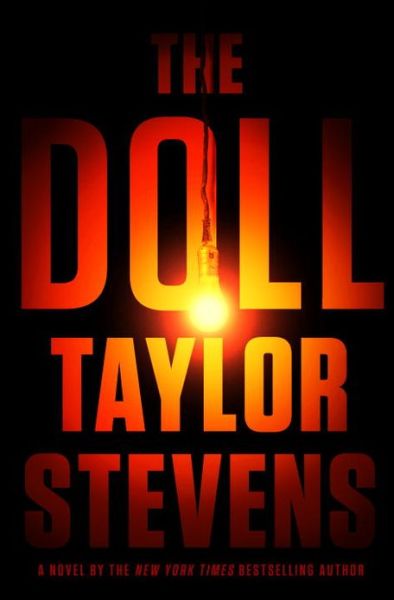
The Doll by Taylor Stevens

The latest international exploits, daring escapes and rescues of Taylor Stevens’s heroine for hire.

doll
In The Doll, Taylor Stevens (The Informationist) brings mercenary Vanessa Michael Munroe back to eager readers for another round of full-speed international intrigue. At the start, Munroe is tranquilized, kidnapped and forced to deliver a Hollywood starlet overseas as part of a human trafficking ring. Munroe’s boyfriend, Bradford, and the associates at his security firm are hot on the case, but the task of rescuing Munroe is complicated because all the other people she loves most in the world have also been kidnapped as collateral against her cooperation. Additionally, “the doll” turns out to be a spitfire with past trauma of her own, determined to give Munroe a run for her money.

With her near-savant linguistic skills, almost obsessive love of and skill with weapons and androgynous appearance, Munroe is a formidable tool in the hands of the “Doll Maker,” the mastermind behind the trafficking trade. But he hasn’t figured on her unpredictability. Even faced with difficult decisions and with her loved ones held hostage, Munroe might be capable of anything.

Stevens again crafts a lightning-swift plot that races across continents and inflicts extreme trauma upon characters she’s taught us to care about. Intelligent action and pacing are a bonus, and other characters like those on Bradford’s team are engaging and provide banter; but it’s Munroe herself who stars, with her wondrous and myriad abilities and her surprisingly soft heart.


This review originally ran in the June 11, 2013 issue of Shelf Awareness for Readers. To subscribe, click here, and you’ll receive two issues per week of book reviews and other bookish fun!


Rating: 7 borders crossed.

Teaser Tuesdays: Light of the World by James Lee Burke

Teaser Tuesdays is a weekly bookish meme, hosted by MizB of Should Be Reading. The idea is to open your current read to a random page and share a few sentences. And try not to include spoilers!

lightoftheworld

The new Robicheaux novel from James Lee Burke comes out in late July. I am loving it. He’s one of my favorites, although some of his books are better than others (what do we want, that’s true of most of our work, whatever it may be!), and the good news is: this one is wonderful. I had trouble choosing which lovely passage to share with you, but this one won out:

Most GIs hated Vietnam and its corruption and humid weather and the stink of buffalo feces in its rice paddies. Not Clete. The banyan and palm trees, the clouds of steam rising off a rainforest, the French colonial architecture, the neon-lit backstreet bars of Saigon, a sudden downpour clicking on clusters of philodendron and banana fronds in a courtyard, the sloe-eyed girls who beckoned from a balcony, an angelus bell ringing at 6 a.m., all of these things could have been postcards mailed to him from the city of his birth.

Isn’t that something. My mother points out that this will mean more to you if you’re familiar with serial character Clete Purcel, whose hometown is New Orleans. (Obviously.)

And in honor of Dave and Clete, I mixed myself a drink to accompany Light of the World: a riff on a mix that they both enjoy (Dave’s is virgin, I suspect Clete’s is not). Mine included Dr. Pepper, cherry moonshine, orange juice, and was garnished with a Twizzler. Sorry I didn’t take a picture for you!

This quotation comes from an uncorrected advance proof and is subject to change.

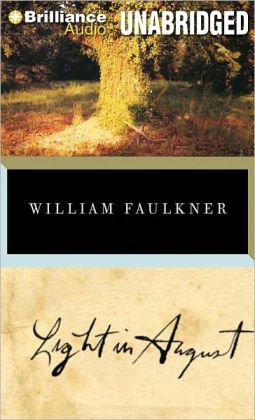
an interim report on Light in August by William Faulkner (audio)

augustI am nearly halfway through Light in August, and I need to get some things off my chest.

The lack of physical descriptions in this book is bothering me. Race is clearly a major issue, and yet I am often left confused about who was of what race. In some stories that would be a strength – that neutrality – but considering that I suspect it is so darned important here, I would like to know who is who. Rarely do we get a physical description. And then, out of nowhere, I get this:

She was a waitress in a small, dingy, back street restaurant in town. Even a casual adult glance could tell that she would never see thirty again. But to Joe she probably did not look more than seventeen too, because of her smallness. She was not only not tall, she was slight, almost childlike. But the adult look saw that the smallness was not due to any natural slenderness but to some inner corruption of the spirit itself: a slenderness which had never been young, in not one of whose curves anything youthful had ever lived or lingered. Her hair was dark. Her face was prominently boned, always downlooking, as if her head were set so on her neck, a little out of line. Her eyes were like the button eyes of a toy animal: a quality beyond even hardness, without being hard.

This is both lovely and, in some ways, bothersome to me. I love that she was not short, but rather “not tall.” And then that “smallness… not due to any natural slenderness but to some inner corruption of the spirit” comes along and I wanted to sarcastically retort, “you mean like a cocaine addiction is an inner corruption of the spirit”? Her face “always downlooking, as if her head were set so on her neck” is quite amazing and evocative; it makes me pause to picture this. But I can’t quite tolerate the “quality beyond even hardness, without being hard.” Come off it, Faulkner.

My impatience with his writing makes me question myself. I am often a little scornful of what strikes me as pretentious Literaryness; but then I’m so often appreciative of lyrical writing, so where do I draw the line? Am I letting my prejudice against (or to be more honest, my fear of) Faulkner get in the way of an honest appraisal? How to account for taste – even my own? It remains a puzzle. As I’ve written before, I think we all should attempt – as I am trying to do – to own our own reactions and tastes, and not apologize for not liking those who are called literary greats (Henry James, T.S. Eliot, I’m looking at you). Why don’t I like Faulkner? Take in a sentence like this:

I do not know yet that in the instant of sleep the eyelid closing prisons within the eye’s self her face demure, pensive; tragic, sad, and young; waiting, colored with all the vague and formless magic of young desire.

I’m sorry, but this reminds me of the abstract art that us philistines can’t tell from a kindergartner’s work. Speaking of vague and formless – this reminds me of The Waste Land, or Gertrude Stein, for goodness’ sake. If I keep reading this, I may go crazy.

On the other hand, I took in Jason’s lovely, helpful comments on the book beginning I posted, and I am somewhat encouraged. Some of this will just turn out to be a matter of taste; Jason can have Faulkner and I can have Hemingway, who some people abhor and that is fine, etc. etc. But perhaps I can continue with Faulkner and find more to like, too. Jason, I’m still looking forward to As I Lay Dying. I am trying; don’t lose patience with me yet. 🙂

And for now, I continue, but wish me luck.

book beginnings on Friday: Young Men and Fire by Norman Maclean

Thanks to Rose City Reader for hosting this meme. To participate, share the first line or two of the book you are currently reading and, if you feel so moved, let us know what your first impressions were based on that first line.

young men and fire

Following an informative and lovely Publisher’s Note, which tells us that this is a posthumous publication of an unfinished (but largely formed) work, Norman Maclean begins his book Young Men and Fire with a story about the beginning of his involvement with the Mann Gulch Fire.

It was a few days after the tenth of August, 1949, when I first saw the Mann Gulch fire and started to become, even then in part consciously, a small part of its story.

To think that while the fire was still burning, in 1949, Maclean knew he’d be tied to it forever – though he didn’t begin this book til 1976, and it was unfinished at his death in 1990 – is profound in itself.

I think I am a serious Maclean fan. Stay tuned.

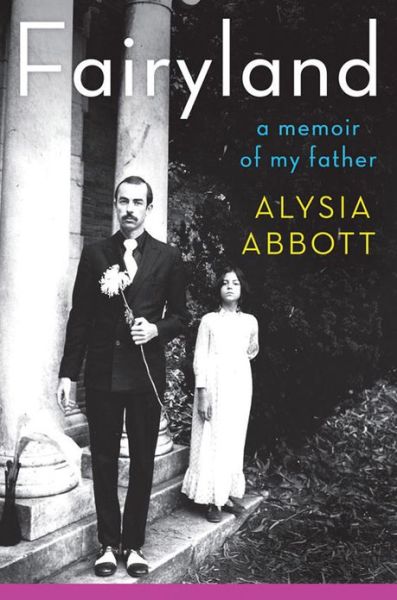
Fairyland: A Memoir of My Father by Alysia Abbott

A daughter’s tender memoir of her father’s life as a single gay man in 1970s Haight-Ashbury.

9780393082524_p0_v2_s600

When Alysia Abbott was two years old, her mother was killed in a car accident. Her father, Steve, moved her across the country to raise her alone as a gay man and single father in 1970s San Francisco–a pioneer in several senses. Alysia’s childhood and teen years took place against the backdrop of a magical Haight-Ashbury district filled with creative, adventurous people like her father (a poet and political activist), recreational drugs and minimal supervision.

Their father-daughter relationship was loving but rocky. When Steve develops AIDS and his health begins to plummet, he calls 20-year-old Alysia home from her studies in Paris and New York City to nurse him, a full-circle caretaking demand that she resents at the time.

Fairyland is foremost a daughter’s memoir of a much-loved parent. She continues to become acquainted with him through her research, most notably in reading copious notebooks filled with his poetry and journal entries. She colorfully renders an iconic epoch in San Francisco, together with the city’s gay culture and politics, and the early days of the nationwide gay rights movement. Alongside beautiful characterizations (often morphing into eulogies), Alysia paints a stark image of the AIDS epidemic and the Reagan administration’s non-response to it. As a personal story and as a portrayal of an era, Fairyland is powerful, loving, authentic, and contains Steve’s artistic legacy in its lyricism. It acknowledges Steve’s impact on Alysia–and both their shortcomings–with gratitude and grace.


This review originally ran in the June 7, 2013 issue of Shelf Awareness for Readers. To subscribe, click here, and you’ll receive two issues per week of book reviews and other bookish fun!


Rating: 9 brightly colored t-shirts.