Teaser Tuesdays: From Alaska to Tierra del Fuego: Across the Americas in Two Years by Michael Boyny

Teaser Tuesdays is a weekly bookish meme, hosted by MizB of Should Be Reading. The idea is to open your current read to a random page and share a few sentences. And try not to include spoilers!

fromalaska

Randomly chosen from this beautiful coffee table book:

In the days of our stay, we experience a city as fragmented as its history is fascinating: repulsive and charming, poverty-stricken and glamorous, terrifying and endearing – probably as full of contradictions as the Mexican soul itself.

The city in question is Mexico City, and I imagine that this list of contradictions is an accurate start, at least.

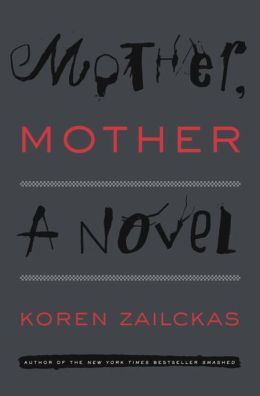
Maximum Shelf: Mother, Mother by Koren Zailckas

Maximum Shelf is the weekly Shelf Awareness feature focusing on an upcoming title we love and believe will be a great handselling opportunity for booksellers everywhere. The features are written by our editors and reviewers and the publisher has helped support the issue.

This review was published by Shelf Awareness on June 26, 2013.


mother mother
Mother, Mother opens on a quiet Saturday morning in a small town north of New York City. A young boy wakes up with his mother standing over him, waiting to start their day. He is a little odd–we soon learn he’s been recently diagnosed with Asperger’s syndrome and epilepsy–and his mother seems to be wound a little tight, but she’s also concerned and loving. Next, the perspective shifts to that of his older sister, a rebellious teen who has just been placed in a local mental hospital. The father is cheating. The eldest daughter ran away with a boyfriend several years ago.

These are the perceptions presented in the first few pages of Koren Zailckas’s startling debut novel. Do you believe everything you’ve just read?

As the story of the Hurst family unfolds, the reader will learn to question every “fact” exhibited. The youngest child, Will, and the middle daughter, Violet, continue to trade off the first-person relating of their family drama. One is on the autism spectrum and the other is drug-addled; thus the reader has to parse not one unreliable narrator but two. Will both loves his mother and fears her, and is constantly struggling to determine what exactly it is she wants so that he can please her. He is home-schooled, because of the Asperger’s: Is this the cause or the effect of their unusually close relationship? Josephine, the titular mother, starts off coldly Stepford-like and quickly takes a turn toward chilling. Violet, who has been observing Sallekhana (a form of Jainist ritual starvation), recently took psychedelic morning glory seeds and came home to her family out of her mind, hallucinating and violent. Now Josephine is adamantly opposed to Violet coming home from the hospital, ostensibly because of the threat she poses to her little brother. The absent eldest daughter, Rose, remains ghostlike and disembodied for most of the book. Her past is enigmatic and her current location unknown–but unexpectedly, she writes to Violet in the hospital, after years of silence. And while their father, Douglas, is physically present, he has problems of his own that make him self-centered and ineffectual.

Much of Mother, Mother‘s mystery revolves around the night when Violet, in a haze induced by near starvation coupled with the psychedelic seeds, brandished a knife at her family, harming Will. A drunken Douglas drove her to the psych ward. But as it turns out, neither Will nor Violet has a clear memory of what happened on that night. Then Child Protective Services enters the scene, in the form of a case worker surprisingly sympathetic to Violet. This engages Josephine’s protective instincts, and the reader must struggle alongside CPS to discern the truth about where–or from whom–Will suffered his injuries. From the start, the reader is kept off-balance by Will and Violet’s constantly shifting, conflicting, inconsistent narratives. Josephine’s contributions, which come in dialogue form through Will or Violet’s observations, only serve to muddy the waters. From the start, the reader senses that something is amiss, but will have to puzzle for a time over which of these troubled characters to trust.

As the action unfolds, Violet remains institutionalized, but the details of the night in question begin to reveal themselves. Will and Violet both begin to regain their memories, but they continue to interpret those recollections in very different ways. Even as the source of the true evil begins to become clear, the reader is kept guessing as to everyone’s final fates until the closing pages, and the surprises keep coming until the very end.

Koren Zailckas is the bestselling author of two memoirs, Smashed and Fury. Her first attempt at fiction will not disappoint her fans, as she continues to exhibit a nuanced understanding of psychological drama, combined with a wry tone that brings surprising humor to such an unnerving story. Zailckas reveals and conceals fact and rumor in this complex tale with deliciously deceitful cleverness: readers should beware the seemingly straightforward narrative as told by Will and Violet. Take, for example, Will’s placement on the autistic spectrum. In some ways, it is very apt: his obsession with obscure, little-known vocabulary words will of course charm the booklover; but on the other hand, he is awfully good at reading emotions.

Mother, Mother is unsettling, even frightening, and perhaps what makes its atmosphere so successfully compelling is that it is so very domestic and ordinary. The Hursts not only appear outwardly normal, they may be our role models–the perfect family next door. What Zailckas has accomplished is most disturbing because it is so close to home.


Rating: 7 not-so-loving looks.

Come back tomorrow for my interview with Zailckas!

book beginnings on Friday: The Norman Maclean Reader

Thanks to Rose City Reader for hosting this meme. To participate, share the first line or two of the book you are currently reading and, if you feel so moved, let us know what your first impressions were based on that first line.

maclean

For this book beginning, we are treated to a previously unpublished chapter from Maclean’s abandoned book about George Armstrong Custer and the Battle of Little Bighorn.

It was in the year – even in the season of year – marking the 80th anniversary of the Battle of the Little Big Horn that Major Edward S. Luce retired as Superintendent of the Custer Battlefield National Monument. He and the Hill have long been closely connected.

Even in those few words, I recognize Maclean and his attention to detail and his interest. As I’ve just read in the introduction, Maclean’s obsession with the Mann Gulch Fire (see Young Men and Fire) is at least matched by his obsession with Custer; but his high standards and (argues the editor who wrote the introduction) his proximity to the subject caused him to leave this book behind.

I am super-extra-excited to have more Maclean to dig into. Let’s have it.

Liz’s Pinterest from The Son

I once wrote about how I keep a piece of scratch paper as a bookmark, one sheet dedicated to each book, for keeping notes: page numbers for referral or quotation, words to look up, thoughts that belong in my review. My coworker (who has contributed to this blog several times), Liz, read that post, and says she thought it a great system. Now, lately, Liz has been telling me about reading The Son, by Philipp Meyer. Set in the American southwest, The New York Times calls it a “multigenerational family saga spanning the years from 1836 to 2012,” one of those “greatest of historical novels… we come to feel both the distance of the past and our own likely complicity in the sins of a former age, had we been a part of it.” (High praise!) Apparently Liz has been making a number of notes on historical terms and references that she needed to look up – and she’s gone a step well beyond my vocabulary lessons, and created a visual collection of those notes on Pinterest.

I’m not on Pinterest at this time – too many things to keep up with! – but it’s an attractive way to see what she’s learning… what do you think? Anybody else have any Pinterest pages based on books out there? (Silly question, I know! Do share!)

Ring for Jeeves by P.G. Wodehouse

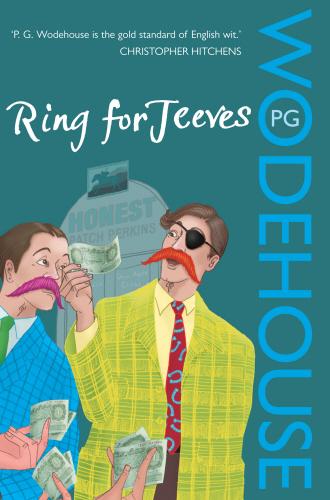
ringforjeevesI would like to begin this review-of-sorts by noting the front-cover blurb by Christopher Hitchens:

P.G. Wodehouse is the gold standard of English wit.

Next, note the back-cover blurb by Stephen Fry:

You don’t analyse such sunlit perfection, you just bask in its warmth and splendour.

And thirdly, my A.Word.A.Day email the other day included the following “thought for the day,” by Susan Sontag:

Interpretation is the revenge of the intellect upon art.

The collected wisdom of these three statements is that P.G. Wodehouse is awesome and hilarious; and to further beleaguer the point or try to parse it would be a waste of time, possibly a disservice. In that spirit, and because I’ve reviewed several Wodehouses already, I’m not going to say much more.

Wodehouse is still light-heartedly hilarious and well worth a lazy afternoon. This is, if anything, one of the better ones I’ve read.

If you care for a plot synopsis, I’ll continue to be brief: Bertie Wooster is not present in this story; Jeeves is on loan to a similarly foolish young man. There is confusion about which dame he’s most devoted to. A decrepit English manor is on sale. A bumbling “white hunter” from Africa lusts after a wealthy American widow. Hilarity ensues and all ends well. There are no aunts in this story. The end.


Rating: 7 damp spots.

Teaser Tuesdays: The Astronaut Wives Club by Lily Koppel

Teaser Tuesdays is a weekly bookish meme, hosted by MizB of Should Be Reading. The idea is to open your current read to a random page and share a few sentences. And try not to include spoilers!

astronaut

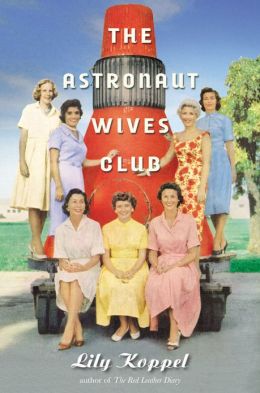
I am pleased with this newly-released work of nonfiction focusing on the wives of the first astronauts (and their immediate successors). A developing reading niche of mine is what I am calling “biographies of little-known women in history,” and this qualifies. To set the tone:

The wives pored over their fifteen-page “Seven Brave Women Behind the Astronauts” spread. Through touching up and editorial tinkering, Life had transformed seven very different, complicated women into perfect cookie-cutter American housewives. There was not a whiff of domestic turbulence.

What is written boldly between these lines is that there was domestic turbulence, right? Nothing horrendous (that I’ve encountered so far, at least), but the point is that the program that employed the astronauts in question began in 1959, and thus the all-American, 1950’s, dimples-and-apple-pie version of family life was paramount. These women were expected to exemplify that image, for the sake of their husbands and their country. And that’s really something: a daunting challenge, I think.

Claire DeWitt and the Bohemian Highway by Sara Gran

A singularly weird and drug-fueled private eye, not for the faint-hearted.

gran

Sara Gran’s Claire DeWitt and the Bohemian Highway gives us a refreshingly bizarre twist on the classic private investigator. Readers of Claire DeWitt and the City of the Dead will recognize Claire’s copious and indiscriminate drug use (she never fails to check a medicine cabinet and pocket the contents; she seeks dealers like she seeks clues) and her generally hard-bitten lifestyle. Similarly unconventional is her somewhat metaphysical style of detection, guided in part by a controversial dead French detective who speaks to Claire through his book.

When Claire’s ex-boyfriend Paul is murdered, and several of his valuable guitars go missing, his wife, Lydia, hires Claire to look into things. A simultaneous case involves a diminishing herd of miniature horses up in Marin County: Claire suspects they may be committing suicide. The action shifts from contemporary San Francisco, where Claire hunts Paul’s guitars and his killer, to the Brooklyn of Claire’s adolescence, where she and two friends once investigated a missing girl. One of those friends will later go missing herself; and the whispers of the missing Tracy, the dead Paul and the possibly suicidal miniature horses haunt Claire as she tries to keep it together and solve a murder through the haze of various uppers and downers.

Strange, distinctive characters are one of Gran’s greatest strengths, coupled with a strong sense of place and a gritty atmosphere of depravity and mysticism. Dark, classic PI adventures with an unprecedented zaniness mixed in make Claire DeWitt a rare reading experience.


This review originally ran in the June 25, 2013 issue of Shelf Awareness for Readers. To subscribe, click here, and you’ll receive two issues per week of book reviews and other bookish fun!


Rating: 8 bumps.

book beginnings on Friday: The Boy Who Could See Demons by Carolyn Jess-Cooke

Thanks to Rose City Reader for hosting this meme. To participate, share the first line or two of the book you are currently reading and, if you feel so moved, let us know what your first impressions were based on that first line.

demons

Despite a passing resemblance to The Sixth Sense, based only upon the blurb I saw somewhere, I am interested in getting into this Boy. It begins:

People look at me funny when I tell them I have a demon.

“Don’t you mean, you have demons?” they ask. “Like a drug problem or an urge to stab your dad?” I tell them no.

We shall see.

What does your weekend hold?

This quotation comes from an uncorrected advance proof and is subject to change.

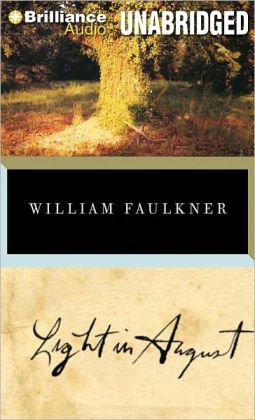
final review: Light in August by William Faulkner (audio)

augustI am challenged by Faulkner. I already began to share my frustrations in an earlier post that you might want to check out.

So then, the second half of the book. The short story is I still don’t understand what this book is about. It opens with a pregnant country woman, traveling on foot in pursuit of the missing father of her child. He left her when he found out she was pregnant, promising to send for her when he had a household set up; everyone Lena talks to, and I the reader, understand that he’s no good and this is a lie, but she is dogged. She succeeds in tracking him down, this man she knows as Lucas Birch, to all our surprise, and he is indeed no good (and also now goes by Joe Brown). And then the story shifts to that of a companion of Birch/Brown’s, a man named Joe Christmas. We learn his entire life story. He was an orphan, living mostly as a white boy/man but occasionally outed as being part black. (Note that there are lots of n-words in this book. Something to keep in mind in the audio format, if you’re driving around with your windows down.) There is also a Byron Bunch, who cares for Lena while she gets close to having her baby; and a man named Hightower, a former minister who advises Byron Bunch. We learn pieces of their stories, as well. We don’t learn terribly much about Birch/Brown himself, despite in some ways him being the hub around which these spokes rotate. And I’m torn between wishing we knew more about Lena, and being frustrated (and therefore satiated) by what I do know of her.

The bottom line is that I still do not understand what this book is about. On one hand, that makes it really a pretty good candidate for what I’m doing with it, which is listening to it to prepare to to listen to a lecture explaining to me what the heck it’s about and what Mr. Faulkner was trying to do with it. On the other hand, it has not aided my enjoyment of this book. I’m confused. Why do we care about these people? I never learned to care about these people. Are we concerned with Lena? Or are we concerned with Christmas? Are we concerned with Byron Bunch?

I found it strange that certain characters make very long, descriptive speeches, when they’re meant to be simple people. When they speak, I hear Faulkner, not Lena, or Mrs. Hines or whomever. I’m not a fan of the author speaking through the dialog of his characters.

My audio edition concluded with an interview – of all people – with James Lee Burke. This is strange because he’s one of my favorites (and stranger still because I just days ago finished his new book, Light of the World – sorry, the review won’t post til the book is published in late July). It turns out that he puts Faulkner right up there with his top four greatest writers of all time: Chaucer, Milton, Shakespeare and Keats. I am baffled. I won’t try to re-hash this interview for you, in which Burke touches on the gifts of Faulkner; suffice it to say it’s the first time I failed to “get” James Lee Burke. [If you’re interested, it’s the Brilliance Audio production of 2011, read by Will Patton. The interview with Burke is conducted by an awesomely-named James Atlas.]

I think that maybe Faulkner transmits on a frequency I don’t receive. I understand vaguely that this is a work of allegory. Perhaps the Yale University class lectures that I plan to listen to eventually (you can find them here on iTunes U) will illuminate things; possibly they will not. This is a non-review, I know. I’m sorry. I don’t get Faulkner.

Next up in my audio collection is The Sound and the Fury and I don’t think I’m brave enough. Jason’s recommendation of As I Lay Dying was encouraging, but I’m still a little gun-shy; plus my local library doesn’t have that one on audio. For now, I will take a break from Faulkner. Maybe I’ll even start with some of the Yale lectures and see if I’m inspired and educated.


Rating: requires discussion.

When trying to come up with a numbered rating for this book, I think: I did not like this book. But whose fault is that? Is it partly my fault? Do I share some blame for being unable to appreciate or follow? I give Light in August a 3 for my enjoyment level, but to acknowledge my complicity in our minds’ failure to meet, Faulkner’s and mine that is, I will assign a very generous 5 grumbles and hope for either better, or no, future Faulkner reads.

notes on Young Men and Fire by Norman Maclean

young men and fireI decided to do a whole separate post (because my review was… long) sharing my notes as I read this book. As I’ve said before, I like to use a scrap of blank paper as a bookmark because I can takes notes on it. Often these are words I’m unfamiliar with, with page numbers, so I can look them up and reread them in their context; quotations with page numbers; or notes of concepts I want to include in a review. Some books fill a quarter-page piece of scrap paper with notes; some have 2-3 notes; a fair minority of the time, I can get all the way through a book with no notes at all and write a review from memory.

Young Men and Fire filled 3 quarter-page scraps of paper and part of a 4th, and I was writing very small. So I wanted to share these notes here. I’ve expanded them slightly to explain to you what I was noting; but still they are basically marginalia. [My page numbers refer to the 1992 hardback from the University of Chicago Press that I got from my local library.] I also left off a few that turned out to be less interesting avenues of pursuit, or that turned out to be personal.

  • author photo: this V.C. Wald 1981 portrait of Maclean in a boat, looking down, is evocative for me and I love it. (see bottom of post)
  • Ehrlich & Dillard blurbs: on the back of the book (among others). Gretel Ehrlich is one of those I had never heard of til I had, and now I see her everywhere. Dillard is one I’ve heard lots about, and it’s finally time for me to read her.
  • like The Perfect Storm: science, weather, geography – actually like it in subject too
  • takes his reader in hand to guide her on this together-journey
  • “left a world that is still burned out.” 86
  • “a mystery of the universe is how it has managed to survive with so much volunteer help.” 112 (having worked with volunteers, and been a volunteer myself, I found this quite apt and funny.)
  • great comments on human nature 114-15. “…most people think they can be of help, and some even seem born to rescue others, as poets think they are.”
  • stations of the cross (a concept that I had to look up: I am unapologetic about being an atheist, but regret a little how uneducated I am in the religions that I don’t believe in)
  • Custer: turns out to be a subject of sort of secondary obsession for Maclean. apparently The Norman Maclean Reader includes his unpublished notes on Custer that were headed for being their own book. I am looking into this.
  • poem 201: I had to look up a poem that was quoted without attribution; it turned out to be “In Flanders Fields” by Colonel John McCrae.
  • “I added a final truism for myself, ‘True poems are hard to find.'” 202
  • “Beer doesn’t seem to do much to remove dehydration, but it makes it easier to admit error.” … “We were too tired to sit down in the shade, if there was any, so we put the plastic bag with the rest of the beer between us on the hot hood of the engine. We figured, since beer couldn’t take away dehydration, we might as well drink it warm.” 209. What I can say, I guess I collect literary quotations about beer.
  • sewing machines 214. The scene described is one in which the smokejumpers play a game of volleyball, watched by visitors from The General Public, who are surprised the smokejumpers are “not as big as the Minnesota Vikings,” and after the game is over, “to the ever-increasing surprise of the visitors, would sit in front of sewing machines and peacefully mend their parachutes. They were very skillful with their sewing machines and damn well better have been, since their lives hung on their parachutes.” This one is for my mother, who not only collects sewing machines but also uses them. She also collects instances of the intersection of manliness and sewing machines – not as rare as you might think, it turns out. (She still has not gotten Husband onto one.)
  • this story in Fire Season? and Jumping Fire? note to self to go and check on the Mann Gulch’s appearance(s) in the two books; I’m sure it must be there…
  • story 214-15: a brief anecdote I appreciated, told by Hal Samsel
  • “…a storyteller should never look at a day as lost if he has learned something about how to tell stories, especially about how to make them shorter.” (which is a lesson Maclean learns from Hal, above.) 215
  • Ancient Age 216: a brand of bourbon that I confess I had to look up (I like Knob Creek myself, if you’re taking notes)
  • I begin to see clearly that I favor those authors who booze. Hemingway, Abbey, Burke, and Maclean, I’m looking at you.
  • math 229-30 and on… another note for my mother, who is a math person (geometry particularly) and might appreciate this discussion of math, its challenges, and its value, not to mention the math itself, complete with charts and graphs, that helps explain the Mann Gulch fire
  • Black Larry: the real-life character in Fire Season who recommended I read this book. make a note to send him a note.
  • silviculture 247: from the US Forest Service: “Silviculture is the art and science of controlling the establishment, growth, composition, health and quality of forests and woodlands to meet the diverse needs and values of landowners and society on a sustainable basis.” Maclean uses it in a way that suggests an earlier meaning (at least to him), of the science of controlling forests to meet the needs of loggers, which is not really the same thing as the above definition.
  • anemometer 248: An instrument for measuring the speed of the wind, or of any current of gas.
  • Phil Connors – management – Rothermel – 256: another note to check Fire Season for reference to a man named Rothermel who helped rework the Forest Service’s policies on managing fires rather than just always fighting them. again, I’m sure it’s in there.
  • (back to The Perfect Storm) as I remember it, Junger never addresses much his own strengths or weaknesses with the technical aspect of his research, that is, the science. Maclean does; he pokes fun at his limits with math. This brings in his own personality & amuses me. Also Junger never becomes a character until his final comments(?), whereas Maclean is a major character, necessarily, throughout.
  • “All of us have the privilege to choose what we wish to visualize as the edge of reality. Either tier of crosses allows us to picture the dead as dying with their boots on. On some of the bodies all but the boots were burned off. If you have lived a life that has thrown you in contact many times with nature, you have already discovered that sometimes you can deal with nature only by allowing it to push back what until now you and others thought were its edges.” 277
  • elements – title: I discussed this in my book review, how Maclean adds “young men” to our list of the elements, normally four: earth, air, fire, and water. thus the title of the book.

As you can see, this book inspired many ruminations in me, some still unfinished.

Many thanks to Veronica Wald for sharing this on her blog! It’s worth clicking the link above for the story of the iconic photo.