Teaser Tuesdays: A Garden of Marvels: How We Discovered that Flowers Have Sex, Leaves Eat Air, and Other Secrets of Plants by Ruth Kassinger

Teaser Tuesdays is a weekly bookish meme, hosted by MizB of Should Be Reading.

garden of marvels

You will recall the book beginning I recently posted for this book. I wanted to share another tidbit, equally delectable:

“Used to be some call for ’em,” he said over the phone in a drawl that sounded like Southern Comfort cut with a generous squeeze of lime.

The man with the voice is, appropriately, a citrus farmer in Florida. How charming is this author??

This quotation comes from an uncorrected advance proof and is subject to change.

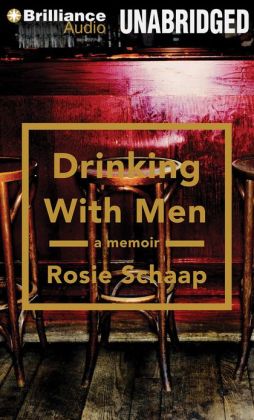
Drinking with Men by Rosie Schaap (audio)

drinking with menI picked up this memoir for what I’m sure are obvious reasons. The title alone appeals to me: I am, ahem, a drinker, and a tomboy who’s been most commonly and comfortably in the company of men. Read a blurb, and find out further that Rosie Schaap is a fan of hanging out in bars, which puts her generally in male society; I’m right there with her.

And I was immediately charmed at this audiobook, read by the author in her somewhat gravelly (drinker’s, smoker’s) voice. She opens the introduction by calling herself a serial monogamist when it comes to bars: she becomes a regular at one for a year or years, then moves to another to which she will also be faithful for the medium-long-term. This memoir is organized by bars where she achieved “regularhood” (a status that she points out is even more overwhelmingly male-dominated than bar-drinker-hood generally), and covers the rest of her life – relationships, school, careers, living arrangements – as it relates to the bar, mostly. Her brother, parents, and husband get sketched rather more lightly than do her drinking buddies, for example. Her bars are located in New York City, small-town Vermont, Dublin and Montreal – but mostly New York City, her hometown and persistent home.

As expected, and as her first few lines indicated, I felt a real connection with Rosie. (I consider us to be on a first-name basis, as we would be on our barstools.) Her inexplicable (to some) comfort going to bars alone as a woman struck a note with me: I share that comfort (at the right bar, of course), and confirm her observation that this is rare behavior. I certainly agree that the definition of the best sort of bar is where one can go alone while female – and even read a book, or carry a conversation without shouting. (See here.) I also agree that these bars can come in different shapes and sizes (well, small is the ideal size), and that they overlap, but not entirely coincide, with dive bars. I often felt as if she were speaking right to me – like this is a long-lost sister I’m listening to. How lovely. We should get a drink sometime.

She did lose me for a little while mid-way, when she got enthused about religion and becoming a minister. I couldn’t follow her there; we got separated; and I worried that we had taken permanently distinct roads. But she sort of let that part of her story lapse; I don’t know if that part of her life lapsed, too, but I was certainly okay with the book taking that turn. Personal preference, there.

Rosie’s life has taken a few turns that I think will be familiar to many of us: youthful rebellion, difficulty determining What She Would Do With Her Life, and a troubled marriage. She experience 9/11 as a New Yorker, and lost her father the same season. She moved away a few times, and returned. And she has had some very cool relationships with some very cool bars. I felt very close to her as I experienced what she had written, and as she read it aloud for me. I think that has to be one of the aims of memoir.

As an aside, I had a fun “aha!” moment: as Rosie talked to me, I had a niggling feeling of deja vu. I recalled a story I’d read somewhere, about a young woman in a bar wearing an ugly hat, who was approached by an intimidating biker who wanted to buy her hat for his friend. It was a good story, and I was reminded of it. Sure enough, just as I was wondering, she told it. I figured out that I’d read it in the New York Times Magazine, courtesy of my mother. (You can read it here.)

Schaap’s writing style sort of disappeared for me, which I mean in a good way: that is, that there was no discernible style. It just felt like she was telling her story. I would have enjoyed ten times this length of the same – although on the other hand, she seems to have shared exactly the right amount.

If you’re at all interested in bar culture or women in a men’s world – I recommend Rosie’s story told in her own voice.


Rating: 9 pints.

book beginnings on Friday: A Garden of Marvels: How We Discovered that Flowers Have Sex, Leaves Eat Air, and Other Secrets of Plants by Ruth Kassinger

Thanks to Rose City Reader for hosting this meme. To participate, share the first line or two of the book you are currently reading and, if you feel so moved, let us know what your first impressions were based on that first line.

Oh my. You guys, I just started the most amazing book. For instance – check out these very first lines.

garden of marvels

This book was born of a murder, a murder I committed. It was not my first, but I have some hope it will be my last. Since I never set out to kill – quite the contrary – I suppose I am guilty only of negligent homicide, or possibly mere criminal negligence. Still, I feel deeply culpable. All I can do is plead ignorance, and say that this particular death was a life-changing event for me (as well, of course, for my victim). Possibly, since you have this book in your hands, the tragedy will save a few lives I will never know.

The deceased in this case was a twelve-year-old guest, a permanent resident, really, of my household. She was a lovely, graceful creature about five feet tall, and a particular favorite of my family. Kam Kwat she would have been called in Cantonese, had she lived in her native land. As it was, since we live just outside Washington, D.C., we knew her as a kumquat tree.

I have quoted at greater-than-usual length because I wanted you to be able to appreciate Kassinger’s clever ruse here. Wait, don’t go! Yes, it’s a book about plants – the science behind plants, even – but it is the least dry thing you can imagine; I think the conversational tone is well displayed here, and it only gets better. I am entranced. Stay tuned!

This quotation comes from an uncorrected advance proof and is subject to change.

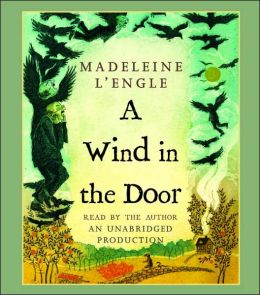
A Wind in the Door by Madeleine L’Engle (audio)

wind in the doorThe second book in L’Engle’s Time Quintet series stars the same quirky, likeable Murry family members: chiefly Meg, along with her brother Charles Wallace; and to a lesser extent, their mother and twin brothers. (Their father is again away in this story. I wonder if he’ll come to play a stronger role in later books.) Calvin, friend of the family and Meg’s tentative romantic interest, plays a lead role alongside Meg. Where their task in A Wrinkle in Time was to save the Murry father, this time it’s Charles Wallace himself who’s in danger: there’s something wrong with his mitochondria, and the farandolae who dwell therein.

As A Wrinkle in Time used outside supernatural influences – Mrs. Whatsit, Mrs. Who, and Mrs. Which – to direct Meg and Charles’s actions, A Wind in the Door features a Teacher named Blajeny and a cherubim named Proginoskes (Progo for short). Yes, cherubim is generally considered to be plural, but Proginoskes is “practically plural” – he is at first mistaken for a drive of dragons by Charles Wallace.

To save Charles Wallace from the rebellion of his farandolae (and you can look it up: while farandolae are fictional, mitochondria are as real as the tesseract that starred in A Wrinkle in Time), Meg and Calvin, along with Blajeny and Progo, must become very very very small and get to know one of Charles Wallace’s farandolae intimately, going inside Charles Wallace to fix him up.

I enjoy the characters that L’Engle creates. I will say that her young people don’t always sound like young people – which is explained in Charles Wallace’s case because he is nothing like a normal young person (this book opens with him being constantly beat up at school for talking about mitochondria and the like); but I think Meg is supposed to represent a more approachable, normal-ish girl, and along with Calvin, Sandy and Dennis, she can be a little odd. But somehow, even as I note this, it doesn’t bother me. Realism is not a central dogma of this series; it is fantasy after all.

I love the science (even though it’s science fiction, and I suppose might confuse the young readers – and the not-so-young – as to what’s real; that’s a concern), and I love that L’Engle makes science interesting and relevant in a series starring a girl. That’s no small thing even today, but these books were published in the 1960’s, 70’s, and 80’s, and I think this deserves note and applause. That said, Meg is on the one hand a mathematical genius, and on the other a little whiny and reliant upon big strong Calvin. Perhaps that’s where the realism comes in.

With a few quibbles, I definitely did, again, enjoy this listen. It’s read by the author in a somewhat gravelly voice, and she does voices for her characters. I recommend the books, for readers of all ages (I am not much of a YA [young adult] reader, myself), and I recommend the audio. I’ll be continuing with the series: next up is Many Waters.


Rating: 6 snakes.

The Black Count by Tom Reiss

blackcountThis poor book got picked up and put down repeatedly as I dealt with other reading deadlines. It took me two and a half months to read! But I kept coming back. The Black Count came recommended by The World’s Strongest Librarian, and I bought it at Elliot Bay Books in Seattle when I got to finally meet in person my awesome editor at Shelf Awareness, Marilyn. So good vibrations unite in this read.

The “black count” is the father of Alexandre Dumas, author of The Three Musketeers and The Count of Monte Cristo. Much of Dumas’s work, it seems, was based on his father’s life and unique and outlandish experiences. I had not known that; I suspect many readers don’t. Tom Reiss’s work is a biography of Alex Dumas (the father: I will call him Dumas throughout), with an eye to the legacy expressed by the novelist (son: I will call him the novelist), and some background on the French Revolution. Napoleon figures rather heavily in Dumas’s later story and military career.

Dumas was born in Saint-Domingue, which is modern day Haiti, to a black slave mother and a white French father. His father went back and forth somewhat on Dumas’s place in the world, at one point selling his son into slavery but eventually giving him a good education, fancy clothes, and place in French society. He is a physical prodigy early on, adept at horseback riding and fencing, and his military career is illustrious from the beginning. Dumas is an ardent republican, enthusiastic about the revolution, not least because – and here I learned something I probably should have known – the French Revolution was decidedly liberal on its attitude towards black citizens, giving them near-equal or equal rights, privileges and access – at least for a time. Slavery was abolished in France, although the extent to which abolition applied to the colonies varied. And unfortunately, this egalitarianism was short-lived.

The dark-skinned soldier worked his way remarkably quickly up to general of a division, and gave admirable performances in actual hand-to-hand combat: something, then as now, that high-ranking officers often avoid. His feats are literally the stuff of legend, and those military stories are some of Reiss’s stronger moments, naturally. If history is to be believed, Dumas was absolutely worthy of the tales that his novelist son would spin. [Is history to be believed? Reiss did his own research and looked at all the ancient scraps of paper from the time; accounts tend not to vary; the case looks good. But from this historical distance, I think there must always be a question.]

Dumas married for love and had three children, the first of whom died in childhood. His star was rising when Napoleon came to power. Napoleon is the villain of this story, as he is encapsulated in the villain of The Count of Monte Cristo: he rolled back and reversed the Revolution’s racial equity advances, and considered Dumas a formidable rival, apparently because of Dumas’s great accomplishments; the latter seems to have done nothing actually wrong. Dumas is taken as a prisoner of war in Italy and has a miserable time there, which again plays into The Count of Monte Cristo. (Look for enjoyable, comical descriptions of Dumas’s highly formal correspondence with one of his jailers.) It does not appear that Napoleon is actually to blame for this period in Dumas’s life, although possibly he could have done more to get him freed sooner. Following his POW imprisonment, Dumas’s health never recovers; he loses his commission under Napoleon’s racist regime; and he dies when his youngest child, the novelist, is only four years old. The novelist’s glorified view of the father he remembers as Herculean will never be moderated.

As a historian, Reiss is perhaps a bit credulous of Dumas’s perfection. In a description of the soldier’s last hours, there is a priest called, which the novelist is careful to point out could not have been for confession, as his father had never committed even a single regrettable act in his lifetime. This seems like too extreme a statement to stand unquestioned – haven’t we all done something regrettable? …Especially those of us whose career was based on killing people? Dumas had a reputation for humane victory and protection of the defeated from looting, which is admirable. But I have a little trouble stomaching this unqualified hero-worship.

Reiss also unfortunately descends into dryness rather regularly. I several times considered giving up the book; but then I’d give it another go and eventually be mesmerized again by the narrative. He’s at his best when he lets his own story, of researching the book, creep onto the page; or lacking that, when he lets a primary source or Dumas-the-novelist pen a few lines. I should also note that my very slow, stop/start method of reading this book (almost unheard of for me) almost certainly made the story move a little more slowly and more disjointedly. I regret that, and it might have gone a little better otherwise. But I think it’s worth stating that things can get a little slow in the middle. Also, Reiss is happy to go quite a few pages without telling us who one of his characters is, and expect us to remember him. Again, better if you read it all straight through quickly. If you aren’t doing it that way, beware this small problem.

All in all, though, I did find myself motivated to finish the book, and I was rewarded. The Black Count is a good primer on the French Revolution and on Napoleon as well, and the sections that portray exploits in battle are lively. Readers looking for a great deal of insight into Dumas-the-novelist’s work will be at least a little disappointed; but I am definitely putting this book down with a renewed interest in rereading The Count of Monte Cristo, which I loved in high school.

A little dry in the middle, but a mostly-accessible history of the French Revolution and one of its forgotten heroes, with a nod to a very fine novelist who adored his father.


Rating: 5 trees of liberty.

Teaser Tuesdays: Drinking with Men by Rosie Schaap

Teaser Tuesdays is a weekly bookish meme, hosted by MizB of Should Be Reading.

drinking with men

I am loving this ode to bar culture masquerading as a memoir. I feel a kindred spirit, as Anne would say. And wouldn’t you just know it – how much do these lines resemble my words of just a week ago?

“You know what I want?” he asked me, quietly but excitedly, almost in a whisper. More glögg, I might have guessed. But that wasn’t it. “I want to have a bar,” he said, “where a woman could come in, sit down with a book, read, have a drink, and not be bothered.”

I have been raving about Rosie Schaap’s story. Do check it out. Stay tuned for my review.

The Waste Lands by Stephen King

waste landsThe Waste Lands is book 3 in King’s Dark Tower series. (See my reviews of book 1 and book 2.) As Jeff said in a comment on an earlier review, they keep getting better and better! (He also said that the first 4 are the best, meaning that we’re headed downhill here soon; but I am optimistically hoping that the slope will be gradual, and/or that I will disagree with him!)

Plot-wise, I’m going to be brief here. There are copious summaries all over The Internet. See my reviews of the first two books for discussion of what this series is really about, in all its sweeping epic genre-mashup glory.

Roland and his two new companions, Eddie and Susannah, are continuing on their quest towards the Dark Tower; but really, this is Roland’s quest, with the other two along as less-than-eager fugitives from their own world. One of the plot arcs involves Eddie and Susannah becoming increasingly invested in the quest for its own sake, rather than accompanying Roland as a self-preservation method. The central struggle of this book, however, is to get Jake (“The Boy”) over from his world to theirs. Jake played an important role in The Gunslinger, where he… seems to have died… twice… but here he is again, because as he so importantly cried out in book 1, “there are other worlds than these.” Jake and Roland both have memories of their shared experiences, which conflict with parallel memories that say they never met. Both are in the process of being driven crazy by these warring memories; bringing our four characters together in the flesh will resolve that threat. Finally, we pick up a 5th: a billy-bumbler (that is something like a cross between a raccoon and a dog, that talks, and likes people) they call Oy. He’s really Jake’s billy-bumbler, and turns out to be a very clever one, who helps save the day repeatedly. I am over-the-moon smitten with Oy and delighted to have him along for the ride. I want a billy-bumbler, too.

At the close of The Waste Lands, our newly minted, secure, united ka-tet of Roland, Eddie, Susannah, Jake and Oy is headed towards likely death in a monorail train with a consciousness that likes riddles. However, there is a book 4 to come, so I suspect they will manage to elude destruction once again!

I love this series; I’ve already ordered the rest of the books so I won’t have to take any more breaks! Hooray for Stephen King and his mind-boggling ability to create immense, epic, complex and fascinating worlds in his head and then invite the rest of us into them. I think somebody should write a dissertation on why King is Literature despite also being Popular With The Kids. Keep ’em coming.


Rating: 8 gold-ringed eyes.

book beginnings on Friday: The Weight of Blood by Laura McHugh

Thanks to Rose City Reader for hosting this meme. To participate, share the first line or two of the book you are currently reading and, if you feel so moved, let us know what your first impressions were based on that first line.

weight of blood

I have a delightfully chilling novel to share with you today, although I regret to also tell you it won’t be out til March. Set in a small Southern town unused to the meddling of outsiders, The Weight of Blood is a real treat. Here are the opening lines.

That Cheri Stoddard was found at all was the thing that set people on edge, even more so than the condition of her body. One Saturday in March, fog crept through the river valley and froze overnight.

Lots of atmosphere there, hm? Stay tuned! I should have an author interview to share with you soon.

This quotation comes from an uncorrected advance proof and is subject to change.

The Book of Jezebel: An Illustrated Encyclopedia of Lady Things by Anna Holmes

A colorful and clever reference guide to life as a woman that readers can enjoy straight through, cover to cover.

jezebel

The Book of Jezebel, edited by the creator of the popular feminist website with contributions from many of its writers, is an illustrated encyclopedia of “lady things.” The Jezebel definition of lady things includes body parts, clothing, historical and contemporary women in pop culture, literature and politics–and women’s issues related to feminism, reproductive rights and relationships. It also contains an “ode to female friendship,” (mostly) humorous attacks on certain public figures and plenty of photographs and illustrations that add to the book’s informational value and its hilarity.

Although often funny, The Book of Jezebel is serious in its underlying intent, aspiring to balance empowerment with femininity. It’s not just for women, but for men who love them as well.


This review originally ran in the November 29, 2013 issue of Shelf Awareness for Readers. To subscribe, click here, and you’ll receive two issues per week of book reviews and other bookish fun!


Rating: 8 steps.

Football Nation: Four Hundred Years of America’s Game

A multifaceted, pictorial perspective on America’s favorite sport.

football nationa

With the aid of awe-inspiring images from the Library of Congress, Susan Reyburn (Baseball Americana) masterfully recounts a detailed history of the gridiron in Football Nation. From colonial times to the commercialism of contemporary professional and college ball, Reyburn offers a look at football’s journey toward becoming the most popular sport in the country.

With previously unreleased images, including cartoons, illustrations and photographs, Reyburn traces the historical relationship between the United States and the game. Fans will gain a deeper understanding and appreciation for the sport, but even casual followers of the game will be enthralled with an unprecedented depth of perspective on this glamorized spectacle in history and in popular culture. Football Nation is an appealing read for anyone remotely interested in what many call the United States’ most popular sport–and how it got that way.


This review originally ran in the November 29, 2013 issue of Shelf Awareness for Readers. To subscribe, click here, and you’ll receive two issues per week of book reviews and other bookish fun!