Wawahte by Robert P. Wells

Wells tells a haunting tale of three Canadian Indians and abuse during their forced schooling in government institutions.

wawahte

In Wawahte, Robert P. Wells sets out to tell the story of Canada’s First Nation children who were taken from their homes and their parents by the Canadian government and installed in Indian residential schools. For more than one hundred years, from 1883 to 1996, generations of children were subjected to physical, verbal, and sexual abuse, racism, and denigration in these institutions, and were punished for speaking their native languages or practicing their beliefs. As told to Wells by three Indian residential school survivors, these haunting narratives are a familiar but gripping story of Western imperial dominance. While the writing is unpolished, the accounts are nonetheless harrowing and important.

…Click here to read the full review.


This review was published on August 27, 2014 by ForeWord Reviews. 8-29-2014 10-30-23 AM


My rating: 5 nights.

book beginnings on Friday: Older, Faster, Stronger by Margaret Webb

Thanks to Rose City Reader for hosting this meme. To participate, share the first line or two of the book you are currently reading and, if you feel so moved, let us know what your first impressions were based on that first line.

older

I am well pleased with this current read, and want to share.

A year ago, at age 50, I set out on a journey to run my way into a younger self. Just as Henry David Thoreau set off for the wilds of Walden Pond to enter a solitary relationship with nature and understand how to live well, I wanted to enter a deeper relationship with my body and understand how to train it well.

These first two lines tell you what the book is about. This lucky woman spends a year studying on how to be the best marathon runner she can be, with all sorts of science & experts to back her up, and shares with her reader what she has learned. Stay tuned; I like it.

This quotation comes from an uncorrected advance proof and is subject to change.

The Rathbones by Janice Clark (audio), finished

rathbonesSee also my review of the first half.

The Rathbones finished, as it started, an odd and unusual book; which is not necessarily a good or a bad thing, and in this case worked out nicely. It was certainly memorable. I don’t want to give away any more plot than I already have (not much), because I think this unique reading experience does best when the reader goes in blind, as I did. So this review will be brief.

In regards to an earlier stated concern, I will say that the threads were pulled together in the end, but only in a loose weave. All the stories connect, but aren’t tied up with great neatness. I’m fine with this. It’s a dreamy tale, with vaguely supernatural elements. It nods to the Odyssey and Moby-Dick – or maybe more than nods. I liked the characters very much, by which I mean both that they are well crafted (with some complexities), and also likeable; they are not drawn in firm black lines, but a little blurrily, which is true of the book as a whole, and part of its charm.

The story of the Rathbone family is centered around the sea, with notes on the whaling industry that shaped the New England coast for a time. There are elements of a bildungsroman, a literal journey as well as a journey toward adulthood, the uncovering of family legacy and forming of new bonds. Travel and adventure on the sea are only part of what brings the Odyssey into play; more explicit references are made with The Rathbones‘ own Circe character, for example. But I’m going to stop there.

My experience in listening to this audiobook was excellent, even if I was perplexed halfway through. The reading is grand. The story is fanciful, and the narration fits it well. For those who enjoy relinquishing control and floating along with a fine author’s imagination, I think The Rathbones is an engaging and entertaining adventure.


Rating: 7 sons.

Worn Stories by Emily Spivack

A meditative collection of short, accessible memoirs documenting the meaning of clothing.

worn stories

Emily Spivack’s fascination with the past lives of clothing led her to create a website, wornstories.com, on which she collects “sartorial memoirs” from friends, family, acquaintances, celebrities and everyday strangers. Now her book, Worn Stories, assembles those accounts. They are short, and generally recorded as told to Spivack but are occasionally written by the contributor. Each brief narrative is accompanied by a photograph of the item, against a white background, adorned at most by a clothes hanger. The text describes how the speaker came to own the article, or what took place in and around it that made it worth keeping–sometimes for decades. A dress, a pair of shoes, a hat or accessory conveys an emotion or an experience: love, loss, accomplishment. They may symbolize a place or a time in a life, or remind us of what we don’t want to forget.

These vignettes are at turns hilarious (humorist John Hodgman’s long-sought Ayn Rand dress or trucking manager Pamela Jones’s party dress), silly (reporter Jenna Wortham’s sequined top) and poignant (creative ambassador Simon Doonan’s Lycra shorts or writer/bartender Kelly Jones’s tie-dyed wrap skirt). Some have historical significance: Holocaust survivor Dorothy Finger had an ill-fitting suit made from a piece of wool fabric that was the only thing she saved from her life in Poland.

Spivack speaks directly to her reader only in a brief introduction. The collection of contributors’ reports forms a whole that is entertaining, thoughtful and loving of the universal tales we have to tell about the garments we carry through our lives.


This review originally ran in the August 29, 2014 issue of Shelf Awareness for Readers. To subscribe, click here, and you’ll receive two issues per week of book reviews and other bookish fun!


Rating: 8 stains.

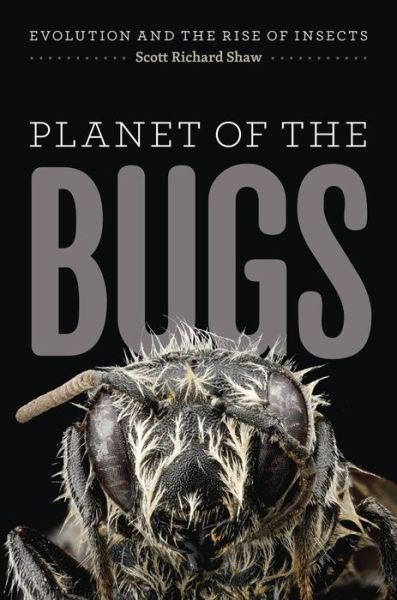
Teaser Tuesdays: Planet of the Bugs: Evolution and the Rise of Insects by Scott Richard Shaw; and Texas State Things

Teaser Tuesdays is a weekly bookish meme, hosted by MizB of Should Be Reading.

bugs

Yes, we just teasered this one last week. I’m sorry, I couldn’t help it. (This is just a segue to talk about the great state of Texas, anyway.)

Several times I have run across the concept, in this book, of a state fossil. For example,

The state fossil of Maine, Pertica quadrifaria (an Early Devonian land plant), provides a nice place to start. This is a rare and distinctive state fossil, compared to others that we’ve discussed so far.

Others discussed so far include the state fossils of Wisconsin and Pennsylvania (two different trilobites).

I had never encountered the idea of a state fossil before; how interesting! Of course the first thing I did was go looking for Texas’s state fossil. According to The Paleontology Portal:

Texas does not have a state fossil, but it does have a state dinosaur, as well as a fossil for its state stone (petrified palm wood). Pleurocoelus was a large herbivorous sauropod dinosaur that lived during the Early Cretaceous (~ 140-110 million years ago).

Which just sent me searching further. And what did I learn! We all know about the state flower (Texas bluebonnet), state tree (pecan), state mammal (small) (the armadillo), and state motto (“Friendship”). But who knew we had an official state cooking implement (the Dutch oven)?? or a state tartan (Texas Bluebonnet tartan)?? And a state molecule, no less! I wonder how many other states have a state native pepper as well as a state pepper (other). And on and on. Yes, I used Wikipedia. And I am fascinated.

Thank you, Planet of the Bugs, for this side-venture.

This quotation comes from an uncorrected advance proof and is subject to change.

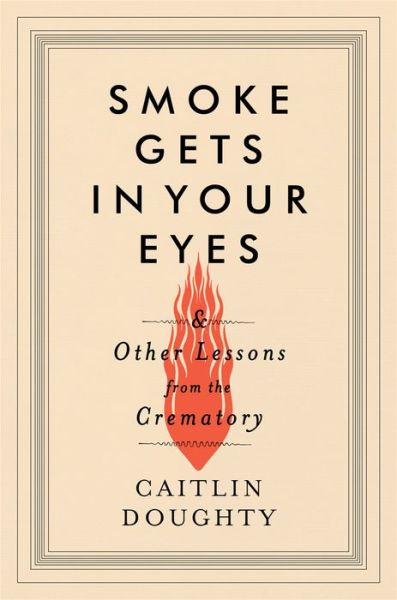
Smoke Gets In Your Eyes (& Other Lessons from the Crematory) by Caitlin Doughty

A young woman’s mortuary career and enthusiasm for death inform an entertaining and thought-provoking memoir.

smoke

At 23, Caitlin Doughty had an undergraduate degree in medieval history and a lifelong fascination with death. Interested in turning her preoccupation into a profession after a move to the Bay Area, she found it surprisingly difficult to get a job in the mortuary business without relevant experience, but eventually secured a position as crematory operator at Westwind Cremation & Burial in Oakland, Calif. In just a few months of working with her deadpan boss Mike, socially awkward body-transport driver Chris and jovial embalmer Bruce, Caitlin learned a great deal, as she relates in her debut, Smoke Gets in Your Eyes.

She learned how to cremate bodies (do the larger people early in the day, babies at the end), what exactly happens after the oven (bones have to be ground down in a special blender to create the uniform ashes the family expects) and how to pick up a recently deceased body from a family at home (mostly, keep your mouth shut). She learned that dead people aren’t really scary, once you get used to them, and came to believe that wired jaws and copious makeup are less attractive and less respectful than simply letting the dead look–and be–well, dead.

In her memoir of “lessons from the crematory,” Doughty shares tidbits of research into the death rituals and mythologies of other cultures throughout history: Tibetan sky burial, the dutiful cannibalism of the Wari’ people in the jungles of Brazil, ancient Egyptian embalming techniques. She points out a central difference between contemporary Western practices and theirs: the Wari’ and others conform to a system of beliefs, where our so-called modern death-disposal techniques arise from a fear of mortality and a need to hide dead things away. In her experience at Westwind, and later in mortuary school, Doughty developed her own value system, emphasizing an honest relationship with our mortality and a frank acceptance of and love for our dead.

Doughty’s research, musings and anecdotes about the crematory are charmingly conveyed in an earnest yet playful voice, brimming with surprising humor as well as insight. Her coming-of-age tale encompasses love and life (and death), and her appeal for a new cultural approach to the end of life is refreshingly frank and simple at the same time that it is profound. Despite addressing a subject that will strike some as morbid or unpleasant, Doughty is an engaging and likable narrator,and Smoke Gets in Your Eyes is thoughtful and approachable.


This review originally ran as a *starred review* in the August 21, 2014 issue of Shelf Awareness for the Book Trade. To subscribe, click here.


Rating: 8 dresses.

book beginnings on Friday: The Lodger by Louisa Treger

Thanks to Rose City Reader for hosting this meme. To participate, share the first line or two of the book you are currently reading and, if you feel so moved, let us know what your first impressions were based on that first line.

lodger

The Lodger is a novel about a woman – a true historical figure – who went again the conventions of her time, and about a famous author as well. Those are several elements likely to attract me; and then the cover features a woman in full gown and bonnet with a bicycle? Sold. And check out this opening paragraph:

Dorothy stepped off the train. She could feel the clammy sinking sensation beginning to creep round her, as though she was a ghost drifting through the world of the living. Taking a deep breath to anchor herself, she looked around. It was a small clean station, brightened by hanging baskets of ruffled mauve and white Sweet Peas, the sharp green of their leaves almost translucent in the May sunlight. She told herself there was nothing sinister; no one was going to find her guilty. It was just a visit to an old school friend, recently married.

I find this a fine beginning, designed to hook the reader in. The juxtaposition of clean, bright, ruffled, leafy, and sunny with sinister – and the idea that someone would find Dorothy guilty?? What on earth? Tell me more!

Stick around!

This quotation comes from an uncorrected advance proof and is subject to change.

It by Stephen King: finished

This review contains mild spoilers – like, about how characters feel about each other, and about who dies in the first 100 pages or so. No major plot-wrap-up spoilers. Medium spoilers.

Please recall my much earlier review of the first third or so of this book.


itMy It-reading friend got in touch to say that she’d been reading away while I hadn’t been. (I had been reading, just not this book.) Luckily I was just then headed off on vacation! so I sped through the last 800 or so pages, and upon my return, met her at the bar to discuss.

What happens in Stephen King’s It? I needed reminding as well; and I give Danielle credit for finding & recommending Constant Readers, a blog devoted to King’s work. Two friends discuss It in five parts, in banter-y dialog; it’s great fun, and they’re fairly expert about SK, unsurprisingly. Enjoyable and thought-provoking – check them out. (Part 1, Part 2, Part 3, Part 4, Part 5.)

I won’t spend too much more time on plot summary; It is fairly well established in our cultural consciousness and 1,000 people have written about this before so you can get the plot easily enough from Google if you need it. Kids become adults; good vs. evil; scary, exciting, outrageous.

A few notes from my impressions and/or my discussions with Danielle (and a little bit with my buddy Jack, who was unable to make the bar date)…

  • This book gripped me from the start, when briefly-likeable little Georgie gets it; I loved all the characters and rooted for them all the way through, in both their kid and adult form. Jack and Danielle both found them most relateable and real as kids, but I identified better with the adults versions (I don’t seem to remember my childhood as well as some people do) – although clearly, the kids were deeply likeable.
  • King’s worldbuilding skills are alive and well.
  • I adore how Stephen King always has a hero librarian in his books! (& Joe Hill too.)
  • His highly believable characters are one of his greatest feats: we agreed that this book is clearly character driven, although the plot was well done and powerful as well; and let’s be clear on King’s world-building prowess, yet again.
  • The ending was satisfying for me because it felt like the right, the realistic solution; but of course we’d always like to know more. In this case, I hunger for a little more epilogue for each of our survivors. I would love to see a follow-up book starring one of our grown-ups in his or her new life.
  • King continues to be outrageously self-referential; as I told Danielle (for whom It was her first King read! how exciting!), things will make more and more sense, the more you read him. The Dark Tower series ties in all over the place, and are you kidding me? Dick Hallorann from The Shining makes a not-insignificant appearance as well.
  • The dog dies! plus all the animal torture – gah!! Truly horrifying, King.
  • WHERE THE HECK DOES HE COME UP WITH THIS STUFF? Specifically, 27 years in between events? What is that about? The imagination astounds me.
  • I was rarely actually frightened. (There were a few nights when I read late into the dark hours in an unfamiliar bed…) I guess I didn’t buy into the supernatural threats quite enough to scare myself silly. But I marvel at the world created!

Rate ’em: how did we like the characters? Richie is annoying but also loveable; I think his role is to be annoying to his friends, less so to the reader. (To me at least.) Stan is hard to love. Maybe because he dies so early that we know not to invest in him? Eddie is also a little exasperating but I found him sympathetic as well. Despite these three being difficult to like, I ended up rooting for them all. When Eddie and Stan really stepped up to the plate and gave it their all, they came further, you know? For Bill and Ben, heroism seemed to come more naturally. (For all that Ben is meant to be the archetype of fat loser kid, he always had a courageous hero sitting very near the surface; he didn’t have to come as far to get there.) I loved Bev, Danielle didn’t; and while Mike was maybe a little boring, he was the rock, or the tie that bound them all together (not to mention being an uber-capable librarian, which is always worth points). And Bill? Interestingly, the Constant Readers did not appreciate Bill. And I can understand the ways in which they found him boring, but I loved him all the same. As far as his being a foil for Ben & Bev’s romance, I say, not his fault; there will always be that guy (or girl), and he (or she) doesn’t always have control over that role. Fair game. In the end, I loved all seven of our kids, more or less equally – with Stan a half-step below, for not sticking around long enough to earn more love.

Favorite quotations from Constant Readers:

  • “In the Gunslinger world, they’d be a ka-tet.” Yes.
  • “This book is full of childhood sweetnesses without every getting mawkish or saccharine, which is a fucking feat.”
  • “I know you hate the Turtle, but I really like the image/concept of this lumbering creature that created the universe by puking, this really reflexive, disgusting bodily function, and now it’s dead because it puked in its own shell. I like the idea of the creator of all things being sort of witless. Or at least clumsy. I really believe that, man, if Something Made Us All, it was definitely not on purpose. A puking Space Turtle fits my ideology very well.”

On that last point: I totally agree. The turtle-as-creation-myth resonates deeply with me, and crosses over not only from the Dark Tower series, but from various native cultures from around the world (see Turtle Island). I am carrying forward this idea of the turtle that vomited up our world, and didn’t much care about it thereafter, as my new philosophy of life and its origins. Thank you, Stephen King.

He’s done it again. It is the Constant Readers’ favorite SK, and I’m pretty sure it’s Jack’s as well. I’m not sure I’m prepared to say that, but it’s definitely a great example of what he does best.


Rating: 9 newspaper boats (shiver).

The Rathbones by Janice Clark (audio), first half

rathbonesI am not quite halfway through The Rathbones, and I am at no proper stopping point – nor am I stopping – but I do feel the need to pause and report back to you. I am intrigued and bemused by this book. I don’t love it, although I might in the end; but I don’t dislike it either. I’m just a little perplexed.

The Rathbones is told mostly from the perspective of 15-year-old Mercy Rathbone, the last of that clan. She lives in the large, old Rathbone mansion on the Connecticut coast with her rather crazy mother and her reclusive tutor & cousin Mordecai. She wonders about the fate of her father, gone to sea many years ago now, and her little brother, whose existence is denied by mother and cousin. An unpleasant visitor sends Mercy and Mordecai fleeing in a little boat… into strange seas. They light upon one island and then another, meeting strange people who reflect in different ways on the paired mysteries of Mercy’s missing father, and the Rathbone family legacy. As I pause to write this, we are mid-journey, and I don’t know appreciably more about these mysteries than I did at page 1; and in a way I am worse off, in terms of knowing where the heck we are going, because I still haven’t figured out which thread of this story is the lead.

The writing and language are lovely, and well read by four narrators in turn: Erin Spencer, Cassandra Campbell, Malcolm Campbell, and Gabrielle De Cuir (itself an unusual convention, though I approve). The imagery is impressive as well. Moment to moment, this book is engrossing – sentence to sentence, scene to scene. But as for the overall story, I’m still baffled. Are we concerned about finding Mercy’s father (who is not, by the way, a Rathbone)? Or about unraveling the sinister, and apparently supernatural, history of the Rathbone family? Are we going to deal with the worn-out wives again, or is their episode past? Where are we going??

I’ve chosen a somewhat random example of Clark’s descriptive stylings for you here. Perhaps you can hear the dreamy, fantastical, and outlandish tone that draws me in…

Though the man was not Oriental, he wore wide scarlet silken trousers beneath the jade robe and pointed slippers of embroidered silk whose long tips quivered at each step. Mordecai stood beside me as the man approached. They were of a similar size and bearing, and each boasted a pigtail, one pale, one dark. The man bowed first to Mordecai, pausing for a moment with a troubled look. They might have been two sides to a single coin. He then bowed to me, sweeping off his pointed hat. The pigtail came away with it. Beneath the hat curled a powdered wig. Beneath the wig, a face that made Mordecai seem the fairest of men. It was all sharp angles and harsh planes, the skin rough and pale and faintly gray, though he was a young man. I judged him to be near Mordecai’s true age. It was a face that might have been hewn from the granite on the islands that the Starks had worked so hard to smooth. I thought that if I touched his cheek I might slice my finger open.

Don’t get me wrong, I am not here to criticize. I think I am charmed by this work. But so far it is working on me more like a series of vaguely connected short stories than as a coherent novel. We’ll see; maybe she will pull it all together soon. Mystery and obscured connections seem to be a theme, so I am hopeful that this is the case.

I also want to note that there are clear influences here of the whale-obsessed culture of Moby-Dick, as well as the fantastic interconnected adventures-at-sea of the Odyssey. The latter is one of my all-time favorites (although Moby-Dick, not so much. maybe I just need another seminar course on it), so that’s a good thing.

I am having no doubts about sticking around for the second half of this odd novel, so stick around for the next review to come. I am (at least) as curious as you are.

Teaser Tuesdays: Planet of the Bugs by Scott Richard Shaw

Teaser Tuesdays is a weekly bookish meme, hosted by MizB of Should Be Reading.

bugs

I am choosing my teaser sentences today off the very first page of the charmingly titled Planet of the Bugs (although it is not quite a book beginning, since these are not the first lines). What wonderful examples of evocative, lovely writing, though; I couldn’t help but share.

As the songs of frogs, katydids, crickets, and cicadas emanated from the forest, my boots sloshed along the pathway. Typical of San Ramon, it had been raining all day, the trail oozed treacherously slick with slippery mud, and water was everywhere. On mushroom caps sprouting from a rotting log by the trail, silvery droplets rolled to the edge, clung briefly shimmering – then fell away. The sounds of water were all around, bubbling and gurgling over mossy rocks in the river, chattering in nameless streams and rivulets. A light mist was still falling, and the emerald vegetation, dappled in a hundred shades of green, was dripping and glistening with raindrops.

Doesn’t that just make you want to dive right in – bugs or no bugs?

This quotation comes from an uncorrected advance proof and is subject to change.