on picking up another book by Marilyn Johnson

overdueThree people simultaneously bought me Marilyn Johnson’s previous book, This Book Is Overdue!, as I graduated from library school. (Possibly they are reading this now – sorry! I don’t even remember who they were.) I didn’t make it even halfway through. Was it uninspiring, or was it I who was uninspired? worn out from study? It’s a fine question about the intersection of book, reader, time and place; a good reading experience requires a happy meeting of all four. Maybe I would love the book now.
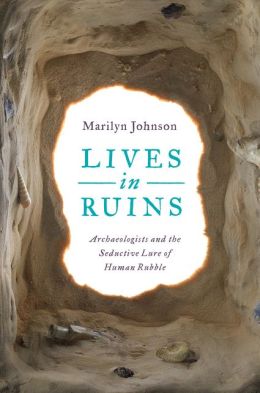
livesI’m rather encouraged to try again. The first pages of Johnson’s latest work, Lives in Ruins, reference librarians immediately – and beer too, twice in three pages; a funny story about the apocalypse is credited to a graduate student, and during an economic depression, “Dublin was running, as far as I could tell, on what spilled out of the pockets of Brits during their bachelor parties.” Johnson is self-deprecating and irreverent, and also serious and passionate about her subject (in this case, archaeologists). What’s not to love?

May have to try This Book Is Overdue! again. Perhaps three well-meaning graduation present givers were right after all.

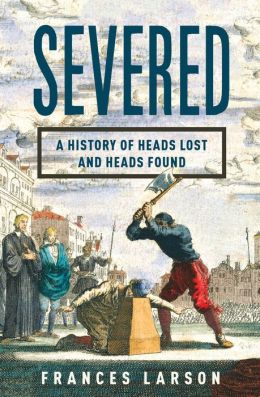
book beginnings on Friday: Severed: A History of Heads Lost and Heads Found by Frances Larson

Thanks to Rose City Reader for hosting this meme. To participate, share the first line or two of the book you are currently reading and, if you feel so moved, let us know what your first impressions were based on that first line.

severed

This one is eye-catching, no? The first few lines follow suit:

Josiah Wilkinson liked to take Oliver Cromwell’s head to breakfast parties. The broken metal spike which had been thrust through Cromwell’s skull at Tyburn, 160 years earlier, provided a convenient handle for guests to use while examining the leathery relic over their devilled kidneys.

It gets a little more gruesome from here, as you might expect, but gratuitous gore it isn’t. It looks (early on) to be a thoughtful examination of the heads in our history, from an anthropological standpoint. And assuming you’re up for, you know, severed heads – I think it will be quite good.

This quotation comes from an uncorrected advance proof and is subject to change.

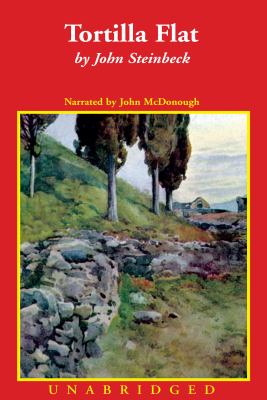
Tortilla Flat by John Steinbeck (audio)

tortillaTortilla Flat is set in the neighborhood by that name in post-WWI Monterey, California, and involves a group of paisano friends. Perhaps I am just being lazy, but I do think that Steinbeck himself can tell you best what the book undertakes. I give you the first paragraph of his Preface:

This is the story of Danny and of Danny’s friends and of Danny’s house. It is a story of how these three became one thing, so that in Tortilla Flat if you speak of Danny’s house you do not mean a structure of wood flaked with old whitewash, overgrown with an ancient untrimmed rose of Castile. No, when you speak of Danny’s house you are understood to mean a unit of which the parts are men, from which came sweetness and joy, philanthropy and, in the end, a mystic sorrow. For Danny’s house was not unlike the Round Table, and Danny’s friends were not unlike the knights of it. And this is the story of how that group came into being, of how it flourished and grew to be an organization beautiful and wise. This story deals with the adventuring of Danny’s friends, with the good they did, with their thoughts and endeavors. In the end, this story tells how the talisman was lost and how the group disintegrated.

And that is, very much, what the book is about.

Danny inherits two houses from his grumpy grandfather upon returning from the war. He is astonished by his good fortune and newfound riches, but also dismayed at the great responsibility of owning property. He takes in friends, one by one by one, and they become a strange, disordered household. It is true that critical readings of this book treat it as an interpretation of the knights of King Arthur’s Round Table; but I think it’s worth pointing out that these men are a rather dirty, devious, and intermittently disloyal version thereof. They steal from each other on occasion; and their main purpose in life is to obtain wine, and drink it. Not necessarily a bad thing. Steinbeck writes as impressively as ever about the wine:

Two gallons is a great deal of wine, even for two paisanos. Spiritually the jugs maybe graduated thus: Just below the shoulder of the first bottle, serious and concentrated conversation. Two inches farther down, sweetly sad memory. Three inches more, thoughts of old and satisfactory loves. An inch, thoughts of bitter loves. Bottom of the first jug, general and undirected sadness. Shoulder of the second jug, black, unholy despondency. Two fingers down, a song of death or longing. A thumb, every other song each one knows. The graduations stop here, for the trail splits and there is no certainty. From this point anything can happen.

You might also call it a picaresque, being full of minor adventures that often run to humor and pathos by turns.

My audio version is narrated by John McDonough, and I like his interpretation very much. The Spanish-in-translation word order and sentence structure gives an accurate paisano feel, and McDonough reflects that in the lilt and rhythm of his speech. (Note that I did not say he puts on an accent.) I enjoyed hearing this story told. I did not always like the players, but that’s not a requirement for liking a book.

I won’t rate this one above the best of the Steinbeck I have read, Cannery Row and Of Mice and Men. But it is recognizably Steinbeck, and worth the time.


Rating: 7 jugs of wine, naturally.

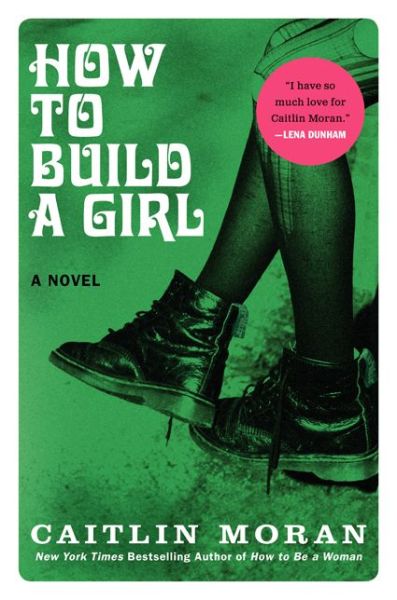
How to Build a Girl by Caitlin Moran

The self-made girl of Caitlin Moran’s debut novel is irreverent, painfully self-conscious, triumphant and very funny.

moran
The wise and hilarious Caitlin Moran (How to Be a Woman; Moranthology) makes her first foray into fiction with How to Build a Girl, and this novel is everything her fans will expect it to be.

It is the early 1990s. Johanna Morrigan is 14 years old and lives in Wolverhampton, England, with her parents and four siblings: an older brother, a younger brother and two babies without names (known long-term as the Unexpected Twins). They are all on government assistance, or benefits. Her mother is depressed and her father is still distributing the demo tapes of his youth, sure that one day he’ll be a rock star. Johanna is desperate to leave behind Wolverhampton, benefits and her virginity.

Her big chance comes when she scores a television appearance during which she will read aloud her prize-winning poem on the theme of “Friendship.” However, she fails to make her family proud, instead surprising even herself with a shameful impromptu Scooby-Doo impression. Deciding that being Johanna Morrigan is a losing proposition, she sets about methodically building the girl she wants to be: she christens herself Dolly Wilde (after Oscar’s niece), and decides to become a music critic. With no money to acquire the latest albums, however, she is resigned to ordering them through the local library.

Dolly Wilde is constructed on the music of Hole, Bikini Kill, David Bowie and Kate Bush; the writing of Dorothy Parker, Orwell and Kerouac; and a blind ambition to reach London. She sends in one album review per day for 27 days until, amazingly, she is hired to review albums and performances for Disc and Music Echo. From Dolly’s very first encounter with live music, this gig ushers in an era of drink, sex and eventually drugs; she happily pursues the lifestyle of the rock stars she admires, but is challenged to reconcile this new life with her household of seven back at home in Wolverhampton.

In order to fall in love with the clumsily charming and often heartbreaking Johanna, readers will want to check their inhibitions regarding four-letter words and copious masturbation. Puzzles as stale as the difference between love and a casual hookup become fresh in this young woman’s vigorous, enthusiastic and ever-misguided perspective. Moran is cheeky, intelligent, thought-provoking and laugh-out-loud funny, and reminds us that we are always learning and rebuilding, no matter our origins.


This review originally ran in the September 9, 2014 issue of Shelf Awareness for the Book Trade. To subscribe, click here.


Rating: 9 cigarettes.

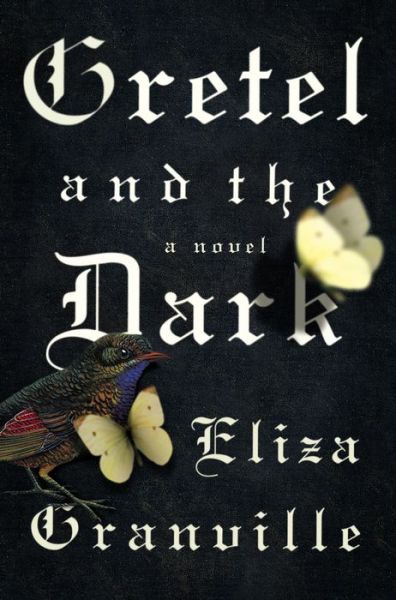
Teaser Tuesdays: Gretel and the Dark by Eliza Granville

Teaser Tuesdays is a weekly bookish meme, hosted by MizB of Should Be Reading.

gretel

This is a delightful blend of dark, gloomy fairy tale, historical fiction, and horror. I don’t want to say anything more about it at this point, but I think I’ve found a real winner.

For now, enjoy these lines, which are a fine example of the emphasis placed on the importance of storytelling.

“When I make up stories I’ll write them down so they won’t disappear or be changed.”

Greet shrugs. “Then they won’t be proper stories, will they?”

Also, who doesn’t love a little girl who thinks this:

When I grow up I shall be a famous author like Carol Lewis or Elle Franken Baum, but the girls in my books will be explorers, they’ll fly planes and fight battles, not play down holes with white rabbits or dance along brick roads with a silly scarecrow and a man made out of metal.

Stay tuned. Gretel and the Dark looks like a star.

This quotation comes from an uncorrected advance proof and is subject to change.

getting rich writing book reviews


Warning! Long post follows. Sorry.

I have found myself commenting several times lately on the richness of my hobby-and-part-time-job, of reading books and then writing about them. I thought it was time I put this into a coherent statement for you here.

I was always a steady reader, as a child, and through school. I always loved to read. (In one of those blogging memes that went around some time ago, a self-interview sort of thing, I was supposed to give my favorite book as a child. I couldn’t remember, so I asked my mom. Her response was something like, “are you kidding! There was a new one daily!”) As a new librarian, I took a readers advisory class that recommended keeping a book blog as one way of recording one’s reading for reference later on. And that’s how we got to pagesofjulia; and that in turn is how I was able to apply to write for Shelf Awareness, a year or two down the road.

So I’ve always been a reader. And I had some fine English classes (and other social sciences) that trained me to take notes while reading, and to look for themes, leitmotif, stylistic quirks, and the like. But only since becoming a book blogger and paid book reviewer have I really begun to hone the skills of close reading – not for a class assignment (I knew how to do that), but to record my personal reactions, or the qualities that a prospective reader would want to know about. (I also began reading with an eye as to how a book might be improved. But that’s a different topic. Perhaps.)

Another result of reading for the sake of writing about what I’ve read, has been the growing diversity of the books I pick up. My reading volume has increased, is ever increasing, and I need the variety to keep from getting bored. If I read nothing but thrillers, at the present rate, it would be difficult to say something new about each one. And I want to better serve my editor by contributing diverse material. But also, as my reading has expanded, so have my interests, which then expand my reading, and there we have the most delightful self-perpetuating cycle you could imagine.

In the past several years, I have read widely in fiction (lots of mysteries and thrillers, as ever, but a little romance, fantasy, sci fi, historical and literary fiction, classics, and some odd formats, outliers and oddities) and nonfiction (sports and nature, as ever, but also science, history, biography, essays, politics, journalism, and literary criticism). I have tended to read for what I can learn from the book, myself, but also with a wider readership in mind, so that I can write a sale-able review. And a magical thing has come of this wide reading diversity.

I have never learned so much, so richly, as in reading this way. I attended a very fine public high school with a highly regarded International Baccalaureate program, and then a college Honors program, from which I graduated summa cum laude. I have a master’s degree. But I’ve never experienced such an interdisciplinary curriculum as this: read eclectically. Take notes.

The area of my reading that has most surprised me is in science. I never considered myself as having a scientific mind, and I was generally lukewarm on science classes (with a notable exception for chemistry); but with such magnetic titles as The Drunken Botanist and A Garden of Marvels, and biographies of Rachel Carson and Hali Felt, not to mention Annie Dillard‘s breathtaking Pilgrim at Tinker Creek… well, I found it easy and even natural to grow in that direction. (As a flower toward the sun, if you’ll excuse the simile.)

And when I began reading more widely, and repeatedly reading in areas new to me – like science – I noticed another magical thing: I started recognizing concepts. I have written before on what I’m calling synchronicity, the seeming coincidence of discovering a newly learned fact or area of study again and again in a short time. The more I think about it, the more I think my friend Liz is right: it’s not that things actually come to me in threes, but rather that when I’ve recently learned something, I am more able to see it the next few times it crosses my desk (book, mind). These are opportunities to relearn a new concept or fact; and they are opportunities to cross-reference within other disciplines, to reinforce knowledge, to gain a fuller understanding of what a concept or a fact means in historical, cultural, political context.

One area in which I am not an expert is education (or educational theory or design), so I’ll try not to get too far off-track here. But I think we’re probably doing something wrong in our formal education system regarding interdisciplinary learning. I’ve never felt so richly instructed as I do by simply spending all the time I can find in reading, widely and with both eyes wide open. And while a steady diet of bodice-ripping romance novels or pulp might not do it, notice that I’m not recommending reading a bunch of scholarly works, or even all nonfiction. (And some pulp is always welcome, just as you can probably eat a few M&Ms alongside your healthy diet.)

Fiction has a great deal to offer: entertainment, yes, but also the opportunity to get inside someone else’s head, to understand their processes and motivations; or to travel to another time or experience another culture, and likewise to better understand the workings of that time or place or culture. And these are valuable lessons to learn for the important everyday work of being human: the ability to empathize, or to understand or even imagine the motivations of others, makes us better people. (There have been some studies on this. See for example the Guardian here and here.) Fiction is good: I’ve said this before.

To say that reading nonfiction is education is a much more familiar concept; you learn new facts from nonfiction, right? (We could actually argue over this point, but let’s not do it here and now.) But again, I think that reading lots – fiction or non – is far more than the sum of the parts, of having read all those individual books. The more you read, the more you learn, not only from what you’ve read, but from the combined and compounded effects of varied reading. I feel more intellectually stimulated now than I did in high school, college or graduate school. It’s not just that I read a lot of books; I read lots of different kinds of books. Some are silly or pulpy, but as I scan this list, I can’t pick out even one that didn’t teach me something. Some are weird (for example). But put them all together, and they make for a fine education.

Read eclectically. Take notes.

So We Read On: How The Great Gatsby Came to Be and Why It Endures by Maureen Corrigan

An impassioned guide to The Great Gatsby by a highly qualified and devoted fan.

so we read on

NPR’s Fresh Air book critic Maureen Corrigan (Leave Me Alone, I’m Reading) didn’t like The Great Gatsby the first time she read it for school when she was a teenager. But after teaching and lecturing about it for decades, her enthusiasm and ardent passion for F. Scott Fitzgerald’s classic novel infuse So We Read On (a title that spins off the novel’s famous closing line).

Corrigan argues that “if there is such an animal [as the Great American Novel], then The Great Gatsby is it.” She feels that many readers who encounter Gatsby for the first time in high school or even middle school are too young and inexperienced to appreciate it fully; many will unfortunately and unnecessarily form a dislike for a book that they might learn to love later in life. She also debunks a widespread interpretation of the novel as a grand, decadent celebration of materialistic American culture; it is, rather, an enormously subtle criticism of a class system that Fitzgerald felt had snubbed him.

In exploring these and other ideas, Corrigan undertakes a close reading of the text, examining language and punctuation and considering the context of the Roaring ’20s, the Lost Generation, Fitzgerald’s literary colleagues (including his “frenemy” Ernest Hemingway) and family (the famous or infamous Zelda). Despite her scholarly method, Corrigan’s work remains resolutely accessible to the everyday reader. Indeed, those who haven’t encountered Gatsby since high school are her intended audience. With humor and even the occasional pun, Corrigan offers the love of a classic novel to any and all.


This review originally ran in the September 9, 2014 issue of Shelf Awareness for Readers. To subscribe, click here, and you’ll receive two issues per week of book reviews and other bookish fun!


Rating: 9 dives.

to date: best books of 2014

I was trying to hold off til the end of this calendar year, but I’ve been asked several times recently for book recommendations, and have sent this list privately to a few friends. So why not share? Below you will find the best books I’ve read this year, so far. Hopefully there will be more in these last few months!

Some reviews haven’t even posted yet, but here you are, getting a sneak peek at my ratings.

Those that received a rating of 10:

Those that received a rating of 9:

* = audiobooks.

There have been lots of 8s, too, including for example the latest from Stephen King and James Lee Burke; this lovely novel; a little literary history (oh and here’s another); some plants*; and two that are still to come: We Make Beer, and Older, Faster, Stronger.

What have you read so far this year that’s blown you away?

De Potter’s Grand Tour by Joanna Scott

A fantastical mystery of historical fiction, peopled by amiable eccentrics.

de potter

Joanna Scott (The Manikin) spins a mysterious, slightly fanciful historical yarn in De Potter’s Grand Tour. The titular character is variously called Armand de Potter, Pierre Louis Armand de Potter d’Elseghem or (to the immigration authorities) Pierce L.A. Depotter Elsegern; his personal history is as amorphous and changeable as his name. De Potter lives a legend of his own design, beginning with his immigration to New York from Belgium in the early 1870s, determined to become a person of note. He joins a local society in dredging up oddities from the harbor, which sparks his interest in antiquities. With a few astute investments, he soon becomes an accomplished collector specializing in Egyptian artifacts. He simultaneously works as a teacher (educating aristocratic young ladies in multiple languages), and eventually channels all his skills and interests into a travel and touring company, which has great success. Years later, his wife, Aimée (a former student, born Amy), is devastated when he is lost at sea.

The grieving Aimée finds herself unexpectedly debt-ridden and receives a disturbing final letter from her late husband, which prompts her to examine his past more closely. It now appears that Armand looked to The Count of Monte Cristo as a model for the building of his myth. As Aimée ages, she yearns for her husband, and wonders what really happened on that ship that sailed from Constantinople.

Scott’s tone is whimsical, and her characters are idiosyncratic and appealing. De Potter’s charming tale, told in split chronology both before and after Armand’s disappearance, will please readers seeking a playful trip back in time.


This review originally ran in the September 2, 2014 issue of Shelf Awareness for Readers. To subscribe, click here, and you’ll receive two issues per week of book reviews and other bookish fun!


Rating: 7 gold watch charms.

Teaser Tuesdays: Tortilla Flat by John Steinbeck

Teaser Tuesdays is a weekly bookish meme, hosted by MizB of Should Be Reading.

tortilla

I am pleased to return to old standbys from time to time. It has been too long since I’ve read any Hemingway. And Steinbeck is another love, one I’ve not explored enough. This audio production of Tortilla Flat, an early novel of his, is going well for me so far. I wanted to share a few lines that I think show what he can do with simple language. Tell me this doesn’t paint a scene – one you’d be happy to inhabit, in fact.

The grace was not quite so sharp to Pilon when he could not tell Big Joe about it, but he sat and watched the treasure place while the sky grayed and the dawn came behind the fog. He saw the pine trees take shape and emerge out of obscurity. The wind died down and the little blue rabbits came out of the brush and hopped about on the pine needles. Pilon was heavy-eyed but happy.

This makes me feel peaceful.