God Loves Haiti by Dimitry Elias Léger

An inspired and nuanced portrayal of politics and love, with a backdrop of natural disaster.

haiti
Dimitry Elias Léger’s debut novel, God Loves Haiti, takes place in the days just before, during and after the devastating earthquake that struck Port-au-Prince in 2010. Those 35 seconds, coupled with the mayhem and aftershocks that followed, killed hundreds of thousands, but among the survivors are a politically important old man, a vibrant younger one and the woman who has recently chosen between them but still struggles with her choice. Natasha is an artist, deeply passionate about her painting, though she’s also passionate about the poet Dante, her religion and the politics and business that engross her husband and her boyfriend. All three have different relationships to the colorful Haitian community, which is epically short on resources for everyday life, let alone a disaster of these proportions. All three choose and experience different paths after the quake hits.

Asking big questions is part of Léger’s charm, but although subjects like love, religion, sin, redemption and national identity and value seem particularly weighty against this backdrop of human suffering, the novel has thoroughly winning comic moments, too. The narrative jumps around in time to visit each member of the love triangle before and after the earthquake, and to track each character’s development. The atmosphere Léger evokes manages simultaneously to be heartrendingly realistic and dreamlike: the survivors of tragedy and disturbing pain naturally operate with heightened and distorted perceptions. The irregular chronology, quick pacing and lyrical prose combine for an artistic success that is both surprising and satisfying.


This review originally ran in the January 6, 2015 issue of Shelf Awareness for Readers. To subscribe, click here, and you’ll receive two issues per week of book reviews and other bookish fun!


Rating: 7 aerial views.

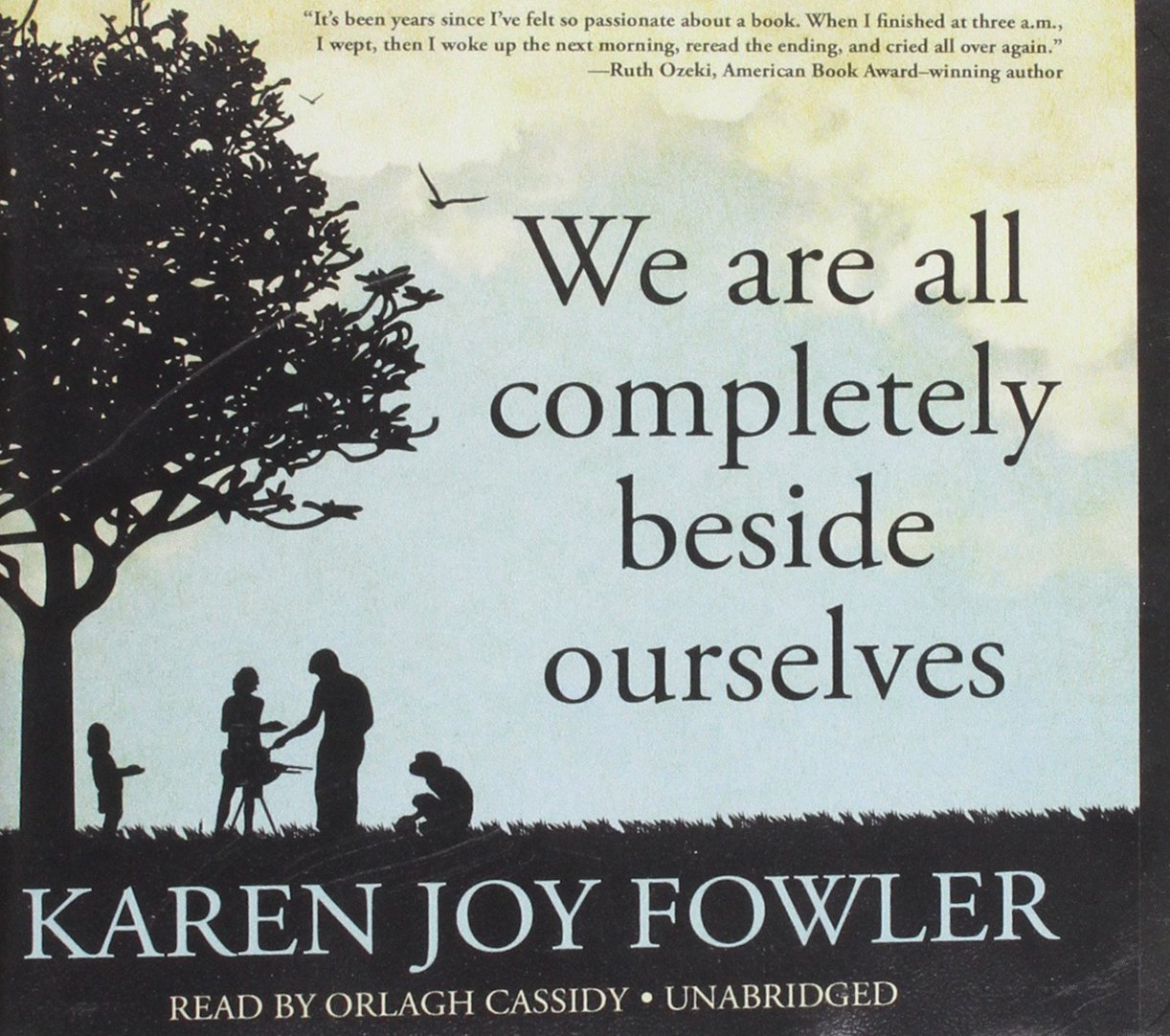
book beginnings on Friday: We Are All Completely Beside Ourselves by Karen Joy Fowler (audio)

Thanks to Rose City Reader for hosting this meme. To participate, share the first line or two of the book you are currently reading and, if you feel so moved, let us know what your first impressions were based on that first line.

we are all

I have been hanging onto this audiobook for a while now, til a friend’s recommendation pushed it to the top of the list. I came in hopeful, based on that recommendation, and so far I am not disappointed. Check out these opening lines.

Those who know me now will be surprised to learn that I was a great talker as a child. We have a home movie taken when I was two years old, the old-fashioned kind with no sound track, and by now the colors have bled out – a white sky, my red sneakers a ghostly pink – but you can still see how much I used to talk.

I think this is an awfully effective way to get me curious. A quiet person, or a talkative person, would be one thing; but someone who has undergone such a change, and describes the juxtaposition portrayed on an old video called “ghostly,” well, there’s something there to pique the attention. Well done, Karen Joy. I continue hopeful.

This quotation comes from an uncorrected advance proof and is subject to change.

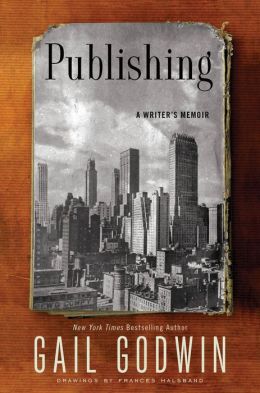
Publishing by Gail Godwin

In a winning voice, novelist Gail Godwin shares her experiences in publishing, which are alternately humorous and moving.

publishing

Gail Godwin is the author of 14 novels, as well as story collections, nonfiction and memoir, now including Publishing: A Writer’s Memoir, which she calls a “meditation on publishing.” In vaguely chronological fashion, she recounts her experiences with the industry; toward the end, she reflects upon earlier times.

Godwin begins with her years as an aspiring writer. Knowing well her mother’s progress from collegiate playwright to journalist to author of magazine romance stories, she is plagued by a hunger for publication and success (which presumably come together). She writes about failed marriages, fiction workshops and teachers who were encouraging and helpful (as well as those who weren’t), rejection and, finally, the book that sold: The Perfectionists, published in 1970. Several poignant chapters cover the “dance” between an author and an editor, with vignettes of each of Godwin’s dance partners over the years, several of whom she lost to unexpected deaths.

At points, her tone becomes elegiac, but Publishing is often funny and joyful as well. In a series of anecdotes, Godwin muses on book tours (the question of funding, author escorts, how long a reading modern audiences will tolerate, the new practice of hiring facilitators to help authors along in public appearances) and the value of bad book reviews. She profiles wonderful, helpful, joy-bringing people, and though she humorously describes the less-pleasant people she has encountered, she graciously avoids naming names. These entertaining, elegant, knowing recollections are accompanied by beautifully simple and appropriate black-and-white line drawings by Godwin’s friend Frances Halsband, which subtly add to the reader’s experience.

While her accounts of writing and publishing are fascinating and amusing, Godwin’s central strength is in her utterly charming personality: wise, occasionally self-deprecating and quietly playful. As promised, Publishing is not a history of the industry nor an instructive manual for the next generation of aspiring writers. It’s simply one woman’s well-told memories, peopled by appealing characters, sketched with wit. Stories about family, travel, love and life make this a book not only for fans of memoir, or dedicated readers, writers, editors and publishers, but for anyone who has pursued a dream or appreciates those who do.


This review originally ran in the January 8, 2015 issue of Shelf Awareness for the Book Trade. To subscribe, click here, and you’ll receive two issues per week of book reviews and other bookish fun!


Rating: 7 funerals.

Miss Zukas and the Library Murders by Jo Dereske

zukasI caught a few minutes of a radio interview with a local author, but I never caught her name. She apparently writes library-themed mysteries set in a fictional version of my new hometown; I heard one of her titles, and a tiny bit of research later, had the first book in her series from the local library: she is Jo Dereske, and this is Miss Zukas and the Library Murders.

Miss Zukas is an extreme, ridiculous stereotype of a librarian. She favors color-coordinated cardigans and sensible shoes, still wears her hair in the style her mother gifted her on her sixteenth birthday, and keeps her apartment obnoxiously, antiseptically clean. “She blanched at the idea of stray thoughts popping about.” I thought of a librarian girlfriend of mine, who was offended by the opposing, counterculture librarian-stereotype in NOS4A2 (purple hair, funny hats, obscenities and Henry Rollins) – she felt it was too trendy, too over-the-top. Well, I was tickled by the purple-haired librarian, and for a moment thought I was offended by Miss Zukas. But it’s pretty clear that this is meant in good fun, that Dereske is laughing with us, so on we go. (It helped when she ironically quoted Socrates at her boss; I could almost believe that Miss Zukas herself was in on the joke.)

The mystery itself – the “library murders” – qualifies as a cozy; the blood is off-stage. Even the references to sex (Miss Zukas has a friend who might be termed, by our prim heroine, as promiscuous) are oblique. And yes, you guessed it, Miss Zukas is the amateur sleuth who helps save the day. Her girlfriend Ruth, a free-spirited and often drunk artist, makes a fine sidekick; there is even a little romance along the way. I think the least believable element (in a book not trying too hard for realism, I should point out) was the friendship between these two women: it didn’t quite ring true for me that a woman as OCD and repressed as our Miss Zukas could really maintain a relationship with the outrageous Ruth. But so be it.

I was a little doubtful once or twice early on, but quickly found myself involved in and amused by the story as well as silly Miss Zukas. The book itself is a little silly; certainly light-hearted; but in the end, entertaining. I zipped right through it. And you know I don’t usually find much to occupy me in a cozy, but I may just have to go find book two in this series. A diverting, easy-reading cozy mystery set in a totally wonderful little town (of course), starring a surprisingly endearing librarian of the shushing sort.


Rating: 6 cards in the card catalog.

Teaser Tuesdays: Dead Wake by Erik Larson

Teaser Tuesdays is a weekly bookish meme, hosted by MizB of Should Be Reading.

dead wake

Unsurprisingly, Erik Larson’s newest release is outstanding, a masterpiece of gripping narrative writing with its own momentum. No one would ever think to compare this to a standard, old-fashioned book of history.

One of the things I think he does well is juxtaposition. For example, read these few lines, and imagine them side-by-side with a description of life aboard a German military submarine.

Aboard the Lusitania, there was quiet. There were books, and cigars, and fine foods, afternoon tea, and the easy cadence of shipboard life: strolling the deck, chatting at the rails, doing crochet, and just sitting still in a deck chair in the sea breeze. Now and then a ship appeared in the distance; closer at hand, whales.

It’s the whales that do it for me.

This quotation comes from an uncorrected advance proof and is subject to change.

writing about the visual arts, in Travels in Vermeer by Michael White

travelsWhen I read about the visual arts in My Grandfather’s Gallery or Lisette’s List or Hell and Good Company, I can always tell that the writer is well-intentioned, but I can rarely recognize the painting being described after having read the description. And these words leave me with the impression that I can’t even begin to appreciate the art without knowing a great deal beforehand. When I encounter really good writing-about-art, as here in Travels in Vermeer, I do find my enjoyment is increased by what I know, it’s true. But I chafe at the idea that these High Arts (as Spiegelman called them) are inaccessible to me without my having a background in art history, art criticism, what have you. It seems so snotty, exclusionary, elitist. Surely not what Picasso et al intended? (Do I care what they intended?) This is the first writing-about-art I’ve encountered that both amplifies the art, and leaves me free to love it from my beginning point of plebeian ignorance. Maybe White – a poet – is the right one to introduce me to poetry, too, another form I often find intimidating and opaque.

Look out for this book. It’s a special one – for reasons beyond those I’ve just named.

Treasure Island by Robert Louis Stevenson (audio)

treasureAfter reading Under the Wide and Starry Sky, I was driven to reread Treasure Island. I suspect that I only ever read the Great Illustrated Classics version, in fact: and I loved that series for several years, but I worry now about what I missed. (I reread certain of those classics in full later on, but not all. What misconceptions am I still harboring?) Husband and I first attempted this audio version, read by David Buck, on our U-haul drive cross-country this fall. But the Scottish accent, and the story-within-a-story format, proved too difficult for the big loud truck and our navigation of unfamiliar roads. Fair warning: this is not a criticism of the book (or the audiobook), but it is not the most distraction-friendly listen I’ve encountered.

The story itself is, of course, riveting, once you get into it. It is narrated from a distance of some years by the voice of Jim, who is a young boy (perhaps 12 or so?) in the time of his tale. At his father’s seaside inn, Jim assists in hosting a mysterious sailor we call Billy Bones; Billy is apparently frightened of certain other seafaring men, particularly a one-legged man who wishes him ill. When Billy dies – of fright, after a visit from a band of related ruffians – Jim finds a map within the possessions of the deceased. Local community members Dr. Livesey and Squire Trelawney conspire with young Jim to buy and staff a ship to go looking for buried treasure they believe is indicated on the pirate map.

Here Stevenson securely establishes several tropes of pirate fiction. The cook they install on board their ship is peg-legged Long John Silver, who sings “yo ho ho and a bottle of rum,” talks in the pirate-talk (“aye, matey”), and carries a parrot on one shoulder. The treasure map, marked with an X, takes them to a deserted island, where the shipmates plan a mutiny: Squire Trelawney has haplessly engaged a bunch of pirates for his crew, and they will be captained not by the captain he’s hired, but by Silver himself. By luck, Jim finds out about their scheme in time to warn Trelawney and the doctor, and the three of them take cover – with their honest captain and a few other loyals – on the island, but Silver and his men are bent on treasure and murder. Also by luck, Jim meets a man who identifies himself as Ben Gunn: he was marooned on the same island years ago, by the very same pirates. And he knows where the treasure is.

Originally published as a story for young boys, Treasure Island keeps the pace up and the action quick, after the first few chapters of set-up at Jim’s father’s inn. (Those early chapters do run the risk of wearying the short attention span of young boys and my Husband, though.) The ship’s journey is fraught with danger, but once on Treasure Island the action really ramps up: there are battles, injuries and fatalities, double- and triple- and quadruple-crossings, treasure! and intrigue. I’ll stop with the plotline there. Jim is the unlikely but triumphant hero of this story (again betraying its original audience); by virtue but mostly by luck, he contributes every major piece of action or intelligence throughout. What fun!

Pacing and action are the clear strengths of this adventure tale, which is as it should be. David Buck’s narration is fine – he does voices and accents where appropriate – but I think this version probably missed some opportunity for theatrics that this wildly theatrical story offered. It’s still a great yarn, and sets up a number of recognizable pirate jokes we know and love today. It would still suit young boys well (although look out for a slightly slow start).


Rating: 7 pieces of 8.

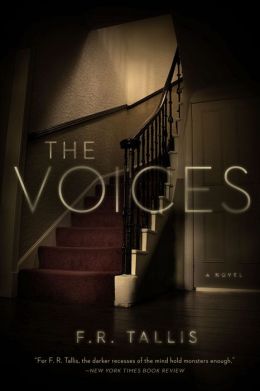
The Voices by F. R. Tallis

A haunted house inhabited by an increasingly troubled family.

voices
The Voices, a chilling tale of supernatural snooping by F.R. Tallis (The Sleep Room), is set in a well-off London neighborhood during the 1960s. When Christopher and Laura Norton move into their newly purchased and renovated old home with their four-month-old daughter, almost immediately they begin hearing strange things. Christopher, an avant-garde composer, is frustrated that his career has come to be defined by sci-fi music soundtracks; the ghostly voices–communications from the dead?–might be just what he needs to restart his more “serious” calling. Laura is simply terrified; she has always had accurate intuitions and now she is sure the voices are speaking her daughter’s name. Christopher begins sampling the voices for what he hopes will be his career-saving masterpiece; but with what consequences?

On its surface, The Voices is a ghost story set in a haunted house. But its historical setting adds complexity: Laura, a former model, reads The Feminine Mystique and makes new female friends at bookstore readings, as Christopher studies the economic challenges facing his country and his household. Their marriage is threatened not only by the voices and the stress they bring but also the changing times and the family dynamics to which Tallis (a clinical psychologist) applies extra scrutiny. The Nortons’ closest friends, also multifaceted, offer another layer of potential support, betrayal or suspense. With the added dimension of interpersonal relationships, this horror story is undeniably hair-raising.


This review originally ran in the January 2, 2015 issue of Shelf Awareness for Readers. To subscribe, click here, and you’ll receive two issues per week of book reviews and other bookish fun!


Rating: 6 knocks.

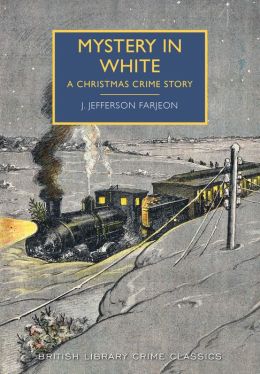
Mystery in White: A Christmas Crime Story by J. Jefferson Farjeon

A captivating puzzle mystery involving strangers thrown together by chance in a nearly snowbound British country house.

mystery
British crime novelist J. Jefferson Farjeon’s Mystery in White was first published in 1937 and receives a brief introduction to accompany this new release. It’s a classic puzzle, timeless even in its charming historic setting. A group of strangers gather in a third-class train compartment a few days before Christmas: an “elderly bore”; a young chorus girl; a clerk who “did not have spots, but looked as though he ought to have had”; a brother and sister; and an elderly scion of the Royal Psychical Society. When relentless snow shuts down the tracks, they flee an apparent murder on the train into the “strange fairyland” of whiteness outside. They happen upon a fine country estate, but the danger only mounts.

The door is unlocked, fires lit and tea set out; though no one appears to be home, the kettle is boiling over. This setting is not the closed environment it seems: in their investigations, members of the party tramp about in the snow only to find their footprints fade quickly and paths are obscured. The danger of losing oneself in the blizzard is added to the danger of knife-wielding lurkers.

Farjeon increases the pace and plays out suspense with an expert hand. His characters are appealing, their plight both picturesque and distressing; there is just a hint of the ghost story to this whodunit. Mystery in White is, in short, an elegantly, enchantingly entertaining tale to be enjoyed on a chilly evening while safely indoors.


This review originally ran as a *starred review* in the January 2, 2015 issue of Shelf Awareness for Readers. To subscribe, click here, and you’ll receive two issues per week of book reviews and other bookish fun!


Rating: 7 windows.

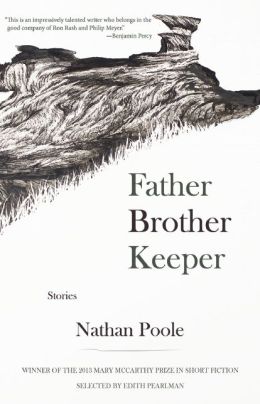
Teaser Tuesdays: Father Brother Keeper by Nathan Poole

Teaser Tuesdays is a weekly bookish meme, hosted by MizB of Should Be Reading.

father brother keeper

Usually I pick out these teaser bits for you especially, but with this lyrically wonderful little book, I opened at random and found these striking lines.

All night long the dealership lights gleam in the madness of the razor wire. Large violent curls, beautiful and intricate, hang in bobs up the tall inverted parabola, and it makes you wonder, seeing all that razor wire, seeing it shine all night long, just who is living in there, and why all that fuss, and what would they do to you if they met you on the street. Would they say warm, strange things to you? Would they tuck you in, hand you the gift of a story, an old knife, kiss your forehead softly like a mother?

I think it’s a fine test of poetry, to open a book and fine something like this. The content is excellent, too.

This quotation comes from an uncorrected advance proof and is subject to change.