The Liars’ Club by Mary Karr

Following on The Kiss, I came to The Liars’ Club intrigued to see how the masters do this work. I have a special interest in memoirs about one’s parents, because I want to write one. And Mary Karr is credited with being one of those, during the “memoir craze” of the 1990’s, who got it right (rather than “just” being sensational). (Yes, Angela’s Ashes is coming up, too.)

Mary Karr grew up in a small Texas oil town she calls Leechfield, on the Louisiana border. Her mother was driving through town between husbands when she got a flat tire, and met the tall, bar-brawling oil man who would become Karr’s father. As a child, the author is devoted to her father and enjoys hanging out at the Legion with the beer drinkers; she is dismayed by her maternal grandmother’s coming to stay with the family as she dies of cancer. Her mother has a nervous breakdown and is institutionalized briefly before moving her two daughters to Colorado and divorcing their father, but the family will reunite in Leechfield once more.

“The Liars’ Club” refers to the beer drinking veterans who hang out at the American Legion bar, playing dominoes and pool, drinking and telling stories. It is only one of the worlds perfectly painted by Karr’s descriptive prose, as well as crab boils, neighborhood gossips, binge-drinking horrors, death threats, jellyfish attacks, bonfires and sexual abuse. I like that she uses sensory details in a way that doesn’t feel forced (a laundry list of inputs) but does give the setting immediacy: the sights and smells of an oil refinery, for instance, are unforgettable.

I love the way in which Karr is a character in her own story. She occasionally refers to what others’ memories assert (in contrast to her own) or adds a detail learned later through her research, but overwhelmingly, the perspective is that of little Mary Marlene, a girl who is spunky, prone to fistfights, and none too bright (she’s so modest), but devoted to her family. She reminded me very much of Haven Kimmel’s young self in A Girl Named Zippy – whose sequel, She Got Up Off the Couch, is perhaps my favorite memoir-of-parent to date. I had to remind myself from time to time that this wasn’t Zippy talking.

Evocative prose, easy-reading descriptive writing, and an eye for both detail and pathos make this a special memoir. But what makes it outstanding is a balance between the horrific and the hilarious, that Karr can tell painful stories with vigor and make me smile or giggle one page later. A well-written, exciting and entertaining, heartfelt memoir it absolutely is, and as a reader, I highly recommend it for pleasurable reading. As a writer, I’d like to pull it apart and see how it works, because the result is powerful and apparently effortless, but I bet it has strong bones. Luckily, there’s this book coming out…


Rating: 8 plastic-wrapped dress shirts.

Madeleine’s War by Peter Watson

A nuanced marriage of military history and romance, set in a secret British resistance unit during World War II.

madeleine

Peter Watson (who wrote Gifts of War under the pen name Mackenzie Ford) entertains with Madeleine’s War, a novel of World War II romance and intrigue starring fictional characters but with a historically accurate background.

Matthew fought on the ground in France with a secret British resistance unit until he suffered a severe injury. In his new role training fresh recruits, he meets Madeleine, a beautiful, talented French-Canadian woman determined to contribute to the war effort. Matthew’s job is to train Madeleine for intelligence and sabotage before she parachutes behind enemy lines. Her superior officer, he is not supposed to fall in love with her, but the two nonetheless embark upon a passionate, short-lived affair, before she is sent to France and disappears.

Despite its title, Madeleine’s War is told from Matthew’s perspective, leaving the reader as in the dark as he is after Madeleine vanishes in Nazi territory. He is then left to track her down–out of both love and duty, which sometimes conflict. The plot then twists again as Matthew is given an uncomfortable mission of his own to carry out.

Watson’s expertise as a historian lends credibility to the context of this story: in his afterword he states that the geography, training procedures, technologies and secrecy he portrays are all based on fact. Matthew and Madeleine and their colleagues are Watson’s own creations, painted with a rosy, romantic glow but also exposed to the glaring realities of war. Romance fans and war buffs will be equally pleased with the result.


This review originally ran in the June 23, 2015 issue of Shelf Awareness for Readers. To subscribe, click here, and you’ll receive two issues per week of book reviews and other bookish fun!


Rating: 7 cigarettes.

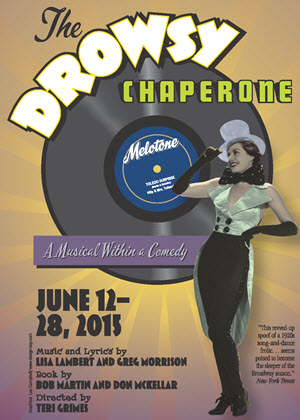
Bellingham Theatre Guild presents The Drowsy Chaperone

drowsyOn a rainy night, with a sprained ankle, I set out on my bicycle with Pops to see a local amateur production at a neighborhood theatre. In a word, the production was indeed amateur (which is to say, unpolished), but heartfelt and charming; and the play borders on too silly but was ultimately fun.

The narrator is a middle-aged, socially awkward man, sitting in the darkness of his apartment and dreaming about another world. He speaks directly to the audience about the strengths and downfalls of musical theatre, and puts on a record, the soundtrack to a musical of the 1920’s called The Drowsy Chaperone. The action comes to life in his living room, as the original cast performs the play, interrupted by our host’s interjected comments on the show.

The musical is your standard comedy of errors, involving a wedding that not everyone is supportive of, and includes mistaken identities and the beginnings of new romances. It was pretty cheesy, particularly in its song and dance (even more so than your standard musical!), although the tap dancing was a great addition. But as the story developed, I was more tuned in to the pathos of the narrator and more on board with the general silliness of the show-within-the-show. So while it started a little questionably, by the end I had let myself go into the world of the theatre, and it was rewarding. The performances were less than perfect, but again, this is local, amateur, community theatre: adjust your expectations a little, and be prepared for a good time. I left feeling uplifted by the fun, and will be looking for more Bellingham Theatre Guild performances in the future. Thanks, neighbors.


Rating: 6 gimlets.

Teaser Tuesdays: The Liars’ Club by Mary Karr

Teaser Tuesdays is a weekly bookish meme, hosted by MizB of Should Be Reading.

I am loving Mary Karr’s well-regarded memoir about growing up in small-town East Texas. She is amazing in many regards, on which more to come soon; but today I want to talk about describing place. I have a special fascination with a “sense of place” in the books I read, whether they are fictional descriptions of real places (James Lee Burke and Michael Connelly, on Louisiana and Los Angeles respectively) or made-up places (Stephen King’s Dark Tower series, or du Maurier’s Manderley), or nonfiction.

liar's clubAs an example of the latter, I think this paragraph-and-a-half near the beginning of The Liars’ Club is as good as it gets.

If Daddy’s past was more intricate to me than my own present, Mother’s was as blank as the West Texas desert she came from. She was born into the Dust Bowl, a vast flat landscape peppered with windmills and occasional cotton ranches. Instead of a kitty for a pet, she had a horny toad. She didn’t see rain fall, she said, for the first decade of her life. The sky stayed rock-white and far away.

About all she later found to worship in Leechfield was the thunderstorms, where were frequent and heavy. The whole town sat at a semitropical latitude just spitting distance from the Gulf. It sat in a swamp, three feet below sea level at its highest point, and was crawled through by two rivers. Any hole you dug, no matter how shallow, magically filled up with brackish water. Even the wide ditches that ran in front of the houses, where I later learned that sidewalks ought to be, were not enough to keep the marsh from burbling up.

This is an astounding piece of writing. So much is communicated, and much of it we take in without even noticing. On the surface, we see that Mother is from West Texas, where it is dry, and East Texas, where the author grew up, is much wetter. But just below that surface, we get a time-frame (implied by the Dust Bowl reference), and a visual cue from “rock-white”: rocks aren’t white everywhere, but now we have a blinding tone for the “blank” West Texas desert. I love that Leechfield is “spitting distance” from the Gulf of Mexico: another reference to wetness; and “was crawled through” by two rivers? That’s a passive voice usage to compete with Hemingway’s famous one that I keep referring to. I like what is implied by that last line: Karr didn’t know about sidewalks til she left town. Not to mention the onomatopoeic effect of burbling…

Creative Nonfiction magazine has a special issue coming out on the theme of Weather. If they get to publish any passages remotely as communicative and deceptively simple as this one, I think they’ll be glad.

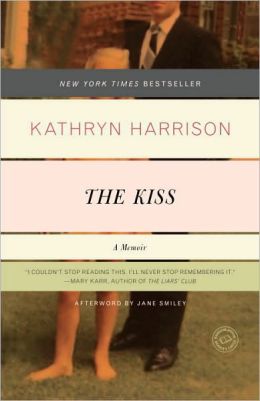
The Kiss by Kathryn Harrison

kissThe Kiss came recommended as a powerfully told memoir, the artful representation of a shocking story that does not rely upon its sensational nature to make an impact, but showcases the author’s craft. All this is true, and I am left feeling very impressed and somewhat reeling, from both the story itself and the writing.

Kathryn Harrison was raised by her mother’s parents, her mother an on-and-off presence in her life who never gives her the love she longs for. She meets her father only twice while she is growing up; his third visit, when she has just turned 20, marks the beginning of a new stage. When he kisses her goodbye at the airport, the air goes electric, and they begin an incestuous affair that will last years and cause the rest of her life to wither. Their relationship is obsessive and controlling: in other words, awfully unhealthy, even if they were not father and daughter; and it will damage her forever.

Clearly there is shock value, and the potential for merely prurient appeal. But Harrison does not let the salacious subject matter carry her book. She examines her troubled childhood, her need for love, her search for herself, and sees in hindsight the way she was preyed upon. Her father is a preacher, who argues that God wants them to be together sexually.

I never question his sanity; although I will come to the point where it is less painful to regard my father as crazy than to conclude that he has been so canny in judgment of my character and its frailties that he knows exactly what language to use, what noose of words to cast around my neck.

She studies her story, and muses on it, and the result is a work of craft, not of voyeurism.

It is still disturbing, make no mistake. You will shiver and flinch, because she doesn’t turn away from the ugly bits – and they don’t all involve her father; there is also the one with the kittens, and the scene in which Harrison’s unloving mother takes her to a doctor to have her hymen broken with medical implements. (Seriously.) But it is also, strangely, beautiful. As a writer, I am here to take notes and see how she does this thing: tells this horrifying story with grace and insight and art. I don’t really understand it, although I hope to.


Rating: 8 photographs.

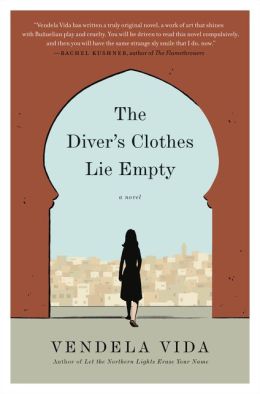
The Diver’s Clothes Lie Empty by Vendela Vida

A vibrant, thought-provoking literary puzzler about identity and self-determination.

diver's clothes

“You stand in the middle of the small square, thinking about your options.” Vendela Vida’s (The Lovers) vivid fourth novel, The Diver’s Clothes Lie Empty, is surprising in several ways, beginning with its unusual second-person perspective: you are the protagonist.

“You” are a woman traveling alone from Florida to Casablanca, fleeing troubles at home that are only gradually revealed to the reader. What you seek is unclear: a vacation? An escape? But what you find instead is the immediate theft of your passport and wallet–in short, everything you need to travel or return home. This abrupt change in circumstances is terrifying but also strangely freeing.

As the rest of the story unfolds, the unnamed protagonist spontaneously reacts to situations as they present themselves. You accept a passport and wallet that was stolen from another American woman, offered by the Casablanca police in lieu of your own, and take on that woman’s identity. You accept an unlikely job offer as the stand-in for a famous American actress. You hang out backstage with Patti Smith, date an older Russian businessman, even undertake a little acting. When circumstances get hectic, however, you are tempted to use your newfound skills in spontaneity and anonymity to disappear again.

The Diver’s Clothes Lie Empty is a complex, enigmatic fable about starting over, the nature of identity and the possibility of escaping the past. Vida’s meticulous release of details, knowing use of suspense, colorful evocation of Morocco and tantalizing characterization make this a singular, revelatory and deliciously satisfying novel.


This review originally ran as a *starred review* in the June 16, 2015 issue of Shelf Awareness for Readers. To subscribe, click here, and you’ll receive two issues per week of book reviews and other bookish fun!


Rating: 7 cameras.

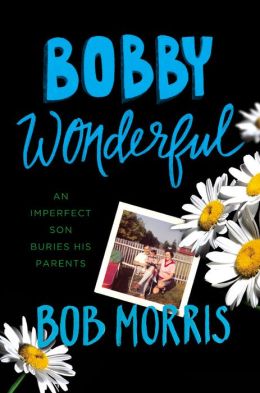
Bobby Wonderful: An Imperfect Son Buries His Parents by Bob Morris

A son’s memoir of love and endings, despite his shortcomings and mistakes.

bobby wonderful

Bob Morris (Assisted Loving; Crispin the Terrible) loved his parents very much, even if he was not always the ideal son. His older brother, Jeff, played that role; Bob was less reliable.

When his mother died, her last garbled word was his name: Bobby. As his father died several years later, he cried out: “Wonderful!” As Morris relives and reconsiders those difficult experiences–caring for each of his parents (more or less), witnessing and helping to make decisions about the ends their lives–he pairs those final words to make the title of his searingly candid memoir, Bobby Wonderful.

Morris is on a much-needed vacation in Scotland, tasting whiskies and forgetting his cares, when he gets the call to come home for his mother’s last days. His first reaction is resentment; the scarf he brings her as a souvenir is a knockoff of the first one he considered. Still, he was there, with Jeff. In the years that follow, Morris helps his father learn to date again and encourages his independence, in part because Morris is busy trying to enjoy his own life. When his father attempts suicide, though, Morris is forced to face uncomfortable questions about his father’s end-of-life wishes, his own devotion and what it means to be a good son.

Morris’s struggles are sensitively told, deeply moving and highly relevant in a world where more and more people face situations like his. Bobby Wonderful is a gift of a book: an often funny but also perfectly serious contemplation of living and dying well.


This review originally ran in the June 12, 2015 issue of Shelf Awareness for Readers. To subscribe, click here, and you’ll receive two issues per week of book reviews and other bookish fun!


Rating: 7 performances.

Lanterne Rouge by Max Leonard

An amiable history of a largely unsung hero pays respects to the last-place finisher of the Tour de France.

lanterne

Even non-cycling fans recognize the Tour de France as the sport’s biggest annual event. Naturally, the attention of the press and the viewer is focused at the front of the race, where attacks, group sprints and winners are born. In Lanterne Rouge: The Last Man in the Tour de France, Max Leonard directs overdue consideration to a different segment of the Tour, where he finds a less fairytale-like but very sincere story.

Ever since the Tour was founded in 1903, as a struggling newspaper’s publicity stunt, someone necessarily has come in last place. Cycling’s term for that someone dates back almost as far: based on his research, Leonard argues that it must have been in use before World War I. The usage of lanterne rouge, or red lantern, is generally accepted as having come from the railroad, where a red lantern lit the last car, letting signalmen know the line behind was clear. Over the last century and more, the lanterne has been variously a joke, a dishonor, an achievement to be sought after and a source of controversy, conflict and myth.

Importantly, the lanterne rouge achieves the accomplishment of finishing the race. The Tour has always had a high rate of attrition. Many men withdraw from the race over weeks of mountain passes, long days and severe weather; some years, Tour staff have pulled trailing riders from the race as well. The lanterne is the man who finishes last–but finishes, a respectable feat.

Leonard makes his passion easily felt as he follows his underappreciated subject. In his prologue (a word not only for a book’s introduction but also a preliminary time-trial stage of the Tour), he attempts to ride a mountain stage of the Tour, but DNF’s (“did not finish”), and his failure will haunt him for the rest of his research and writing process. He then spends nearly two years meeting with surviving lanternes and those who remember them, and searching French libraries for scraps of information about the earliest ones. For example, he pursues the legends of the first lanterne rouge, Arsène Millocheau of 1903 (but did he really finish the race?), and of Abdel-Kader Zaaf of 1951, whose story involves wine, naps, religious difference and colonial racism. Leonard studies the lanterne (and, somewhat resignedly, the leading yellow jersey as well) exhaustively, throughout history and through the race’s evolutions and rule changes. A chapter on drug and doping scandals rounds out any analysis of the Tour, and yes, some lanternes were involved.

Lanterne Rouge is an engaging, exhaustive survey of the last man in the Tour de France, a history, a collection of appealing anecdotes and a psychological consideration of winning and losing. An obvious choice for serious cycling fans, Leonard’s approachable study will also please general sports fans, history enthusiasts and those who root for the underdog.


This review originally ran as a *starred review* in the June 12, 2015 issue of Shelf Awareness for the Book Trade. To subscribe, click here.


Rating: 7 bidons.

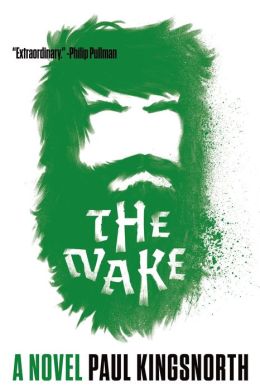
Teaser Tuesdays: The Wake by Paul Kingsnorth

Teaser Tuesdays is a weekly bookish meme, hosted by MizB of Should Be Reading.

Full disclosure: I got this tattoo, below, after reading this piece by Kingsnorth. (It’s more complicated than that, and Kingsnorth did not supply my first exposure to the green man, for the record; IMG_5964but he was a significant inspiration.) If you poke around his website, and his larger presence as a writer, you’ll see that he’s written a good deal about the Norman invasion of 1066; and now, a novel (released last year in Kingsnorth’s native Britain). But there is something different about this book: it is written in a “pseudo-language,” a hybrid between the Old English of the time in question, and the language we speak and understand today. Somewhat in the spirit of the “Landspeak” article I recently posted, Kingsnorth feels that the language in which we express a thing changes the thing being expressed: in other words, it matters.


wake

I am on board with the concept, but I confess, it would be a mistake to underestimate it. The Old English-ish language is a challenge, and casual readers will be dissuaded. It is worth the effort, however. The story inside is riveting and, yes, improved in tone by the impassioned voice of the narrator in his native tongue (or a slightly more readable version thereof). Pro tip: try reading aloud to get the full flavor, and to hear cognates come clear.

I have a few lines for you today that struck me especially, and which are almost understandable.

the fugols that sang here was the fugols i cnawan and the heofon was the heofon of my cildehood and for a small time i felt that my heorte had cum baec to where it sceolde always be. the mist cum round the secg cold as we walced saen lytel and sounds colde be hierde that was lic the sounds of my eald lands when i was still a man

Or, in my own translation,

The birds that sang here were the birds I knew, and the heaven was the heaven of my childhood, and for a small time I felt that my heart had come back to where it should always be. The mist came round the sedge, cold, as we walked saying little, and sounds could be heard that were like the sounds of my old lands, when I was still a man.

I love the sense of place and of belonging to a place – which is one of the losses of the Norman Invasion, in Kingsnorth’s telling – and the tone of mourning. Try it again in the original text. Go ahead. I know I threw you into it in the middle, but a full book of this actually comes to be quite compelling, if you can put in the effort.

Stay tuned for my positive review to come.

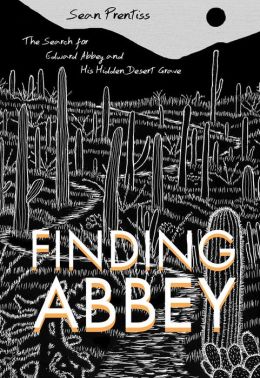
Finding Abbey: The Search for Edward Abbey and His Hidden Desert Grave by Sean Prentiss

A journey to find a famous grave and an exploration of the meanings of environment and home.

finding abbey

After the death of environmental writer Edward Abbey (The Monkey Wrench Gang; Desert Solitaire), four of his friends took his body to the desert near Albuquerque, N.Mex., and illegally buried him in a hidden location. For decades since, the mystery of his final resting place has tantalized Abbey’s fans and followers. Writer Sean Prentiss set out to track down his hero, as related in the thoughtful Finding Abbey: The Search for Edward Abbey and His Hidden Desert Grave.

Prentiss calls on Abbey’s close friends Jack Loeffler, Ken Sleight, David Peterson and Doug Peacock, several of whom inspired characters in Abbey’s fiction. He visits locations that Abbey called home over decades of peripatetic soul-searching. Prentiss does his own exploring, too. Though newly settled in the Midwest for a university job, Prentiss feels enticed by Abbey’s desert Southwest, a region he has also lived and traveled in. As much as he seeks a literal gravesite, or communion with a complicated man, Prentiss equally seeks a home for himself.

Prentiss questions whether he really wants to find the object of his search. “Answers don’t solve questions. Only searching does.” His tone is wondering, and his quest is both personal (where will Prentiss call home?) and universal (what does a sense of place mean to anyone?). His goal might be disrespectful, considering the continued efforts of the Abbey camp to keep the grave’s location a secret, but Prentiss navigates this potential difficulty with sensitivity. While it offers no revelations, Finding Abbey is philosophical, poetic, a creative biography and a loving, evocative celebration of a controversial life.


This review originally ran in the May 15, 2015 issue of Shelf Awareness for Readers. To subscribe, click here, and you’ll receive two issues per week of book reviews and other bookish fun!


Rating: 7 cans of beer.