two listening opportunities

Scott Russell Sanders (photo credit)

Scott Russell Sanders (photo credit)

One of my favorite things I’ve read for the start of school coming up is an essay by Scott Russell Sanders titled “Buckeye.” Terrain.org offers a full-text version here, and I hope you’ll go read it and enjoy it, too. It’s short. Or, perhaps even better: on that same page, you can click to hear Sanders himself read it aloud for you. It’s a little under 20 minutes that way.

I am also still a little entranced over his essay “The Inheritance of Tools,” which I have not been able to find in a free full-text form that is not cluttered with one professor or another’s question-and-answer. (Best not to color your first reading, you know.) If you can track it down, do. I guess I might be in the market for one of his collections one of these days.

Amy Leach (photo credit)

Amy Leach (photo credit)

While I’m thinking of excellent essays read aloud by the author, I can’t help but mention Amy Leach, again. You recall that I loved her book Things That Are. I’ll just remind you again that you can hear her read “God” to a bluegrass accompaniment here. Under 5 minutes, that one.

Enjoy.

And while we’re here: any read-by-the-author clips you love and would like to share? Reading one’s work is such a different skill, I think, than writing it. I think immediately of Barbara Kingsolver, whose Flight Behavior and The Lacuna were such breathtaking performances, completely aside from the excellent books.

reminder: new pagesofjulia coming

Time is speeding up and the lists are changing shape around here.

Husband and I and our two little dogs have just returned from one of my favorite places in the world: the deserts of far West Texas, around Big Bend National & State Parks, where we rode our mountain bikes and enjoyed sunrise views like this from our cabin.

click to enlarge

click to enlarge

Next we have a few days in Houston with Husband’s family and all our friends. I hope to catch a punk show in between bike rides & festivities.

And then I’m home for just a day and a half before catching two airplanes and a bus to get to West Virginia for the start of my grad program. I have been busy reading, commenting and preparing for all the hard work that will begin there on December 30. It is a hectic but joyful time!

This is just a reminder to you kind folks out there that my format will be changing a little bit. I’ll post 5 days a week through the end of the year – which is, the end of next week – and then will post just once a week on Wednesdays. Those posts may be a little shorter than usual, too, although some of them will still be full book reviews (including some for the Shelf), maybe even the odd movie review. I appreciate you all bearing with me as times and this blog change.

In the next week, you can look for my usual year-in-review and best-of-the-year posts. And then, we will all learn together what the future may hold!

Happy holidays, friends.

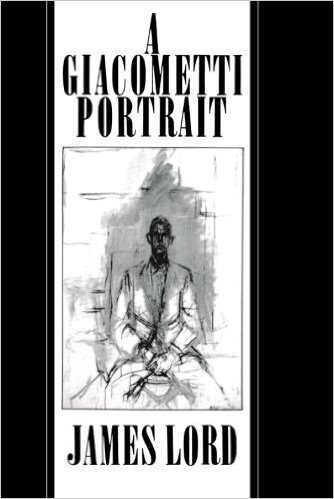
A Giacometti Portrait by James Lord

giacometti-portraitFor school, again: this book informs an upcoming seminar entitled “Process, Image, Form: What Writers Can Learn From Visual Artists,” taught by Richard Schmitt. A Giacometti Portrait is a record of the creation of a work of art. James Lord sits as a model for his friend Alberto Giacometti, a well-known and successful painter living in Paris. Lord flew over from New York to sit for an afternoon; he ends up sitting for 18 days, during which he takes notes and pictures to document the process. The portrait is not finished at the end of this time – it is central to Giacometti’s theory of life and art that such a thing could never be finished – but they agree to stop.

It is an odd but intriguing book. Giacometti is a real character, and the friends become very close while sitting and talking together through Giacometti’s dramatic crises of artistic frustration, and many other threads of life. While Giacometti’s passionate, pessimistic, but oddly magnetic personality is a feature, the portrait itself is at the center of this book, to the exclusion of characterization of Lord himself, outside events and characters, and all else. The book itself, of course, is also a portrait. The title acknowledges this with its syntactic ambiguity.

The material here for a discussion about art, different art forms, techniques and mutual reflections upon one another is obvious, especially as Giacometti writhes and moans, undoing and redoing his work, experiencing one revelation after another, and every one (to him at least) failing. I am most interested to see where our seminar takes us. It’s not a book I’m necessarily prepared to love on my own; it’s too thin, somehow, too occupied with the one thing. But I suspect there’s more here than meets my immediate eye, so I’m very glad to be studying this with help. An unusual, but strangely compelling portrait.


Rating: 7 hard-boiled eggs.

Teaser Tuesdays: Cerulean Blues: A Personal Search for a Vanishing Songbird by Katie Fallon

Teaser Tuesdays is a weekly bookish meme, hosted by MizB of Books and a Beat.

Teaser

Again for school, I am reading Katie Fallon’s first memoir (she has Vulture: The Private Life of an Unloved Bird forthcoming from University Press of New England in March 2017). I look forward to meeting her in just ten days or so! This is not an assigned book; I’m reading it by choice to get to know her a little better.

cerulean-blues
Her opening lines read,

I stepped onto the tarmac in Bucaramanga, a city of more than five hundred thousand people in northeastern Colombia, and blinked in the fierce October sun. Black vultures lazily circled in the clear blue sky overhead, and swallows chittered to each other as they cut and dove above the Avianca jets idling on the runway.

I like that birds appear in the first two lines, since it is a bird that brings Fallon to these pages. The cerulean warbler does not appear so quickly; that’s a large part of the point of the book. I also enjoy the very full picture she paints in these few lines. Glad to be here with her.

This quotation comes from an uncorrected advance proof and is subject to change.

The Delicacy and Strength of Lace, letters between Leslie Marmon Silko & James Wright, ed. by Anne Wright

the delicacy and strength of laceAs I wrote in my beginning, I enjoyed this book more than I expected to. I struggle with poetry, and the snippets included here out of context (it seemed to me) challenged me. I was not familiar with the protagonists. But quickly their voices and personalities revealed themselves; and the story of James Wright’s death, and the introduction to this book by his wife, add a poignancy. There’s something about knowing the sad ending to a story before you read it.

I found many lovely lines (naturally) and scraps of wisdom here. My instinct is to just begin sharing those with you.

I enjoyed Wright’s lines,

I hope you don’t mind post cards. They are a way of sharing something, some place or other delight, and they can also, when written and sent truly, offer small wavelets, so to speak, to the rhythm of a correspondence.

and perhaps even more, that he wrote so instructively, so consciously of this – that he felt the need, and the meta-quality of explaining one’s correspondence. They were still kind of new to each other, you see.

From Silko,

I always resented Shakespeare’s use of the delayed messenger in Romeo and Juliet, maybe because such things are so ordinary and so possible, and so much can be lost for two people that way.

which is both amusing, and profound, and a little confusing – why resent the use of something ordinary and enormous, and isn’t that what we do as writers? Hm.

And then,

I believe more than ever that it is in sharing the stories of our grief that we somehow can make sense out – no, not make sense out of these things… But through stories from each other we can feel that we are not alone, that we are not the first and the last to confront losses such as these.

and I think of the impulse we all seem to share to tell our stories in response to one another. This can be selfish. One person shares something personal and painful, and the response is “well I…” or “my…” as if to turn it back to the speaker every time. But Silko has a point, that there is a function to this return-to-me, and that in the right setting & relationship it’s how we perform empathy. I think about this in conversation sometimes, the effort to not always “me” everything. But it can be well done.

And very pertinently to nonfiction writers in particular, Silko again –

Memory is tricky – memory for certain facts or details is probably more imaginative than anything, but the important this is to keep the feeling the story has. I never forget that: the feeling one has of the story is what you must strive to bring forth faithfully.

This is the trick, or the puzzle, and the much-discussed central problem, with creative nonfiction or with memoir: the tension between strict “fact” (which is what, exactly?) and the richness of imaginative memory. See also Sejal H. Patel’s “Think Different” in issue 58 of Creative Nonfiction (I reviewed here), where she and other memoirists explore the use of technologies to aid memory.

Finally, and perhaps most centrally to the question of correspondence in general and especially between writers:

With you to write to, I go through the day with a certain attention I might not always have. I look for things you might want to see for yourself, but I can’t seem to get them into a letter.


I enjoyed reading this slim epistolary collection, and I think I got a lot out of it. But what was I supposed to get out of it? Despite a few classes taken early this year, I feel rusty at reading literature with a class in mind, and I am so curious about what the seminar that assigned this book will hold. Most of all, I’m excited. So thank you, school and world, for that.


Rating: 8 roosters.

book beginnings on Friday: A Giacometti Portrait by James Lord

Thanks to Rose City Reader for hosting this meme. Participants share the first line or two of the book we are currently reading and comment on any first impressions inspired by that first line.

This is another I’m reading for school (see last week’s teaser), and deals with a work of visual art. The portrait of the title is both one being painted by the author’s friend of the author himself, and the book I hold in my hands: a portrait of the painter.

giacometti-portrait
James Lord is in conversation with the painter Alberto Giacometti as the former sits for his portrait.

“But is even a photograph really a reproduction of what one sees?” I asked.

“No. And if a photo isn’t, a painting is even less so. What’s best is simply to look at people.”

And I thought those lines began to capture part of what the book is about. Also, they spoke to me as a writer who tries to capture life. It makes it all a little futile, perhaps; or maybe it helps the artist to refocus. Plenty to think about.

This quotation comes from an uncorrected advance proof and is subject to change.

Gods, Wasps and Stranglers: The Secret History and Redemptive Future of Fig Trees by Mike Shanahan

A joyful, celebratory world history of the fig tree and its ecological impact.

gods-wasps-and-stranglers

Mike Shanahan’s Gods, Wasps and Stranglers: The Secret History and Redemptive Future of Fig Trees is a deceptively brief account of the Ficus genus of trees in history, emphasizing but not limited to their relationship with humans. Shanahan brings the expertise of decades of ecological fieldwork and a bubbling enthusiasm to a topic clearly close to his heart. He makes a strong argument that his readers should be attuned to and excited about fig trees, too.

The plant figures into the origin stories of cultures all over the world. Fig trees have provided food, shelter, medicine and materials to humans for as long as humans have existed: figs predate us by nearly 80 million years. Because of their contributions as keystone species in ecosystems around the world, figs offer distinctive services in reforestation efforts and the mitigation of climate change. They have contributed to the theory of evolution, the birth of agriculture and possibly humans’ development of opposable thumbs. The story of the fig is inseparable from that of fig wasps, numerous tiny insect species that have evolved to pair respectively in symbiosis with individual species of fig. Shanahan relates all this and more in a joyous voice with occasional lyricism, as when “the Buddhist monk’s robe sang out loud saffron over the rainforest’s muffled tones of brown and green and grey.”

Mythology, biology and hope for the future combine in this highly accessible story of the family of fig trees, with its profound ecological relevance.


This review originally ran as a *starred review* in the December 2, 2016 issue of Shelf Awareness for Readers. To subscribe, click here, and you’ll receive two issues per week of book reviews and other bookish news.


Rating: 8 rhinoceros hornbills.

Creative Nonfiction, issue 58: Weather (winter 2016)

You can buy issue 58 here.

You can buy issue 58 here.

I always find something to appreciate from Creative Nonfiction. And in this issue, I confess, I had the added thrill of seeing several essays I got to read as submissions, that made it all the way to publication. Being a reader for CNF has been an incredible learning experience for me.

In this weather-themed issue, I really enjoyed Joe Fassler’s interview with Al Roker (Fassler wrote the essay “Wait Times” that I found so mesmerizing). Andrew Revkin’s essay about climate change, on the other hand, though much praised by editor Lee Gutkind, failed to grasp me: I found it overlong and less-than-gripping, and I guess also I found his opinions hard to access.

Interestingly, among the essays in the magazine’s main section, I was more excited about Ashley Hay’s “The Bus Stop” and Tim Bascom’s “My First Baptist Winter” than I was about the prize-winning “Recorded Lightning” by Amaris Ketcham: I enjoyed Ketcham’s writing very much, but the lightning-shaped text formatting which I think ‘made it’ for some readers only distracted me. Beatrice Lazarus’s “The Snow” was another interesting reading experience. I found the writing sometimes lovely and sometimes awkward, and the story’s steering between extreme weather and human violence took me a minute to grab onto. There is no question these are all impressive essays, but as usual, some worked better for me, personally, than did others.

Sejal H. Patel’s “Writers at Work” piece, called “Think Different,” lets Patel and five other memoirists discuss the impact of technologies on how we access and write about our memories. How does Google Earth, for example, help or confuse our recollections of the houses we grew up in? (Much more on this topic lies within The House That Made Me, which I recommend if this subject interests you.)

This issue of CNF is not the one I’ve enjoyed most, but there’s no shortage of thoughts provoked. Your mileage may vary.


Rating: 7 tornadoes.

National Theatre Live presents War Horse (2014)

National Theatre Live does it again with War Horse, an encore edition of a performance from 2014. Husband and I saw this live-filmed play at a San Antonio movie theatre on December 8, 2016. I am again going to rave about a stellar story, staging and performance (as well as the NT Live delivery system which I love more and more).

war-horseThe story, based on the novel by Michael Morpurgo, involves a horse and a boy. The year is 1912. Boy’s drunken father unwisely obtains horse while drunk, and boy is tasked with training and racing horse til it becomes saleable at a profit. The boy, Albert, names his horse Joey, and the two become very close; then World War I breaks out, and drunken dad sells Joey to the army. This is an evil thing for him to do, although he does point out later that the army would eventually have come for the horse under anyway. Joey sees battle and various masters. Albert runs away to lie about his age and join the army, in search of his beloved and noble friend.

It is a striking story with all the right emotional notes. Elements of Black Beauty and White Fang, etc., but that’s really to say that the best animal stories contain the same elements, not that anyone is copying anyone else. I cried twice (no spoilers here); but I will say that in the proverbial sense, when librarians (etc.) talk about books and ask “does the dog die?” – here, the dog does not die. This is a figurative dog, y’all. Added to the classic beloved and noble animal story is war; youth and innocence; friendship, loyalty and reconciliation; even some family dynamics. Very thorough and appealing, theme-wise.

But how does this great story with so much potential make it to the stage? Well, the first problem is working with animals, right? So the smart folks at NT Live worked with a South African puppet company, and the results are mindblowing. The horses are life-size (at least), operated by three puppeteers. As a colt, Joey is worked by three people moving alongside; but as an adult, two puppeteers stand inside the body of the puppet, and one outside operates the head. No efforts are made to hide the puppeteers. The show opened with a few lines of monologue and a song while colt-Joey explores the stage, as (I interpret) the audience gets a chance to get used to this set-up. In these moments, I concentrated on seeing the horse and not his three operators; but I quickly turned to watching the operators themselves, because what an interesting job! Immediately, this choice became a non-issue: the horses were astonishingly lifelike. They articulate complexly: every joint of the legs, the full curve of the neck, tail and ears, accompanied by the snorts and breathing provided by the puppeteer actors, as well as full-body shivers or heaving breaths – all of this absolutely brought a convincing, living horse to the stage. The actors who occasionally appear to the eye nearby (they’re there all along, but only occasionally did they appear to me, so absorbed was I in the horse himself) only add to the impression of artistry.

On top of the complicated and inspired puppetry, the company used lighting, projection and sound effects to bring a whole world to an extremely simple stage design. As we’ve seen before most notably in A View From the Bridge, the settings and props were minimal, but very effective. I won’t say too much about this part. But I think it’s fascinating how very much can be done with so little, with the not insignificant contribution of lighting effects; and here the light & sound helped to emphasize another thread of the plot, in a neat trick that I’ll leave for your viewing pleasure, because you’ll want to rush out and find this performance near you.

Of course the acting was superb, blah blah… one expects that from National Theatre Live, and they absolutely meet expectations. I’ve said it before, but the beauty is that this unique format – the live-filmed stage play on a movie theatre screen – really takes advantage of the best of both worlds. I get to see some of the world’s finest actors close-up, more cheaply than flying to London, with a pack of peanut butter M&Ms I snuck into the theatre. This is certainly one of the finest NT Live plays I’ve gotten to see, and I feel so lucky.

I don’t think the cinematography necessarily did as much as in some shows I’ve seen – fewer close-ups than I remember, that sort of thing – or maybe it just disappeared in the richness of the whole experience. This is certainly not a weakness. The shots varied and moved with the action, and it was all perfectly effective. I’m not sure I can think of a way to improve upon this performance and the way it was delivered to me in central Texas.

Perhaps the best part of all of this for me was that Husband really enjoyed it, too. Frankly I was a little worried he’d find it slow; but the emotional impact of the story, and the wild achievements of the creativity of staging & the puppets themselves, impressed him as they did me. There you go, folks, the highest praise: pleases all audiences.

I always recommend NT Live highly. This might just be the best I’ve seen (I don’t know, who can choose, don’t miss A View From the Bridge or Jane Eyre either). It’s playing in a number of theatres; please do yourself a favor and see if you can find a showing. Enjoy.


Rating: 10 collars.

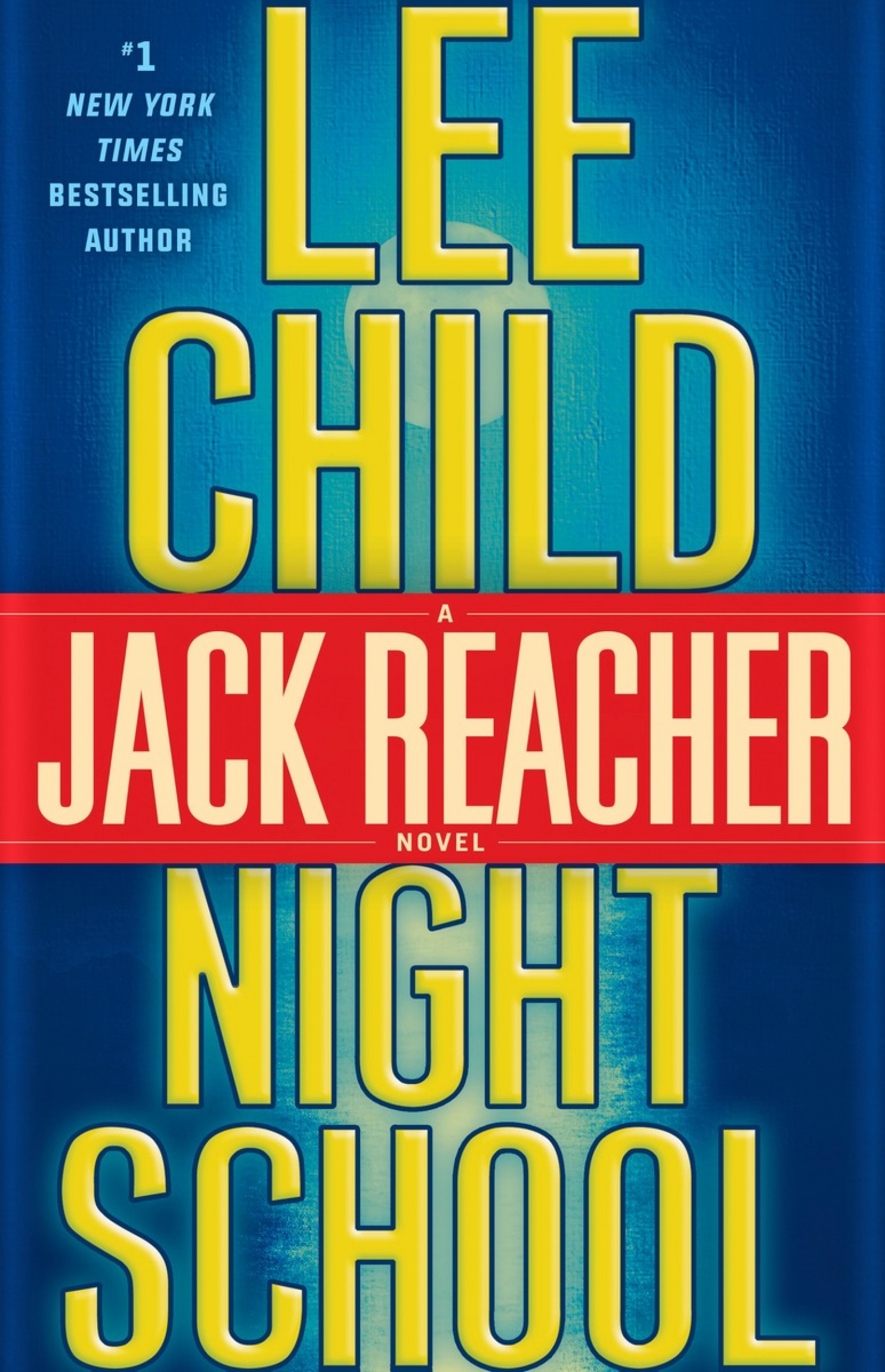
guest review: Night School by Lee Child, from Mom

I’m so glad to have my mother around to review Lee Child along with me – or in this case, to review one I haven’t read yet! (For the moment, this is his newest, but I’m sure there’ll be another along shortly.) Night School follows my most recent Reacher read, Make Me, although the two are not chronological sequels. My mother sent this as an email to me, not intended as a formal review, but I appreciated it and she gave her permission to post.

Here’s Mom.
night-school

I really liked this book, especially compared to Make Me, which I finished afterwards. (And found excessively cruel and graphic, although well-plotted.) The story line carries us along beautifully. Another working of what’s up?, as in Make Me, where we don’t know quite what the deal is, but we have enough info to be looking hard at the details. And of course we get to tangle with some bad guys in number, and whip their fascist asses in entertaining variety.

Here Reacher is still in the army, which means a lot of structure and conflict built in from the bureaucracy. (In Make Me, he’s a bit of a drifter looking for adventure – and I know that’s a claim to fame for his fans.) So the Army sends him to Germany in this quest for the problem they need to solve. He bumps against the neo-nationalists so much you start to wonder if they are part of the plot. Hmmm.

So the plot is the thing, but Child’s writing is beautifully not present. I noted at first the short declarative sentences. After a 50-page warm-up, the story just flowed through. Some of the great stuff: He says to the German adversary, So why do you suppose you speak my language but I don’t speak yours? (Something to do with how important your language/country might be?) Or – the Germans thought they were uniting under one umbrella, but the West saw it as an arrangement of military bases with the people there efficiently manning the hotels and cafes.

I remember that Child is originally British, not to suggest he has an ax to grind. His character is man of integrity without a lot of allegiance to the system. His assistant in this is Neagley, the sergeant in War Games (the short story included at the end of Make Me). She’s perfect here, completely at his command (“adores him,” someone says), but has some complex that doesn’t allow any touch. So the sex interest is his boss, and of course the sex does not get in the way of the plot advances.

I could do some more page-turning like this, and I can’t help but like this impossible character.

Well said all around, in my opinion. I like what you said about the bureaucracy and the foil it provides. Cruel & graphic, yes: this is an important note for prospective new Reacher readers. Must have high threshold for blood. And the plot is indeed the thing. Lee Child excels at several things, I think: that invisibly expressive writing you mention, and action sequences (suspenseful fights I can really see), and a hell of a charismatic lead man. You said it: he’s an impossible character but we just can’t help but follow him. But the plots are nice and complex, filled with technical details and enough to challenge the experienced mystery/thriller reader. That is what I think you’re saying here, anyway.

About that “beautifully not present” writing, I find Reacher’s voice to be distinct and entertaining. Some of the books in this series are written in third person and some in first. And perhaps since I’ve listened to so many as audiobooks (and I highly recommend what narrator Dick Hill does with them!), I think that voice is a big part of the charisma. Those short, declarative, sarcastic, witty deliveries, even just inside his own head, really serve to characterize him.

Well done and thanks. I look forward to Night School and more of the page-turning and impossibilities.