Street Shadows by Jerald Walker

Before he wrote The World in Flames, Jerald Walker wrote this memoir-in-essays focused on a later part of his life, when he was navigating a growth from a series of performed roles, most dramatically that of a Chicago inner-city gangster, to college professor and married father of two. This book only touches upon that supremely weird upbringing (black child of blind black parents in a white supremacist doomsday cult, whew), concentrating instead on the period from young adulthood into, say, early middle age. Central to this arc, unsurprisingly, is his evolution of understanding race, which remains incomplete for the narrator at the time in which he’s writing.

The essays included here are both narratives from a life and traditional essays that explore questions in the narrator’s mind. I noted their organization, which generally alternates between the more distant past (a youth filled with mistakes) and the apparent present (or “narrative present”–not without its ongoing mistakes, but with an emphasis on self-awareness and attempts to understand and improve). The next step that seems natural to me, which I have not (yet) taken, would be to examine each essay for its content in terms of narrative vs. traditional assay/thinking on the page. I have a hunch there may be an organizational trick on that level, too.

I found these essays thought-provoking, engaging, and easy-to-read, a trifecta much harder than it looks. There was something a little effortful for me, though, that I’m having trouble articulating. It’s like I can catch just a glimpse of the writer in the background, building his work, on purpose. The essays that most blow me away have a feeling of effortlessness to me, like there’s no writer at all–a narrator, but no writer, no craftsman. Think of E.B. White, or Eula Biss, or Joan Didion. I’ll be hard at work trying to figure out what makes the difference I’m talking about. And for the record, I think it’s a matter of taste: I know readers who prefer the more crafted-feeling essay to the more obscurely drawn one (I’m thinking of Eula Biss’s subtle through-lines).

Feel free to ignore the above confused paragraph, though, and take this recommendation: Street Shadows is a remarkable work on several levels, including its organization, its storytelling style, and the intense and important subject matter Walker is moved to address.


Rating: 8 photographs taped to the door.

Mean by Myriam Gurba

This memoir is remarkable for its unflinching candor, for its humor in the face of tragedy and absurdity, and for its adventurous style.

Myriam Gurba’s Mean is a memoir of growing up queer, mixed-race, Chicana and female in Santa Maria, Calif., in the 1980s and ’90s. It is also a crime report, and a fantasy featuring ghosts, saints and martyrs. Race, class, sex, sexuality and sexual assault intersect in Gurba’s own life and in the news, especially when the man who attacked her goes on to kill a woman in her community. Surprisingly, though, this is also a book capable of making readers laugh out loud.

The first chapter, “Wisdom,” introduces a murder. Then Gurba flashes back to a childhood that confuses English with Spanish, because “I assumed we all had the same words.” She takes readers from that childhood, with her growing grasp of the messy concepts of white and Mexican (her parents are one of each), as she matures into a young woman dealing with questions of body and sexuality common to Western teens plus some exclusive to this particular slice of culture. The reader follows Gurba to college in Berkeley and beyond, as she continues to navigate family and other relationships.

Gurba approaches her grave subjects with acerbic humor and compassion, in a style all her own. She plays with form: “I hate found poems,” she writes, before presenting her own carefully shaped, visual found poem. Court transcripts and college course records offer various frames for considering a history that is both personal and broad, cultural and political. Formal play is not the point, however; Gurba makes the form follow her unusual story. Unsurprisingly, because she is an artist and a writer, she is concerned with words, appearances and how we make meaning. She is interested in race and class as they show up in food and pop culture; where modern sexual exploration meets Anne Frank; immigration and the visual arts, and more.

The title is important. “Being mean isn’t for everybody. It’s best practiced by those who understand it as an art form. These virtuosos live closer to the divine. They’re queers.” Meanness is a weapon, a defense mechanism and a reaction; it is also part of Gurba’s art. And yet her story and her storytelling voice are also loving and generous. The complexity of this voice contributes to the appeal of her memoir, which is compelling, suspenseful, both knowable as the girl next door and mysterious. Mean is a multifaceted book for many kinds of readers.


This review originally ran in the October 30, 2017 issue of Shelf Awareness for the Book Trade. To subscribe, click here.


Rating: 8 Jell-O parfaits.

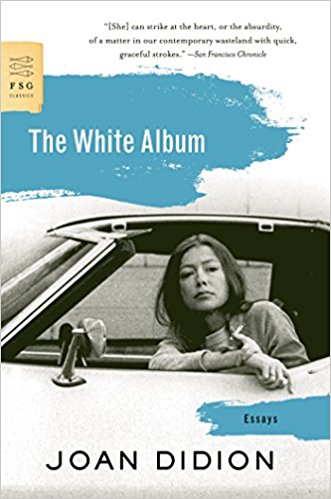
The White Album by Joan Didion

The essays in this collection range over diverse subjects, but as a whole are concerned with American culture, and the Sixties (as Didion capitalizes). Frequent topics include travel, especially air travel, and crime. She always pays close attention to place.

Some essays have aged better than others, but all display Didion’s close focus, instinct for detail, and precise syntax. She also has a knack for surprising endings; it would be interesting to study her for her endings alone. I think she’s very good at time and place, that is, setting us in a recognizable time and place with cultural markers. (This may be an unexpected comparison, but she reminds me of Stephen King in this way: think about 11/22/63.) My advisor Kim points out that she uses clothing and architecture to great effect, and I think that’s part of it.

I am especially interested in the title essay and “At the Dam.” “The White Album” begins with the memorable line, “We tell ourselves stories in order to live.” [Somewhere I have a list of such assertions–that narrative is life–and I think the late, great Brian Doyle figures heavily on it. I wish I had a transcript of an interview he gave onstage for a certain radio show in Bellingham.] This segmented essay, in 37 pages and 15 numbered sections, ranges through the United States (and particularly California) of the Sixties, name-dropping if you will: Huey Newton, Jim Morrison, Janis Joplin, Charles Manson, and more, linking these cultural markers with Didion’s own personal experiences. “At the Dam” is a mere five paragraphs long, but offers an incisive study of a place, the Hoover Dam: its history, its engineering, its cultural relevance, its place in a larger physical and metaphysical world. It makes one of those surprising shifts in scope at the end that gives it a profundity, as if the Hoover Dam needed emphasis.

I’ll be reading more Didion. She is an impressive and craft-y essayist, in that her work feels both crafted–put together–and naturally occurring. She is a master of detail and cultural markers. I’ve got a lot to learn from her, and she is an easy, enjoyable read, to boot.


Rating: 7 lifeguards.

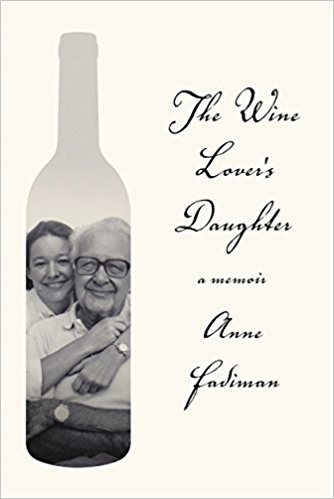
The Wine Lover’s Daughter by Anne Fadiman

A loving daughter’s memoir of her father portrays the literary mind of Clifton Fadiman through his passionate oenophilia.

Before Anne Fadiman was known for The Spirit Catches You and You Fall Down and At Large and At Small, she was an “oakling,” withering (according to an adage she quotes) in the shadow of an oak. Her father, Clifton Fadiman, enjoyed a long, successful career as a reader, book reviewer and wordsmith. He worked for Simon & Schuster, the New Yorker and the radio quiz show Information Please, and produced numerous collections of essays, criticism and anecdotes, children’s literature, translations and anthologies. Most of all, however, he loved wine.

Fadiman’s The Wine Lover’s Daughter is a beautifully composed memoir of her father’s life, viewed through the lens of his oenophilia. She recalls discovering his essay “Brief History of a Love Affair” at age 10, and being disappointed that it did not describe love for a woman. She should not have been surprised, as even at that age she knew the names of the Premier Cru Bordeaux and which were the Great Years (capitalized as such). Clifton’s passion for wine was prodigious, and it was his daughter’s shame and consternation that her palate never came to appreciate any of its forms. This memoir is in part the story of that struggle–her repeated attempts to love wine, and all the fine bottles wasted on her. Near the end, she embarks on a study of taste buds, supertasters and the possible scientific explanation for her (as she feels it) failure to live up to a legacy.

While she does not shrink from Clifton’s flaws–a condescending attitude toward women, profound insecurity–this portrait is deeply loving. Fadiman seeks to reveal a complex and multi-talented man, and to celebrate his contributions to literature. She also seeks contact with a father she clearly misses. Upon discovering the careful handwritten record of his wine purchases: “He liked thinking about a bottle waiting for decades in a hushed, dark place until a hand reached in, and the corkscrew did its work, and the wine came to life again, a life that had deepened while it bided its time. Opening the Cellar Book was like that.” She calls it “the most serious book he ever wrote, the most heartfelt, the most honest.” Finding him again in his Cellar Book, as well as in his copious writings, brings Fadiman great pleasure, and will edify and entertain readers. Along the way, she touches upon a century of U.S. cultural history, to which her father contributed.

Fadiman’s prose is clear and precise, and while not overtly poetic, perfectly composed as to rhythm and sound. As in her past work, she writes with equal skill of her own memories, family history, science and the finer points of wine appreciation (which she knows by heart and inheritance, if not by personal experience). The Wine Lover’s Daughter is a beautiful remembrance and a loving and well-deserved tribute to a literary figure–and to the joy of imbibing.


This review originally ran in the October 26, 2017 issue of Shelf Awareness for the Book Trade. To subscribe, click here.


Rating: 8 papillae.

Bonus:

I had a moment of joyful recognition when I discovered on page 5 that Anne’s father Clifton Fadiman was the author of the children’s book Wally the Wordworm which I remember enjoying as a child.

My review of Anne Fadiman’s The Spirit Catches You and You Fall Down was one of three brief pieces I sent in to Shelf Awareness when I applied to write for them. The beloved editor who hired me there has retired, but she is still reading and reviewing, and she changed my life in wonderful ways, as did Anne Fadiman’s writings.

Circles and synchronicity, friends.


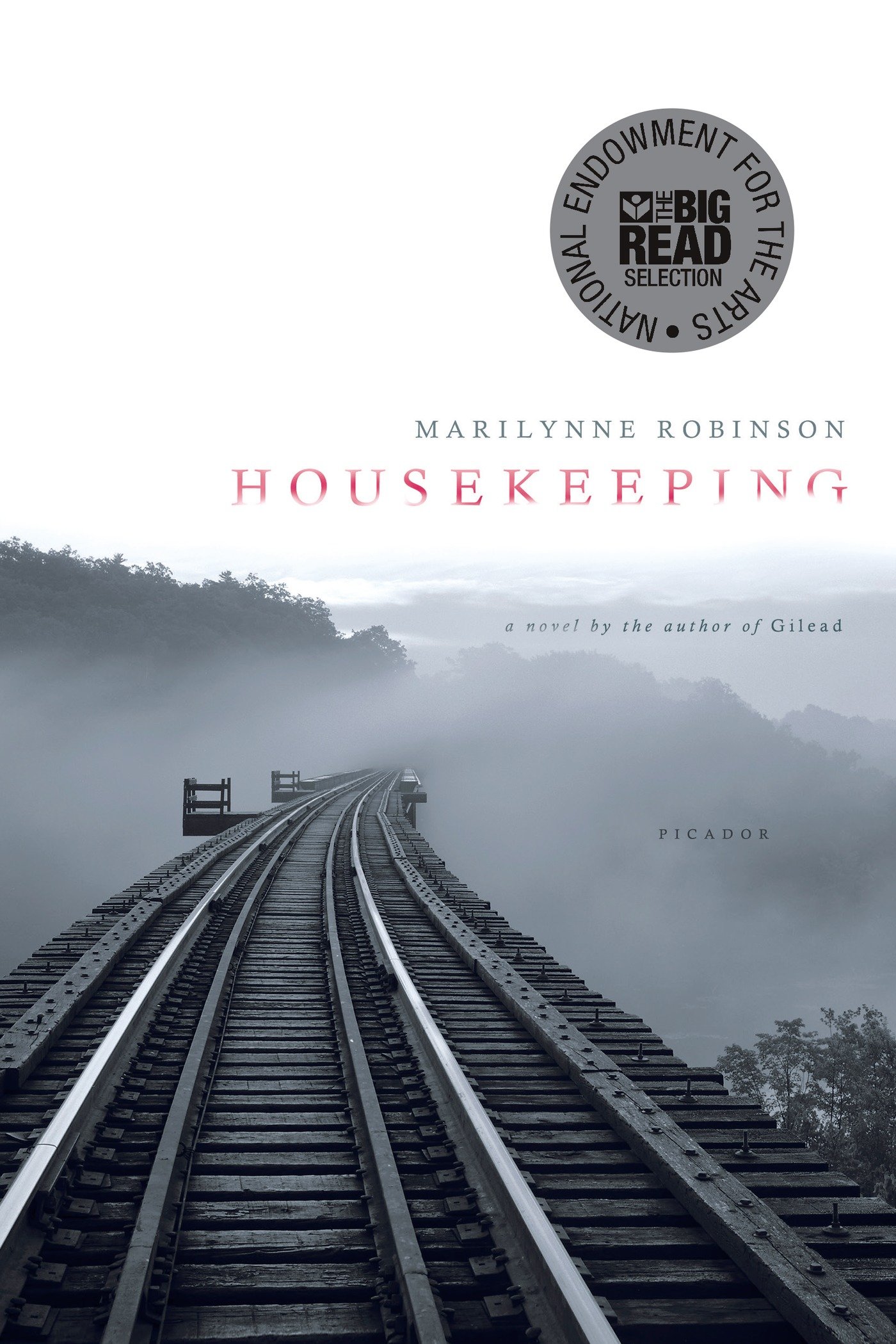
Housekeeping by Marilynne Robinson

Unusually, I was assigned a work of fiction for my study of nonfiction writing.

Set in Fingerbone, a little town in Idaho, this novel is told from the perspective of Ruth, and details her upbringing, along with her younger sister Lucille, by various female relatives. The town of Fingerbone and the surrounding environment, but most especially the lake, play important roles as characters in their own right. Themes overtly include transience and impermanence, and Robinson (who won a Pulitzer for Gilead) employs a subtly shifting narrative voice. A strong sense of place is another obvious feature and focus of this quiet but disquieting novel. Lovely sentence-level language and syntax set atmosphere as well.

I believe I was assigned this book for sense of place, firstly, and for narrative shifting. I was drawn instead to the recurring image and role of water, though, and of that lake in particular. It reminded me of The Chronology of Water and Notes From No Man’s Land for those recurring images that form a theme. I love this kind of imagistic theme, and the way it can provide emotional impact both so subtly and yet so strongly. I’m on the lookout for books that do this kind of work, so keep me in mind.


Rating: 7 mentions of Noah.

The Business of Memory: The Art of Remembering in an Age of Forgetting ed. by Charles Baxter

Baxter solicited essays from established writers and thinkers about memory in an age of information glut, and was surprised by the extent to which they wrote about forgetting, rather than memory. The result is a remarkable variety of personal stories from life and from writing, and a variety of approaches to memory and its partner, forgetting. Not only models of essay form, these can also function as prompts on the topic.

I was quite taken with The Business of Memory, on the whole, but it was a little uneven from essay to essay, in terms of my personal responses. In the end, I decided this was a strength, or a feature of a collection like this.

I was also initially a little confused about whether to call this a craft book, but decided it’s not; it’s an essay collection about memory, by writers and approaching the problems at the intersection of writing and memory, but it’s not intended to be instructive. These are musings, meditations and personal stories. I made a list of those I liked best–a good long list. And as I review them, I see that I like how they each tell a story, a narrative, of personal experience. They touch on memory very differently.

On the other hand, I had some less-favorites. James McPhersons’s essay struck me as pompous, and I took serious issue with his dismissive statement that “women in this elite are guarded from the haphazard intrusions of Eros by the growing number of company sexual-harassment codes”–like, problem solved! And Alvin Greenberg’s gave me trouble: I really appreciated the efforts his essay made to interrogate memory, but I didn’t enjoy his jokey tone. (Also, I’m a huge hypocrite here, but too many parentheticals!) And Steve Erickson’s rambling story struck me as a little bit frantic and confused–as he confesses to feeling.

These reactions teach me that an essay collection can and perhaps should be varied. I appreciate how far these essays (all responses to the same prompt) range, and it feels right that they touched me so differently. Another reader would have different responses, and be differently well-served. I like that idea. I ended up annotating Greenberg’s essay that gave me such a complicated response, because I appreciated my ambivalence.

My favorite essays were these, in order of appearance.

  • Sylvia Watanabe’s “A Book of Names” describes her upbringing in Hawaii, where her father studied bugs, where she learned the importance of naming things to make meaning. She observes her father, and others, losing their memory, and offers a particular cultural understanding of the importance of both names and memory. When she left for graduate school, her grandmother protested: “Don’t go, there will be strangers there, you’ll forget who you are.” It is a lovely essay filled with metaphor, meaning, and images.
  • Victoria Morrow’s “Don’t Look” is haunted. The narrator is a still-young woman investigating her brother’s death, which she has almost entirely filed away, “forgotten” in a defense against trauma. He had always forbidden her to look at him (literally), and now she has failed to see his death.
  • Karen Brennan’s “Dream, Memory, Story, and the Recovery of Narrative” describes her daughter’s traumatic brain injury and subsequent struggles with memory. She describes several dreams, questioning their relationship to reality, and the form of the essay takes on a certain dream-sequence quality in digressions from a mostly-straightforward narrative telling. I appreciated the personal nature and immediacy of this story, and was especially struck by Brennan’s observations about her instinctive turning to narrative to help her daughter. “At some point I hit upon the idea that what I could do for Rachel that her therapists could not do, perhaps, as feelingly, is offer her help with storymaking, with narrative.” “I felt that had I been lying there in some kind of netherworld, I would want a story that made sense.” This is so evocative to me, to think about our individual responses to trauma and how we think it right to help. Some people would deliver endless casseroles. This writer, naturally, wants to provide story. (I also want to say that I had Karen Brennan mixed up with Karen Branan, which gave me a little cognitive dissonance.)
  • I first read Bernard Cooper‘s “Marketing Memory” early in my formal creative writing education, a few years ago. It was interesting to see how differently I read it now. I very much appreciated the essay then, and do now, but differently. Cooper, after the publication of Truth Serum, was alarmed and surprised at the public’s interest in and knowledge of certain personal details which he’d put into his book. When I first read this, I thought it a little naive and disingenuous for him to be so surprised: he’d written about it. But his argument, that he had perceived himself mining experience for material for art, paying attention to crafted language rather than content, makes more sense to me now that I’ve done a little more of that work myself. Also, I’m still in love with Maps to Anywhere.
  • Patricia Hampl’s “Other People’s Secrets” does interesting and hard work examining the writer’s arguable right to write other people’s secrets–here, her mother’s epilepsy. I am alarmed to read that she has a whole file filled with letters from people cutting her out of their lives for the crime of writing their secrets. Eek.
  • Charles Baxter’s “Shame and Forgetting in the Information Age” is a good example of what I respond to in this book as a reader. His essay has four parts, the first about his late brother Tom, the latter three taking more intellectual, theoretical subjects. I marked this essay as among my favorites, but on looking again, it’s really the story of Tom, a loved and loveable and tragic character, that I’m drawn to. Baxter’s words on shame and forgetting in an information-saturated age (and this book was published in 1999! how different now!) are of course wise and valuable; but they don’t sparkle for me like the story of the fallen loved one.

It’s a fine collection, thought-provoking all over the place and in so many ways. I love the diversity here, and would be so curious to hear how other readers responded differently, because I think that’s the beauty of a collection like this: a collection of voices and approaches. I feel certain there’s something here for everyone.


Rating: 9 clean T-shirts for Michael.

Long Day’s Journey Into Night by Eugene O’Neill

This play takes place over a single day, from 8:30 am to midnight, in five scenes in four acts. It features a family of four, Mary and James Tyrone and their two adult sons Jamie and Edmund. Mary is a recovering and then relapsed morphine addict, and Edmund has tuberculosis. They love one another but seethe with anger, resentments, accusations, blame, and pain. Highly autobiographical, it follows O’Neill’s own family life very closely, with Edmund standing in for the playwright.

As a play, it offers a different format in which to write autobiography, one that features present tense, action, and dialog; subtext and interior drama must be communicated solely in dialog and stage directions.

A Long Day’s Journey Into Night gave me a challenge because I don’t read much drama. It reminded me very much of Tennessee Williams, but I’m not sure if that’s because of all they have in common (alcohol, family drama, subtext, angst in a sort of claustrophobic domestic setting) or just because I’ve read so little drama.

A play is normally, by definition, almost entirely built of dialog; stage directions supplement that dialog but are often minimal. This play is something of an exception. The first thing I noticed was that O’Neill uses unusually many and detailed stage directions, which may indicate his interest in closely following the historical truth of his own family. For example, act one opens with several pages describing the Tyrones’ living room, down to the titles and authors of the books on the bookshelves. (These come into play late in the work.) My first thought was that this was a very challenging play to produce faithfully, including in terms of casting, as the characters’ physical appearances are described in great detail. When I learned the degree of autobiography involved, the level of detail made more sense.

For my own purposes in studying this work, I annotated it for the differences between drama and memoir–in other words, for the possible reasons for O’Neill’s choice of format, the characteristics allowed for by the play. It was worth doing, and I look forward to finding a production to view someday. (Kim recommends Sidney Lumet’s film version, with Katherine Hepburn in the role of Mary, Ralph Richardson as James, Jason Robards as Jamie [he also played the role on stage], and Dean Stockwell as Edmund.) But I confess I look forward to reading more familiar work–prose–again, too.


Rating: 7 drinks.

“Goodbye to All That” by Joan Didion

This essay appears in the Didion collection Slouching Towards Bethlehem, but I actually accessed it online, and you can too: here.

From the Essays of E.B. White, particularly “Here Is New York” and “Good-bye to Forty-eighth Street,” and a little bit from “On a Florida Key,” I got swept over to this essay, because I wanted to figure out how they did place so particularly. That is, the particularity of a place, but the fact too that it’s so personal, that even the one Florida Key in the one year when White was there is not the same for anyone else as it was for him. I annotated this essay for the place-details Didion uses, and her zooming in and out.

“Goodbye to All That” is about a time in Didion’s life when she had a relationship with a place. She moved to New York City in the mid-1950s, and away again in the mid-1960s; she writes here of New York “beginning” and “ending” for her. The story of the essay is of the way the specialness of the place ended for her, what she could see from one end of the experience that she couldn’t see from the other. It is a fine blend of particular details and of generalities, or philosophical statements, such as: “one of the mixed blessings of being twenty and twenty-one and even twenty-three is the conviction that nothing like this, all evidence to the contrary notwithstanding, has ever happened to anyone before.” Or, that New York is “a city for only the very young.” There is a definite “Paris is a moveable feast” tone: elegiac, loving of a particular experience indelibly aligned with time and place.

In just over ten pages, Didion memorializes the New York City she loved upon arrival. It is a lovely study of this place, peppered with anecdotes and scenes–parties, snips of dialog–as well as those generalized philosophies; and it retains a feeling of pulled-back nostalgia and reflection. Didion’s choice of details creates that place that is so particular and personal. “When I first saw New York I was twenty, and it was summertime, and I got off a DC-7 at the old Idlewild temporary terminal in a new dress which had seemed very smart in Sacramento but seemed less smart already… and the warm air smelled of mildew…” The hotel room in the second paragraph super-cooled to thirty-five degrees, and the young Didion’s fear to call for help “because I did not know how much to tip whoever might come–was anyone ever so young?” (A lovely aside, addressing the reader there, and again maintaining a reflective distance in time.) The bridge viewed from the window. These details continue to make the place of this essay a specific place–the Triborough bridge, all the street names and addresses named as “the Nineties” and “the Eighties”–but they also give it sensory specificity: “I could smell lilac and garbage and expensive perfume.”

I can’t wait to read more Didion. Up next is The White Album.


Rating: 9 new cabinets.

Love and Fury by Richard Hoffman

Hoffman writes of struggling to know his father, or the challenge of the two fathers: “the one who made me, and the one I’ve made of him.” This is a memoir mostly of Hoffman’s adult life; it also handles race and class and family (the title refers to his theory of familial relationships). Hoffman is particularly concerned with questions of the racism, sexism, misogyny and abuse, the toxic masculinity, the blue-collar working class Pennsylvania of the coal mines with which he was brought up. In the course of the book, he becomes a grandfather and his father dies: these are the occasions for his reflection. And he is calm as well as reflective, introspective; he tries to be hard on himself and look the truth in the eye. This is the classic, universal question I am interested in: the mystery of one’s own parent(s).

I enjoyed Love and Fury. I felt immersed in Hoffman’s reckonings, and I very much identified with the struggle to know the father figure. I liked how he anticipated concerns about his memory, as when he prefaces an early childhood memory with questions about early memories generally, or where he admonished himself to say it (a difficult truth). It felt considered, as a book, if that makes sense–thought out. In fact it is more a memoir-in-essays, with lots of thinking on the page, than a strictly narrative story. A memoir for those interested in social justice as well as family.


Rating: 7 recliners.

Essays of E.B. White

Ah, E.B. White. You know him as the author of Charlotte’s Web and Stuart Little, and as half of Strunk & White, as in The Elements of Style. He wrote for The New Yorker for some six decades, and is one of our finest essayists. This is an important collection, then, and one that my semester advisor Kim Kupperman thought was important to my work.

White’s essays are arranged by subject categories (farm, city, planet, memories, etc.) and cover some forty to fifty years, although unfortunately not all are dated. This essential selection proves his ease and artistry with the form. His prose is conversational, familiar, funny, and serious, but does not take itself too seriously; he is an absolutely likeable narrator, and this collection is both a guide to the United States at various points in history, and simultaneously timeless.

White’s prose is so easygoing; it sounds effortless, but of course we know that’s some of the hardest prose to write. The hardest part of reading so many near-perfect pieces is figuring out what to annotate. But finally I returned to the first essay that made me sort of take in breath at its close, because of its structure and its return: “Coon Tree.”

As White famously writes in his Foreword, the essayist puts on many different shirts when he sits down to write (“philosopher, scold, jester, raconteur, confidant, pundit, devil’s advocate, enthusiast”). But if he can be said to have a single style, it’s what I think of as the classical essayist’s. He appears to ramble across subjects and moods, but this meandering is deceptive; the essay does have a unifying theme or message, even if he seems to wander aimlessly. “Coon Tree” displayed this skill the best, for me, so I annotated it for its structure.

Additionally, I was especially enamored of “Here Is New York” (of course, place), particularly the passage in the second paragraph where he lists places and their distances: “I am twenty-two blocks from where Rudolph Valentino lay in state…” This reminds me of Joseph Mitchell’s meticulous but not tiresome cataloging of the little details that make a place.

But I could go on, when in fact what I mean to recommend to you is: read anything by E.B. White–anything at all, but these Essays make an excellent starting point.


Rating: 9 of the mildest zephyrs.