




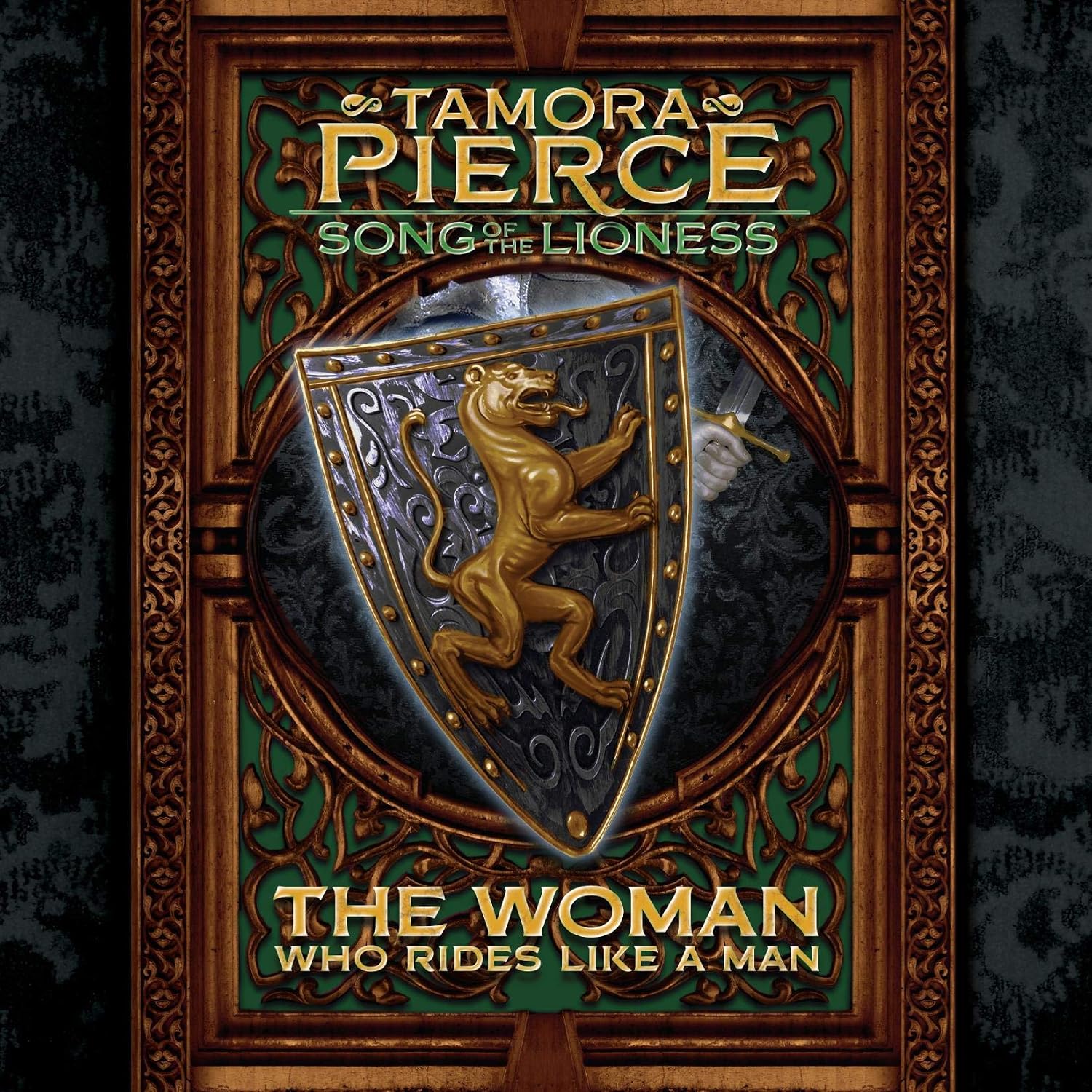
 Book three in a quartet that began here and is flying by. In The Woman Who Rides Like a Man, Alanna has been newly knighted, and the world now knows that she is a woman. We find her traveling through the southern desert (because it is winter and she loathes the cold) with her faithful manservant and trainer, Corum, as her only company. She is in search of adventure, and also legitimacy in the eyes of a court that does not generally approve of women warriors. She finds the first, at least, with the Bazhir, a loose nation of desert folk, and the Bloody Hawk tribe within that people. There is a battle, she proves herself by combat, she is adopted by the tribe; but the existing shaman views her as an enemy, mostly for her gender. After she kills him in a fight she never wanted in the first place, she is tasked with becoming the Bloody Hawk’s shaman in his stead, until she can train a suitable replacement. (There are some interesting cultural questions here; I am more or less as surprised as Alanna that such an important role should go to an outsider.) Of course, the candidates to replace her turn out to be two girls, something that does not bother Alanna but gives the tribe some further trouble.
“I think I’m leaving you in a fairly quiet place,” [Corum] began as he unpacked in his tent. Alanna was watching as she scratched Faithful’s ears. “You weren’t well enough known here that you could get into any trouble, and I thought they’d stay away from ye. But I come back and you’re the mother-blessed shaman of the tribe! You’ve adopted three young ones and you’re forcin’ the women to accept two of their own sittin’ with the men!”
“You’re turning purple,” Alanna commented when he stopped for breath.
But as the Woman Who Rides Like a Man (so called by her new tribespeople, with respect and admiration), she is well placed to push for such a revolution.
In the course of her accomplishments with the Bloody Hawk, Alanna also enjoys a reunion with Prince Jonathan, and they renew their love affair. He asks her to marry him, and one day become his queen; but this will lead in a different direction than he hopes.
By this novel’s end, the prospects for the kingdom of Tortall are looking up, based upon Jonathan’s work with the Bloody Hawk, which is in turn made possible (I’d argue) by Alanna’s relationships. But Alanna’s personal life remains in some upheaval. She’s come a ways from the time when she told the goddess she would never love; in one of her quieter revolutions in what women can be, Alanna takes lovers as she pleases. But she hasn’t settled on what exactly it is that she wants. Luckily, we head into book four with another quest on the horizon.
These books were originally published in the 1980s and have aged remarkably well. I think there is room for some concern in the portrayal of the desert tribespeople, but it does not feel (at least to this reader) necessarily objectionable. I’d defer to a sensitivity reader, perhaps.
I do still love Alanna and her attitudes and adventures, and am looking forward to what the final book in the quartet may hold.
Filed under: book reviews | Tagged: adventure stories, audio, children's/YA, coming of age, gender, historical fiction, speculative fiction |


Leave a Reply