






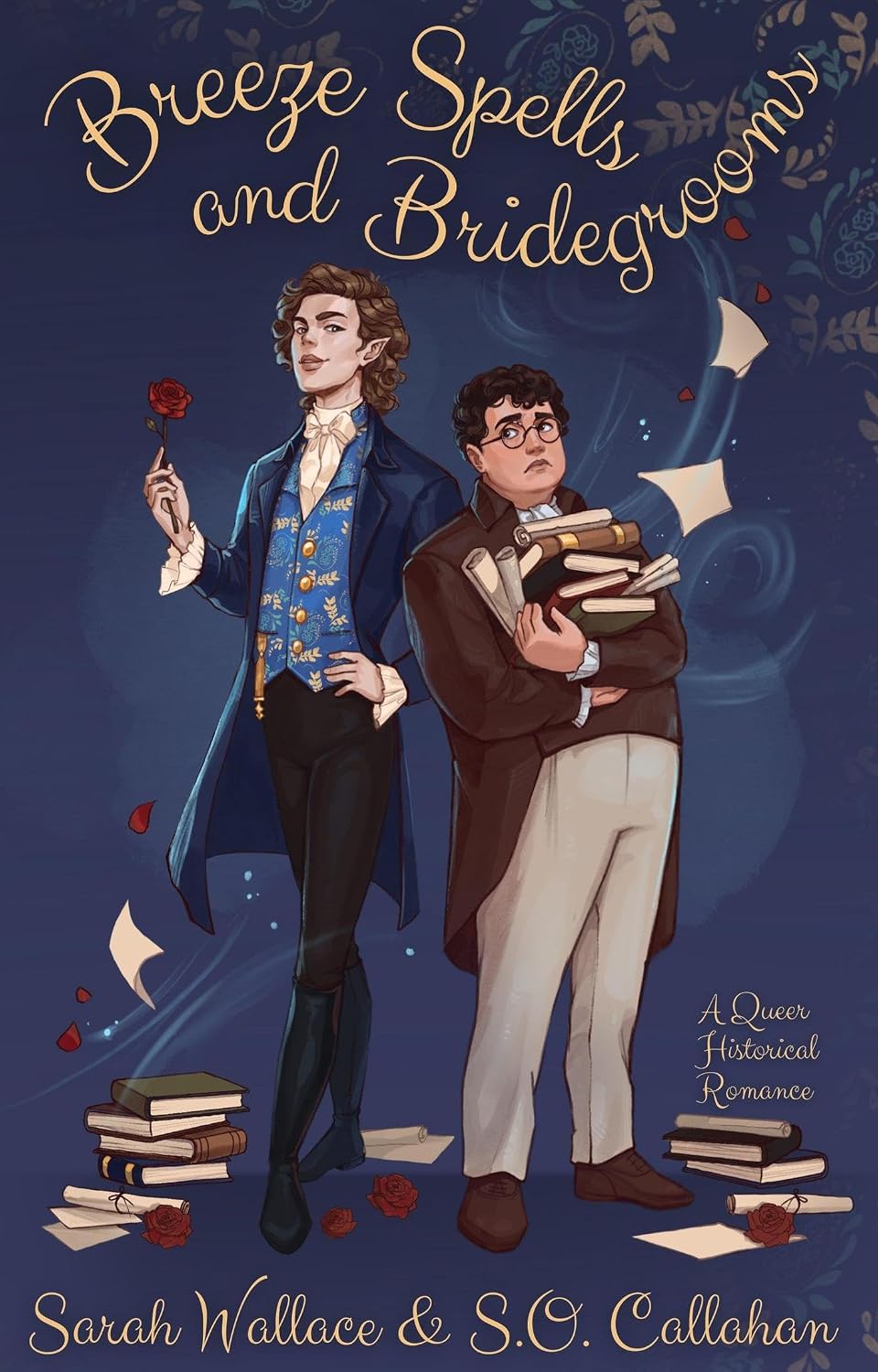
 I had the best time with this lively tale of human-fae relations, magic, and enemies-to-lovers romance. It’s sugary sweet but hit just the right note for me.
In this alternative Regency-era London, same-sex relationships are as usual as hetero ones, and humans and fae folk live together, although not entirely with ease. Everybody (human and fae) takes the Hastings test when they are twelve. This exam claims to test magical ability, and the score assigned dictates each individual’s options for the rest of their life: who inherits, what profession one can enter, and one’s marriageability (which we know is terribly important in Regency London). As we enter this year’s social Season, one Roger Barnes (human) is less concerned with finding a mate, and more concerned with reworking the infamous Hastings test. Roger’s low score has labelled him as worthless, but his hard work on a new test rubric makes the reader suspicious of that conclusion early on. Unfortunately, Roger is assigned to work with Wyndham Wrenwhistle on this project. Wyn (fae) and Roger have known each other since childhood, but never gotten along. Wyn is beautiful, stylish, and aloof, where Roger is chubby, bookish, and deeply anxious. Their partnership for the test rubric is unlikely and prickly from the start, although from the reader’s privileged perspective, they may indeed have complementary qualities and much to offer one another. The trouble really begins when an unusual and eccentric gossip columnist prints the news that the two are engaged–this is false, but once printed, by the mores of their society, it would mean social doom for both families if retracted. And so Roger and Wyn find themselves working not only to fix the Haynes test, but to fake a romantic partnership, complete with romantic walks in the park (chaperoned, of course), deep sighs, and choreographed dances. And spells.
I was tickled by the combination of Regency standards and Wallace and Callahan’s worldbuilding. Human and fae magics, respectively, have long been understood for their differences, not their complementary possibilities. And some features of each will be rediscovered, by accident and with purpose, by this unlikely duo. Roger’s academic enthusiasm is absolutely genuine, and infectious. He really does need help with anxiety; and Wyn, it turns out, needs help with certain aspects of being in the city, as well. This lovely tale includes scholarship, social politicking as well as the political kind, finessing of human-fae relations, and swoon-worthy romance. Breeze Spells and Bridegrooms feels as good as fluff, but with substance. Over 400 pages flew by in an actual blink; I will be looking for more.
Filed under: book reviews | Tagged: fantasy, historical fiction, LGBTQ, romance |


[…] into it, even with an overlay of tragedy everywhere we turn. This book is about the same length as Breeze Spells and Bridgerooms, but felt so different. I love both–but where Bridegrooms raced past in bliss and cakes and […]