






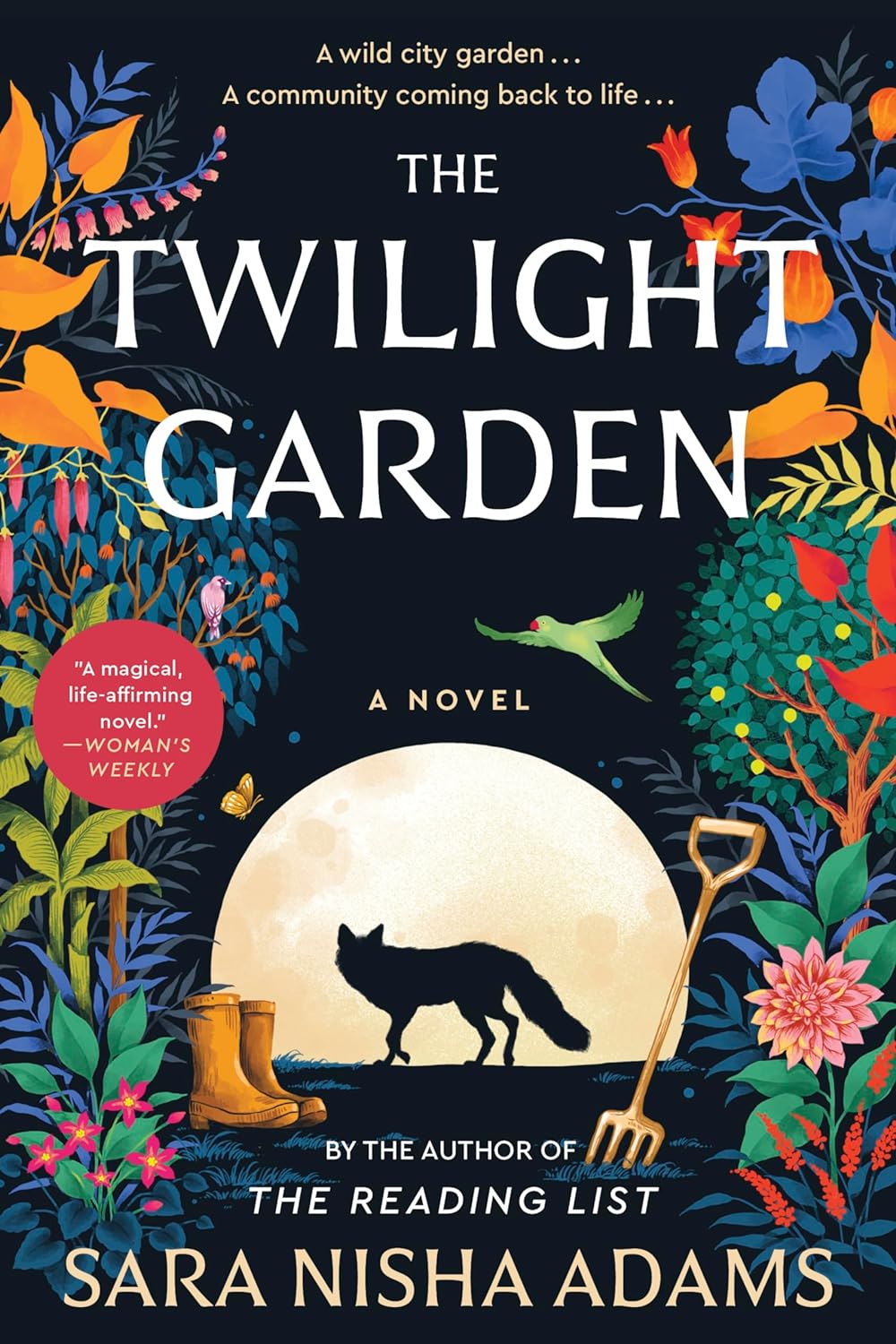
 From the author of The Reading List comes a pleasingly similar, sweet novel of unexpected connections. In a shared garden in London, two sets of neighbors in two timelines (2018-19 and the 1970s and 80s) navigate conflict, build community, share love and struggles, and grow flowers, food, and strong bonds. It’s an optimistic story, which I perhaps don’t get enough of in my life.
I’m thinking of both this and Adams’ first novel as sort of meet-cute, enemies-to-friends stories, with rom-com sweetness but where the relationships that form are not romantic. Rather, neighbors and community members come together, across diversity in age, gender, sexuality, and race, and form deep and meaningful friendships and built families, caring for each other in profound but not romantic ways. There are romances among the cast of characters, but not in the relationships whose trajectory defines the novel. I’m thinking of these as non-romantic love stories, a genre I’ve not thought about before but am trying to define here.
We first meet two neighbors in contemporary London. Winston is a young Indian immigrant who has lived in his rental home for some years with his partner, Lewis, although their relationship seems to be drawing to a close. He’s lonely, disconnected, and a bit depressed, although his work in a nearby convenience store offers a wholesome and healthy dose of community connection. “He was always chatting to customers in the shop, but when it came to the neighbors on his road, he barely knew faces, let alone names.”
Bernice has just moved in next door, newly divorced, with her ten-year-old son Seb. She is white, well-off, privileged, uptight. Because chapters alternate between their perspectives, the reader knows that each is suffering their own private pains, but to one another, Winston and Bernice are each the nightmare neighbor. Their conflict centers around a shared garden, which Winston has treated as a private sanctuary and Bernice views as a death trap for her son. This garden, now in disrepair, transports readers back to the earlier timeline and two additional protagonists.
Maya first moved in (to what is now Winston’s home) with her husband Prem when they were newly arrived from India. They were soon joined by a daughter, Hiral. Next door (in what is now Bernice and Seb’s home) an older woman named Alma lived in the house she’d been raised in. Initially prickly, and permanently ornery, Alma becomes a dear friend to Maya’s family, a relationship that began in the garden. Alma is a very serious gardener and a bit of a control freak, but Maya encourages her to accept help from their community, and they wind up very much a neighborhood hub for food, fellowship, work, mutual support. In Winston and Bernice’s time, mysterious missives inspire the feuding neighbors to attempt reawakening the rich shared garden of years past, and the bonds of community come, slowly, along with it.
This story is deeply sweet, perhaps approaching what my mother would call ‘precious,’ but never getting there. There are no bad guys, although there are some bad behaviors; instead, these are humans who suffer and sometimes handle it poorly, but feel badly about it and try harder next time. The loves (familial, friendly, and romantic) are real and deep. I cried several times. It felt wholesome and good. There is tremendous diversity here in several senses, and closeness is possible across all those lines when humans reach out and make efforts, or when there is real need. It’s a lovely, hopeful version of the world, and I’m here for more of it.
Filed under: book reviews | Tagged: family, friendship, misc fiction, nature, romance, sense of place |
 pagesofjulia
[…] The Twilight Garden, Sara Nisha Adams – fiction […]