shorts by C. L. Polk: “St. Valentine, St. Abigail, St. Brigid”; Ivy, Angelica, Bay; The Music of the Siphorophenes

I have been missing Polk’s Kingston Cycle (starting with Witchmark), and was pleased to find a few shorts (for free!) on their website. Here are one short story and two novelettes. (The last is offered with two spellings! Apologies if I’ve used the ‘wrong’ one here.)
“St. Valentine, St. Abigail, St. Brigid” is a short story with some sweetness in its protagonist’s devotion, and in the honey produced by her mother’s bees, but also darkness, in the prices we pay and the love that is not returned. Theresa’s mother is a powerful magician, a mistress of the bees. Theresa was the price she exacted from a client. She is protected and privileged, but not loved. She will make her own deals for the sake of her own affections. As I recognize from other Polk works, this story combines a dreamy, weighted atmosphere and deep feeling in a delicious blend, with a mythic tone and a character I care deeply about in just a short span of time.

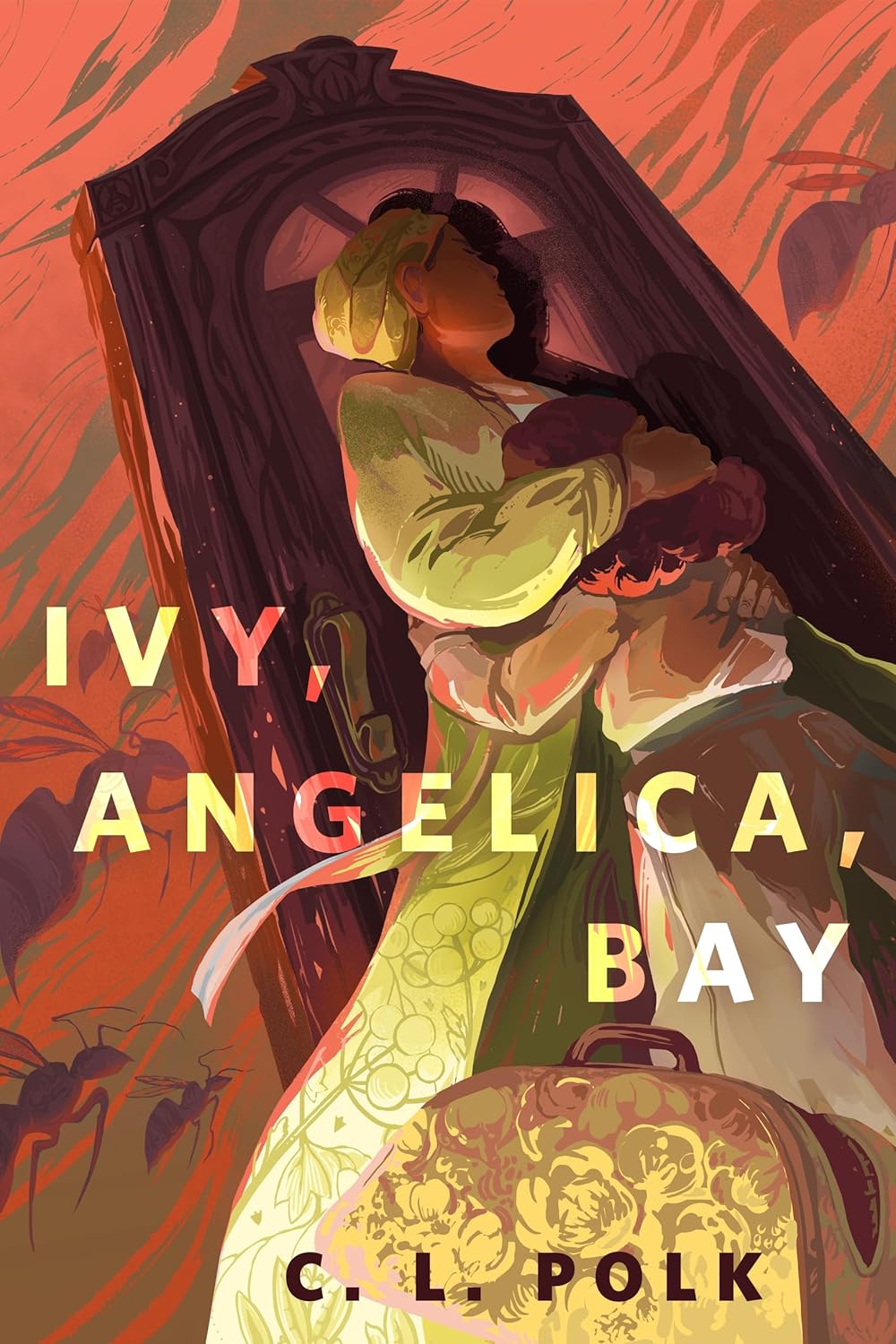
I was even better pleased to find Theresa again, grown up, in Ivy, Angelica, Bay. The heartbreak hits a bit harder here, perhaps because we are growing up. But she’s coming into her powers, as well. The ending offers a twist I love, with opportunities; I wonder if we might hope for more fiction, perhaps at novel-length, in this world: Theresa and the other mistresses of the bees who come before and after, and the world of good people but also darkness in which they move.
The Music of the Siphorophones or Siphorophenes (no cover image I could find) comes from a slightly differently imagined world. Where the bees wield their power in a world that looks a lot like ours, this novelette reminds me a bit of The Expanse: space pilots in a future universe in which ‘spacers’ (who live on ships and stations and planets far from human origins) have developed very differently from ‘grounders’ (mostly-Earthbound people), and there are galaxies’ worth of threats to consider in interspace travel, from pirates to intrigue in politics and entertainment, and good old-fashioned human trauma. But also the Sirens, who offer (reputedly) something like a religious experience to those lucky enough to encounter them. There will be big moral questions on offer for our small cast of characters here, and again, opportunity for this world to grow into more writings for Polk, if they desire it. I hope they do.

This continues to be a talent I’d like to hear more from.


Rating: 7 bulbs of water.

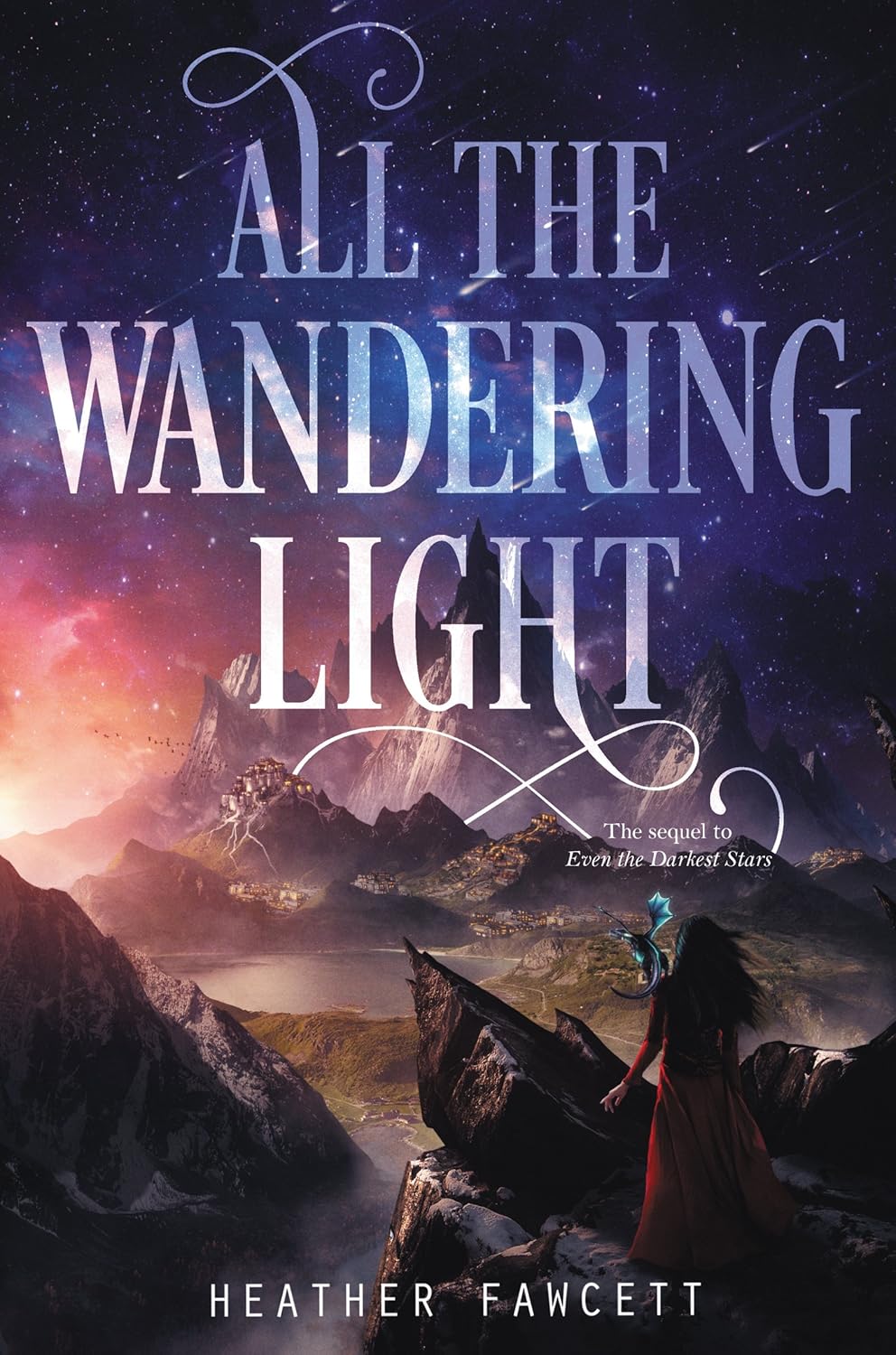
All the Wandering Light by Heather Fawcett

This one follows Even the Darkest Stars, with similar darkness, coming-of-age growth and learning and complication, and love. As is my usual practice, this review will contain spoilers for that previous book but not for this one.

So, on with the spoilers: at the end of book one, we had been hit with the shocking news that River himself was secretly a witch, and therefore obviously (to Kamzin and those of her world) a natural enemy. He has broken the binding spell that stole the witches’ power generations ago, and now their powers are restored, and the Empire is in danger. We learn quickly, though, that River is not so much motivated by wanting to overthrow or hurt anybody; rather, he wanted the freedom of possessing the powers he was born to. He wants to be himself. But by releasing all witches, he has enabled those who have crueler goals than he does, including revenge. His brother Esha intends to be the next emperor of the witches, and desires power enough to destroy the humans’ Empire, including Kamzin and everyone she loves.

In similar fashion to book one, a race is on, this time to get to a fallen star that is said to offer unimaginable power to whomever wields it: the human Emperor or the witch one. Kamzin travels with her friend Tem, her sister Lusha (and the two sisters offer nearly infinite messy siblinghood), and for part of the way, Mara, who was once a member of River’s crew. In the other camp, River reluctantly, even half-heartedly, helps his brothers. The plot of the book follows these two groups, centered on our protagonist, Kamzin–angry and hurt at her betrayal by the magnetic River, who had been a bit of a romantic interest–and her counterpart, River himself, who is likewise confused at the way the world reshapes around him and the power struggles that involve him even without interesting him much. This conflict will build to affect (again) the very fate of the world, and hinge upon the ability of the humans, in particular, to reconsider old prejudices.

Along the way, the part of this book that I struggled most with was the detail in some of the fighting or conflict scenes. Maybe it’s just this reader, for whom the fighting (in its minutia) will never be the most interesting part of the story. But especially with the ethereal, ghostly sort of enemy (and other only-halfway-there monsters), the shadowplay violence is a bit abstract, and doesn’t hold my attention well enough to sustain the way some of those scenes dragged on. I got a bit impatient. I think where Fawcett excels is, yes, worldbuilding, but most of all relationships: the way people (or witches, or stars!) interact and communicate and treat each other. And/or, this is where I’m most engaged with any story. There was lots to love here, just a little that I wished moved a bit more quickly. It’s worth noting that the two books in this duology were Fawcett’s first two. It’s clear to me that she’s improved from here.

I have just two more middle grade books of hers to read and then we have to wait for her to write more. Fawcett remains one of my favorite authors of the last year or two, so I hope she’s hard at work!


Rating: 7 beautiful ball gowns (what?!).

VenCo by Cherie Dimaline

I waited too long to get to this one that was recommended by Liz. Punch line: I think the title’s ‘Co,’ which felt corporate to me, turned me semi-consciously away from this book for a while. (I’ve had it on the shelf for maybe years, since Liz told me I should read it.) And… that’s very much the point, in the novel. As the cover shows (I’ve been looking at just the spine all this time!), ‘VenCo’ is a hidden-in-plain-sight reworking of CoVen. As in witches. Hidden behind a corporation. Very clever. So clever I missed out on reading this great book for longer than I should have. (Facepalm.)

I also read this book immediately following one called Lessons in Magic and Disaster, which is yet to be published so you haven’t seen my review yet, but keep your eyes peeled, because the two books back-to-back could not have been more perfectly paired. Chef’s kiss.

Okay, so here we are in VenCo, beginning with a prologue, “The Oracle Speaks.” Three women in three luxury vehicles pull up outside an understated building in Los Angeles. We get descriptions as they head inside, and the descriptions are a juicy, lovely start. They are the Maiden, the Crone, and the Mother, and together they form the Oracle. They are concerned about time; it’s running out; the circle must be formed under tight deadlines, but the sixth witch is a doozy, they assure each other. Cut to chapter one, “The Legacy of Lucky St. James.” Here we meet Lucky, who is struggling in Toronto. The orphaned (adult) child of an absent father and an alcoholic, but compelling, mother, Lucky lived with and was cared for by her lovely grandmother Stella until the roles reversed and now it would be more accurate to say that Stella, with dementia, lives with and is cared for by Lucky. The younger woman is scraping by, about to be evicted, dubiously employed, unsure how she’ll continue to provide for Stella. Cut again, in chapter 3, to Meena Good, a witch and leader of a coven-to-be, in Salem, Massachusetts. (Yes, we do see how predictable that sounds, but bear with us.) Meena’s group of five witches is introduced from here, until their path intersects with that of Lucky (who reminds me very much of someone Chuck Wendig would create), and the delightful, messy Stella. Every one of these characters is an absolute joy. Even though their story has much darkness and cynicism, they are steeped in and practicing love, just as hard as they can. Except for the one really evil character, who I haven’t mentioned at all yet.

It’s expansive and wonderful: I love how the magic fits neatly into a world we mostly recognize as absolutely and realistically our own. (I love the way Salem, Mass. is handled, the self-aware nod to what a perfect town this is for witch-hunting, ha, but also really.) The stakes are sky-high, the women are doing their best with conflicting goals, they are balancing loyalties and loves and basic survival needs. The future (we hope) coven is something we’re all rooting for.

I found this an easy world to get lost in and felt genuinely sad when the pages closed. I’ve already ordered more from the same author.


Rating: 7 spoons.

Even the Darkest Stars by Heather Fawcett

I just went ahead and followed Ember and the Ice Dragons with another Fawcett book for younger readers. This one is a bit darker than that; I see that Ember is catagorized as middle-grade where this one is young adult, for what that’s worth.

Even the Darkest Stars is set in a magical-world version of the Himalayas, with yaks and butter tea and very high, very cold mountain climbing. But a parallel world to our own, in which an emperor rules over a huge region, keeping everyone safe from the witches of a bygone time. Our protagonist is Kamzin, a teenaged girl in the village of Azmiri, which is far from the emperor’s Three Cities. Her father is the village Elder; her mother was a great explorer in service to the emperor, but she’s been dead for years. Her older sister Lusha will be the next Elder. She studies astrology. As the younger daughter, Kamzin’s fate is to be the village’s next shaman. She is apprenticed to the current shaman, but is a poor student. Instead, Kamzin has always felt a strong pull to travel, to climb, to run, to map, to explore. When the emperor’s Royal Explorer, the famous River Shara, comes to the backwater of Azmiri, Kamzin knows she must stop at nothing to become a part of whatever has brought him here.

And after some brief intrigue and machinations, we wind up with a race. Lusha, the obnoxious older sister, takes to the road with one of River’s own retinue, aiming to beat the Royal Explorer himself to the top of Raksha – the highest mountain in the world, never climbed by a human, which defeated even Kamzin and Lusha’s late mother. Kamzin succeeds in joining up with the great River Shara, a handsome young man – younger than she’d expected – whom she finds bewitching. Also in their small party is Kamzin’s best friend, Tem, a far more accomplished (though untrained) shaman. And a stowaway: Kamzin’s familiar is a fox (or foxlike critter) named Ragtooth. They share a close bond but also he is apt to bite her. Oh and there are dragons: they are more tangential here than in the last book, but your standard ‘house dragon’ will eat just about anything remotely edible and in response, their bellies put out light. So an alternative to a lantern is to feed your scraps to a dragon. Part pet, part appliance, sometimes a nuisance. It’s quite fun. There’s a lot that is fun in this imaginative world… but also, Kamzin’s world and everyone she loves is in grave danger. It takes a while for the true nature of River’s quest to Raksha to be revealed, but once it is, the stakes couldn’t be higher.

This is a compelling story, populated by mystery, magic, fun creatures, breathtaking landscapes, true friendship, the germ of romance, and a tortured coming-of-age made harder by the possible end of the world. There is also great adventure, death-defying climbs, races for fun and for life-or-death… bit of a Princess Bride list there. My favorite part is that it ends with a clear nod to a sequel, which I’ll have my hands on in a day or so. But yes, also darker than Ember. More bad things happen here, and more is at stake. I may not hand it off to the thirteen-year-old yet. But I am so in for book two.


Rating: 7 sour apples.

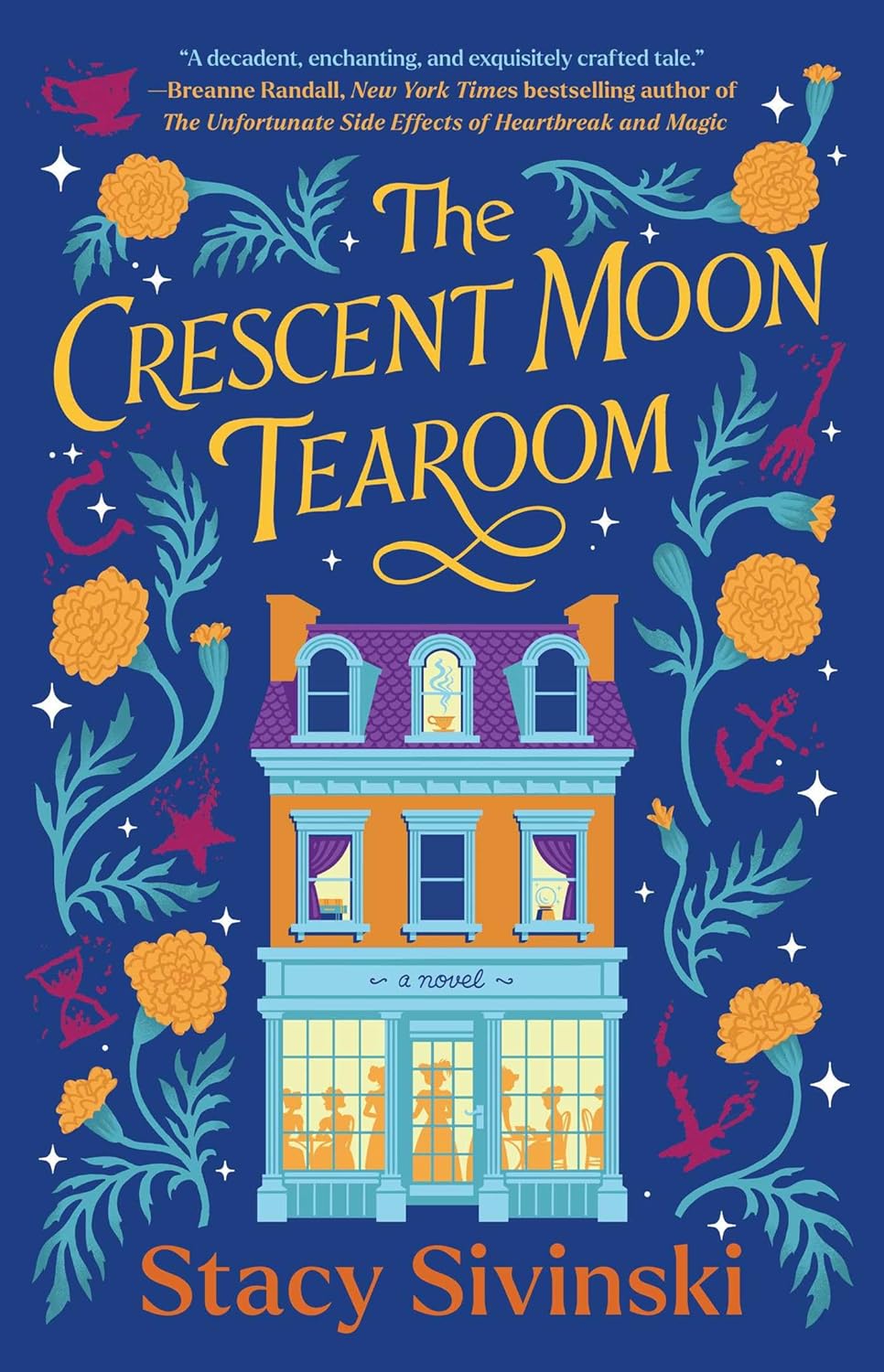
The Crescent Moon Tearoom by Stacy Sivinski

This entrancing debut stars triplet witches who can see the future, but must work together and individually to grasp their own.

Stacy Sivinski’s first novel, The Crescent Moon Tearoom, is a sweet, wise balm of a story about family, change, and coming into oneself.

The Quigley triplets, Anne, Violet, and Beatrix, have always been close. Their beloved mother was a powerful Diviner, able to read the future in various signs. Her daughters put the same skill to use in the Crescent Moon Tearoom, where the three young witches sell magical teas and delectable baked goods and tell fortunes to hordes of Chicago’s women and witches. The tearoom (run out of the family home, itself an endearing character with a will and magic of its own) does a booming business, but all is not well with the Quigley sisters. A challenge comes from the Council of Witches: the younger three must help three older witches discover their Tasks, which is a witch’s very reason for existence and is imperative to complete before a witch passes, or she’s “doomed to linger as a spirit for all eternity.” If they fail, the Council will close their shop. The events entwine with a potential curse on the sisters, threatening to undo everything the sisters love.

Although nearly identical in appearance, the Quigleys are quite different individuals. Their mother used to say, “Violet has her head in the clouds, and Beatrix’s nose is in a book. But [Anne’s] feet are always planted firmly on the ground.” While Violet (the family baker) is volatile and in constant, foot-tapping motion, Beatrix is shy and dreamy. Anne is the caretaker, the brewer of teas, and has secretly been holding back her own magical powers so as not to surpass her sisters. They “had been locked in their web of affection and dependence for so long now. Their bonds had taken shape during childhood and seemed to be coated in bronze.” As they struggle with the ominous Council’s extraordinary demands, their differences are highlighted, even as each sister finds opportunities for new growth.

Sivinski’s droll telling details the lovable Quigleys with all their quirk and charm, each with their own moving emotional arc. Chapters are headed with signs and symbols, as one might find in tea leaves at the bottom of a cup, with brief descriptions of their meaning: a fan suggests flirting with temptation; a bat foreshadows a fruitless endeavor. Each line captivates: “As seers, the Quigleys had long ago accepted that questioning what they saw in the remnants of their customers’ tea was about as useful as trying to wash cherry jelly out of a silk blouse.” With its sweetness, realistic challenges, and satisfying resolution, The Crescent Moon Tearoom is a rare pleasure. Readers will miss the Quigley sisters at this novel’s end.


This review originally ran in the July 26, 2024 issue of Shelf Awareness for the Book Trade. To subscribe, click here.


Rating: 8 petals.

Her Majesty’s Royal Coven by Juno Dawson

This very sweet story of witches, female friendship, intrigue, and coming of age was recommended by Liz. It’s a fun combination of some pedestrian features of regular life – government bureaucracy, for example – with witchcraft and magic. We first meet a group of young girls on the cusp of being inducted into the adult witch’s world of the coven; then we flash forward to find them navigating that adult world in very different ways. Witches can be people of color and queer people, struggling with what that means for any of us in the real, mundane world, as well as the parallel prejudices and oversights of witches (who might be magic but are also just people). Niamh is mourning her late fiancé and just wants to keep her veterinarian practice going smoothly, but she also can’t turn down a young warlock (or witch) in need. Elle has all but renounced her powers, enjoying her cookie-cutter life as wife and mother, until her teenaged daughter shows signs that she’s got powers of her own. Leonie runs an important intersectional coven, with the support of her beloved girlfriend Chinara, but Chinara wants a baby and Leonie’s not sure she’s ready. And Helena… well, her role as High Priestess of Her Majesty’s Royal Coven may be her logical due. Or it may be just a bit much for her. A dire prophecy appears on the horizon, and these four old friends will be hard pressed to handle it each in her own way, to say nothing of how they relate to one another.

It’s really a clever, charming, smart, modern story. These four very different women are just muddling through life as any of us does, magical powers notwithstanding. They parent, find romance, make hard choices, try to do good, and maintain important old friendships – or let them go when they no longer serve. They have to wrestle with bigotry, and they fight for what’s right. They are sweet and strong. And this novel is the first in a trilogy! Thanks for the recommendation, Liz.


Rating: 7 kittens.

The Very Secret Society of Irregular Witches by Sangu Mandanna

I no longer remember where I got this recommendation, but it was a *great* one.

In the opening pages we meet Mika Moon, a young Indian-born witch living in modern-day England. She was raised by a quickly-turning-over series of tutors and nannies, who were in turn employed by an elder witch named Primrose. Primrose is the keeper of the Rules for witches: in a nutshell, witches live in secret and in minimal contact with one another, because witches together mean too much magical dangerously combining in small spaces. Mika is lonely. As a relief valve for her enthusiasm for witchiness, she releases videos on her YouTube channel in which she brews potions and casts spells: it’s not meant to be taken seriously, of course. So she’s alarmed to be caught out by a strange offer to tutor three young witches at a mysterious estate called Nowhere House.

Mika struggles to balance her own strong desire for companionship, community, even family, and her passion for her work, with her grudging respect for Primrose’s Rules. Three little witches in one space should be very dangerous indeed, especially because (like young skunks!) they’re not yet in full control of their powers. Nowhere House turns out to be magical in many ways for Mika, though. She is just beginning to find the kind of kinship she feared would never be an option for someone like her – someone different – when it turns out there are still more layers of secrets than she’d realized.

The Very Secret Society of Irregular Witches is a lovely book. With themes involving outsiderness and the search for belonging, the risks of relating to other people, built families, passion for one’s calling, and every kind of love, it’s a beautiful, affirming study in humanity. Central characters show a nice diversity in age, ethnicity and sexuality. Especially with its realistic, fully-formed child characters, it feels like it wants to be friendly to young adults (such positive messages!), and I was going to classify it as such for nearly 300 pages – at which point there occurred a pretty heavy sex scene, so keep that in mind.

I’d recommend this to anyone – even kids if you’re ready to expose them to sex! – and am anxious to see more from Mandanna. I am so charmed.


Rating: 9 star fragments.

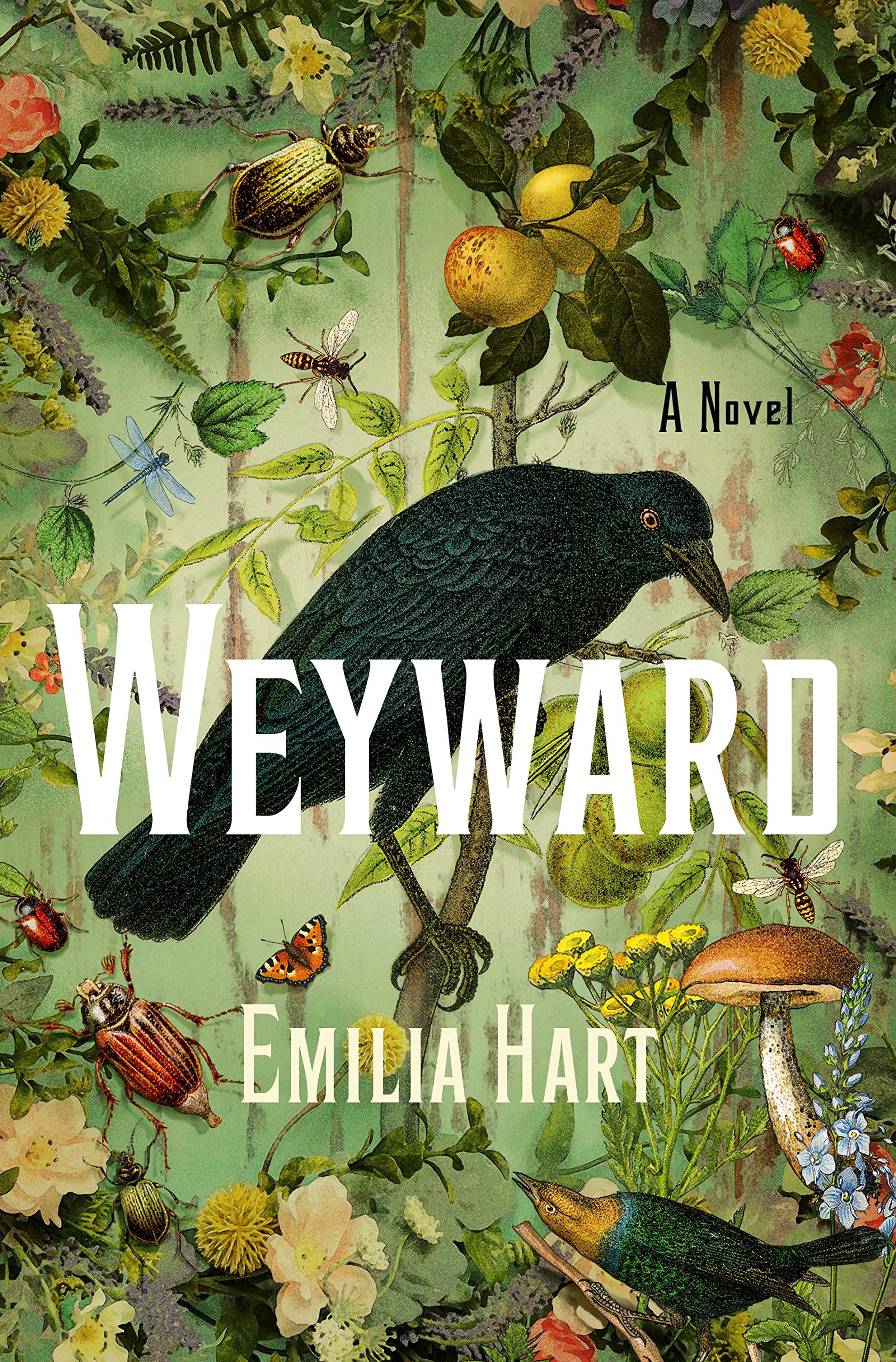
Weyward by Emilia Hart

The stories of three imperiled protagonists across centuries connect in this suspenseful, magical debut about the power of women and the natural world.

Emilia Hart’s first novel, Weyward, glows and glimmers with hidden powers, thrills and danger, a close connection with nature and between women across time. Three distinct stories eventually link to form a larger tale about strength, resilience and love.

Altha goes on trial for witchcraft in the English countryside in 1619. In 2019 London, Kate attempts to escape an abusive partner while harboring a significant secret. And at a grand estate in 1942, teenaged Violet struggles against the limitations of her father’s strict household rules, consumed by an unladylike love for trees, insects and other natural wonders. In alternating chapters, each of these stories deepens. Altha, the daughter of a healer, tries her best to follow in her beloved late mother’s footsteps, helping her neighbors and causing no harm, while dodging the increasingly avid witch-hunters of her time. Locked in a Lancaster dungeon, Altha does what she can to protect herself. Kate flees the city undetected, holing up in a cottage inherited from a great-aunt she hardly knew, but her safety there is tenuous as she plans for an uncertain future. Violet is a tenacious and spirited 16-year-old, but powerless as she is imprisoned in her father’s world; she dreams of becoming a biologist or an entomologist, but cannot even visit the local village. Men in the Weyward world, in all three timelines, are sources of power and abuse, not kindness, but Violet’s loyal brother forms a notable exception.

Each woman must learn about and come to terms with her powers and her connections to the natural world. Violet is passionately entwined with a particular beech tree, with damselflies and weasels, but no one will even tell her her mother’s name, let alone the family history that she senses casts a shadow on her life. Having lost her father at a young age in a curious accident, Kate lives in fear of the birds and insects that most call to her. Altha is reluctant to exercise her full powers, having promised her mother she would be careful. But, she says, “I had begun to suspect that nature, to us, was as much a life force as the very air we breathed.”

Hart expertly weaves together disparate but connected storylines, with leaves and butterfly cocoons and a mountain stream. Her protagonists are strong, but hard beset by the forces around them, even across centuries. Her prose sparkles with wonder and simmers with danger. Weyward‘s atmosphere is compelling, as each plot thread offers suspense. With a momentum of its own, this debut draws readers inexorably to a glorious conclusion that celebrates connectedness and the power of women and nature.


This review originally ran in the February 2, 2023 issue of Shelf Awareness for the Book Trade. To subscribe, click here.


Rating: 7 feathers.

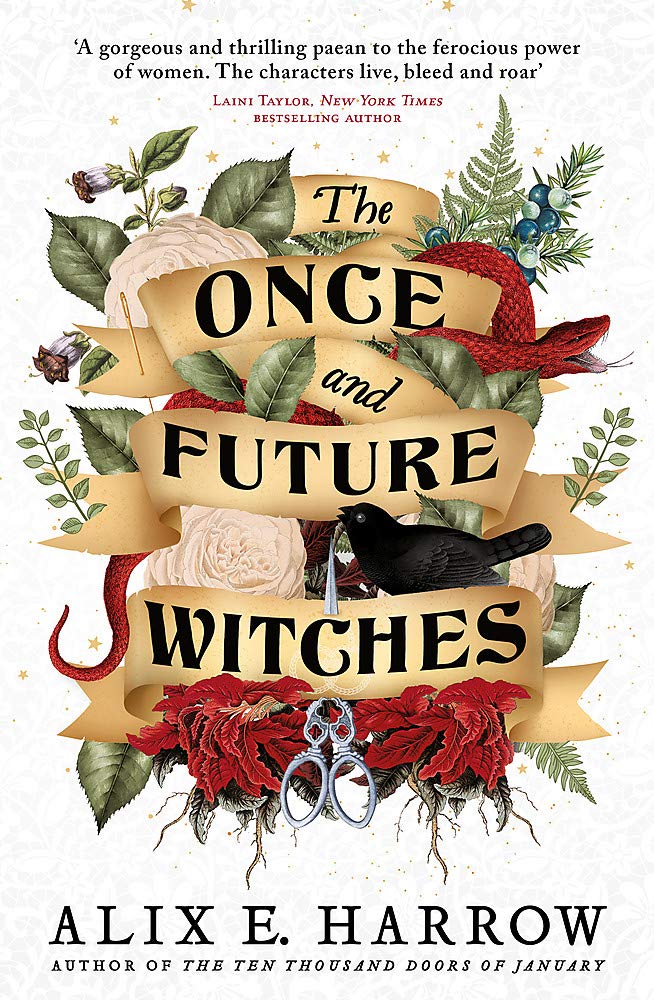
The Once and Future Witches by Alix E. Harrow

Brilliant again. I have a new favorite author. Write more, Alix Harrow.

There’s no such thing as witches, but there used to be.

James Juniper Eastwood is the youngest of three sisters, the one left behind. Their mother died when Juniper was born; their late grandmother, Mama Mags, had been a beloved teacher and friend, but their father was abusive. As the book begins, this youngest sister – the wild, reckless one – has left her family’s rural land and headed into the city of New Salem, a fugitive from justice and alone in the world. Imagine her surprise when she immediately encounters the middle sister, the strongest and the beauty, Agnes Amaranth, and the eldest, Beatrice Belladonna, a bookish woman (quiet, listening) now working as (of course) a librarian. She is further surprised to learn that Agnes and Beatrice have not been in touch since they left her behind all those seven years ago.

So opens The Once and Future Witches in the spring of 1893. New Salem is vibrating with the tension of women’s suffrage and the backlash of a mayoral candidate who claims to offer “light against the darkness” but would really like to reinstate Old Salem’s treatment of suspected witches. Both issues turn on the question of women’s power, or whether they should have any at all. Juniper is predictably full-speed-ahead, unhesitant to stop at any mean’s – including Mama Mags’s spells or wholesale violence – to advance women’s freedoms. Beatrice is inclined to keep her head down. Agnes has been working hard to scrape a living on a mill girl’s salary, and she’s just discovered that she’ll need to scrape as well for the baby she’s carrying. However, despite their wishes, it seems that the Eastwood sisters are tied to each other’s fates – and to the possible return of the Lost Tower of Avalon and the Last Three, Maiden, Mother and Crone, those fabled witches from back when women held real power.

Witching has perhaps not died out entirely. “Back home every mama teaches her daughters a few little charms to keep the soup-pot from boiling over or make the peonies bloom out of season. Every daddy teaches his sons how to spell ax-handles against breaking and rooftops against leaking.” “Witch-blood runs thick in the sewers,” it’s said: poor folk have held onto the minor spells and charms longer than respectable ones have. And if witching sounds very gendered so far, never fear. The Eastwood sisters will explore all sorts of boundaries, including the question of whether men can work women’s magic and vice versa, and whether those categories even make sense. They will find romance with people of various genders; they will reassess the archetypes of Maiden, Mother and Crone. (“Every woman is usually at least one of those. Sometimes all three and a few others besides.”) They will learn to question what it really takes to be a witch in the first place.

This novel is a lightning-paced, page-turning read at over 500 pages; but it does a lot of twisty-turny work in that space, too, and I don’t want to do much plot summary for fear of spoilers. Harrow’s world-building is delightful, but part of the delight is watching the rules shift and change. The sisters do band together, and there are big fights to be fought, along with the other women – and men, and people who challenge those labels – of this big, diverse, fascinating world. (The novel remains set in New Salem, but the battles are decidedly global.) I love how intersectional are the issues: the vote for women, witchcraft, labor rights, class, race, sexuality and gender, pockets. (“This is the precise reason why women’s dresses no longer have pockets, to show they bear no witch-ways or ill intentions.”)

I adore these characters, and the way they both play to type (Maiden, Mother, Crone) and subvert them. Juniper is obviously a hero – she’s the one who knows that “the trick to doing something stupid is to do it very quickly, before anyone can shout wait!” But Agnes and Bella (who eventually drops the more staid ‘Beatrice’ for her mother’s-name, Belladonna) offer perhaps more depths and complexities. Juniper’s devotion to the cause, and to her sisters, could hardly be questioned; but because they spread their loyalties a little further, Agnes and Bella arguably have to make harder choices to stand by what they believe in. There are many loveable, interesting secondary characters, but it is Miss Cleo Quinn, fearless Black journalist and very special friend to one of the Eastwoods in particular, who holds the fourth spotlight on this stage. She has secrets and baggage of her own, but once committed, she never looks back. A handsome union organizer and an older librarian show that men have a lot to offer in this world, too. And that “men really ought to try offers of fealty rather than flowers” more often.

There is so much to love here. Complex plotting, thorough world-building, lovely, growing-and-changing characters, humor, romance, intersectionality, women’s rights, librarians and scholars, badassery. I’m completely sold, just need more from this author.


Rating: 9.5 snake’s teeth.

movie: Roald Dahl’s The Witches (2020)

I recently assigned my Comp I class a book, movie, or television review, and then went looking online for examples of movie and TV show reviews, since I don’t so much specialize in those. I came across a review of a new production of one of my favorite childhood reads: Roald Dahl’s The Witches. (Dahl remains a favorite.) The TV channel who *exclusively* owns this movie offers a free trial, so off I went.

This version blends live-action and special effects to land in a place that is visually rich and simple at the same time. It’s rather beautiful (and often horrifying), but a little cartoonish. Anne Hathaway is the Grand High Witch, Octavia Spencer is Grandma, and Chris Rock narrates as the voice of the older version of the Boy; the Boy himself is played by Jahzir Bruno. The Grand High Witch has a vaguely Germanic accent (nope, wrong again). I found this movie visually pleasing, scary in all the right places, and generally a good, nostalgic return to the novel that I grew up with and loved so much. It matches the book fairly closely, with only a few variations. The pet mice from the book here become a single mouse with a backstory that the novel did not supply. And I regret that they cut the logical argument about (spoiler here; highlight to read white text) the fact that the witch-mice will be twice as dangerous as they were in womanly form, and thus will need to be swiftly dealt with as they were in the hotel, but I guess no one will miss that who doesn’t remember the novel. (The 1990 film version, which I have not seen, changed the ending. That, I don’t think I could forgive.)

What I most missed is one of my favorite details from the novel, although I think I may give it more significance than Dahl necessarily intended: all the ways that witches can disappear children, with examples, as told early in the story by Grandmother. I guess it would have been hard to put that in to a film version, and we get a parallel story instead, that of Grandma’s childhood friend Alice. It’s something I missed, though.

This film does bring race into the story in a way (as far as I know) entirely new to Dahl’s work, and I dug it. It’s just a bit under the surface, but the boy and his grandmother are Black, living in Alabama in the late 1960s, and the fancy seaside resort where they go to stay (and then encounter the massive coven of witches) is a former plantation. They are reminded that perhaps they don’t belong there – for class reasons, of course. The film makes no more of this, but there’s plenty to sit with, anyway.

Perhaps not a masterpiece of film, but a fine story to sink into for an evening. Good for nostalgia; makes me want to go back and read some Dahl all over again. I think I’d started with The BFG.


Rating: 6 drops.