For a Love of His People: The Photography of Horace Poolaw by Nancy Marie Mithlo and the Smithsonian Institution

Arresting images of his community, taken by a Kiowa photographer, enriched by commentary.

for love

Horace Poolaw (1906-1984), a Kiowa Indian from Oklahoma, was an avid photographer who never made a living from that passion. For a Love of His People: The Photography of Horace Poolaw is the first major collection of his work, and serves as companion to a 2014 exhibition under the same name at the National Museum of the American Indian in New York City. Poolaw’s own photographs of his family and community, many never before published, are accompanied by related artwork in a collection of more than 150 images; these striking, vibrant images are not the only appealing aspect of this beautiful book. Essays and interviews by scholars, natives and non-natives, artists and activists and Poolaw’s family put his work in artistic, political and historical context, and portray him as documentarian of his time, place and people. These diverse contributors express Poolaw’s intention to preserve his piece of the 20th century, and complement the richness of his vivid work.


This review originally ran in the November 28, 2014 gift issue of Shelf Awareness for Readers. To subscribe, click here, and you’ll receive two issues per week of book reviews and other bookish fun!


Rating: 6 feathers.

Maus I, A Survivor’s Tale: My Father Bleeds History by Art Spiegelman

mausI have heard about this book for years, and am glad I finally picked it up.

Art Spiegelman’s father was a survivor of Auschwitz. Subtitled (excellently) “My Father Bleeds History,” this book tells the elder Spiegelman’s story, as told to Art, complete with the dialog between father and son that constitutes Art’s research. The action therefore switches back and forth between late-twentieth-century New York City and 1930’s Poland. The father-and-son interview portions are humorous, although with a sad note: Vladek Spiegelman is unhappily married following the suicide of his first wife (Art’s mother), Anja. The flashback parts are, naturally, disturbing, as they tell the story of Polish Jews as Nazi Germany pushed into Poland.

There is also a love story, that of Anja and Vladek, and the family story of Art and Vladek, father and son, getting to know one another and setting boundaries (as in the question of calling in the middle of the night about fixing downspouts). As Art himself laments, Vladek makes for quite a stereotypical – or racist – image of an older Jewish man: he is stingy with his money, manipulates his son using guilt, and speaks in a broken English dialect that I found quite charming, actually. But the story itself is killer, of course. There is a part II, and why do I not already have it here in my hands?

I am no connoisseur of comic (or cartoon?) art (I don’t even know what to call it). I will say that the art is fine, good: lots of black, easy to read (remarkably easy to read – I don’t do many graphic novels, and this one flew by). Spiegelman plays with symbols by making Jews mice, the Nazis cats, and non-Jewish Poles pigs. When the Jews try to blend in with Polish society after they have been removed, they wear pig masks over their mouse faces.

I was reminded of Alison Bechdel, most obviously because of the graphic format, yes, but it doesn’t stop there: Are You My Mother? also dealt with a parent, and framed the parent’s story with the interview process (and the familial tensions that came with it). That framing, that in-and-out of the story by way of the interviews, was familiar, and it’s a technique I like.

I have a feeling that there is quite a bit here to be studied from a more academic angle. I raced through this read in a quick evening, and it probably deserves more time & attention, but I need guidance. Happily, I have not only Maus II to look forward to, but MetaMaus (if I can find it?) with background material. Stay tuned.

Any graphic format fans out there? What have you enjoyed?


Rating: 9 chandeliers.

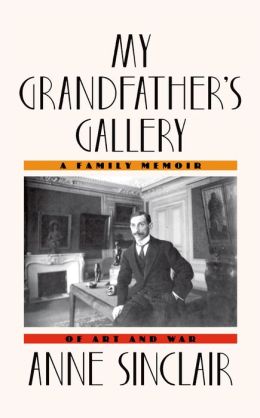
My Grandfather’s Gallery by Anne Sinclair

Investigations by an art dealer’s granddaughter into paintings stolen in World War II France.

grandfather

Paul Rosenberg was a successful art dealer in Paris in the 1930s, a friend to and advocate for Pablo Picasso, Georges Braque and Henri Matisse. A Jewish man, he fled his home in Vichy France in 1940, fearing for his family, his livelihood and his collection of modern masterpieces. From his new home and gallery in New York City, he campaigned for the rest of his life to recover the many valuable paintings and sculptures he lost during the war, looted by Nazis and French collaborators.

Journalist Anne Sinclair didn’t pay much attention to her maternal grandfather’s life and work as an art dealer until he was long dead. In examining old papers, however, she discovered a story that moved her and that represents the experience of many French artists and art professionals, whose collections were stolen and never returned. In My Grandfather’s Gallery, Sinclair writes that she “wanted to create an homage to my grandfather, a series of impressionist strokes to evoke a man who was a stranger to me yesterday, yet who today seems quite familiar.”

Many unidentified paintings continue to lie in museum basements throughout France even now, “awaiting the return of those who will not come back.” Sinclair, like her grandfather, acknowledges that lost lives trump lost art; but the spoliation of priceless paintings constitutes an important piece of her family history, as recorded in this deeply felt memoir. Despite an occasionally awkward translation to English, My Grandfather’s Gallery is a powerful history made personal.


This review originally ran in the September 19, 2014 issue of Shelf Awareness for Readers. To subscribe, click here, and you’ll receive two issues per week of book reviews and other bookish fun!


Rating: 5 letters.

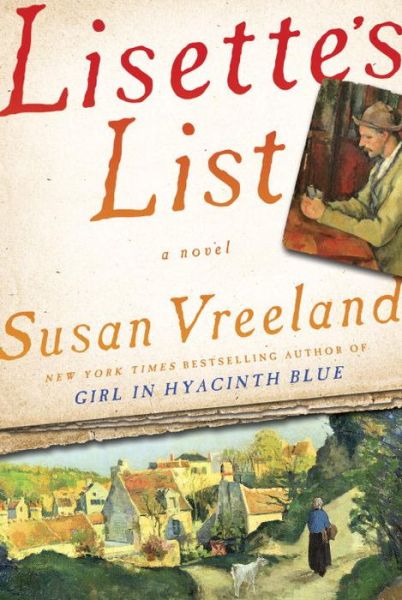
Lisette’s List by Susan Vreeland

Like Vreeland’s previous novels about women in history and art, Lisette’s List is heartfelt, loving and lovely, and asks difficult questions beautifully.

lisette

In Lisette’s List, Susan Vreeland (Clara and Mr. Tiffany; Girl in Hyacinth Blue) lovingly portrays Impressionist, Post-Impressionist and Modernist French art by way of a modest fictional character in Provence.

In 1937, newlyweds Andre and Lisette Roux move from France’s vibrant capital to the pastoral southeastern town of Roussillon to care for his grandfather, Pascal, who has written that he is dying. A passionate Parisian, Lisette is at first miserable in the backwater town, and infuriated when Pascal turns out to be healthier than he let on: he simply wanted their company, and to share what he remembers about the famous French artists he has known.

But Lisette is as fervent about art as she is about Paris, and Andre has trained in his grandfather’s trade of carving fine frames for fine paintings. She is captivated by Pascal’s collection of seven paintings: by Cézanne and Pissarro, and one possibly by Picasso. As a miner in the nearby ochre mines and later a pigment salesman, Pascal made the most of his access to these men, and now shares his recollections with the rapt Lisette–as well as his wisdom about life and love.

By the time Pascal eventually dies, Lisette has made a home of sorts in Roussillon; her love for the paintings further compels her to stay in Provence when Andre hides them (for fear of their destruction or seizure by German troops), not telling even Lisette where they’re stowed. Andre then enlists to fight for France, and Lisette is left alone, waiting for both the safe return of her husband and a reunion with the artwork.

Over the next decade and more, Lisette keeps a list of “Lisette’s Hungers and Vows.” Inspired by Pascal and his paintings, Andre’s love and the quiet strength and beauty of the Provençal surroundings, she pledges to “learn what makes a painting great,” “learn how to be self-sufficient” and “love without reservation.” She meets Marc Chagall and his wife, Bella, who are hiding in a nearby town. Upon receiving a gift painted specially for her by Chagall, she begins her own art collection and narrative. But war necessarily brings tragedy as well as new beginnings. Lisette will experience love and loss, joy and deep pain; learn animal husbandry as well as art history; and parse the moral questions raised under Vichy French rule, as the years go by. She finds new friends, undertakes small favors and large sacrifices, all in times of war and recovery, amid the paintings she loves so. Readers will likely rush through the lovely Lisette’s List, only to be bereaved when the final stroke is painted and the portrait is complete.


This review originally ran in the August 4, 2014 issue of Shelf Awareness for the Book Trade. To subscribe, click here.


Rating: 8 pieces of marzipan.

Are You My Mother? by Alison Bechdel

motherI am deeply impressed by Alison Bechdel: her self-awareness, her fraught journey through her life and her relationship with her mother, her psychoanalysis and her work in this book (and, I’ll wager, her earlier Fun Home, which I haven’t read but have heard lots of good things about. I’ve put it on the list). This is a memoir of her mother, at first glance; but it’s more self-involved than that, although I don’t mean that in a bad way. That’s just what this book is. It’s the story of her writing a book about her mother, and it’s that book; it’s really a book about herself, then.

It is also a graphic memoir, which is not a format I’ve spent much time on, as I find it a little exhausting to follow; I guess I’m a traditionalist when it comes to my reading matter! I prefer traditional fonts, and certainly hard-copy rather than electronic (well, there are the audiobooks…). I’ve read very few graphic works, and although I’ve enjoyed them all, I tend to find them a little more effortful. On the other hand, though, I sped through these 289 pages easily in an afternoon. Seeing Bechdel’s visual version of herself, her mother, and her other characters (a father, two brothers, two psychoanalysts, a few girlfriends) added to the experience; so, props on the format as well, as it turns out. (This is where I’ll note that Alison Bechdel is also the author of the esteemed comic strip, Dykes to Watch Out For, and a whole pile of books of said comic.)

I feel the need to address a personal element of my reading this book. I have aspired for a handful of years now to write a book about my own mother. And it was my mother who gave me this book – I believe after she went to an author reading at a bookstore? – with a nudge toward writing my own version. This is funny to me now that I’ve read Are You My Mother?, because for one thing, Bechdel’s mom was less than pleased with her efforts (is there a joke in there, Mom?); also, the book I envision, hope, one day to write is not very much like this one. No criticism there, of course. I dream of something a little more like Haven Kimmel’s mother-book, She Got Up Off the Couch. That is, I want to tell my mother’s story (unavoidably mediated through the lens of being her daughter), because I think her life story needs telling. Bechdel’s need was admittedly a little more self-focused. She quotes Virginia Woolf more than once: about To the Lighthouse, “I suppose that I did for myself who psycho-analysts do for their patients. I expressed some very long felt and deeply felt emotion. And in expressing it I explained it and then laid it to rest.” And that is what Bechdel is working on doing through this memoir: psychoanalyze herself, and put her emotions to rest. At the end, it feels like she does, at least a little.

She is quite involved in the idea of psychoanalysis, and does quite a bit of her own research; in addition to relationships with two different analysts, she reads Freud and some lesser-knowns; her personal favorite is one Winnicott. She opens each chapter with a dream, then sets it in the timeline of her life and discusses what it might mean. It’s an interesting lens, and not one I’m familiar with. I’m not ready to go get analyzed, myself, but I came away respecting Bechdel’s process. Some of the papers she studies and quotes from are overly academic for what I was looking to get out of this book, but that’s okay; I let them flow over me and stayed on track with what Bechdel was up to, which was what I was looking for.

I found Bechdel funny, personable, sympathetic, and authentic. I’m glad for her in what she gained through this process. I expect to come back to this book for some thoughts on my own work, if/when I ever get that far; for now, it was a rewarding read. And I’ll be looking for Fun Home. For feminists, lesbians, mothers, daughters, or people with relationships to solve – I recommend this deftly drawn work of emotion and searching. Thank you, Alison.


Rating: 7 sessions.

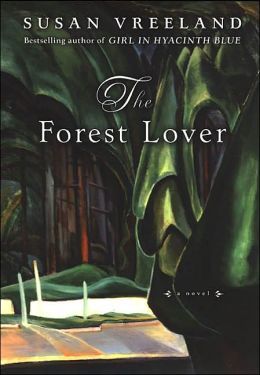
The Forest Lover by Susan Vreeland

forestloverWhat a lovely book. I recently read and enjoyed Scott Elliot’s Temple Grove enough that I attended to his “Note on Sources,” and requested several from my local library. This was one of those – aided by my enjoyment of Vreeland’s Girl in Hyacinth Blue and Clara and Mr. Tiffany.

Like those two of her books, this is historical fiction dealing with a female artist. [Also think of Tracy Chevalier’s Girl With a Pearl Earring.] The three historical periods, geographic locations, and women in question are quite diverse, but there is a very clear thread connecting them all as female, artists, and historical; I appreciate that showing of diversity in her subjects and also of a singleminded interest. I am safely a Vreeland fan now. Fairly naturally, considering that they deal with female artists of earlier times, her books also address women’s struggle for independence.

Emily Carr, like the subject of Clara and Mr. Tiffany, is a real-life historical figure about whom we don’t know everything; this is a fictionalization of her life. She was born in British Columbia in 1871 to British parents. She showed an inclination for sketching and painting early on, which hobby was encouraged by her father at first, but he expected her to grow out of it in favor of more womanly pursuits (like marriage), and she didn’t. We meet Emily or “Millie” when she’s struggling to make ends meet and trying not to depend too much on the trust fund she shares with 4 sisters, teaching art for a living and befriending local Native Canadian Indians. The sisters mostly do not approve this association. Her favorite subjects are natural scenery and native people and their lifestyles; she travels to islands and outposts for these subjects; again, this is not appreciated by her family. She does enjoy some good female companionship, though: Sophie is an Indian woman and fellow artist (a basketmaker) who befriends her in broken English; Jessica is a less adept painter but rather saucy lady friend; Alice is her “good” and friendly sister; and after Emily musters the courage to travel to Paris to study the “new” art (see below), she meets fellow painter Fanny, a New Zealander and kindred soul.

To give you an idea of the Paris of Emily’s experience, as a moment in time, I share these lines.

“Van Gogh’s been in his grave for twenty years, Cezanne for four, yet art collectors still don’t buy them, and despise what’s new now.”

“What is new now?”

“Their offspring. Léger, Picasso, Braque, Matisse, Modigliani, Derain, Rouault. Many directions.”

Momentous times, then!

Back in Canada, Emily ages as we watch her struggle with art and life. She wants desperately to represent the native people’s lives and art, and the powerful forest surrounding her. Or, as she comes to learn, she wants to more than represent or copy: she wants to communicate what these things make her feel. Her study in Paris under various teachers advances her practice, but still doesn’t get her there. We follow Emily through a series of lifestyles and decisions that form a crooked path but ultimately continue to move her toward a higher form of the art and communication she desires.

There is one man who begins to be a love interest for Emily; but as the title implies, she finds herself unable (for various reasons) to participate in physical, person-to-person, romantic or sexual love with this man. She is not the forest’s lover in a carnal sense – this book is not that weird. And Emily does continue to relate to people. Jessica and her sisters, and most importantly Sophie, retain a hold on her heart; and she forms a new (platonic) relationship with a damaged white man who understands Indians better than whites. But in a very real way, her relationship with the natural world is the most magnetic in her life.

I often observe that I like an author’s earlier (or lesser known) work better than the later. (I hope this is not just me being contrary. I don’t think I do it on purpose.) In this case, though, I think my favorite of her books is still her most recent, Clara and Mr. Tiffany. The earlier two I’ve read are both wonderful; but I sometimes felt this showed its earlier origins. It is occasionally less graceful. While she is mostly “on,” there are some awkward phrases, too. Observe these two single sentences, on two facing pages. I find one smoothly appealing, and the other a bit effortful.

Emily felt as if smelly white scum had eked out her pores.

versus

A breeze shifted the ends of foliage, like the tips of fingers moving.

Do you make the same observation I do? (Which one is which?)

Criticisms aside, though, this novel is far more graceful than not; and while I could pick apart lines like the one above, the sum of its parts is glorious. Vreeland’s greatest strengths are those I recognize from her other books. She understands art, and the artist’s struggle to get it just right. She addresses women’s issues compassionately as a natural part of the story of one woman in history. And unique to this work, the natural world and its beauty, value, power, importance, and scale play a deservingly large role.

Another success for Susan Vreeland.


Rating: 8 smears of viridian.

From Alaska to Tierra del Fuego: Across the Americas in Two Years by Michael Boyny

fromalaskaAnother gift from Fil, and another winner!

This is a coffee table book that is part travel narrative and part photography or art book. Author Michael Boyny tells us that he and his partner, Sabine, are travel junkies. They conceived of this road trip from tip to tip of the Americas and planned it well in advance, buying a 1985 Ford F250 with motorhome cab in their native Germany, fitting it out and test-running it on a trip through Scandinavia before shipping it to New York and setting off across Canada. Chapters each detail a segment of the trip and run, oh, 4-8 pages each: quick descriptions of places that struck them in terms of natural beauty, culture, physical activity, or other item of interest (good and bad). Whole states may be covered quickly or require more time, depending on how they struck Boyny. Two years of travel are covered in under 200 pages, and a number of those pages are devoted to photographs (on which more in a minute), so the text is necessarily a little cursory here and there; but no matter. It is less an in-depth study of anyplace in particular and more a travel journal: just the highlights. I took my time reading this book in bursts of just a few pages or chapters at a sitting – at my coffee table, in fact. And it was very enjoyable.

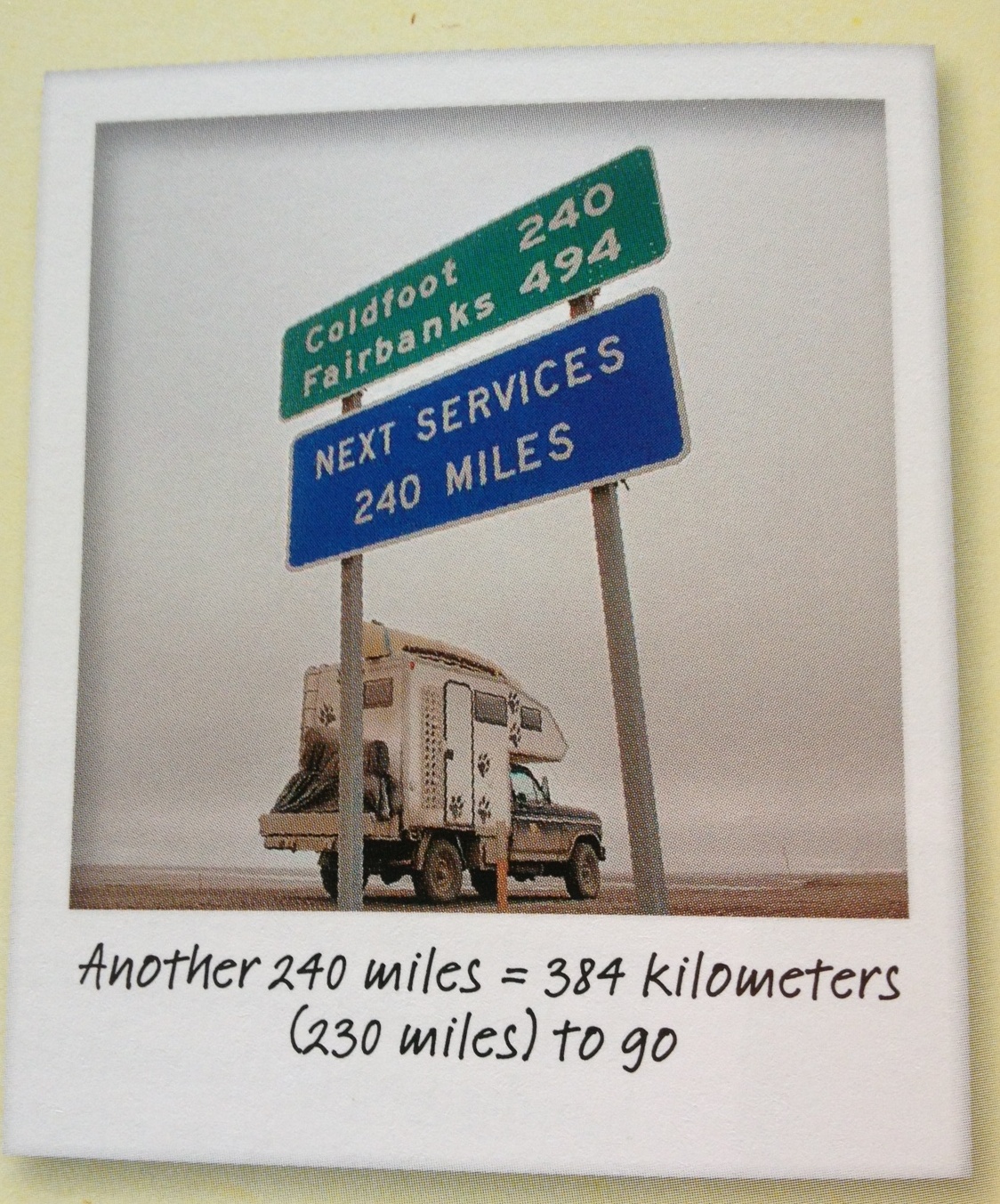
Boyny’s English is perfectly fine, but sometimes a little odd; he is very fond of adjectives. Perhaps someone told him that an adjective for every noun was a good method of descriptive writing? At least that was my impression in the opening pages; either he settled down or I stopped noticing. Call it a nuance that I noted, but didn’t get in the way too much. Another funny item I noticed was the exhaustive translation of kilometers to miles (centimeters to inches, etc.), which I appreciate very much in theory but which sometimes turned downright amusing in practice:

240 becomes 230, like magic!

240 becomes 230, like magic!

Michael and Sabine see Alaska; Canada; the Western United States; Mexico; Central and western South America. They are outdoorsy types (perhaps this goes without saying: they’re living in a truck for two years!) and often camp outside, sometimes rent rooms or hotel rooms, even occasionally a more permanent dwelling (seven weeks in a rented house in San Miguel de Allende taking Spanish lessons). They also do quite a bit of hiking (overnight backpacking included), and outings (again sometimes overnight) in the canoe they carry on top of the truck; a scooter racked behind allows for easy short trips as well. The physical activities they undertake set them well apart from your average (American) RV dweller. They compile a fine list of places they could live, across both continents, and are kind in their sparse criticisms; the coast of Peru gets a poor rating but the highlands of that same country become a highlight just pages later.

But oh, the photographs. Don’t get me wrong: Boyny’s narrative of two years spent traversing 15 countries was well worth reading, an interesting education in snippets, even within my own country or places I’ve visited, because he enjoys his own unique perspective. But the photographs alone make this book a special find. Boyny is a passionate amateur photographer (maybe I shouldn’t say amateur; it’s how he makes his living when he stays in one place) and his photos share roughly equal space with text, including a good number of amazing two-page spreads. These photographs include portraits of the inhabitants of various places, wildlife (toucan! quetzal!) and scenes of commerce and lifestyles; but the strongest, unsurprisingly, are landscapes. The largest spreads include views of the Yukon; Monument Valley; the Grand Canyon (naturally); Bryce Canyon; the Mayan ruins at Tulum (Husband and I have been there!); the Galapagos; Machu Picchu; and Patagonian lakes. I can’t say enough about his captures of some of the most extraordinary views on the planet – they alone make this trip worth it, both for Michael and Sabine, and for his readers.

A major hit for photos alone; an an interesting travel story to boot. Thanks, Fil!


Rating: 8 muddy tracks.

Houston: It’s Worth It

I came across a book the other day that I found charming. The whole concept of “Houston: It’s Worth It” began as a discussion amongst friends and then become a website, here, that gained in popularity; then there was an exhibition of photography; and eventually, this book. It is mostly photographs, interspersed with brief quotations in extra-large text – perfect for coffee table browsing – communicating that tagline theme. Houston: it really is worth it.

The concept is to say that this city has a lot going for it despite what they call “the twenty afflictions” (they list, for example, the heat, the humidity, the hurricanes, the flying cockroaches, the mosquitos, the traffic, the construction, the sprawl…). You can get a pretty good idea of what they’re trying to do with the website, the book, the whole HIWI franchise, at their about page. As alluded to in my review of The Great Psychedelic Armadillo Picnic, I am rather a Houstonlover myself; and this is just my brand of cheerleading: a little self-deprecating (hey, it IS humid here), a little tongue-in-cheek, but at heart, appreciative of the awesome facets to my hometown.

The photographs are outstanding, and all citizen-contributed. They show nature, architecture, landmarks, food, drink, weather, and people. I think they show a great deal of diversity – of people (ethnic, religious, cultural) as well as lifestyle and cuisine – and diversity is always at the top of my list of what’s great about Houston.

In short, this is a great little coffee table book that shows why Houston is SO worth it in pictorial as well as text form; it’s attractive, well put together, and not too serious for its own good. I’m glad it happened across my desk.


Rating: 6 taco stands.

Girl in Hyacinth Blue by Susan Vreeland (audio)

This was a lovely little audiobook. The writing beautifully, lyrically evokes the setting. At the start of the book, I recognized the tone and I’m sure there’s a literary term for it, although it escapes me; it actually reminded me of The Picture of Dorian Gray (which, however, I didn’t like). There was that same tone of desperate passion for a work of art; there was a similar element of a painting dominating a man. It was emotional, emotive. But it seemed to calm down as the book progressed, getting more contemplative, quieter, more introspective. And that was really nice, too.

The book is about a painting of a girl in a blue smock, taking a moment’s break from sewing buttons onto a shirt to look out a window. It is variously named by different characters in the story; the title is one name for it. The book opens in a present-day setting: a teacher invites a colleague back to his house to show him a painting he’s kept secret until now. He claims it is a long-lost Vermeer. (Vermeer is the real-life Dutch master who painted The Girl with a Pearl Earring.) From there, we trace the painting’s history backwards through time, through its various owners and caretakers, back to its painter and the moment of inspiration, visiting the girl who sat for it.

An obvious comparison to this book presented itself immediately: Tracy Chevalier’s very successful Girl With a Pearl Earring, which was made into a movie starring Scarlett Johansson. I thought both the book and the movie were lovely, and for others who enjoyed either, I highly recommend Girl in Hyacinth Blue. Not only is the subject matter very like (a fictionalized explanation of the history and inspiration of a Vermeer – or a questionable Vermeer), I found the tone to be reminiscent, as well. It’s interesting to think of these two as companion pieces. It’s been a few years since I read Pearl Earring (maybe that was 2004 or thereabouts?), so maybe my memory is warped, but they struck me as very alike. And for the record, it looks like both were originally published in 1999, so I don’t think anyone copy-catted anyone else!

The portraits of life painted (no pun intended – really she’s an artist) by Vreeland are remarkable. They’re very clear and realistic and whimsical, lovely vignettes into a nice selection of times and places. We meet Dutch, German, and American characters spanning several centuries, and each is neatly portrayed and very enjoyable even as brief snippets – meaning, each might stand alone nicely even without being part of a larger story. In fact, they stand alone so well that in the audio format, with a different reader for each, I kept thinking the book had ended! A person might even say each brief portrayal of a person or family’s life resembles a Vermeer painting, particularly when we get to the middle-class Dutch folks of his own period.

Girl in Hyacinth Blue is an effortless read with beautiful characterizations and scenes of life from a number of times and places, presenting the engaging puzzle of a beautiful painting and its questionable provenance. I highly recommend it.

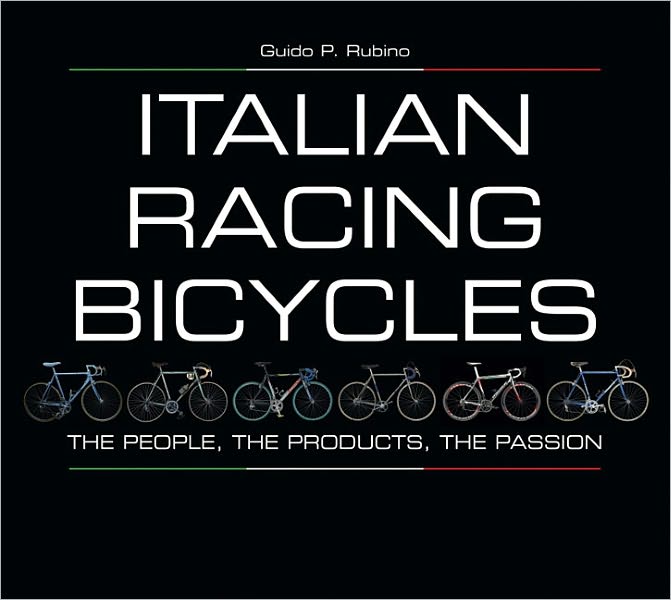
Italian Racing Bicycles by Guido Rubino

A beautiful book of pictures and stories about everything related to the fine art of Italian race bikes.

Passionate fans of Italian bicycles, professional bicycle racing, the history of the sport and/or fine craftsmanship must add Italian Racing Bicycles to their collections. It’s not just about bicycles, as the title suggests, but about the companies that made (and still make) them and about the Italian cyclists who ride competitively. Top-of-the-line Italian bikes are works of art as well as masterpieces of function, and Guido Rubino considers 40 of the finest manufacturers: their histories, likely futures, personalities and history-making products. The indispensable Colnago, Campagnolo and Bianchi brands are covered, as are the men who originally bore those names. Racing greats such as Coppi, Pantani, Sarroni and Bartali, whose performances helped establish the legacies of these companies, receive well-deserved attention here as well (along with select non-Italians like Eddy Merckx). Plenty of beautiful pictures complete this lovely coffee-table book.


This review originally ran in the December 6, 2011 issue of Shelf Awareness for Readers. To subscribe, click here, and you’ll receive two issues per week of book reviews and other bookish fun!