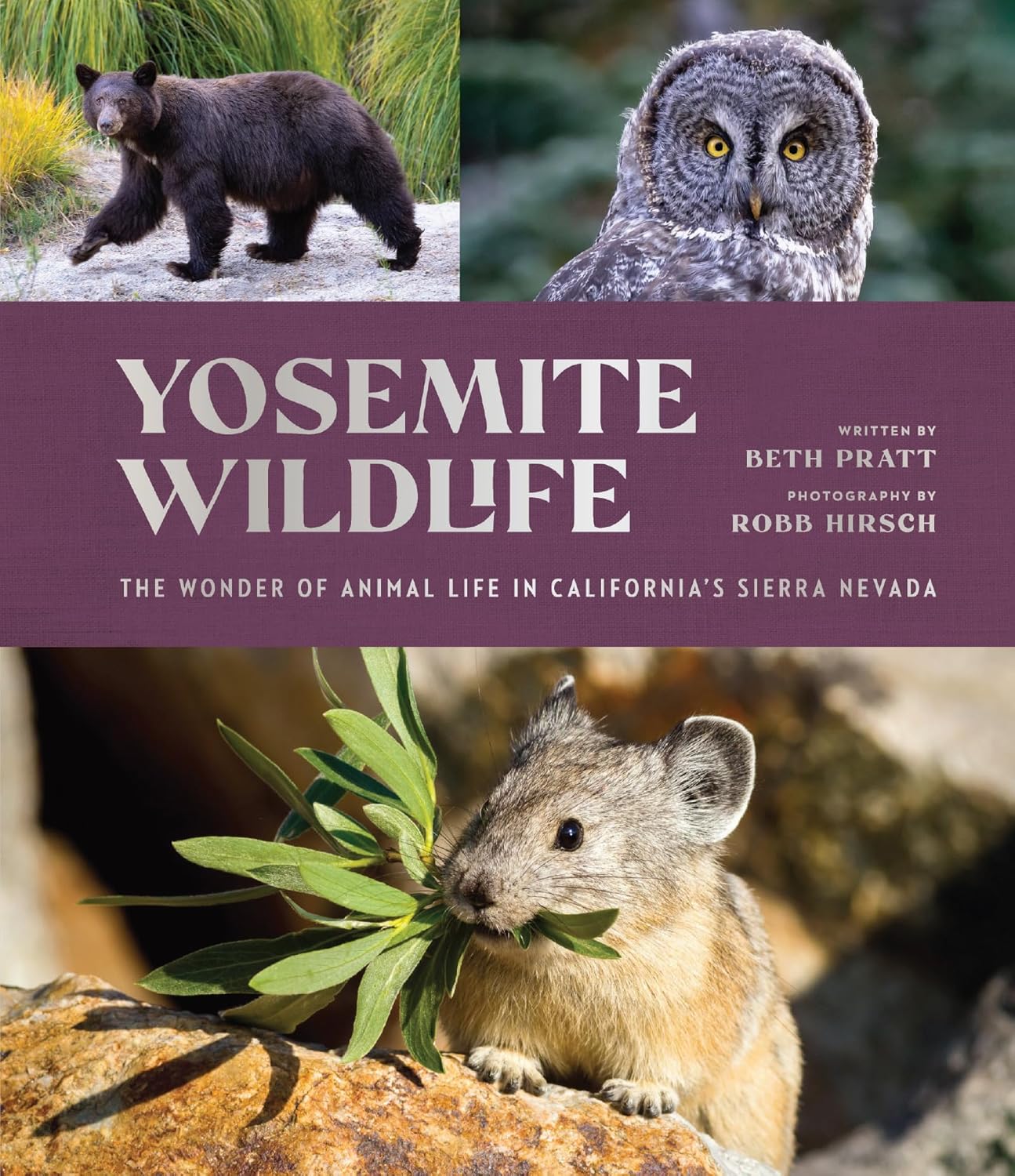
Yosemite Wildlife: The Wonder of Animal Life in California’s Sierra Nevada by Beth Pratt; photographs by Robb Hirsch

Environmental leader and lifelong Yosemite lover Beth Pratt partners with biologist and wildlife photographer Robb Hirsch to offer Yosemite Wildlife: The Wonder of Animal Life in California’s Sierra Nevada, the first book in 100 years to address this national gem’s diverse animal wildlife. With more than 300 images, Yosemite Wildlife is also rich in Pratt’s accessible prose; this thorough survey of observations and storytelling is designed to update a 1924 publication for the historical record. As a beautifully produced, large-format, glossy presentation, it also exhibits Pratt’s and Hirsch’s expertise and passion for a place that is much more than just its famous geology and dramatic scenery. With plentiful archival records, historical images, and personal stories from park staff and naturalists, it’s an informative document as well as a stunning visual feast.

Conservation success stories and profiles of Yosemite’s human defenders over the years accompany Hirsch’s sumptuous images of the iconic black bear and mule deer, the Sierra green sulphur butterfly, the northwestern pond turtle, raptors and songbirds, dragonflies and butterflies, charismatic predators, shy shrews, quirky herptiles, and more. Exquisite.


This review originally ran in the November 4, 2025 gift issue of Shelf Awareness for Readers. To subscribe, click here, and you’ll receive two issues per week of book reviews and other bookish fun.


Rating: 8 push-ups.

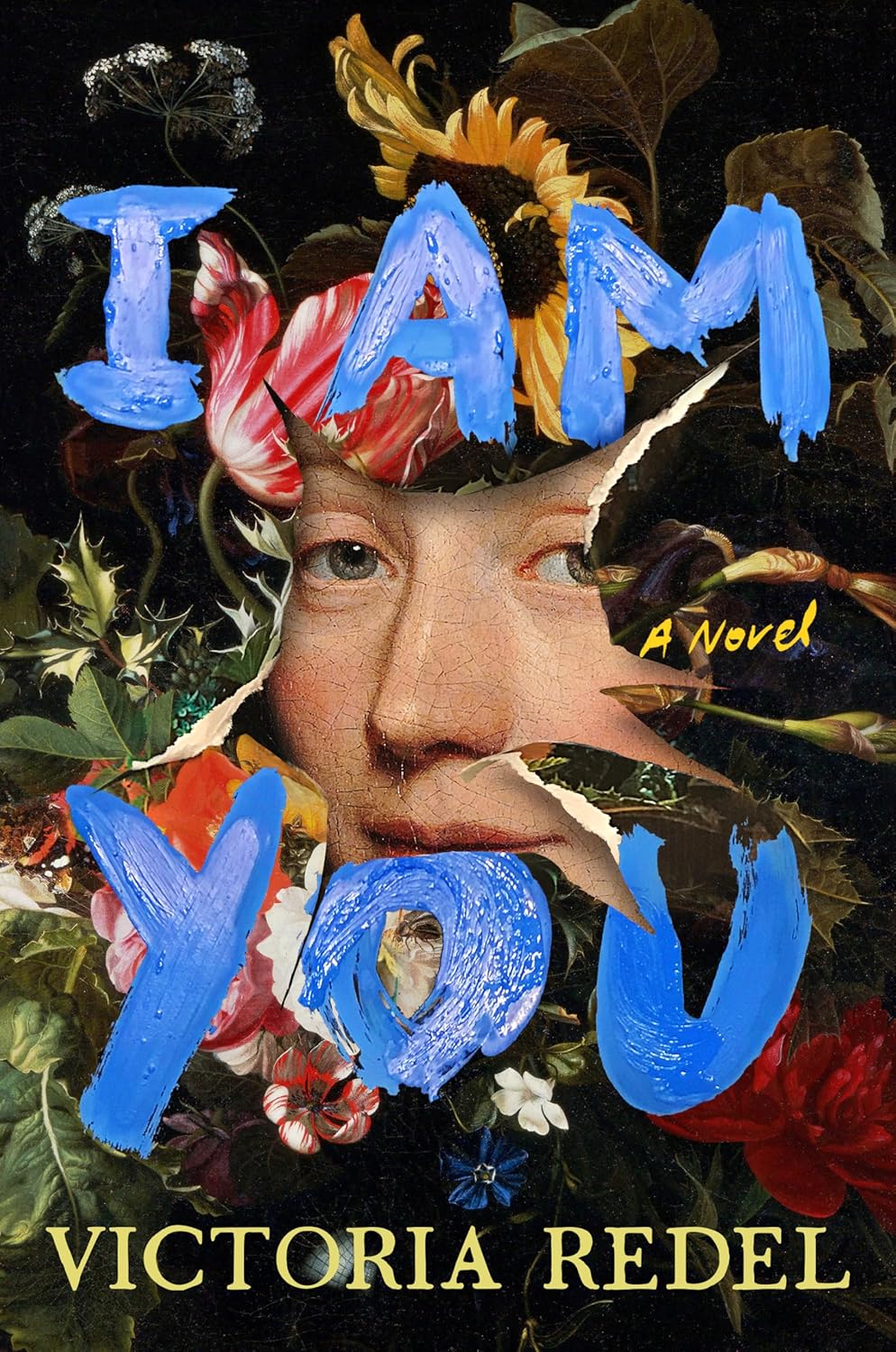
Maximum Shelf: I Am You by Victoria Redel

Maximum Shelf is the weekly Shelf Awareness feature focusing on an upcoming title we love and believe will be a great handselling opportunity for booksellers everywhere. The features are written by our editors and reviewers and the publisher has helped support the issue.

This review was published by Shelf Awareness on June 10, 2025.
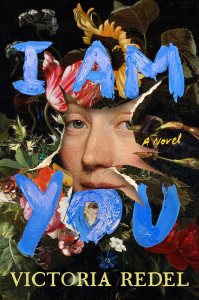

Victoria Redel (Before Everything; The Border of Truth) presents a bold, poignant historical novel about art, love, power, and authorship with I Am You. In the 17th-century Dutch Golden Age of painting, two women with greatly contrasting social and economic status achieve enormous closeness. One is a successful still life painter, the other her maid and assistant. Through their shared story, Redel finds room to muse on art and observation, the wonders of paints and pigments, social strata, interpersonal relationships and power dynamics, gender expressions, and much more. I Am You is no treatise; it is firstly a story of human relationships. But like all great stories, it allows for reflections beyond its literal subjects.

The novel opens in the town of Voorburg in 1653. A child named Gerta is put out to work by her family. Because the household where she is to live needs a boy, Gerta becomes Pieter in service to the wealthy Oosterwijcks. At age seven, Pieter is fascinated by the 14-year-old Maria Oosterwijck: “Her particular words. The varieties of her laughter. The concentration of her fingers as she skimmed or flicked the board with a paintbrush.” Pieter is a quiet child and a hardworking servant, gentle with the rabbits he cares for and butchers for the family meals. Maria, an aspiring painter, is permitted to study only still life, a form considered appropriate for “woman’s art.” She compulsively sketches and paints young Pieter at work: he is “the body most available” to a girl forbidden the study she craves. In his turn, and in his fascination, Pieter begins preparing inks for Maria’s use. He collects the materials–black walnut husks, alder cones, willow bark, oak galls, lichen, marigolds–and crafts them into inks and reed pens. In this way, Maria and Pieter grow up together, intertwined by art and separated by their stations in life. Then Maria, bound for Utrecht to continue her studies, peremptorily declares Pieter a girl once more, in order to to take her as her maid to the larger city.

In Utrecht and then Amsterdam and beyond, Maria and Gerta remain joined. Maria is an increasingly successful painter, commercially and socially, despite the significant impediment of being a woman. Gerta, serving as her maid, becomes progressively indispensable as a talented maker of paints and pigments. Eventually, she teaches herself to sketch and then to paint, becoming Maria’s studio assistant in more functions.

Sometimes Gerta still goes out as Pieter: “How could I erase all I’d known as a boy? Why would I? How much more useful to have known the world both male and female, to traverse brazenly with the rude mind of a boy or angle delicately with a girl’s careful polish.” Her gender-bending is a mode of social expediency, more than of self-identity: “Inside both costumes was me.” In this and other ways, I Am You comments on gender in society, which is only one of Gerta’s disadvantages, but Maria’s chief one. Gerta (or Pieter, as Maria will call her in private all their lives) narrates the novel from start to finish, providing a nuanced perspective on their world, with an evolving appreciation of her limits in it. Even as Gerta’s privileges in Maria’s household expand–she has a nicer bedroom, furnishings, and clothing than any maid should expect–she is reminded that she enjoys these advantages only by Maria’s whim.

Their relationship deepens until the two women become partners in every aspect of life, but Gerta remains subservient. Her devotion to Maria is total, so that even when Maria’s circumstances change and she finds herself ever more dependent on her maid, Gerta is glad to provide a broad range of support. But calamities arise, and there may come a time when the subordinate’s need for recognition, for identity, surfaces. Maria has had a painter’s eye for detail in the visual world from a young age, thanks to both talent and training, but it is Gerta who sees the changing nature of all. “Every day since childhood, hadn’t it been my daily job to make one thing into another? Nut into ink. Stone into viscous paint. The chicken I clucked to as I scattered melon scraps became the stew I spooned into bowls. Even myself, a constant transformation–girl child to boy, servant to budding girl, woman to man to woman, maid to painter to lover….” In the end, it is Gerta who will navigate the hardest choices for the two of them.

Redel excels at sensory and imagistic writing, particularly in the thrilling qualities of color, inks, paints, and pigments, and revelatory art. Her descriptions of the sights, smells, and sounds of daily life, food, and housekeeping are visceral. She writes expressively about sex, which in this novel can be both pleasure and communion, and also disturbing–as an abuse of power, and with questionable consent. The canals of Amsterdam, the butchering of dinner, and the disposal of bodily wastes alongside tender caresses and vivid achievements on the canvas: Redel offers compelling descriptions of both splendor and pain.

I Am You is a novel that deals with heavy themes and tough choices. Gerta’s sensitive, incisive perspective often reveals sad and distressing events, as well as the transcendent revelations of creative work. In considering art, love, gender, and class, her story confronts injustice and tragedy as well as beauty. The result is sensual, thought-provoking, and unforgettable.


Rating: 7 rabbits.

Come back Monday for my interview with Redel.

The Women Who Changed Photography: And How To Master Their Techniques by Gemma Padley

Gemma Padley’s The Women Who Changed Photography: And How to Master Their Techniques delivers brief, punchy profiles and incisive assessments of what is revolutionary about these underappreciated photographers. In short chapters, Padley presents 50 women–some well-known, some all but unknown–from all over the world, born from 1799 through 1992. Profiles and portraits are followed by photographs, with Padley’s instruction on how to mimic what is special about the work. This includes technical advice (how to combine and blend portraits; hand-tint a photo; play with angles, color, and flash) and the conceptual (how to use photo stories to raise awareness on an issue). Photographers include Anna Atkins, who “privately published the first book to be illustrated using photography,” and Anne Wardrope, the “first woman in America to photograph her own nude body.” They work in documentary, portraiture, art, photojournalism, and cover war, fashion, conservation, and more. Wide ranging and diverse, with fascinating storytelling, these contents are visually stunning and technically detailed, and will please readers with a variety of interests.


This review originally ran in the November 5, 2024 gift issue of Shelf Awareness for Readers. To subscribe, click here, and you’ll receive two issues per week of book reviews and other bookish fun.


Rating: 7 apertures.

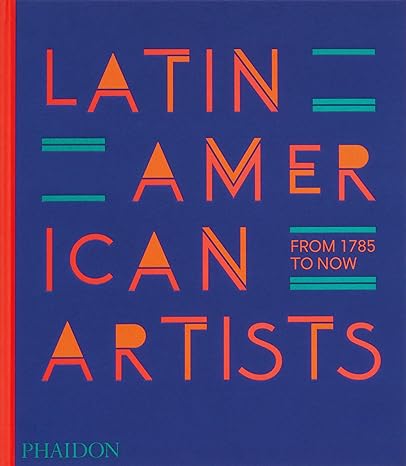
Latin American Artists: From 1785 to Now


Latin American Artists: From 1785 to Now expands on Phaidon’s iconic The Art Book with a collection of images created by 308 artists from 20 countries and territories, accompanied by brief but serious supplementary text. With a thorough introduction by academic art historian and curator Raphael Fonseca, this large-format book is an art object in itself. Each artist is represented by a single important work and brief biographical and artistic context, written in an academic tone. These enormously diverse artists, who span a broad range of media, are organized not chronologically, conceptually, or regionally; instead, an alphabetical presentation results in surprising and thought-provoking juxtapositions. Perfect for art lovers or scholars and essential for academics, this is a simply stunning visual feast for readers at large.


This review originally ran in the October 31, 2023 gift issue of Shelf Awareness for Readers. To subscribe, click here, and you’ll receive two issues per week of book reviews and other bookish fun.


Rating: 8 corn tortillas.

Citizen: An American Lyric by Claudia Rankine

Claudia Rankine’s voice is as powerful as you’ve heard, and Citizen is many things, in ways that can be challenging but also make it a rewarding meditation. A slim book, it rewards slower-paced reading, because there’s a lot to think about (and look at). I think I had envisioned a book of poetry in more traditional fashion, which would be challenging for me (because I find poetry difficult; I think I look too hard for literal readings). What I found was a little more form-bending, which mostly made it a little easier to take in. Lyric essays intersperse with poetry, and there are a handful of images of visual art as well, and references to other media, including YouTube videos and Rankine’s own “situation videos.” Predictably, I follow along better in the prose-ier sections than the poetry-leaning ones, and the former come first in the book, which I think made the transition a little harder. This is a problem on my end (when will I get over my fear of poems?). I sort of wish for a reading guide, although that runs the risk of prescriptivism.

Citizen is about race, or about race in America, or about what it is like to be Black in America. It relates macro- and microaggressions so that they build up: does the reader feel shocked? weary? angry? reading them? Well, maybe that’s the point. The small, everyday experiences have cumulative effect. The narrator spends a chapter (essay?) describing what it is to sigh incessantly, and be shushed in her sighs. She spends time observing Serena Williams: her play, the aggressions she experiences, when she does and does not react with outrage, and how the world reacts to her reactions. There is a chapter of scripts for Rankine’s situation videos, about which she says on her website: “It is our feeling that both devastating images and racist statements need management.” (I couldn’t figure out how to watch the actual videos on her website, although some are on YouTube.) There is a list of names of Black men and women killed by police; it fades out into gray text because the list is too long. The visual images that come in between the text sections might be said to offer a break, but it’s more like a different way of looking.

On the cover image, I most like these words from The New Yorker‘s review: “The book’s cover, an image of a black hood suspended in white space, seems to be a direct reference to Trayvon Martin’s death, but the image is of a work from 1993, two years after Rodney King was beaten senseless by members of the L.A.P.D. It’s called ‘In the Hood,’ and it suggests that racism passes freely among homonyms: the white imagination readily turns hoods into hoods. The image also makes you think of the hoods in fairy tales and illustrated books, part of the regalia of childhood. But its white backdrop recalls the haunting quotation from Zora Neale Hurston that keeps cropping up in Citizen: ‘I feel most colored when I am thrown against a sharp white background.’ The hood becomes an executioner’s headdress, too.”

In the end after finishing the book and trying to review, I find my impression is more of poetry than of prose, because there’s an overall feeling even between the moments where I was frustrated because I couldn’t always parse the literal meaning. (Maybe Vince will show up to explain it to me.) Not for the first time, the poet is smarter than I am. But it was a hell of an experience, and I’d read more. Her reputation is deserved.


Rating: 7 lessons.

Utopia by Heidi Sopinka

Art, gender, love and friendship are all under consideration in this novel of twisted relationships in the 1970s L.A. art scene.

Heidi Sopinka’s Utopia opens at a party with the first-person perspective of Romy, a performance artist, directly addressing her months-old daughter. The evening ends with an unexplained tragedy, and from there the novel jumps forward some months to follow a young woman named Paz, who is now raising Romy’s baby and is married to Romy’s husband, Billy. It is 1978, and Paz, Billy and all their friends are steeped in the Los Angeles art scene, where sex, drugs and free expression are soured by competition, infighting and wildly different rules for male and female artists. Paz attends women’s groups and wishes for a freer life for herself, but many women see her as having taken over Romy’s life in decidedly unfeminist fashion. Romy, the more successful and established artist, casts a long shadow; Paz loves Billy but is perhaps more in love with Romy, whose life and art obsess her. Caring for Romy’s baby, lost in reading Romy’s journals, Paz finds herself in something of a love triangle with a ghost, and begins to lose grasp of her own life and art. And then a postcard arrives, apparently from Romy. It is labeled “disappearance piece.”

Utopia cleverly investigates layers of social issues: feminism and its intersections with race and class; gender roles in life and in art; women’s relationships; the artist’s relationship to commerce and social justice. The central narrative belongs to Paz, but that narrative is always shadowed by Romy, and intermingled with Romy’s voice via her journal entries. “Everything Romy said assumed importance. She lived her life so strongly.” The two women and all they have in common (including an art-star husband and a baby) offer plenty of room to examine questions about art and gender. Paz’s best friend Essa (also an artist and mother) is another powerful character and model for Paz to chart her own path. They are surrounded by other women of the art scene and feminist groups; the novel is populated by strong women questioning norms.

Sopinka (The Dictionary of Animal Languages) excels in characterization and the evocation of the power of creation. In pursuing her predecessor’s mysterious end, Paz must put herself in real danger and explore the very edges of not only art but existence. “She’s driving a speed addict’s car in an inside-out shirt, on painkillers, with a hand wrapped in gauze, on her way to find her husband’s dead ex-wife. If she concentrates hard enough, these things will snap into a logical pattern.” By the time the perspective shifts to that of a third woman near the novel’s conclusion, Utopia has asked that the reader journey through some weighty questions–but all will be rewarded.


This review originally ran in the August 16, 2022 issue of Shelf Awareness for the Book Trade. To subscribe, click here.


Rating: 7 matches.

The Marsh Queen by Virginia Hartman

Mystery, romance, conspiracy, family drama, natural history and art combine in this excursion into a decades-old suspicious death in the swamplands of northern Florida.

Loni was 12 years old when her beloved father headed into the northern Florida marsh in his johnboat and did not return. At 36, she is working her dream job as a natural history artist at the Smithsonian, ignoring her past and her remaining family as hard as she can, until her younger brother calls to insist she come home to help care for their mother. The Marsh Queen, Virginia Hartman’s fast-paced, compelling first novel, sees the prodigal daughter return to the swamps, the family she left behind, the mystery of her father’s death and the possibility of a fresh start.

“Daddy wasn’t just a visitor to the swamp, he was a part of the place.” Loni’s father, Boyd, was a Fish & Game officer, a fisherman, a devoted husband and father and a most unlikely suicide, although that was the rumored–and covered up–cause of his death. Loni was his usual companion in the swamps, uninterested in fishing but a passionate and talented illustrator of the birds they watched together. As an adult, she’s kept that passion, but grown distant from her brother and especially from her always-prickly mother, Ruth, now suffering from dementia. A serious gardener and herbalist, Ruth struggles with painful secrets long kept from her daughter. Loni’s leave of absence from the Smithsonian comes at an especially stressful time at work, and returning home is always painful; nothing about this trip feels right. But Loni canoes the swamps, discovers family secrets, investigates her father’s death, finds herself involved in fresh intrigues and dangers–and meets a handsome stranger. The Smithsonian, and leaving Florida behind, have always been central to Loni’s life plan, but as she sinks back into the quirks of family and home, she may just find a new way.

Hartman’s descriptive writing and clear passion for her subject are on best display when Loni immerses herself in the natural environment, in her art and in her memories of Boyd. In her contemporary relationships, Loni can be frustratingly obtuse and lacking in self-awareness. As the enigma around Boyd’s suspicious death gets more complex, the plotting can feel a little unwieldy. But the subversion of Loni’s expectations is frequently refreshing; a few secondary characters offer intriguing perspectives, and the novel’s framing details of Florida marshland, ornithology, museum work and fine art are expertly and beautifully drawn. The Marsh Queen is unwavering in its lush, finely detailed, appreciative portrayal of a distinctive natural setting, and ends on a redemptive, even inspirational note.


This review originally ran in the July 1, 2022 issue of Shelf Awareness for the Book Trade. To subscribe, click here.


Rating: 5 herons.

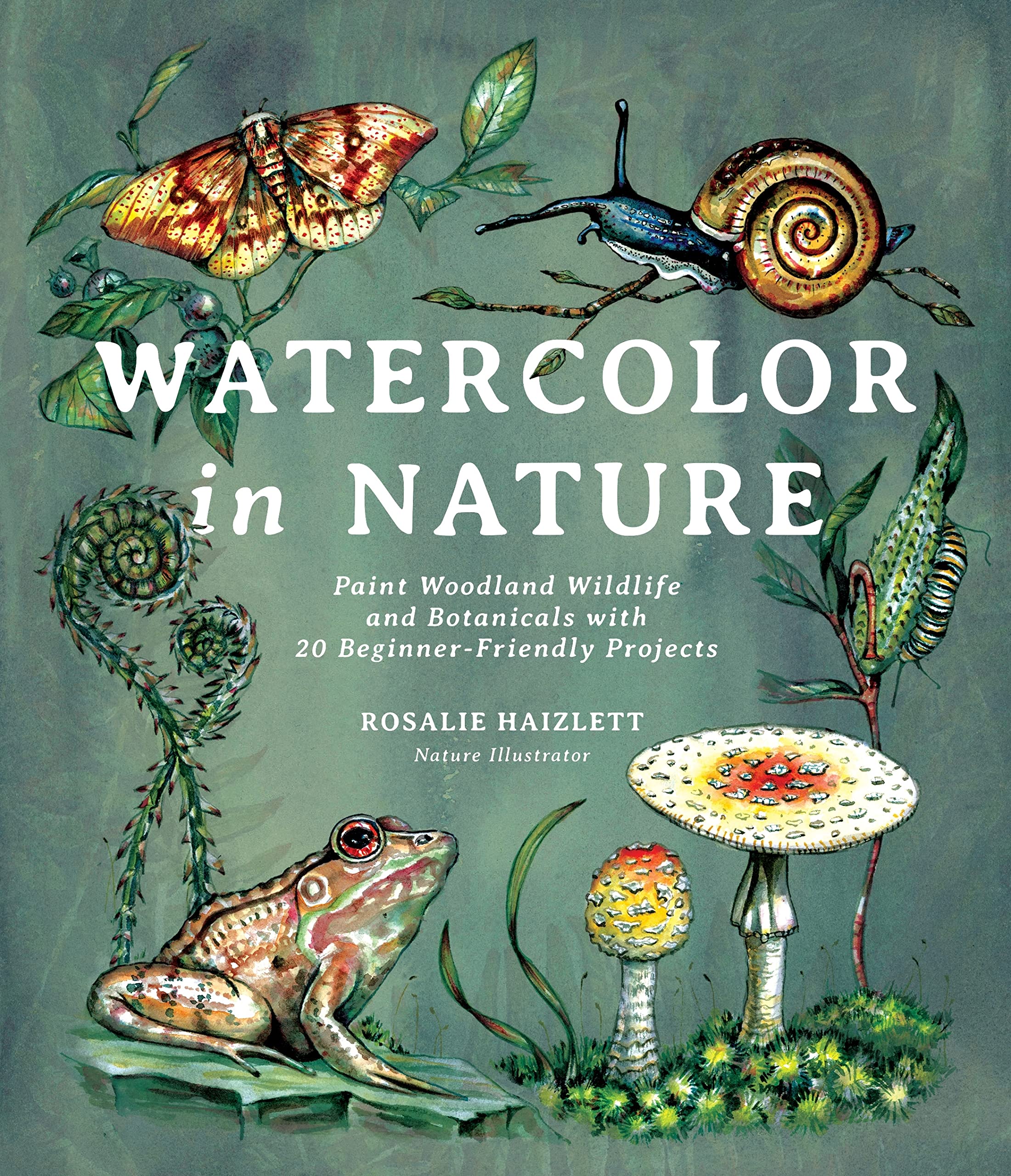
Watercolor in Nature: Paint Woodland Wildlife and Botanicals with 20 Beginner-Friendly Projects by Rosalie Haizlett

This book was a perfect birthday gift. Rosalie Haizlett is a local/regional artist from West Virginia whose work I’m familiar with (it’s in local coffee shops and gift shops, and I’ve got some of her stickers) and and admire. I’ve done a little painting with acrylics over the last decade or so, but no watercolors since kindergarten. And this instructional book is positively wonderful.

Things I love about Watercolor in Nature: clarity and ease of use. Haizlett opens with very brief (one page) sections on how she became an artist and how to use this book (slow down, breathe, take breaks! and, take it in order: each project builds on the one before). She goes over materials, colors, and basic techniques. And then there are the projects, 20 of them in two groups: ten use pencil and ink and ten are watercolor-only. Each adds a new skill to the painter’s toolbox, so it does make sense to take them in order. And the way she walks you through each is perfect – even the most intimidated learner can do this, because she breaks it into intuitive steps, always with images. If you just follow the directions you end up with more or less the intended outcome – that easy. (I say more or less because these are paintings of nature, which is asymmetrical and changeable, and each individual painting is a little different, as it should be.) I was a little intimidated by Haizlett’s lovely art – and another benefit to this book is that it’s filled with her art! – but she made it super easy and friendly; I was never confused. I am a little tempted to cut out some of these pages and put them on my walls. But I’m making my own art, too.

Totally, 100% recommend this to anyone interested in learning watercolor with natural subjects. I’m extremely pleased. After playing around in this book, I trust and like its narrator completely; I feel like she’s a friend. Delightful.


Rating: 9 wild blueberries.

1000 Perfect Weekends by National Geographic

1000 Perfect Weekends is a beautiful, photo-packed offering from National Geographic, sure to expand anyone’s bucket list. Destinations are grouped into 18 chapters, including beaches, mountains, cities, small towns, wildlife and nature themes, family-friendliness and off-grid options. Explore “kayaks like floating La-Z-Boy recliners” on the Delaware River, coffee tours in Panama and a bee farm in the Philippines, alongside references to UNESCO sites, architecture, dining, adventures and a delightful ode to libraries in the chapter on “Historical Explorations.” Entries are short, punchy and accompanied by mouthwatering photographs and frequent, inspiring top-10 lists (sporting events, theme parks, spas). Adrenaline-fueled, enabled and accessible, pet-friendly: there is a perfect weekend for everyone in this tantalizing book, an obvious choice for the frequent flier and the armchair traveler alike.


This review originally ran in the November 2, 2021 gift issue of Shelf Awareness for Readers. To subscribe, click here, and you’ll receive two issues per week of book reviews and other bookish fun.


Rating: 6 Instagram moments.

movie: Escher: Journey Into Infinity (2018)

I had left Italy. I lost the Italian landscape and architecture and something else had to take its place. This stimulated the formation of inner images. I started working with passion when I discovered that I had things of my own that had to come out, that I could express something others don’t have.

What a beautiful, completely absorbing and eventually transcendent film. For starters, something like Fantastic Fungi, there is such a rich body of work in the weird world of M.C. Escher that any proper documentary should turn out to be visually stunning, and this one does the job properly. I loved the animations of his prints, which it turns out he’d imagined happening. (There was a moment when a tessellated lizard clicked, came to life, and clambered out of its print. Hops lost his shit.) What I didn’t see coming was such a fascinating life – I’d known nothing of Escher the man, I guess, and in fact hadn’t realized how recently he lived and worked, and therefore how World War II and the rise of fascism had affected his life. I had not expected Graham Nash (of Crosby, Stills and Nash) to be onscreen early, telling the amusing story of Escher’s claiming he was a mathematician and not an artist at all. The Escher that emerges here is grumpy and flummoxed by the hippies’ interest in his work, and their annoying tendency to colorize his black-and-whites with such bright hues. His eldest son is there too, describing (chillingly) how the family chose to leave Italy 1935 after the son (as a small child) showed a disturbing interest in playing the baby fascist. This whole story was fascinating, whimsical, frequently funny and also pathos-ridden.

I appreciated Escher the romantic (in his relationship with his wife), the curmudgeon, and the tortured artist:

What I can say is that no print ever succeeds. They all fail. Simply because I always pursue a vision that cannot be realized… my prints, none of which were every made with the primary aim of making something beautiful, simply cause me headaches… that is the reason that I never feel fully at home among my colleagues. They pursue beauty first and foremost. Perhaps I only pursue wonder.

And this film was simply mind-blowing. The music, the diegetic sound, the still photography, the video of landscapes and architectures referred to in Escher’s work, the animations from his work, the delightfully performed narration (“told in his own words from hundreds of letters, diaries and notes”) by Stephen Fry – it all came together for a very special experience. I’m so glad my parents clued me in. (This has inspired purchase of an Escher art book, so stay tuned for more reviews. Always more.) Definitely recommended.


Rating: 9 steps.