Who Is Maud Dixon? by Alexandra Andrews

This delightfully disquieting novel explores identity, deceit and extreme measures through two women’s shape-shifting lives.

Is it really possible to shed one’s history “as easily as a coat slips off the back of a chair” and walk away? And if so–what might one walk into? That’s the puzzle posed by the cunningly plotted Who Is Maud Dixon? by Alexandra Andrews.

Florence Darrow thinks of her past in Florida “as a gangrenous limb that needed to be severed for the greater good.” Now that she’s landed an editorial assistant position in New York City, she can begin remaking herself. However, she can’t quite make out the shape of the new version of herself she’s trying to form. “How did one go about building up someone new? She tried on moods and personalities like outfits.” Then the opportunity of a lifetime comes along: she is hired as personal assistant to Maud Dixon, pseudonym for the electrifying and mysterious author of the biggest bestseller in recent history. Florence becomes one of just two people to know Maud’s true identity. And she finally has a model to guide her own transformation into the bestselling author and confident self-made woman she knows she can be.

Florence sinks with pleasure into her new life: living in the carriage house behind Maud’s lovely old stone house in the country, enjoying Maud’s cooking and fine wines and opera. This, she thinks repeatedly, is where she belongs, this is the life she’d choose for herself. On Maud’s advice, Florence stops returning her mother’s increasingly petulant phone calls.

But who, really, is Maud Dixon? Florence knows her name, and the name of the Mississippi town she comes from. But much of her hero’s persona remains enigmatic: Maud is unpredictable, thorny, wise and (to the Florida ingenue) perfectly captivating. Florence can’t figure out the road map to get from here to there. (Maud says that “here and there are overrated.”) Florence is thrilled to travel with her to Morocco on a research trip for Maud’s long-awaited second novel, but in the new setting, what Florence doesn’t know about her boss quickly turns sinister. Florence may not be the only one with a past she’d like to shed.

Who Is Maud Dixon? is a wickedly fun study in deception, secrets, striving and longing. Andrews’s stylish, intricate debut novel showcases deft prose and expert use of tone and atmosphere: the cooing of pigeons “had the aggressively soothing tones of a nursery rhyme in a horror movie.” What means might one justify to grasp the life she really wants and (she’s tempted to believe) deserves? These memorable pages hold one possible answer.


This review originally ran in the February 26, 2021 issue of Shelf Awareness for the Book Trade. To subscribe, click here.


Rating: 8 clean white towels.

The Sentinel by Lee Child and Andrew Child

Here we have it: the first book of Lee Child’s transition to his brother’s eventual takeover of the Reacher series. The Sentinel credits Lee Child and Andrew Child together, as will the next (Better Off Dead is due later this year). I have had my doubts, but I really enjoyed this installment. Hooray!

A little like Blue Moon, this plot has Reacher step into a scene in media res, where he sees something bad about to happen. (This is not an uncommon Reacher device, actually; I’m thinking of Gone Tomorrow too.) In a little town in Tennessee, the streetlight is out and the police phones are down. Something’s a little odd here, and why does everybody seem so angry at one rather nerdy man in particular?

There is nothing new about the broad strokes: Reacher takes on the PI role even though nobody really wants him to, let alone the local cops, whose job he can do better than they can. The details are rather fascinating, though. I’m not sure it always works for me when Child tries to be uber-timely (here, the Russians might be trying to hack an American election, which is a subject I’d like a break from in my fiction, I think). But that’s a personal call, maybe. I do like when Reacher finds himself a team of local amateurs, or quasi-amateurs, as he did in Blue Moon, to my great enjoyment then and again here. And I think I appreciated that we took a bit of a break from Reacher’s amorous exploits.

Instead, Reacher ends up the knight in shining armor for a dweeby, dreamy (male) IT manager, and that relationship struck me as sweet and a bit of a departure for our hero. Knight-in-shining-armor is a bit of a theme here, actually, because the opening Reacher scenes involve both his love for quality live music (and especially blues), and his tendency to stick up for the little guy. I liked that the action didn’t open with Reacher, but jumped around among a few characters whose relationship is not immediately clear. I found a few lines of dialog here and there a bit out of character – and I’m sorry I didn’t mark those to share with you, but I read this book in a day, staying up too late to finish it, which doesn’t happen much these days (because it shouldn’t; teaching has me busy and exhausted). Being a smidge out of character may be a result of bringing in a new coauthor (who, we assume, knows the Reacher oeuvre as well as anybody, but still). However, my need to finish this book in a single day is an excellent commentary. It’s been a while.

I’m shying away from plot here, as I sometimes do with Reacher, to say that this is pretty straight-on Reacher with just a few twists, already mentioned, which worked well for me. If this is the new Andrew Child style, I am sorry I doubted, and I’m looking forward to more.


Rating: 8 cables.

Forget Me Not by Alexandra Oliva

A woman with a strange past struggles with a near-future reality in this riveting, moving masterpiece of both character and plot.

In Forget Me Not, Alexandra Oliva (The Last One) introduces a strong, damaged protagonist in a near-future world very similar to our own. Captivating characters carry this absorbing cautionary tale.

It’s been six years since the pandemic. Everyone wears a Sheath around their forearm that links them into social networks, maps, business reviews and details about the people they pass on the street. But Linda didn’t grow up in this world: she was 12 years old when she climbed over the walls that circumscribed the only world she’d ever known. Twelve years old when she was thrust into a never-ending spotlight, because of where she’s come from and who she is.

Now, as an adult, she lives alone in an apartment in Seattle, terrified to step outside, to make eye contact, to interact. “People bemoan the inhumanity of her childhood, but the outside world is so much worse.” That childhood remains an enigma for much of the book, but Linda remembers running barefoot and relying on herself, a life that seems more natural and straightforward than the one she knows now. “She was limber and determined and not once in her life had someone ever asked her, Are you okay? She knew no other way but to keep going.”

Then an unusual woman moves in down the hall. Anvi seems open, forthright; Linda knows better than to trust anyone, but Anvi captivates her. She’s persistent. And she introduces Linda to a virtual reality gaming world where she feels, perhaps paradoxically, a bit more real. Reality itself begins to look less certain: “Could her whole existence simply be someone else’s side quest? She can feel the urgency with which she wants some version of this to be true. To wipe herself of responsibility–to claim it wasn’t fear but an algorithm that made her run….” When Linda’s past resurfaces, Anvi accompanies her back to the place where she grew up, to search for answers she may regret finding. Linda’s shaky understanding of her very existence is thrown into question.

Forget Me Not explores humans’ relationships with the natural world, with technology and with each other. It is far from polemic, however, with affecting characters, a real sense of urgency for their various plights and a thriller’s racing plot. Linda is deeply troubled and deeply sympathetic; Anvi is a dear, quirky young woman with insecurities of her own. This is a poignant novel of isolation, terror, misperceptions and, ultimately, empathy.


This review originally ran in the February 19, 2021 issue of Shelf Awareness for the Book Trade. To subscribe, click here.


Rating: 8 buzzes of the Sheath.

The Hare by Melanie Finn

A totally captivating novel to read in as few sittings as possible (beware!), often a bit disturbing or discomfiting, but always engrossing.

We first meet Rosie and Bennett in 1983. They’re on a date, which doesn’t go very smoothly, and highlights their differences. He’s older, far more sophisticated; he comes from money, while she’s a little awkward. (Or maybe just young.) She dutifully takes his cues, but the reader is immediately uncomfortable. Rosie’s perhaps not as uncomfortable as she should be.

We rewind just a bit to gather up her backstory. A childhood of privation in Lowell, Massachusetts; an art scholarship at Parsons School of Design in New York City. She’s a student there when she meets Bennett at MoMA, and is excited and flattered at his attention. And they’re off and running.

Somewhere inside, Rosie had the idea, like a stone buried deep in the Presbyterian loam of her soul, this pregnancy was punishment for being greedy. Her orgasms were rich as chocolate cake or red velvet. Layers of sweetness and dripping icing.

What lovely lines, hm? And a good example of Finn’s expressive writing, and Rosie’s rich interiority. We follow her from here over decades, eventually to rural Vermont; and I don’t think I’ll tell you much of what happens, but she grows and changes and learns so much. She’s a riveting character. While I empathize deeply with Rosie (eventually, Rose) throughout the book, there are times I disagree with or feel disturbed by her perspectives. This perhaps only deepens the connection, though, and my need to see her through.

The Hare is told in close third person, meaning Rosie is ‘she’ rather than ‘I’ but we still see what she sees, which allows for the question of whether she is really a reliable narrator. There are a few types of unreliable ones: there’s the narrator who is being deceitful and lying on purpose, and then there are other kinds, who maybe can’t see their own worlds clearly. Do I see myself the same way that you see me? Can I reliably narrate myself? Tiny spoiler here: Rosie consistently tells us she’s not much of an artist. But some others around her think she might be gifted. Who do you believe?

The visual-arts frame is a neat one – I love this stuff when it’s done right. A certain Van Eyck painting plays a small but pivotal role. And a little more subtly, Rosie’s eye for image, color, line, and perspective have an enormous impact on how we see what she sees. This is a novel with layers to it in a way that I love; I think I’ll be thinking of it for some time.

Gender is central to this book. Rosie’s position in her life, her situation in several senses, and her feelings of powerlessness are attributed to her being a woman. Her gender, and those of other characters, are always and unavoidably related to their roles and relationships. The novel itself is a commentary on gender roles; Rose eventually make explicit commentary, but she was always make implicit observations, too. The back-of-book blurb calls her “an authentic, tarnished feminist heroine,” and I think that’s about right. In some ways this is a coming-of-age story, but lasting far beyond the time in her life that we tend to think of as the coming-of-age time. She’s still growing up, as we all are (I have come to see), and I really appreciated noting that here.

Finn is absolutely expert at mood and atmosphere. We are with Rosie when she feels dread on a Connecticut (I think) back road; luxuriates in a boathouse on a fancy estate on the coast; works in fear, numb and bone-tired, in the snowy Vermont mountains. This is a book to take you out of your own life.

This review has included almost no plot summary. That’s on purpose. I want you to read this work of suspense and be as surprised by events as I was. It’s beautifully thought-provoking, often lovely, and occasionally frustrating (in that Rosie sometimes frustrated me – as I feel sure Finn intends). Haunting. The hare of the title does extraordinarily broad and deep work. I am enchanted.


Rating: 8 duck decoys.

Night School by Lee Child

My mother also reviewed this novel here. We had similar feelings.

Above-average, even for Reacher. I loved this one. It’s set back in the time when Reacher was still serving as a military police detective – maybe we need more of those; they make up a minority of the canon. Here’s the set-up: fresh off receiving a medal for “the thing in Bosnia,” Reacher is sent back to school for a course in “Impact of Recent Forensic Innovation on Inter-Agency Cooperation.” He finds himself in a room with two guys from the FBI and the CIA, respectively, in similar positions: good competent agents who’d expected better than some bullshit course in cooperation. Luckily it’s not what it seems. Reacher and his counterparts are instead assigned a top-secret mystery involving an unknown American trying to sell something to someone for an unknown reason. They can have anything they need; so Reacher gets Sergeant Frances Neagley, who we know from books like Without Fail and Bad Luck and Trouble (among others). I like her.

The action of Night School takes Reacher and Neagley (and some of his new teammates) to Hamburg, back to Virginia, and back to Hamburg again, where they tangle with some far-right Nazi-types and the mostly pretty good Hamburg police. Plus of course the mystery American and the mystery foreign interest who wants to buy the mystery thing.

I thought this one was excellent fun. I enjoyed seeing Reacher do the kind of mental detective work he excels at (a la Criminal Minds), and I enjoy seeing him still in the Army’s grasp; that system gives him something to push-and-pull with in ways that I think serve the narrative well. There is a little less physical ass-kicking here than in some Reacher novels, and that’s fine with me; that action stuff is fun here and there but it doesn’t make a story the way the mental game does. There’s also a little sex (as usual) but not in a way that takes over the novel, either. And again, I really like Neagley. The mystery itself has elements of unreality, but welcome to Child’s fiction: it’s escapist-realism, not hyperrealism.

Without spoilers, I will say that I often thought this was one of the more cinematic efforts of the series; I especially enjoyed thinking of the final action’s setting onscreen. But as long as they keep Tom Cruise as the big screen’s Reacher, nah.

This is the most enjoyment I’ve gotten out of a Reacher novel in some time. Maybe it just caught me at the right time.


Rating: 8-and-a-half backpacks.

Blue Moon by Jack Reacher (audio)

I’m going to say this is the best Reacher I’ve encountered in a while. They can be a little up-and-down. But this is classic, vintage Reacher: he blows through town without intending to stay. He sees a (relatively minor) injustice about to play out, and sticks his toe in. Events snowball; he has no fear; he takes on each progressively trickier scenario until he’s chest-deep in it, but he keeps winning. He meets a nice woman and they have an intense, time-limited, but ultimately satisfying time together, both in terms of the sex and the other action. He rides off into the sunset (so to speak). What’s new here is that he builds up a little posse; I can’t think of another example offhand in which he teams up with more than one other person (or maybe two). I found the mix of characters in that posse fun, even if they’re not super well developed. This is a Reacher book, after all. We know better than to get too attached to anyone else.

Other reviewers (on Goodreads and the like) are frequently not so pleased with this installment as I am. For one thing, to each her own; some of Child’s more highly-rated novels have not been among my favorites. For each book, a reader in a time and place, is part of it. Some of the complaints I saw noted that the plotline is unrealistic in many of its details: two rival gangs, Albanian and Ukrainian, in a mid-sized middle-American city (I sure wish I knew which one, but Child doesn’t like to specify), get into a sort-of turf war, with Reacher in the middle. Really, he’s responsible for the body count each ascribes to the other. Many, many deaths receive almost no police response (because the gangsters have bought off the police, naturally). Reacher is Superman. His short-term girlfriend takes up the fight with surprising alacrity. It’s true, all of this is wildly unrealistic; but buying into that is absolutely part of the Reacher experience. I didn’t find this one any more so than usual. If realism is a concern, I’m not quite sure how you got to be a Reacher fan. Oh – and some reviewers were bothered by the excessive violence. Now, if violence is a concern, same answer: Reacher may not be for you. That said, this novel definitely has a higher-than-average body count, so take note.

All the usual good stuff plus a little new good stuff (but not too much, because familiarity is part of the comfort). I am comforted.

This audiobook is narrated by Scott Brick. I have been missing Dick Hill’s work, but Brick has been growing on me, I suppose; I enjoyed this performance. It felt like returning to a place I know and love. Yes, a place of unrealistic plot lines, superheroes, and lots of violence. The good news is it’s only fiction, friends.


Rating: 7 cell-phone pictures.

Auberon by James S. A. Corey (audio)

Early in listening to this novella, I was pleased to be returned to the world of Corey’s imagination (and guided by the familiar reading voice of Jefferson Mays, thank goodness). By the time I looked up and saw that it was half over, I felt a little perplexed by the failure of the plot to draw me in. By the end, I felt frankly disappointed. It was a mildly entertaining return to the worlds of The Expanse, and I do not regret it, but this installment is not a stand-out. I recommend it for completist fans only; Auberon is not a good representation of the extraordinary power of this series.

Auberon is a recently settled planet, even more recently under the control of the far-reaching arm of Laconia. The novella begins when Laconian Governor Rittenaur arrives to take power, hoping to establish a firm but not abusive government. His wife, Dr. Mona Rittenaur, is to take over research operations. In an early scene (and one of the more gripping ones), a sinister older man named Erich with one bionic arm threatens the new Governor, referring to an old Earth western frontier tale: “silver or lead?” he asks, meaning will this leader be purchased by bribe or take a bullet? In the end it is a different vulnerability entirely that will expose Rittenaur to the forces on Auberon.

I found Erich’s scenes (and the bionic arm itself) the most compelling parts of this story. The characters of Governor and Dr. Rittenaur, and the moral challenges they each face, were perhaps meant to be the central and most moving bits, but I found they both fell a little flat, perhaps for lack of development. The original/central foursome of The Expanse–Holden, Naomi, Amos and Alex–captured my heart completely (and make the whole series work), because they are complex, loveable but conflicted, deeply, fully developed as characters with backstories. A little more investment in the Rittenaurs might have made this novella work, but such is the challenge of the novella-length story. (For the record, Corey has sometimes knocked this shorter format out of the park. Just not here.) For me, Auberon didn’t really work. It was a fine few hours, but like I said, I don’t especially recommend it. I’m looking forward to the next Expanse novel or novella, though! This one just whetted my appetite again.


Rating: 6 automatic movements.

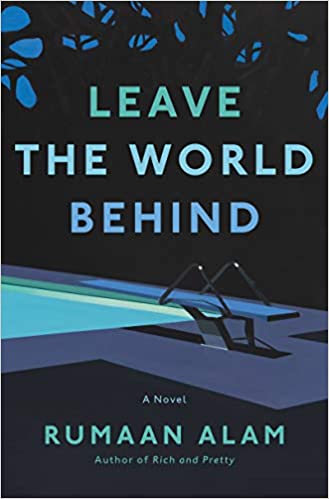
Leave the World Behind by Rumaan Alam

Ominous events throw two families together and off-balance in this captivating, thought-provoking novel.

Rumaan Alam (Rich and Pretty; That Kind of Mother) thrills and unsettles with Leave the World Behind, a novel about family and other relationships, getting what’s desired and reactions in the face of crisis.

The story begins mid-road trip, a white family of four on their way from the city to their vacation rental. Amanda is an account director in advertising, Clay an English professor; Archie is 15, Rose 13. They have an apartment in Brooklyn (“really Cobble Hill”) and a mid-range sedan somewhere between luxurious and bohemian. “The life they had was perfect,” Amanda frequently reflects, and yet they are jealous of their well-appointed Airbnb, its idealized decor and the imagined lives of its owners. The four of them enjoy the house, the pool, the beach. Their vacation is perfect if a little boring, like the family. Alam’s narrative and descriptions are gorgeously detailed and impeccably paced, so that this is a story for readers to sink into, effortless and comfortable, even sumptuous. Until a knock comes at the door.

Ruth and G.H. are the owners of the vacation home, and the arrival of the older couple in the middle of the night is disturbing enough, but their story is stranger: a blackout in New York City, fear driving them out into the country, invading the family’s perfect getaway. Amanda is suspicious. Unexpectedly, Ruth and G.H. are Black. Amanda wonders if it wouldn’t make more sense for them to clean this beautiful house, rather than own it.

The almost entirely undefined external situation–the reported blackout, loss of cell and Internet services, televisions reduced to blank blue screens–forces the four adults and two teenagers together and holds them there, a delicious narrative device that leaves them simmering. The resulting tension touches on generational differences, gender dynamics, class and race–Clay and Amanda are self-conscious of their faux-benign racism, and the story serves subtly as a criticism of social norms. There is a note of the locked-room mystery and heaps of foreboding. Readers gets meticulous details of Amanda’s grocery shopping and the vacation home’s furnishings, but the extent and nature of the outside threat is delivered in mere hints. “Some people got sick, because that was their constitution. Others listened and realized how little they understood about the world.”

Leave the World Behind is pitch-perfect in atmosphere, easy to read and deceptive in the high polish of its setting. Alam has crafted a deeply bewitching and disquieting masterpiece.


This review originally ran in the September 4, 2020 issue of Shelf Awareness for the Book Trade. To subscribe, click here.


Rating: 9 green porcelain lamps.

Winter Counts by David Heska Wanbli Weiden

On South Dakota’s Rosebud Indian Reservation, local enforcer Virgil Wounded Horse is faced with a challenging and personal case.


David Heska Wanbli Weiden’s first novel, Winter Counts, is a gripping story of crime investigation set on the Lakota Rosebud Reservation in South Dakota. Virgil Wounded Horse is cynical. He can’t imagine not living on the rez, but he’s more than skeptical of Indian spirituality and ritual, and doesn’t feel very connected to his people; his memories of being bullied in school are too fresh. Now that both his parents and his sister are dead, he doesn’t have much family to feel loyal to–but he is devoted to his orphaned nephew, Nathan, now a teenager who shares his home.

Virgil makes his living as a private enforcer. Tribal police have very limited powers, and the feds don’t bother with much on the reservation short of murder, so the Lakota often resort to hiring someone like Virgil to deliver vigilante justice. Now he gets to beat up his former bullies, and earn a few bucks doing so. It’s not necessarily work to take pride in, though, especially in the eyes of his ex-girlfriend’s politically powerful family. So Virgil is surprised when her father, a tribal council member, asks for his help. And he’s even more surprised when the case brings Marie back into his life.

It seems a local small-time pot dealer might be moving up into dealing heroin on the reservation. And when Nathan accidentally overdoses, it all becomes very real, with high stakes. Virgil will end up traveling all over the rez and down to Denver to try to track this latest crime wave. The scope of the case quickly grows beyond this private enforcer’s comfort zone, and he has a renewed romance to manage, while trying to keep Nathan safe at the same time. Out-of-town gangs, heavy hitters and hard drugs challenge Virgil’s skills. To keep all these threads together, he may need to reconnect with his Native roots, after all.

While Weiden’s prose is serviceable, his sympathetic characters and gripping plot keep readers engaged. Action and suspense are special strengths, and Weiden, himself a member of the Lakota nation, brings valuable perspective to the lives and experiences of his characters. The setting of Winter Counts offers an important and overlooked glimpse at the particular challenges faced by Native Americans, especially concerning crime and justice. But make no mistake: at the heart of this crime novel is a fight for the future of Rosebud Reservation and the lives of Virgil, Nathan, Marie and many more for whom this place is home. Tightly paced, compelling, realistic and deeply felt, Winter Counts offers a fresh take on the crime thriller.


This review originally ran in the July 30, 2020 issue of Shelf Awareness for the Book Trade. To subscribe, click here.


Rating: 6 glasses of Shasta.

No Middle Name: The Complete Collected Jack Reacher Short Stories by Lee Child

All the Reacher short stories! I thought I could take this one in chunks, but no: I stayed up later than I should have to rush through the whole thing, as per usual. I loved it.

I’d read “Second Son” before, but I was glad at another chance. It’s definitely one of those that requires a suspension of disbelief, as Reacher at (I think) thirteen is just a slightly smaller version of himself: badass, a fighter, and very clever. He solves two mysteries for the MPs, which seems a bit unrealistic, although also an excellent backstory for a later MP.

I’d also read “Small Wars,” but I doubted my memory of the ending, which made it fun again. There is an element almost of a Poirot-style detective in Reacher’s intuition, his ability to take scattered facts and build a whole story out of them.

Some of these stories star Reacher in adulthood, in his post-military rambling stage, which is when most of the novels are also set, and some see him still in the Army. But we also have several instances of teenaged Reacher. These are fun for me, although they make that mistake, as mentioned above, of treating younger Reacher as a miniature (still very large) version of adult Reacher. Whatever; it’s a departure from realism, but the Reacher corpus is not about hyper-realism. “Everyone Talks” is told from the first-person perspective of a character who’s not Reacher, and according to my memory, that’s unique. I appreciated the variety, being a bit outside his own perspective. By contrast with longer stories of 40+ pages (“High Heat” runs over 70), some of these stories are very short, almost vignettes, and might serve as character studies of Reacher himself: what does a guy like this do in a particular situation, that sort of thing. He’s a problem solver, he’s a hero, he’s an eccentric, he does the right thing. He’s a romantic, and a sexual creature, and he uses his fists, but with a code.

As a collection, I think No Middle Name is an excellent addition to the Reacher world, satisfying fans’ desires both for plot, storytelling, and action, and the Reacher character himself. (Also the odd romance or sex, which I think is a well-established if secondary element.) Longer, more involved stories come earlier in the collection; it wraps with several shorter ones. The final story, “The Picture of the Lonely Diner” (reference to the Hopper painting), felt like the perfect closer. Again, I thought short stories might help me take smaller sips of the fiction I love, but I ended up binging as usual, so consider that a warning of sorts. Possibly a good entry point for a curious reader. Certainly, a great read for the established fan.


Rating: 8 lines of adult dialog.