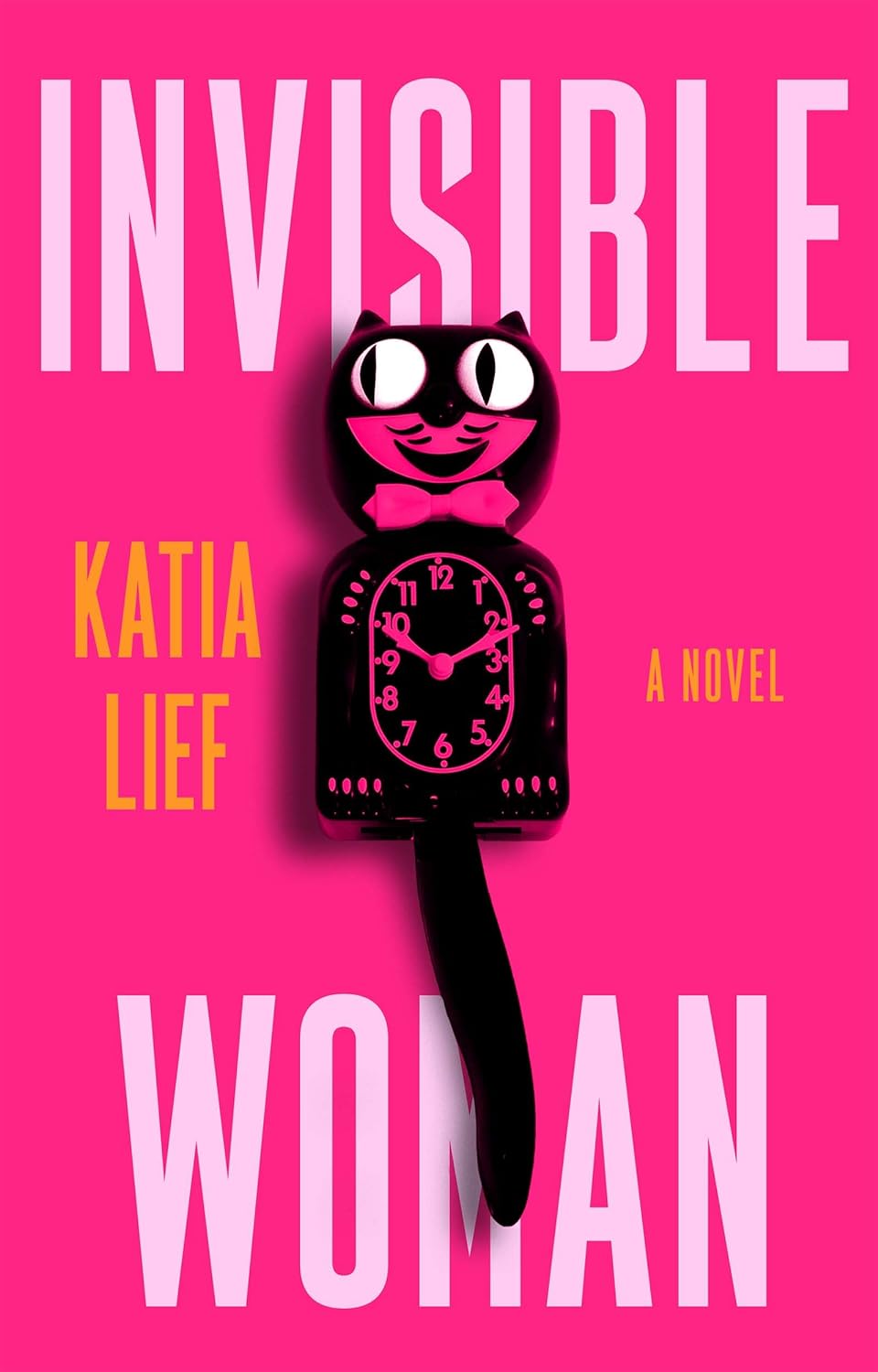
Invisible Woman by Katia Lief

A woman troubled by old crimes and loss reaches out to an old friend, with disastrous consequences in this chilling commentary on gender in society.

With Invisible Woman, Katia Lief (Five Days in Summer; The Money Kill) follows a woman navigating professional life, family, friendship, and societal roles, attempting to reconnect with an old friend whose path diverged from hers decades ago. Their stories are individually compelling, as well as offering questions relevant to the #metoo era.

Joni Ackerman had been a pioneering filmmaker in the 1980s and ’90s, and her best friend and former college roommate, Val, was a promising up-and-coming actor. A secret trauma caused the two young women to grow apart; Joni married, had children, and slowly slid beneath the surface of her husband’s sparkling career in television. The novel opens in 2018, when a fresh film-industry scandal emerges that sends Joni looking for her friend. Joni feels that the time has come to speak out about an old crime, but Val wishes to remain in obscurity, and Joni’s husband, Paul, wants to let sleeping dogs lie. Joni wrestles with her long-lost friendship over a significant divide of time and suffering. Her marriage has been strained for years, and a recent cross-country move has left her isolated. She dives into the novels of Patricia Highsmith, in editions long ago given to her by Val, for comfort and escape, but as real life grows darker and weirder, Highsmith’s gritty psychological thrillers start to feel all too close to reality.

The concerns of Invisible Woman are firmly rooted in #metoo, #timesup, and the historical and continuing challenges of women in the entertainment industry. Joni loves her daughters but grapples with what it’s cost her career to become a mother: early in the novel, she’s invited to appear at a film retrospective in a series called “Lost and Forgotten.” She struggles with personal and family difficulties, and with alcohol. Highsmith was a strong influence on Joni’s highly regarded work in film, but also threatens her tenuous grasp on reality. Readers will root for Lief’s carefully crafted protagonist, even as her decisions become increasingly irrational.

Invisible Woman twists and turns, its escalating dangers alternating with fresh reveals, as momentum builds to a breaking point. Joni is compulsive, troubled, but sympathetic; Val is less central but exerts a force of her own. Characters develop quickly from disagreeable but benign to chilling and dangerous; some readers will find this atmospheric novel engaging and disturbing enough to lose sleep. A literary psychological thriller, cultural study, and heartbreaking story of friendship and loss, Joni’s unforgettable story involves layers of lies and the dangers of self-sublimation. Lief chills, entertains, and challenges.


This review originally ran in the October 27, 2023 issue of Shelf Awareness for the Book Trade. To subscribe, click here.


Rating: 7 years.

Here in the Dark by Alexis Soloski

Against the backdrop of New York City’s theater scene, a young woman grapples with the line between life and art in this memorable debut, lush with darkly elegant detail.

Alexis Soloski’s Here in the Dark is a thrillingly dark psychological drama, set in the least visible part of the spectacle of theater. Vivian Parry, 32-year-old theater critic for an important New York City magazine, carefully rations her vodka and sedatives to keep clear of the grasp of the “therapists I’m occasionally required to see.” She holes up in her Manhattan studio apartment, writing and editing in between shows. Readers quickly understand that Vivian is avoiding an unnamed trauma. In the audience–anonymous, with pen and notebook poised–is the only time she is remotely okay: “When I’m in the dark, at that safe remove from daily life, I feel it all–rage, joy, surprise. Until the houselights come on and break it all apart again, I am alive. I know myself again.”

It’s an act: “I am, of necessity, an imitation of myself–a sharp smile, an acid joke, an abyss where a woman should be. For a decade and more I have allowed myself only this lone role, a minor one: Vivian Parry, actor’s scourge and girl-about-town. I don’t play it particularly well.” Seeking a crucial promotion, she reluctantly agrees to an interview with David Adler, an eager graduate student and a man she belatedly suspects may be acting a part, too. “I consider myself a superlative judge of theater and life and the crucial differences between,” she thinks. “But David Adler has shaken that certainty like a cheap souvenir snow globe.” Following their odd and fateful meeting, Vivian finds herself inexorably caught up in intrigues involving a missing person, a dead body discovered in a park, an abandoned fiancé, Russian gangsters, Internet gambling, and more. The line between performance art and “real” life begins to blur still further. Vivian is heavily reliant on drink and pills; it would be easy to mistake her increasing sense of danger for paranoia, but readers can’t deny the threats slipped under her door.

Soloski, in Vivian’s clever, moody, sardonic voice, envelopes readers in details richly laden with subtext. Seasonal decorations include “cardboard Santas leering from store windows, snowflakes hung like suicides from every lamppost.” A large man has “a chest that would intimidate most barrels.” Of Justine, Vivian’s forceful best (and perhaps only) friend: “There are sentimental tragedies shorter than Justine’s texts.” Vivian’s fragile reality fractures in sleek, stylish prose. Here in the Dark is a carefully wrought, slow-burning psychological thriller: as numb as Vivian keeps herself, the terror surges to a crescendo, her wits and understanding of what is real pitched against an unknown foe.

This riveting first novel offers building momentum and looming horror with an entrancing and troubled protagonist and the most sophisticated of settings. Here in the Dark is frightening, delicious, engrossing, and unforgettable.


This review originally ran in the October 16, 2023 issue of Shelf Awareness for the Book Trade. To subscribe, click here.


Rating: 7 thumbnails.

The Diver by Samsun Knight

This novel of existential questions features a grieving, perhaps unhinged widow and the paralegal hired to investigate her, who team up in increasingly bizarre efforts to reconcile their lives.

Samsun Knight’s first novel, The Diver, opens with a brief, dramatic scene: “A scuba diver is on a deepwater dive with her husband, one hundred thirty feet below.” They are exploring a shipwreck from the 1800s when their oxygen tank pressure gauges fail. The diver survives, and her husband does not.

Knight presents this brief section in a third-person perspective that provides details of the dive; the rest of the novel features the first-person voice of a young man named Peter. Peter works as a paralegal at an ethically questionable law firm that specializes in intimidation services on behalf of wealthy clients; the diver’s sister-in-law hires them. In this way Peter comes into contact with Marta, the widowed diver. He wants to help her, and he may love her. He also has his own baggage and history of loss, a “sinkhole of family.” Peter’s plot line is a series of mishaps and grotesque, often darkly comic episodes; readers are privy to his first-person narration and can understand his messy life. Marta’s more enigmatic story is, likewise, filled with grim absurdity. The Diver is further peopled with unfeeling art-school classmates, a mother on the verge of breakdown, a profoundly disturbing fortune-teller, and two goons who share a first name. Knight combines psychological suspense with outrageous catastrophes and a bit of a ghost story.

Knight follows Marta by following Peter; she is the novel’s ostensible protagonist, but it is Peter’s minutiae on display. The two characters are drawn together by their misery and their openness to possibility. They speak in disjointed sentences but, Peter thinks, mostly understand one another: “That sense of broken compartments, of trying and failing to fit Marta’s actions into the boxes I’d established for her, had graduated into a full collapse of anxiety.” The price of their odd alliance, however, may be higher than either one realizes.

The story plays with format and includes interspersed snippets of interview transcripts, tarot cards, diagrams, an art-mag essay about Freud’s concept of unheimlich, and more. The overall result is a little off-kilter and occasionally grisly. (Some readers will struggle with scenes involving animal cruelty.) As an examination of the dark sides of relationships, it is disturbing and always imaginative. Marta, for one, resorts to increasingly weird experiments with the occult in her quest to bring her husband back.

How far would a person go for love, grief, hope, or fear? This disquieting novel pushes these questions beyond expected boundaries in its inquiry into terrible, life-changing wrongs. Dealing in mysticism, love, anguish, and unpardonable crimes, The Diver is not a novel for the faint of heart, but it is rewarding in its surprises.


This review originally ran in the September 28, 2023 issue of Shelf Awareness for the Book Trade. To subscribe, click here.


Rating: 6 bunnies.

The Taken Ones by Jess Lourey

Disclosure: I was sent an advanced review copy of this book in exchange for my honest review.


The sun smiled violently overhead, causing the tar beneath Rue’s blue-striped Adidas to glisten and pulse.

The first in a new series from a prolific author of 20-something previous works, The Taken Ones offers mysteries within mysteries.

On a hot July day in 1980 three little girls walked into the woods in small-town Leech Lake, Minnesota. They were headed for a dip in the creek, but never made it. Instead, one girl, Rue, walked back out again, with no memory of what had traumatized her nearly to death. Her friend Amber (eight) and Rue’s little sister Lily (five) were gone.

More than forty years later, Agent Van Reed of the Minnesota Bureau of Criminal Apprehension strives to escape her own traumas. Forgetting is the best thing, she tells herself. Her childhood and teen years were newspaper-headline material, and she’d dedicated ten years of her life to the Minneapolis Police Department, only to be ostracized after the death of her beloved partner. When a woman is discovered dead after being buried alive, and Van is called in on the case, she pursues it avidly, partnered with the unbelievably dapper forensic scientist Harry Steinbeck. She wonders if this new partnership might represent a fresh start. As the recent victim is tied to the decades-old disappearance, though, Van may find wounds reopened and secrets bared that she can’t stomach.

Van’s trauma (and that of the surviving girl, Rue, now a profoundly troubled psych nurse) reads true, and while her story is a bit sensational (again, headline material), that stuff does happen in real life. (Being a law enforcement agent with that past is an absolutely believable plot element, and imagine how hard.) She’s not entirely well – nor would she be. Harry Steinbeck is loveable and mysterious, and definitely hiding something. Side characters who incline toward ‘good’ and ‘bad’ guys have their own complicating features, too. I loved many of the sentences and descriptions, and Lourey’s eye for place.

This is a plot with many twists and side paths as dark as those Minnesota woods. Lourey excels at short chapters and cliffhangers, keeping me up past my bedtime for a few nights in a row. This is an exciting one, abounding in surprise reveals, most of them unexpected even to this trope-sensitive, genre-attuned reader. There were also some intriguing threads begun that I hope will be followed in later books in the series. This is expert work. I’m really looking forward to more Steinbeck & Reed.


Rating: 8 glasses of sweet tea.

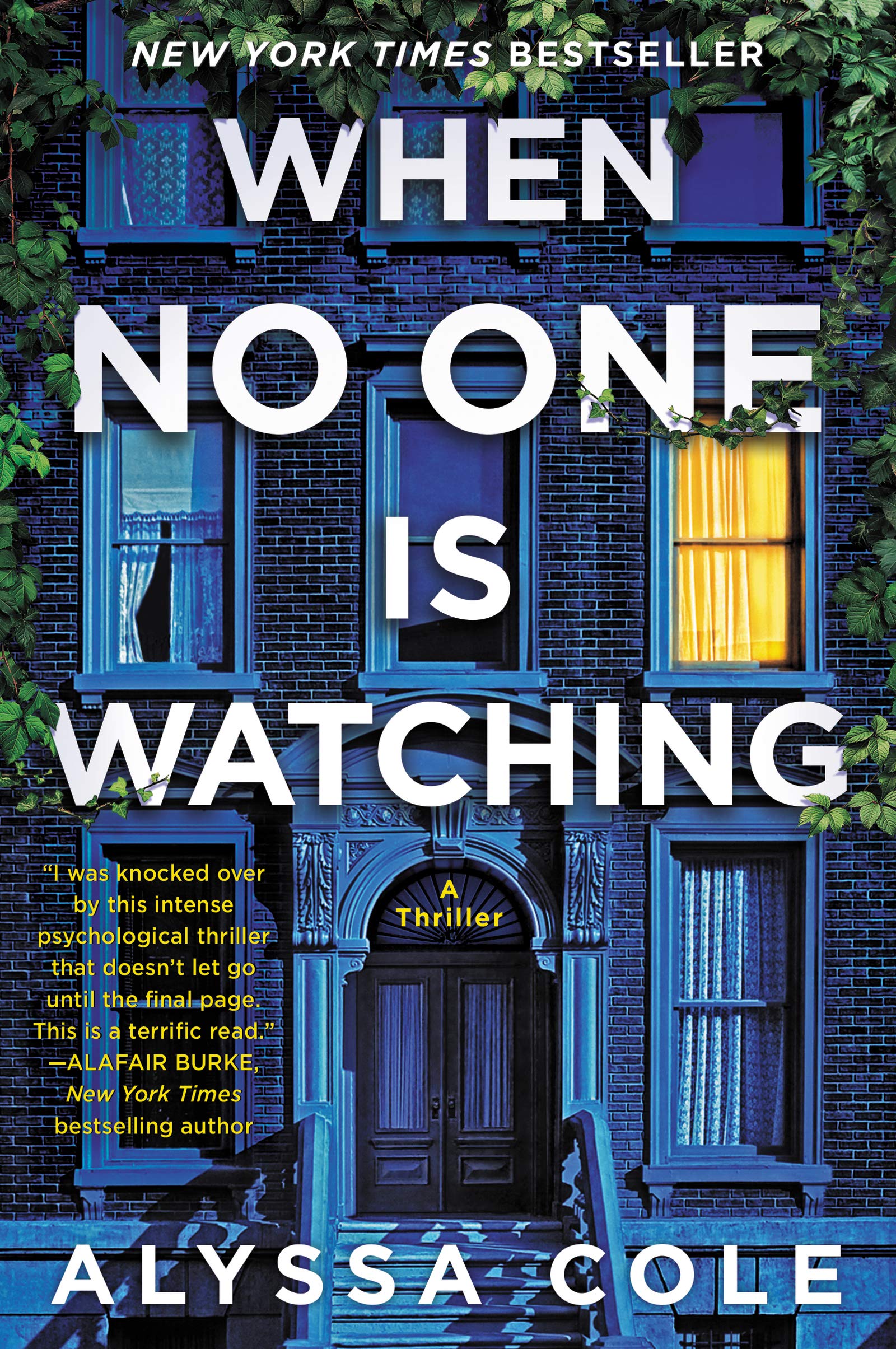
When No One Is Watching by Alyssa Cole

While it takes its time getting to the ‘thriller’ part, this novel does pack a punch once the thrills begin. Told in two points of view, a romance builds alongside the terror.

Following a nasty divorce, Sydney has recently moved from Seattle back home to the fictional Gifford Place neighborhood in Brooklyn, NY. Her mother’s health has taken a turn for the worse, and it is a relief anyway to return to her childhood home, a handsome brownstone building where Sydney’s lifelong best friend Drea also lives in an apartment. The neighborhood is changing quickly, though: gentrification is coming hard for Gifford Place, a traditionally Black neighborhood, and neighbors Sydney’s known all her life are disappearing right and left, along with the businesses she frequents, and being replaced by white residents. The book opens with a brownstone tour emphasizing only the neighborhood’s distant white history, which Sydney interrupts to interject a truer version, before leaving frustrated for comfort food at her favorite bodega. The tour guide’s snotty advice that Sydney should start her own tour gets her thinking, though.

With the annual block party approaching, Sydney works on her research for the tour. Meanwhile, a new white resident, Theo, struggles in a failing relationship with his absolutely toxic racist girlfriend Kim. She is one of several of Sydney’s new white neighbors who move well beyond micro- into macro-aggressions and overt racism, while hapless Theo appears to be having the first eye-opening of his life all at once. I’m leery of this device. Theo volunteers to be Sydney’s assistant in tour research, offering us a rather too obvious didactic opportunity: Sydney explains history to Theo who also, on his own, researches patterns of white flight, redlining, real estate scams, and the reaches of slavery beyond Confederate borders. Gasp, northern bankers benefit from cotton planting too! This is a bit transparent for my tastes. Where has Theo been hiding all these years that he’s so ready for his awakening but has just never been exposed to truth before? [I thought it was a good detail, on the other hand, that Theo is white but also comes from poverty and crime. I felt this offered a subtler and therefore perhaps more clever avenue to explore why poor white people, though facing certain disadvantages, still experience an absence of the obstacles that face Black people of any socioeconomic background.] There are however some fun moments, like when they come up with a safe word (‘Howdy Doody’ – Theo’s idea) for when he gets into his “little white feelings.”

This is the weakest part of the novel, for its didactic feel and slower pacing. Then we move into a quickening of the dangers. Theo and Sydney uncover the dirt, historical and contemporary, the widespread conspiracy to take over Gifford Park for great profits and throw longtime residents out on their asses or to an undisclosed location. Banks, hospitals, real estate agencies, medical research facilities, tech scams and plain intimidation–is it a conspiracy theory if it’s all true? Where have Gifford Park’s disappeared residents been going, anyway? Why would Mr. Perkins take off in the final days before the big block party? Sydney’s past traumas make it difficult to trust her new friend, who is admittedly slow to some punches. (It is funny, if also sad, when he figures it out: “Not being able to call the police when you need help really sucks, I’m learning.”) Once the action shifts into gear, When No One Is Watching rockets along. Horror, fight scenes, sex, drama, and relevant social issues: it’s haunting but also fun. If a few plot threads get dropped along the way, so be it.

Possibly Cole got a bit ambitious with the combination of capital-I Issues and thriller intrigue. It was rough in spots. But she also accomplished a lot, and kept me engaged (if occasionally a little impatient), and I’d encourage more efforts like this one.


Rating: 7 loosies.

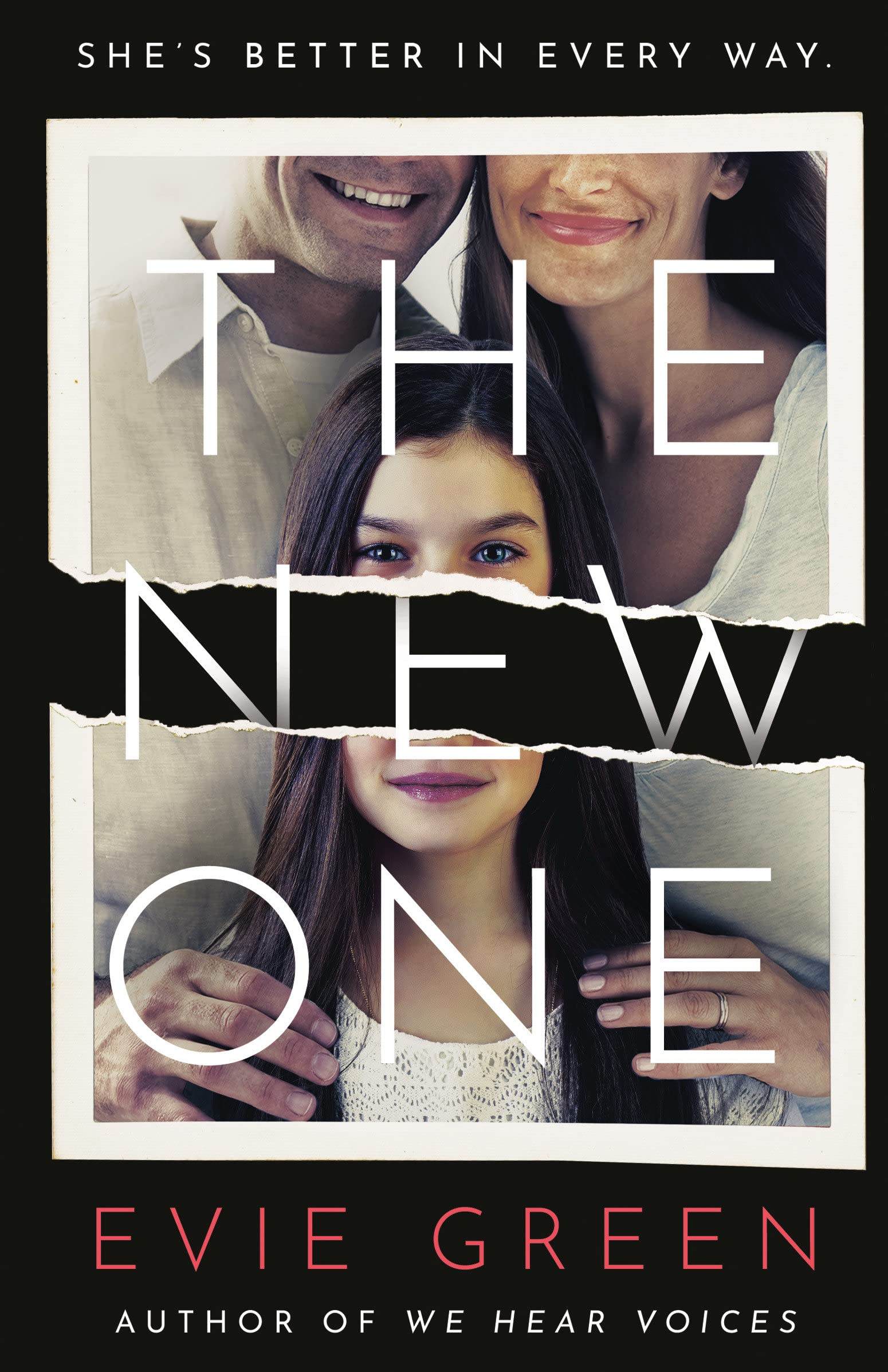
The New One by Evie Green

Artificial intelligence, family troubles, love and aspiration combine for a delightfully suspenseful novel of secrets and betrayal.

In The New One, Evie Green (We Hear Voices) takes readers on a propulsive journey through grief, loss and secrets kept by those we love. This compelling novel will have readers up all night, following the tribulations of a struggling family offered a great gift–or possibly a curse.

Scarlett, the Trelawneys’ daughter, was a perfect angel–brilliant, beautiful, sweet, gifted–until she turned 13. She then becomes a terror: lying, staying out late at night, neglecting her schoolwork. “They had become a shouty family,” Green writes. “They all yelled at one another every day, and [Tamsyn] had no idea how to stop.” In near-future Cornwall, Scarlett’s parents, Tamsyn and Ed, are barely surviving in their humble camper: Ed works nights, and Tamsyn is up early mornings, “a peasant working in fields.” They subsist on stolen cauliflowers and rarely speak to each other (without shouting). Then tragedy strikes: Scarlett is left lying in a hospital bed in a coma, and Tamsyn fears she’ll never see her daughter conscious again. Just as their insurance runs out, they receive an offer that seems a mix of magic, miracle and horror: while a company called VitaNova rebuilds their daughter, the comatose Scarlett will receive the finest medical care, and her parents will be granted a fully funded fresh start in Geneva, Switzerland. Scarlett, now named Sophie (her middle name), is part human clone and part AI. She shares Scarlett’s memories and gifts, although with the traumatic past year erased, and has been augmented with a better knowledge of French and physics–and a perfect, innocent love for her parents.

Most of the story is told from Tamsyn’s point of view, with brief ventures into the perspectives of the other members of her family. Tamsyn is unsure of her manufactured daughter: this new one is so like her darling Scarlett that she’s impossible not to love. But Tamsyn grasps what Ed seems not to: their real, true, original daughter still lies unconscious, and every bond with Sophie represents a small betrayal.

The New One‘s creepy Stepford atmosphere is not to be underestimated. Readers can see what even Tamsyn cannot: Sophie understands more than she seems to, and her best interests and Scarlett’s may not align. Ed is keeping secrets. Geneva is a bit too perfect. Green’s (aka British author Emily Barr) prose is compulsively readable, her characters disarming and capable of great mystery. The New One is deliciously disturbing, engrossing and surprising at its every turn. This not-to-be-missed novel of family dynamics and what it really means to be human and to love is both pleasurably escapist and thought-provoking.


This review originally ran in the February 23, 2023 issue of Shelf Awareness for the Book Trade. To subscribe, click here.


Rating: 8 DVDs.

Maximum Shelf: All the Sinners Bleed by S. A. Cosby

Maximum Shelf is the weekly Shelf Awareness feature focusing on an upcoming title we love and believe will be a great handselling opportunity for booksellers everywhere. The features are written by our editors and reviewers and the publisher has helped support the issue.

This review was published by Shelf Awareness on February 13, 2023.


From S.A. Cosby, author of Blacktop Wasteland and Razorblade Tears, All the Sinners Bleed is a lushly dark mystery set in fictional Charon County in Southeastern Virginia and starring a Black sheriff in a town that’s not at all sure it’s ready for one. Recently elected Sheriff Titus Crown is out to right some wrongs from the inside: police corruption, racism and profiling, law enforcers living above the law. He’s also dodging a few traumas of his own. Having come home to Charon County means he gets to live with and help his aging father, but it also means he’s reminded of his beloved late mother. His brother lives in town but rarely comes around. Titus has a local girlfriend who’s very sweet and good for him, but sort of unremarkable; he has a sense he should love her more. He’s haunted by the events that ended his FBI career in Indiana. Running a small staff of deputies in a small Southern town has its own challenges, mostly manageable ones; he hopes to redeem himself in this way from wrongs only hinted at.

But then there’s a call about an active gunman at the high school in town. In minutes, Titus is looking at a popular teacher of decades shot to death in his classroom, and a young Black man killed by deputies while the school–and via their cell phone videos, the entire Internet–watched. Before Latrell Macdonald died, “with a wolf’s snout in his left hand and cradling a .30-30 like a newborn in the crook of his right arm,” he spoke of crimes that make Titus’s blood run cold. The ensuing investigation will crack Charon County wide open, and challenge to the core Titus’s plans to clean up his hometown and make amends for things that happened in Indiana.

Titus is no investigative slouch. “His instructors at the Academy had their own version of String Theory. The way they explained it, there were invisible strings that vibrated unseen in the liminal spaces between sunrise and secrets, between rumor, shadows, and lies. Strings that pulled all this together. All you had to do was find the seam and unravel it. Or rip it apart.” His years with the Bureau and training under his friend and mentor there give him an edge on profiling and pursuing an enemy who seems determined to toy with him. He finds the remains of badly tortured and murdered Black boys and girls; as he investigates, the body count only rises. An old girlfriend from his FBI years appears, asking to interview him for her crime podcast; his father pleads with him to come back to church. The Sons of the Confederacy are planning a march at the upcoming Fall Fest, and a strange story surfaces about a reclusive fire-and-brimstone snake-handling preacher. Increasingly distressed at his inability to keep his county safe, Titus is plagued by memories and the present evil attacking his home. On less and less sleep, he doggedly puts in work. “He went over a few other emails, reviewed the gas expense reports, checked the arrest log from last night, updated the Sheriff department’s social media page…. It felt strange to attend to the mundane and the profane at the same time but that was a defining aspect of the job.”

All the Sinners Bleed is noir with a particular American Southern twist. Place figures heavily. “The soil of Charon County, like most towns and counties in the South, was sown with generations of tears…. Blood and tears. Violence and mayhem. Love and hate. These were the rocks upon which the South was built.” Cosby deals in timely themes: returning home and reckoning with old wounds and crimes; the unsavory histories of the places we love; the legacies of Confederate statues, of slavery and racism; the darkness within all of us, even those playing the good guys; the role of police and policing. His prose is gruff, poetic but stark: “The clouds gathered like young men on a corner getting ready for a fight.” Titus has a code like that of Michael Connelly’s Detective Harry Bosch: “Either we all matter or no one matters. Everyone deserves to have someone speak for them.” He believes that something hard and mean dwells in every heart–and in a few, true evil. What has beset Charon County is not supernatural. It is merely the wages of sin (as his churchgoing neighbors might say), or the county’s bloody past coming back around. There is something of the lone gunslinger–damaged but virtuous–in Titus Crown, who stands against the worst elements of human nature. Like Cosby’s previous novels, All the Sinners Bleed is often grim, but it lands on a surprisingly hopeful, even joyful ending.

For fans of gritty, dark mysteries with an interest in the very real and contemporary demons of United States culture and history, Cosby’s work offers a sinister but satisfying voyage into the best and worst of returning home and starting fresh.


Rating: 7 sheep.

Come back Monday for my interview with Cosby.

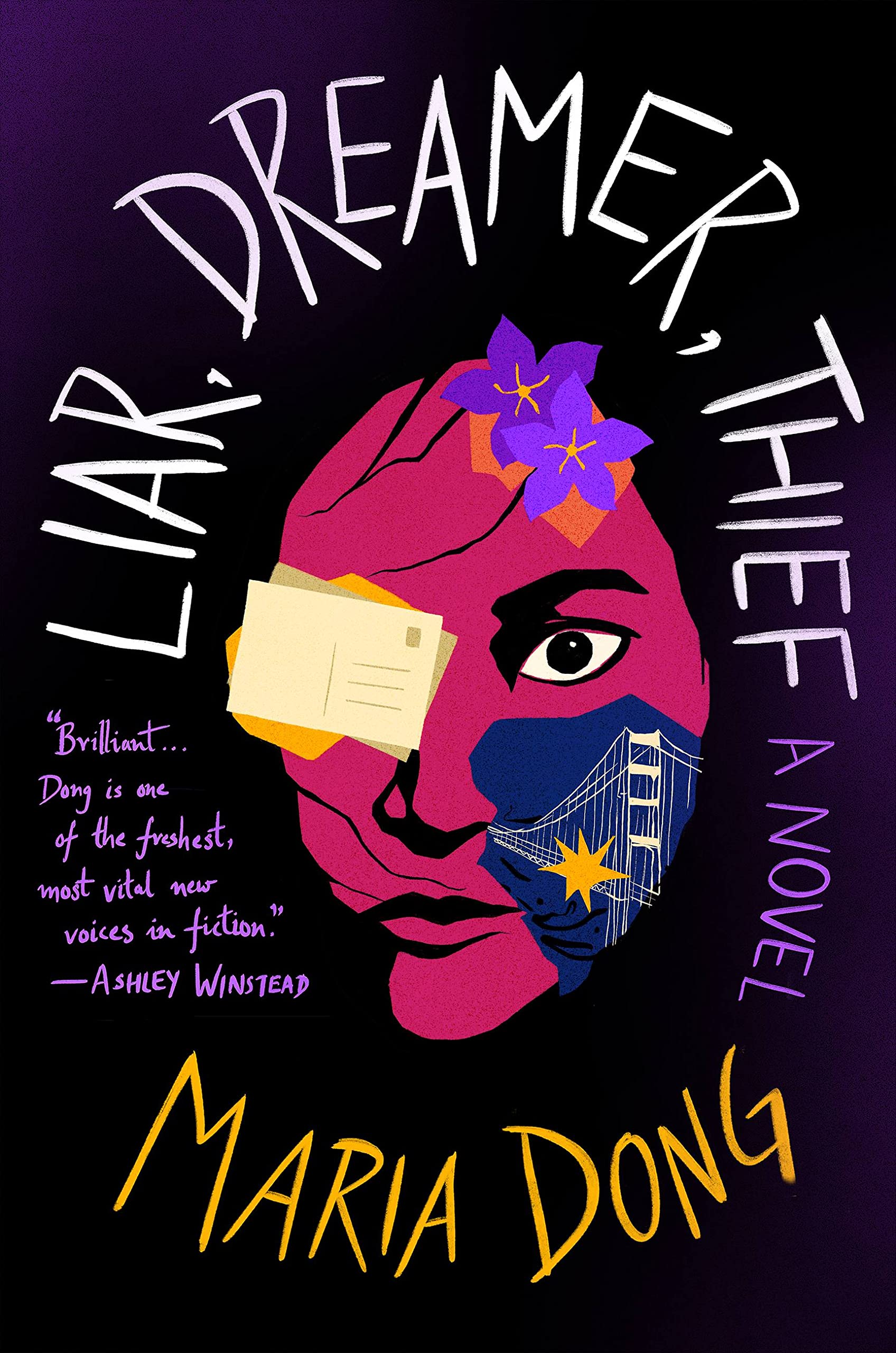
Liar, Dreamer, Thief by Maria Dong

A young woman relies on ritual and fantasy to navigate her daily life–until the real world turns as bizarre as her worst fears.

Maria Dong’s debut novel, Liar, Dreamer, Thief, is a masterfully harrowing adventure for both reader and narrator. Katrina Kim is 24 years old and struggling to keep it together. She’s not great at her temp job at an insurance company; she has no real friends other than her mostly absent roommate; she relies on rituals involving geometry and prime numbers to feel safe from her shapeless, apparently irrational fears; she frequently imagines herself into the magical world of her favorite children’s book or the classical works of music she once performed. She argues that she is not stalking her coworker Kurt, but readers will suspect this may be semantics. She has $45 in her bank account and her parents haven’t spoken to her in years. Readers may assume Katrina is struggling with an undiagnosed mental illness, drawing endekagrams (a star polygon with 11 points) to help her get through the days–until she happens to watch Kurt jump off her favorite bridge, while shouting that it is all her fault.

Liar, Dreamer, Thief is punctuated with geometry lessons (the four stellations of the endekagram) and passages from the fantasy book that provides Katrina with her other, safer-feeling life, emphasizing these coping mechanisms as she embarks on an amateur (and poorly funded) investigation into Kurt’s disappearance. Her barely functional life goes further to pieces. Just as readers begin to worry that this narrator is not only unreliable but completely unstable, the clues shift slightly, and suddenly it appears that some of Katrina’s nastiest and most fantastical fears may be all too real.

This is a completely absorbing novel, both a terrifying whodunit thriller and a heart-wrenching drama about mental health, family, loneliness and moral relativism. Dong’s pacing and revelation of secrets is expert; beware staying up late to finish Katrina’s story in one go (and, perhaps, beware nightmares of the Mirror Man). Katrina makes some cringe-worthy choices while facing challenges both existential and mundane (clocking in on time in the cubical farm); she is an imperfect protagonist but disturbingly accessible, and indomitable even in her lowest moments. Liar, Dreamer, Thief excels at empathy and conveying the frustration of one’s own limitations, as Katrina wonders, “Does everyone in my orbit have a secret tragedy, just crawling underneath the surface?” Its mysteries swell toward a denouement that feels simultaneously unwieldy and inevitable. Probing those secrets may be mortally dangerous–or may be Katrina’s salvation.

This exceptional debut novel showcases relentless momentum, horrors, compassion and an unforgettable protagonist: not to be missed.


This review originally ran in the November 11, 2022 issue of Shelf Awareness for the Book Trade. To subscribe, click here.


Rating: 8 minutes.

The Marsh Queen by Virginia Hartman

Mystery, romance, conspiracy, family drama, natural history and art combine in this excursion into a decades-old suspicious death in the swamplands of northern Florida.

Loni was 12 years old when her beloved father headed into the northern Florida marsh in his johnboat and did not return. At 36, she is working her dream job as a natural history artist at the Smithsonian, ignoring her past and her remaining family as hard as she can, until her younger brother calls to insist she come home to help care for their mother. The Marsh Queen, Virginia Hartman’s fast-paced, compelling first novel, sees the prodigal daughter return to the swamps, the family she left behind, the mystery of her father’s death and the possibility of a fresh start.

“Daddy wasn’t just a visitor to the swamp, he was a part of the place.” Loni’s father, Boyd, was a Fish & Game officer, a fisherman, a devoted husband and father and a most unlikely suicide, although that was the rumored–and covered up–cause of his death. Loni was his usual companion in the swamps, uninterested in fishing but a passionate and talented illustrator of the birds they watched together. As an adult, she’s kept that passion, but grown distant from her brother and especially from her always-prickly mother, Ruth, now suffering from dementia. A serious gardener and herbalist, Ruth struggles with painful secrets long kept from her daughter. Loni’s leave of absence from the Smithsonian comes at an especially stressful time at work, and returning home is always painful; nothing about this trip feels right. But Loni canoes the swamps, discovers family secrets, investigates her father’s death, finds herself involved in fresh intrigues and dangers–and meets a handsome stranger. The Smithsonian, and leaving Florida behind, have always been central to Loni’s life plan, but as she sinks back into the quirks of family and home, she may just find a new way.

Hartman’s descriptive writing and clear passion for her subject are on best display when Loni immerses herself in the natural environment, in her art and in her memories of Boyd. In her contemporary relationships, Loni can be frustratingly obtuse and lacking in self-awareness. As the enigma around Boyd’s suspicious death gets more complex, the plotting can feel a little unwieldy. But the subversion of Loni’s expectations is frequently refreshing; a few secondary characters offer intriguing perspectives, and the novel’s framing details of Florida marshland, ornithology, museum work and fine art are expertly and beautifully drawn. The Marsh Queen is unwavering in its lush, finely detailed, appreciative portrayal of a distinctive natural setting, and ends on a redemptive, even inspirational note.


This review originally ran in the July 1, 2022 issue of Shelf Awareness for the Book Trade. To subscribe, click here.


Rating: 5 herons.

Better Off Dead by Lee Child and Andrew Child

Once could have been a fluke, but twice is solid. The Andrew Child continuation of the Lee Child empire will be okay.

Pretty classic building blocks here. Reacher’s just walking down a road in borderland Arizona when he comes across an unusual scene: an apparent car crash that isn’t what it looks like. (I won’t mention the opening chapter, which contains tricks of another sort.) Reacher tropes: a small town in the grips of an evil it wishes it could shake, but the locals don’t have the juice to deal with forces this great. Our hero stumbles into it, and feels sympathy for certain involved parties (and if one of them happens to be an attractive, super-competent woman of about his age, more’s the pity). Also, cue the timely issue of veteran suicide rates. There are some solid fight scenes and more trickery than I’m used to, actually, in terms of the plot itself: I appreciate this. Look, Reacher novels are familiar, even formulaic, but in the best ways, and in ways that still keep me page-turning and generally manage to surprise me. I was sure I saw the whodunit coming in this one and I was wrong. This remains a comfort read (despite the blood and guts); it’s like coming home. And I am just so terribly relieved that the Andrew Child continuation of the franchise seems to be going swimmingly.

Promotional copy claims that this one “will be the riskiest job of Reacher’s life,” to which I say, come on, have y’all read the previous 25 Reacher novels? It’s okay. I can’t wait for the next riskiest job of his life! Keep ’em coming.


Rating: 7 condoms.