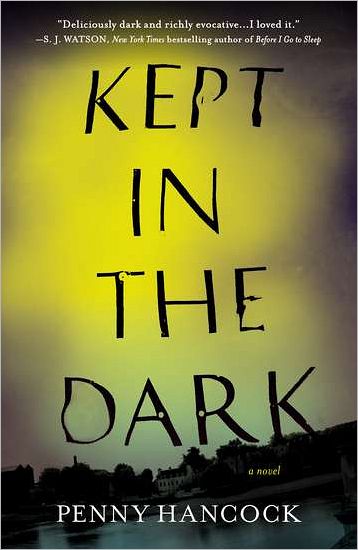
Kept in the Dark by Penny Hancock

An enchantingly disturbing tale about an older woman and a younger man, with shades of Lolita.

Sonia is slowly withdrawing from the world, from her marriage to an older man who travels a great deal, from her relationship with a daughter who has left home, and into the River House, her family estate on the Thames. When 15-year-old Jez knocks on her door, she is charmed by his youth, which reminds her of another time in her own life and another young boy. The pull of the river and her memories prove too strong for her, and Sonia decides to keep Jez in the River House, where she feels he belongs. As the outside world mounts a search for the missing boy, Sonia becomes convinced of the rightness of what she is doing, and her fractured grasp on reality slides further downhill.

In Kept in the Dark, Penny Hancock’s twist on the timeworn male kidnapper and young female victim, Sonia and her delusions are deliciously, convincingly creepy. The fantasy of her relationship with Jez, who is increasingly frightened and ill, gradually reshapes the rest of the world into the enemy of Sonia’s happiness, until her connection with her own past overrules the present. The reader’s willpower is tested as the stakes grow higher, along with the temptation to flip to the final page of the book. Will Sonia let Jez go as promised? Or will the force of the river, the River House and the power of obsession keep him captive? Jez’s fate and the dark secret of Sonia’s childhood are left hovering, teasing, until the closing moments of this delightful debut novel.


This review originally ran in the August 31, 2012 issue of Shelf Awareness for Readers. To subscribe, click here, and you’ll receive two issues per week of book reviews and other bookish fun!


Rating: 7 goosebumps.

Teaser Tuesdays: Broken Harbor by Tana French

Teaser Tuesdays is a weekly bookish meme, hosted by MizB of Should Be Reading. Anyone can play along! Just open your current read to a random page and share a few sentences. Be careful not to include spoilers!

My excitement about Tana French has only grown as I’ve read her books, culminating with the first she wrote but the last I read, The Likeness. So I was very anxious to get my hands on her new book, Broken Harbor. My review is coming in a day or so, but for now I will tell you that she does not disappoint! Here’s an example of why:

It was October, a thick, cold, gray Tuesday morning, sulky and tantrumy as March.

The plot and the characters are wonderful, too. But I love the evocative tone of that one sentence. Doesn’t it help you picture Dublin (and surrounding areas), and feel the cold? The strong sense of place is one of my favorite elements of French’s mysteries. I’ll go ahead and give her points for “tantrumy,” too, although I’m sure some purists will be offended. ๐Ÿ™‚

How’s your Tuesday, and what are you reading?

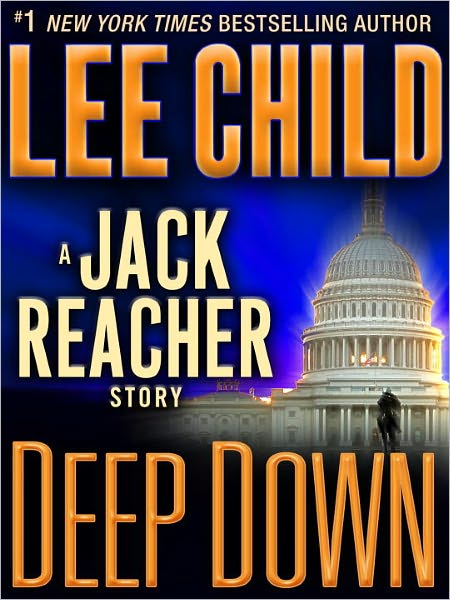
Deep Down by Lee Child

Jack Reacher is back. In this e-book-only short story, he’s back in the army, in his 20’s, making it chronologically one of the very early Reacher tales. He’s been called in from Frankfurt to Washington, D.C., where he’s put undercover as a sniper sitting in on a pre-committee… I know, bear with me… of politicos discussing a possible requisition for sniper rifles. Apparently the prior two meetings of these subcommittee politicos with military representatives have resulted in sensitive weapons information being leaked overseas, and Reacher is to find the leak. His handler in this operation is sure the leak is one of four women, and encourages Reacher to use his woman-wrangling skills as he sees fit. As we watch Reacher getting briefed and prepped in a slightly-too-small suit, we simultaneously see one of the women jogging into work. And the action begins. I’ll leave it at that in case you want to read it yourself.

Reacher fans will be able to predict how things play out. There are a few obligatory features: Reacher seems to read minds; he makes observations the average bear would not, and draws correct conclusions. There is flirtation. There is violence. He gets things right in the end. In these ways, it fits within the other Reacher stories we know and love.

What’s different here, though, is the format – and I don’t mean the e-book part, although I’m still not excited about that aspect either. No, I think I’m coming to the conclusion that short stories do not best showcase Reacher’s abilities. This is the second I’ve read, and The Second Son was interesting for the light it shed on Reacher’s past, brother Joe’s personality, and their relationship. I felt that Deep Down had some shortcomings. A lot of what I love in a full-length Reacher novel is development, the careful playing out of string, the stinginess with which we learn details, the way we get to know our characters better, often the development of a steamy relationship to boot: all things we need a full-length novel to do. While this story had all the elements Reacher needs (as observed), it didn’t give them the space they needed to grow. It didn’t do it for me. Instead, Deep Down read to me like what I fear it is: a hastily-produced holdover for Lee Child’s fans to satisfy themselves with while we await his new novel (A Wanted Man comes out in September). It was fun, and Reacher did kick butt, and it only took me 30 minutes to read – but that’s part of the problem. Only so much plot can come to fruition in a 30-minute read.

That last statement makes me wonder – is this really a problem inherent to the short story? And I don’t think it is. I’ve certainly read some very impressive, moving short stories by my favorite master of that genre, Hemingway. But you know, I don’t read a lot of short stories; I do find it a difficult genre, and I think I’m dissatisfied more often with short stories than I am with novels. New question, then: am I a poor reader of short stories, difficult to please? Or is this a difficult genre to do well in? I suspect the latter (although I’ll allow the former): with less space in which to develop characters and plot, an author has to be very precise and economical. This would help explain why Hemingway was so good at them, precision and economy being his hallmarks. And that author may need to take on less, plot-wise, so that he has time to flesh it out.

I have managed to make a rambling mess of this review. Perhaps I am not so strong on precision and economy, myself? At any rate, I found this a fine but decidedly below-average Reacher story; I am anxious for the next full-length book. Many thanks again to my mother for her loan of the e-reader so I could knock this one out on a lunch break!


Rating: 4 tough guys.

Teaser Tuesdays: Kept in the Dark by Penny Hancock

Teaser Tuesdays is a weekly bookish meme, hosted by MizB of Should Be Reading. Anyone can play along! Just open your current read to a random page and share a few sentences. Be careful not to include spoilers!

Happy Tuesday, kids. I’m happy to share today a teaser from a new-to-the-U.S. thriller (out in the UK last January) called Kept in the Dark. Nice little play on words, there: “kept in the dark” usually means not telling somebody something, but of course there’s a more literal meaning here. I am finding this deliciously creepy! Enjoy.

…there’s a sweetness in saving some things for later. To savour the anticipation. Now Jez is here, in the music room, I have all the time in the world again.

Note the British “ou” spelling of savor – no, spellcheck, I meant it that way. ๐Ÿ™‚

This quotation comes from an uncorrected advance proof and is subject to change.

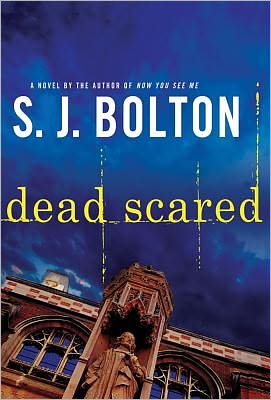
Dead Scared by S.J. Bolton

A disturbing high-speed thriller involving a rash of university student suicides and a mysterious someone with the power to give bad dreams.

Detective Constable Lacey Flint thinks she is going undercover as an attractive but neurotic student at Cambridge University in the hopes of exposing whoever might be driving students to commit suicide at an alarming rate and by violent means. The longer she spends living on campus and undergoing hazing and humiliation, however, and the more she learns about those earlier suicide cases, the less clear her role becomes. The university counselor who is her only contact is clearly living in fear, as are many of the women around her, and Lacey begins to undergo the same out-of-body experiences and gruesome nightmares described by the girls who’ve killed themselves. Is Lacey herself at risk?

The enigmatic DC Flint, introduced in 2011’s Now You See Me, has a storied past that Bolton leaves largely unrevealed–a trait shared by many other characters. Alternating with Lacey’s first-person perspective, the novel regularly checks back with her superior officer, Detective Inspector Mark Joesbury, who struggles with the truth of what he’s sent Lacey into. They share a shadowy past and some chemistry, but this is one of several aspects left shrouded in mystery, adding to the compelling, suspenseful mood established by thematic elements like evil clowns, sexual abuse, gory scenes of suicide and a panoply of psychiatric issues. Fast-paced, spooky and uncomfortable, Dead Scared keeps its reader on edge until the final paragraph.


This review originally ran in the June 8, 2012 issue of Shelf Awareness for Readers. To subscribe, click here, and you’ll receive two issues per week of book reviews and other bookish fun!


Rating: 6 whispers on the back of your neck.

book beginnings on Friday: Dead Scared by S.J. Bolton

Thanks to Rose City Reader for hosting this meme. To participate, share the first line or two of the book you are currently reading and, if you feel so moved, let us know what your first impressions were based on that first line.

This week I’m reading an advanced review copy of S.J. Bolton’s latest thriller, Dead Scared, and it is indeed scary. It begins, in the prologue:

Tuesday 22 January (a few minutes before midnight)

When a large object falls from a great height, the speed at which it travels accelerates until the upward force of air resistance becomes equal to the downward propulsion of gravity. At that point, whatever is falling reaches what is known as terminal velocity, a constant speed that will be maintained until it encounters a more powerful force, most commonly the ground.

I’ll leave you to ponder what might be falling.

This quotation comes from an uncorrected advance proof and is subject to change.

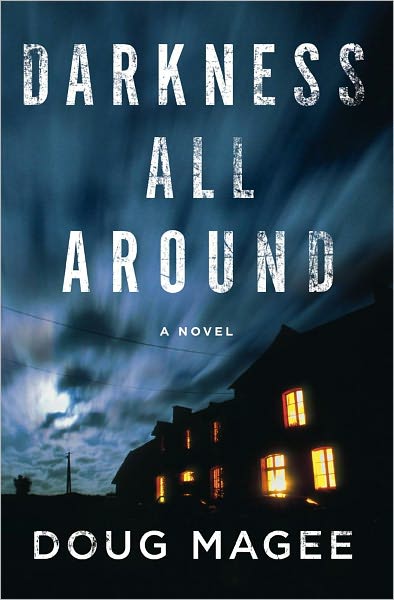
Darkness All Around by Doug Magee

Darkness All Around is a psychological thriller involving a fractured trio of childhood friends from smalltown Braden, Pennsylvania. Risa was always expected to marry Alan but ended up getting pregnant with Sean, the third in their clique, and marrying him instead. Sean, struggling with his father’s suicide, ends up a raging drunk and leaves Risa and their daughter Kevin; Alan the ambitious politician helps her have him declared dead after many years’ absence and marries her himself, and takes over parenting Kevin as well. When the book opens, Kevin is the newly-minted football star of deeply football-obsessed Braden; Alan is on the campaign trail headed to Washington; and Risa is not sure she feels in control of her life. And then Sean shows back up.

Sean suffered a brain injury and very nearly died, to come back freshly sober and trying to remember his life before drink. He’s back in Braden without any intention of bothering Risa and Kevin, feeling good about his old friend Alan’s ability to take care of them. Rather, he’s concerned about the decade-old murder of Risa’s friend Carol: despite a local simpleton having confessed to the crime, new flashbacks convince Sean that he was involved. He contacts a local reporter who covered Carol’s death to try and help him figure out what happened; but of course it’s unavoidable, in a town like Braden, for Risa to avoid learning about his return. And Alan is not the least bit tolerant of this disruption of his campaign.

Sean is sick, but recovering – both in terms of his alcoholism, and his amnesia. His memory returns over the course of the book and he struggles to make sense of it. Risa is still dealing with the trauma of her first marriage, and Alan simply comes across as a self-centered jerk. Teenaged Kevin is understandably insecure about his supposedly dead father reappearing on the scene, especially considering his new football-related issues. The local reporter, Henry, was brand-new to town when Carol was killed but is now fully a part of the action. And as you might have guessed, nothing is as simple as it seems.

The action and the suspense are well-done; I had trouble putting this book down and while it didn’t keep me up at night, it thought about it. Except for Alan, who I wanted to kick, the characters were sympathetic and fairly real; Kevin was nicely done as a sometimes-loving and sometimes-wall-punching teen. I really felt for Sean. Limited character development and occasionally awkward dialog will allow me to move on from this book more quickly than some, but it was thoroughly satisfying and worth my time.

This book was sent to me by the author in exchange for my honest review.


Rating: 4 matches.

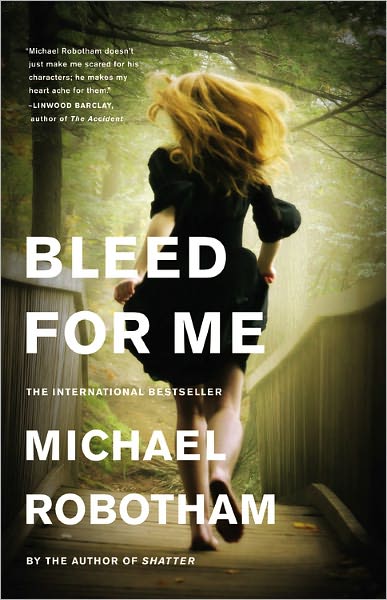
Bleed for Me by Michael Robotham

A darkly entertaining thriller with a surprisingly lovable hero.


Joe O’Loughlin is a semi-retired psychologist struggling to hold his marriage and family together while coping with Parkinson’s disease. After moving from London to a quiet small town to find some peace, Joe is trying to teach part-time at the local university, make up with his wife and be a good father to his teenage daughter, Charlie. But then Charlie’s best friend Sienna shows up one night covered in blood. She can’t remember what happened, but her father, a decorated ex-cop, has been murdered and it’s his blood on her hands. Joe is reluctantly talked into helping out with the investigation.

The mystery begins with the murder of Sienna’s father, but it quickly gets more complicated, until Joe is investigating decades-old crimes, a neo-Nazi gang and a schoolteacher’s past–all while trying to understand Sienna’s wounded psyche. Of course, he’s also still trying to patch things up with his wife and Charlie.

Bleed for Me, Michael Robotham’s fourth novel featuring Joe O’Loughlin, is fast-paced, disturbing, gritty and complex, with a highly charismatic narrator and hero. As the well-meaning and earnest Joe turns rogue investigator, puts his own life at risk and battles Parkinson’s all at the same time, he easily earns the reader’s compassion. His unlikely friends (including a bitter but loving ex-cop) make for surprising moments of humor, and the suspense keeps the reader ducking surprise blows.


This review originally ran in the February 28, 2012 issue of Shelf Awareness for Readers. To subscribe, click here, and you’ll receive two issues per week of book reviews and other bookish fun!


Rating: 4 pagesofjulia.

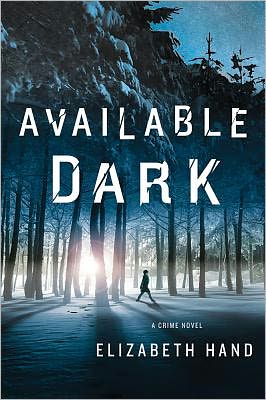
Available Dark by Elizabeth Hand

A dark, cold, bloody thriller set in Icelandโ€™s winter, seen through a photographerโ€™s lens.


Cassandra Neary lives hard. Between the drugs, the booze and her trauma-ridden past, she just barely stays afloat; a recent foray (in 2007’s Generation Loss) back into her former field of photography didn’t earn her much, other than a suspicion of murder that she’s eager to outrun. So when a mystery man contacts her from overseas, offering a chance to put her 30-year-dead photography skills back into action for a tidy sum, she leaves her New York City slum life without too much consideration. Correspondence from her high school boyfriend Quinn–long thought dead–pushes her along, too.

But Cass is greeted in Helsinki not only by gruesome photographs–more or less her specialty–but by gruesome murders as well, and she has to keep moving. So it’s on to Reykjavik in the heart of winter, where Cass makes her way through a world of icy cold, hard drugs, black metal, mental illness and multiple murders. A reunion with Quinn lends adrenaline and excitement, but no greater light.

Not for the weak-stomached or the easily frightened, Available Dark is a masterpiece of lovely writing and ghastly details. Elizabeth Hand, who has a personal background in the early New York punk scene, treats the finer points of Scandinavian black metal with respect. Her writing is sharp-edged and gritty, and fully realized, filled with frightening, contradictory characters and shocking edge-of-the-seat twists. Cass’s artistic perspective, as she photographs ritual killings and crime scenes, adds another layer to what might have been a straightforward thriller. Great fun, if you can hang on for the ride!


This review originally ran in the Feb. 21, 2012 issue of Shelf Awareness for Readers. To subscribe, click here, and you’ll receive two issues per week of book reviews and other bookish fun!


Rating: 5 gory photographs.

Hanging Hill by Mo Hayder

A suspenseful, fast-paced thriller that reunites estranged sisters amidst a series of grisly events.

When a popular, beautiful local girl is found brutally murdered on a towpath in idyllic Bath, the investigation team pursues the recommendation of the forensic psychologist: search for a teenage boy, one of her peers. Naturally, Harley-riding bad-girl police detective Zoe Benedict has something else in mind. She follows a more sinister lead toward amateur porn, strip clubs and unsavory characters–and is astonished to encounter her estranged sister, Sally, the good girl, reduced by divorce to cleaning rich peopleโ€™s houses to support her daughter, at the center of the case. One of Sally’s clients is a successful (and appropriately sleazy) pornographer; her daughter shares a history with the murdered girl; and her boyfriend has some inside knowledge that makes him especially afraid for Sally’s safety. A dirty secret from Zoe’s own past threatens to reveal itself, while Sally, struggling to defend her loved ones from harm, discovers new strength no one thought she possessed. And the sisters’ relationship gets a second chance.

Mo Hayder’s (Skin; Gone) tightly plotted Hanging Hill keeps the suspense taut, and the characters are realistic and multifaceted as well as (in most cases) sympathetic. Hayder delights in exposing the dark side–of domestic life, of family, of childhood and growing up–and her gritty, gruesome bits are not for the faint of heart. But there are love affairs, too, sweetly relieving the grimness. Hanging Hill is finely put together and entirely satisfying–at least until the terrifying ending, which uproots the safe feeling of resolution into which the reader was lulled.


This review originally ran in the Feb. 14, 2012 issue of Shelf Awareness for Readers. To subscribe, click here, and you’ll receive two issues per week of book reviews and other bookish fun!