book beginnings on Friday: The Fame Thief by Timothy Hallinan

Thanks to Rose City Reader for hosting this meme. To participate, share the first line or two of the book you are currently reading and, if you feel so moved, let us know what your first impressions were based on that first line.

famethief

Ah, it’s Friday again, kids! I have a new thriller to begin with you this week. A front-cover quotation from the Los Angeles Daily News calls Timothy Hallinan “a modern successor to Raymond Chandler,” which are strong words; we shall see. This book begins:

Irwin Dressler crossed one eye-agonizing plaid leg over the other, leaned back on a white leather couch half the width of the Queen Mary, and said, “Junior, I’m disappointed in you.”

If Dressler had said that to me the first time I’d been hauled up to his Bel Air estate for a command appearance, I’d have dropped to my knees and begged for a painless death.

Some clever over-the-top character sketching there, I’d say. All right, I’ll keep reading.

How are you starting off your reading weekend?

This quotation comes from an uncorrected advance proof and is subject to change.

book beginnings on Friday: You Are One of Them by Elliot Holt

Thanks to Rose City Reader for hosting this meme. To participate, share the first line or two of the book you are currently reading and, if you feel so moved, let us know what your first impressions were based on that first line.

oneofthem

I’m quite excited about this book as I begin it. I haven’t read much of anything involving Russia, but so far I love this author’s tone and the story fascinates me. Plus, look at this beautiful cover, to which connections are made in just the opening pages. I’m psyched. And I’m going to cheat (slightly) and give you a double-beginning. First, the prologue:

In Moscow I was always cold. I suppose that’s what Russia is known for. Winter.

And then, Chapter 1.

The first defector was my sister.

I don’t remember her, but I have watched the surviving Super 8 footage so many times that the scenes have seared themselves on my brain like memories.

If those aren’t some teasers for you… I just don’t know.

Happy weekend, friends!

This quotation comes from an uncorrected advance proof and is subject to change.

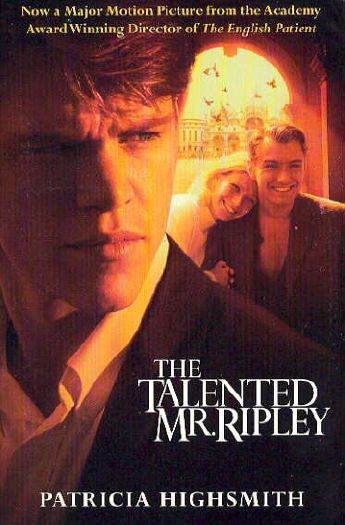
The Talented Mr. Ripley by Patricia Highsmith

Sorry for the short review today; I’m a little bushed. But don’t think any less of the book in question, because The Talented Mr. Ripley is a riot of a creepy-crawly good time.

ripleyMy second Patricia Highsmith, and one of her best known, was the perfect airplane book for my very long trip home from Australia recently. Highsmith is a master of engaging, disturbing stories, and I want more.

Tom Ripley is a con man and, I think I can say, a sociopath. He believe that society owes him something, and he’d rather not have to work too hard for it; and he lives in a time when class is very important. He knows what class he wants to belong to but can’t quite figure out how to get there. He’s struggling in New York City when he’s approached by a wealthy man who asks him to sail to Italy and collect his son, the heir to the family business and a vague acquaintance of Ripley’s. This being a paying gig and a chance to see the world and start anew – and escape the possible consequences of his latest scam – Ripley is happy to play a role, something he does exceptionally well. In the small seaside town of Mongibello, he gets along well with Dickie (the desired son) and initially with Dickie’s local American friend Marge, who may or may not be a love interest as well. But Ripley’s imbalances quickly begin to take over. He is jealous of Marge, and admires Dickie to a disturbing degree. He wants Dickie’s life. And soon, he thinks he has found a way to have it.

The storyline is loosely based on Henry James’s novel The Ambassadors, which makes several appearances in this book. Highsmith knows her way around a literary device.

The key to the appeal and memorability of this story is Highsmith’s ability to portray the completely amoral murderer, the obsessed and insane. This is just the author for those who like to be disturbed! It’s Ripley’s distorted sense of right and wrong that is most upsetting in this book. He is entirely, fully, deeply frightening. More so than any murder or wrongdoing, it’s the depravity within him that causes the goosebumps on the reader’s neck.

Now I really want to see the movie.


Rating: 7 suitcases.

The Rage by Gene Kerrigan

A noir crime novel featuring the collision of a motley group of characters in modern Ireland.

rage

The Rage by Gene Kerrigan (The Midnight Choir) is a multifaceted, character-driven story of crime and remorse. Vincent Naylor, freshly out of prison, is back to planning a robbery with his old accomplices, most notably his beloved big brother, Noel. Bob Tidey is an experienced and jaded police detective, still devoted to doing good but with the growing feeling that his employers limit his best efforts. Maura Coady is a retired nun living with her guilt and regrets. When Maura witnesses something out the front window of her apartment that doesn’t look quite right, she calls Tidey to report it, setting in motion a string of events that run counter to the Naylor brothers’ movements toward the next big score. The reader watches each player’s trajectory on this collision course, but still won’t guess the big finish until it crashes into place.

The Rage will please readers of crime thrillers and literary fiction alike. The atmosphere effectively evokes contemporary Ireland, with all its discontent and economic frustration, and in this way brings to mind Tana French’s lyrical Dublin Murder Squad mystery series. Bob Tidey’s cynicism and gruff efforts at romance recall Michael Connelly’s hero Detective Harry Bosch. The intersecting story lines and crescendo of action create a cinematic effect. Kerrigan’s compelling characters carry this thriller breathlessly through to its climax, but it is the engaging dialogue, thoughtful and absorbing prose and social conscience that make The Rage memorable.


This review originally ran in the February 8, 2013 issue of Shelf Awareness for Readers. To subscribe, click here, and you’ll receive two issues per week of book reviews and other bookish fun!


Rating: 6 regrets.

The Black Box by Michael Connelly

Harry Bosch’s investigation into a 20-year-old murder linked to the Rodney King riots and the first Gulf War is set to a moody jazz soundtrack.

The Black Box, Michael Connelly’s 25th novel, comes 20 years after his first, The Black Echo, which introduced readers to Los Angeles detective Hieronymus (Harry) Bosch. These days, Bosch is working with the LAPD’s Open/Unsolved Unit, and he decides to pursue a 20-year-old case that was originally his: the murder of Danish photojournalist Anneke Jespersen during the 1992 riots. Bosch never got a chance to investigate thoroughly–but, as regular readers know, Bosch never gives up. As he pursues the reason Jespersen came to Los Angeles in the first place, he finds himself investigating war crimes dating back to Desert Storm. Searching for the “black box” that will reveal the recorded secrets of Jespersen’s murder, Bosch also lands (not unusually) on the wrong side of the police department’s leadership.

All the strengths that Connelly’s readers have come to expect are on display. He employs an expert sense of place in evoking a gritty, stark Los Angeles, and the mood of the novel is dark and brooding. The pacing is taut, the characters well developed. Bosch’s side interests in jazz artists like Art Pepper and baseball greats like Casey Stengel provide depth and layers to his personality. Series readers will enjoy the updates on ongoing story lines, as Bosch’s daughter, Madeline, continues to mature and his relationship with girlfriend Hannah struggles along. But like all Connelly’s atmospheric, fully realized novels, The Black Box can also be read as an entirely satisfying stand-alone mystery.


This review originally ran in the December 14, 2012 issue of Shelf Awareness for Readers. To subscribe, click here, and you’ll receive two issues per week of book reviews and other bookish fun!


Rating: 6 furrowed brows.

Strangers on a Train by Patricia Highsmith

strangersStrangers on a Train was Patricia Highsmith’s first novel, and deservedly received a good deal of attention (although never as much as one might expect in her native United States) and is admired as one of her finest. It’s a quietly frightening story about two men, strangers, who meet on a train, and find that each has a person in his life who he would rather were not. Guy Haines wishes he were rid of his adulterous and manipulative (and estranged) wife Miriam, so that he might marry the lovely and wealthy Anne. Charles Bruno hates his father, who limits Bruno’s access to his own money. It is Bruno’s idea that they could trade murders: each could have an alibi for his own acquaintance, and would never be suspected in the murder of the other’s, because there would be no detectable motive. Guy is disgusted by Bruno and his concept, and leaves the train without saying goodbye.


SPOILERS FOLLOW.

Bruno proceeds to murder Miriam without his consent. Guy suspects it may have been Bruno but can hardly believe in such a strange action on the part of a stranger. And then he begins to hear from Bruno. Guy’s relationship with Anne, and his work as an increasingly acclaimed architect, both suffer as he feels guilt for his involvement in Miriam’s death; and Bruno’s harassment increases, as he now feels Guy owes him the returned favor of killing Bruno’s father. Put very simply, Bruno succeeds in driving Guy a little crazy, until he carries out the murder; but they don’t get away with the second as easily as they do the first, essentially because Bruno (clearly a psychopath, and a raging drunk to boot) can’t leave Guy alone. He’s obsessed. I will interject here that I think the “perfect crime” conceived by Bruno would have worked if he could have remained a stranger to Guy; but he can’t. I will lay off the spoilers here, mostly, and tell you that they both meet unpleasant ends, in rather different manners.

The structure of the book is worth noting. The early tension of the two strangers’ meeting, and Bruno’s excited murder of Miriam, go by rather quickly. And the final action that resolves the fates of Guy and Bruno also happens in a rush. The middle section of the book is all interior: we see some of Bruno’s thought processes and degeneration, but him being the psychopath makes him rather less interesting than Guy, who was an essentially good and “normal” person when we met him on page 1. Most of the psychological drama takes place inside Guy’s head, where much more change takes place, and he goes slowly… crazy? Or, to look at it another way, slowly gives in to some nasty impulses. I’m rather in the first camp, but I think there’s room for debate.

Highsmith has done a fine job here of what I believe she set out to do: she creates a creepy-crawly atmosphere of fear that the worst lies within each of us, that we don’t really know our friends or family like we think we do, that the worst is only an obnoxious phone call or two away. The inside of Bruno’s head is a nasty place to be, but it’s Guy’s inner workings that are truly frightening. It is a very effectively executed novel.

That said, it won’t be for everyone. Even as I found myself admiring Highsmith’s craft, and riveted to the page, I was not always entirely enthused. For one thing, the extended psych-drama of the lengthy middle section of the book was a little slow-paced for me. And while she does an excellent job of putting me inside that scary brain of Guy’s, I’m not so sure that I wanted to be there. Thus, call this a well-executed novel that I did not really want. And part of that is Highsmith’s victory and (perhaps) her intention: to make her reader uncomfortable. But I think part of that, too, is just that psych thrillers are not my favorite things.

Exquisitely done, but not my cup of tea. Still interested in The Talented Mr. Ripley; and the Hitchcock movie version of this one.


Rating: 7 imagined stranglings.

Mad River by John Sandford

A series of bloody murders in Minnesota’s farm country, and the supremely likable detective who will stop them.


John Sandford’s Mad River stars Virgil Flowers, a supporting character in Sandford’s Prey novels who graduated to his own series with 2007’s Dark of the Moon. This sixth installment stands capably alone; series readers will recognize certain characters, but the plot twists and building suspense require no backstory.

Flowers is an investigator for the Minnesota Bureau of Criminal Apprehension called out to the tiny farm town of Shinder to investigate a string of brutal murders, starting with a highway patrol officer. The spree is quickly connected to a trio of local youths, and as the tension mounts and the murders spread across the state, the challenge is to catch the killers before the vengeful local cops get to them. Flowers suspects there’s a connection to something even bigger and needs the killers taken alive.

The central plot is riveting, but strained relations within the law enforcement community, Flowers’s visits with his loving parents and his dalliance with an old flame provide further drama. The story’s travels around the state add local color: expanses of empty farm land make the killers nearly impossible to track. Perhaps the greatest strength of Mad River, though, lies in Flowers himself. It’s hard to think of a more balanced and genial investigative hero, yet he’s still able to keep cops and bad guys alike in line. The bulk of the mystery is revealed fairly early on, though the killers’ motivations and dynamic remain riveting until the final pages–and the ultimate question persists to the tantalizing end.


This review originally ran in the Oct. 12, 2012 issue of Shelf Awareness for Readers. To subscribe, click here, and you’ll receive two issues per week of book reviews and other bookish fun!


Rating: 6 small town cops.

book beginnings on Friday: The Black Box by Michael Connelly

Thanks to Rose City Reader for hosting this meme. To participate, share the first line or two of the book you are currently reading and, if you feel so moved, let us know what your first impressions were based on that first line.

The new Harry Bosch novel by Connelly comes out in November! Aren’t you excited? Here’s the first two teaser sentences for you:

By the third night the death count was rising so high and so quickly that many of the divisional homicide teams were pulled off the front lines of riot control and put into emergency rotations in South-Central. Detective Harry Bosch and his partner Jerry Edgar were pulled from Hollywood Division and assigned to a roving B watch team that also included two shotgunners from patrol for protection.

Naturally we jump right into the action. I do like Connelly; and his latest does not disappoint.

What are you reading this weekend?


This quotation comes from an uncorrected advance proof and is subject to change.

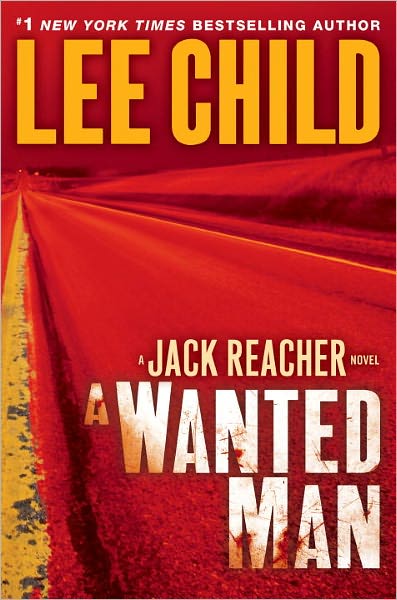
A Wanted Man by Lee Child

Jack Reacher’s extraordinary expertise intersects full-speed with the FBI and an unknown threat in rural Nebraska.

A Wanted Man is Lee Child’s 17th novel starring retired military police officer Jack Reacher, who roams the country with a toothbrush in his pocket, defeating bullies, defending the weak, solving problems and charming women. Following on the action of Worth Dying For, Reacher is trying to hitch his way cross-country to find a woman whose voice attracts him from afar. But the driver and passengers in the car that picks him up are not what they seem. Soon, Reacher is pulled into a rural Nebraska murder investigation that somehow draws the interest of the FBI, the CIA and the State Department.

Beautiful and talented women, paramilitary threats, an unidentified murder victim, kidnappings, carjackings and a child at risk allow Child’s hero to shine: Reacher knows to use his brains and investigative skills as well as his brawn and weapons training to overcome the enemy. His skill at arithmetic–what Reacher called in an earlier novel a “junior idiot savant” gift for numbers–is particularly useful here.

A Wanted Man delivers expertly paced building of tension, thrilling, full-throttle action and kick-butt fight scenes, all wrapped in a tautly structured mystery with military flavor and international implications. Fans love Reacher because he’s smart, physically unbeatable and chivalrous, and here they’ll find everything they’ve come to expect. Newcomers will have no problem joining mid-series; as usual, the hardest part is waiting for the next installment.


This review originally ran in the Sept. 18, 2012 issue of Shelf Awareness for Readers. To subscribe, click here, and you’ll receive two issues per week of book reviews and other bookish fun!


Rating: 6 shots fired.

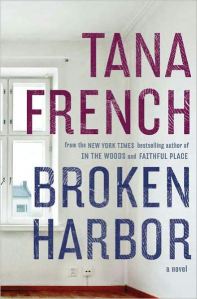
Broken Harbor by Tana French

I consider this to be another great hit from Tana French, author of The Likeness, In the Woods, and Faithful Place. Her mysteries are atmospheric, have a strong sense of place (that place being Dublin and the surrounding suburbs), and look back toward the past. Ireland’s economic depressions and the inheritance of related difficulties with employment and housing also play a role in each book. These four books are a series, loosely, in the sense that certain characters overlap; but each stands alone so well it’s almost a disservice to link them together. By no means would I recommend worrying about reading them all, or reading them in order.

In Broken Harbor, Mike “Scorcher” Kennedy is the reigning bad-ass murder detective on the Dublin squad, but the mistakes of a recent case, never described in detail, have him under a shadow; so he’s relieved and excited to get the latest gruesome, media-intensive case. He’s got a partner, Richie, a brand-new rookie from the wrong side of the tracks, which suits Scorcher because he’d just as soon work alone, and an easily-led rookie is the closest thing to working alone. A family of four named Spain – mom, dad, and two little ones – have been attacked in their home; three are dead, and the mom is in intensive care. Their home is in Brianstown, a fancy new development that got left unfinished in its earliest stages by the failing of of the housing boom; it’s not a pretty place after a few years’ decomposition since construction ceased. And, importantly, Brianstown used to be the seaside village of Broken Harbor, where Scorcher vacationed as a child with his family.

The important elements are several. The mystery of who nearly wiped out the Spain family is, on the face of things, the central plot, and it does keep Scorcher, Richie, and the reader busy for the entire book; the solution isn’t revealed until the final pages. A mystery within the mystery is what’s made all these holes in the walls of their home, and what force was haunting the Spain parents, otherwise poster children for a perfect life, right down to the magazine-worthy interior decor. The economic recession that killed Brianstown before it got out of the gate is an important detail that we attend to throughout, and is part of what makes Dublin & its suburbs the only place this story could be set. And then there are Scorcher’s demons: as we’ve seen in French’s other novels, his childhood connection to Broken Harbor will follow him through this seemingly unrelated case. This is a thriller not just because of the awful fate of the Spains, but also because of Scorcher’s family drama, still playing itself out. His training of the rookie, Richie, is poignant: the detective who never wanted a partner finds himself yearning for the camaraderie he’s observed in other partnerships, wondering if Richie could be “the one.” And finally, Scorcher is forced to do some philosophical questioning. The deal he’s made with the universe, his understanding of the source of the world’s evil, will be challenged.

The tone of this novel is one of my favorite parts. It’s dark, lush, and almost dreamy. Scorcher feels real to me even as he approaches caricature (hey, call me credulous, I’m enjoying this). He’s fatalistic, relying in part upon physical feelings that tell him when he’s getting close; we get hints that he knows what’s coming. His tortured persona, his tendency to distance himself even when he’d like to get close, is a recognizable genre type, but well-done all the same. I always appreciate French’s evocation of Ireland, its culture and the impact its economy continues to have. And the psychological drama of the Kennedy family had me on the edge of my seat. Certain elements are a little formulaic, sure, but beautifully wrought; and the lovely writing puts it in such a package that I don’t mind a bit. This is a great example of why I love Tana French.


Rating: 7 unpleasant memories.