Teaser Tuesdays: The Secret Place by Tana French

Teaser Tuesdays is a weekly bookish meme, hosted by MizB of Should Be Reading.

secret

I love Tana French. Obviously I was excited about her latest, which I am accessing via audiobook (because I have loved past audio editions of her work, especially The Likeness).

This one is shaping up to be as good as I’d hoped. Check out this passage about teenaged girls meeting at the mall. Probably we can all recognize the angst…

And at least back when they were twelve they just put on their coats and went. This year, everyone gets ready for the Court like they’re getting ready for the Oscars. The Court is where you bring your bewildering new curves and walk and self so people can tell you what they’re worth, and you can’t risk the answer being Nothing zero nothing. You like so totally have to have your hair either straightened to death or else brushed into a careful tangle, and fake tan all over and an inch of foundation on your face and half a pack of smoky eyeshadow around each eye, and supersoft superskinny jeans and Uggs or Converse, because otherwise someone might actually be able to tell you apart from everyone else and obviously that would make you a total loser.

Stay tuned.

The Kind Worth Killing by Peter Swanson

A modern retelling of Strangers on a Train that is every bit as chilling as the original, with new twists.

killing

In The Kind Worth Killing, a masterful modern reworking of Patricia Highsmith’s Strangers on a Train, Peter Swanson (The Girl with a Clock for a Heart) introduces his two protagonists, Ted Severson and Lily Kintner, on an airplane. Ted is a wealthy, successful businessman who discovered that his beautiful bohemian artist wife is cheating on him with the contractor building their new dream home. Lily is a woman with a difficult past–some experience of unhappy families, cheating and murder. Playing a game of truth after several drinks and the full telling of his tale, Ted casually admits, “What I really want to do is kill her.” And that makes sense to Lily: “Everyone dies. What difference does it make if a few bad apples get pushed along a little sooner….”

The resulting intrigues follow Highsmith’s outstanding original in atmosphere and spirit more than in specific details, which is a fine choice, because the new plot lines showcase suspenseful twists and turns, expert pacing and a breathless race to a surprise ending. Thus Swanson brings the best elements of Strangers on a Train–compelling but increasingly worrisome characters, the momentum of a chance meeting–to a fresh new setting, split between the Boston metro area and the rugged coast of Maine. Even readers unfamiliar with Highsmith will be enchanted by this captivating, powerful thriller about sex, deception, secrets, revenge, the strange things we get ourselves wrapped up in, and the magnetic pull of the past.


This review originally ran in the February 6, 2015 issue of Shelf Awareness for Readers. To subscribe, click here, and you’ll receive two issues per week of book reviews and other bookish fun!


Rating: 8 martinis.

Unbecoming by Rebecca Scherm

A delicious, deceptively simple tale of art, crime, love and betrayal.

unbecoming

In the opening pages of Rebecca Scherm’s debut novel, Unbecoming, Julie from California is working in Paris at an antiques repair shop, polishing and replacing hinges, cleaning beadwork and resetting jewels. Except her name is really Grace, and she’s from Garland, Tennessee. Two young men are about to be paroled from prison in Garland, and Grace is nervous, because her name is not all she’s lying about. From this beginning, we follow Grace back in time: her unhappy home life, her great luck in being loved by a popular boy from a good family, her joy at being his mother’s daughter, her departure for college in New York City, her work in art appraisal and her ignominious retreat from all of the above. Only at the end of the novel do we learn how exactly Grace landed in Paris with a new name, a forged biography and a fear of her past.

Unbecoming is beguiling: a love story with twists and turns; the tale of an insecure, insufficiently loved girl from the wrong side of the tracks; a delightfully nuanced narrative about trust and trustworthiness. Grace is endearing and intriguing, although she is not all (or is more than) she seems. Layers of lies, longing and duplicity recall The Talented Mr. Ripley, another chilling masterpiece of dishonesty’s helpless acceleration. Scherm’s light, confident touch with pacing, suspense and characterization is pitch-perfect. Beware staying up all night to rush through this engrossing, enchanting debut.


This review originally ran as a *starred review* in the January 27, 2015 issue of Shelf Awareness for Readers. To subscribe, click here, and you’ll receive two issues per week of book reviews and other bookish fun!


Rating: 8 trillions.

Teaser Tuesdays: Suitcase City by Sterling Watson

Teaser Tuesdays is a weekly bookish meme, hosted by MizB of Should Be Reading.

suitcase

From just the first few pages:

They were the easy, pretty people who stopped in at the Cedar Key docks and ate in the restaurants and then sailed on to the next piña colada or planter’s punch. Teach called them the Whatever People. Whatever was an attitude, a place where people had enough time and money to let things happen to them, things that felt good.

These lines set up the backdrop of this book in several ways. We learn our geographical setting, as well as the class background of the protagonist, and his attitude towards others. I think that’s solid. And I like the concept of the Whatever People. Something about this idea reminds me of the Fitzgeralds, Scott and Zelda, always so aware of everyone’s class and of what they could afford to not care about.

This quotation comes from an uncorrected advance proof and is subject to change.

book beginnings on Friday: The Kind Worth Killing by Peter Swanson

Thanks to Rose City Reader for hosting this meme. To participate, share the first line or two of the book you are currently reading and, if you feel so moved, let us know what your first impressions were based on that first line.

killing

Be excited about this one: a modern retelling of Patricia Highsmith’s Strangers on a Train, and it is excellent! It begins:

“Hello, there,” she said.

I looked at the pale, freckled hand on the back of the empty bar seat next to me in the business class lounge at Heathrow Airport, then up into the stranger’s face.

“Do I know you?” I asked.

And there we have it. A plane replaces a train; and our protagonists are a man and a woman rather than two men. Let the fun begin.

This quotation comes from an uncorrected advance proof and is subject to change.

The Boy Who Drew Monsters by Keith Donohue

A terrifying, enigmatic and ever-accelerating story about the power of imagination.

monsters

Jack Peter Keenan has always been an odd boy. Even before the accident three years ago, he was not exactly normal. Now almost 11 years old, he doesn’t go outside, ever. As Christmas approaches, there are strange happenings afoot: things that go bump in the night, apparitions in the snowy roadway, screams of people who aren’t there. Jack has begun drawing monsters. His parents, Holly and Tim, are increasingly worried.

Holly renews her relationship with the church; when she seeks answers, the local priest and his Japanese housekeeper pelt her with tales of shipwrecks and spirits. Tim resolves to work harder with his son. The parents of Jack’s one friend, Nick, take off for the holiday, leaving him to stay with the Keenans in their remote Maine beachside home, in the snow and bitter cold. As Jack’s drawings multiply and the howls outside grow louder, readers will wonder if he’s withdrawing, abandoning reality (and pulling Nick and the Keenans along with him), or if somehow his interior landscape is populating the outside world.

Multiple mysteries enliven the terror of The Boy Who Drew Monsters, which becomes ever more disturbing as the source of danger comes gradually into focus. In his sensitive, incisive treatment of Jack’s behavior and its effect on his family, Keith Donohue (The Stolen Child) explores the challenges of mental disorders, but suspense and a bright thread of terror evoke the very best of the horror genre. Just as a Maine winter chills the bones, this singular little boy provides a satisfyingly frightening story.


This review originally ran as a *starred review* in the October 10, 2014 issue of Shelf Awareness for Readers. To subscribe, click here, and you’ll receive two issues per week of book reviews and other bookish fun!


Rating: 7 steps outside.

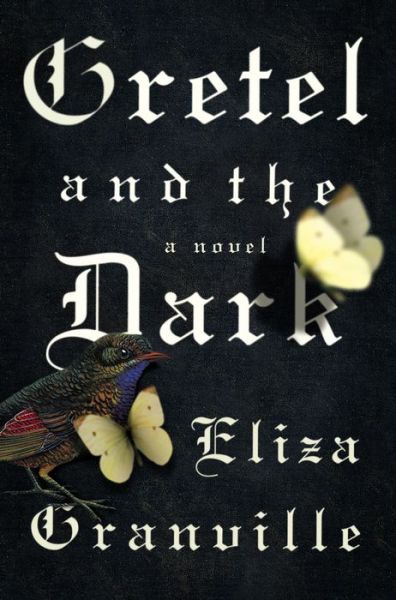
Gretel and the Dark by Eliza Granville

Two historical storylines, great evil, and an abiding mystery combine into one sinister and memorable fairy tale for the stout of heart.

gretel

As the title Gretel and the Dark suggests, Eliza Granville’s debut novel is a grim, spooky fairy tale. But keeping with the nature of any good fairy tale, there is another layer: it is also a meditation on historical good and evil, set both in Nazi Germany and fin de siècle Austria.

In 1899, a shockingly beautiful young woman is rescued off the street and delivered to the home of celebrated Viennese psychoanalyst Josef Breuer. She claims to have no identity, so the besotted Josef calls her Lilie, a name that will come to have greater significance than he originally intended. She is emaciated, bruised and beaten, hair shorn, with numbers inked on her arm. The story she tells is simply not possible: when questioned, Lilie tells Josef that she is not human but a machine, sent to kill a monster, whom she must find before he grows too large. She frightens him with her dreamy fantasies of how she’ll do it–“it doesn’t take long to kick someone to death”–but she casts an irresistible spell, and Josef (and his equally smitten gardener) is driven to puzzle out the truth of her history and the abuses she has experienced.

In the parallel plot, told in alternate chapters set several decades later, a little girl named Krysta pouts as the world around her changes. Her father works in a “zoo” during the days and can’t stop washing his hands at night; she is surrounded by unfriendly people, and retreats into her imagination to avoid the hazards and hatred she can’t understand. As her personal situation deteriorates and her circle of trusted acquaintances shrinks, Krysta hopes to save herself using the fairy tales on which she was raised–even, or especially, the nasty ones, with wolves, witches, beheadings and gore.

In precise balance and crafted in lovely, lyrical language, Gretel and the Dark is a masterpiece of fantasy, horror, childhood innocence and the evils of both our innermost imaginings and our shared history. Deliciously chilling and both fantastical and gravely real, with momentum building throughout, Granville’s extraordinary debut holds its crucial secrets to the last, adding suspense to its virtues. The connection between the not-entirely-likeable little Krysta and the enigmatic Lilie remains an open question until the final pages, and the power of imagination and storytelling is a prominent theme. This chilling, fantastical tale will simultaneously entertain and provoke serious contemplation on the depths of human depravity.


This review originally ran as a *starred review* in the October 7, 2014 issue of Shelf Awareness for the Book Trade. To subscribe, click here, and you’ll receive two issues per week of book reviews and other bookish fun!


Rating: 10 cherries.

Teaser Tuesdays: Gretel and the Dark by Eliza Granville

Teaser Tuesdays is a weekly bookish meme, hosted by MizB of Should Be Reading.

gretel

This is a delightful blend of dark, gloomy fairy tale, historical fiction, and horror. I don’t want to say anything more about it at this point, but I think I’ve found a real winner.

For now, enjoy these lines, which are a fine example of the emphasis placed on the importance of storytelling.

“When I make up stories I’ll write them down so they won’t disappear or be changed.”

Greet shrugs. “Then they won’t be proper stories, will they?”

Also, who doesn’t love a little girl who thinks this:

When I grow up I shall be a famous author like Carol Lewis or Elle Franken Baum, but the girls in my books will be explorers, they’ll fly planes and fight battles, not play down holes with white rabbits or dance along brick roads with a silly scarecrow and a man made out of metal.

Stay tuned. Gretel and the Dark looks like a star.

This quotation comes from an uncorrected advance proof and is subject to change.

Shirley by Susan Scarf Merrell

Shirley Jackson is brought back to life in a quietly disturbing tale worthy of its subject.

shirley

Author Shirley Jackson (“The Lottery”; The Haunting of Hill House; We Have Always Lived in the Castle) casts a long and chilling shadow. The psychological thriller Shirley, from Susan Scarf Merrell (A Member of the Family), follows in its namesake’s tradition.

Jackson and her husband, literary critic Stanley Edgar Hyman, lived in small-town Vermont while she wrote and he taught at Bennington College in the 1960s. In this book, Fred and Rose Nemser, Merrell’s inventions, are newlyweds and move into the Hyman-Jackson home when Fred becomes a graduate student and teaching assistant. Rose, our 19-year-old narrator, is pregnant, recently rescued from a childhood of poverty and family dysfunction by her new husband; she is staggered by Shirley’s big house, big family and art. Stan takes Fred under his wing, tutoring him in both their profession and in marriage. Shirley’s mentorship of the malleable Rose is more complex.

Rose wants to write about Shirley; she wants to replace Shirley’s children in their mother’s heart; she wants to be Shirley. In her devotion, she can’t help wondering about the phone calls that go unanswered every night, and the female student who went missing so many years ago (whom Shirley and Stan so emphatically did not know). Naturally, not all of Rose’s overtures are welcome.

An apt tribute to Shirley Jackson herself, Merrell’s novel recalls Daphne du Maurier’s Rebecca and Edgar Allan Poe. Jackson’s fans are the clear winners here; Shirley, Stan, Fred and Rose may not be so lucky.


This review originally ran in the July 29, 2014 issue of Shelf Awareness for Readers. To subscribe, click here, and you’ll receive two issues per week of book reviews and other bookish fun!


Rating: 6 letters.

The Mad and the Bad by Jean-Patrick Manchette, trans. by Donald Nicholson-Smith

Fans of classic noir will be entranced by this spare, hard-boiled novel of suspense translated from the French.

mad and bad

Jean-Patrick Manchette’s The Mad and the Bad was originally published in French (Ô Dingos, Ô Châteaux!) in 1972. Donald Nicholson-Smith’s 2013 translation is the first into English, and is introduced here by American crime writer James Sallis.

Michel Hartog is an architect, made fabulously wealthy by the sudden death of his brother and sister-in-law. Along with their riches, he has inherited the responsibility of caring for their spoiled and difficult son, Peter, age “six or seven.” Michel has a reputation for employing the damaged, crippled and ill, so it is in character that he would use his wealth to have a shockingly beautiful young woman released from an insane asylum to look after his nephew. Julie Ballanger is rightfully suspicious of her new patron; the eccentric Michel immediately supplies her with alcohol, which she had learned to avoid in her former home, and it mixes poorly with her tranquilizers and antidepressants.

A killer named Thompson and three semi-competent thugs have been hired to execute Julie and Peter, but an ulcer is eating Thompson from the inside out, and his is a race against time. After Julie and Peter are kidnapped from a public park by Thompson’s men, the madwoman and her young charge manage to escape and race for a labyrinthine estate in the mountains that Julie saw in a picture Michel carries. She hopes to find her employer and safety there, but in fact finds neither. The reader wonders if Thompson will get to Julie and Peter before his stomach gets to him; meanwhile, the remote mountain fortress holds an unexpected surprise.

Manchette’s plot is straightforward, and his characters’ motives are fairly simple, if profoundly disquieting: to kill, to survive, to inflict pain or to avoid it. The bulk of the story is devoted to character sketches and explorations of those simple, disturbing motivations. The dialogue is spare, almost dreamlike, and Manchette’s settings tend toward the cinematic. Special attention is paid to architectural features; bare white walls, opulent yet sterile, are the perfect backdrop for blood splatters. Shots are fired, large tables are turned, fires are set and cars are driven into crowds. The Mad and the Bad is odd and gruesome, but maintains a twisted sense of humor throughout.

Nicholson-Smith’s translation is unadorned, a perfect match for Manchette’s style, which is sparse and tersely written but with an artistic eye for detail. Julie and Peter flee, Thompson pursues them doubled over in agony, and the reader is well satisfied by the end of the suspense.


This review originally ran as a *starred review* in the June 24, 2014 issue of Shelf Awareness for the Book Trade. To subscribe, click here.


Rating: 6 croissants.