The Gallagher Place by Julie Doar

In this moody debut novel, new and old crimes on her family’s estate in upstate New York force a quietly struggling woman to confront loyalties and conflicts among family and friends.

Julie Doar’s first novel, The Gallagher Place, investigates old and new mysteries within a compelling family drama set in a striking landscape.

Protagonist Marlowe Fisher is an illustrator living on the Upper West Side and a loner, even surrounded by her powerful family and their estate. When she and her two brothers, as adults, discover a body on their property, the case reopens old wounds. Decades earlier, Marlowe’s childhood best friend vanished without a trace. The freshly murdered man and the long-missing teenaged girl do not initially appear linked, but the surrounding community has long harbored suspicions about the wealthy Fishers. Marlowe has always yearned to know what happened to Nora, although that desire presents new conflicts, having come under investigation once again.

The Fishers have always used the Gray House in upstate New York as a weekend and holiday retreat, “a wholesome family sanctuary to escape the crowded city life and the bittersweet pain of growing up too fast. A haven, her father sometimes called it. If that was the case, why did bad things still happen?” And bad things do happen, especially the disappearance of Nora Miller. Marlowe has never had another relationship as meaningful as her friendship with Nora, a local girl and an honorary, if part-time, fourth Fisher sibling, who wished desperately to escape her rural roots. Marlowe feels strongly: “Nothing mattered as much as the two of us.” The loss of Nora has shadowed Marlowe’s life ever since, culminating in a carefully hidden drinking problem.

The recent murder, and accompanying investigation into Nora’s disappearance, is both galvanizing and disturbing. As Marlowe embarks on her own inquiries, more thoroughly than ever before, she not only refreshes old pains but discovers new risks. To search for Nora means to interrogate her own memory, to learn uncomfortable truths about herself and her family, to confront class differences, privilege, and inheritances. This discomfiting process takes place in two timelines, against the backdrop of Dutchess County, N.Y., in the summers of the 1990s (when Nora and Marlowe were teenagers) and in the present winter of 2018. The Fisher property defines Marlowe’s greatest trauma and coming of age; she remains devoted to “the spirit of landscape” that inspires her art. A strong sense of place is central to this chilling novel about old secrets and what one might choose to uncover or keep hidden. The Gallagher Place is dramatically atmospheric, expertly paced, and haunting.


This review originally ran in the October 10, 2025 issue of Shelf Awareness for the Book Trade. To subscribe, click here.


Rating: 7 gifts.

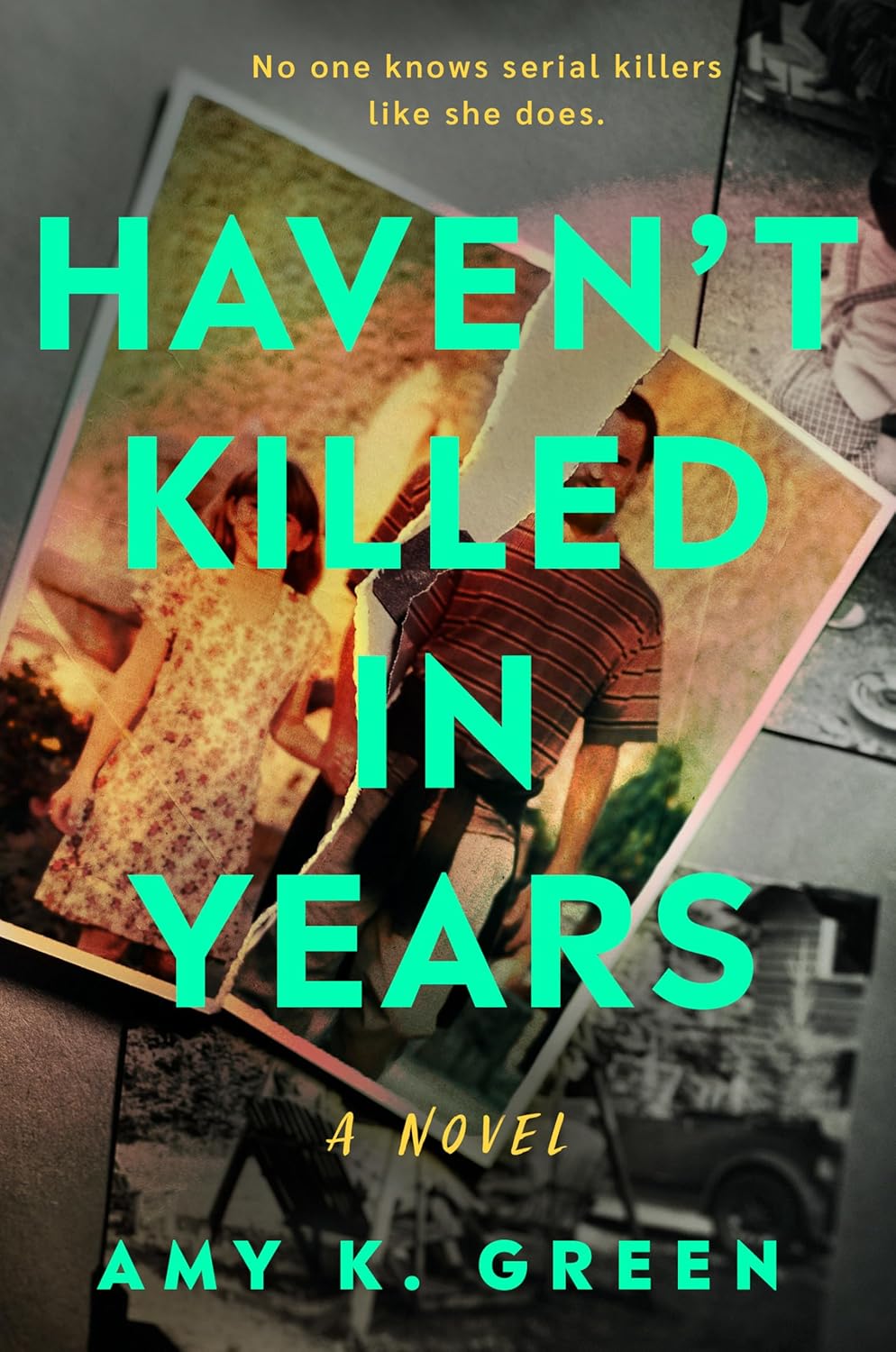
Haven’t Killed in Years by Amy K. Green

The long-hidden daughter of a serial killer is caught up in a new wave of crimes in this clever, absorbing, constantly surprising novel about finding one’s own way.

Amy K. Green (The Prized Girl) presents a twisting puzzle of a thriller with Haven’t Killed in Years, starring a young woman whose hidden past resurfaces in bizarre, gruesome, and often funny ways.

“On the day my mother was released from prison I stubbed my toe four times…. It was a statistical anomaly and, in hindsight, a warning that bad things were coming my way.” In this way, readers meet Gwen Tanner, who has a boring office job, an unremarkable one-bedroom apartment, and no serious relationships. From the outside she appears to be “your standard almost-too-basic law-abiding woman approaching thirty. On the inside? Eh, not so much.” Gwen was born Marin Haggerty. When she was nine, her father was convicted on eight counts of first-degree murder (eight being just the ones they could pin on him) and both parents went to prison (her mother for aiding and abetting). Marin became Gwen and disappeared from the public eye. She has spent the past two decades building a resolutely ordinary life, hoping to avoid the fate her father intended for her: to be just like him. Her father had “also had a good job and worn nice clothes; it was the easiest way to hide in plain sight.”

But now a severed arm turns up on her doorstep, with a note: “Hi, Marin.” Someone knows Gwen’s real story. Her safe, staid lifestyle is disrupted; and more than that, Gwen is offended that someone thinks they can get the better of her. She sets out to investigate, but the clues and the characters just tangle her up further. She meets a tour guide who specializes in her father’s crimes, a group of murder-obsessed young men, and a woman from her own childhood who does not recognize her. These relationships complicate her sterile existence; she mostly accidentally finds herself making friends–who are also suspects. “When you let people into your life, there are so many details. I knew that and I had ignored my own rules anyway.” Is it time for Gwen–Marin–to come into her own as her father’s protégé? Or is she going to surprise herself and set out on her own path?

Just when this unforgettable protagonist thinks she knows who is behind which crimes, new information throws her (and readers) off track. Many scenes spin into comedies of errors, playing on constant subversions of expectations. In Gwen/Marin’s dryly cynical voice, these madcap events hit both tender and comic notes. Despite instances of poignant suffering and a noteworthy serial killer, Haven’t Killed in Years is weirdly, deeply fun.


This review originally ran in the September 29, 2025 issue of Shelf Awareness for the Book Trade. To subscribe, click here.


Rating: 8 blue drinks.

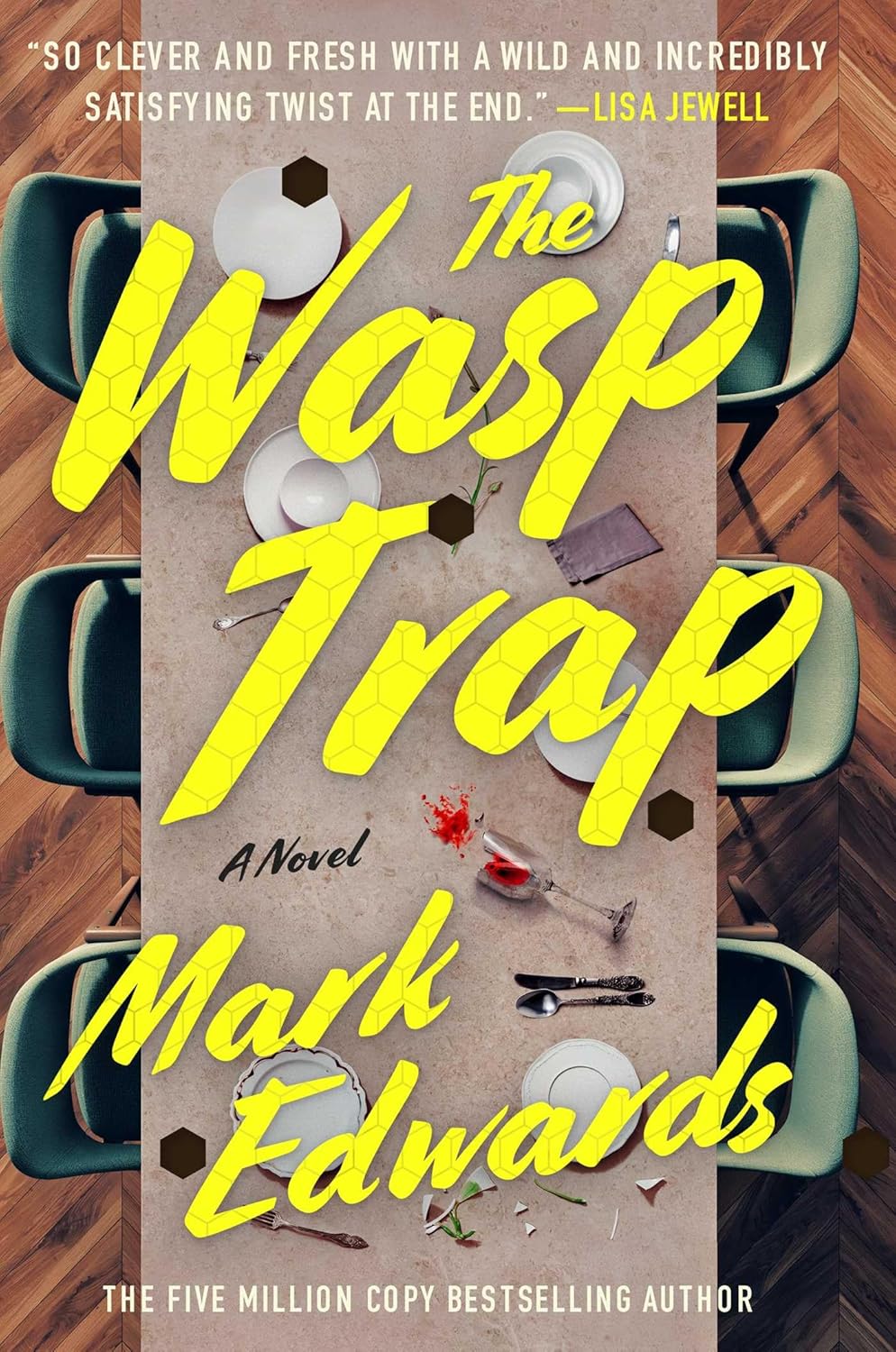
The Wasp Trap by Mark Edwards

Six estranged friends and colleagues gather at a sumptuous dinner party to find themselves terrorized by old secrets in this gratifying tale of suspense and psychopaths.

The Wasp Trap is an absolutely thrilling, tautly plotted puzzle of a novel by Mark Edwards. This double-locked-room mystery, with all the tension that that implies, presents a cast of well-developed characters facing various hidden challenges.

The first timeline, introduced in the novel’s prologue, takes place in July 1999. A group of recent college graduates are gathered at a country estate outside London by a charismatic psychology professor to work around the clock on a dating website meant to achieve maximum dotcom-era profits. In truth, they also work at developing a test to identify psychopaths (their mentor’s first interest). The estate is well outfitted with “fruit-colored iMacs” and age-appropriate entertainment. For a few months, in these pleasant confines, the group becomes very close. “The lothario. The salesman. The affluent couple, the joker and the local girl. Finally, me, the wordsmith, whose role was to write it all down. If any of us were a psychopath, I already had a good idea who it would be.” The bulk of the novel is narrated by Will, an aspiring writer who often feels trapped on the outside, thwarted in his attempts to connect. He is well-suited to observe the character of his counterparts, but not unbiased.

Twenty-five years later, they gather again, to commemorate the death of their former employer. Two members of the original project have married–they are the only two to have kept in touch, after what seems to have been a rocky and abrupt ending. Now “the affluent couple” hosts their old friends for a lavish dinner party in their high-security Notting Hill townhouse. But immediately the evening shifts from awkward to nightmarish, part home invasion and part sinister game. The group is commanded to reveal a secret from the storied summer of ’99. Each dinner guest denies knowing what information is sought, but each, of course, does harbor secrets. The key to The Wasp Trap‘s deliciously frightening uncertainty lies in the pain and horror of not knowing whom, in a closed environment, one can trust. The once-tight-knit group fractures amid secret and not-so-secret sexual tensions, financial pressures, and old jealousies, especially with a suspected psychopath or two in their midst.

Offering twists and turns and surprises through his novel’s final pages, Edwards executes a highly satisfying thriller with this intriguing blend of terror and nostalgia for youth and freer, more hopeful times.


This review originally ran in the July 22, 2025 issue of Shelf Awareness for the Book Trade. To subscribe, click here.


Rating: 8 cans of Pepsi.

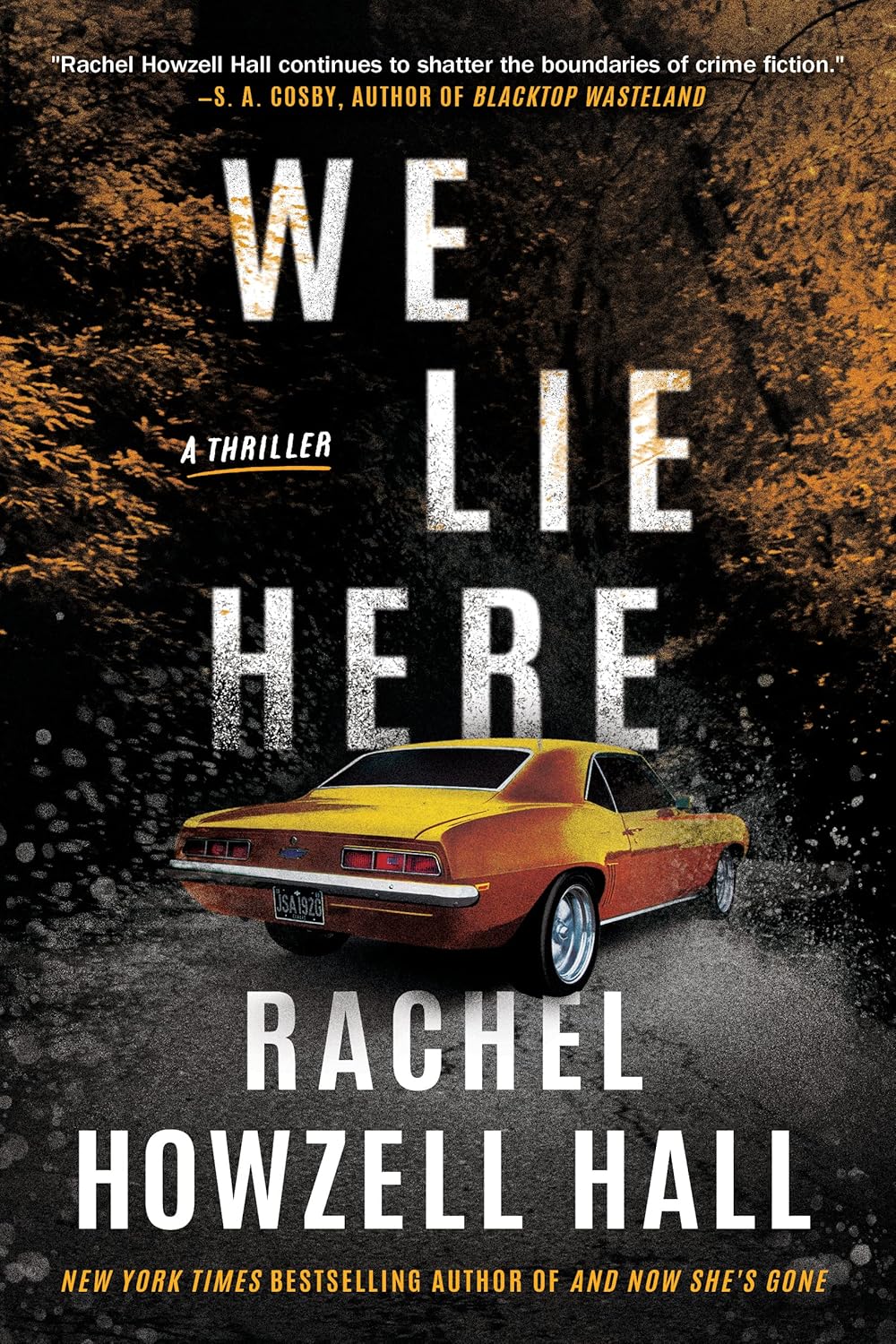
We Lie Here by Rachel Howzell Hall

This tense, suspenseful thriller slipped easily along with the momentum of a well-designed plot, for the most part. There were a few hiccups in the late-middle for this reader, but the finish got me, and this author deserves a hat tip for the big reveal which in hindsight feels almost obvious, but I never did see it coming.

We meet Yara Marie Gibson when she’s on her way back to Palmdale from Los Angeles. L.A. holds her moderately successful (it’s still early) career as a writer for television, her awesome boyfriend Shane, and her young-adult life; Palmdale, in the Antelope Valley in northern Los Angeles County, is home, and it’s trying to kill her. The novel’s first line is “The city of Palmdale takes my breath away,” and she means it literally. Yara suffers from severe asthma and allergies, worsened by anxiety, which is in turn worsened by her family in general and her mother in particular, plus the fact that her mother and sister smoke cigarettes every waking moment, and indoors. Yara is highly motivated by the party she’s throwing for her parents’ twentieth wedding anniversary, a very elaborate affair for which she’s footing the bill; nobody even pretends that her younger sister Dominique is not her mother’s favorite, but Yara is driven to give her parents this gift. Her father seems loving, but Barbara Gibson (who goes by a multitude of nicknames in Yara’s first-person narrative) is the sort of figure who sucks all the oxygen out of a room – this works metaphorically as well as in the sense that Yara, again, cannot breathe here…

These 400 pages take place over just a week or so, as Yara prepares for the party while choking to death in her childhood bedroom, and a series of strange events and characters arise: mysterious long-lost family members show up and disappear, threatening messages new and old come to light, bodies are found. There are numerous fights and shouty phone calls, and old secrets from before her parents’ marriage come to light. The Gibsons are a family with some messes and dysfunction–in other words, perfectly normal, if not perfectly healthy. They are also “the only Black family on the block,” and Yara is always aware of the impact of race on her life and safety. There are links to old Black Hollywood royalty, and racism both then and now.

A plot element that threw me for much of the book was Yara’s amateur sleuthing, which is accepted as natural by so many characters, including an old friend of hers who is a sheriff’s deputy. It didn’t quite follow for me that Yara’s job as a writer for a fictional TV crime show, and her blood relationship to a recently deceased woman (potentially a murder in which Yara would be a suspect), would qualify her to get the inside information she receives from such an official source; I expected a little more leave-it-to-the-professionals. This was a minor sticking point, but it lasted long enough for me (a hundred pages or more?) to impact my experience of the book. A lot of Yara’s personality, bless her heart, is her anxiety, forgetfulness, and breathing difficulties. And (highlight white text to reveal spoilers): at the discovery that her father was married before he married her mother, Yara’s reaction is more violent than I found likely. I mean, I guess she might have heard of this before, but the way she flips out felt outsized to me. I did pause and remind myself that we don’t all react to anything in the same way; and it’s clear that Yara’s parents’ marriage carries a lot of weight for her, thus this big party. Ah well. I coached myself through it.

As I said, in the middle portion of the book, there were some draggy bits – especially as I dealt with these small but persistent questions. But it does pick back up again! My experience of the novel’s opening pages was electric: Hall grabbed me with scene, dialog, sensory detail, and a strong sense of place, and anxiety about family is pretty universally relatable; it was a great start. And by the big crescendo and denouement (including a compelling epilogue), we were right back on track and on pace. It was an enjoyable fictional world to sink into, overall: escapism, suspense, momentum. Not perfect, but well worth the price of admission.


Rating: 6-and-a-half puffs on the inhaler.

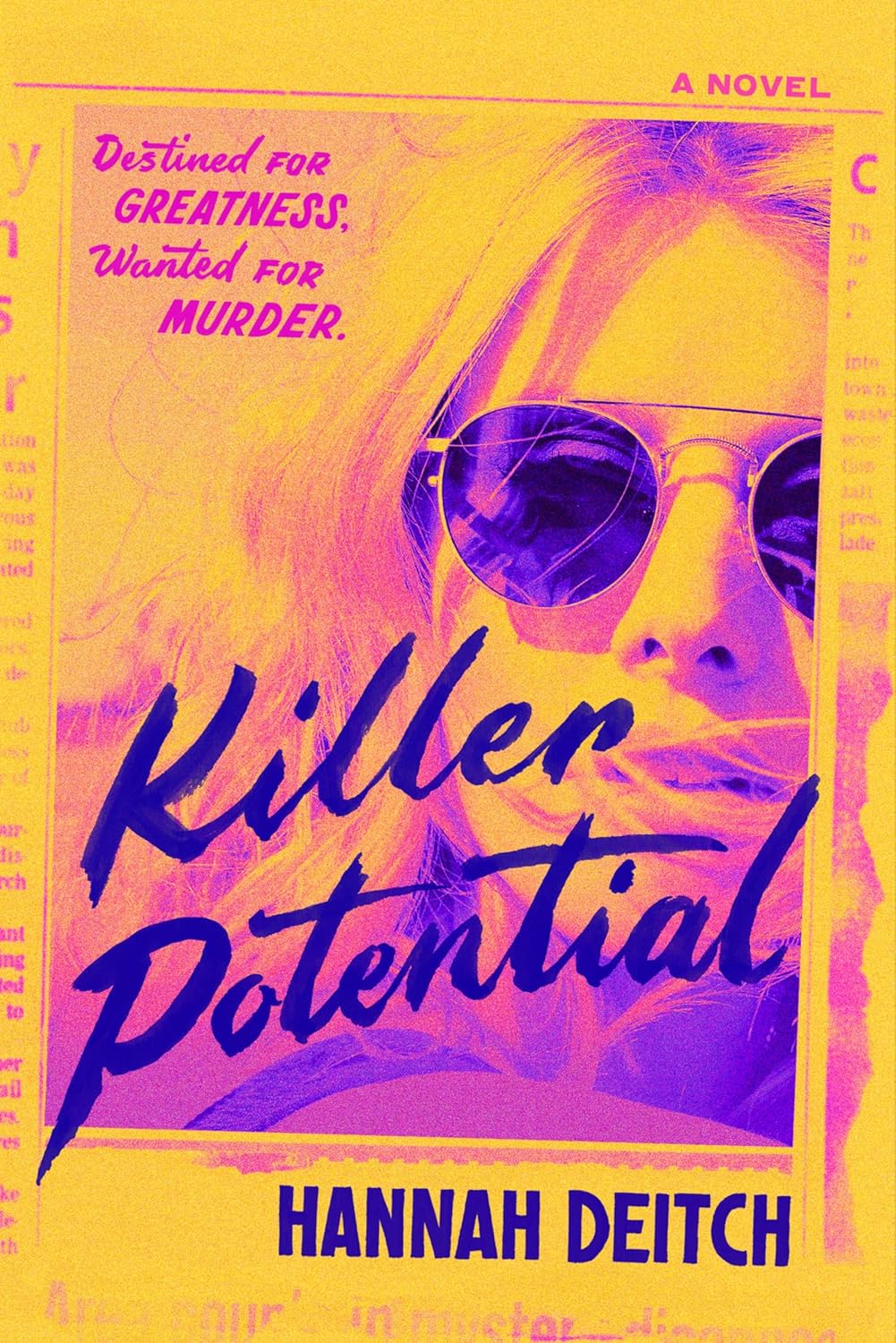
Killer Potential by Hannah Deitch

Two young women on the run offer mesmerizing complexity in this smart, propulsively paced, thought-provoking, and electrifying debut novel.

Hannah Deitch’s first novel, Killer Potential, is a bloody, class-conscious, suspenseful thriller starring two young women caught in a spiral of violence, blame, and bonding. This rocket-fueled debut is a deliciously dark, twisting, entertaining read, so beware the urge to stay up all night finishing it.

The novel’s primary narrator is Evie Gordon, who opens by saying, “I was once a famous murderess…. It isn’t true.” Labeled “Talented and Gifted” from the age of eight, Evie thrived on the simple, clearly outlined goals and rewards of formal education. As a graduate, she foundered and eventually landed in Los Angeles as an SAT tutor to the children of the rich and famous. On a Sunday afternoon, she appears at the Victor mansion as usual, only to find Peter and Dinah Victor very freshly and brutally murdered, and an emaciated, traumatized, and nearly mute woman tied up in a closet. In an adrenaline-fueled haze of terror and confusion, they flee the bloody scene together. The bulk of the novel follows Evie and the woman, Jae, as they go on the run, presumed to be the murderers of the Victors, and commit a series of crimes along the way.

Through Evie and Jae’s fragile, yearning, mistrustful bond, Deitch explores privilege and the divide between the haves and have-nots; sex and sexuality; trust and betrayal; what it means to be a “nice” or “good” person; and ambition and aimlessness. The interplay between them offers a taut psychological drama as backbone to a propulsive thriller of gruesome crime, exhilaration, and deception. Killer Potential is disturbing, fun, and unforgettable.


This review originally ran in the March 22, 2025 issue of Shelf Awareness for Readers. To subscribe, click here, and you’ll receive two issues per week of book reviews and other bookish news.


Rating: 7 powdered doughnuts.

The Greatest Lie of All by Jillian Cantor

A young actress takes on the role of a glamorous romance author and gets more mystery–and romance–than she’d reckoned for.


The Greatest Lie of All by Jillian Cantor (Half Life; The Hours Count; Margot; The Lost Letter) is a propulsively paced story of intrigue, romance, and suspense starring two women a generation apart navigating family, love, secrets, and art. In one of their several parallels, each uses a professional pseudonym, so that four names delineate these two character arcs.

Readers meet the young, up-and-coming actress Amelia Grant just after the death of her beloved mother, and in the moment when she discovers her actor boyfriend in bed with his costar. At this low, Amelia is primed to accept her biggest role yet: to play the fabulously successful romance author Gloria Diamond in a biopic. Gloria had been Amelia’s mother’s favorite; it feels like a sign and a way to be close to the mother she’s lost, the only person who had called her by her birth name, Annie.

Heartbroken but determined, Amelia travels from Los Angeles to Gloria’s remote Seattle-area home to get to know her subject before filming begins. But “the Gloria Diamond” is distinctly unfriendly, cold, and dismissive. Even as Amelia finds a tentative friendship with Gloria’s son, Will (“cute, in an academic kind of way”), she despairs at ever understanding what makes the older woman tick. Gloria’s career was built on her famous, brief romance with her late husband, Will’s father. But the more Amelia learns, the less convincing that story is. She embarks on an informal investigation fueled by shadowy motives: her desire to play a “true” Gloria Diamond; her curiosity about the nature of love, especially as her mother so appreciated it in Diamond’s fiction; and Will’s reluctant desire to understand his mother. As she pursues the history of the author once known as Mary Forrester–Mare to her friends–Amelia begins to wonder about her own role in the drama unfolding before her.

In chapters that shift between Amelia’s perspective and that of the young Mare, The Greatest Lie of All shines in its plot twists and surprises, and, most of all, its pacing, which accelerates from a slow burn to a heart-thumping momentum. The tension increases, stakes rising as Gloria/Mare and Amelia/Annie must reckon with their pasts to chart their shared present. Danger accompanies every possibility of romance, and family history matters more than it originally appears. Cantor’s experienced hand shows in this classically crafted thriller, which will keep its readers tautly engaged to the final scene.


This review originally ran in the September 24, 2024 issue of Shelf Awareness for the Book Trade. To subscribe, click here.


Rating: 6 glasses of wine.

Maximum Shelf: The Collaborators by Michael Idov

Maximum Shelf is the weekly Shelf Awareness feature focusing on an upcoming title we love and believe will be a great handselling opportunity for booksellers everywhere. The features are written by our editors and reviewers and the publisher has helped support the issue.

This review was published by Shelf Awareness on July 17, 2024.


“When the MiG-29 swung into view, barely 50 yards portside, passenger Anton Basmanny in seat 12A didn’t feel all that surprised. In fact, he even knew the reason it was there. He was the reason…. When you were the Kremlin’s least favorite blogger, a lot could happen.” Thus opens The Collaborators, a ripping gem of a novel by Michael Idov (Ground Up; Dressed Up for a Riot) that transports readers around the world–Minsk, Moscow, London, Berlin, Los Angeles, Portugal, Morocco, and more–and through a range of geopolitical and interpersonal intrigues. Propulsively paced, and containing as much humor, romance, philosophy, and whimsy as classic spy-thriller action, this brilliant novel will charm readers and linger long after its final pages.

After beginning with the plight of the Kremlin’s least favorite blogger on board a troubled flight to Riga, Idov’s narrative jumps to an American spy at work in that capital city. “At Yale, from where the CIA recruited him, Ari Falk had been an Army ROTC scholarship student… and a Slavic literature major: half meathead, half egghead. Add a Jewish name, desperate poverty, and tense foster-kid demeanor, and the result was so difficult to parse that most peers gave up without trying.” Falk likes Riga, but his job concerns him: he may be a bit too ethical, or even sentimental, for CIA work. “Falk felt like the farmer who adopted a new shelter cat each time a coyote ate the previous one. Once you subtracted the issue of intent, he ran a coyote-feeding program.” Falk is looking for Anton Basmanny, who has not arrived as expected.

Pages later, Idov introduces Maya Chou Obrandt, an aspiring actor, daughter to a Taiwanese-American mother and a Russian-American, self-made-billionaire financier father whose death by apparent suicide has just been announced on the news–but with no body, his fate remains unknown. Idle, frustrated, she sets off to search for her missing father. “As long as she was Maya Chou Obrandt, Girl Detective, she wasn’t Maya Chou Obrandt the twice-relapsed twenty-three-year-old addict, or Maya Chou Obrandt the corpse.” On their separate but intersecting missions, Maya and Falk meet by accident at a marina in Tangier, and team up as an unlikely duo: the disaffected CIA agent and the wayward heiress, who uncover decades-old plots beyond either’s imagining.

The Collaborators features short, punchy chunks of narrative switching close-third-person perspectives between a number of characters. Anton, Falk, and Maya are joined by a Russian bagman, a British open-source intelligence innovator with no poker face, and players from various espionage agencies, all lively with idiosyncrasies and multilingual dialog. But all are not what they seem, as identities shift and allegiances come into question: a teenaged Jewish boy at a refugee camp near Rome in the 1980s exhibits commercial acumen that attracts the attention of an American spy; a striking older couple fly business class but are untraceable; Russian agents across history and an aging CIA man intersect in unexpected ways. Not all the characters whom readers will meet, and even like, survive until the novel’s end, but Idov makes every loss and gut-punch count. The action opens in 2021, but events appearing as flashbacks from the Cold War through the 1980s and ’90s strongly influence that present. Idov spins a complex plot, spanning decades and much of the globe, but it proceeds at a lively pace: beware the late-night binge read.

Idov’s many strengths include line-by-line clever riposte (“stop looking at me like I’m a talking dog,” Maya tells Falk when the latter is indeed impressed by her reasoning) and the details that make his characters individual and often lovable (a band t-shirt, a love for bad tea). Readers with an interest in the geopolitical intrigue will certainly be drawn in by modern-day plots involving telecommunications, commerce, and machinations of power, but it is equally rewarding to sink into the dramas of love affairs cut short by espionage (one character’s sacrifice is labeled Faustian by another who may face a similar choice).

Although it does excel at certain features of the espionage thriller–car chases, shootouts, and double- and triple-crosses–The Collaborators is by no means a book for genre readers alone, or even primarily. There is much to love for anyone who appreciates an engaging story, and despite its plot-related strengths–compelling pacing, adrenaline-charged action sequences–the story at heart is character-driven. Characters espouse thought-provoking philosophies and go to great lengths to navigate romances challenged by international intrigue. Despite the body count, the novel often harbors a lovely, even feel-good tone.

Idov’s intelligent, emotive spy novel is funny and sweet, as well as blood-soaked; clever and riveting in its plot twists; and focused on idiosyncratic characters first and foremost. No special expertise in Russian intrigue is required, nor even a special interest in the espionage genre. Brilliant, entertaining, rocketing, and unforgettable, The Collaborators is not to be overlooked.


Rating: 8 glasses of tea.

Come back Friday for my interview with Idov.

Maximum Shelf: Creation Lake by Rachel Kushner

Maximum Shelf is the weekly Shelf Awareness feature focusing on an upcoming title we love and believe will be a great handselling opportunity for booksellers everywhere. The features are written by our editors and reviewers and the publisher has helped support the issue.

This review was published by Shelf Awareness on May 8, 2024.


Rachel Kushner (The Flamethrowers, The Mars Room) envelops her readers in an absorbing tale of espionage, philosophy, intrigue, and chaos with her noir fourth novel, Creation Lake.

An unnamed narrator opens these pages with extended quotations from the e-mails of a man named Bruno Lacombe, which she is reading without his knowledge. Bruno’s ideas will form an important thread throughout the novel, although he never appears in the flesh; the epistolary sections offer a perspective on events, a worldview, in juxtaposition to the narrator’s. She begins by reading his e-mails as part of her job, but their meaning will shift. And Bruno’s corporeal absence allows for some question as to his true form.

This narrator, presently using the alias Sadie Smith, is an American woman living in France. A former FBI spy, she was fired after a case she worked as an undercover agent did not bring the trial result the agency desired. Now she performs similar work for shadowy private interests: she takes on a character and infiltrates a group, instigating as well as observing its actions. In the Guyenne region of France, she is to penetrate an organization of anarchist environmental and anti-civilization activists called Le Moulin and learn of their involvement in a recent act of sabotage. The assignment to observe and investigate becomes an assignment to provoke further action, and she may yet be asked for more.

Creation Lake has layers. It is partly a spy novel. “Sadie” gains entry to the Moulinards through her fiancé, Lucien, a wealthy, privileged young man she easily seduced and moved in with following a carefully planned “cold bump” that Lucien thinks was an accidental encounter. She moves through the community she’s been assigned to, playing one character off the other, with readers privy to her inner commentary about both the assigned mission and the personalities of her new acquaintances. Along with her sexual relationship with Lucien (enacted with carefully concealed distaste), she carries on another affair that is more pleasurable but no more honest. She can be funny, cutting, and disarmingly self-critical. Despite holding all the cards–at least in her own view–“Sadie” is not precisely a highly organized personality.

Creation Lake is also in part an exploration of philosophies, as Bruno preaches the virtues and qualities of the Neanderthal and other early relatives and forebears of Homo sapiens. An enigmatic figure, he lives in a cave and extols the virtues of primitivism by e-mail. Kushner’s not-necessarily-reliable narrator brings a certain amount of mystery herself: amoral, even nihilistic, she seemingly cares not a bit about the principles at question in her work, but only about her paycheck and a few simple pleasures. Unmoored by the FBI, she has no leader or cause to follow, barely pausing at collateral violence. Importantly, her role with the Moulinards is that of a sympathetic outsider hired to translate their writings. Rather than a true convert, she is able to ask questions, showing curiosity and a friendly skepticism. This allows her to fully explore the Moulinards’ beliefs, although she is unimpressed by their devotion to principle.

None of these characters is heroic or even especially virtuous; the narrator points out the hypocrisy and self-serving nature of the activists. “Charisma does not originate inside the person called ‘charismatic.’ It comes from the need of others to believe that special people exist.” On the other hand, she may find herself more susceptible to the philosophies of the unseen Bruno than she was equipped for. Bruno apparently writes these e-mails for one audience–the Moulinards–but they will perhaps have their greatest effect on the audience he is apparently unaware of.

With punchy short chapters and bursts of action, the plot builds tension to a boiling point while resisting any convention or formula of the spy novel genre, which it reinvents as much as it inhabits. Kushner’s pacing is inexorable, ratcheting up tensions to propel readers to a surprising ending. Spare, even stark, Creation Lake considers the past and the future of humankind without sentiment, letting the narrator’s unblinking observations stand alone. She is hardworking and apathetic, drinking a bit too much and going through the motions of a job that she has no particularly strong feelings about.

If Kushner’s expansive plot considers no less than the very origin and fate of humanity, “Sadie” considers only her next destination. As focused as she can be on the job at hand, her approach to life is profoundly blurred. Gritty and hard-edged, this is a novel of both cynicism and belief, with a mysterious narrator at its center, adrift but anchoring its plot. There is something dark at work throughout, but Kushner keeps a sense of fun, pleasure, and unexpected humor as well. “Deep down, even if they lack the courage to admit it, inside each person, they know that the world is lawless and chaotic and random.” Taut and propulsive, Creation Lake leaves its readers with plenty to think about once its pages close.


Rating: 7 cans of warm beer.

Come back Friday for my interview with Kushner.

You’d Look Better as a Ghost by Joanna Wallace

Plot twists and a weirdly relatable serial killer offer readers a wild ride in this darkly comic thriller of grief and murder.

Joanna Wallace’s first novel, You’d Look Better as a Ghost, combines black humor and a realistic portrayal of grief with a serial killer, with whom readers are surprisingly inclined to empathize. This oddball story is both grim and unexpectedly entertaining.

When readers first meet narrator Claire, she is standing awkwardly at her father’s funeral, wondering at the strange behavior of the “serious-looking men in serious black suits… standing seriously too close and staring at me. Are they waiting for me to talk?” She assesses their comments, taking everything literally, contemplating human idiosyncrasies. She’s not all that good with people, and she’s also deeply grieving.

It’s not just grief. Claire has always struggled with the habits of those she calls “ordinary people,” a group she does not identify with. “Whenever I’m unsure of how I’m expected to respond, I use a cliché. Even if I’m not sure what it means, even if I use it incorrectly, no one ever seems to mind.” She lives alone outside of London, painting, running on her treadmill, and now wrestling with the loss of her father following a painful battle with early-onset dementia, psych wards, and abusive care homes. Her late father seems to be the one person she’s ever felt close to; flashbacks to childhood sketch a chilly if not disturbing portrait of her mother. Plagued by migraines, Claire gets a doctor’s referral to a bereavement counseling group. “I may not have cried, drunk to excess or wrung my hands in disbelief since Dad died but I’ve definitely become more reckless with my kills.”

Oh, yes: Claire is also a serial killer. She struggles with “ordinary people” to the extent that she often feels the need to end their lives, a process for which she enjoys taking her time. Her new bereavement group offers her potential outlets for her creativity, as well as new challenges.

In Claire’s witty, deadpan voice, You’d Look Better as a Ghost revels in dark humor. A new acquaintance “asks whether I want anything to eat. A slice of chocolate cake. That’s what I really want. But I’m mindful of the fact that I killed this woman’s sister fairly recently and the cake is ridiculously overpriced. So, I order a shortbread biscuit instead. Feels like the decent thing to do.” Claire has some very firm ideas of propriety; for example, pairing wellies with a kilt bothers her considerably more than dismemberment does. But the novel also deals seriously with the protracted grief of losing a loved one to dementia, and the potentially redemptive power of true friendship. Amid much irreverence, its themes are genuinely heartfelt and even sweet. This debut is fresh and unforgettable.


This review originally ran in the January 29, 2024 issue of Shelf Awareness for the Book Trade. To subscribe, click here.


Rating: 7 mugs of soup.

Ilium by Lea Carpenter

A lonely young woman falls in love and finds herself at the center of a spy mission in this mesmerizing, moving story about different kinds of seduction.

Lea Carpenter’s third novel, Ilium, is a spy story, a romance, a coming-of-age record, and a tale of lost innocence told in an elegiac tone, with something for every reader to get lost in. Its opening chapter introduces a young woman boarding a bus in Central London, watched by a man from “a world far away.” The rest is told from the point of view of the young woman. “There was a private garden near the house where my mother worked,” she begins, describing a childhood of unfulfilled desires. She has grown up dreaming of this locked garden, of having access to exalted spaces, of being someone she is not. “What the garden taught me was that the allocation of keys in life isn’t fair, that luck and happiness are not prone to reason or will.” At age 20, she meets the garden’s new owner, a man 33 years her senior, successful, charismatic, entirely independent, who sweeps her off her feet; they are soon married in Mallorca, and then he asks her for a favor. “All you have to do is listen,” he says.

Carpenter’s narrator (who remains unnamed, a nod to the clean absence of self that is part of what makes her attractive to her new handlers) is coached in her role. She is flown by helicopter to a lavish, elaborately casual estate on the French coast, where she is installed as the guest of a wealthy family at leisure. She poses as an aspiring art dealer; the fine art world does not serve as backdrop to a major plot point, but does provide some lovely details: “The oligarchs’ relationship to Russia’s various intelligence agencies is like the color blocks in a Rothko, a carefully calibrated blur.” The mysterious and charming patriarch of her host family, Edouard, prizes his commissioned series of paintings based on Homer’s Iliad, another of the plot’s minor but rich threads. “You never want an operation to be personal but so many are, ask Achilles.” The young narrator, now a spy, starts off almost laughably naïve, but her observations along the way, related in hindsight, are astute. The qualities that make her valuable to her shadowy new employer–loneliness, emptiness, openness, optimism, a tendency to romance–make her vulnerable to finding friendship where perhaps she should see danger.

Carpenter (Eleven Days; Red, White, Blue) assigns her narrator a winsome voice: innocence wearied by experience, but always clever, and sympathetic to all the players in a complex operation begun long before her birth. Ilium is an espionage thriller in its richly wrought and detailed plot; but its spotlight falls centrally on the narrator herself, whose yearning for a role to play earns her a bigger one than she could have imagined. The dreamy tone of this sparkling, riveting story sets up a memorable counterpoint to its intrigue.


This review originally ran in the November 9, 2023 issue of Shelf Awareness for the Book Trade. To subscribe, click here.


Rating: 7 color blocks.