The Waste Lands by Stephen King

waste landsThe Waste Lands is book 3 in King’s Dark Tower series. (See my reviews of book 1 and book 2.) As Jeff said in a comment on an earlier review, they keep getting better and better! (He also said that the first 4 are the best, meaning that we’re headed downhill here soon; but I am optimistically hoping that the slope will be gradual, and/or that I will disagree with him!)

Plot-wise, I’m going to be brief here. There are copious summaries all over The Internet. See my reviews of the first two books for discussion of what this series is really about, in all its sweeping epic genre-mashup glory.

Roland and his two new companions, Eddie and Susannah, are continuing on their quest towards the Dark Tower; but really, this is Roland’s quest, with the other two along as less-than-eager fugitives from their own world. One of the plot arcs involves Eddie and Susannah becoming increasingly invested in the quest for its own sake, rather than accompanying Roland as a self-preservation method. The central struggle of this book, however, is to get Jake (“The Boy”) over from his world to theirs. Jake played an important role in The Gunslinger, where he… seems to have died… twice… but here he is again, because as he so importantly cried out in book 1, “there are other worlds than these.” Jake and Roland both have memories of their shared experiences, which conflict with parallel memories that say they never met. Both are in the process of being driven crazy by these warring memories; bringing our four characters together in the flesh will resolve that threat. Finally, we pick up a 5th: a billy-bumbler (that is something like a cross between a raccoon and a dog, that talks, and likes people) they call Oy. He’s really Jake’s billy-bumbler, and turns out to be a very clever one, who helps save the day repeatedly. I am over-the-moon smitten with Oy and delighted to have him along for the ride. I want a billy-bumbler, too.

At the close of The Waste Lands, our newly minted, secure, united ka-tet of Roland, Eddie, Susannah, Jake and Oy is headed towards likely death in a monorail train with a consciousness that likes riddles. However, there is a book 4 to come, so I suspect they will manage to elude destruction once again!

I love this series; I’ve already ordered the rest of the books so I won’t have to take any more breaks! Hooray for Stephen King and his mind-boggling ability to create immense, epic, complex and fascinating worlds in his head and then invite the rest of us into them. I think somebody should write a dissertation on why King is Literature despite also being Popular With The Kids. Keep ’em coming.


Rating: 8 gold-ringed eyes.

The Drawing of the Three by Stephen King

drawing threeThis is book 2 in the Dark Tower series. I reviewed book 1, The Gunslinger, here (and a later installment, The Wind Through the Keyhole, here). And I have just ordered my copy of book 3.

At the end of The Gunslinger, Roland – the title character, the last gunslinger in his changing world – met up with the man in black (not Johnny Cash), and fell into a deep sleep; when he awoke, it seemed that a long time had passed, maybe years. This is the beginning of The Drawing of the Three; we’ve lost no time, except what Roland lost while he slept. As the man in black read in his tarot cards, the gunslinger will now encounter three individuals who will shape his future, and enable him – maybe – to reach the dark tower, his only goal.

He awakens on a beach with a strange creature approaching him – something like a giant lobster, with the ability to verbalize nonsensical questions, and with menacing claws. These figures he will call the lobstrosities (I love it), and they’ll be a constant threat. Roland does encounter the characters that the man in black predicted: the Prisoner, the Lady of Shadows, and Death (though Death will come under a different name). I’ll leave the plot alone at that.

This is a fantasy novel with all the captivating elements I mentioned when I reviewed The Gunslinger. It is perhaps less overtly a genre mashup; this struck me more as a whimsical mashup of worlds. Roland travels back and forth between his world, which shares characteristics with ours but is clearly other, and a New York City that the reader recognizes. This world-shifting fascinates me. I am reminded of a book I read as a kid called Eva, by Peter Dickinson. I was transfixed by the question of whether Eva lived before our time, or after our time; it could have gone either way. Similarly there was another “chapter book” called Enchantress from the Stars, by Sylvia Engdahl, around the same time that raised the same questions for me: is the enchantress from our planet? before or after our time? or another “star” altogether? Something along these same lines struck me with The Drawing of the Three.

What I think I’m trying to say here is that Stephen King, as always, excels at representing both realism, and fantasy or “other”, all at the same time. The backstory for each of the four characters in this book – Roland, the Prisoner, the Lady, and Death – is meticulous. King doesn’t give the Prisoner a life just as he relates to Roland, our star; he gives him a history, and it’s magnificent. As for plot tension, there’s nothing higher-stakes than the fate of the world, which is the epic conflict of this series.

If The Gunslinger was slightly less impressive than The Wind Through the Keyhole, this second in the series more than recovers. I am transfixed; I am riveted to Roland’s world, committed to his costars (I hope King doesn’t kill them off too quickly!), and even though I’ve read a few books since this one as I write this review, I can’t stop thinking about the Dark Tower series. I can’t get my hands on book 3, The Waste Lands, quickly enough. Stephen King continues his winning streak.


Rating: 7 lobstrosities.

Joe Hill

Following my experience with Joe Hill’s outstanding NOS4A2, I have been considering the relationship of Hill’s writing to his father’s.

Joe Hill

Joe Hill

A little background: as we all know by now, Joe Hillstrom King is the oldest son of Stephen King. Those being prodigiously large shoes to fill, he began his career as a novelist using Joe Hill as his pen name, not wanting to be associated with Dad – one can imagine the admiration or scrutiny that might have brought. More to the point, I imagine he would have been unable to fully appreciate any success gained as Stephen King’s son, unsure if he could take full credit for it. However, a few books in, it appears he’s now confident in his own career and independence; he “came out” as King’s son in 2007, partly because his public was getting suspicious. (He does awfully resemble his father.) I sympathize with Hill’s need to separate himself early in his career.

Stephen King

Stephen King


[As an aside, I sympathize still more with novelist Kelly Braffet, a lifelong King fan who has ended up his daughter-in-law. As I learned in that article that I recently shared with you, she began her relationship with King’s second son Owen terrified of speaking to her hero. This would indeed be terrifying – I can only imagine! I mean, if I were to date the son of a still-living Hemingway, at least I could rely on the fact that Hem is a bully and a blusterer, which I know how to handle; but King is apparently just a terrifically nice guy. And that’s so much scarier! Speaking of which, I loved the world’s strongest librarian‘s recent blog post about meeting Stephen King.]

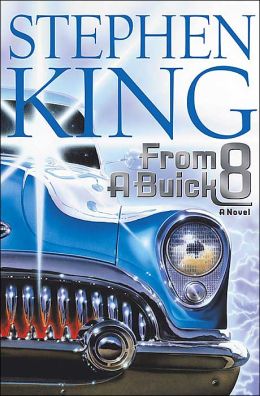
I respect Hill’s decision to hide his family background early on, and I respect his decision to stop hiding it. But I wonder what effect my knowledge has had on my reading of his work, because here’s the thing: NOS4A2 has a hell of a lot of Stephen King in it. I mean this in the best possible way – I love King, and I love NOS4A2. buick8

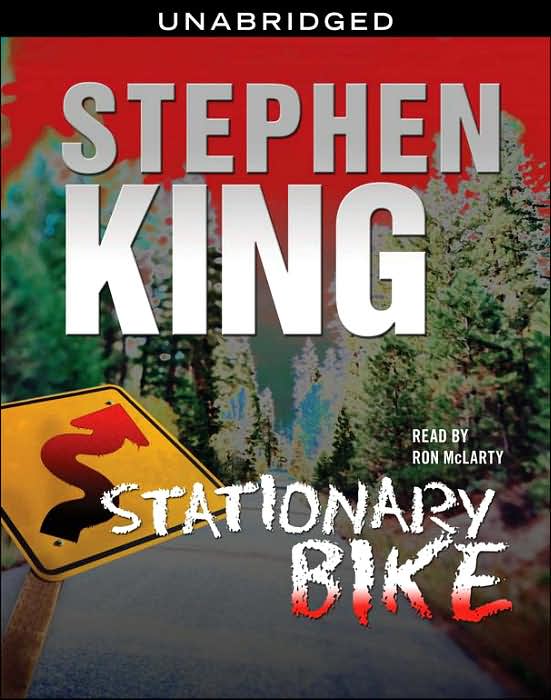
For one thing, there are plot points: a car with a will of its own is straight out of the very first Stephen King novel I ever read, From a Buick 8. A bicycle that takes its rider otherworldly places played a central role in Stationary Bike. I don’t mean to call Hill statbikederivative – he’s not – but it’s interesting to see these parallels, and it makes me wonder: if your father was Stephen King, would you consciously pull from his novels? Unconsciously? That would seem to be unavoidable.

Stylistically, too, I recognized a King-like realism and heightened awareness of pop culture and strongly recognizable settings; mixed with expert worldbuilding, the result felt inextricably related (no pun intended) to King’s strongest work. But that suggests a question, too. Would I have made these comparisons and found these similarities if I hadn’t known about the familial connection between the two authors? And that question is really the point of this blog post. I feel confident that I would have seen these connections, because they appear so striking. But we’ll never know, because I didn’t get to go into this reading blind. For that matter, I picked this book up because of the Hill’s relationship to King. And the point of that statement is that Joe Hill was so very right to begin his career under cloak of pseudonym. Now, though, it needn’t matter, because he’s a kick-ass author in his own right. Bring on Heart-Shaped Box.

At the end of the audio version of NOS4A2 that I listened to, there was included an author interview with Joe Hill. (That is, there are no questions, just Hill speaking, but it reads like an interview; I imagine the questions were asked off-stage.) This was an enjoyable way to hear him in his own voice, and I loved some of what he had to say about audiobooks in particular. He cites Harold Bloom, eminent literary critic, saying that audio is simply not the same – is not “literature” – and that listening is not reading (well, duh). Hill refutes this idea, pointing out that listening to literature is yes, different, but is its own important thing. He uses as an example a certain blind author of noted “literature”; I would also point out Homer, who was both blind and pre-written-history, who lived back when the oral tradition was the only way to share stories. At any rate, Hill’s celebration of audiobooks was nice to hear. (And unsurprising, considering his upbringing.)

Finally, in the same interview/monologue, Hill says that “imagination is as powerful as physical law.” I want to leave you with that: a very apt point from Hill, as an author and as a product of the King household.

The Gunslinger by Stephen King (audio)


This is my 1000th post! Thanks for your support, friends!

gunslingerI so very much enjoyed The Wind Through the Keyhole from Stephen King’s Dark Tower series that I had to find The Gunslinger, book one in that series. I was captivated by King’s own narration of the former, and disappointed to find that he didn’t read this one himself; but narrator George Guidall did a fine job, and I shouldn’t punish him for not being Stephen King.

In a fantastical spin on the western genre, we open with Roland Deschain walking alone with his mule, his guns holstered at his hips. He is pursuing “the man in black”, with an eventual destination of “the dark tower.” These terms are archetypal and possibly metaphorical. He has to cross a desert. He talks with a lone farmer (accompanied by a talking crow), and tells the man a story. (The story-within-the-story is repeated in The Wind Through the Keyhole, very enjoyably.) In the gunslinger’s story we experience the town of Tull, where Roland had also stayed for a spell, in pursuit of the man in black, with some nasty consequences. This is the first of the gory-bloody bits in The Gunslinger, but not the most extreme. We are also learning something of the magical nature of this world that the gunslinger inhabits. The man in black casts spells to entrap Roland; time doesn’t flow normally. At a glance, however, this could be our own world – possibly following war or other disaster.

Next, Roland meets “the boy,” Jake, who has himself come from some other world. As he describes it, Roland thinks he must be making things up; but the reader recognizes modern-day New York City. Jake and Roland travel together for a spell, still across the desert, and then have to climb a mountain, and then go into the mountain. I’ve put off saying this for long enough: The Lord of the Rings is strongly present. The dark tower, the linguistic touches, the lone-ranger type which is borrowed both from western books & movies and from Tolkien, and now the trip into the evil mountain with the ghoulish parahumans threatening them along the way, are all clearly inspired by that exemplary world-building trilogy. Come to think of it, I’m pretty sure I referenced Tolkien in my review of The Wind Through the Keyhole, too.

Anyway. They’re traveling, and Roland tells Jake a story, too – another story-within – this time about his training as a gunslinger, and the climactic, life-determining moment when he fought his teacher. This is the truly gory bit: it made me cringe a little, and I don’t consider myself a squeamish reader, so take note. This is Stephen King, after all. Horror joins western and fantasy-epic in King’s genre mashup. Roland and Jake will have a final meeting with the man in black; and I shall leave you there.

I enjoyed this book very much. Stephen King is, without question, expert at world-building and believable, fully-wrought, finely detailed backgrounds. Roland is both an archetype and a real person I easily learned to care about. The tension, suspense, and dramatic action are engaging and had me sitting up straight waiting for the next blow. The boy Jake is sympathetic. There is a mystery surrounding the man in black, and the final confrontation – I said I wouldn’t go there. On the other hand, The Gunslinger felt to me grittier, grainier, less literarily refined than The Wind Through the Keyhole, which in my memory, at least, was a superior book; but not by much. And for that matter, a grainier, less refined beginning feels like it suits this series. I am enchanted by the pulling together of genres, as I stated: western, horror, fantasy, and epic adventure. I don’t think I’m doing it justice in this review, but this is fine work, friends. I’ll be seeking out book two.


Rating: 7 slow mutants.

Doctor Sleep by Stephen King

It was over a year ago when I discovered a preview of this book, and I’ve been anxiously looking forward to it ever since. How lucky was I to get a review copy!!


The long-awaited sequel to The Shining lives up to its heritage.

king

As a sequel to 1977’s The Shining, Doctor Sleep has unspeakably large shoes to fill, but Stephen King is more than able to follow up on the thought-provoking and deliciously shivery thrills of that novel.

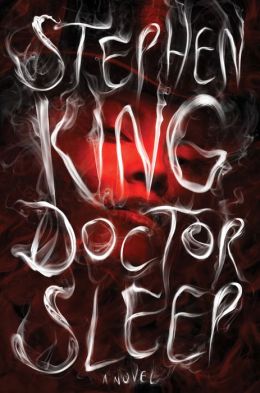
Several decades after the events of The Shining, Dan Torrance is haunted by the ghosts of his childhood and deep in the ugly throes of his father’s disease, alcoholism. He lands in the small town of Frazier, N.H., where he finds meaningful work, a few good friends and Alcoholics Anonymous. Finally his life seems to be on track–until a little girl named Abra is born, whose “shine” is astronomically brighter than his ever was. A community of not-quite-humans is zeroing in on Abra; to live, they need what she has, and they balk at nothing, including violence toward children, to get it. Thus, Dan is again embroiled with the monsters he couldn’t drink away, but thought he’d learned to store in a lockbox on a dusty shelf in his mind.

King continues to show a mastery that extends beyond genre. Doctor Sleep has The Shining‘s spooky intimate authenticity, 11/22/63‘s grasp of pop cultural references and sense of time and place, and Carrie‘s uncanny understanding of youth. Where The Shining took place in a single claustrophobic setting, Doctor Sleep roams wide both geographically and topically, through paranormal concepts and King’s prodigious imagination. Themes of family and personal struggle persist, but perhaps most enjoyable are the page-turning suspense and terror for which King is so deservedly famous.


This review originally ran in the October 4, 2013 issue of Shelf Awareness for Readers. To subscribe, click here, and you’ll receive two issues per week of book reviews and other bookish fun!


Rating: 8 screams.

Teaser Tuesdays: The Gunslinger by Stephen King

Teaser Tuesdays is a weekly bookish meme, hosted by MizB of Should Be Reading. The idea is to open your current read to a random page and share a few sentences. And try not to include spoilers!

gunslinger

Today I am thrilled to finally be finding time for book one in the Dark Tower series by King, which I entered with a later installment, The Wind Through the Keyhole. I loved it. I’m just sorry this one isn’t read by Stephen King, too!

I picked out my favorite early lines for you:

He had laid his fuel in a pattern that was not artful but only workable. It spoke of blacks and whites. It spoke of a man who might straighten bad pictures in strange hotel rooms. The fire burned its steady, slow flame, and phantoms danced in its incandescent core. The gunslinger did not see. The two patterns, art and craft, were welded together as he slept.

I love this pictorial expression of the gunslinger’s melding of art and craft, and how it “speaks of blacks and whites.” I am a King fan. I feel confident this one will be good…

from NYT magazine: “Stephen King’s Family Business”

Thanks to my mom for sharing this fun article by Susan Dominus, “Stephen King’s Family Business“, in which she sits down with the family – Stephen, Tabitha, their three children Naomi, Joe and Owen, and Owen’s wife Kelly. This crowd of six boasts five novelists, a hefty feat: Dominus calls them “as close to a first family of letters as America is likely to have,” and I think she makes a fair case.

It’s a pleasure to step inside the lives of Stephen King and his family. I am only a beginner-fan, having read, oh, 7 or so of his many many books; but I am a fan, and even at my beginner level, was aware that the King family talent extends beyond Stephen himself. The people portrayed in this article are down-to-earth and likeable, and come across as both a tight-knit family and as distinct individuals at the same time.

Go check it out. I, for one, was already watching my local library for NOS4A2 on audio, but have now requested Heart-Shaped Box as well. Who knows what you’ll find?

movie: Carrie (1976)

You will recall that I recently read Stephen King’s Carrie, and was very impressed. I then made it a point to watch the classic 1976 movie starring Cissy Spacek.

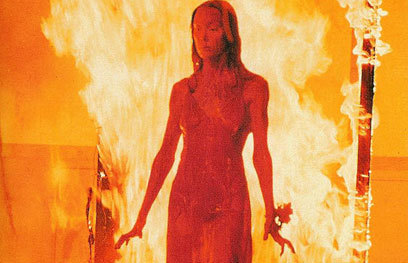
classic shot from the final scenes.

classic shot from the final scenes.

The movie is reasonably faithful to the book in terms of simple plot. Carrie gets her period, is abused by the girls at school, is asked to the prom by popular Tommy whose popular girlfriend Sue has put him up to it (for mostly altruistic motives), is abused at prom, goes red in the face and uses her recently discovered special powers to get hers back.

But the book lost a lot in its translation to film. For one thing, the structure of the book was part of what made the total package so striking; and we necessarily lost a huge majority of the interior thoughts shared in the original. We lost important pieces of Carrie’s family history (the stones falling on her house were left out entirely) and of Chris and Billy’s evil machinations. Also, wasn’t Margaret White entirely too pretty on screen??

I thought the movie did capture the creepiness factor fairly well, although I was not much frightened by the movie, maybe because I already knew everything that was going to happen and felt less a sense of dread than I would have if it had all come as a surprise. (Although I’m easily frightened by movies. So, maybe take a half point off for not frightening me.) I will say one thing, and this is a spoiler if you haven’t seen the film, so highlight the following white text if you want to read: the final scene, where Sue takes flowers to Carrie’s grave (or home site?) and Carrie reaches up and grabs her wrist “from beyond” – that wasn’t in the book and I swear I jumped a foot when that hand appeared. Holy smokes, I was frightened. But I don’t know where that even fits in the story crafted by Stephen King, so again, I’m not giving full points for this.

Final conclusion: a fine movie, entertaining, but hardly worthy of the book it was based on. What else is new?


Rating: 5 cruel high school girls.

Carrie by Stephen King

carrieHere’s a book-turned-movie we’ve probably all heard at least something about! And apparently it’s being made into a 2013 movie, although maybe for the film version I should start with the 1976 version with Sissy Spacek? I had the vaguest notion that I’d seen it already; but as I read the book I realized that this was definitely new material to me.

I am really glad that I picked up this collector’s edition at my local used bookstore. The introduction by Tabitha King, the author’s wife, was a great addition. She puts in perspective the creation and success of this, King’s first published novel, written while they were scraping out a living as parents of two small children, each working full-time on opposite schedules and hardly seeing each other. When this novel did well, then, it made the change of their lives, and started Stephen King on the path to become the huge name he is today. She also reveals that her own terrible PMS was (she is sure) the inspiration for Carrie’s menstrual difficulties, and muses on the strangeness of a novel centering around menstruation and the trauma of a girl’s first period, written by a man, in the 1970’s no less. I enjoyed this introduction.

And the book itself! Carrie is really something. I can appreciate (even with my very limited experience with Stephen King) how this book fits into his oeuvre: it’s a fine example of his ability to create atmosphere, and let us into the heads of his characters. Carrie herself is both tragic and terrifying. I can’t help but sympathize: she’s been abused by her mother from birth, and her completely bizarre upbringing has crippled any chance she might have had of fitting into her world. Now, as evidenced by Sue Snell’s inner conflict about her popularity, conformity is not necessarily a good thing; but Carrie is so far outside of her society that she’s handicapped by it. And to put it simply, kids can be so cruel, can’t they? But when Carrie begins to steer her own fate, I likewise can’t help but shiver.

Carrie comes into her telekinetic own after a trauma, when she gets her first period in very public fashion and is ridiculed (violently) for it; a double trauma, then, if you will (compounded by her total ignorance, at age sixteen, of menstruation). Whether her special powers are born of puberty or trauma is unclear; probably it’s both.

The novel is fairly short: at about 150 pages, it took me just two days to read (in the course of my normal, busy life). The structure is unique, partly epistolary, partly scrapbook-style: sometimes we look out from inside Carrie’s head, sometimes from the heads of other characters; interspersed are clippings from magazines, newspapers, news releases, and books. The effect is a little jarring and disjointed, in just the right way (and, you can bet, as King intended it). The final, climactic events are foreshadowed and referred to from the very beginning; this, and the building of the action, and the careful release of new pieces of information, combine to create the atmosphere and tension King is known for. And, as important as anything else about this book, he gets his adolescent female characters just right: they really are teenaged young women, and that’s no small accomplishment for any author, perhaps let alone a man.

I found Carrie terrific. There’s no question in my mind that this is a fine novel, quick to read but exquisitely crafted, definitely cinematic (want to see the movie now!) and classic. Perhaps it’s all hindsight, but I can see Stephen King’s rising star in this early work. And I want more than ever to read more of his!


Rating: 8 mind flexes.

movie: The Shining (1980)

The 1977 novel by Stephen King which I just reviewed was made into a movie by Stanley Kubrick in 1980. Husband and I planned to watch it on Halloween (as I’d just finished the book) but we couldn’t even wait that long.

I struggle to retain a little perspective as I write this review. I loved the book very much. Movies made from books are often disappointing, and I keep reminding myself, this is not because they are less good, only different. The format requires that they compress the action, often curtailing development of characters and plot, to fit into two hours or so. Interior thoughts and motivations are often lost (see recent discussion). None of which means that movies can’t be good; they just can’t be books.

As you’re already gathering, this movie disappointed me in that it wasn’t just like the book. In fact, they have relatively little in common. Both are about the Torrance family: Jack, Wendy, and Danny. Jack is still a recovering alcoholic, still takes the caretaker job at the Overlook Hotel. Dick Hallorann still befriends Danny, although their friendship is much less profound. My first great let-down was in Hallorann: I found him sort of bumbling in the movie, less developed, certainly less capable and fun, less someone I want to hang out with. For that matter, my earliest warning was in the character of Ullman, the hotel manager: a real creep in the book, he was an oily but not exceptionally unpleasant nonentity in the movie… I guess these are the sacrifices we make to time restraints. And of course, the monsters are reduced in number and in detail, again presumably because of the time limitations. Most damningly, a certain key character meets an entirely different ending in the movie, which I have a hard time forgiving. I have to keep reminding myself, these are different stories.

But the real departure from book to movie, it seems to me, is in the source of the evil. As I noted, in the book, Jack is an essentially good – flawed, but human – man, husband, and father. The Overlook Hotel is an evil entity that preys upon his weaknesses and takes him over. Jack as man is redeemed somewhat. In the movie, though, Jack goes insane and tries to kill his wife and child. No redemption there.

But how was the movie as just a movie, without these unrealistic comparisons to the book? Okay, I’m trying. As a movie it was indeed spooky. It created atmosphere. The scenes with Danny riding his Big Wheel through the halls alone were powerful. For that matter, the images were all powerful – and absolutely iconic today. (I could have identified all of the images in this post for you before I saw the movie. And I am a pop culture dunce.) Stanley Kubrick did his Stanley Kubrick thing. I think it would have been an enjoyable and impactful movie experience, had I seen it first. Clearly, however, the book ruined me for it. Which is so often the case. However, I also think that the movie would have ruined me for the book. Scatman Crothers’ portrayal of Hallorann was not at all what I’d pictured, and I like my conception of him better. So there’s a conundrum. If you have to pick one format, kids, I recommend the book.


Rating: 5 advantages taken.