The Boy Who Drew Monsters by Keith Donohue

A terrifying, enigmatic and ever-accelerating story about the power of imagination.

monsters

Jack Peter Keenan has always been an odd boy. Even before the accident three years ago, he was not exactly normal. Now almost 11 years old, he doesn’t go outside, ever. As Christmas approaches, there are strange happenings afoot: things that go bump in the night, apparitions in the snowy roadway, screams of people who aren’t there. Jack has begun drawing monsters. His parents, Holly and Tim, are increasingly worried.

Holly renews her relationship with the church; when she seeks answers, the local priest and his Japanese housekeeper pelt her with tales of shipwrecks and spirits. Tim resolves to work harder with his son. The parents of Jack’s one friend, Nick, take off for the holiday, leaving him to stay with the Keenans in their remote Maine beachside home, in the snow and bitter cold. As Jack’s drawings multiply and the howls outside grow louder, readers will wonder if he’s withdrawing, abandoning reality (and pulling Nick and the Keenans along with him), or if somehow his interior landscape is populating the outside world.

Multiple mysteries enliven the terror of The Boy Who Drew Monsters, which becomes ever more disturbing as the source of danger comes gradually into focus. In his sensitive, incisive treatment of Jack’s behavior and its effect on his family, Keith Donohue (The Stolen Child) explores the challenges of mental disorders, but suspense and a bright thread of terror evoke the very best of the horror genre. Just as a Maine winter chills the bones, this singular little boy provides a satisfyingly frightening story.


This review originally ran as a *starred review* in the October 10, 2014 issue of Shelf Awareness for Readers. To subscribe, click here, and you’ll receive two issues per week of book reviews and other bookish fun!


Rating: 7 steps outside.

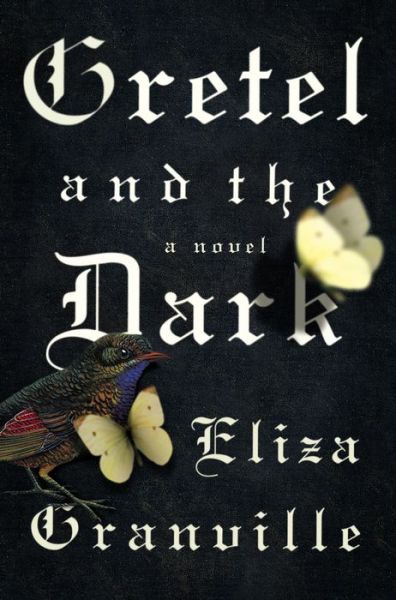
Gretel and the Dark by Eliza Granville

Two historical storylines, great evil, and an abiding mystery combine into one sinister and memorable fairy tale for the stout of heart.

gretel

As the title Gretel and the Dark suggests, Eliza Granville’s debut novel is a grim, spooky fairy tale. But keeping with the nature of any good fairy tale, there is another layer: it is also a meditation on historical good and evil, set both in Nazi Germany and fin de siècle Austria.

In 1899, a shockingly beautiful young woman is rescued off the street and delivered to the home of celebrated Viennese psychoanalyst Josef Breuer. She claims to have no identity, so the besotted Josef calls her Lilie, a name that will come to have greater significance than he originally intended. She is emaciated, bruised and beaten, hair shorn, with numbers inked on her arm. The story she tells is simply not possible: when questioned, Lilie tells Josef that she is not human but a machine, sent to kill a monster, whom she must find before he grows too large. She frightens him with her dreamy fantasies of how she’ll do it–“it doesn’t take long to kick someone to death”–but she casts an irresistible spell, and Josef (and his equally smitten gardener) is driven to puzzle out the truth of her history and the abuses she has experienced.

In the parallel plot, told in alternate chapters set several decades later, a little girl named Krysta pouts as the world around her changes. Her father works in a “zoo” during the days and can’t stop washing his hands at night; she is surrounded by unfriendly people, and retreats into her imagination to avoid the hazards and hatred she can’t understand. As her personal situation deteriorates and her circle of trusted acquaintances shrinks, Krysta hopes to save herself using the fairy tales on which she was raised–even, or especially, the nasty ones, with wolves, witches, beheadings and gore.

In precise balance and crafted in lovely, lyrical language, Gretel and the Dark is a masterpiece of fantasy, horror, childhood innocence and the evils of both our innermost imaginings and our shared history. Deliciously chilling and both fantastical and gravely real, with momentum building throughout, Granville’s extraordinary debut holds its crucial secrets to the last, adding suspense to its virtues. The connection between the not-entirely-likeable little Krysta and the enigmatic Lilie remains an open question until the final pages, and the power of imagination and storytelling is a prominent theme. This chilling, fantastical tale will simultaneously entertain and provoke serious contemplation on the depths of human depravity.


This review originally ran as a *starred review* in the October 7, 2014 issue of Shelf Awareness for the Book Trade. To subscribe, click here, and you’ll receive two issues per week of book reviews and other bookish fun!


Rating: 10 cherries.

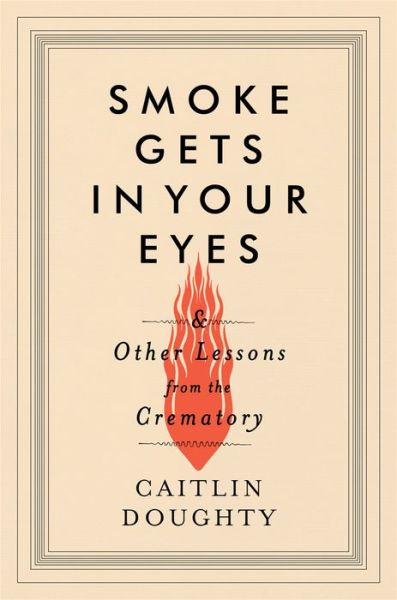
Smoke Gets In Your Eyes (& Other Lessons from the Crematory) by Caitlin Doughty

A young woman’s mortuary career and enthusiasm for death inform an entertaining and thought-provoking memoir.

smoke

At 23, Caitlin Doughty had an undergraduate degree in medieval history and a lifelong fascination with death. Interested in turning her preoccupation into a profession after a move to the Bay Area, she found it surprisingly difficult to get a job in the mortuary business without relevant experience, but eventually secured a position as crematory operator at Westwind Cremation & Burial in Oakland, Calif. In just a few months of working with her deadpan boss Mike, socially awkward body-transport driver Chris and jovial embalmer Bruce, Caitlin learned a great deal, as she relates in her debut, Smoke Gets in Your Eyes.

She learned how to cremate bodies (do the larger people early in the day, babies at the end), what exactly happens after the oven (bones have to be ground down in a special blender to create the uniform ashes the family expects) and how to pick up a recently deceased body from a family at home (mostly, keep your mouth shut). She learned that dead people aren’t really scary, once you get used to them, and came to believe that wired jaws and copious makeup are less attractive and less respectful than simply letting the dead look–and be–well, dead.

In her memoir of “lessons from the crematory,” Doughty shares tidbits of research into the death rituals and mythologies of other cultures throughout history: Tibetan sky burial, the dutiful cannibalism of the Wari’ people in the jungles of Brazil, ancient Egyptian embalming techniques. She points out a central difference between contemporary Western practices and theirs: the Wari’ and others conform to a system of beliefs, where our so-called modern death-disposal techniques arise from a fear of mortality and a need to hide dead things away. In her experience at Westwind, and later in mortuary school, Doughty developed her own value system, emphasizing an honest relationship with our mortality and a frank acceptance of and love for our dead.

Doughty’s research, musings and anecdotes about the crematory are charmingly conveyed in an earnest yet playful voice, brimming with surprising humor as well as insight. Her coming-of-age tale encompasses love and life (and death), and her appeal for a new cultural approach to the end of life is refreshingly frank and simple at the same time that it is profound. Despite addressing a subject that will strike some as morbid or unpleasant, Doughty is an engaging and likable narrator,and Smoke Gets in Your Eyes is thoughtful and approachable.


This review originally ran as a *starred review* in the August 21, 2014 issue of Shelf Awareness for the Book Trade. To subscribe, click here.


Rating: 8 dresses.

The Ghost in the Electric Blue Suit by Graham Joyce

An entrancing fantasy of a young man’s search for past and future in a single summer of change.

ghost in the electric blue suit

Graham Joyce (Some Kind of Fairy Tale) explores family legacies and the struggle for new beginnings in The Ghost in the Electric Blue Suit.

In the sultry English summer of 1976, David Barwise does not return home from college to work for his stepfather as the family expects, but instead takes a job at a run-down holiday resort. The economy is headed downhill, and the resort industry is especially depressed, but David is attracted to the seaside town where his biological father disappeared mysteriously when his boy was a toddler.

His coworkers are a rowdy bunch in which “everyone has an angle.” Among them, David is particularly drawn to Colin, a dangerously angry brooder, and his wife, Terri, beautiful and silent. Over the course of the summer he will find himself pulled against his will into a political association he finds hard to break. He’ll find lust and, later, love. And eventually he’ll solve the mystery of his father’s fate and build a new relationship with his mother and stepfather.

The cast of colorful characters includes some neo-Nazis, a woman with a mysterious past, a solitary Italian tenor, an unlikely pair of fortune-telling sisters and a friendly young dancer. But Joyce’s most remarkable achievement is the tense atmosphere of this slim and haunting novel, simultaneously dreamy and chilling, setting David’s preference for Velvet Underground and Jimi Hendrix against the backdrop of Sinatra, Como and Nat King Cole performed in a dying theater.


This review originally ran as a *starred review* in the August 5, 2014 issue of Shelf Awareness for Readers. To subscribe, click here, and you’ll receive two issues per week of book reviews and other bookish fun!


Rating: 6 sand castles.

The Mad and the Bad by Jean-Patrick Manchette, trans. by Donald Nicholson-Smith

Fans of classic noir will be entranced by this spare, hard-boiled novel of suspense translated from the French.

mad and bad

Jean-Patrick Manchette’s The Mad and the Bad was originally published in French (Ô Dingos, Ô Châteaux!) in 1972. Donald Nicholson-Smith’s 2013 translation is the first into English, and is introduced here by American crime writer James Sallis.

Michel Hartog is an architect, made fabulously wealthy by the sudden death of his brother and sister-in-law. Along with their riches, he has inherited the responsibility of caring for their spoiled and difficult son, Peter, age “six or seven.” Michel has a reputation for employing the damaged, crippled and ill, so it is in character that he would use his wealth to have a shockingly beautiful young woman released from an insane asylum to look after his nephew. Julie Ballanger is rightfully suspicious of her new patron; the eccentric Michel immediately supplies her with alcohol, which she had learned to avoid in her former home, and it mixes poorly with her tranquilizers and antidepressants.

A killer named Thompson and three semi-competent thugs have been hired to execute Julie and Peter, but an ulcer is eating Thompson from the inside out, and his is a race against time. After Julie and Peter are kidnapped from a public park by Thompson’s men, the madwoman and her young charge manage to escape and race for a labyrinthine estate in the mountains that Julie saw in a picture Michel carries. She hopes to find her employer and safety there, but in fact finds neither. The reader wonders if Thompson will get to Julie and Peter before his stomach gets to him; meanwhile, the remote mountain fortress holds an unexpected surprise.

Manchette’s plot is straightforward, and his characters’ motives are fairly simple, if profoundly disquieting: to kill, to survive, to inflict pain or to avoid it. The bulk of the story is devoted to character sketches and explorations of those simple, disturbing motivations. The dialogue is spare, almost dreamlike, and Manchette’s settings tend toward the cinematic. Special attention is paid to architectural features; bare white walls, opulent yet sterile, are the perfect backdrop for blood splatters. Shots are fired, large tables are turned, fires are set and cars are driven into crowds. The Mad and the Bad is odd and gruesome, but maintains a twisted sense of humor throughout.

Nicholson-Smith’s translation is unadorned, a perfect match for Manchette’s style, which is sparse and tersely written but with an artistic eye for detail. Julie and Peter flee, Thompson pursues them doubled over in agony, and the reader is well satisfied by the end of the suspense.


This review originally ran as a *starred review* in the June 24, 2014 issue of Shelf Awareness for the Book Trade. To subscribe, click here.


Rating: 6 croissants.

The Owl Who Liked Sitting on Caesar by Martin Windrow

A fondly affectionate portrait of a Tawny Owl, tempered by wry wit and British reserve.

owl

Military historian Martin Windrow (Our Friends Beneath the Sands) never considered himself an animal lover. But to aid his recuperation after a skydiving accident, Windrow allowed his brother to acquire for him an unusual pet. Wellington, a Little Owl (“this is a species, not a description”), was more than he had bargained for, and too much for his London flat; when Wellington escaped, Windrow found himself shamefacedly relieved. Convinced to try a different species, he made a second attempt with a Tawny Owl hatchling he named Mumble, and they became fast friends.

The Owl Who Liked Sitting on Caesar is in large part a loving memoir of a dearly departed and singular companion. Windrow also shares his research into the biology, history, folklore and usual habits of the Tawny Owl and its strigine relations. He repeatedly stresses the amateur nature of these studies, but nonetheless imparts wisdom and praise for this corner of the animal kingdom, as well as for his friend of 15 years.

Mumble is an endearing juvenile, a feisty adolescent, and initially tolerant of visitors, but eventually too prickly to admit her master’s friends. Windrow moves out of London and into the country to allow her greater freedom, and watches her personality and customs change as she ages, molts and nests. It has taken nearly 20 years after Mumble’s demise for him to reopen the tender subject of her life, drawing on diary entries that recorded her vocalizations, eating habits, grooming and quirks. Fans of loving memoirs about pets, accessible science writing and dry humor will be charmed by Windrow’s love letter to Mumble.


This review originally ran as a *starred review* in the June 13, 2014 issue of Shelf Awareness for Readers. To subscribe, click here, and you’ll receive two issues per week of book reviews and other bookish fun!


Rating: 7 HHS (hoot and head shots).

Mr. Mercedes by Stephen King

A detective novel by the horror master in which a mass murderer torments a retired cop who fights back.

mr. mercedes

Stephen King’s Mr. Mercedes opens in a present-day depressed Midwestern metropolis, where retired detective Bill Hodges is haunted by the one who got away. It has been several years now, but he can still see the job fair, the long lines of unemployed people who’d waited overnight in the cold, the ghostly gray Mercedes accelerating through the crowd, the gristle and gore dripping from its fender as it drove off. Hodges is considering suicide when he receives a letter from someone claiming to be the Mercedes Killer.

Hodges is reinvigorated by a second chance at solving the cold case, with a few unlikely allies. The neighbor kid who mows Hodges’s lawn contributes computer skills and a surprisingly strong sounding board for new theories. The sister of the car’s original owner is both a delightful foil to the former cop’s depression and a potential love interest. Her niece brings the challenge of dealing with mental illness, but also a steely resolve, to this dubious crime-fighting team. While tracking Hodges’s efforts, Mr. Mercedes simultaneously follows the Mercedes Killer himself. He’s a loner who works two jobs, lives with his mother and attracts no attention, but harbors creepy inclinations worthy of Stephen King.

King’s fans will recognize his talents with suspense, finely drawn Americana and the horror of pure evil lurking in the everyday. His characters are as true-to-life and likeable as ever. As the improbable heroes and the Mercedes Killer rush toward a crashing finish, Mr. Mercedes is proof yet again that King can still terrify his readers without invoking the supernatural.


This review originally ran as a *starred review* in the June 3, 2014 issue of Shelf Awareness for Readers. To subscribe, click here, and you’ll receive two issues per week of book reviews and other bookish fun!


Rating: 8 ice creams.

Wolf by Mo Hayder

A truly petrifying home-invasion thriller filled with blood and unexpected twists.

wolf

Wolf, Mo Hayder’s (Birdman) seventh novel starring Detective Inspector Jack Caffery, may be her most terrifying yet. In the secluded hills of Somerset, England, Oliver Anchor-Ferrers recuperates from surgery with his wife, daughter and dog gathered around him. Their remote country home is mostly peaceful, but lies near the scene of a murder that rocked the family 14 years earlier and continues quietly to haunt them. Then a home invader imprisons the Anchor-Ferrers. The isolation of their estate works against them, and their family pet is their only hope of contact with the outside world.

Meanwhile, the gruff but likable detective continues to fight his own demons, chiefly the still-unsolved case of his brother, who disappeared when Jack was young. The trail has gone the worst kind of cold, with most of the principal players now dead. To find closure, he’ll have to work with the reticent and uncanny drifter known as the Walking Man, who seeks help of his own–he wants to find the owner of a lost dog that crossed his path. Accompanied by the runaway pup, hot on the trail of his own mystery, Jack closes in on the Anchor-Ferrers estate hidden in the woods.

A complexly plotted thriller, Wolf ranges widely over the arms industry, pedophilia rings, space technologies and more. Hayder repeatedly teases her readers with apparent answers to the puzzles she presents, but keeps them guessing. Intricate, intelligently constructed and featuring fully developed characters, Wolf is an absolutely chilling and disturbing read.


This review originally ran as a *starred review* in the May 9, 2014 issue of Shelf Awareness for Readers. To subscribe, click here, and you’ll receive two issues per week of book reviews and other bookish fun!


Rating: 8 little dogs.

The Reef: A Passionate History: The Great Barrier Reef from Captain Cook to Climate Change by Iain McCalman

The Great Barrier Reef is both easily understood and awe-inspiring in this history of its discovery, exploitation and beauty.

reef

With The Reef, Iain McCalman (Darwin’s Armada) has composed “a passionate history” of the Great Barrier Reef, opening with his own long-awaited voyage (part of a reenactment of Captain Cook’s original trip). Following the prologue, he withdraws to the role of historian rather than participant, and chronicles the Great Barrier Reef as known to Western society over the last few centuries.

The Reef is divided into three parts. Beginning in 1770 with Captain Cook and proceeding through later explorers who helped chart the reefs in the 1800s, “Terror” emphasizes the threat the reef posed to ships and their navigators, and the fear of cannibals and others thought to inhabit the area. In Part II, “Nurture,” the reef begins to offer refuge for those seeking to escape civilization or make a fresh start. Europeans are taken in by native islanders, or discover island paradise; naturalists arrive, captivated by the biodiversity and beauty of the area while beginning to realize that coral is a resource that can be exploited. “Wonder” sees the scientific community take an interest, disagreeing about the origins and biology of the reef. Ecology emerges as a new field of study, its proponents seeking to place the reef in the larger context of other natural environments, to study relationships and cause and effect. Individual activists work to defend the unusual and changing ecosystem from mining, oil spills, overfishing and the rough use of tourism.

At the end, we are introduced to nature-loving scientist J.E.N. Veron, nicknamed “Charlie” after Charles Darwin, an engaging character who communicates the final dire message of the Great Barrier Reef’s looming extinction. Returning to the personal nature of his prologue, McCalman’s epilogue speaks to the grim consequences of climate change but holds forth hope as well.

The few images in The Reef include portraits of the personalities involved but not the corals themselves (although McCalman refers his reader to books that offer the latter). This work’s strengths include a coherent structure, friendly narrative style and a reasoned culminating call to action that does not disrupt its primary role as a comprehensive history. Plentiful notes indicate strong research, but McCalman’s writing is accessible to any reader interested in the intersection of science, nature and history. From perceived threat to resource to paradise destination to climate-change indicator–Charlie Veron calls corals “the canaries of climate change”–the Great Barrier Reef is fully explored in this engaging study.


This review originally ran as a *starred review* in the May 6, 2014 issue of Shelf Awareness for the Book Trade. To subscribe, click here.


Rating: 7 dives.

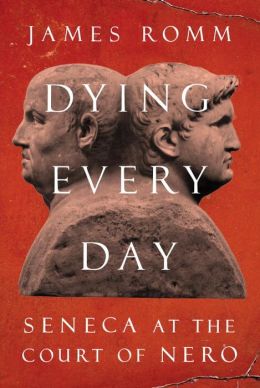
Dying Every Day: Seneca at the Court of Nero by James Romm

An accessible study of Seneca, adviser to the appalling and scandalous Roman emperor Nero.

dying every day

Classical historian James Romm tackles Nero’s Roman Empire, and the controversies and contradictions of the moral philosopher Seneca, in the appropriately titled Dying Every Day.

Nero became emperor in 54 A.D., at the age of 16, under the thumb of his overbearing mother, Agrippina. Like his uncle Caligula–who had also come to the throne at a young age–Nero scandalized Rome with debauchery, exhibitionism, violence and terror. Romm’s chapters are tellingly named: Fratricide, Regicide, Matricide, Matriticide and Holocaust are bookended by two Suicides, the whole capped by an epilogue entitled Euthanasia.

Nero’s legacy is fairly straightforward, but the tutor brought out of exile to prime him for autocratic rule is a more complex character. Seneca was a Stoic who admired Socrates and Cato, prolifically produced moral treatises and scorned wealth. In his role as Nero’s teacher, mentor and trusted senior adviser, however, he colluded in murders within the royal family and amassed a personal fortune. His prose and drama leave behind a contradictory image, and historians from his contemporaries through the present day have puzzled over his true character. Ascetic Stoic moralist or conniving courtier? Romm (Ghost on the Throne) doesn’t claim to settle the centuries-old mystery, but sheds light using ancient sources and occasional references to modern critics, joining his readers in marveling at a regime remembered by history for its shocking excesses.


This review originally ran as a *starred review* in the March 18, 2014 issue of Shelf Awareness for Readers. To subscribe, click here, and you’ll receive two issues per week of book reviews and other bookish fun!


Rating: 7 bloodlines.