guest review: Running the Rift by Naomi Benaron, from Pops

I spotted this title when it was released (in January) and bought it for my Pops – he’ll explain why that was an obvious move, below – and he has graciously written us a review. I’m always glad to have his insightful and well-written book reviews! With no further ado, Pops.

I am a runner; and for more than 3 decades I have been casually collecting fiction having something to do with running. This is a very small niche; so you either can’t be too selective as a literary critic, or you end up with a very small collection. I am such a glutton for the subject that I have read through all levels of writing expertise top to bottom, usually finding “average” entertainment value – and usually centered on running, with a story woven in. All of which makes it pretty special to enjoy the occasional literary gem on this narrow bookshelf.

Even at first mention, the title Running the Rift had my attention. I needed no explanation to surmise the connection between running and the famed Rift valley in Africa. A quick notice of Barbara Kingsolver’s perky book cover endorsement (“culturally rich and completely engrossing”) and the Bellwether Prize for Fiction winner’s medal sharpened my interest. But none of this prepared me for what lies between the covers.

This is not a “book about running”; rather, it is the rare work of fine literature that features a boy who just happens to love running. (For that, I suspect we can thank an author who just happens to be a triathlete.) This is a love story: a love story within family, and about connections to physical and cultural place, more than the trite “love of country.” And it is a coming of age love story between adolescents. But it is so much more, because the story occurs in Rwanda in the 1990’s when that country was the scene of an unspeakable and terrible genocide committed by neighbor upon neighbor.

Rather than explore the colonial, political, economic and social roots of this fratricidal event in history, the story focuses on our main characters and their families, Tutsi and Hutu both, as their lives are torn by forces beyond their grasp. Accounts of the brutal killings are awful to read, as is the gradual approach to the event since we know what’s coming. But it is the richness of the characters, their love of life and family – and, yes, country – that carries us along.

Personally, I was also carried along by an appreciation that the story is based in history – a history we should know better, since these events were truly “unspeakable,” under-reported and poorly understood by much of the world. And of course I was captured by our main character, a boy who truly loves to run and manages to run through one of humankind’s worst moments into manhood and a promising future.

Thank you, Pops, for this lovely review; you’ve certainly convinced me of the value of this book. I’m so glad you liked it, too; I knew very little about it when it caught my eye but it sounds like my instinct was on target. 🙂

Because Pops asked for them, I’ve linked to some other reviews of the book for your reference.

The verdict appears to be a resounding “read this book now.” Thanks for sharing, Pops.

Spokesongs: Bicycle Adventures on Three Continents by Willie Weir

This slim (140-page) volume is less traditional travel memoir and more a series of one-to-two page reports on individual experiences, or meditations on what it means to be a cycle-tourist in underdeveloped areas. The eponymous three “continents” of India, South Africa and the Balkans make up only a small portion of Weir’s experience as a cyclist and as a cycle-tourist (that is, someone traveling by bicycle). He also has experience as a bicycle courier in Seattle, something which will always increase credibility in my eyes. (I did the same in Houston for a few years, in an earlier life.) He calls his brief vignettes “verbal songs of the road,” which I think is a nice turn of phrase.

Each episode or anecdote tells a very simple, brief story; as a whole they don’t make up much of a sum narrative, which is not a criticism. This could be a coffee-table book, to be picked up time and again at random. It’s very easy, an effortless glimpse into one man’s adventures, with a touch of a love story coming in at the end. The writing isn’t sophisticated (nor even consistently correct, grammatically) but it’s sweet, and it’s real. While there are certainly far more complete, involved stories of bicycle adventures of various kinds, this might be the simplest to enjoy and one of the briefest. It was a gift from our buddy Fil to Husband, the Not-Reader, and I think it actually has a chance of being read by him, at least in parts, which is saying something. I recommend it for what it is: a brief look at cycle-touring in the developing world, or a collection of brief, captivating experiences.

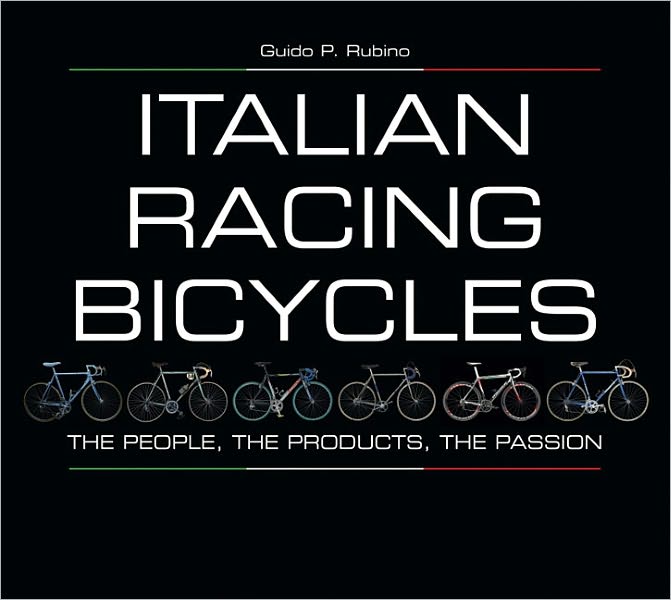
Italian Racing Bicycles by Guido Rubino

A beautiful book of pictures and stories about everything related to the fine art of Italian race bikes.

Passionate fans of Italian bicycles, professional bicycle racing, the history of the sport and/or fine craftsmanship must add Italian Racing Bicycles to their collections. It’s not just about bicycles, as the title suggests, but about the companies that made (and still make) them and about the Italian cyclists who ride competitively. Top-of-the-line Italian bikes are works of art as well as masterpieces of function, and Guido Rubino considers 40 of the finest manufacturers: their histories, likely futures, personalities and history-making products. The indispensable Colnago, Campagnolo and Bianchi brands are covered, as are the men who originally bore those names. Racing greats such as Coppi, Pantani, Sarroni and Bartali, whose performances helped establish the legacies of these companies, receive well-deserved attention here as well (along with select non-Italians like Eddy Merckx). Plenty of beautiful pictures complete this lovely coffee-table book.


This review originally ran in the December 6, 2011 issue of Shelf Awareness for Readers. To subscribe, click here, and you’ll receive two issues per week of book reviews and other bookish fun!

Into the Silence by Wade Davis

An epic history of adventure and adversity, of one man and a nation’s quest for redemption.

In Into the Silence, Wade Davis (The Wayfinders, The Serpent and the Rainbow) portrays several attempts to climb Mount Everest during the 1920s within the context of the state of the British Empire after the First World War. With the benefit of new access to primary sources, he begins with visceral descriptions of the Great War in all its horrifying violence, as seen through the eyes of several players in the later Everest drama, and then follows these men through the postwar numbness of a Britain that had lost the bulk of a generation. Davis makes a convincing argument that the assault on Everest was “the ultimate gesture of imperial redemption.”

George Mallory was the star of three successive attempts to summit a mountain that was at the time a complete mystery–its weather patterns and geography entirely unknown, the cultures that surrounded it viewed by the British with a misguided paternalism. Along with a host of fellow climbers, adventurers and scientists, Mallory was driven toward an accomplishment that the nation came to grasp as an outlet for its frustrations and a hopeful liberating triumph. While he was the principal character in the eyes of his contemporaries and in history, the other explorers also receive well-deserved and detailed attention in Davis’s account.

Into the Silence is a book about mountaineering and a respectable adventure epic with all the alpinist details, but it’s also so much more: a heartbreaking portrayal of war; the story of more than a dozen individuals whose lives were rocked by a war and a mountain; and finally, a history of a nation watching its own imperial era come to an end.


This review originally ran in the November 4, 2011 issue of Shelf Awareness for Readers. To subscribe, click here, and you’ll receive two issues per week of book reviews and other bookish fun!

On Bicycles ed. by Amy Walker

An exhaustive how-to manual and impassioned plea on behalf of riding bicycles for transportation and as a way of life.

Editor Amy Walker is joined by some 30 authors–policy-makers, researchers, business owners, activists, parents and/or cyclists–in this instructive manual. On Bicycles is not concerned with colorful Spandex, racing bikes or speed. Rather, this is a handbook for North Americans who want to use bicycles for commuting, transportation and fun.

The book covers a range of subjects and possible needs. First, why we ride: for better health, for the environment, for a better connection with our communities. Next, chapters cover what gear is needed, how to ride safely in various conditions, how to make the transition away from the car; how to transport kids by bike and how to get them on bikes themselves; how to use a bicycle for cargo needs; different kinds of bicycles; community services and connections including and beyond the retail bike shop; and redesigning our infrastructure and culture to allow for more and better biking. Your experienced-cyclist-and-book-reviewer learned new things; the novice rider will be thoroughly equipped with information and empowered by the enthusiasm pouring off these pages.

Walker’s examples come largely from that exemplary bike town, Portland, Ore., and some of her discussion feels a bit removed for cyclists in, say, Houston–but her arguments and advice are more, rather than less, relevant for cities (and riders) with further to go before reaching cycling nirvana. The only caveat: if you are in the camp that occasionally resents Portland’s reputed smugness, you may find a touch of that here. But it might be worth the stellar and scrupulous advice.


This review originally ran in the September 20, 2011 issue of Shelf Awareness for Readers. To subscribe, click here, and you’ll receive two issues per week of book reviews and other bookish fun!

book beginnings on Friday: Into the Silence by Wade Davis


Thanks to Katy at A Few More Pages for hosting this meme. To participate, share the first line or two of the book you are currently reading and, if you feel so moved, let us know what your first impressions were based on that first line.

Into the Silence: The Great War, Mallory, and the Conquest of Everest appears to be a largeish, well-researched, exhaustive coverage of its three overlapping subjects. I’m just a bit into it but am finding it to be gripping, and painful in its discussions of the tragedy that was WWI. You know, I feel like we say this about just about all the wars (and rightfully), but what an awful thing it was…

I am going to give you a double beginning today. The prologue:

On the morning of June 6, 1924, at a camp perched at 23,000 feet on an ice ledge high above the East Rongbuk Glacier and just below the lip of Everest’s North Col, expedition leader Lieutenant Colonel Edward Norton said farewell to two men about the make a final desperate attempt for the summit. At thirty-seven, George Leigh Mallory was Britain’s most illustrious climber.

And chapter one:

On the very day that George Mallory and Sandy Irvine disappeared on Everest, another party of British climbers slowly made their way to the summit of a quite different mountain and in very different circumstances. At 2,949 feet, Great Gable was not a serious or difficult climb, but it was said to be “the most completely beautiful of English mountains.”

So you can see the juxtaposition set up. I find this to be an effective way of linking his topics (see the subtitle) right from the start.

A word on nonfiction book beginnings: Unlike in fiction, where I feel the first lines should always grab or surprise the reader and interest her, I think nonfiction can take one of two routes. I do like to be grabbed in the first lines, of course, and extra points are given for this. But it’s extra credit, not required work. Sometimes nonfiction begins quietly, stating a date, a place, arranging a background, and this I find effective, too. Somehow, with nonfiction, I’m comfortable settling into things with this understated approach, which I think the above falls into.

What are your thoughts? And what are you reading this weekend?

These quotations come from an uncorrected advance proof and are subject to change.

book beginnings on Friday: On Bicycles: 50 Ways the New Bike Culture Can Change Your Life by Amy Walker (ed.)

Thanks to Katy at A Few More Pages for hosting this meme. To participate, share the first line or two of the book you are currently reading and, if you feel so moved, let us know what your first impressions were based on that first line.

On Bicycles is sort of a book of advice, not necessarily to be read cover to cover. But I’m finding myself doing just that, which should be taken as a compliment, especially as, in all humility, I don’t need this kind of advice, being rather an experienced cyclist.

Amy Walker edits, and writes a number of chapters, but by no means the majority of the book. Her chapter one, entitled “Bicycling is Contagious,” begins:

Warning! Cycling can be addictive. Before you grab onto those handlebars, before you throw a leg over the saddle and start pumping away at those pedals, be aware: once you start, you may never want to stop.

Well, she’s off to a good start for me! I couldn’t agree more.

This quotation comes from an uncorrected advance proof and is subject to change.

What are YOU reading?

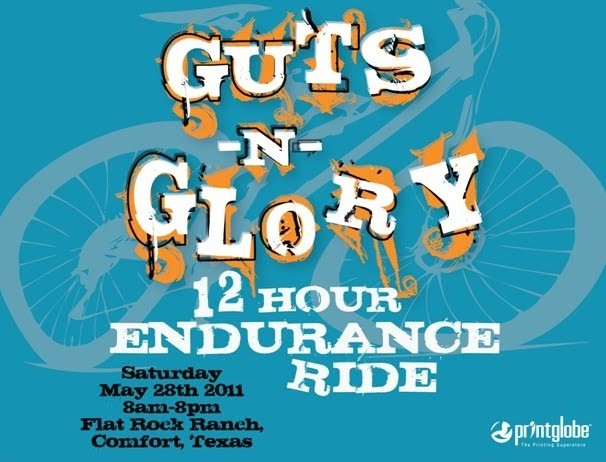
Comfort Guts ‘n’ Glory

Just a quick note to let you know that if you’re interested, my race report is up from the 12-hour mountain bike race I did two weeks ago. Thanks!

Around the World on Two Wheels: Annie Londonderry’s Extraordinary Ride by Peter Zheutlin

I ate up the story of Annie Cohen Kopchovsky, better known as Annie Londonderry, like the tale of adventure it is. As I said earlier, this story combines sports marketing, women doing outrageous things, bicycles, travel, and history. Nowhere to go wrong there, unless in writing badly or boringly – which Zheutlin thankfully does not.

Annie was a working-class young mother of three living in the tenements of Boston in the 1890’s, when she decided, out of the blue, to take on the challenge of riding a bicycle around the world in under 15 months. She had never ridden a bicycle before, and her decision to set off on this journey is rather mysterious. The origins of the idea are rather unclear: she claimed that two wealthy Boston businessmen had made a wager that a women couldn’t do such a thing (following the around-the-world ride just recently accomplished by a man), and that they were offering a substantial purse upon her successful completion, but it does not appear that there were any such businessmen or any such wager. At any rate, Annie acquired a hefty women’s bicycle, a new name (the Londonderry Lithia Spring Water Company became her first sponsor), and set off.

Annie doesn’t appear to have planned very well. She set off first for New York, from Boston, then Chicago, then back to New York, then across the ocean to France. If your knowledge of geography suggests that this is not the most efficient route for circumnavigating the globe, you are correct.

In Chicago, Annie abandoned the attire that was appropriate at the time for ladies: high collars, long sleeves, full skirts with copious undergarments and petticoats and corsets and… lots of things I’m not familiar with. She first went to bloomers or split skirts, and eventually (I believe on her second visit to New York) gave up on even the bloomers and went to a “men’s riding suit”, meaning pants that more or less fit her – ack, shocking! She also picked up (in Chicago) a “diamond-frame” men’s bicycle – meaning, with a horizontal top tube, making skirts impractical or impossible. Her bike lost some 20lbs in this transition, and her wardrobe change lost a lot of weight, too.

The most fascinating parts of Annie’s story are the inconsistencies, erm, not to say lies she told throughout. She changed the terms of the wager repeatedly; she gave a plethora of personal biographies to different newspapers, ever-changing and not once (at least not that is documented) telling the truth. She never mentioned, for example, that she was a married mother of three; this would have made her leaving home unacceptable in her society. Annie told outrageous stories of violence, adventure, and near-death experiences during her journey, many or most of which appear to be false. And most egregiously, perhaps, she did not ride a bicycle for the majority of her trip at all. She rode, as stated above, around the northeast United States, and then across France, and from there took trains and ships almost exclusively (with a series of short, recreational or social rides for exhibition or touring purposes) from France to the Far East. She then shipped to San Francisco, where the riding began in earnest again; she rode south to El Paso and back up to Chicago, Boston, and New York, most likely with some miles by rail interspersed, but overwhelmingly by bike.

Annie claims to have won the wager, making it back to Boston under the 15-month deadline, and to have secured the $10,000 purse; but who paid it? Never mind the details, she would have told us. Although she didn’t ride anywhere near all the miles, she did a lot of riding, and appears to have finished in awfully good shape, even for a man of her time (and goodness knows, unheard of for a woman). She was a colorful character, and while not above criticism, what she did do was a remarkable accomplishment. If she cheated and rode “only” 10,000 miles, I would still give her a high-five and my respect. By today’s standards it’s easy to disparage the ethics of her, um, liberties with the truth, and the journalistic ethics of the many papers who covered her story credulously (and her own later career in sensationalist journalism). But Zheutlin does a fine job of setting the stage for the reader, reminding us that these were the journalist standards of the times.

Interspersed into this story of Annie’s wild ride and her telling of tall tales, Zheutlin gives us snippets of the history of the women’s suffrage movement, the history of the bicycle in American culture, and the revolution in women’s clothing reform that was deeply intertwined with bicycle riding (I wasn’t aware of the close relationship there). I found the author’s Afterword, in which he discusses his research process and his relationship with Annie’s memory (she is his great-grandaunt, although he only learned of her existence after her death), especially moving and interesting, and I wish this aspect would have played into the body of the book. As I’ve said of several nonfiction books I’ve read before, I enjoy the author’s voice, and her/his experience in research and writing. To me, this is part of the story, and leaving it out can be a disservice, leaving the story incomplete, or at worst, even dishonest. I don’t accuse Zheutlin of dishonesty of course; I’m just saying his role in Annie’s story being told is an important chapter, in my opinion.

I really enjoyed this story for its crossover elements into so many chapters of history: women’s rights and clothing standards, bicycles, travel, journalistic trends, even tidbits of various world cultures. I also appreciated Annie as an outlandish and wild woman, cyclist, and teller of tales. And I took pleasure in Zheutlin’s quiet comments on his research processes. If you’re a stickler for honesty, don’t expect to find Annie entirely likeable; but I think you’ll still be impressed by her story, and learn a few little-known details of our history as women, cyclists, and Americans. Check it out.

Thanks again, Fil!

The Long-Awaited, Much-Anticipated Julia Jenkins 26v29 Official Opinion. (preliminary.)

This one is for my bicycle friends. My bookish friends are welcome too, of course.

Last night I rode my friend KD’s Epic 29er for the first time, at our local Memorial Park trails in town. I’ll have KD’s 29er for two weeks, which will be a great demo period (thanks KD!!). The question is this: now that I’m ready to replace both my hardtail and full-suspension mountain bikes, I need to decide whether I want to stick with the (standard, traditional-for-decades) 26-inch wheel size that I ride now, or move over to 29-inch wheels (which have gone from new-and-trendy to awfully ubiquitous). So, I’ve been fortunate to get KD’s 29er for some test rides. I have a 26er Epic, so there’s a fair comparison there (though hers is much newer and higher-end, thus my desire to upgrade).

Here’s the background: I am, if not change-averse, very cautious about changes and upgrades in technology and gadgetry. I was the last person I knew to get a cell phone; an email address; a facebook account. (And I have a website and a blog, yes. When I adopt, I do tend to do so wholeheartedly. But late.) After years of working in bike shops and racing bikes, I’m out of patience with gearheads – people who get super-psyched about upgrades and fancy equipment. It’s really a lot more about the engine than it is about your gear, people. I’m an anti-gearhead.

Thus my reluctance to “drink the kool-aid” or “go over to the dark side” or some might say, “get with the times” and get on the big wheels.

I know that 29ers hold momentum better, but I know they accelerate more slowly. I know that 29ers roll over obstacles better (any obstacle is smaller relative to a 29-inch wheel than it is relative to 26), but I also know that they’re less nimble in tight, twisty cornering scenarios.

I rode at Memorial last night just as a test ride, to get the bike set up for me. We adjusted the reach and the rear suspension a little. The real test will come this weekend at Comfort. Comfort trails beg for a 29er: wide-open, rocky, and technical. Great opportunity to roll over things with the bigger wheels, and not really any tight twisty stuff to challenge them. Memorial, meh. I’m not a huge fan of those trails these days; they’re pretty eroded and rooty (not to mention trafficked). And then of course, if I wanted to really challenge the 29er, I should take it to Lake Bryan trails, ha. Super twisty and tight; the joke is you’re looking at your own butt half the time. But that’s another story.

Very quickly during last night’s ride, I found myself liking it. It’s true that the big wheels gave me more confidence and rolled over things easier. There’s a slightly different rhythm or timing to the body English in the twistier sections, but it didn’t slow me down any; in fact it only took a minute to adjust, and it still felt right. The bike, ideally, should be like a 26er, just on a different scale. (KD is my perfect bike-trading buddy because we ride the same size – like, precisely, down to saddle height – use the same pedals, everything. So her bike definitely fits me. And this in a world where we worry about millimeters.)

But I made another odd observation: I was fighting it mentally. I didn’t want it to work! I guess I’m even more change-averse than I thought. Am I just hanging onto the thought of 26 inches because I have for so long, and I don’t want to admit I was wrong? Surely I’m not that prideful. I was looking for places it didn’t work. But I didn’t find them. And I’m sure I’m not going to find them in Comfort. In fact, I’m planning on taking both Epics (26 and 29), but I’m already feeling like the 26 might not see any dirt.

I guess if I really want to push it I should take the 29er to Bryan… and I do have the bike for another weekend.

So what do you think, friends? I want a ti hardtail! Thinking about the Ti Mariachi. And then maybe a Spearfish like Husband? Love the color… Then I’ll need a new singlespeed at some point… this is the fun part. 🙂