The First Fifteen Lives of Harry August by Claire North (audio)

I am doing the unfortunate thing where I’ve waited too long since I listened to this one. In my defense, it was a whirlwind two-week road trip that allowed me to listen to several (!) audiobooks.

Another recommendation by Liz, this one’s pretty mind-bending. Harry August narrates the story of his lives himself, beginning with the first time, when he lived unremarkably. He was born in a train station washroom in 1919, and was then adopted but didn’t know it; his adoptive mother died when he was young, and his adoptive father remained distant; he served in World War II and then returned to the estate where his father had served as a sort of maintenance man, which role Harry takes over until his own death in old age. Ho hum. Then… it all starts over again. In his second life, he does not handle well the knowledge that this has all happened once before. In his third life, he uses what he knows of the war (for example) to his advantage, staying away from high-casualty battles and the like. With each life, he gains a little better understanding of what he’s experiencing. But he struggles to make meaning of it all, even as he meets others like himself: ouroborans, they call themselves, or kalachakras. Until, that is, he meets one man in particular, a fellow ouroboran who will become perhaps his greatest friend and nemesis.

I’ve already said too much, and will let you discover Harry’s many lives and acquaintances for yourself from here.

It’s quite a thought-provoking concept, and a new twist on time travel and the tricky question of the butterfly effect. (Would you kill Hitler? What if he’s only replaced by something worse?) The novel is not plot-driven, precisely, and it’s not character-driven at all. Harry has remarkable drive to learn, understand, and explain; this intrigues me about him, but he’s a bit short on actual personality (and has more of it than anyone else in the book). So, a concept-driven novel, which is a change. I found it perfectly absorbing, one to get lost in, and to occasionally pause and ponder. I will say, there weren’t characters I liked, and that can make it a little tough to hook in. I was very intrigued, but often bemused too.

The audiobook was a strong production on the whole. Peter Kenny does a wide range of voices, which are often pleasing, but I must say his American accents are not convincing.

It will be interested to see how this one sticks with me.


Rating: 7 beakers.

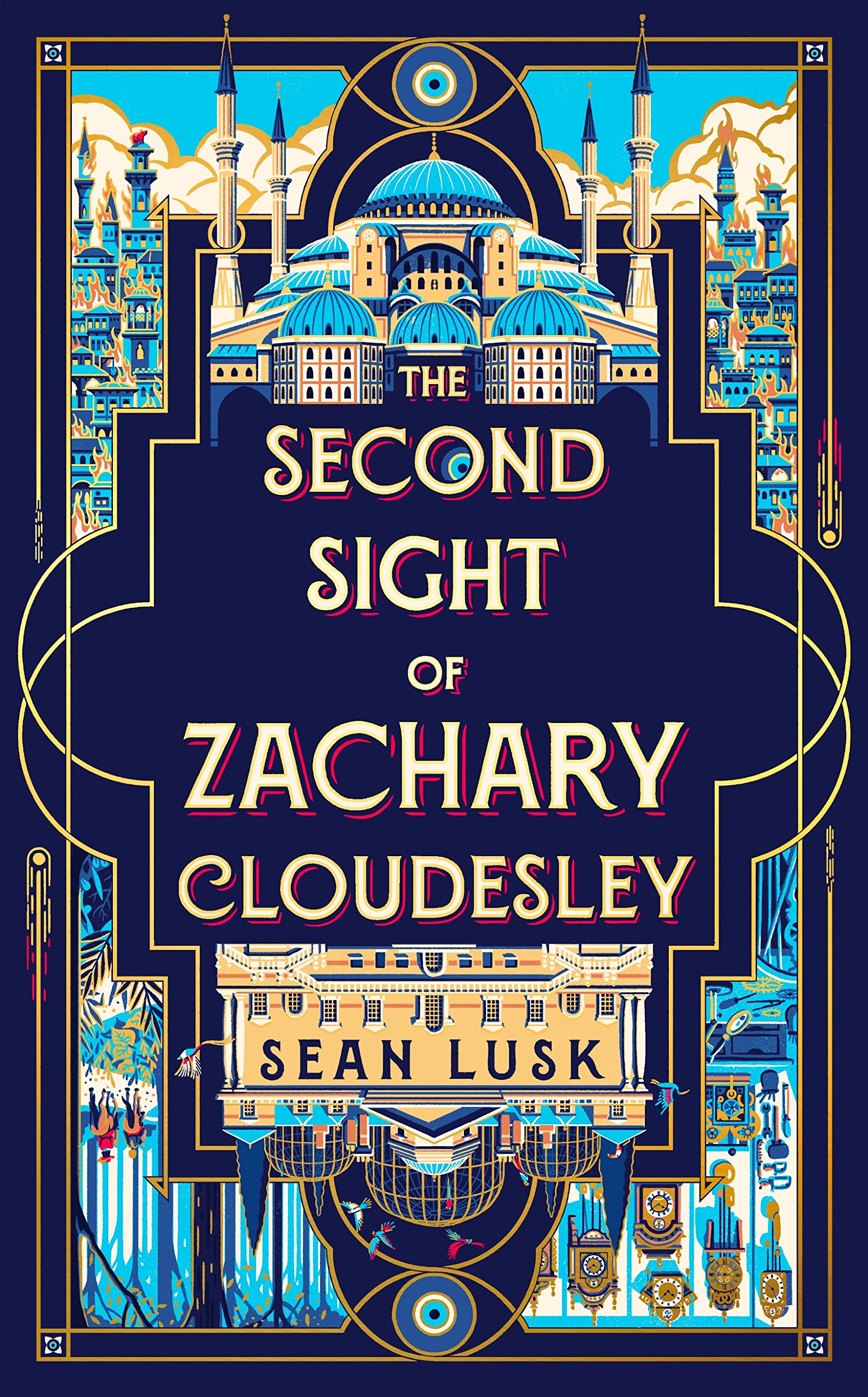
The Second Sight of Zachary Cloudesley by Sean Lusk

An exceptional boy in a loving, if odd, family, surrounded by automatons, must adventure into historical Constantinople to save his father in this debut novel of love and whimsy.

Sean Lusk’s debut novel, The Second Sight of Zachary Cloudesley, is a strange, spellbinding, imaginative work of magical realism set in 1700s London and Constantinople, exploring Pinocchio-esque questions about what is real, and the many forms of love. It contains no shortage of tragedy, but always retains a charming sense of wonder.

In London in 1754, Abel Cloudesley anxiously paces outside the birthing chamber where his beloved wife, Alice, labors. Zachary Cloudesley’s life begins with his mother’s death; Abel will be a loving father, but at first the experience is clouded by grief.

Abel is a clockmaker, but clocks are only the beginning of his artistry: he creates clockwork creatures, automatons that move and communicate like the real-life animals and humans they mimic. In Abel’s workshop, Zachary suffers a life-changing injury, resulting in the treasured son being sent away to be raised in the safety of his eccentric great-aunt Frances’s home in the country. Zachary’s no-nonsense nurse, Mrs. Morley, and the staunchly feminist Frances round out an unusual family for a very unusual boy. Zachary is a genius, precocious in everything, a great reader and nature lover. He also knows things–the past, the future–that he should not be able to know. When Abel is sent away to distant Constantinople on an odd and dangerous mission, seven-year-old Zachary says, “You should not go, Papa. You know that, don’t you?” Abel knows, but sail he does.

Years later, a teenaged Zachary will set out to rescue his father–believed to be long dead–from imprisonment in the Ottoman court. Zachary is still a deeply intelligent young man, but his studies have been conducted from the English countryside, and these travels will be eye-opening. Readers will delight in following the devoted son as he learns about a broader world, encounters romance, and seeks family. Through these pages are woven the clockwork wonders that have gotten Abel into this mess, and may yet get him out.

The Second Sight of Zachary Cloudesley is enchanting. Abel and Zachary are sensitive, compelling characters; Mrs. Morley and Aunt Franny are stalwart and impressive female heroes in two very different styles; Mrs. Morley’s daughter (raised alongside Zachary nearly as a sister) offers her own development and young romance; and Abel’s gifted employee Tom, an indispensable friend to the family, is not quite what he appears.

Lusk’s engrossing novel wraps a coming-of-age narrative in a historical setting, with lovable characters and dreamlike twists. Don’t miss Lusk’s memorable, sweet, original debut.


This review originally ran in the October 12, 2023 issue of Shelf Awareness for the Book Trade. To subscribe, click here.


Rating: 8 peacock feathers.

Maximum Shelf: A Short Walk Through a Wide World by Douglas Westerbeke

Maximum Shelf is the weekly Shelf Awareness feature focusing on an upcoming title we love and believe will be a great handselling opportunity for booksellers everywhere. The features are written by our editors and reviewers and the publisher has helped support the issue.

This review was published by Shelf Awareness on October 12, 2023.


Douglas Westerbeke’s debut novel, A Short Walk Through a Wide World, is a wild romping adventure, a poignant tale of relationships and interconnectedness, and a compelling journey of self-discovery. The worldwide (and possibly beyond) travels of Aubry Tourvel have something for every reader, with a momentum that’s impossible to turn away from.

“The paper is clean and white–she hasn’t drawn her first line–so when the drop of blood falls and makes its little red mark on the page, she freezes. Her pencil hovers in her hand. Her heart, like it always does, gives her chest an extra kick.” With these opening lines, readers meet Aubry mid-scene, in a marketplace in Siam. Her illness has returned. First the blood, “And then the pain strikes–a terrible, venomous pain–a weeping pain, like a nail through a rotten tooth.” The first pages are adrenaline-fueled, as Aubry runs for her life.

Aubry recounts her past in fragments to people she meets along the way. In early chapters, she narrates the beginning of this singular illness, this mysterious curse that appeared when she was nine years old in 1885, where her family lived in Belle Époque Paris. She ran, and “Every step made her breath flow easier, made the pain slip a little farther away. She knew this would be her strategy from now on. She would outrun it.” Precocious Aubry quickly intuits the inexplicable rules of her condition: she can never revisit the same place twice, can never retrace her steps, can stay in one place only two to three days, four at the most, before she must move on. And so begins a life of constant travel. From a privileged, spoiled childhood, Aubry becomes resourceful, wary, self-sufficient, standoffish, and eventually a kind–but always watchful–wanderer.

Aubry fashions a spear and becomes adept with it. She travels mainly on foot and by boat, doing odd jobs, fishing and hunting. Her relationships, while often meaningful, last only days. One of her most significant love affairs lasts a whole week, aboard a moving train, until the train breaks down and she must leave her lover behind. A few acquaintances try to travel with Aubry, but it becomes increasingly clear that she is special, able to withstand more than the average human. On foot, she crosses the Himalayas, and the Calanshio Sand Sea in the Libyan desert. She finds libraries filled with wordless books containing only pictorial storytelling–to overcome language barriers–and discovers that these libraries, perhaps a little magic, are for her alone.

The workings of Aubry’s unique, global-scale library are never clear, even to her. There, she finds everything she needs: sustenance, warmth, information. “It comforts her that for every path she’s taken during her many revolutions around the world–for every individual footstep, it seems–there’s a story. Something once happened, a past that is not hers.” This is what library-lovers everywhere have long known, but it is also a device that allows for one of the more magical elements of Aubry’s strange travels. “‘It seems,’ said [one brief acquaintance], ‘that the world you travel through is not the same world we travel through.’ My God, thinks Aubry. My God.”

It is a lonely life. People she meets tend to “romanticize her illness. They imagine an eternal holiday, which is ludicrous, of course. Does anyone really want an eternal holiday? A holiday is a temporary break from the routine, a chance to shake off the dust of habit, to experiment with new foods and customs, but then to return, perhaps borrowing from the outside, perhaps rejecting it–but either way, a return.”

Westerbeke’s imagination is prodigious, and the details with which he fleshes out this absorbing tale are equally abundant. A Short Walk Through a Wide World abounds in the tastes, smells, textures, and sensations of a woman who lives almost from moment to moment. Her haphazard travels, rarely planned, are always in response to a sharp pain or a nosebleed, or worse. She stays just a half-step ahead of the illness which she’s come to personify. “It clung to her back, fingers and toes screwed into her bones, gasping and grinning at all the places she went, a happy demon mounted forever on her shoulders.” She speaks to it, and it responds.

Aubry’s travels arrange themselves into a moving story, often sad, but also filled with joy and fun. Aubry has a special weakness for children, and delights in engaging with them wherever she goes, from a ferry in Siam to a tribe in the Congo. This expansive tale offers new ways of looking at the world–wise, questioning, as rich in emotional depth as it is in detail. The characters she meets are numerous and diverse: New Zealanders rescue her in Siam; an Ottoman fisherman encourages her to gain a meaningful skill; an Indian prince befriends her; a Tibetan nomad invites her to hunt a mysterious beast; a Mexican journalist tracks her down in Alaska. A Short Walk Through a Wide World is utterly engrossing, a world–worlds–to get lost in. In these riveting, swashbuckling adventures, tender meditations on relationships, and philosophical musings about travel and home, every reader will find something to love.


Rating: 9 horned cucumbers.

Come back Monday for my interview with Westerbeke.

How Long ’til Black Future Month? by N.K. Jemisin

This book took me on such journeys and brought me so much joy and enjoyment and laughter and more difficult but also rewarding feelings; I have long felt that Jemisin is a rare master, but this may be the pinnacle. I love this book. I was once mildly disappointed with novella-length versions of her world; but here she clearly perfected the short story. And I was so pleased with the wide variety of worlds we got to dip into. Every story is unmistakably Jemisin, but each is also so different. They range in the impressions they give of settings in time and in space, from recognizably referring to our world to being fairly far afield; some are set in the worlds of her novels, some stand alone, and a few closely answer another author’s work (more on that in a minute). Some, similarly, seem to fit into a timeline of our own world, while others stand apart. But they all have the flavor. I went back to immediately reread one story in particular as soon as I finished the book, and that’s a rare move.

How Long opens with an author’s introduction in which she shares her coming-of-age as a writer, her growth as a short story writer, and the struggle of being a Black woman in fantasy and science fiction, among other things. “The stories contained in this volume are more than just tales in themselves; they are also a chronicle of my development as a writer and as an activist.” For this reader, at least, it felt right to come to this collection after having read all the novels (I haven’t read all her work as published in various places, but I’ve read all the books); I felt familiar with the writer now offering a look back across those years. Such a treat. Also, I hope she lives to write many books for a long, long time more.

The first story in the collection is “The Ones Who Stay and Fight,” which is quite explicitly a response to Ursula Le Guin’s “The Ones Who Walk Away From Omelas.” This was, again, a real treat for me; I’ve read “Omelas” for a couple of classes in which I was a student and also taught it for several years, so I’ve looked pretty closely at its concepts as well as its sentences, and that was an excellent preparation to appreciate Jemisin’s strong response in both its concepts and its sentences. To match the voice and style of another writer is not ‘mere’ imitation but a serious accomplishment in itself, and this story does that well. Jemisin has a fiery answer to Le Guin’s troubled false utopia; her Um-Helat is not “that barbaric America” nor “Omelas, a tick of a city, fat and happy with its head buried in a tortured child.” She’s got a different idea, and exhorts the reader to come along, “get to work.” (The direct address comes from Le Guin, but Jemisin grasps it firmly.) I was so delighted with this opening story, I could hardly stand it.

Other favorites include “Red Dirt Witch,” “L’Alchimista,” “The Effluent Engine,” “The Evaluators,” “Henosis,” and “The Elevator Dancer” – is Orwell just this much in our society, or in my head (recently Julia), or is this an explicit play on 1984? To emphasize the range of these stories, I will attempt a few one-line description/summaries:

  • “Red Dirt Witch”: The White Lady threatens Emmaline’s family, but she knows the red dirt of Alabama, and the magic it holds, too well to go down easily.
  • “L’Alchimista”: As a professional chef, Franca has fallen far, but she can’t resist a challenge; when a mysterious stranger shows up at her little kitchen in Milan, she will discover her art holds even greater power than she knew.
  • “The Effluent Engine”: In historical New Orleans, a Haitian spy looks for technological advantage and finds also love. (Jemisin’s website calls it “a swashbuckling adventure-romance set in 1800s New Orleans with secret societies, derringers, and bustles.” Love!)
  • “The Evaluators”: Human contact with alien species is highly regulated; why is this one trade contract being rushed? Danger! (Strong hints of Octavia Butler’s Lilith’s Brood series.)
  • “Henosis”: In out-of-order chapters, a famous author is kidnapped by his biggest fan.
  • “The Elevator Dancer”: Security guard secretly, shamefully, watches a subversive act of dance.

Bonus: many of these stories are available elsewhere, linked from Jemisin’s site, if you’d care to go hunting that way.

This book has left my mind changed, and I’ve stepped away and back to it. Strongly recommend.


Rating: 10 frava roots.

What Is Not Yours Is Not Yours by Helen Oyeyemi

I continue to wrestle with Oyeyemi, whom I admire but who leaves me confused as often as she leaves me delighted. I think this is the one I like best (of whose I’ve read), alongside or just below Gingerbread. It definitely had its more challenging stories, but finished strong, and maybe that’s the win: leave me on a high note.

What Is Not Yours Is Not Yours is, first of all, a great title; it is also a short story collection whose contents I thought unconnected until rather late in the game. There are a few recurring characters, actually, but their relationships across stories are limited. It’s mostly disconnected. There is a linking subject or theme: keys, and locks. In some stories they are literal and physical, in some more metaphoric, and in a few the reader has to think a bit to make the concept fit (like an ill-fitting key, ha), but it will. I like that as a through-line.

“books and roses” introduces a couple who are lost to each other, whose keys open doors to a garden of books and a library of roses. “‘sorry’ doesn’t sweeten her tea” contains many fascinating ideas and sub-stories, but it’s mercurial in its focus, quickly shifting which character we seem to be watching; I was actually charmed throughout, but left pretty baffled, too… unlike some stories, it at least left me in a place that felt like an ending. “is your blood as red as this?”, the longest story in the collection, left me less satisfied – like, what just happened? I can handle feeling this way occasionally, but if it gets too frequent I’ll become frustrated or lose interest.

But soon came “presence,” which also put its reader through some fast switches, but left me again in a place I felt a little surer footing. “a brief history of the homely wench society” and “dornička and the st. martin’s day goose” were both downright delightful, leaving me giggling and tickled and thought-provoked. The first sets out the history of two gender-based rival clubs at Cambridge, and the latter offers a twist on Little Red Riding Hood. After one odder one, we finish with “if a book is locked there’s probably a good reason for that don’t you think,” which felt like the perfect note to end on: a little shape-shifting as its setting moves from a realistically boring workplace drama to something decidedly metaphysical, with a neat fable built in, and a magical flourish of an ending. With that taste in my mouth, I feel good about this collection. My overall impression remains that Oyeyemi may be much smarter than I am.

I confess I’m a little comforted that a Guardian reviewer found these stories somewhat uneven; that makes me feel better, like maybe I missed some things because the stories weren’t quite perfect? But I always doubt myself, because Oyeyemi seems to have so much going on. I’m afraid it’s me. I don’t always relish an author making me feel not so smart, but I don’t think that’s what she’s out to do here, and so I don’t hold it against her. I think her imagination may be a bit wider and more flexible than mine. She’s pretty special, and I’ve just ordered the rest of her books that aren’t yet on my shelf, so you can stay tuned and expect that we’ll use the Oyeyemi tag some more.


Rating: 7 comments.

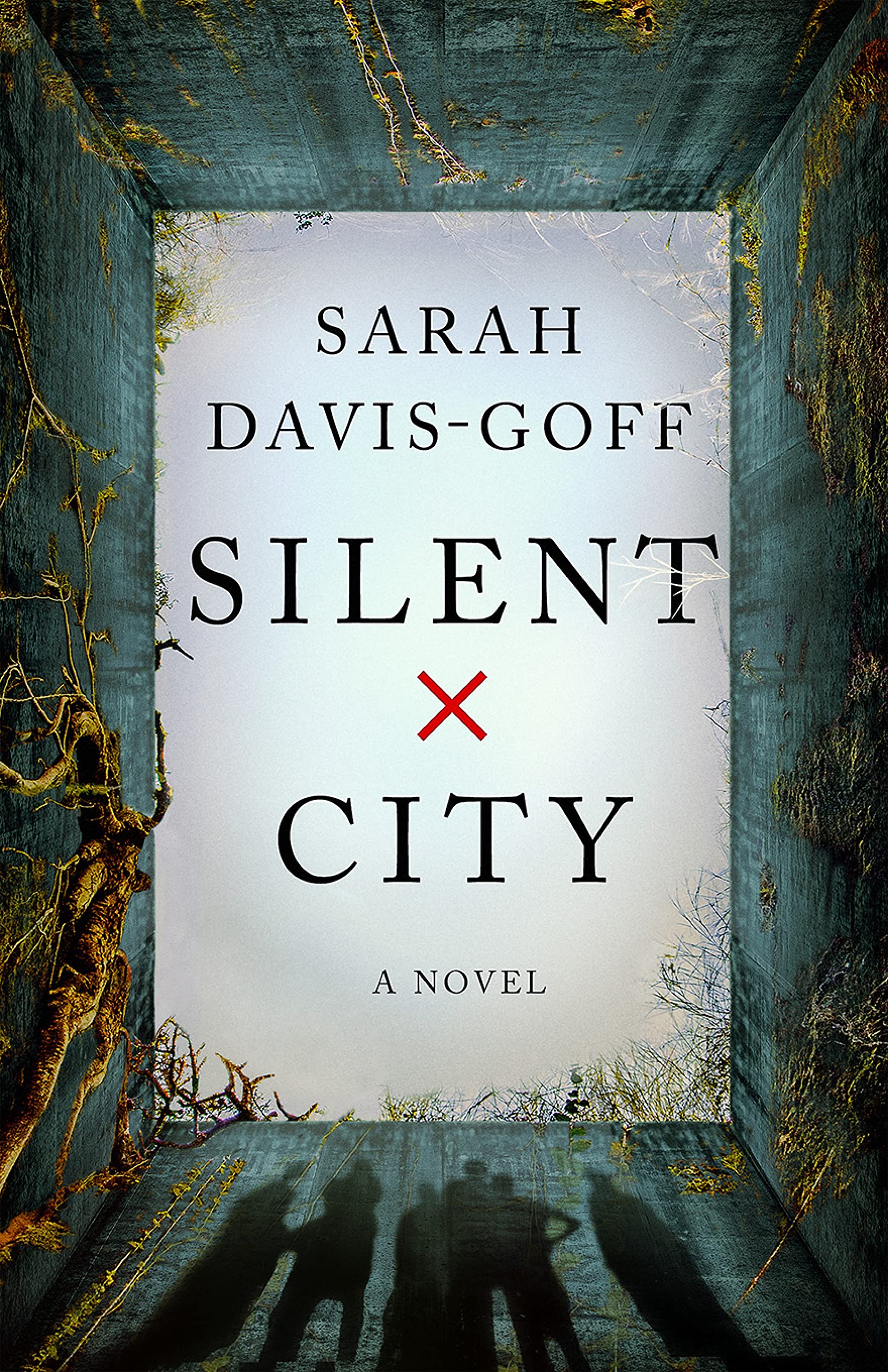
Silent City by Sarah Davis-Goff

In this darkly atmospheric novel set in a futuristic Dublin, a young woman fights for justice in an oppressive society ruled by fear during a zombie-like apocalypse.

Sarah Davis-Goff’s Silent City centers on a young woman faced with impossible choices in a post-apocalyptic version of Dublin. “To me, banshees are heroes. I saw images of banshees growing up at home on the island, women dressed in black, warriors. The ones who fight the skrake. HERE TO PROTECT, the grimy posters said.” Orpen was raised by her two mothers on an island devoid of other humans and, crucially, of skrake: monsters that bite, infect, and kill. The skrake “takes up your body and uses it like a puppet. Fast, vicious, strong, with long sharp teeth, the skrake is like a child’s bad dream.” Following the death of her mothers, Orpen ventures into a world she knows nothing about. She is bent on survival in this terrifying landscape of zombie-like beasts.

In the dystopian city that was once Dublin, she becomes a banshee, a member of the entirely female troops of paramilitary security forces ostensibly meant to protect, but actually used by “management” (entirely male, sinister, self-serving) to forage for supplies and keep other lowly citizens in check. Wallers work night and day, repairing and rebuilding the city’s walls against the skrake; the roles of farmers and breeders are equally humble. Banshees work in pairs: Orpen has found a surreal closeness and loyalty with her partner: “I never saw a woman who wasn’t sometimes beautiful, but Agata always is.”

The zombie apocalypse represents a possibly overdone subgenre, but Davis-Goff (Last Ones Left Alive) takes her readers into fresh territory here. Orpen’s struggles are not merely survivalist; raised with only two human companions and little context for other relationships, she must learn to chart new loyalties, friendships, and partnerships against existential questions of right and wrong. The city claims to provide protection and sustenance but, in fact, uses the banshees to commit atrocities and to exercise control over a subdued population, frightened into total silence lest they excite the skrake. Orpen and the women she serves alongside–all guilty of cruelties under orders–must balance loyalty against justice. “Those who can still feel for another, we feel it. I have to believe we do. I have to believe there are enough of us to change the world.”

Silent City is grim but hopeful, tackling questions of risk, trust, courage, morality, and sacrifice. Davis-Goff’s prose is stark but lovely. A strong feminist voice, austere circumstances, and a resolute sense of integrity make this dystopia memorable and inspiring.


This review originally ran in the August 25, 2023 issue of Shelf Awareness for the Book Trade. To subscribe, click here.


Rating: 7 dreams.

In the Lives of Puppets by TJ Klune

In the Lives of Puppets is TJ Klune’s third adult standalone novel, in a similar vein to The House in the Cerulean Sea and Under the Whispering Door. These are the only three of his I’ve read, although there are more, and I may still get to those.

I said about Whispering Door that Klune excels at “the juncture of sweetness, fantasy, profundity, inclusivity, wisdom and pure silliness.” Puppets continues in that style. Rather than magical orphans or a magical afterlife, here we have a decidedly sadder challenge. The story begins with a lovely forest. A man (“who wasn’t actually a man at all”) approaches an old, falling-down house in the forest. He builds a life there, a crazy network of add-on treehouses and laboratories a la Swiss Family Robinson. He has a son, Victor. Flash-forward: we meet adult Victor with his two companions, a nurse-robot named Nurse Ratchet (that’s an acronym for Nurse Registered Automaton To Care, Heal, Educate, and Drill, and yes, think One Flew Over the Cuckoo’s Nest) and a vacuum-robot named Rambo. Victor’s father Giovanni is still around, and much-beloved; they have a happy family, although Victor is the only human member of it. Like Giovanni, he is an inventor, builder, creator. He spends many of his days combing through the Scrap Yards, where the Old Ones deposit their detritus, some of which turns out to be useful to Victor’s little forest-dwelling family. It’s where he found Nurse Ratchet and Rambo, both of whom he’s patched up to become the wacky friends they are today. (Nurse Ratchet is forever hoping to murder someone or something, slowly, and document their agony. Rambo is crippled by anxiety, restlessness, and his ceaseless need to clean. He loves the old movie Top Hat.) One day, at the Scrap Yards, Victor finds a new potential friend, one who will change everything.

This book assailed me with literary allusions, some of them less obvious than the two I’ve named already. Epigraphs refer to Pinocchio; Victor’s first name and some other plot elements remind of me Frankenstein; the goofy-sidekick robots make me think of R2D2 and C3PO from Star Wars as well as The Wizard of Oz. Which is to say, Klune is not working with brand-new material here (nor does he think he is). The world of robots gets a decided Klune twist, though: sweet, silly, romantic, hopeful. There are a few big reveals I won’t name here. As I already mentioned, this world feels a bit less hopeful to me than the worlds of Whispering Door and Cerulean Sea. The romance felt a full step less believable to me, somehow, although I can’t quite say why – it’s not like the pairings-off in those first two novels made perfect sense in any real world, but this is fantasy. Something about this one just didn’t go off the same, for reasons I can’t articulate. Possibly (is this too obvious?) it is that difficult to write robots (or androids) as relatable humanish characters. Maybe it’s as simple as where we were left with this love affair.

I really enjoyed this read: I was absorbed, engaged, tickled, and concerned for the characters I’d come to love. It is a good book. I just think it’s less awesomely good than the two previous ones by this author that I’ve read. I will certainly buy the next standalone novel he publishes in this same vein.


Rating: 7 butterflies.

Maximum Shelf: My Name Is Iris by Brando Skyhorse

Maximum Shelf is the weekly Shelf Awareness feature focusing on an upcoming title we love and believe will be a great handselling opportunity for booksellers everywhere. The features are written by our editors and reviewers and the publisher has helped support the issue.

This review was published by Shelf Awareness on May 10, 2023.


My Name Is Iris by Brando Skyhorse (The Madonnas of Echo Park; Take This Man) is a chilling near-reality dystopian novel, set in an unnamed state that resembles California (and is called the “Golden State”). Protagonist Iris Prince is a second-generation Mexican American whose parents view her birthright as a gift and use the refrain “you were born here” to shame her whenever they feel her bad behavior shows a lack of gratitude. (“I am a second-generation Mexican-American daughter of Mexican immigrants, meaning that of course I was ungrateful.”) Born Inés Soto, she was glad to have her first name simplified by white schoolteachers, and then to take her husband’s last name. Iris is proud to be a rule follower, her highest ambition to blend in.

When the novel opens, Iris Prince has just left Alex, her husband of 16 years, and is determined to finally build the sanitized, magazine-cover life she’s dreamed of: a new house in a suburban neighborhood on a cul-de-sac, a new school for her nine-year-old daughter, Melanie. She has shunned her parents’ low-income home in a Spanish-speaking neighborhood (where her younger sister still lives, annoying Iris with her activism) and avoids Alex’s overtures at co-parenting or getting back together. Iris feels that her real life–coffee clubs, gardening, and white picket fences–is about to begin.

Then one morning, she looks out of her lovely new bay window to find that a wall has sprung up in her front yard. It seems permanently fixed, and no one but Iris and Melanie can see it. Her realtor and contractors claim the wall must have been there all along, until gaslit Iris wonders, “Who was I to say otherwise?” And, impossible as it is, the wall seems to be growing.

Meanwhile, a new piece of wrist-wearable tech called “the band” is sweeping across the state. Iris herself voted in favor of the proposition that established this technology as a paper-saving, easy identification to “facilitate paying for and receiving state and public services, act as a drivers’ license,… help users regulate a household’s water usage and garbage output, serve as proof of residency for your child’s enrollment in school, and potentially save the state millions of dollars.” But it turns out that, regardless of citizenship, one must have a parent born in the United States to qualify for a band. Iris’s confidence in her place in society is shaken. “Wear your bands and prove you belong here,” says the propaganda. Hatred, bigotry and intolerance quickly swell into violence. “Somehow, in an overnight or two, my social contract had been renegotiated. Politeness vanished.” Iris’s loyalties are challenged: she has long associated herself with law and order and the establishment, but those forces have turned against her, despite all her rule-following. Each morning she drops her daughter off at school, the band’s seductive glow encircling Mel’s slim wrist–due to Alex’s birthright, Mel qualifies for the privileges of the band. But Iris fears for her home and her job; her mother has been fired for her bandless status, and the family is in jeopardy. Under these pressures, Iris will have to consider just what she’ll risk to protect her hard-won sense of identity.

Skyhorse seeds his text with plenty of Spanish-language dialogue, especially with Iris’s parents and sister; non-Spanish-speaking readers will easily use context clues. In addition to this lovely linguistic texture, Skyhorse imbues his all-too-lifelike novel with fine details–Iris’s anti-nostalgia for a defunct supermarket, her love for bland ritual–and judicious use of highly impactful notes of the mysterious or the surreal. These twists of magical realism include a ghost from a childhood trauma who haunts Iris in her vulnerable moments, and of course the wall itself, which grows and morphs overnight. The wall is ever-present, at one point “almost like a co-parent,” even as it literally deprives her home of the sun’s light and heat, as well as her sense of security: “Later, when I would dream, I dreamed of walls.”

My Name Is Iris is terrifying with its proximity to reality. Iris is perhaps preoccupied with labels and appearances (as the book’s title forecasts), and not the most likable protagonist, initially; but her flaw is simply in seeking the American dream as it’s been advertised. Despite her obedience–teaching her child to always trust the police, adhering strictly to HOA rules–the world she’s trusted has turned on her. What can one woman do to fight a state security regime or a magically self-constructing wall?

This gripping dystopia poses difficult but important questions about the world as we know it and the few small steps it takes to slide into horror. Intolerance and xenophobia lurk in the most seemingly benign corners. My Name Is Iris is part social commentary and part thoughtful consideration of themes that include family, identity, transitions, perspectives, and hope. In addition to being an engrossing, discomfiting tale, this will make an excellent book club selection and fuel for tough conversations.


Rating: 6 chanclas.

Come back Monday for my interview with Skyhorse.

The World We Make by N.K. Jemisin

It’s been nearly three years since I read The City We Became, and I wish I’d spent a few minutes reviewing that one first. I still felt close to the avatars of New York’s boroughs, but New York himself (he goes by Neek, as in NYC if you pronounce the Y like ‘ee’) felt less familiar, and I’d lost track of some of the rules of Jemisin’s carefully constructed world. For slightly better results, you might want to keep book 1 a little handier than I did here, but it was still a hell of a ride.

Highlights include the personalities themselves, their relationships, and the final action scene(s). I remembered loving Manny (Manhattan), Brooklyn and Bronco (the Bronx); I feel like we get to know Padmini (Queens) better here, and I really enjoyed that. I applaud Jemisin’s work with Aislyn, the bigoted Karen-in-training avatar for Staten Island; she is unlikeable but complicated enough that the reader grudgingly sympathizes, which is a feat (and an exercise in patience and empathy that some might have excused the author for not engaging in). These avatars have had time since the last book’s action to settle in to relationships among themselves in ways that are pleasing; the characters were strong to begin with but they perform best when they play off each other (true of all characters, probably). Then there are the avatars of other cities around the world: I imagine it must have been so fun to build characters for places like London, Tokyo, Istanbul, Paris, Budapest, Kinshasa, and Amsterdam… because this novel ends up in a massive showdown. In its course, we (and our avatars) learn more about the rules of the world of living cities and their great Enemy. The threat, as threats do, grows larger and then imminent, and a major brawl ensues. This series was originally billed as a trilogy, and actually I still thought it so at book’s end; it was only in Jemisin’s acknowledgments that I learned we’re done here. I do think the ending allows room for more if she finds her energies refilled, but I understand the effects of the pandemic and Trump’s evil on her intended storytelling, and (not that she needed my permission) I can grant her this ending, too.

Three years ago, when I read The City We Became, Jemisin was new to me. Now I return to this series having since read every novel Jemisin has ever written.* With this perspective, the Great Cities duology feels both familiar and very different from her other work. This one is set in the most recognizable of her fictional worlds, closest to our own real one. The characters are modern, urban, fresh and real-world-adjacent, while the characters in her other outstanding works are realistic but recognizably otherworldly. I don’t think I have a preference, but it’s a different effect. I guess for readers more reluctant to venture into proper sci fi/fantasy, this urban version might feel friendlier.


*I have not yet read How Long ’til Black Future Month?, her short story collection, which I erroneously thought comprised works by other authors that she’d collected and edited. I would have gotten around to that eventually. But it is in fact all her own work, which means I need to get there soon.


I love the action and attitude of these living cities, and Jemisin is an important figure in my lifetime of reading. Can’t wait for more – whatever she does.


Rating: 8 sticky toffee puddings.

The Shadowed Sun by N.K. Jemisin

It’s getting hard to keep track of (let alone rank) the Jemisin novels I’ve read, but this feels like one of the best. I was absorbed by The Killing Moon (book one in this duology), but this feels better still. We’ve returned to the same world, where Hananja is the most revered Goddess in Gujaareh. We’ve kept the systems – for example, Hananja’s worshippers following the four Paths to become Sharers, Teachers, Sentinels and Gatherers; but now, ten years after the action of book one, Kisua rules Gujaareh as an occupying force. Sunandi, who we know from book one, returns as Kisuati governess of Gujaareh; despite her role as occupier, she retains a certain sympathy and understanding for those she rules over, and an uneasy near-friendhip with the Gatherer Nijiri (also returning from the earlier book). Our protagonist is new: Hanani is a Sharer-Apprentice, the first woman to serve on any of the four Paths (the Sisters are an unofficial fifth route of service, but not as respected or formalized in the same way on the Council). Hanani experiences the prejudices and underestimation you would expect as the first woman in her world, but she soldiers on, so to speak.

Both within the city of Gujaareh and outside of it, revolution is brewing. The occupiers’ forces have begun to step out of line, the locals have begun to chafe, uppercaste nobility are angling for advantages, and a would-be prince of the Sunset Lineage has surfaced, living with the nomadic and so-called barbarian Banbarra tribes of the desert. Meanwhile, a nightmare plague (literally – it is spread, and kills, in dreams) is racing through the city, even infiltrating the Hetawa (Hananja’s church). In an unlikely turn, Sharer-Apprentice Hanani is given an opportunity to prove herself through a most difficult trial, which lands her in the desert, in a canyon full of Banbarra tents, and in the company of Wanahomen, heir of the Sunset Lineage.

Wana is a prickly one, and despite the lingering traces of Hananja’s Law and Wisdom in his memory and his heart, he has been with the Banbarra long enough to be quite a cultural leap away from Hanani’s devout obedience to her faith. (Hint: the “barbarians” are in some ways the more enlightened.) The two are bound together by a common goal to save Gujaareh, and soon by shared traumas and a bit of something like chemistry to boot. They will struggle sometimes against each other but often together, both learning about themselves and from the other. They grow into stronger versions of themselves in hopes of saving their shared homeland.

Wana is an interesting and eventually sympathetic (although never perfect) character, but Hanani is the star, followed by other women she meets along the way, including Wana’s mother and his former lover, a really fun one who helps outfit Hanani with Banbarra clothing, ornamentation, wealth and customs. Hanani fears that as the first and only woman in her line of work, any mistake she makes will reflect on her entire gender (isn’t that familiar), but eventually learns that this also means she gets to chart a course no one’s ever known. I love what she does with that.

Reading these two books in proper sequence is a must, and familiarity with the world of the first absolutely enriches the second. This was one of the deepest, richest pieces of fantasy reading I’ve done lately. Only wish there were more.


Rating: 8 polished rubies.