Jesus Out to Sea by James Lee Burke (audio)

Disclosure: James Lee Burke has said some nice things about me. I appreciate that, deeply. But he couldn’t buy my good review that way. Not all of his books are equally excellent. This one is excellent.


jesus-out-to-seaOn our drive south, Husband and I listened to this collection of James Lee Burke short stories on audio. I found it deeply powerful. The stories range widely: geographically, they are set in Gulf Coast south Texas, Louisiana and Mississippi, and Montana. In time, they are set in the 1940s and 50s through 2005’s Hurricane Katrina. Protagonists are oil rig workers, children, jazz musicians and retired professors of literature and creative writing. What they all have in common, though–characters and stories both–is their focus on society’s outcasts and castaways, the downtrodden and unlucky, the poor; and on the evil that lurks in the hearts of men (and women). In other words: classic James Lee Burke.

The opening story, “Winter Light,” stars a retired academic who opposes hunters and doesn’t let them on his land. His refusal to back down in this and other just causes* precipitates ugly events. “The Village” is a short, stream-of-consciousness first-person narrative by a military man involved in a massacre in Vietnam. Its style, if not its tone, is different enough from the Burke I know to startle me; I am impressed. “The Night Johnny Ace Died” tracks musicians through love triangles and organized crime in 1950s Louisiana. “Water People” sees base conflicts and suppressed traumas among Gulf Coast oil drill workers in the same era. “Texas City, 1947” references a real-life major catastrophe of that year (look it up), but that big event is only one piece of a puzzle starring an abused child and a number of sad and sordid crimes, as well as a sympathetic nun who (sadly) Husband didn’t find terribly realistic. My impression from hearing these stories read aloud is that this was one of the longer ones. If that’s incorrect, at least it was one of the more impactful for me, and contained lots of familiar geographic markers.

“Mist” featured a young woman attending AA meetings and trying to be sober. Her past traumas include the death of her husband in Iraq and events during Hurricane Katrina that go unnamed for most of the story. I suppose this is a personal reaction, but I found the particular uglinesses of this story harder than most of the others. But beautifully done, and not exploitative.

“A Season of Regret” reprises the opening story: a different retired academic on his own chunk of land makes a stand for a different set of just issues. I enjoyed the new version of a familiar concept. These are two different characters and two different sets of challenges, but the emotional tone is the same. Next come a trio of stories told by the same narrator, a child named Charlie growing up in 1950s Houston. These have their higher and lower moments in terms of holding interest, but I found the characters–Charlie, his best friend Nick, Charlie’s father, and the family of neighborhood bullies–compelling. And there’s nothing like hearing the specific history of my hometown extracted and mulled upon in its details: it feels like coming home.

The final, titular story is the clear tour de force of this collection, in my opinion. “Jesus Out to Sea” is narrated by a man from New Orleans, who grew up on Magazine Street with two best friends who were brothers. The three go to Vietnam; one is broken by the experience and ends up a gangster; the narrator and the other brother become modestly accomplished jazz musicians who decline into hard drug use before the gangster helps them get clean. The story culminates with a storm that need not be named. While Burke’s writing throughout this collection is as lyrical, startling and shockingly beautiful as ever, this story showcases those talents the best, in its repeated use of bougainvilleas as the blood of Christ, or the blood of any of us, among other things. This story is music and poetry and oh, the tragedy. I admit to being especially affected by Katrina stories. But this one evokes all the unnecessary pain and wrongness of it, as well as the simple natural forces that those of us from hurricane country are familiar with, and the ways in which this storm was different. As we listened to “Jesus Out to Sea,” Husband was driving south across Utah, and we missed a turn by 20 miles or so because our navigator (ahem) was so distracted. It’s powerful stuff, this.

Sharing a book with Husband is a rare treat for me, so I want to give voice to some of his reactions. Overall, he gave this collection a 7, and complained of abrupt endings that didn’t wrap everything up neatly: he wanted to understand clearly what happened to everybody, which is a privilege not always afforded. He wanted a little more justice, to see revenge gained. But we know we don’t always get that from Burke.

He loved the nostalgia of hearing about places and cultural and historical markers we know intimately, though, and I have long found this to be one of the easiest ways to win a reader’s heart: shared landmarks, especially geographic ones (at least for those of us tied to place), and especially little-known ones, so we feel like we’re in on a secret. The classic example in this case was the Alabama Ice House, where young Charlie goes to fetch his dad home for dinner in the 1950s, and where they sometimes get hot dogs: Husband said, “they still serve hot dogs there!” excitedly, and I shared his enthusiasm for a place we know and love. For Husband (not for me), one young protagonist’s experiences in Catholic school also rang a bell.

Husband struggled to find certain details of some stories realistic. But my reaction was very different. I guess I’m more inclined to trust Burke to know better than I do how some things work; or to trust that some unrevealed detail could explain the unlikely event. In the case of a famous gangster showing an interest in learning yo-yo tricks from a couple of kids–maybe I was just too charmed by the whimsical and oh-so-human oddity to complain. Husband did praise the descriptions and scenes overall, said he could visualize what was described; and I think what he’s referring to is the fullness of sensory detail, the evocation of fully-formed worlds.

I also want to mention the repeated images and phrases that showed up in this collection. Several characters, when startled or distracted, looked as if flashbulbs had just gone off in their faces. Several suffer from noises in their heads that recall the thropping of helicopter blades or the banging of people trapped in their attics in rising water. Husband noticed these, too, and again we had different reactions. I have the impression that some of these come from a Burke habit, a way of seeing and describing things. Others–the thropping of the helicopter in a troubled character’s head–I think might serve as a wise and artful linking device. These stories are held together in several ways: the attention they pay to underclasses and injustices, a way of looking at the world, and a sense of the Louisiana Gulf Coast as the center of a personal world. They are also held together by poetry, bloody bougainvilleas, the smell of fish spawning, and torment; and if that torment recurs as a series of thumping sounds, it only helps us follow Burke’s special genius.


Rating: 8 bougainvilleas.

*For the record, whatever your position on hunting, I think this character has a right to control his own property.

Mississippi Noir ed. by Tom Franklin

Collected noir stories firmly grounded in Mississippi atmosphere offer a concise view of the genre’s possibilities.

mississippi noir

Akashic Books’ noir series travels to Mississippi, with Tom Franklin editing this collection of short stories by both established and newly published authors. Mississippi Noir includes 16 tales, symmetrically organized in four sections of four: “Conquest & Revenge,” “Wayward Youth,” “Bloodlines” and “Skipping Town.” The thematic groupings are loose, and the contents work equally well in any order, picked up and put down as the reader chooses.

These chilling stories vary in length, from 20-some pages down to just a few, and though they cover a range of subjects and settings in time, they consistently embody the ideal of noir writing with a strong sense of place. Bullets, blood, abuse and longing appear frequently, with some sex scenes thrown in as well. Ace Atkins writes of desperate teens running out of options; Megan Abbott, in a scintillating contribution, views from both sides a romance gone tragically wrong; Chris Offutt’s understated story stars a waitress drifting from town to town; and Dominiqua Dickey’s first published story involves an interracial romance in 1936. Within all of the pieces, the authors pay special attention to local details: natural beauty, economic depression, college culture, the longing to escape a small town or the yearning for a wider world.

These stories are dark by definition, and marked by unhappiness: as one narrator sighs, “I wanted sleep to pass without actually having to sleep. I wanted the future.” But an appreciation for the surroundings is always evident; these pages drip with Mississippi humidity. Fans of classic noir will be pleased and rooted in this redolent setting.


This review originally ran in the August 9, 2016 issue of Shelf Awareness for Readers. To subscribe, click here, and you’ll receive two issues per week of book reviews and other bookish news.


Rating: 7 bullets.

Stephen King’s The Body: Bookmarked by Aaron Burch

A writer’s examination of the writing that shaped him–even reluctantly–yields layers of self-awareness.

stephen kings the body

Ig Publishing’s Bookmarked series features writers contemplating the literature that has made deep impressions on their lives and work. Aaron Burch’s entry is Stephen King’s The Body, a brief but incisive consideration of King’s novella and Burch’s life in ways that surprise the author and intrigue the reader.

“The Body” is one of four novellas in King’s Different Seasons (which also includes “Rita Hayworth and the Shawshank Redemption”). It is perhaps better known for the film adaptation, 1986’s Stand by Me. Burch’s lifelong fascination began with the movie; he writes here about coming later to King’s written work as he becomes a reader, a writer and a teacher. King’s protagonist, Gordie Lachance, is also a writer and very much resembles King himself. The layers of meta-awareness continue in Stephen King’s The Body: Burch refers to his writing of the book and to its earlier drafts.

“The Body” is a Bildungsroman circling themes of friendship, nostalgia and loss as four childhood friends trek cross-country to view the dead body of a boy their age. Burch explores these themes with tenderness and sentiment, even as he resists the latter. Although “The Body” and Stand by Me provide the framework for Burch’s contemplation, his work is at least as much self-reflective memoir or personal essay as it is literary criticism. As he writes, his marriage looks to be breaking apart–a parallel Burch forces himself to confront. The two processes, writing and considering a marriage, prompt a direct gaze into difficult truths, but as King writes (as Gordie Lachance): “The most important things are the hardest to say.” This is a recurring sentiment in Burch’s slim book, where he earnestly attempts to address those hard things.

Burch exposes himself as a striking character who has a complicated relationship with art–the art he produces (up until now, only fiction) and the art he enjoys. He is an unlikely writer of literary criticism, with his resistance to considering authorial intent, and purposefully avoids behind-the-scenes perspectives on his favorite works. “It can be fun to take apart a magic trick and figure out how it actually works, but it also ruins the magic of the trick.” Having pushed himself, however, Burch is surprised to find his venture into literary criticism extraordinarily enlightening.

Burch elaborates on King’s themes of loss and friendship with those of transitions, of firsts: first date, first kiss, first job, first road trip. As Gordie (or King) writes, “There’s a high ritual to all fundamental events… the rites of passage, the magic corridor where the change happens.” The beauty of Stephen King’s The Body is in Burch entering that magic corridor, and splitting the experience wide open–uncomfortably, even–for the reader to study with him.


This review originally ran in the August 1, 2016 issue of Shelf Awareness for the Book Trade. To subscribe, click here.


Rating: 7 scenes.

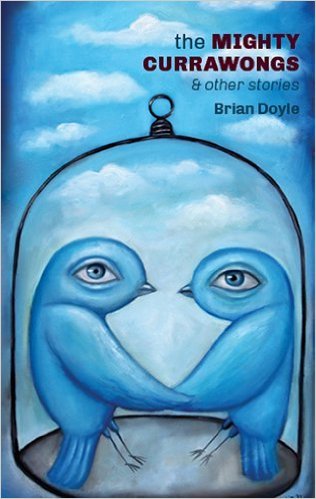
Teaser Tuesdays: The Mighty Currawongs and other stories by Brian Doyle

Teaser Tuesdays is a weekly bookish meme, hosted by MizB of Books and a Beat.

Teaser

Brian Doyle on books! Obviously you need this in your Tuesday.

mighty currawongs
From the story called “Elson Habib, Playing Black, Ponders the End Game”:

…one only needs a hundred books, my boy; the trick is to choose carefully which books are your companions; many people simply accumulate books and do not read them, whereas a discriminating soul has fewer books in toto but swims in them regularly; and the best books bear rereading, for somehow they always contain surprises and lessons you did not notice in previous readings. It is possible that some very good books continue to write themselves after they are published, perhaps working with their companions on the shelf, which is why I rearrange them twice a year, so as to provide them with new stimuli. Who is to say that they do not communicate among themselves, in ways only they know?

There is a whole blog post hidden in here about book ownership: how many, how stored, how arranged, how loved, how many read vs. unread. Incidentally, I am preparing for another cross-country move, so packing & choosing books again. Today, I don’t want to muck up Doyle’s lovely words. That blog post will come (and you will be asked about your own habits!).

But for today, go back and reread those lines, above. Happy reading.


This quotation comes from an uncorrected advance proof and is subject to change.

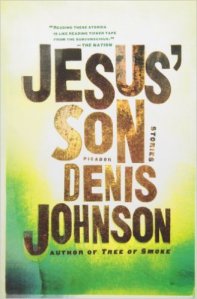
Jesus’ Son by Denis Johnson

jesus' sonThis is an intense, gritty collection of connected short stories that is almost a novel. The unnamed narrator (known only as Fuckhead) is clearly the same guy throughout, as we follow him through a nearly-chronological series of adventures in drug abuse, petty crime and violence, depravity and apathy. Also novelistically, there is something of an arc: the story ends with our narrator living sober with a part-time job, muddling along in a dingy, not-guilt-free version of redemption. It is not clearly told; the narrator is addled and deluded, and so is his story-telling style; it is performative of the character.

There is beauty throughout, as well. It is a fascinating, glittering series of tales in its emotional range and its tolerance for different viewpoints. Jesus’ Son has the power to entertain and amuse, to disturb and disquiet, and to uplift all at once. It is a strange, powerful creation.


Rating: 7 hits.

Arcadian Nights: The Greek Myths Reimagined by John Spurling

Classic Greek myths starring Herakles, Theseus and more are reborn in vivid, funny, fresh forms.

arcadian

From his home in a hillside Peloponnesian village, John Spurling (The Ten Thousand Things) charmingly retells some of Western literature’s best-known stories. He balances careful attention to the originals with his own humorous voice, honoring well-loved classics with a fresh eye.

Each section focuses on a hero: Perseus, Herakles, Apollo, Theseus and the ill-fated Agamemnon. Chapters begin and end with Spurling’s own Arcadian vista, on the Gulf of Argos, which inspires his imagination. Through these lenses, Arcadian Nights (re)familiarizes readers with the curse on the House of Atreus, the Twelve Labors and the complexly intertwining genealogies of mortals and immortals in a storied era somewhere between history and myth. Spurling notes commonalities with other cultures’ and religions’ fables, and infuses the established legends with added detail: imagined dialogue lends well-known characters extra personality, and Herakles gets a perfectly apt new piece of apparel. The occasional modernization enlivens the tales, as when the newly dead line up to cross the River Styx into Hades–it “was a little like going through security in an airport today”–but this is no clumsy 21st-century resetting of Aeschylus. Rather, Spurling’s gentle, clever wit complements the originals’ themes of heroism and romance, and their reminders of the importance of hospitality, humility and memory.

Spurling’s passion and enthusiasm and the best of Greek myth shine through this new version, equally appropriate to introduce new readers or reinvigorate the appetite of those who already honor such names as Zeus, Achilles, Athena, Poseidon and more.


This review originally ran in the February 16, 2016 issue of Shelf Awareness for Readers. To subscribe, click here, and you’ll receive two issues per week of book reviews and other bookish news.


Rating: 7 golden apples.

short pieces: Walker, Tolkein, Stegner and more

Ah, the irony: I said just the other day that I was done with Faulkner, and yet here we are. In a continuation of going through those pages that have been piling up, I’ve read a few essays and short stories – including one by Faulkner.

A Rose for Emily” by William Faulkner: This may be the format for him & me, because I found him perfectly comprehensible and amusing in this short form. It seamlessly evokes a small Southern town with its prejudices and whisperings and feelings of rectitude; it has atmosphere. It also has an engrossing, entertaining, and fully-formed story in it. And I think this is a mark of the master of the short story: that it can feel complete. Those less adept at it leave us feeling like we missed out on something. Not so here. I won’t say any more about the story itself, except that yes, Faulkner can be enjoyable; and if you’ve balked before, as I have firmly balked, you might consider giving this one a try. If you hate it, it’s only six pages long.

An interview with Terry Tempest Williams from YES! magazine: “Survival Becomes a Spiritual Practice.” I still love Terry Tempest Williams. She is wise, even when she can be kind of gauzy and dreamy, as here. I like that this interview addresses two “places” that “we” are in just now: a state of the world, as well as her own geographical placement, moving back and forth between Vermont (where she teaches part of the year at Dartmouth) and her home in the Utah desert.

The Sense of Place” by Wallace Stegner: If I ever get my hands on an audio-cassette player, I have a whole collection of “sense of place” essays by Stegner, read aloud by the man himself, and I cannot wait to hear them. Send me a tape player, somebody.

This essay rounds out that inaccessible collection, as I understand it. Stegner describes us as being defined by place as well as defining place. He presents a possibly controversial idea, that

at least to human perception, a pace is not a place until people have been born in it, have grown up in it, lived in it, known it, died in it – have both experienced and shaped it, as individuals, families, neighborhoods, and communities, over more than one generation.

A few lines earlier:

The deep ecologists warn us not to be anthropocentric, but I know no way to look at the world, settled or wild, except through my own human eyes.

I like this honesty, because I acknowledge and respect the caution not to be anthropocentric; but Stegner makes a true point that we can only know the one perspective, really. (I guess I would counter that being less anthropocentric should simply involve acknowledging that there are other perspectives. I think Stegner gets that, though.) He gives equal airtime to those who have, perhaps, grown up nowhere, too.

If the rest of this essay collection continues on this path – of exploring what we mean to our places and vice versa, how we define one another – I need to hurry up and find that tape recorder.

Leaf by Niggle” by John Ronald Reuel Tolkien (because that is how his name is spelled out at this link. Funny, I never knew what J.R.R. stood for, I don’t guess). What an enchanting story! Niggle is a “little man… who had a long journey to make.” He doesn’t want to take his trip, but he knows he has to. He’d rather finishing this painting first: a painting of trees and countryside. He wants it to be perfect. But there are other pulls on his time, and he ends up being forced to go on his journey without perfecting his work. In fact, he’s so rushed he does not even pack a bag. I won’t tell you the rest…

I wondered throughout if this was a big beautiful allegory for art, for the making of art – Tolkien’s own writing, or any of ours. There are some lovely images and moments:

He had a number of pictures on hand; most of them were too large and ambitious for his skill. He was the sort of painter who can paint leaves better than trees.

And,

There was one picture in particular which bothered him. It had begun with a leaf caught in the wind, and it became a tree; and the tree grew, sending out innumerable branches, and thrusting out the most fantastic roots. Strange birds came and settled on the twigs and had to be attended to. Then all round the Tree, and behind it, through the gaps in the leaves and boughs, a country began to open out; and there were glimpses of a forest marching over the land, and of mountains tipped with snow. Niggle lost interest in his other pictures; or else he took them and tacked them on to the edges of his great picture. Soon the canvas became so large that he had to get a ladder…

Can’t you just see Middle Earth developing, demanding that Tolkien attend to it, in the same way?

“My picture!” exclaimed Niggle.

“I dare say it is,” said the Inspector. “But houses come first. That is the law.”

Ah, and there’s the rub.

This story can be said to comment on religion, the value of art, the question of what we owe our neighbors; it indicates some of Orwell’s 1984; there is a great deal in this short story (nine pages). Strange and fanciful and lovely, like all of Tolkien’s work.

My Father’s Country is the Poor” by Alice Walker, 1977, The New York Times. In a short two and a half pages, Alice Walker paints beautiful, heartbreaking pictures: of her father and her own life, of a visit to Cuba, of the difficulties of race, culture, class, and their inextricability. She tells us “what poverty engenders… what injustice means.” Only Alice Walker, and even in 1977, so much that we should attend to. I don’t want to comment too much on this; better that you go read her words, which are few and flawless.

Writers by Barry Gifford

Barry Gifford’s brief fictional scenes of celebrated authors are funny, tragic and insightful.

writers

The prolific and versatile Barry Gifford (Wild at Heart; The Lost Highway) has a little fun with a range of literary figures in Writers, a collection of dramatic scenes “intended to be read as stories as well as performed as plays.” Gifford begins with “Spring Training at the Finca Vigía,” in which Hemingway showcases his famous bluster and paranoia while hosting two Brooklyn Dodgers at his Cuban home; Martha Gellhorn also makes an appearance in this longest of Gifford’s imaginings. Most run around 10 pages in length, and are short and pithy.

The settings range from “relatively realistic” to “wholly imaginary,” Gifford warns, and include a conversation between the living Roberto Bolaño and the ghost of Jorge Luis Borges. Arthur Rimbaud tells his sister on his deathbed, “I have been bitten by life before and survived.” Marcel Proust’s final words are likewise recorded. Herman Melville laments the public’s reaction to Moby-Dick to a passing policeman, who worries that he is suicidal. Emily Dickinson questions her sister: “Why? I’m nobody. Who are you? Aren’t you nobody, too?”; James Joyce and Samuel Beckett exchange silences. Joining these cameos are Kerouac (with characteristic openness and affinity for drink), Albert Camus, Nelson Algren, Jane Bowles, Baudelaire and others.

Gifford’s imagined anecdotes occasionally reference the absurd, but overall tend to confirm readers’ impressions of large and troubled personalities. These famous artists appear surreal and often ugly, but by caricaturing them he also reasserts their humanity. The result is both entertaining and thought provoking.


This review originally ran in the November 24, 2015 issue of Shelf Awareness for Readers. To subscribe, click here, and you’ll receive two issues per week of book reviews and other bookish fun!


Rating: 6 sets based on my personal affinity.

Selected Shorts: Pets! (audio)

I just said I wasn’t going to do any more audiobooks any time soon; but this different format (and a road trip) convinced me.

petsThis collection includes six short stories, read by six different narrators, around a theme. The interpretation of “pets” varies, from cats and dogs through a mostly-wild parrot and a few mythical (or horrific) creatures. My feelings about the stories vary a little, too, but overall it was great fun.

In my opinion, we start off less than strongly with T. C. Boyle’s “Heart of a Champion,” read by Isaiah Sheffer, which parodies Lassie’s superdog perfection and the perfect haplessness of little Timmy, before winding up with a different and slightly sinister twist. Mom & I (on the road together from Fort Worth to Houston) agreed that this one was less engaging than the others, and didn’t exhibit the taut packaging of the very finest of short stories. Robertson Davies’ “The Cat That Went to Trinity,” read by Charles Keating, was delightful: a gothic story of academic rivalry, in which a professor at Massey College laments that institution’s inability to keep a college cat. They all go to Trinity. In homage to a certain gothic novel our professor (a specialist) is teaching, a questionable project is attempted. The tone of this story is intense parody of that gothic genre, and is completely hilarious. I enjoyed it very much.

Molly Giles’ “Pie Dance,” read by Kate Burton, presents a change of pace. An woman narrates a visit from her ex-husband’s new wife, and the story that unfolds is complicated, multi-layered, and thought-provoking; a person could listen to (or read) this story several time looking for the little clues. It is a real piece of artistry, and very funny to boot, behaving like a fun and entertaining piece and only creeping up as a more complex one. This story is certainly one of the strongest points of this collection. On the other hand, Ana Menendez’s “Story of a Parrot,” read by Jacqueline Kim, is a different kind of literary undertaking, featuring a Cuban couple relocated to Florida, where they do not get along as the wife dreams of a missed stage career. It is dreamy and gauzy, and though intriguing in many ways, it didn’t come together perfectly for me.

Max Steele’s “The Cat and the Coffee Drinkers,” read by Paul Hecht, was another fun one, told by a former student of Miss Effie’s kindergarten, which is very much a nontraditional classroom. It has its moments of poignancy and the opportunity for serious points, but overall is easily appreciated for its tongue-in-cheek humor.

But the best by far was the story that brought me to this collection in the first place: Gail Godwin’s “St. George,” read in fine form by Jane Curtin. A lonely and socially awkward medieval scholar cracks an egg to discover a tiny but very real dragon. Her attempts to raise it up are a comedy of errors, fanciful and hilarious and perfectly portrayed (of course) by Curtin. This story was riotous and smart, and offered a surprising final solution; it also exemplifies the way a short story can be a nicely encapsulated literary experience in miniature, where structure is so important. I’m glad I sought out “St. George” and will have to keep my eyes open for Godwin.

Each of these stories ran 20-30 minutes, a great format for short listening opportunities and one I’ll look for again. Every one was not equally outstanding, but I am pleased.


Rating: 8 pearls.

(Collections are hard. “St. George” would have gone 8 or 9, and the Lassie story maybe a 6. But it was good fun all around.)

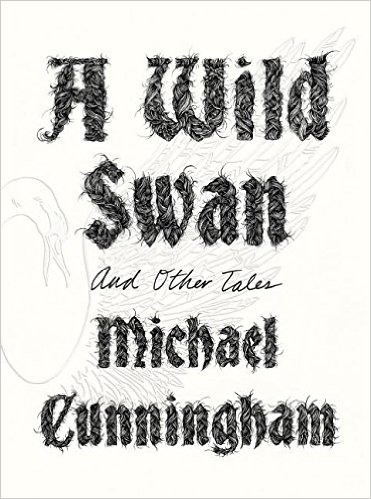
The Wild Swan: And Other Tales by Michael Cunningham, illustrated by Yuko Shimizu

Pulitzer Prize-winning novelist Michael Cunningham darkly reimagines classic fairy tales, with moodily appropriate illustrations.

wild swan

Michael Cunningham (Pulitzer Prize-winner for The Hours) takes a fresh and dark look at a selection of classic fairy tales with A Wild Swan: And Other Tales. His brief, richly imagined new stories, often based only loosely on their models, are accompanied by detailed, atmospheric black-and-white illustrations by Yuko Shimizu.

An introduction teases readers to acknowledge that they, too, enjoy seeing the fairy tales’ “manifestations of perfection”–those with “comeliness that startles the birds in the trees, coupled with grace, generosity, and charm”–cut low. Cunningham then proceeds to do just that with his versions of originals by the Brothers Grimm, Hans Christian Andersen and others.

Here readers will find the “crazy old lady” who lures Hansel and Gretel to her cottage of candy in the woods; but Hansel and Gretel are pierced and tattooed, and sexy “with their starved and foxy faces.” Snow White’s prince is obsessed with the beautiful deathly version of her he discovered in the coffin, and troublingly insists on replaying the scene over and over again. Rumpelstiltskin is surprisingly well intentioned–for the most part. Rapunzel’s life following the closure of the Grimms’ tale is revealed, and it’s a good thing she kept her severed braids. The Beast has grown to be a bad boy, even after Beauty gives him her love. He is “impeccably handsome” with “a lascivious, bestial smile; a rapacious and devouring smile,” the one who might catch your eye on the subway or at “the after-hours party your girlfriend has insisted on,” but you’ll come to regret it. And in the title story, the princess is successful in transforming all of her brothers but one back to their fully human forms.

Cunningham sometimes brings these stories into more or less modern times, but the point of this collection is not to recast the classics with smartphones and fast cars, and the setting of some remains unchanged. Rather, these are playful riffs on well-known stories, almost always with a still gloomier tone than even the Brothers Grimm applied. The mood of these tales of disturbing fetishes, murderous schemings and pedestrian human flaws such as hubris, laziness and jealousy is eventually relieved, however, by Cunningham’s final flourish, entitled “Ever/After.”

A Wild Swan works expert mischief with backstory, aftermath, interludes and retellings of well-known favorites. These tales are not always for the kids, of course, but will appeal to an intersection of dark humor and nostalgia for timeless stories, or anyone with an appreciation for a deliciously spooky imagination.


This review originally ran in the November 5, 2015 issue of Shelf Awareness for the Book Trade. To subscribe, click here.


Rating: 7 minutes under the lid.