Back of Beyond by C.J. Box

A fast-paced, twisty thriller set in the backwoods of Yellowstone in which an alcoholic cop tracks a killer, hopefully in time to save his son.
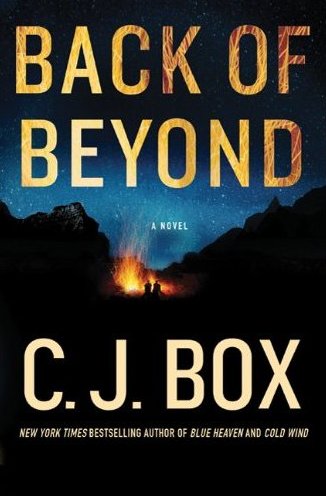
Cody Hoyt’s job as a policeman in Helena, Montana teeters delicately in balance with his self-destructive behaviors. He has nearly two months sober when he’s called to the scene of his AA sponsor’s death: Hank Winters and his cabin are burned nearly beyond recognition. Cody spins off into a drunken relapse, mistakenly shoots the county coroner, and heads out of town in search of Hank’s killer–against orders, since the local authorities see no signs of foul play. But Hank’s death is just the beginning. It seems that a brutal killer has joined a backcountry horseback-riding trip into the depths of Yellowstone–along with Cody’s son, Justin. Reeling with the DTs and enraged by Hank’s murder and the threat to Justin’s safety, Cody sets out into the wilderness to bring down a killer and bring his son back safe, even as the bodies pile up around them.

Sympathetic secondary characters include Cody’s long-suffering partner Larry, a still-hardy retired wilderness outfitter who agrees to take Cody into the backcountry, and a precocious young girl on the pack trip. Yellowstone’s natural beauty is partly overshadowed by the very real dangers, both natural and manmade, that the motley crew of near-strangers encounters in this adrenaline-charged setting. Far from civilization, there is no lack of suspects, and everyone wonders who can be trusted. While Cody searches for a killer, multiple plots intertwine and complicate beyond what he’s imagined, and he’ll have to follow Justin to the very precipice to save him.


I wrote this review for Shelf Awareness for Readers. To subscribe, click here, and you’ll receive two issues per week of book reviews and other bookish fun!

On Bicycles ed. by Amy Walker

An exhaustive how-to manual and impassioned plea on behalf of riding bicycles for transportation and as a way of life.

Editor Amy Walker is joined by some 30 authors–policy-makers, researchers, business owners, activists, parents and/or cyclists–in this instructive manual. On Bicycles is not concerned with colorful Spandex, racing bikes or speed. Rather, this is a handbook for North Americans who want to use bicycles for commuting, transportation and fun.

The book covers a range of subjects and possible needs. First, why we ride: for better health, for the environment, for a better connection with our communities. Next, chapters cover what gear is needed, how to ride safely in various conditions, how to make the transition away from the car; how to transport kids by bike and how to get them on bikes themselves; how to use a bicycle for cargo needs; different kinds of bicycles; community services and connections including and beyond the retail bike shop; and redesigning our infrastructure and culture to allow for more and better biking. Your experienced-cyclist-and-book-reviewer learned new things; the novice rider will be thoroughly equipped with information and empowered by the enthusiasm pouring off these pages.

Walker’s examples come largely from that exemplary bike town, Portland, Ore., and some of her discussion feels a bit removed for cyclists in, say, Houston–but her arguments and advice are more, rather than less, relevant for cities (and riders) with further to go before reaching cycling nirvana. The only caveat: if you are in the camp that occasionally resents Portland’s reputed smugness, you may find a touch of that here. But it might be worth the stellar and scrupulous advice.


This review originally ran in the September 20, 2011 issue of Shelf Awareness for Readers. To subscribe, click here, and you’ll receive two issues per week of book reviews and other bookish fun!

fiction vs. non

I’ve talked a few times recently here at pagesofjulia about fiction and nonfiction. (See for example my discussion of the value of fiction.) Most recently, in my review of In Cold Blood, I ponder the fine line between the two. Sometimes it’s difficult to tell. How do we draw the line? Here at the library, for cataloging purposes, I use OCLC’s bibliographic record; but there is often room for debate. Ernest Hemingway (obviously) is my go-to example of an author of fiction which is so highly autobiographical as to raise eyebrows; and for that matter, he was also an author of nonfiction that may have fudged here and there (i.e. his journalism in times of war in which he claimed a heroic or brave role for himself). And then there are the James Freys and Greg Mortensons of the world, who claimed to be writing nonfiction and later were accused of either smudging their facts or wholly making things up. So, my point is, the line between fiction and nonfiction (a) can be fuzzy and (b) is an important line to be aware of – even when we can’t draw it firmly.

I came across a short article the other day that I want to share it with you here. Robert Gray’s column at Shelf Awareness, is called “Deeper Understanding.” He recently wrote Conquering Our National Fear of Fiction, in which he notes that President Obama has been criticized for reading fiction. He then makes arguments – and quotes studies – in favor of reading fiction for education, and for improving ourselves. His message is one I definitely get behind (again, see my discussion of the value of fiction).

I love reading nonfiction. I think I love it more every year. There’s so much in the history of our world – and in what’s happening in our world today – that’s fascinating and that we should be aware of. Of course, I’m not doing an exceptional job of keeping up on everything. There’s too much to know. But I do enjoy nonfiction. In fact, I feel like I’ve read an awful lot of it this year – but when I look back at my Books Read log, I see that fiction still massively outnumbers nonfiction. Maybe I had a misconception because so much of the fiction I read is very short, and some of nonfiction is quite long, so the time spent on each might be closer to equal… maybe I’m making excuses. My point is, I have nothing against nonfiction, and should read more than I do. But! Fiction! Not an ugly stepchild at all!

So, for discussion here if you please: Do you read mostly fiction, or non? What is the value of each? In other words, is fiction frivolous and nonfiction valuable, or does fiction have a great deal to offer us as people, as a society? Why? What authors have you come across who smudge the line between the two? How strongly do you feel about defining the line, and how do you go about it? For example, is In Cold Blood fiction or non? Or some strange hybrid?


For your reference, I’ve linked here to a few of my favorite nonfiction reads of the last year or two…
Around the World on Two Wheels: Annie Londonderry’s Extraordinary Ride, Peter Zheutlin
Dethroning the King, Julie Macintosh
The Devil in the White City, Erik Larson
Fire Season, Philip Connors
Heroine’s Bookshelf, Erin Blakemore
Iphigenia in Forest Hills, Janet Malcolm
Mr. Playboy, Steven Watts
Hemingway’s Boat, Paul Hendrickson
Newspaper Titan by Amanda Smith

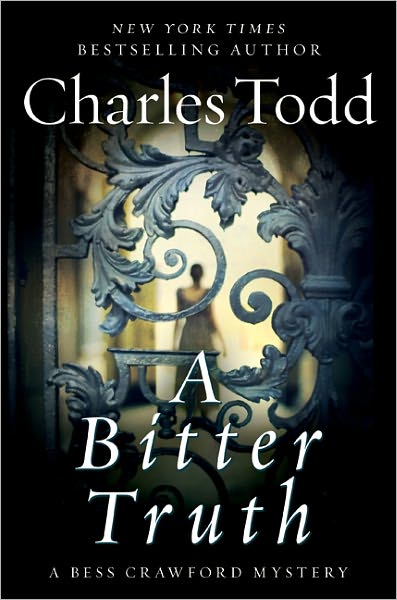
A Bitter Truth by Charles Todd

A quiet but fully-wrought WWI mystery involving war orphans, family dynamics, and nurse Bess Crawford’s good intentions.

Mother-and-son writing team Charles Todd (the Ian Rutledge series) delivers the third in the Bess Crawford series. Bess, a World War I nurse and sometime amateur sleuth, is trying to make her way home on leave at Christmas when she discovers a battered and crying woman huddled on her London porch in the freezing rain. Of course Bess takes her in, and is persuaded to accompany Lydia back to her husband’s family home. A smattering of domestic violence is just the beginning; the family is haunted by past losses, at odds with one another and thrown further off-kilter by the question of a possibly missing and possibly illegitimate child. Bess’s hesitant commitment to Lydia and her family will follow her to the front lines of the war in France and back again, to the tense, almost haunted family estate where her own life will be endangered before all is resolved.

Todd paints a remarkable, poignant wartime scene of people quietly seething with tragedy and loss, stoically soldiering on, with layers of disinherited and heroic minor characters. Bess is a well-developed character: strong, brave and imperfect, she has involved herself beyond her intentions and proprieties in this story. Two male friends raise the question of a romance in the reader’s mind, but Todd is not ready to answer it yet.

This is a well-constructed and understated historical mystery. Fans of Jacqueline Winspear’s Maisie Dobbs mystery series, in particular, will want to read A Bitter Truth immediately.


This review originally ran in the September 2, 2011 issue of Shelf Awareness for Readers. To subscribe, click here, and you’ll receive two issues per week of book reviews and other bookish fun!

The Accident by Linwood Barclay

A relentlessly paced thriller in which a man has to turn detective to protect his little girl and determine the truth behind his wife’s death.

When Glen Garber’s wife, Sheila, is killed in a drunk driving accident, he’s shocked and disbelieving when he learns that she was the drunk driver. Suddenly a single father, he struggles to reconcile Sheila’s final act with what he knew of her, but things just keep getting stranger. One of Sheila’s best friends is killed in another bizarre accident right after yelling at Glen’s eight-year-old daughter, Kelly, for overhearing a phone call.

The intrigue mounts. Glen receives threats and inexplicable instructions from Sheila’s friends; someone shoots out Kelly’s window; and a sinister figure with ties to organized crime pays a visit to the Garber household. Glen’s contracting business, already in financial trouble, may be on its way to becoming another victim. The background and setting are über-current, with small-town families struggling to survive a recession, tricky sub-prime mortgages and home foreclosures. Unsure of the local police department, Glen is forced to undertake his own investigations. Is someone trying to destroy his business? What questionable sideline dealing was Sheila involved in? And who or what, exactly, killed her?

Glen, a competent builder but a decidedly amateur investigator, is most importantly a loving father. After all the dust settles, this heart-pounding thriller is surprising family-oriented. Barclay’s (Never Look Away) fast-paced, twisting plot keeps the reader guessing at who the good guys and the bad guys are. Allegiances shift. Glen isn’t sure who can be trusted; and while we stay a step ahead of him, the ending still comes with a shocking crash.


This review originally ran in the August 9, 2011 issue of Shelf Awareness for Readers. To subscribe, click here, and you’ll receive two issues per week of book reviews and other bookish fun!

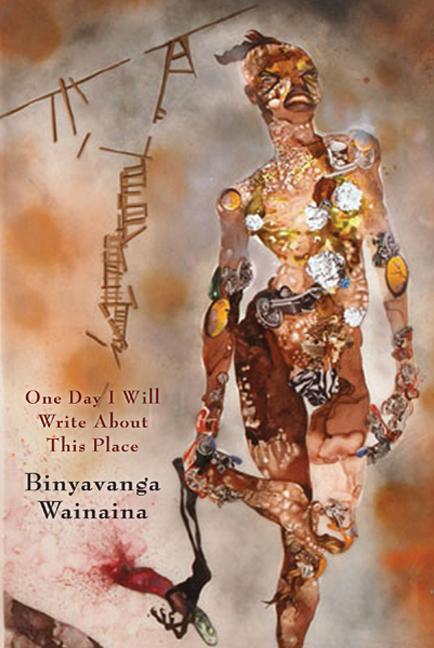
One Day I Will Write About This Place by Binyavanga Wainaina

Binyavanga Wainaina’s memoir, with details of various African backgrounds and his sensitive artist’s perspective, paints a poignant and lively picture.

Wainaina’s memoir of his life in Africa begins with his childhood in Kenya, follows him through university in South Africa, to a family reunion in Uganda, and on to his travels throughout Kenya, to land him finally in New York State as a writer and professor. His tale, however, is far from simply a recounting of one man’s life. At its heart, the book is the story of an artist, his struggles as a child to adjust to his view of the world and his discovery of writing as an outlet. His perspective as a child verges on the fantastical as he confuses colors with shapes and objects with sounds. The lyrical, imaginative writing throughout the book reflects this unusual vision. Wainaina paints pictures with words; his writing is reflective and playful and worth lingering over. Music, too, plays a role–almost as another character–as he describes his intense reactions to the music of Kenya, of Africa and of the world.

Another worthwhile aspect of this book is its intelligent and informed study of the politics of the African continent and the diversity of Kenyan perceptions. Wainaina tells of the battle between tribalism and a united Kenya, and the richness of linguistic and cultural perspectives there. Politics, however, is never the main subject; it is merely a background to his personal story. The Africa evoked is captivating and will be exotic and new to many readers.

Wainaina’s memoir is by turns funny, sad, hopeful and occasionally cynical, but always engaging. Fanciful abstractions of his environment and instructive tales of African politics combine to give us a fascinating vision of his world.


This review originally ran in the July 22, 2011 issue of Shelf Awareness for Readers. To subscribe, click here, and you’ll receive two issues per week of book reviews and other bookish fun!

Shut Your Eyes Tight by John Verdon

A breathtaking thriller in which retired NYPD Detective Dave Gurney can’t resist involving himself in the grisly case of a decapitated bride even as the case threatens his personal life.

Retired NYPD Detective Dave Gurney lives in the Catskills with his wife, Madeleine, trying to adjust to their new life and learn to appreciate nature. Madeleine is content, but Gurney can’t seem to halt his obsession with criminal investigations, so when a former colleague offers him the sensational case of a decapitated bride connected to a bevy of juvenile sex offenders and an international crime family, he can’t resist. The seemingly impossible and horrifying details fascinate him. Gurney ends up endangering himself and threatening his relationship with Madeleine, who resents the gruesome menace he brings home.

The case of the murdered bride expands and contorts to involve sexual psychology and sexual abuse, and is complicated by police forces so bent on thwarting one another that they seem willing to risk the case itself. The puzzle of the murder mystery, in which we participate alongside Gurney, is suspenseful and challenging, and as a psychological thriller keeps the reader breathlessly turning the pages.

Gurney is a likable character, tortured by his own past, and conflicted in his view of himself as a talented detective but an imperfect husband and father. He worries that he may be uncomfortably similar to the sociopaths he hunts: incapable of compassion and caring, more concerned with the chase than with his family. The reader sympathizes, however, as he grows into a fully developed man, battling an evil that increases as the story progresses, until the suspense and fear come together in a final heart-stopping crescendo.


This review originally ran in the July 22, 2011 issue of Shelf Awareness for Readers. To subscribe, click here, and you’ll receive two issues per week of book reviews and other bookish fun!

Very Bad Men by Harry Dolan

A clever, complex thriller in which a killer hunts the perpetrators of a decades-old crime.

Anthony Lark has three names written down in his notebook, and he’s hunting them down one by one as part of his mission to avenge a 17-year-old crime. David Loogan (introduced in Bad Things Happen) is content with his life in Ann Arbor, with girlfriend Elizabeth Waishkey (who’s a police detective) and her daughter Sarah, and with his job as editor of a mystery magazine. Lucy Navarro is a tabloid reporter trying to dig up a story linking the old crime with a current political campaign. But David is drawn into the murky waters of Lark’s crusade, and Elizabeth is assigned to the investigation, so David feels compelled to help Lucy in her inquiries–especially after she disappears suddenly.

This fast-paced and intelligent thriller is told in David’s voice, but offers insight into Lark’s troubled psyche as well, as he battles the demons that make the words in his notebook breathe and tremble. Readers of the mystery genre will have a little extra fun with David’s work editing mystery stories; we even learn which authors Lark follows. Teenaged Sarah is a spunky addition to the diverse mix of characters trying to solve the crime: amateur David, tagging along with Elizabeth, the experienced professional; and indomitable Lucy, whose past holds a secret or two. Then there are the political players: an aging senator about to retire and his up-and-coming daughter-in-law, who may be tied to an old bank robbery. Complex and well-developed characters, a mind-bending plot and a wry tone make this novel impossible to put down.


This review originally ran in the July 8, 2011 issue of Shelf Awareness for Readers. To subscribe, click here, and you’ll receive two issues per week of book reviews and other bookish fun!

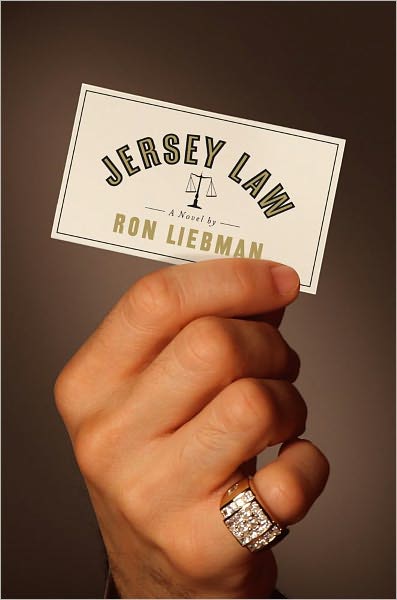
Jersey Law by Ron Leibman

A hard-boiled legal thriller with lots of laughs and an accent that’s all Jersey, but with a sensitive side as well.

Accomplished D.C. lawyer Ron Liebman evokes a sharply realistic and very funny New Jersey underworld in his second novel, Jersey Law (following Death to Rodrigo). Fans of Michael Connelly’s The Lincoln Lawyer will enjoy the well-meaning but mildly rule-bending team of Mickie and Junne, criminal defense attorneys for inner-city Camden’s drug dealers and lowlifes. They defend drug kingpin Slippery Williams; they spar with the DA; and they carefully balance the letter of the law with watching their backs. Junne (short for Junior), our narrator, places us firmly in the Camden streets with his conversational style, what he would call “street jive.” Don’t mind the sentence fragments; they make the book breathe in Junne’s terse Jersey voice.

Mickie and Junne have been friends since middle school, and have their practice down to a fine art. When one of their clients decides to testify against another, however, their loyalties are tested. If they warn the client, who is an old friend, men will certainly die, and they will have broken client confidentiality; if they don’t, it may mean their own demise. And then there’s their new secretary to worry about: Tamara is working hard to keep her nephew off the streets and out of the gang life. Tamara is an excellent example of one of Liebman’s strengths as a novelist: he creates funny, sympathetic characters we care about in spite of their flaws.

Junne’s large Italian family, Mickie’s womanizing and their shady lawyer-landlord fit perfectly in with the scenery. By turns poignant and suspenseful, Jersey Law is consistently funny, ending on just the right note for a sequel.


This review originally ran in the June 28, 2011 issue of Shelf Awareness for Readers. To subscribe, click here, and you’ll receive two issues per week of book reviews and other bookish fun!

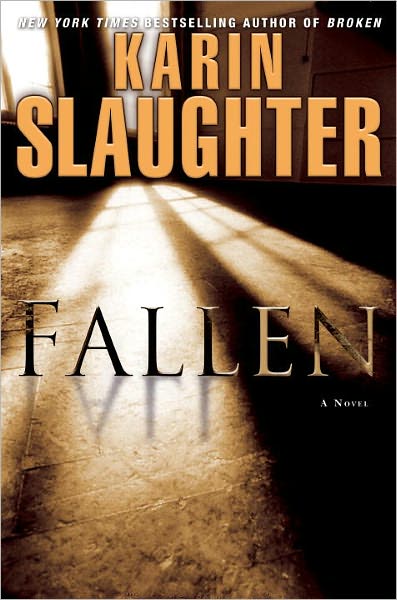
Fallen by Karin Slaughter

Police corruption, gang violence, family ties and a nascent romance entangled in this breathless, emotional ride through Atlanta’s underbelly.

Karin Slaughter’s latest work of suspense has all the elements her readers have come to expect: likable, well-developed characters; an array of strong women; fast-paced action; and surprising plot twists. This story of family relationships, with its underlying threads of romance, violence and taut suspense, will satisfy fans of Lisa Gardner or Lisa Scottoline as well as Slaughter’s own.

When Georgia Bureau of Investigations Special Agent Faith Mitchell arrives at her mother’s house to pick up her daughter, Emma, there’s blood on the door, and the baby’s been hidden in the shed. Retired Atlanta police captain Evelyn Mitchell is missing, but her house is not empty; Faith goes in with guns blazing, and the blood flows.

The clock ticks in the search for Evelyn as the case is further complicated by shifting suspicions and questioned loyalties. We share Faith’s concern for her family and her need to be involved, despite a clear lack of professional detachment. Her partner, Will Trent, aches to help her, but his past investigation of her mother’s unit compromises their relationship. Sara Linton, a local doctor with ties to law enforcement, struggles to balance her role in the case with a budding personal relationship with Will. Meanwhile, Amanda Wagner, Will’s boss and Evelyn’s best friend, might be playing both sides of the fence.

Slaughter weaves intense and unrelenting suspense while compelling readers to care about the very real and human characters involved, whose backgrounds and conflicting loyalties we sympathize with even as we see their flaws.


This review originally ran in the June 24, 2011 issue of Shelf Awareness for Readers. To subscribe, click here, and you’ll receive two issues per week of book reviews and other bookish fun!