Black Mask (audio)

Classic hard-boiled crime stories from the historic and genre-defining pulp magazine Black Mask, in a beautifully performed audio collection.
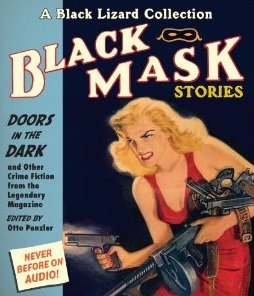

Black Mask magazine (1920-1951) was a defining force in the pulp-magazine genre of hard-boiled detective stories, and this collection offers five representative pieces for the first time in the audio format. The excellent spoken performances are a rare treat, especially when finding stories of this vintage is in itself a challenge. The masters of the genre are represented in this collection, including Dashiell Hammett, under a pseudonym. Don’t skip the introduction, either: it’s a worthwhile and informative history of pulp magazines, the detective/crime genre, a number of classic authors, and Black Mask in particular. Each story has its own short introduction as well, adding to the value of the collection.

“The Phantom Crook” takes on organized crime in order to free a damsel in distress from blackmail. A case of arson and apparent murder is not what it appears. Another blackmail case threatens to take advantage of a well-meaning but bad-tempered newspaper photographer. A drunken reporter tails a detective into a warehouse district in pursuit of a crook. And in the final tale, a Florida private investigator named Sail, working off his boat, investigates a case of sunken treasure while the bodies stack up. In each story, the gritty, taut suspense is reinforced by an appropriately gruff audio performance.

Black Mask has released a total of three collections of short stories. The following two promise more of the same: dark, suspenseful, character-rich crime drama. Readers of the modern hard-boiled detective/P.I. genre owe it to themselves to check out their roots in these fine examples of detective-noir classics.


I wrote this review for Shelf Awareness for Readers. To subscribe, click here, and you’ll receive two issues per week of book reviews and other bookish fun!

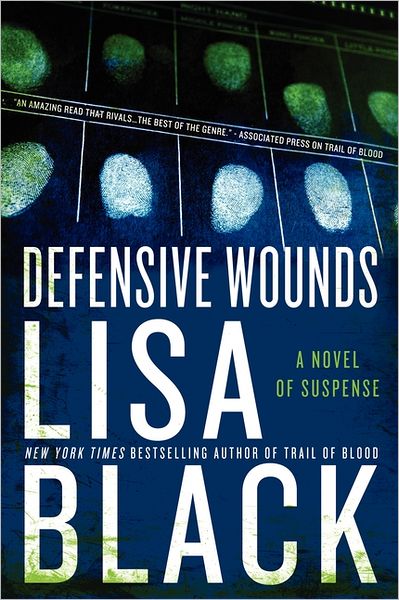
Defensive Wounds by Lisa Black

A forensic scientist with the cases of several murdered defense attorneys to investigate–reluctantly–while keeping her daughter safe on the scene of the crimes.

Defensive Wounds is the fourth in Lisa Black’s series starring Cleveland forensic scientist Theresa MacLean. CSI comes to life when a series of defense attorneys are murdered in spectacular fashion at the Ritz-Carlton during a convention; investigations are complicated by the fact that, as the cops put it, “everyone” hates these victims. For that matter, murder investigation in a hotel–let alone the collection of forensic evidence–is a detective’s nightmare; fibers and bodily fluids abound. Theresa’s involvement is made especially significant by her daughter Rachael’s new job at the hotel. With her cousin Frank one of the investigating detectives, Theresa is perhaps more intimately concerned than she should be–which is how she discovers the seemingly innocent character who may have singled Rachael out.

The tribal mentality of cops versus defense attorneys muddies everyone’s waters, and old crimes and questionably accidental deaths are reexamined. Theresa may have a new romantic interest, even as she tries to thwart Rachael’s budding relationship. Meanwhile, a serial killer runs loose, while Theresa collects loose fibers and cat hairs and struggles to make sense of it all.

An authentic feel to the forensics joins with breathless pacing and an intertwining cast of characters to make for an exciting and unique contribution to the thriller genre. Those new to Black’s series will be right at home with Theresa, a woman who takes her career in science and law enforcement seriously, while simultaneously trying to be a good mother. But we’re really here for the adrenaline rush, and Black delivers.


I wrote this review for Shelf Awareness for Readers. To subscribe, click here, and you’ll receive two issues per week of book reviews and other bookish fun!

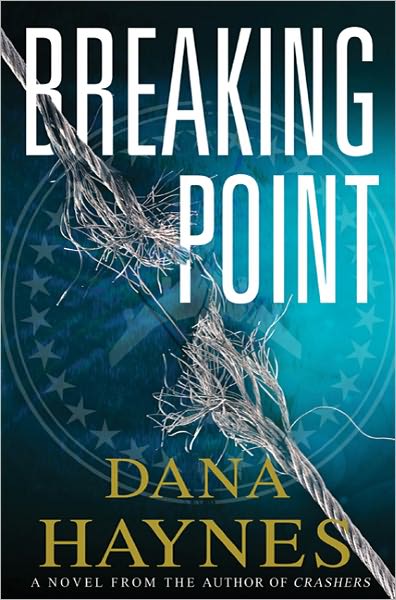
Breaking Point by Dana Haynes

A breathtaking thriller about a plane crash involving a team of plane crash investigators, a hired assassin, illegal weapons and plenty of intrigue.


Three plane crash investigators, known as crashers, are en route to a conference when their plane goes down in the woods of Montana. Their skills quickly reveal this was no accident, but they weren’t the target: one of their fellow passengers was headed to the same conference to reveal information about illegal weapons deals, and his jilted business partners have responded by using banned technologies to take down a plane half-full of civilians. A staggering cast of agents from the FBI, CIA, ATF and warring factions of the crashers’ own National Transportation Safety Board (plus a hired assassin!) rush to respond, but some of them are out to sabotage the investigation. The adrenaline-filled story zips from drug busts on the Mexican border to the back streets of Spain, through Washington, D.C., and the Montana backwoods–where, as the action ratchets up, a small town is literally (yes, literally) caught between a forest fire and a flood, both of which threaten to destroy key evidence, as the bullets start flying.

You needn’t have read Crashers, Dana Haynes’s first novel, to be wrapped up in the breathless momentum of this action-packed thriller. It has more than enough violence, overlapping loyalties and double- and triple-crossings to create its own web of intrigue. The characters are interesting and likeable, and the dialogue is cute, but they take a back seat to the story’s headlong, full-speed pace and edge-of-your-seat thrills.


This review originally ran in the November 18, 2011 issue of Shelf Awareness for Readers. To subscribe, click here, and you’ll receive two issues per week of book reviews and other bookish fun!


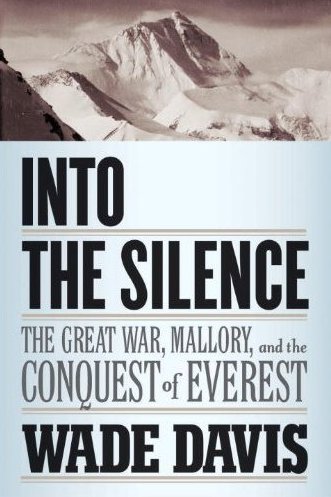
Into the Silence by Wade Davis

An epic history of adventure and adversity, of one man and a nation’s quest for redemption.

In Into the Silence, Wade Davis (The Wayfinders, The Serpent and the Rainbow) portrays several attempts to climb Mount Everest during the 1920s within the context of the state of the British Empire after the First World War. With the benefit of new access to primary sources, he begins with visceral descriptions of the Great War in all its horrifying violence, as seen through the eyes of several players in the later Everest drama, and then follows these men through the postwar numbness of a Britain that had lost the bulk of a generation. Davis makes a convincing argument that the assault on Everest was “the ultimate gesture of imperial redemption.”

George Mallory was the star of three successive attempts to summit a mountain that was at the time a complete mystery–its weather patterns and geography entirely unknown, the cultures that surrounded it viewed by the British with a misguided paternalism. Along with a host of fellow climbers, adventurers and scientists, Mallory was driven toward an accomplishment that the nation came to grasp as an outlet for its frustrations and a hopeful liberating triumph. While he was the principal character in the eyes of his contemporaries and in history, the other explorers also receive well-deserved and detailed attention in Davis’s account.

Into the Silence is a book about mountaineering and a respectable adventure epic with all the alpinist details, but it’s also so much more: a heartbreaking portrayal of war; the story of more than a dozen individuals whose lives were rocked by a war and a mountain; and finally, a history of a nation watching its own imperial era come to an end.


This review originally ran in the November 4, 2011 issue of Shelf Awareness for Readers. To subscribe, click here, and you’ll receive two issues per week of book reviews and other bookish fun!

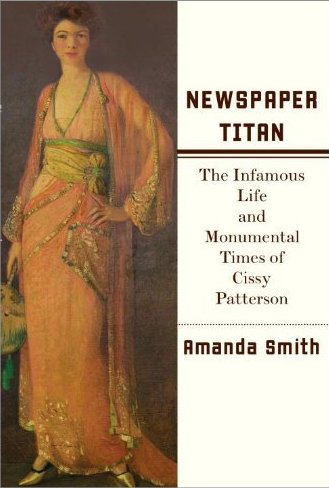
Newspaper Titan: The Infamous Life and Monumental Times of Cissy Patterson by Amanda Smith

The exhaustive–but not exhausting–biography of a complicated and difficult woman, heiress to a newspaper dynasty and a fascinating and controversial figure.

Amanda Smith’s (Hostage to Fortune: The Letters of Joseph P. Kennedy) exhaustively researched biography of Cissy Patterson begins several decades before her birth, with her grandfather Joseph Medill and his creation of the Chicago Tribune. The extended family of Medills, Pattersons and McCormicks would be newspaper royalty for several generations; but perhaps none cut a stranger figure than Cissy.

Eleanor Medill Patterson, known as Cissy, led was born in 1881 into a fractious, influential newspaper family and married a dissolute Polish count who turned out to be broke and who kidnapped their daughter, Felicia. With great effort and the interventions of powerful political figures from around the world, she regained her daughter and divorced. The countess then had a series of unsatisfying relationships and grew estranged from Felicia; published two acclaimed novels; and married a Jewish man despite her apparent anti-Semitism and eventual sympathy with the Nazi cause in World War II. Late in life, she began a newspaper career as journalist, editor and, finally, publisher and owner of the enormously successful Washington (D.C.) Times-Herald, which she created out of two failing papers. When she died in 1948, alcoholic, vindictive and erratic Cissy left a fortune, including ownership of the Times-Herald, whose disposition was held up by court battles sparked by conflicting wills and accusations of her insanity.

Called “perhaps the most powerful” and the “most hated” woman in America in the 1940s, Cissy’s fascinating and curious life is examined here in detail. But this lengthy book is never boring, because its subject is such an outrageously flamboyant and historically significant figure.


This review originally ran in the September 20, 2011 issue of Shelf Awareness for Readers. To subscribe, click here, and you’ll receive two issues per week of book reviews and other bookish fun!

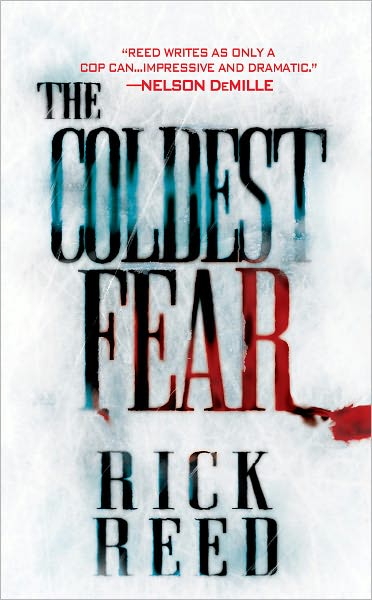
The Coldest Fear by Rick Reed

A fast-paced crime thriller involving a serial killer; likable, witty detectives; and a mess of body parts.

Rick Reed, former police detective and author of the true crime Blood Trail, brings back Detective Jack Murphy from his first novel The Cruelest Cut in this suspenseful ride. A woman’s body is found mutilated and missing parts in a bathtub at the Marriot in Evansville, Indiana; mere hours later, Jack is looking at her right hand, arranged alongside the similarly abused body of a young mother in the projects. The bodies stack up quickly as Jack and his partner struggle to keep up with their own investigation. A local newspaper reporter scoops them at every turn, and his source just might be their serial killer. They’re taken out to a small town with a two-man police department, and then an FBI profiler is brought in, as the case quickly spins into mammoth proportions and spans jurisdictions.

Reed lends his professional expertise to this thriller in which the vantage point shifts from Jack’s criminal investigation to the perspective of the killer, providing a unique reading experience. The murderer remains nameless, but we get glimpses into what drives him and what makes him hesitate. When his identity is finally revealed, the shock is not lessened, but the journey gets an interesting twist from the shifting viewpoint.

Reed’s second crime thriller delivers with fast-paced suspense, twists and turns, the humor of several witty detectives and that rarity of fiction, a likeable FBI agent. Gruesome serial killings are balanced by banter, the sweet if harried relationship between Jack and his parole officer girlfriend, and an ending with a note of hope.


This review originally ran in the September 16, 2011 issue of Shelf Awareness for Readers. To subscribe, click here, and you’ll receive two issues per week of book reviews and other bookish fun!

The Barbarian Nurseries by Héctor Tobar

A deceptively quiet story, with swift currents running deep beneath its surface, considers the fate of an unprepared Mexican housekeeper in Orange County left to care for her employers’ young children.

Pulitzer Prize-winning journalist Héctor Tobar‘s second novel tackles the ambitious goal of characterizing Southern California’s multicultural schizophrenia and achieves it admirably.

Araceli is quietly comfortable in her role as housemaid to the Torres-Thompson household in Orange County, one of three Mexican domestics; but when the gardener and nanny are suddenly dismissed, she is puzzled to find herself expected to care of three children she considers strangers. Worse, she wakes up one morning to find both her employers gone with their baby–leaving her alone in the house with two young boys. In desperation, she sets off with them on a daunting trek through diverse and unfamiliar Los Angeles to try to find their estranged paternal grandfather.

Tobar creates an intriguing juxtaposition of cultures, as the Torres-Thompson children are thrust into a huge, unfamiliar, multiethnic city. Most observations are from Araceli’s perplexed, amused, lyrically bilingual perspective. At other times, we look through the boys’ eyes, with all the wonder of the new, including evidence of poverty they’ve never before encountered. The older boy (age 11), in particular, has a unique way of clinically interpreting new experiences through books he’s read, imbuing the world with fantasy. The adventure with the boys is a comedy of errors–Araceli becomes suddenly famous as a symbol of racial politics, and her fate depends upon forces outside her control.

The Barbarian Nurseries is a beautifully written, contemplative and thought-provoking view into Southern California’s diversity and contradictions, as well as a fascinating and well-presented story.


This review originally ran in the September 27, 2011 issue of Shelf Awareness for Readers. To subscribe, click here, and you’ll receive two issues per week of book reviews and other bookish fun!


Y’all! One of the best books I’ve read this year! Rush out there and get it!!

Hemingway’s Boat by Paul Hendrickson

A lyrical, textured, and meticulously researched meditation on Hemingway from a fresh new angle.

Paul Hendrickson, NBCC award-winning nonfiction author for Sons of Mississippi, pulls off the remarkable feat of finding a fresh, new angle from which to approach Ernest Hemingway: his boat Pilar. Purchased in 1934 with an advance from his longtime publisher Scribner, she saw him through three wives, great achievements and critical failures in his writing career, big fish and little ones, and the beginnings and the endings of many relationships. Hendrickson suggests that Pilar may have been the love of Hemingway’s life.

This is not a biography but a careful and compassionate rumination on the man through the lens of the boat. Hendrickson has brought to his readers a Hemingway who is neither object of worship nor monster, but a full and complex human who made serious mistakes in his relationships and fought pitched battles against his own demons, and finally lost.

The Hemingway fan will be enthralled with new details of his life, and the study of figures previously treated as minor but now revealing new facets of the man. The less familiar reader will be fascinated by this comprehensive account of the master and his complex spiderweb of varied effects on so many lives, large and small. Hendrickson presents his unusual and noteworthy story with beautifully quiet intensity and contemplation. Hemingway’s Boat achieves a terrific feat in reworking Hemingway’s story.


This review originally ran in the September 23, 2011 issue of Shelf Awareness for Readers. To subscribe, click here, and you’ll receive two issues per week of book reviews and other bookish fun!


Further notes… I can’t tell you how much this book moved me. Perhaps you have noticed that pagesofjulia is a raving fan of Hemingway. I’ve read several biographies, works of literary criticism, and other spinoffs (see The Hemingway Hoax and The Paris Wife); I’m a little obsessive. But Hemingway’s Boat holds a very special place for me. Hendrickson (PH) treats Papa (EH) sort of gently, but doesn’t spare EH in his moments of monstrosity… PH comes from several different angles, interviewing different people who knew EH more or less well, unearthing some new details. PH approaches EH with the relatively unique concept that he was just a man – a great artist, but also human, with flaws and moments of everyday beauty. This book was noteworthy in all my reading of EH and the surrounding literature. It made me laugh and cry; I treasure this galley copy, where I usually pass them on as soon as I’ve turned in my review. This book alone has made my recent career as Shelf Awareness book reviewer worthwhile. (PH also recently came around here to comment on a post, which I found very exciting. Hi Paul!) I wholeheartedly recommend this book for fans of Hemingway, or of literary biography, or of well-written nonfiction, or for those looking for vignettes in Key West or Havana history.

Never Knowing by Chevy Stevens

An adrenaline-filled rush of a thriller about an adopted woman’s search for her true identity, and the consequences for her own family.

Sara Gallagher has always known she was adopted. It’s not until she has a much-beloved six-year-old daughter, Ally, and is about to get married that she decides to search out her birth mother. But she never dreamed of the repercussions: it’s her birth father’s identity that is the real shock, and the threat he poses to her and her happy family begins to rip their world apart. Sara and her fiance, Evan, struggle to maintain their relationship as the police tap their phone lines and begin to take over their personal lives. The horror only grows–and the pace ratchets up–as she finds herself unable to extricate her birth father, “John,” from her life.

Stevens uses the same unique format that was so successful in her bestselling debut novel, Still Missing: the novel is told in first-person, through Sara’s long one-sided conversation with her psychiatrist, whose voice we never hear. This lets us in to her inner conflict, as she struggles with her love for Evan and Ally (and her sisters and adoptive parents), and her need to protect them from the evil she fears she’s inherited.

Never Knowing addresses issues of adoption, family, and parenthood; it exhibits what a mother’s love can do, and what it means to be a parent. This thriller is relentlessly, heart-thumpingly fast-paced. The suspense will leave you breathless, as you learn to care for the conflicted but likeable characters, whose family ties make it all worthwhile.


I wrote this review for Shelf Awareness for Readers. To subscribe, click here, and you’ll receive two issues per week of book reviews and other bookish fun!

fiction as politics

No, I’m not going to talk about the fiction of Bill O’Reilly or Glenn Beck.

Shelf Awareness reports:

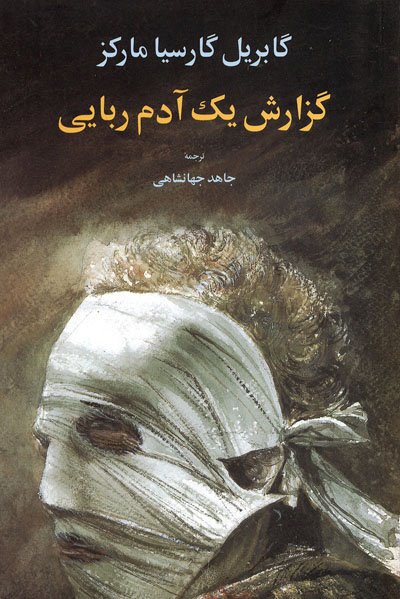
García Márquez Novel a Bestseller in Iran

Copies of Gabriel García Márquez’s 1996 novel News of a Kidnapping have sold out in Tehran’s bookshops this week “after detained opposition leader Mir Hossein Mousavi said the book’s description of Colombian kidnappings offers an accurate reflection of his life under house arrest,” the Guardian reported. Mousavi and opposition leader Mehdi Karroubi have been under house arrest since calling for mass protests last February in solidarity with other pro-democracy movements in the Arab world.

Last week, Mousavi was permitted to meet briefly with his daughters, and told them: “If you want to know about my situation in captivity, read Gabriel García Márquez’s News of a Kidnapping.” Word spread quickly online, “prompting hundreds of opposition supporters to seek out the book. Queues formed in some bookshops, and copies of the book sold out within days,” the Guardian wrote.

The news was also shared on García Márquez’s Facebook page, which linked to a Radio Free Europe blog post reporting that Mousavi’s supporters had launched their own Facebook page, “News of a Kidnapping, the status of a president in captivity,” and that “a number of Iranian websites and blogs have made an electronic version of the book in Persian available for download.”

I find this very exciting and interesting in so many ways. Marquez wrote a work of fiction in 1996 that has become incredibly relevant and interesting to a demographic he may have never originally specifically intended; it’s speaking to modern events that he couldn’t have foreseen (again, at least not specifically). Let this be an rebuttal to those that argue that fiction has no real-life important purpose! Commercially speaking, it can’t be a bad thing from Marquez’s perspective that he’s selling more books; but I’d wager he is more pleased that his work is speaking to current events and, hopefully, helping the cause of democracy.

Another interesting aspect of this short news piece, as reported by Shelf Awareness, is in the rapid-fire social networking/media communication of Mousavi’s recommendation, and the distribution of the Persian translation. As in the recent Egyptian protests, these relatively new media are aiding social and political causes. I think it’s interesting to see media technologies changing the way we do the business of the world. And to see these lessons tied back to BOOKS is kind of inspirational for me.

I’m no expert in Iranian politics and don’t claim to be. But the power of the media, communications and social networking, and most especially, 15-year-old works of fiction on today’s political turmoils is worth noting.

Does this catch your imagination as it does mine?