The Fame Thief by Timothy Hallinan

Timothy Hallinan’s quirky thief/detective (last seen in Little Elvises) is forced to delve into long-past Hollywood scandals by a nonagenarian crime boss.

famethief
The Fame Thief is Timothy Hallinan’s third novel starring Junior Bender, a professional burglar with a second calling as a crook’s detective–because bad guys need their mysteries solved, too. Irwin Dressler, no less powerful a crime boss for his 93 years of age, hires Junior against his will for a strange 60-year-old case, the theft of a Hollywood actress’s most valuable asset: her fame.

Dolores La Marr was a kid from Scranton, scarcely beginning to make it big in 1940s Tinseltown, when her association with that era’s fashionable gangsters landed her in a nasty, full-color scandal. Strangely, no one but Dolly took the fall, and all these decades later, Dressler still wants to find out who set her up. Junior quickly learns that this mystery is not as dead as it seems, and that some dangers only increase with age.

The refreshingly unassuming Junior is a fun riff on the typical private investigator: his specialty–committing crimes, rather than solving them–brings him an unusual perspective. The elderly Dressler is a fabulous, deadpan wiseguy in “eye-agonizing” golf pants, backed up by two unusually domestic versions of the standard muscled goon. And Junior’s own domestic concerns–a teenage daughter, her jokester boyfriend, an ex-wife and a randy new girlfriend–fill out the eccentric, likable cast. Fast-paced action and a building body count pair nicely with humor in this series, bound to keep the reader coming back for more.


This review originally ran in the July 12, 2013 issue of Shelf Awareness for Readers. To subscribe, click here, and you’ll receive two issues per week of book reviews and other bookish fun!


Rating: 6 slow-speed car chases.

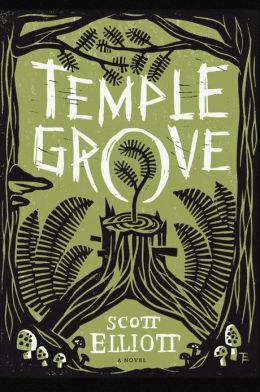
Temple Grove by Scott Elliot

A subtle, brooding novel of environmentalism and human complexities set in the Pacific Northwest.

templegrove

In Temple Grove, Scott Elliot (Coiled in the Heart) considers the Olympic Peninsula and its human and nonhuman inhabitants with nuance. A young Native American woman, ambivalent toward her two-month-old son, hikes along a lovely river. Eighteen years later, that son, Paul, hikes back into the woods to engage in what will be called eco-terrorism: spiking trees to discourage their being logged. Simultaneously, a man named Bill returns from a lengthy exile in Alaska, grateful to find work logging in the woods of his homeland. Parallel to these two men–who, like magnets, attract and repel one another–Paul’s mother, Trace, ruminates on her disconnection from her husband and her son.

Paul roams the Olympic forests with his mentor, an aging environmental activist, not entirely aware of why his connection to this place is so strong. Upon his homecoming, Bill remembers (and is disturbed by) past mistakes. The only flaw in this profound and sensitive novel is a potentially upsetting and controversial resolution to one of the plot’s surprises.

Human concerns are embedded within the rhythms of nature, and the traditions of Trace’s Makah tribe resonate within her and her son as in Elliot’s writing. Contemplative, secretive, a novel of the earth, its people and filial relationships, Temple Grove presents a surprisingly broad cast of ordinary men and women representing all walks of life, all sharing the fact of inner conflict.


This review originally ran in the July 9, 2013 issue of Shelf Awareness for Readers. To subscribe, click here, and you’ll receive two issues per week of book reviews and other bookish fun!


Rating: 7 ambivalences.

Maximum Shelf author interview: Koren Zailckas

This interview was published by Shelf Awareness here in an abridged format due to space constraints. This is the full interview.

Following Monday’s review of Mother, Mother, then, here’s the lovely Koren Zailckas!


Koren Zailckas: On Mothers

Koren Zailckas is the author of two memoirs, Smashed and Fury, and lives in New York’s Hudson Valley with her husband and three children. Mother, Mother is her first novel. She recently tweeted: “33 with 3 books and 3 kids. #birthdaysymmetry.”

Where did you get the idea for this distressing mother figure?

korenI really wanted to challenge the cultural assumption that all mothers are inherently selfless. We’re living in an era of baby-bump obsession, in a don’t-speak-badly-of-your-momma culture. Read an Angelina Jolie profile or watch TLC and you’d think women enter delivery rooms as laboring heffalumps and exit as Battista Salvi’s Madonna and Child. But the word “mother” isn’t synonymous with Mother Theresa, and having a child doesn’t make a woman a mom any more than owning a paintbrush makes her Frida Kahlo.

This idea that all mothers are naturally patient, forgiving and self-sacrificing isn’t just sappy-sweet, it’s callous. It’s dangerous. It discounts experiences by those of us who were raised by women whose genetics and early life traumas permanently altered their brains and made them incapable of empathy.

Here’s the sick truth: Some mothers aren’t naturals. I’d always suspected that as a kid, but I learned it for certain when I moved from Brooklyn to the Catskills. Last lambing season, I was in a New Paltz knitting supply shop, surrounded by beautiful, hand-dyed yarn, when the farmer clomped inside in rubber overalls and announced her sad morning. “The ewes gave birth last night,” she said, darkly. “And two of them just weren’t naturals. They left their newborns to freeze to death on the side of the barn.” Some mothers, no matter how well intentioned, just can’t see their kids as anything other than tools, hindrances or extensions of themselves. Other mothers can’t consider their children at all.

Mother, Mother’s Josephine Hurst isn’t just a critical or controlling mom. She’s a narcissistic mother, and she’s in good company. Loads of women–one out of ten Americans, according to new studies–have Narcissistic Personality Disorder, which many shrinks consider untreatable. Medication rarely helps. Therapy doesn’t do much either.

I hope Josephine will give shivers of recognition to anyone out who grew up with a narcissistic mother. I hope those readers will recognize her neediness, her manipulative nature, her grandiose sense of self-importance, her tendency to play favorites between her children and pit her family against one another, and I hope they seek some small comfort in it. Maybe that sounds crazy, but I really mean it. I hope Josephine puts a name–NPD–to longstanding patterns of maternal chaos. I hope some readers have a light-bulb “this is a syndrome!” moment. (You see: also in the narcissistic mother’s repertoire is “gaslighting.” They’re great at making their victims doubt themselves and question what’s real.)

As for those lucky folks who grew up with the mother of Mother’s Day Cards, I hope Mother, Mother gives them at least a glimmer of the fear that resides in the hearts of kids like Will Hurst. As humans, we are born utterly helpless–dependent on our mothers much longer than any other species on Earth. If mothers are our first teachers, then having a narcissistic mother teaches you that the world is a fucking terrifying place, where the rules change constantly and punishment is the only constant.

You wrote two memoirs before this novel. Was this your first try at fiction?

Yep, this was my first attempt at fiction. Mother, Mother brought me back to Smashed in that way. Smashed was my first prose. Before that, I’d only poetry and interoffice memos.

And how was it different?

mother motherFiction required a lot more restraint than memoir. By design, memoir is an exercise in over-sharing. You’re giving the reader way too much information to begin with, confiding things you wouldn’t tell to just the casual stranger while you’re waiting side-by-side for a bus: “Warm today, isn’t it?… Let me tell you about that time I staggered, drunk, lost and naked down the halls of a fraternity.” You wouldn’t do that. No emotionally healthy person would do that.

I think I gravitated to memoir because I had my fair share of damage. I grew up in a family a lot like the Hursts, where you weren’t allowed to express emotion, speak openly, talk about why your mom is a radically different person in public, talk about why Dad lives in another state for weeks and months at a time. You bottle all that stuff up over a long period of time and it eventually just explodes all over some poor, unsuspecting victim, no matter who they are, no matter how briefly you’ve happened to know them. I think, to begin with, I wrote Smashed and Fury because I was suffering from what Zbignew Herbert called “suffocation from formlessness.” I was smothering under the weight of all the memories I hadn’t put into words. When I was finally ready to name those experiences (addiction, anger over ongoing family dysfunction) the stories came out, fast, in reams.

In my memoirs, I’ve always tried to best to be as self-aware as I can. To own my shadows. To be ten-times harder on myself than I am on anyone else in the story. But no matter how you slice it, it’s still exhibitionistic. It’s still a bit like being a trench-coat flasher: “Here I am, all at once! Here are my stories! I know they’re flabby in some parts, but I can’t change them–they’re real!”

Maybe the cheap analogy would be: fiction feels like a strip tease. But it’s more than that. Fiction feels like real intimacy. Especially when it comes to psychological thrillers, suspense stuff. You reveal things slowly to the reader, over the course of your time together. Not every character has to be hyper self-aware all the time, owning every character flaw, aware of their deeper motivations. You can gently fold in a hint, here and there. Teaspoon of backstory. Foreshadowing, to taste.

I still find that really difficult from time to time. My husband’s pet name for me is “Spoiler Alert.” He always tells me I say way too much when I’m making movie or book recommendations. My brother-in-law will never forgive me for ruining the grand finale of The Sopranos for him.

I might well have told you how the Hursts end up in Mother, Mother’s first chapter were it not for my long-suffering editor. She probably has carpal tunnel from all the times she went back to the manuscript to slash out obvious clues.

Did you do research into Asperger’s syndrome in order to get it exactly as right as you got it? Did any other aspects of this novel require research?

I did a little bit of research. But mostly, I manifested Will’s Aspergers in a way I could relate to.

Will’s intense focus, his “Aspie interest,” is language. He’s like a collector of rare and precious objects, and in this case, those objects are unusual and arcane words. Autotonsorialist: one who cuts their own hair. Misodoctakleidist: someone who hates practicing piano. Awkwardness ensues whenever Will uses them in spoken conversation, but he just can’t help himself. He’s addicted.

Over the course of Mother, Mother, I think Will’s relationship to language changes. Words stop being a mode of connection. Instead, they become more like trophies, accolades. He trots them out to impress, intimidate or prove his worth. It’s a really narcissistic use of language. It worsens Will’s social functioning, heightens his loneliness and drives him deeper inside himself.

Aspergers? Maybe. The side effect of a dysfunctional family? Possibly. Or maybe, for Will, it really is a burgeoning writer thing. As a writer, you spend so much time alone, trying to think of funny and fresh ways to describe every day things. Then, when it’s time to go out into public, you forget that you don’t have to agonize over word choices. When you’re chatting about weather with your neighbors at the farm stand, you can just say, “It’s pouring.” People look at you funny when you go all Du Maurier and say, “Can you believe this lashing, pitiless rain?”

Two of your main characters share similar experiences but head in very different directions towards the end. Did they always go that way, or did you have to go along for the ride to learn the fates of your characters?

I think I knew from the first word that Violet and Will had very divergent ideas about their family. Any therapist will tell you, siblings can be raised by the exact same people and still have totally different mothers and fathers.

This is especially true in narcissistic families, where the narcissist picks one kid to be the golden child (the person who earns added prestige for the narcissist) and another to be the scapegoat (the person the narcissist projects her own negative self-image onto).

In the Hurst’s case, I think Will is quite genuine in his confusion over his sister. He doesn’t have any clue why Violet’s so angry. Her drug use, her rebelliousness… It seems really irrational to him, especially with his mother right there in his ear, telling him, “Your sister’s crazy.”

And for her part, Violet doesn’t understand why Will is so fearful and reserved. He seems to have his mother’s unconditional approval. Josephine’s love seems to come so naturally to him.

With that dynamic in place, I think I did go along for the ride. When I began, I didn’t quite know what would happen to Will or Violet.

Will, in particular, shocked the hell out of me. It was kind of thrilling to watch him unfold. Especially because he’s at this very pivotal year. He’s twelve when the book begins and really on the brink of adolescence. A transformation happens. One I never saw coming.

Transformations fascinate me, especially where psychology is concerned. That’s what everyone who’s hooked on psychology wants to know: How does change occur? How do good people turn evil? Or, how do kids grow up?

Can you tell me how there came to be humor in such a very dark book? How would you characterize your style of humor?

I suppose I’ve always had a touch of gallows humor. That self-lacerating, inverted kind. Also, a bit of that bone-dry, stuff-your-feelings, British humor too. (Maybe that’s why I married an Englishman.) Also factor in a little bit of defeatist attitude. I’ve always related to that George Bernard Shaw quote: “If you can’t get rid of the family skeleton, you might as well make it dance.”

I’m glad you think this book is funny. I think it’s really important for dark, scary books to be funny. Every few pages, I really wanted there to be at least a restorative chuckle, something to lighten the mood from jet-black to slate.

I think the biggest laughs in life are usually tinged with relief. They’re a kind of collective, hissing sigh: “Wheew, look at us, joking about this really delicate, uncomfortable, offensive topic! We’re really skating on thin ice here, aren’t we? But it’s fun! Hold my hand. Did that sound like a crack?”

Some of the creepiest ladies in the history of literature are also the funniest. Shirley Jackson is fucking hilarious. I wish she were still around today, if not only so her mommy-memoirs could be optioned for a self-starring reality show. Take Life Among the Savages… Beginning each morning with the very real fear that you will slip on a Matchbox car or doll’s broken arm and break your neck on the stairs is morbidly priceless.

In my experience, once you become a mother everything is doubly terrifying and laughable. It only seems natural to mix the two together. (Although, that could just be the sleep deprivation talking.)

The dual first-person perspectives are very unsettling (in a good way). How did you choose that format?

I think sheer panic drove me to tell the story from two perspectives. When I first started thinking about fiction, many years ago, I told Crown’s Molly Stern, “I’m going to write a first-person, one-perspective novel.” Just like that. All fresh-faced bravado. Molly wasn’t discouraging, but she reminded me just how tricky that is. It’s hard to keep the plot constantly pounding when you have just one protagonist.

Initially, with Mother, Mother, I thought (quite cowardly) that I’d hedge my bets between Will and Violet. I thought: double the characters, double the action. Never a dull moment. From there, it became a much more strategic, much more about how “family,” as a concept, is a bit like “car crash.” Everyone experiences it from a different perspective. So why not let the reader get two points of view on the Hursts?

Since you came from writing memoirs, I wonder how present you are in Mother, Mother. Did you have to fight putting yourself in this book, or was it a relief?

I think there are snippets of myself and my childhood all over this book. That said, the Hursts are a prime example of writing what you know, then taking it to a level that is psycho-extreme.

For instance, I always felt like my mom was a little possessive of me when I was a kid, and I tried to go to friend’s houses as opposed to bringing them home to mine, where my mom talked down to them and slated them behind their backs. I was in my thirties when I got a Facebook message from a woman I used to play with when I was seven. “I was sooo afraid of your mom!” She wrote. “She used to call us brats and hooligans. We were only allowed one juice box no matter how thirsty we were!” I think I sort of exorcised some of that in Mother, Mother, and took it to a scarier extreme. I mean, Josephine homeschools Will because she’s so keen to have him to herself.

I’ve been reading Eric Booth’s The Everyday Work of Art, and he has a great line about how the word “art” in its infancy was a word that meant “to put things together.” And the process of writing Mother, Mother really felt like that. Marrying personal experience to the psychological profile of narcissistic mothers. Piecing together recurring nightmares with irrational fears, Frankenstein-ing in ordinary scenes from a modern, American, family life.

You know, it was a relief. I feel like doctors should prescribe thriller-writing to anyone with anxiety or PTSD. You get to be in charge of your fear. And of course, you get to change the outcome. In real-life dysfunctional families, roles shift, but there’s not much change.

What have you read and loved lately?

This is really the golden age of women’s psychological fiction, and for the past few years I’ve been gobbling up everything by Tana French, Gillian Flynn, Laura Lippman, Megan Abbott, Kelly Braffet. It’s just too exciting to look away.

That said, I have three children under four, so I’ve also have Mo Willems on heavy rotation. That’s my life at the moment: Murder and The Pigeon Finds a Hot Dog.


Don’t you just love how very funny she is? Thanks, Koren, for taking the time to share so much with us. I certainly enjoyed it!


This interview originally ran on June 26, 2013 as a Shelf Awareness special issue. To subscribe, click here, and you’ll receive two issues per week of book reviews and other bookish fun!

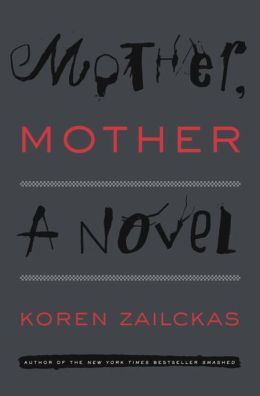
Maximum Shelf: Mother, Mother by Koren Zailckas

Maximum Shelf is the weekly Shelf Awareness feature focusing on an upcoming title we love and believe will be a great handselling opportunity for booksellers everywhere. The features are written by our editors and reviewers and the publisher has helped support the issue.

This review was published by Shelf Awareness on June 26, 2013.


mother mother
Mother, Mother opens on a quiet Saturday morning in a small town north of New York City. A young boy wakes up with his mother standing over him, waiting to start their day. He is a little odd–we soon learn he’s been recently diagnosed with Asperger’s syndrome and epilepsy–and his mother seems to be wound a little tight, but she’s also concerned and loving. Next, the perspective shifts to that of his older sister, a rebellious teen who has just been placed in a local mental hospital. The father is cheating. The eldest daughter ran away with a boyfriend several years ago.

These are the perceptions presented in the first few pages of Koren Zailckas’s startling debut novel. Do you believe everything you’ve just read?

As the story of the Hurst family unfolds, the reader will learn to question every “fact” exhibited. The youngest child, Will, and the middle daughter, Violet, continue to trade off the first-person relating of their family drama. One is on the autism spectrum and the other is drug-addled; thus the reader has to parse not one unreliable narrator but two. Will both loves his mother and fears her, and is constantly struggling to determine what exactly it is she wants so that he can please her. He is home-schooled, because of the Asperger’s: Is this the cause or the effect of their unusually close relationship? Josephine, the titular mother, starts off coldly Stepford-like and quickly takes a turn toward chilling. Violet, who has been observing Sallekhana (a form of Jainist ritual starvation), recently took psychedelic morning glory seeds and came home to her family out of her mind, hallucinating and violent. Now Josephine is adamantly opposed to Violet coming home from the hospital, ostensibly because of the threat she poses to her little brother. The absent eldest daughter, Rose, remains ghostlike and disembodied for most of the book. Her past is enigmatic and her current location unknown–but unexpectedly, she writes to Violet in the hospital, after years of silence. And while their father, Douglas, is physically present, he has problems of his own that make him self-centered and ineffectual.

Much of Mother, Mother‘s mystery revolves around the night when Violet, in a haze induced by near starvation coupled with the psychedelic seeds, brandished a knife at her family, harming Will. A drunken Douglas drove her to the psych ward. But as it turns out, neither Will nor Violet has a clear memory of what happened on that night. Then Child Protective Services enters the scene, in the form of a case worker surprisingly sympathetic to Violet. This engages Josephine’s protective instincts, and the reader must struggle alongside CPS to discern the truth about where–or from whom–Will suffered his injuries. From the start, the reader is kept off-balance by Will and Violet’s constantly shifting, conflicting, inconsistent narratives. Josephine’s contributions, which come in dialogue form through Will or Violet’s observations, only serve to muddy the waters. From the start, the reader senses that something is amiss, but will have to puzzle for a time over which of these troubled characters to trust.

As the action unfolds, Violet remains institutionalized, but the details of the night in question begin to reveal themselves. Will and Violet both begin to regain their memories, but they continue to interpret those recollections in very different ways. Even as the source of the true evil begins to become clear, the reader is kept guessing as to everyone’s final fates until the closing pages, and the surprises keep coming until the very end.

Koren Zailckas is the bestselling author of two memoirs, Smashed and Fury. Her first attempt at fiction will not disappoint her fans, as she continues to exhibit a nuanced understanding of psychological drama, combined with a wry tone that brings surprising humor to such an unnerving story. Zailckas reveals and conceals fact and rumor in this complex tale with deliciously deceitful cleverness: readers should beware the seemingly straightforward narrative as told by Will and Violet. Take, for example, Will’s placement on the autistic spectrum. In some ways, it is very apt: his obsession with obscure, little-known vocabulary words will of course charm the booklover; but on the other hand, he is awfully good at reading emotions.

Mother, Mother is unsettling, even frightening, and perhaps what makes its atmosphere so successfully compelling is that it is so very domestic and ordinary. The Hursts not only appear outwardly normal, they may be our role models–the perfect family next door. What Zailckas has accomplished is most disturbing because it is so close to home.


Rating: 7 not-so-loving looks.

Come back tomorrow for my interview with Zailckas!

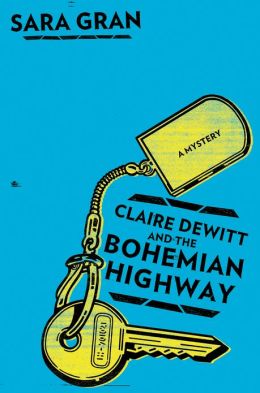
Claire DeWitt and the Bohemian Highway by Sara Gran

A singularly weird and drug-fueled private eye, not for the faint-hearted.

gran

Sara Gran’s Claire DeWitt and the Bohemian Highway gives us a refreshingly bizarre twist on the classic private investigator. Readers of Claire DeWitt and the City of the Dead will recognize Claire’s copious and indiscriminate drug use (she never fails to check a medicine cabinet and pocket the contents; she seeks dealers like she seeks clues) and her generally hard-bitten lifestyle. Similarly unconventional is her somewhat metaphysical style of detection, guided in part by a controversial dead French detective who speaks to Claire through his book.

When Claire’s ex-boyfriend Paul is murdered, and several of his valuable guitars go missing, his wife, Lydia, hires Claire to look into things. A simultaneous case involves a diminishing herd of miniature horses up in Marin County: Claire suspects they may be committing suicide. The action shifts from contemporary San Francisco, where Claire hunts Paul’s guitars and his killer, to the Brooklyn of Claire’s adolescence, where she and two friends once investigated a missing girl. One of those friends will later go missing herself; and the whispers of the missing Tracy, the dead Paul and the possibly suicidal miniature horses haunt Claire as she tries to keep it together and solve a murder through the haze of various uppers and downers.

Strange, distinctive characters are one of Gran’s greatest strengths, coupled with a strong sense of place and a gritty atmosphere of depravity and mysticism. Dark, classic PI adventures with an unprecedented zaniness mixed in make Claire DeWitt a rare reading experience.


This review originally ran in the June 25, 2013 issue of Shelf Awareness for Readers. To subscribe, click here, and you’ll receive two issues per week of book reviews and other bookish fun!


Rating: 8 bumps.

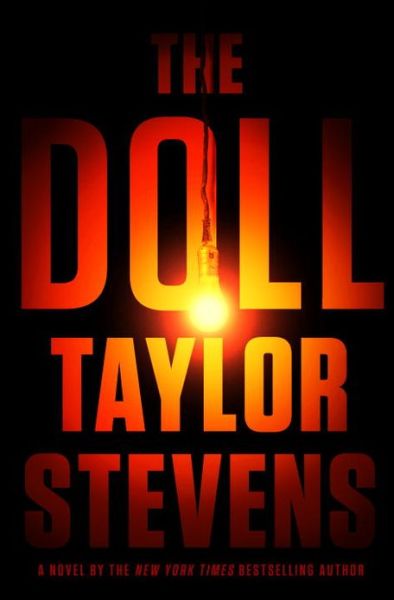
The Doll by Taylor Stevens

The latest international exploits, daring escapes and rescues of Taylor Stevens’s heroine for hire.

doll
In The Doll, Taylor Stevens (The Informationist) brings mercenary Vanessa Michael Munroe back to eager readers for another round of full-speed international intrigue. At the start, Munroe is tranquilized, kidnapped and forced to deliver a Hollywood starlet overseas as part of a human trafficking ring. Munroe’s boyfriend, Bradford, and the associates at his security firm are hot on the case, but the task of rescuing Munroe is complicated because all the other people she loves most in the world have also been kidnapped as collateral against her cooperation. Additionally, “the doll” turns out to be a spitfire with past trauma of her own, determined to give Munroe a run for her money.

With her near-savant linguistic skills, almost obsessive love of and skill with weapons and androgynous appearance, Munroe is a formidable tool in the hands of the “Doll Maker,” the mastermind behind the trafficking trade. But he hasn’t figured on her unpredictability. Even faced with difficult decisions and with her loved ones held hostage, Munroe might be capable of anything.

Stevens again crafts a lightning-swift plot that races across continents and inflicts extreme trauma upon characters she’s taught us to care about. Intelligent action and pacing are a bonus, and other characters like those on Bradford’s team are engaging and provide banter; but it’s Munroe herself who stars, with her wondrous and myriad abilities and her surprisingly soft heart.


This review originally ran in the June 11, 2013 issue of Shelf Awareness for Readers. To subscribe, click here, and you’ll receive two issues per week of book reviews and other bookish fun!


Rating: 7 borders crossed.

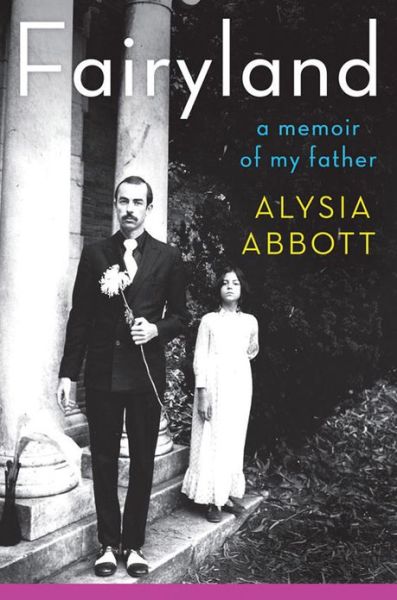
Fairyland: A Memoir of My Father by Alysia Abbott

A daughter’s tender memoir of her father’s life as a single gay man in 1970s Haight-Ashbury.

9780393082524_p0_v2_s600

When Alysia Abbott was two years old, her mother was killed in a car accident. Her father, Steve, moved her across the country to raise her alone as a gay man and single father in 1970s San Francisco–a pioneer in several senses. Alysia’s childhood and teen years took place against the backdrop of a magical Haight-Ashbury district filled with creative, adventurous people like her father (a poet and political activist), recreational drugs and minimal supervision.

Their father-daughter relationship was loving but rocky. When Steve develops AIDS and his health begins to plummet, he calls 20-year-old Alysia home from her studies in Paris and New York City to nurse him, a full-circle caretaking demand that she resents at the time.

Fairyland is foremost a daughter’s memoir of a much-loved parent. She continues to become acquainted with him through her research, most notably in reading copious notebooks filled with his poetry and journal entries. She colorfully renders an iconic epoch in San Francisco, together with the city’s gay culture and politics, and the early days of the nationwide gay rights movement. Alongside beautiful characterizations (often morphing into eulogies), Alysia paints a stark image of the AIDS epidemic and the Reagan administration’s non-response to it. As a personal story and as a portrayal of an era, Fairyland is powerful, loving, authentic, and contains Steve’s artistic legacy in its lyricism. It acknowledges Steve’s impact on Alysia–and both their shortcomings–with gratitude and grace.


This review originally ran in the June 7, 2013 issue of Shelf Awareness for Readers. To subscribe, click here, and you’ll receive two issues per week of book reviews and other bookish fun!


Rating: 9 brightly colored t-shirts.

You Are One of Them by Elliot Holt

A haunting debut novel that combines a young girl’s coming-of-age, a lost friendship and the chill of the Cold War.

oneofthem

Elliott Holt’s You Are One of Them opens in 1980s Washington, D.C. Sarah Zuckerman is a troubled child, haunted by those who have left her behind. Her mother, obsessed with the threat of nuclear war, never leaves the house; her father has moved back to England and remarried. When Jenny Jones moves in across the street, Sarah is enchanted: the Joneses are a perfect American family, loving and happy, and Jenny is the perfect best friend. It’s Sarah’s idea to write a letter to the Soviet premier, asking for peace, but it’s Jenny’s letter that gets published and answered with an invitation to visit the Soviet Union. After the Joneses return, world-famous Jenny doesn’t have time for Sarah any more. Then Jenny is killed in a plane crash, her body never recovered.

Ten years later, as Sarah graduates from college, she gets a letter from a Russian woman who suggests she may know something about Jenny’s eventual fate. Their correspondence prompts Sarah to move to Moscow, and as she makes new friends in this strange foreign city, it seems that everyone has possible ties to the KGB. Could Jenny really be among these mysterious Russian women? And how far is Sarah willing to go to reclaim her friendship?

You Are One of Them is part thriller, part elegy, part study of place, as Moscow comes alive and Holt explores themes of lost and missing loves, within its echoes of the real-life story of Samantha Smith and the broader mystique and paranoia of the nuclear era.


This review originally ran in the June 7, 2013 issue of Shelf Awareness for Readers. To subscribe, click here, and you’ll receive two issues per week of book reviews and other bookish fun!


Rating: 7 conspiracy theories.

Junius and Albert’s Adventures in the Confederacy by Peter Carlson

Adventure, suspense, and a dash of romance make for a highly readable–and absolutely true–Civil War story.

junius
Peter Carlson’s Junius and Albert’s Adventures in the Confederacy opens with the capture of its titular subjects near Vicksburg in 1863, then rewinds to show how they landed in such a predicament. Albert Richardson, an enterprising journalist for the New York Tribune, had decided to travel south as an undercover correspondent, and naturally chose his best friend and fellow newspaperman Junius Browne to accompany him. The stakes were high if they were discovered–the Tribune was reviled as a liberal abolitionist paper–but the two young men were game for adventure. After their capture, they spent nearly two years in a series of Confederate prisons before escaping, half-starved and freezing, to trek overland toward Union lines in December 1864.

Despite the serious and frequently tragic nature of Albert and Junius’s story, the book’s title signals the often playful tone that Carlson (K Blows Top) employs. The descriptions of Confederate prisons like Libby, Castle Thunder and Salisbury are horrific, but there is also the occasional scene of mirth–as when prisoners put on a variety show to celebrate the 4th of July. Besides Junius and Albert, the other colorful personalities in Carlson’s history include a larger-than-life “Union pilot” skilled at guiding refugees over the mountains to freedom, and a beautiful young Southern horsewoman who rescues them during a perilous moment. With eccentric and likeable characters like these, Carlson’s history successfully masquerades as an entertaining adventure story.


This review originally ran as a *starred review* in the June 4, 2013 issue of Shelf Awareness for Readers. To subscribe, click here, and you’ll receive two issues per week of book reviews and other bookish fun!


Rating: 7 weary months.

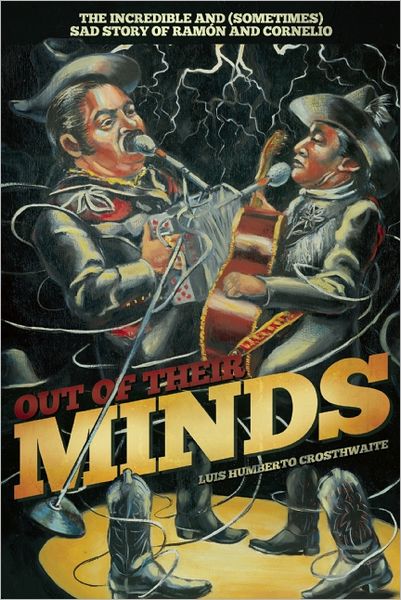
Out of Their Minds: The Incredible and (Sometimes) Sad Story of Ramón and Cornelio by Luis Humberto Crosthwaite

A bizarre and entertaining tale of two Mexican norteño musicians guided by God–and the price they pay for their fame.

outoftheirminds

Luis Humberto Crosthwaite’s Out of Their Minds, a novel first published in Spanish in 2001, is a motley collection of fictional interviews, dreams, dialogues and sketches. It’s centered on Ramón and Cornelio, a couple of bored kids in Tijuana with a bajo sexto and an accordion. Then God speaks to Cornelio, offering to write his songs for him, and the duo known as los Relampagos de Agosto (a sly reference to Jorge Ibargüengoitia’s satiric The Lightning of August?) takes off.

Greeted onstage by screaming women throwing underwear, their world explodes in undreamed-of decadence and groupies. Fast forward a few years, though, and Ramón and Cornelio’s lives are sadly riddled with drugs and superficiality. Unsurprisingly, the two lifelong friends no longer see eye to eye, and the rock-and-roll lifestyle has dimmed their fire. Where they used to lie awake at night and discuss the perfect girlfriend (she must have pretty feet), now their wives have left them and Ramón talks to his accordion instead.

In the ever-shifting perspective of this strange world, where God worries about producing fresh material (“he doesn’t want to be judged as a repetitive God, with few ideas”) while a friend of Cornelio dies over and over again, the duo’s career arc clearly references the Beatles–but places them in Mexico’s norteño music scene. Wry, lyrical and frequently funny, the story of Ramón and Cornelio is indeed incredible and sometimes sad; but the music plays on and we continue to revel in it.


This review originally ran in the May 24, 2013 issue of Shelf Awareness for Readers. To subscribe, click here, and you’ll receive two issues per week of book reviews and other bookish fun!


Rating: 6 blurry nights.