Maximum Shelf author interview: Terry Hayes

Following Wednesday’s review of I Am Pilgrim, here’s Terry Hayes: On Breadth of Scope.


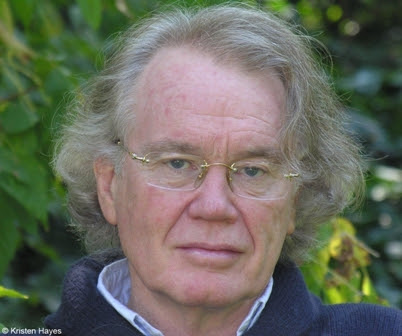
Terry Hayes was born in Brighton, England, migrated to Australia as a child, was based in New York as foreign correspondent at 21, and produced a current affairs radio program before moving to Los Angeles to work as a screenwriter. He has written numerous screenplays and mini-series, and has received two international Emmy nominations. His credits have included Payback with Mel Gibson, From Hell with Johnny Depp and Vertical Limit with Chris O’Donnell. I Am Pilgrim is his first novel. He lives in Switzerland with his wife, Kristen, and their four children.
photo: Kristen Hayes

photo: Kristen Hayes

I Am Pilgrim travels through many complex spheres in numerous countries. How much research was required for this book? How did you go about it, and did you enjoy that part of the creative process?

The short answer is: an enormous amount of research. When I started I had no idea just how challenging it would be–which was probably just as well, otherwise I might not have even started. I did have a couple of advantages. With the exception of Afghanistan and Saudi Arabia, I had either lived in, or visited for extended periods, all of the countries where the plot takes place. The race against time criss-crosses continents, and ranges from the Lower East Side of Manhattan to Damascus in Syria, from Santorini in the Greek islands to a Bulgarian border post. My own wanderings lessened the research load and, I hope, allowed me to bring the novelist’s eye for detail to those locales. The second advantage I had was that I had once been a journalist and foreign correspondent, so I am accustomed to efficient and focused research and interviews. I approached the material as if I was a journalist on assignment–I admitted to myself I had a lot to learn. The one thing that I found the most difficult was the science. The plot involves a lot of biological detail, and I wanted that to be as accurate as possible. When I was at high school, several of my science teachers told me that I was very lucky I was good at English and history! Still, I have an enormous curiosity and am happy to read and interview widely, so I eventually managed to wrestle that part of the subject to the ground.

In a practical sense, it would not have been possible without the Internet. Such a vast array of information, so readily accessible, I believe is changing the nature of writing, especially of something like an international spy thriller. You can find out exactly how public beheadings are conducted in Saudi Arabia, how much a gene sequencing machine costs on eBay, or many of the latest tradecraft habits of covert intelligence agents operating in hostile territory. It gives an enormous grounding to the rest of the research. I did enjoy it, most of the time. I am lucky to have an overwhelming curiosity and a pretty good memory, so the research, whether it was about the Islamic faith or the design of a Roman coliseum called the “Theatre of Death,” was really a great experience. Of course, I worried that I had made a mistake–which I am sure I probably have–but I reminded myself that the book was not a documentary. It was, beyond everything else, a work of fiction.

You have created an extraordinarily intricate plot, with lots of characters and lots of detail. Can you tell us a little about the note-taking, outlining or whatever method you used to keep everything straight?

This is the type of book I have always loved–big, epic stories that you can really lose yourself in. The ones that affect you in a very emotional way and also, hopefully, teach you something on the journey. That was the sort of novel I tried to write. Part of that ambition was to interweave a major plot with a number of subplots and somehow try to make it all “of one piece.” Basically, how I did it was to keep telling myself the story. Or, better still, telling it to my wife on long car rides! I think, by the end, she was glad to hear the last of Pilgrim. Of course, you have to have some major stepping stones, or turning points, along the way. The biggest of these was the ending. Whether it is a screenplay, a piece of journalism, or the novel–I have always had to know how it was going to finish. So, once I had an idea of the character and an ending, I could start to embellish it. “Okay,” I would ask myself. “Where do we meet him?” “Why is he there?” “What does he want, what is his objective?” On and on and on. Slowly, the blanks would start to get filled in, and in order to do that, you have to have Pilgrim–or whatever his real name is–interact with other people. It’s funny, but you don’t forget a good run of events in the story, or ideas of how to do it. Bad ideas don’t last a single sleep. Time after time, I would start at the beginning again and tell myself (or my long-suffering wife) the story. When the detail became too much, I started to make notes and, naturally, I had to do that while I was researching the more difficult sections of the story–the things like the biology of viruses or the exact methods used in waterboarding. As the story grew, I started to use what people in movies call “beat-sheets”–one-line notes detailing each “beat” of the story, each significant development of the plot or important moment for a character. Toward the end, the problem became finding the exact research note I knew I had made months earlier. “I know I wrote that down somewhere….”

In the past, you have written in a number of formats, including screenplays, television and journalism. How was writing this novel familiar, and in what ways was it new and challenging?

Well, it is all story-telling. Whether it is a feature article for a newspaper or a screenplay for an action movie, you are always trying to take the reader–or viewer–through a sequence of steps, or events, which are believable and arresting. There is always that struggle to find the right word, the memorable phrase, the clearest way of expressing something. So those things were extremely familiar. The major difference is that in writing movies or long-form TV, the script is part of a manufacturing process–it is a step along the way to creating the finished episode or movie. In a novel, it is the finished article. So the pressure on crafting the words and paragraphs is that much greater. Sometimes a little paralysing! The other major difference is that in movies or TV you can’t tell the audience what a character is thinking–you have to rely on the actor to try and convey that. Of course, in a novel those internal thought processes are easily conveyed, so it is much easier to explain why a character follows a certain course of action. After years of writing for the screen, I found that completely liberating. I loved having the ability to say in the novel “He thought such and such… so he did this and this.” Because you can’t do those internal thoughts in a screenplay, I always think writing a movie is like fighting with one hand tied behind your back: it’s a real skill, but it sure makes things hard.

Pilgrim, like many of fiction’s most compelling heroes, struggles with his own past and demons. If anything he becomes more human, and less perfect, as the novel develops. Did he develop this way for you, too?

Yes, he sure did. I think it’s a little like life itself–the more you get to know somebody, the more you learn about their flaws and the wounds they carry. It doesn’t mean you like them any less; to the contrary, you often end up admiring them even more. So it was with Pilgrim. Most of us, I think, are damaged in some way, but Pilgrim–as you point out, like so many heroes in fiction–is more damaged than most. On one level, the novel is about him confronting and dealing with those issues and demons from his past–a different sort of pilgrimage, I guess. Despite his failings, despite his flaws, he never gives in. He knows that he has to endure an enormous amount of anguish and pain, but he finds the courage and resolve to see his mission through to the end. The fact that he is prepared, if necessary, to sacrifice himself in the pursuit of something far more important than himself makes him a true hero, in my mind. There seems to be a prevalent view, especially in movies, that heroes should have some sort of super-powers. I don’t agree. I think it is the very human things, faults and failings included, that make a true hero. Especially if he or she can overcome them and show us what great courage and commitment really mean.

And then there’s your antihero, the Saracen, who is Pilgrim’s genius-counterpart but approaching total evil. Do you think of them as two sides of the same coin?

They have so many things in common–especially an anguished childhood–that I certainly see them like that. If this were Star Wars, I would say one turned to the dark side, the other to the light. Although born on completely opposite sides of the earth, they both experienced the death of a parent in horrific circumstances, they are both extremely intelligent, have undertaken medical degrees, and are loners, complete outsiders in the world. They both go on a great journey, a pilgrimage, where the fate of people and nations hangs in the balance. At one stage Pilgrim describes his adversary as a “ghost”–spectral, hidden and barely glimpsed–but Pilgrim could just as easily be describing himself. These two men, who have spent all their lives living in the shadows–one hell-bent on cataclysmic revenge, the other a covert intelligence agent–move ever closer to each other. When they finally step out of the shadows and meet in a place called the Theatre of Death, their battle relies more on intelligence than it does on weapons. It is an epic struggle between two men trying to outsmart each other. In order to do that, they have to know an enormous amount about each other. I have always thought that, because of his own background and experiences, Pilgrim understands his adversary better than any man on earth.

What do you have in mind next? Avoiding spoilers, of course: is there room for a sequel here?

Well, in my fevered mind, Pilgrim was always the first part of a trilogy. On the last page of the last novel we discover what his real name is, and I don’t think it is giving away too much to say that he walks up the front steps of a house and we know that he has found safe harbor at last. As you can probably tell, I have the next two books outlined–which I had to do in order to set up a lot of things in the first novel that I would pay off in the later volumes. However, as I was not certain if I Am Pilgrim would meet with any success, I did not want to launch into writing the second volume if nobody had read the first! Therefore I am in the midst of writing a book tentatively called The Year of the Locust, which is another thriller, partly set in the intelligence world. It also involves “just over the horizon” science and pits a man and his wife against seemingly impossible odds. I like the story very much and, as much as is possible while wrestling with words every day, I am really enjoying it. I hope, when it is finished, other people will feel the same!


This interview originally ran on May 27, 2014 as a Shelf Awareness special issue. To subscribe, click here, and you’ll receive two issues per week of book reviews and other bookish fun!

Maximum Shelf: I Am Pilgrim by Terry Hayes

Maximum Shelf is the weekly Shelf Awareness feature focusing on an upcoming title we love and believe will be a great handselling opportunity for booksellers everywhere. The features are written by our editors and reviewers and the publisher has helped support the issue.

This review was published by Shelf Awareness on May 27, 2014.


I am pilgrimA woman is found dead in a ratty New York City hotel. Despite the outward hallmarks of a “simple” murder–one motivated by rage, sex or money–it quickly becomes clear that this is an intelligent and carefully planned crime. The room is awash in sulfuric acid, and the victim has been stripped of her face, fingerprints and teeth. A powerful antiseptic has been used to destroy all DNA on the scene. Detectives link the crime to a borrowed library book about investigations, written by one of the world’s best professional investigators, a man who doesn’t officially exist. The author of that book happens to be present at the crime scene: he is the unnamed narrator of I Am Pilgrim, an intricately plotted thriller of global proportions, and the debut novel by screenwriter Terry Hayes.

Hayes has made an inspired choice in selecting an unnamed narrator to tell this story–information can be meted out methodically, with all the oblique references and foreshadowing one might expect from a secret agent. We learn from the man who eventually consents to the code name “Pilgrim” that he has a complicated past in many cities and countries around the world, including the small Turkish town of Bodrum, which is improbably linked to the murdered woman in New York City. When detectives learn that the hotel room in question had been occupied since the morning of September 11, 2001, more questions are raised–who checks in to a NYC hotel on that morning?–and international implications begin to be theorized. Pilgrim planned to be on hand at the scene only as a consultant, to assist his friend, NYPD homicide detective Ben Bradley. But perhaps he belongs there after all.

As it turns outs, the nameless murder victim in New York City is the least of Pilgrim’s concerns.

On the other side of the world, years ago, a young boy watched his father’s beheading at the hands of the Saudi Arabian government. That boy has grown up to become a mujahid and go to war in Afghanistan against the Soviets, and has now taken on a false Lebanese identity while hatching a grand plan to take down the “far enemy,” the Western world as embodied by the United States. This unnamed man is nicknamed “the Saracen,” as our narrator is called Pilgrim, and the central plot of I Am Pilgrim is the buildup to their final standoff.

A retired chief of the most secret intelligence agency in the United States, Pilgrim is called in by the President himself after three bodies with various nationalities are found, scorched and disintegrating, in a grave of quicklime in a deserted village in the Afghani desert. The Saracen has been hard at work for decades. No crude airplane hijackings for him: the destruction of the Western world will require brilliance, finesse and absolutely thorough preparation. With his test run in the desert complete, he’s ready for the biggest scheme of all. And as good at his job as Pilgrim is, the Saracen is his match.

The coincidence of Pilgrim’s presence in the N.Y.C. hotel room will ease his transition back to full-time work on a seemingly unrelated assignment, and he reenters the underground world easily enough. Disguised as just another FBI agent, he’s sent to Turkey, ostensibly to investigate the suspicious death of a young American billionaire there. In reality, he’s hunting the Saracen. One of the many successes of I Am Pilgrim is that within 600-plus pages of mysteries within mysteries, a plethora of subplots all link together smoothly. In seeking the Saracen, Pilgrim hopes for no less than to save the world, but he is also concerned with his cover mysteries, including the death of the American billionaire in Turkey–despite local investigators having ruled it accidental, and having tried to close the case–and the murder of the still-anonymous woman in the shabby hotel in New York.

Within this elaborately plotted thriller of international espionage, Hayes inserts a charmingly detailed past and personal story for Pilgrim and his supporting characters, including Detective Ben Bradley and the U.S. director of national intelligence, who is nicknamed the Whisperer. (Hayes has a fondness for aliases.) Pilgrim’s childhood, Bradley’s heroism and modesty, and the Whisperer’s rise through the ranks of secret government agencies are realistic and enthralling. I Am Pilgrim not only circumnavigates the globe but also reveals an appreciation for and study of fine art, and references world history in building its background. In these ways, whimsy and realism are advanced in parallel by the rich context, strong characters and framing elements Hayes employs.

This debut novel is lengthy, but uses every line to full effect; the page count is necessary to pursue the involved and involving story Hayes has planned. Fully wrought characters and an ambitious, but impeccably designed plot are unfurled at a breakneck pace; the reader’s only problem will be finding time to race through I Am Pilgrim in as few sittings as possible.


Rating: 8 doses.

Come back for my interview with Hayes later this week!

The Falling Sky by Pippa Goldschmidt

My father also reviewed this book here.


An astronomer’s professional and personal journey, both eased and challenged by her scientific mind.

falling sky

Pippa Goldschmidt’s The Falling Sky revolves around Jeanette, a young astronomer deeply dedicated to her work but uninspired by the competitive bureaucracy of postdoctoral research. The stars and galaxies make sense to her in a way that people do not; she is a talented and intelligent scientist whose rational lens often fails her in navigating the world of human relationships. In a Chilean observatory, she makes a discovery that could turn the scientific world on its head; what she will do with this new and disruptive evidence will similarly upend her personal life. Amid the commotion, a new love affair with an old friend and the disorder of her professional ambitions combine to reawaken a childhood trauma, a tragedy from which her family has never recovered.

The Falling Sky incorporates hard science (Goldschmidt is an astronomer as well as an accomplished writer) with the story of a young woman struggling to find and establish her own place in the world. Artists, romantics, philosophers, mystics, feminists, photographers and scientists will all identify with aspects of Jeanette’s journey. Those familiar with the Edinburgh setting will be pleased by its evocation. But perhaps the most remarkable and unusual element of Goldschmidt’s striking debut novel is Jeanette’s perspective: the reader sees her world as she does, with an emphasis on objectivity, data points, the relativity of time and space, and the search for connections between distant galaxies. As Jeanette sighs, “the lack of information is appalling,” but her story comes around to a satisfying conclusion nonetheless.


This review originally ran in the May 20, 2014 issue of Shelf Awareness for Readers. To subscribe, click here, and you’ll receive two issues per week of book reviews and other bookish fun!


Rating: 6 connections.

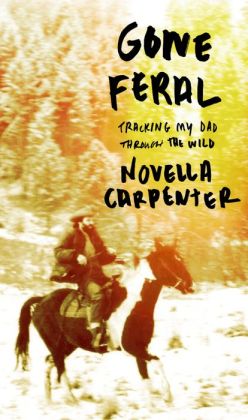
Gone Feral: Tracking My Dad Through the Wild by Novella Carpenter

Back-to-basics urban farmer Novella Carpenter investigates family in her second contemplative memoir.

gone feral

When Novella Carpenter was 36, her father went missing. It turned out to be a false alarm, but the threat of losing him helped Novella realize that, if she was ever to get to know George Carpenter, she might be running out of time, since their relationship had been stuck somewhere between uneasy and estranged for years. Gone Feral: Tracking My Dad Through the Wild charts her journey home.

After a romantic meeting in 1969 San Miguel de Allende, Mexico, her parents embarked on an idealistic European tour before settling on a farm in Idaho in “voluntary poverty.” But the marriage ended when Novella and her sister were five and seven, and their mother moved them to Washington State; Novella didn’t see much of her father after that. Now, three decades later, she has a small urban farm in Oakland, Calif., which she documented in her memoir Farm City. When she and her boyfriend, Bill, decide to try to get pregnant, she wonders about her own genetic legacy. Breeding ducks, chickens and milk goats has taught her the importance of the stock line. In working to become a parent herself, after the scare of George going missing, she goes in search of her father, hoping to build the relationship they never had.

George is still scraping by near the Idaho farm where Novella was born. He’s a regular backwoods curmudgeon, making a meager living by logging and cutting firewood and sharing his cabin with wild animals. She hopes they’ll go fly-fishing, re-creating the romance of A River Runs Through It. Maybe they’ll forage for wild foods or he’ll teach her how to fell a tree perfectly. Instead, he rants about the devils that possess the old family farm and exhibits previously unnoticed signs of post-traumatic stress disorder (the legacy of his service in the Korean War). Novella is disturbed, angered all over again at what she sees as his abandonment, and concerned about the genes she’ll pass on to a child, if she ever succeeds in getting pregnant.

Gone Feral is reflective, as Novella ponders the paradoxes of her upbringing–for example, the liberal hippie value system (hers and her mother’s) that rejects her father the mountain man–and wonders what it is she really wants for her own child. Traveling through the country and her own past teaches her about herself, her origins, and how to build a future that includes father as well as child.


This review originally ran in the May 20, 2014 issue of Shelf Awareness for the Book Trade. To subscribe, click here.


Rating: 5 babies.

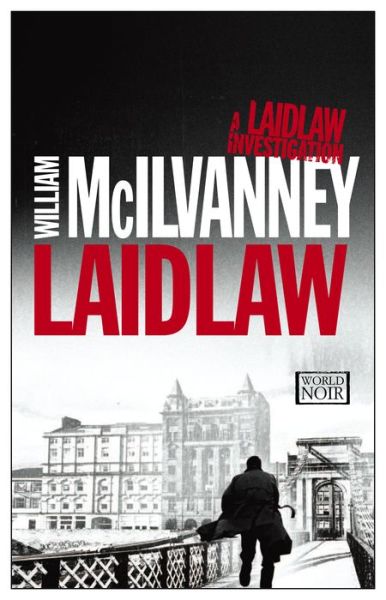
Laidlaw by William McIlvanney

A literary Scottish noir mystery from the 1970s–heavy on character, setting and lyricism–lives up to its reputation in this reissue.

laidlaw

Originally published in 1977, William McIlvanney’s Laidlaw, the first book in a trilogy, set a standard for noir mystery. In this reissue, McIlvanney’s gruff, broad strokes read as freshly as ever.

Glaswegian detective inspector Laidlaw is the quintessential hardened, hard-drinking cop. Sarcasm, problems at home and a prickly exterior belie a sensitive man who believes that his society bears some responsibility for every crime he investigates.

Laidlaw is approached by a thug he’s dealt with before: Bud Lawson’s daughter hasn’t come home from the club, and Lawson wants Laidlaw’s help. Where other cops hold Bud’s criminal past against him, Laidlaw is willing to assist. For this case, he is partnered with the ambitious and impressionable young detective constable Harkness, who is meant to act as liaison between Laidlaw’s unconventional tactics and the police establishment. Harkness is an excellent foil for Laidlaw’s methods and worldview, and the growth and development of their relationship throughout is a satisfying side plot.

A murdered teenage girl does not, on the surface, look to be related to the network of thugs and gangsters that run Glasgow’s criminal industry. But her killer–exposed to the reader early on–quickly becomes a pawn. Bud Lawson’s gangster associates want him so they can exercise their revenge; other gangsters with other connections want him spirited safely out of town; and, of course, Laidlaw has his own goals–though, as he asks, “Who thinks the law has anything to do with justice?”

The phonetically spelled Scottish brogue adds color to dialogue, and McIlvanney’s remarkable lyricism is surprisingly refined in this dark, coarse world (“She waited patiently for his head to come back from a walk around his guilt”). His strengths are both character and setting: Laidlaw is a complex individual, harder on himself than on anyone else, with an iconoclastic nature and difficulty with authority figures. The Glasgow McIlvanney evokes, rife with poverty and an unglamorous criminal underbelly, is absolutely compelling, and is a precursor to strong mystery settings like Michael Connelly’s Los Angeles or James Lee Burke’s Louisiana.

Laidlaw is not so much action-packed–although there is plenty of head-busting–as it is considered, psychological and concerned with the existential. McIlvanney has earned his reputation as the father of the “tartan noir” crime-writing genre that includes Ian Rankin, Denise Mina and Val McDermid. Readers will be glad to know that the next two books in this trilogy are set for re-release in late 2014.


This review originally ran in the May 12, 2014 issue of Shelf Awareness for the Book Trade. To subscribe, click here.


Rating: 5 pubs.

Wolf by Mo Hayder

A truly petrifying home-invasion thriller filled with blood and unexpected twists.

wolf

Wolf, Mo Hayder’s (Birdman) seventh novel starring Detective Inspector Jack Caffery, may be her most terrifying yet. In the secluded hills of Somerset, England, Oliver Anchor-Ferrers recuperates from surgery with his wife, daughter and dog gathered around him. Their remote country home is mostly peaceful, but lies near the scene of a murder that rocked the family 14 years earlier and continues quietly to haunt them. Then a home invader imprisons the Anchor-Ferrers. The isolation of their estate works against them, and their family pet is their only hope of contact with the outside world.

Meanwhile, the gruff but likable detective continues to fight his own demons, chiefly the still-unsolved case of his brother, who disappeared when Jack was young. The trail has gone the worst kind of cold, with most of the principal players now dead. To find closure, he’ll have to work with the reticent and uncanny drifter known as the Walking Man, who seeks help of his own–he wants to find the owner of a lost dog that crossed his path. Accompanied by the runaway pup, hot on the trail of his own mystery, Jack closes in on the Anchor-Ferrers estate hidden in the woods.

A complexly plotted thriller, Wolf ranges widely over the arms industry, pedophilia rings, space technologies and more. Hayder repeatedly teases her readers with apparent answers to the puzzles she presents, but keeps them guessing. Intricate, intelligently constructed and featuring fully developed characters, Wolf is an absolutely chilling and disturbing read.


This review originally ran as a *starred review* in the May 9, 2014 issue of Shelf Awareness for Readers. To subscribe, click here, and you’ll receive two issues per week of book reviews and other bookish fun!


Rating: 8 little dogs.

The Untold by Courtney Collins

An astonishingly fresh and surprising novel of adventure, heartbreak, grit and love, set in the Australian bush.

untold
In the bush of 1920s New South Wales in Australia, readers observe a young woman digging by a river and then running for the hills. Her story unfolds slowly, in fractured time and brief views, in The Untold, a dreamy debut novel by Courtney Collins based on the life of legendary Australian wild woman Jessie Hickman.

Jessie’s past is varied and often tragic. She left home at 12 to join the circus, then moved on to an illustrious and mostly successful career rustling horses. At age 21, she was convicted for stealing two chickens. Upon her release from prison, she fell in with a rancher who put her back to work stealing horses and cattle, then forced her into a profoundly miserable and violent marriage. Her latest traumas have now sent her, and her beloved horse, Houdini, crashing uphill. They are headed for the top of the highest mountain she can see, through driving rain and flowing blood, in the scene that opens the novel.

Jessie will encounter gangs of men and boys, some friendly, some not: there is a bounty on her head and the residents of the town and the bush have turned out for the hunt. Among those pursuing her are a former lover–an Aboriginal tracker–and a police sergeant, purportedly working together but each unclear which side he’s really on; their quarry exerts a strange magnetic pull and counter-pull. As the reader is increasingly drawn into the story, The Untold rushes precipitously toward a heady convergence among Jessie, Houdini, the gangs and the two men with more personal business to conduct.

Collins has composed a truly startling and singular saga, set in a wild and brushy backdrop of mountains and elemental forces, peopled with hard-edged creatures of all sorts who each have a savage mood and a desperate will to live. Death is a consistent theme in Jessie’s life, beginning as early as we can know, but she has a surprising ally. In fact, while Collins keeps her reader guessing throughout, the biggest surprise of all is the narrator’s role in Jessie’s story.

The Untold is lyrical and untamed, with a firm emphasis on survival and redemption and a full array of improbably charming characters, none with an unstoried past but few as feral as Jessie herself. The reader will be as exhilarated as the protagonist by her struggles, and quite possibly come up gasping for air.


This review originally ran in the May 8, 2014 issue of Shelf Awareness for the Book Trade. To subscribe, click here.


Rating: 9 handfuls of mud.

The Reef: A Passionate History: The Great Barrier Reef from Captain Cook to Climate Change by Iain McCalman

The Great Barrier Reef is both easily understood and awe-inspiring in this history of its discovery, exploitation and beauty.

reef

With The Reef, Iain McCalman (Darwin’s Armada) has composed “a passionate history” of the Great Barrier Reef, opening with his own long-awaited voyage (part of a reenactment of Captain Cook’s original trip). Following the prologue, he withdraws to the role of historian rather than participant, and chronicles the Great Barrier Reef as known to Western society over the last few centuries.

The Reef is divided into three parts. Beginning in 1770 with Captain Cook and proceeding through later explorers who helped chart the reefs in the 1800s, “Terror” emphasizes the threat the reef posed to ships and their navigators, and the fear of cannibals and others thought to inhabit the area. In Part II, “Nurture,” the reef begins to offer refuge for those seeking to escape civilization or make a fresh start. Europeans are taken in by native islanders, or discover island paradise; naturalists arrive, captivated by the biodiversity and beauty of the area while beginning to realize that coral is a resource that can be exploited. “Wonder” sees the scientific community take an interest, disagreeing about the origins and biology of the reef. Ecology emerges as a new field of study, its proponents seeking to place the reef in the larger context of other natural environments, to study relationships and cause and effect. Individual activists work to defend the unusual and changing ecosystem from mining, oil spills, overfishing and the rough use of tourism.

At the end, we are introduced to nature-loving scientist J.E.N. Veron, nicknamed “Charlie” after Charles Darwin, an engaging character who communicates the final dire message of the Great Barrier Reef’s looming extinction. Returning to the personal nature of his prologue, McCalman’s epilogue speaks to the grim consequences of climate change but holds forth hope as well.

The few images in The Reef include portraits of the personalities involved but not the corals themselves (although McCalman refers his reader to books that offer the latter). This work’s strengths include a coherent structure, friendly narrative style and a reasoned culminating call to action that does not disrupt its primary role as a comprehensive history. Plentiful notes indicate strong research, but McCalman’s writing is accessible to any reader interested in the intersection of science, nature and history. From perceived threat to resource to paradise destination to climate-change indicator–Charlie Veron calls corals “the canaries of climate change”–the Great Barrier Reef is fully explored in this engaging study.


This review originally ran as a *starred review* in the May 6, 2014 issue of Shelf Awareness for the Book Trade. To subscribe, click here.


Rating: 7 dives.

Maximum Shelf author interview: Chevy Stevens

Following yesterday’s review of That Night, here’s Chevy Stevens: Listening to Her Own Voice.


Chevy Stevens grew up on a ranch on Canada’s Vancouver Island and still lives on the island with her husband and daughter. When she’s not working on her next book, she’s camping and canoeing with her family in the local mountains. Her debut, Still Missing, won the International Thriller Writers Award for Best First Novel. That Night is her fourth novel.

unnamedThis is your fourth novel. Is it getting easier, or harder?

I really enjoyed writing That Night, and even though it still had some challenges–as each book does–it was the fastest I’ve ever written a novel. It was a different experience for me in many ways, however, because I was pregnant when I started writing the book. I had a wonderful amount of energy and focus (love those pregnancy hormones!), and also the burning desire to get as much completed as possible before the baby arrived. I was a few days short of finishing my first draft when she decided to make her appearance. The rest was finished after she was born.

I think with each book you learn more and you grow as a writer so you learn to recognize weaknesses early, and to question things sooner. I’ve also learned how to listen to my inner voice more when I have doubts about a plotline or a character. I think with each book I’m beginning to understand my own style more, what works for me, where my voice resonates the most, and what my fans also enjoy the best about my writing. Hopefully I can keep giving them that.

You got the idea for your debut, Still Missing, in which a realtor is abducted from an open house, while working as a real estate agent yourself. Where do your subsequent creepy-terrifying plot concepts come from? Do you scare yourself with these stories?

Never Knowing was the result of a conversation I had with my editor, a “what if” premise, which grew into a story. In Always Watching, I wanted to write about Nadine, the therapist in my first two novels, and I was intrigued by the debate about repressed memories and also the subject of cults. The cult in that book is inspired by a hippie commune that lived in Shawnigan Lake in the ’70s.

That Night grew from an idea I had while watching a true story on television about a man who served years for his girlfriend’s sister’s murder. I also “saw” Toni in my mind and wanted to write about her.

Sometimes certain scenes in the books do scare me quite a bit. Essentially, I am telling myself the story first, so if I don’t feel anything, then it’s not strong enough. There are some moments in the current book I’m working on that are truly terrifying and made my own heart pound when I wrote them.

Did you have to research the prison system?

I did quite a bit of research for That Night. There seemed to be more information available about the American prison system than the Canadian, so I had to work hard to uncover some sources willing to talk to me. Because of the sensitive nature of the information they shared, they asked to remain private. I read everything I could find–online articles, books, memoirs, and watched both documentaries and numerous episodes of Lockup.

Shauna and her gang are so mean, it’s just boggling. Do they come from life–yours or anyone’s–or are they a grotesque fantasy?

I think we all remember “mean girls” in high school, but they are also a product of what I learned during my research. I read books on teen bullies and how girls can be especially vicious, often cutting another girl out of their circle, or simply deciding they don’t like someone and then making their life hell. There have been many documented real-life cases where bullying has gotten completely out of hand, with deadly consequences. Sadly, a few young girls have even taken their own lives because they can’t cope with the constant harassment. The worst part to me is that parents are often unaware of what’s happening to their children at school.

Toni’s voice is convincingly teenaged in the passages set in her early life, and more grown-up in the post-prison passages. Did you make a conscious effort to vary her voice? Was it difficult to switch gears?

I don’t think it was conscious. Writing is a bit like acting sometimes, you go into the character. So when I was writing Toni’s teenage years, I felt like a teenager, with a teenager’s concerns and thoughts and hopes and dreams. Then, when Toni was older and released from prison, I wrote from a different mindset, imagining how it would feel to be in that situation, how it would shape you, harden you, how angry you would be at the system for failing you.

Are you already at work on your next book, and can you share anything about it with us? All your books so far are stand-alones; any interest in the idea of a sequel?

Yes, I am close to finishing my fifth novel. I’m not ready to share the title just yet. It’s a superstition of mine that the book has to be finished first. But I will share that it’s another standalone about three sisters who escape a terrible situation and go on the run, only to get caught in an even worse nightmare.

I haven’t wanted to write a sequel to any of my books at this point because I’ve usually put the characters through quite a bit, and it doesn’t feel fair to keep ruining their lives.


This interview originally ran on April 30, 2014 as a Shelf Awareness special issue. To subscribe, click here, and you’ll receive two issues per week of book reviews and other bookish fun!

Maximum Shelf: That Night by Chevy Stevens

Maximum Shelf is the weekly Shelf Awareness feature focusing on an upcoming title we love and believe will be a great handselling opportunity for booksellers everywhere. The features are written by our editors and reviewers and the publisher has helped support the issue.

This review was published by Shelf Awareness on April 30, 2014.


that nightIn the small town of Campbell River on Vancouver Island in the late 1990s, Toni Murphy can’t wait to graduate from high school. Her parents are totally hassling her: they disapprove of her boyfriend, Ryan; her mom is controlling and angry; her father has become distant. A group of popular girls at school is determined to make her life miserable, and her too-perfect little sister, Nicole, has recently started hanging out with those very girls. Toni and Ryan intend to save a little money, get an apartment together and, eventually, leave town for good. Things are a bit rough at home, but they have a plan, and they are so close….

Then, one night, Nicole is killed. Toni and Ryan are convicted of her murder and sent to prison.

Nicole’s killer–or killers–not only took the life of their victim, but effectively Toni and Ryan’s as well, and the young love they shared: once out on parole they will never be allowed contact again. Toni and Nicole’s parents’ lives are ruined as well. Their mother holds onto her rage against her elder daughter, and their father’s indecision about whom to support ends up supporting no one.

Seventeen years later, Toni is being processed out of prison and into a halfway house when we meet her in the opening lines of That Night, the fourth novel by Chevy Stevens (Still Missing). She is frightened and unsure of how she’ll readjust to the outside world. It was so painful on the inside–being separated from Ryan and everything she knew–that the only way she could cope was to shut down. She stopped writing to Ryan in the men’s prison, asked her father to stop visiting and got into a lot of fights. Now that she’s out, her fellow parolees at the halfway house want to continue with violence, and Ryan wants to renew contact. He’s intent upon solving the crime they’ve been convicted of, but violating the parole conditions that forbid contact could land both of them back in prison; anyway, Toni feels the best way to move on is to put Nicole’s murder behind her. In returning to her hometown, however, she finds that no one else is ready to do that. Her mother is still furious, believing Toni killed her little sister; her father is still unsure whose side he’s on; it’s nearly impossible for an ex-con to get work, and even harder for her to keep it. And Toni’s high school nemeses, Shauna and her henchwomen, are still around, and still have a bone to pick. She makes just one friend: a rescue pit bull named Captain.

Slowly, Toni begins to settle in. Back in Campbell River, she goes to work at the Fish Shack, where she waited tables in high school–now they keep her (and her prison tattoos) hidden away in the kitchen. She lives with Captain on a small boat and checks in with her parole officer daily. Toni has now experienced severe bullying, incarceration and an egregious failure of the criminal justice system; at 34 years old, she’d like to just be left alone to put together whatever life she can. She doesn’t visit her parents, but she does see Ryan hanging around the marina where she lives. He’s pushing ahead in investigating Nicole’s death, against Toni’s advice, and he has his eyes on the girls who picked on her in high school–Shauna and her clique testified against Ryan and Toni at the trial, and Ryan wants to know why. What really happened that night? As Ryan’s investigations approach the truth, the events of 17 years ago feel very recent indeed; Toni may be in danger–and she may not be the only one.

That Night shifts back and forth between the events of 1996, when Toni’s teenaged world fell apart, and the present, with Toni newly released from prison and struggling to rebuild her life. Both are told in first person by Toni herself, although in two subtly different voices: that of the rebellious teen with short-term concerns and long-term dreams, and that of the ex-con whose hard-won and carefully constructed defense system is still brittle. This nonlinear style highlights Toni’s sense of confused and harried apprehension, of disruption. Flashbacks allow the reader to visit Toni behind bars, and these scenes, too, are evocative and disturbing.

Stevens matches the success of her previous novels with character-driven drama and a clear commitment to the particular nuances of her Vancouver Island setting. A strong sense of foreboding and a thoroughly compelling plot keeps her reader guessing, while a hint of romance broadens the appeal. Toni’s gritty, emotional, traumatized persona is both gripping and sympathetic. Foreshadowing and terrifying suspense are riveting in Stevens’s sure hands; readers will want to keep all the lights on as That Night moves into its final acceleration.


Rating: 6 dog walks.

Come back tomorrow for my interview with Stevens!