The Untold by Courtney Collins

An astonishingly fresh and surprising novel of adventure, heartbreak, grit and love, set in the Australian bush.

untold
In the bush of 1920s New South Wales in Australia, readers observe a young woman digging by a river and then running for the hills. Her story unfolds slowly, in fractured time and brief views, in The Untold, a dreamy debut novel by Courtney Collins based on the life of legendary Australian wild woman Jessie Hickman.

Jessie’s past is varied and often tragic. She left home at 12 to join the circus, then moved on to an illustrious and mostly successful career rustling horses. At age 21, she was convicted for stealing two chickens. Upon her release from prison, she fell in with a rancher who put her back to work stealing horses and cattle, then forced her into a profoundly miserable and violent marriage. Her latest traumas have now sent her, and her beloved horse, Houdini, crashing uphill. They are headed for the top of the highest mountain she can see, through driving rain and flowing blood, in the scene that opens the novel.

Jessie will encounter gangs of men and boys, some friendly, some not: there is a bounty on her head and the residents of the town and the bush have turned out for the hunt. Among those pursuing her are a former lover–an Aboriginal tracker–and a police sergeant, purportedly working together but each unclear which side he’s really on; their quarry exerts a strange magnetic pull and counter-pull. As the reader is increasingly drawn into the story, The Untold rushes precipitously toward a heady convergence among Jessie, Houdini, the gangs and the two men with more personal business to conduct.

Collins has composed a truly startling and singular saga, set in a wild and brushy backdrop of mountains and elemental forces, peopled with hard-edged creatures of all sorts who each have a savage mood and a desperate will to live. Death is a consistent theme in Jessie’s life, beginning as early as we can know, but she has a surprising ally. In fact, while Collins keeps her reader guessing throughout, the biggest surprise of all is the narrator’s role in Jessie’s story.

The Untold is lyrical and untamed, with a firm emphasis on survival and redemption and a full array of improbably charming characters, none with an unstoried past but few as feral as Jessie herself. The reader will be as exhilarated as the protagonist by her struggles, and quite possibly come up gasping for air.


This review originally ran in the May 8, 2014 issue of Shelf Awareness for the Book Trade. To subscribe, click here.


Rating: 9 handfuls of mud.

The Reef: A Passionate History: The Great Barrier Reef from Captain Cook to Climate Change by Iain McCalman

The Great Barrier Reef is both easily understood and awe-inspiring in this history of its discovery, exploitation and beauty.

reef

With The Reef, Iain McCalman (Darwin’s Armada) has composed “a passionate history” of the Great Barrier Reef, opening with his own long-awaited voyage (part of a reenactment of Captain Cook’s original trip). Following the prologue, he withdraws to the role of historian rather than participant, and chronicles the Great Barrier Reef as known to Western society over the last few centuries.

The Reef is divided into three parts. Beginning in 1770 with Captain Cook and proceeding through later explorers who helped chart the reefs in the 1800s, “Terror” emphasizes the threat the reef posed to ships and their navigators, and the fear of cannibals and others thought to inhabit the area. In Part II, “Nurture,” the reef begins to offer refuge for those seeking to escape civilization or make a fresh start. Europeans are taken in by native islanders, or discover island paradise; naturalists arrive, captivated by the biodiversity and beauty of the area while beginning to realize that coral is a resource that can be exploited. “Wonder” sees the scientific community take an interest, disagreeing about the origins and biology of the reef. Ecology emerges as a new field of study, its proponents seeking to place the reef in the larger context of other natural environments, to study relationships and cause and effect. Individual activists work to defend the unusual and changing ecosystem from mining, oil spills, overfishing and the rough use of tourism.

At the end, we are introduced to nature-loving scientist J.E.N. Veron, nicknamed “Charlie” after Charles Darwin, an engaging character who communicates the final dire message of the Great Barrier Reef’s looming extinction. Returning to the personal nature of his prologue, McCalman’s epilogue speaks to the grim consequences of climate change but holds forth hope as well.

The few images in The Reef include portraits of the personalities involved but not the corals themselves (although McCalman refers his reader to books that offer the latter). This work’s strengths include a coherent structure, friendly narrative style and a reasoned culminating call to action that does not disrupt its primary role as a comprehensive history. Plentiful notes indicate strong research, but McCalman’s writing is accessible to any reader interested in the intersection of science, nature and history. From perceived threat to resource to paradise destination to climate-change indicator–Charlie Veron calls corals “the canaries of climate change”–the Great Barrier Reef is fully explored in this engaging study.


This review originally ran as a *starred review* in the May 6, 2014 issue of Shelf Awareness for the Book Trade. To subscribe, click here.


Rating: 7 dives.

Maximum Shelf author interview: Chevy Stevens

Following yesterday’s review of That Night, here’s Chevy Stevens: Listening to Her Own Voice.


Chevy Stevens grew up on a ranch on Canada’s Vancouver Island and still lives on the island with her husband and daughter. When she’s not working on her next book, she’s camping and canoeing with her family in the local mountains. Her debut, Still Missing, won the International Thriller Writers Award for Best First Novel. That Night is her fourth novel.
unnamedThis is your fourth novel. Is it getting easier, or harder?

I really enjoyed writing That Night, and even though it still had some challenges–as each book does–it was the fastest I’ve ever written a novel. It was a different experience for me in many ways, however, because I was pregnant when I started writing the book. I had a wonderful amount of energy and focus (love those pregnancy hormones!), and also the burning desire to get as much completed as possible before the baby arrived. I was a few days short of finishing my first draft when she decided to make her appearance. The rest was finished after she was born.

I think with each book you learn more and you grow as a writer so you learn to recognize weaknesses early, and to question things sooner. I’ve also learned how to listen to my inner voice more when I have doubts about a plotline or a character. I think with each book I’m beginning to understand my own style more, what works for me, where my voice resonates the most, and what my fans also enjoy the best about my writing. Hopefully I can keep giving them that.

You got the idea for your debut, Still Missing, in which a realtor is abducted from an open house, while working as a real estate agent yourself. Where do your subsequent creepy-terrifying plot concepts come from? Do you scare yourself with these stories?

Never Knowing was the result of a conversation I had with my editor, a “what if” premise, which grew into a story. In Always Watching, I wanted to write about Nadine, the therapist in my first two novels, and I was intrigued by the debate about repressed memories and also the subject of cults. The cult in that book is inspired by a hippie commune that lived in Shawnigan Lake in the ’70s.

That Night grew from an idea I had while watching a true story on television about a man who served years for his girlfriend’s sister’s murder. I also “saw” Toni in my mind and wanted to write about her.

Sometimes certain scenes in the books do scare me quite a bit. Essentially, I am telling myself the story first, so if I don’t feel anything, then it’s not strong enough. There are some moments in the current book I’m working on that are truly terrifying and made my own heart pound when I wrote them.

Did you have to research the prison system?

I did quite a bit of research for That Night. There seemed to be more information available about the American prison system than the Canadian, so I had to work hard to uncover some sources willing to talk to me. Because of the sensitive nature of the information they shared, they asked to remain private. I read everything I could find–online articles, books, memoirs, and watched both documentaries and numerous episodes of Lockup.

Shauna and her gang are so mean, it’s just boggling. Do they come from life–yours or anyone’s–or are they a grotesque fantasy?

I think we all remember “mean girls” in high school, but they are also a product of what I learned during my research. I read books on teen bullies and how girls can be especially vicious, often cutting another girl out of their circle, or simply deciding they don’t like someone and then making their life hell. There have been many documented real-life cases where bullying has gotten completely out of hand, with deadly consequences. Sadly, a few young girls have even taken their own lives because they can’t cope with the constant harassment. The worst part to me is that parents are often unaware of what’s happening to their children at school.

Toni’s voice is convincingly teenaged in the passages set in her early life, and more grown-up in the post-prison passages. Did you make a conscious effort to vary her voice? Was it difficult to switch gears?

I don’t think it was conscious. Writing is a bit like acting sometimes, you go into the character. So when I was writing Toni’s teenage years, I felt like a teenager, with a teenager’s concerns and thoughts and hopes and dreams. Then, when Toni was older and released from prison, I wrote from a different mindset, imagining how it would feel to be in that situation, how it would shape you, harden you, how angry you would be at the system for failing you.

Are you already at work on your next book, and can you share anything about it with us? All your books so far are stand-alones; any interest in the idea of a sequel?

Yes, I am close to finishing my fifth novel. I’m not ready to share the title just yet. It’s a superstition of mine that the book has to be finished first. But I will share that it’s another standalone about three sisters who escape a terrible situation and go on the run, only to get caught in an even worse nightmare.

I haven’t wanted to write a sequel to any of my books at this point because I’ve usually put the characters through quite a bit, and it doesn’t feel fair to keep ruining their lives.


This interview originally ran on April 30, 2014 as a Shelf Awareness special issue. To subscribe, click here, and you’ll receive two issues per week of book reviews and other bookish fun!

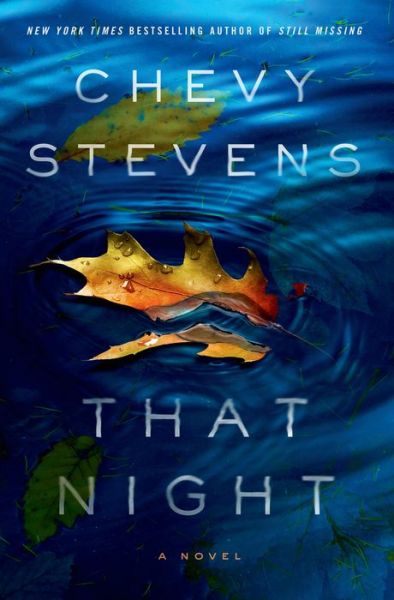
Maximum Shelf: That Night by Chevy Stevens

Maximum Shelf is the weekly Shelf Awareness feature focusing on an upcoming title we love and believe will be a great handselling opportunity for booksellers everywhere. The features are written by our editors and reviewers and the publisher has helped support the issue.

This review was published by Shelf Awareness on April 30, 2014.


that nightIn the small town of Campbell River on Vancouver Island in the late 1990s, Toni Murphy can’t wait to graduate from high school. Her parents are totally hassling her: they disapprove of her boyfriend, Ryan; her mom is controlling and angry; her father has become distant. A group of popular girls at school is determined to make her life miserable, and her too-perfect little sister, Nicole, has recently started hanging out with those very girls. Toni and Ryan intend to save a little money, get an apartment together and, eventually, leave town for good. Things are a bit rough at home, but they have a plan, and they are so close….

Then, one night, Nicole is killed. Toni and Ryan are convicted of her murder and sent to prison.

Nicole’s killer–or killers–not only took the life of their victim, but effectively Toni and Ryan’s as well, and the young love they shared: once out on parole they will never be allowed contact again. Toni and Nicole’s parents’ lives are ruined as well. Their mother holds onto her rage against her elder daughter, and their father’s indecision about whom to support ends up supporting no one.

Seventeen years later, Toni is being processed out of prison and into a halfway house when we meet her in the opening lines of That Night, the fourth novel by Chevy Stevens (Still Missing). She is frightened and unsure of how she’ll readjust to the outside world. It was so painful on the inside–being separated from Ryan and everything she knew–that the only way she could cope was to shut down. She stopped writing to Ryan in the men’s prison, asked her father to stop visiting and got into a lot of fights. Now that she’s out, her fellow parolees at the halfway house want to continue with violence, and Ryan wants to renew contact. He’s intent upon solving the crime they’ve been convicted of, but violating the parole conditions that forbid contact could land both of them back in prison; anyway, Toni feels the best way to move on is to put Nicole’s murder behind her. In returning to her hometown, however, she finds that no one else is ready to do that. Her mother is still furious, believing Toni killed her little sister; her father is still unsure whose side he’s on; it’s nearly impossible for an ex-con to get work, and even harder for her to keep it. And Toni’s high school nemeses, Shauna and her henchwomen, are still around, and still have a bone to pick. She makes just one friend: a rescue pit bull named Captain.

Slowly, Toni begins to settle in. Back in Campbell River, she goes to work at the Fish Shack, where she waited tables in high school–now they keep her (and her prison tattoos) hidden away in the kitchen. She lives with Captain on a small boat and checks in with her parole officer daily. Toni has now experienced severe bullying, incarceration and an egregious failure of the criminal justice system; at 34 years old, she’d like to just be left alone to put together whatever life she can. She doesn’t visit her parents, but she does see Ryan hanging around the marina where she lives. He’s pushing ahead in investigating Nicole’s death, against Toni’s advice, and he has his eyes on the girls who picked on her in high school–Shauna and her clique testified against Ryan and Toni at the trial, and Ryan wants to know why. What really happened that night? As Ryan’s investigations approach the truth, the events of 17 years ago feel very recent indeed; Toni may be in danger–and she may not be the only one.

That Night shifts back and forth between the events of 1996, when Toni’s teenaged world fell apart, and the present, with Toni newly released from prison and struggling to rebuild her life. Both are told in first person by Toni herself, although in two subtly different voices: that of the rebellious teen with short-term concerns and long-term dreams, and that of the ex-con whose hard-won and carefully constructed defense system is still brittle. This nonlinear style highlights Toni’s sense of confused and harried apprehension, of disruption. Flashbacks allow the reader to visit Toni behind bars, and these scenes, too, are evocative and disturbing.

Stevens matches the success of her previous novels with character-driven drama and a clear commitment to the particular nuances of her Vancouver Island setting. A strong sense of foreboding and a thoroughly compelling plot keeps her reader guessing, while a hint of romance broadens the appeal. Toni’s gritty, emotional, traumatized persona is both gripping and sympathetic. Foreshadowing and terrifying suspense are riveting in Stevens’s sure hands; readers will want to keep all the lights on as That Night moves into its final acceleration.


Rating: 6 dog walks.

Come back tomorrow for my interview with Stevens!

Maximum Shelf author interview: Lily King

Following yesterday’s review of Euphoria, here’s Lily King.

Lily King grew up in Manchester, Mass. She received her B.A. in English Literature from the University of North Carolina at Chapel Hill, and her M.A. in Creative Writing from Syracuse University. She has taught English and creative writing at several universities and high schools in the U.S. and abroad. Her three previous novels are The Pleasing Hour, The English Teacher and Father of The Rain. Her short fiction has appeared in literary magazines including Ploughshares and Glimmer Train, as well as in several anthologies. King is the recipient of a MacDowell Fellowship and the Whiting and PEN/Hemingway Awards, among others. She lives with her husband and children in Maine.

photo credit: Laura Lewis

photo credit: Laura Lewis


Presumably even this “loosely based” work required research into the field of anthropology and Mead’s life. Did you have any background to begin with? Did you enjoy this research?

It required a ton of research and no, I had zero background in anthropology or ethnology, not even one anthropology course in college! Like many writers, though, I have always felt like an extremely amateur and untrained anthropologist in the world, observing the huge, crazy mysteries of human behavior and writing it all down in novels.

On the one hand, you enjoy the research because it’s not writing, which is much harder, but on the other hand you miss writing miserably and feel like a part of you is dead. I had so much to learn before I could start, but because I always knew the book would be fiction, I didn’t want to get too attached to any one detail or fact. I read a lot of books at a squint, taking notes but always letting my imagination in on it, writing more notes on what could happen than what did happen, but at the same time trying to absorb all the information in some visceral way so that it felt like personal experience I could draw from when I started writing. And it was hard to know when to start writing. There was always, always more to read, more to learn. When I finally decided it was time, the research loomed over me. But once I wrote the first scene, I felt it become my story, and all that information became useful, not threatening.

What makes Margaret Mead such a good subject for this work? And when did you know you wanted to write about her?

I stumbled into the novel by reading a biography of Margaret Mead nine years ago and coming across this one short chapter about when she was way up this river in Papua New Guinea with her second husband and she met her third. She fell in love hard and fast in this completely isolated environment. She believed in an open marriage, what she called “polygamy,” and her husband did not, but she was very honest about her feelings and the whole thing, combined with the heat and mosquitoes and malarial fevers, was just a wild mess. So of course I thought, what a fantastic novel that would make. For a long time I didn’t believe that I would actually write it. But I kept going out and getting books about them and by them and taking notes and getting ideas while at the same time thinking: I cannot write this novel. I cannot write a novel about a love triangle between anthropologists in Papua New Guinea in 1933. It was preposterous. But I couldn’t seem to stop myself, either.

How did the writing of Euphoria differ from your three previous novels?

With the first three, I was able to just start writing. Each of them required a little detour to the library for something, but usually not until I was deep in, after the first draft had been written. But for this one I didn’t even write a sentence for a year after I got the idea. I was working on my novel Father of the Rain while reading everything I could get my hands on about Margaret Mead and Gregory Bateson and Reo Fortune. And when I got that first sentence–four sentences, actually–in a coffee shop, I didn’t write anything else for several more years. That little cluster of sentences, though, helped me feel I could write the rest someday. They are the words that open the book still and are not much changed from when I scribbled them down at the back of a notebook in that coffee shop. That was very different. With the other books, once I got the first sentences I kept going for fear the initial vision would cloud over and vanish.

Euphoria is told in first person by Bankson, who is the outsider in his own tale. This gives the reader a somewhat restrained perspective. How did you decide to tell it this way? Did you toy with giving Nell her own voice?

That’s an excellent question. The plan all along was for it to be told from Nell’s point of view. It was supposed to be her story entirely. And it did start that way. But after I wrote the first chapter, I realized I needed the reader to feel what was going on with Bankson, the man she is about to meet and fall in love with, so I wrote that next chapter from his perspective. It surprised me how much closer I was able to get to him, and so quickly, how I was able to get inside him in a way that I was not inside her. This is something that all the planning and plotting of a book can’t anticipate. I knew I was a bit in love with him even before I started writing, so I thought it would be so easy to write from Nell’s perspective about falling for him. I just never expected to identify with him so closely, sort of fuse with him. But once I did, I realized it was his story. I denied this for a while, actually, and tried to write the book from all three points of view, but apart from Nell’s journal entries, Bankson claimed the whole thing in the end.

How important is historical accuracy in fiction? How faithfully does your novel follow the historical record?

Fiction is called fiction for a reason. While I used what I read about a particular moment in the life of Margaret Mead as a springboard, I felt absolutely no allegiance to historical accuracy when it didn’t work within the story I was trying to tell. Some of Euphoria is historically accurate, but not because I forced it to be, just because those elements were useful to me. They inspired me. I love history and I love reading about history and I treasure what little I know about our past on this earth, but a novel is not where I go for facts. A novel is where I want to feel the truth. Sometimes you need facts to get at the truth; more often you need your own voice and vision.


This interview originally ran on April 23, 2014 as a Shelf Awareness special issue. To subscribe, click here, and you’ll receive two issues per week of book reviews and other bookish fun!

Maximum Shelf: Euphoria by Lily King

Maximum Shelf is the weekly Shelf Awareness feature focusing on an upcoming title we love and believe will be a great handselling opportunity for booksellers everywhere. The features are written by our editors and reviewers and the publisher has helped support the issue.

This review was published by Shelf Awareness on April 23, 2014.

euphoriaLily King (Father of the Rain) renders three young anthropologists in 1930s’ New Guinea with nuance, tenderness and charming ambiguity in Euphoria. King draws on the life of Margaret Mead and her relationships with her second and third husbands (Reo Fortune and Gregory Bateson, respectively), but the novel is only loosely based on their lives and work.

Nell Stone is an American, and has recently written a book that is receiving much attention for its controversial subject matter: the sex lives of children in the Solomon Islands. She is an up-and-coming young anthropologist being talked about around the world; when we meet her, she is just emerging from a year and a half in the field in New Guinea, alongside her husband, Fen. Fen is Australian, overbearing and decidedly threatened by Nell’s success, as fame and glory as an anthropologist have so far eluded him.

When Nell and Fen come out of the field, at a party they meet fellow anthropologist Andrew Bankson. He is fresh off a failed suicide attempt, haunted by the deaths of his two brothers and unable to find himself in either his native England or the tribal communities he studies. Bankson is lonely and attracted to the couple, and suggests that he establish them with unstudied “natives” nearby his own fieldwork; he wants to keep them as his friends and neighbors.

The three form an unlikely triangle of mixed alliances. Nell and Fen, for all their disharmony, share a history and an intimacy the loner Bankson can’t pierce. But Nell and Bankson achieve a singular connection of the minds: they inspire each other, each stimulating the other’s best work. With Fen’s sensitivity over and resentment of Nell’s talents, this is a dangerous but intoxicating symbiosis, a cerebral union that is sensual and nearly sexual. Bankson is, in fact, rather in love with both Nell and Fen. The two men establish their own bonds as well, when Fen nurses Bankson through a malarial fever. It is a love triangle, but also an intellectual one, and shadows the perceptions of each anthropologist about the tribes they live amongst. They already have very different approaches: Nell has loved, ever since she was a small child, exploring other worlds so that she can come back and tell her family, friends and now colleagues about her adventures; for her, the joy is in the description and the homecoming, but she also has a knack for integrating herself into a new culture. Fen, it seems, would rather become a tribesman than study or write about the tribes. Bankson struggles to participate, but is more inclined to observation–his background is in the natural sciences. As he writes, “I was raised on Science as other people are raised on God, or gods, or the crocodile.”

Lily King makes an interesting decision in choosing Bankson as her narrator, as he is the most isolated of the three, spending much of his energy in observing not only the tribal peoples he is meant to study, but also Nell and Fen. That the story of these three characters is told from the perspective of his outsider status means that the reader, too, is forever peeking in and around corners, hoping for more information. Nell’s voice is heard through journal entries eventually sent to Bankson by another old friend and possible love interest of Nell’s, but she remains tantalizingly difficult to access. The tension of this desire to know Nell better is central to Euphoria, for Bankson and for the reader.

King raises broader questions as well, as each anthropologist’s individual approach to his or her work is troubling in its own way. The tribal communities of the fictional Kiona, Mumbanyo, and Tam peoples invite consideration about the fields and methods of anthropology and ethnology. The Tam women, who do the trading and the artistry in their community, inspire Nell’s growing ideas about traditional gender roles, a stance that (predictably) does not sit well with the irritable Fen. Margaret Mead is known not only for her writings and work in anthropology, but also as a feminist thinker; in King’s hands, the Tam culture inspires the beginning of Nell’s own feminist development. As Bankson gravitates toward Nell’s empathetic and involved relationship with the Tam, Fen is planning a serious cultural crime, which will precipitate the final denouement. (The life stories of Nell, Fen and Bankson are quite different from their historical counterparts Mead, Fortune and Bateson, so there are no spoilers for readers familiar with that history.)

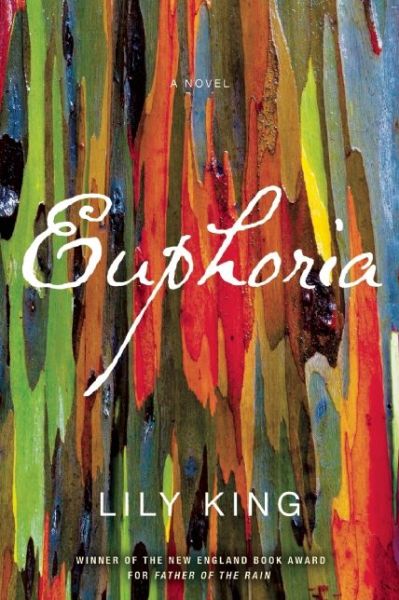
Euphoria is a masterpiece of dreamy, lyrical, sensuous writing and evocation of a sometimes frighteningly exotic New Guinea. Readers can expect to be enchanted by the setting, inspired by the free-spirited Nell, challenged by the question of respectful participant observation, angered by certain of the characters’ actions and teased by the sexual tension. As a bonus, the beautiful cover of Euphoria features the striking rainbow gum tree that figures in the plot of this remarkable novel.


Rating: 8 books.

Come back tomorrow for my interview with King!

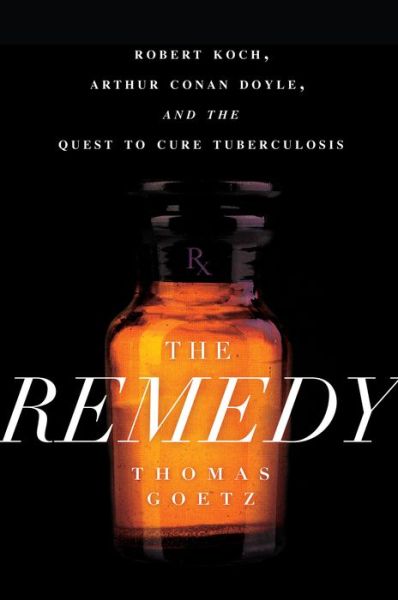
The Remedy: Robert Koch, Arthur Conan Doyle, and the Quest to Cure Tuberculosis by Thomas Goetz

The compelling connection between Sherlock Holmes and the search for a tuberculosis cure.

remedy

Thomas Goetz’s The Remedy achieves a rare feat: serious, accurate scientific writing that is also engaging and entertaining.

In the mid-1800s, the practice of medicine largely resembled groping in the dark. Patients came to doctors “with the hope of a cure but never the expectation of one.” The final decades of that century, however, were marked by extraordinary advances in science, technology and medicine: “germ theory” was developed, infectious diseases were better understood, and more-modern notions of hygiene and sanitation began to catch on. Robert Koch, a provincial German doctor, pioneered experiment design and research standards, and in 1882 he identified the bacterial cause of tuberculosis–the most deadly disease in human history.

Koch attempted to develop a cure for TB, which he presented in Berlin. Despite meticulous empirical methods he had established, Koch’s zeal for his remedy led to his downfall, as his treatment was unprovable. An obscure British doctor and sometime writer, also provincial, was the first to pen an appropriately skeptical response. Despite his criticism, Arthur Conan Doyle was a great admirer of Koch and appreciated his scrupulous observations; in fact, Goetz asserts that without Koch, “there may never have been a Sherlock Holmes as we know him.”

The intersection of Koch and Doyle brought the spirit of scientific discovery to crime detection, and the spirit of investigation to scientific research. Goetz’s exploration of their lives and their impact on the world as we know it is both historically significant and enthralling.


This review originally ran in the April 18, 2014 issue of Shelf Awareness for Readers. To subscribe, click here, and you’ll receive two issues per week of book reviews and other bookish fun!


Rating: 9 dead rabbits.

In addition to my shorter review, above, I’d like to add a few more details. A big part of what I loved about this book was the breadth of scope. For example, to provide his readers with an accurate view of what Koch, Lister, Pasteur, and other scientists of the day were up against, Goetz describes at some length the state of medicine in their time. He warns us against coming too easily to the idea of germs and microbes as self-evident; and funnily enough, I was talking with a friend about this book, and she said just that: isn’t it obvious that surgeons would wash their hands beforehand?? But as Goetz so carefully points out, no, not obvious at all; when first presented as a theory, germs were as ridiculous as the idea that the earth might be round. Etc.

Along with medical background, we learn about the common practices of farming and domestic life; we learn about the lingering national hatred that would have pitted Pasteur and Koch so strongly against one another in the aftermath of the Franco-Prussian War; and about the social constructs that led Arthur Conan Doyle to work so hard at being a doctor when he really wanted to be a celebrated author. (I was reminded of other authors I’ve read about, like Louisa May Alcott: Doyle was always frustrated by the great success of his detective stories in the face of the failure of his more literary novels, just as Alcott was annoyed by the success of Little Women–a book she didn’t like very much. And you know, Doyle killed off Holmes, only to be pressured into his resurrection.)

I suppose I’m a sucker for breadth of scope. Nonfiction that covers history, science, social issues, and literature – and does it in fine literary style, to boot – will always win my heart. Back to the theme of synchronicity that I’m written on before: the older I get and the more of this interdisciplinary study that I encounter, the more I am convinced that this is way we should study history. How many of us found history boring in high school? I did. But once you link music, literature, fashion, politics, science, military conflicts… on and on, once you link all these threads so that the world of the past comes alive – who could not be fascinated? I think we do our kids a real disservice by not embracing this kind of study in their regular schooling.

The Remedy is both a good read, and an examination of a piece of world history whose importance really can’t be overstated.

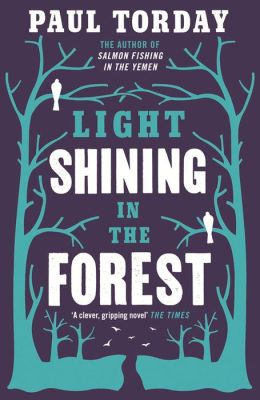
Light Shining in the Forest by Paul Torday

A disturbing thriller of missing children in a small English town, masquerading as a quiet tale about political red tape.

light shining in the forest

Light Shining in the Forest by Paul Torday (Salmon Fishing in the Yemen) begins as an eccentric, dreamy tale of an ineffectual pencil-pusher and a family distraught over a missing child whose trail has gone cold. A forester named Geordie works alone on a clear-cut at the English-Scottish border and remembers his missing stepson. A smarmy, self-satisfied career bureaucrat named Norman revels in his latest assignment: in a new pilot program of the British government he is given the title of “Children’s Czar” to the North East region, along with a hefty salary and a fine office and nothing to do. He sits at his fancy desk sipping lattes and waits to receive a mission that never comes.

Geordie’s stepson has been missing for months; but when more children go missing in a sleepy town nearby, an ambitious young journalist wonders if a children’s czar might be just the one to show some concern. Despite Norman’s repeated protest that his job is “strategic, not operational,” he is eventually goaded into action. When the unlikely team of journalist and bureaucrat initiates an investigation into the missing children, Light Shining in the Forest begins to accelerate into a thriller of great suspense and intensity. What started as a story of a surreal forest and quiet distress becomes a terrifying view into the mind of a monster, with religious overtones and paranormal possibilities and a panicked journey into the heart of the forest. Torday delights in creepy details as he turns his created world on its head; readers will be tempted to stay up late to finish reading but will need to keep all the lights on.


This review originally ran in the April 15, 2014 issue of Shelf Awareness for Readers. To subscribe, click here, and you’ll receive two issues per week of book reviews and other bookish fun!


Rating: 7 library books.

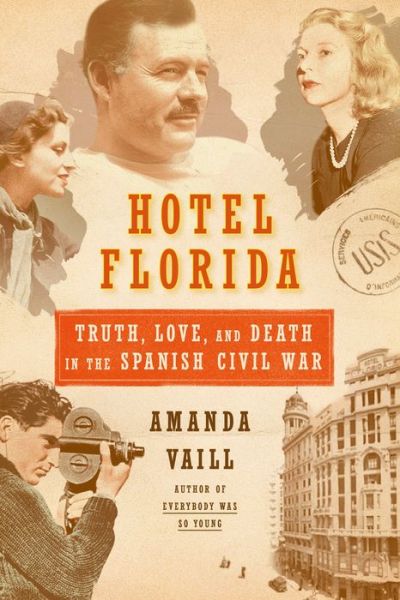
Hotel Florida: Truth, Love, and Death in the Spanish Civil War by Amanda Vaill

Vaill’s story of three love affairs, set against the Spanish Civil War, yields a nuanced perspective on war journalism and romance.

florida

During the Spanish Civil War, Madrid’s Hotel Florida was a meeting point for war correspondents, press officers and foreign intellectuals. Amanda Vaill (Everybody Was So Young) uses the hotel as a focal point to examine the war through the lives of three men and three women. These six individuals–all leftists of various stripes and pedigrees, converging on Spain from all over Europe and the U.S.–allow Vaill to range freely through the history of the war, which raged from 1936 to 1939.

Vaill follows her subjects chronologically, shifting locations through Francisco Franco’s rebellion against the Popular Front government and the events that led up to the Spanish Civil War. Arturo Barea of Madrid serves as a censor for the Propaganda Department, finding his leftist politics and commitment to truth well matched by his new assistant Ilsa Kulcsar, who comes from an Austrian resistance cell and speaks many languages. Meanwhile, Ernest Hemingway feels stifled in Key West; a new war to cover provides him with an excuse to get away from his wife and find fresh material to revive his stagnant writing. The attractive young journalist he’s just met, Martha Gellhorn, is also eager to get to Spain. Finally, a young man named Endre Friedmann is exuberantly pursuing his passion for photography in Paris when he meets the charming Gerta Pohorylle. They set off for Spain together with their ideals on their sleeves. Taking new names–Robert Capa and Gerda Taro–they will find fame and love and change the face of war photography forever. One of them will die on Spanish soil.

In addition to explaining the complexities of the Spanish Civil War, Hotel Florida lives up to its grand subtitle. Vaill examines the meaning of truth as conceived by each of her six players–writer, journalist, translator, censor, press officer, photographer. Their romances, all born of war, and the deaths to which they bear witness bring emotion and heartbreak. Buttressed by plentiful research, Vaill’s prose exhibits touches of Hemingway’s own writing style and a gift for narrative that keeps Hotel Florida accessible and engaging.


This review originally ran in the April 15, 2014 issue of Shelf Awareness for the Book Trade. To subscribe, click here.


Rating: 8 ideals.

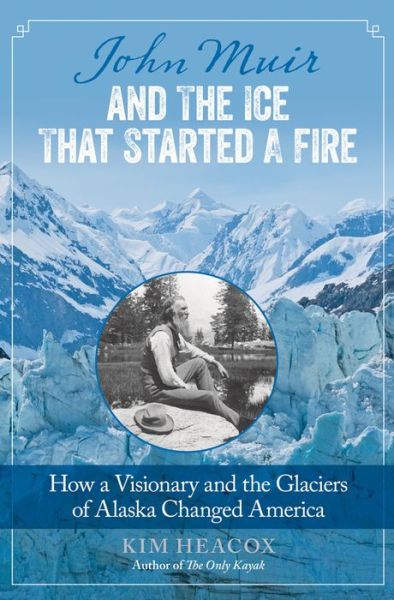
John Muir and the Ice that Started a Fire by Kim Heacox

The carefully researched and engaging story of John Muir, Alaska’s glaciers and the movement they built together.

muir ice

John Muir and the Ice That Started a Fire is neither a straightforward biography of Muir nor a simple study of the global significance Alaska’s glaciers. Rather, Kim Heacox (The Only Kayak) is concerned with the relationship between Muir and the glaciers that rivaled Yosemite in his affections, and the impact that pairing had.

From a humble background in Scotland and Wisconsin, and between stints as a surprisingly apt businessman, Muir lived as a self-described tramp, ardent nature lover and student of flowers, trees, mountains and–upon finally reaching Alaska–glaciers. His famed role as author and activist came late in life, and not easily: he found writing hard work and political activism distasteful, though necessary. However, Muir made perhaps the greatest impact on conservation of any individual in United States history.

Heacox meticulously researched and lovingly describes Alaska’s rivers of ice and Muir’s path toward them, his emergence as writer and preservationist, and his far-ranging influence in legislation, literary legacy and new traditions–including the birth of the conservation movement as we know it. Though often descriptive rather than persuasive, Heacox lends his own voice to the cause in his final chapters: “To debate [climate change] is to give credibility to an argument that shouldn’t exist.” He closes by adding the arguments of Aldo Leopold, Bill McKibben and Derrick Jensen to Muir’s, in the interest of preserving our wild spaces–thereby continuing Muir’s work.


This review originally ran in the April 11, 2014 issue of Shelf Awareness for Readers. To subscribe, click here, and you’ll receive two issues per week of book reviews and other bookish fun!


Rating: 8 little dogs.