West of Sunset by Stewart O’Nan

F. Scott Fitzgerald’s final, less glorious years in Hollywood, fictionalized with nuance and grace.

sunset

“A poor boy from a rich neighborhood, a scholarship kid at boarding school, a Midwesterner in the East, an Easterner out West,” F. Scott Fitzgerald “knew better than anyone how to live in an imaginary world.” In West of Sunset, Stewart O’Nan (The Odds) fictionalizes Fitzgerald’s final four years in the late ’30s, spent in Hollywood scraping by, writing and editing screenplays while Zelda rides out her own ups and downs at Highland Hospital. Their years of wealth, fame and adventure are behind them, and though he lives modestly by Hollywood standards, Scott’s finances are increasingly desperate, with Zelda’s hospital bills to pay, their daughter Scottie’s tuition and his own living expenses.

Between pills to sleep and pills to wake up, Scott struggles to hide his heavy drinking from his employers and eventually falls in love. He continues to visit Zelda as her mental illness persists and sees Scottie on holidays, while his girlfriend, Sheilah Graham, barely tolerates his drinking (not to mention his marriage). In these years, Fitzgerald begins but does not finish The Last Tycoon, his last manuscript.

O’Nan brilliantly, sensitively portrays Fitzgerald’s internal drama with a tone of wry wit and doom. The nuances of Zelda’s character are apt and appropriate, and appearances by Dorothy Parker, Hemingway and Humphrey Bogart add color and humor. O’Nan’s characterization and dialogue are spot-on, and his choice of the less-glamorous years of his subject’s life yields a beautiful, elegiac novel worthy of its model.


This review originally ran in the January 13, 2015 issue of Shelf Awareness for Readers. To subscribe, click here, and you’ll receive two issues per week of book reviews and other bookish fun!


Rating: 8 Cokes.

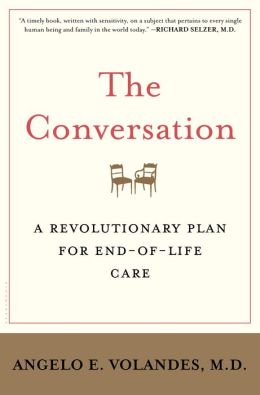
The Conversation: A Revolutionary Plan for End-of-Life Care by Angelo E. Volandes, M.D.

A physician’s fervent quest for better information about medical options for patients nearing their end, and the steps necessary to make those choices clear.

conversation
In The Conversation: A Revolutionary Plan for End-of-Life Care, Angelo Volandes, a medical doctor for decades, focuses on the extensive, intensive, intrusive medical interventions that patients routinely receive at the end of life, many of which extend life by a matter of hours or days or not at all, while decreasing its quality substantially. He earnestly argues that every patient should be offered the option to choose among three broad categories of care: life-prolonging, limited medical and comfort care–in other words, the choice between quantity and quality of life. The Conversation advocates for all patients and families to receive information about what end of life care looks like within these three categories, and firmly states the importance of patients, families and medical professionals having what he calls the Conversation about end-of-life wishes openly and often.

To make these points, Volandes describes his upbringing as the child of Greek immigrants and the impact it has had on his life: from his start as a student of Socrates and a Greek diner cook, his stint as a philosophy major and then his work as a medical practitioner, he has been interested in what good life (and good death) are. Appropriately, Volandes neither attempts nor claims to be impersonal or unemotional about this charged topic; rather, he brings his personal and professional experiences as well as research to his impassioned argument.

The majority of the book is devoted to stories of patients, families and circumstances–and Volandes’s own attempts, good and bad, at approaching the Conversation. With names changed, these are real-life anecdotes of choices made with more or less preparation and knowledge of what a decision will entail, or what an incapacitated patient would have wanted. The last quarter of the book is composed of several appendices and a lengthy, narrative notes section, all of which provides substantive hands-on advice aimed variously at the patient, or the patient’s spouse or children. The Conversation is a how-to manual, enlivened by engaging–if occasionally painful–true stories. Volandes makes his points succinctly and convincingly and offers readers the tools to make change within their own lives.


This review originally ran in the January 6, 2015 issue of Shelf Awareness for the Book Trade. To subscribe, click here, and you’ll receive two issues per week of book reviews and other bookish fun!


Rating: 7 people.

God Loves Haiti by Dimitry Elias Léger

An inspired and nuanced portrayal of politics and love, with a backdrop of natural disaster.

haiti
Dimitry Elias Léger’s debut novel, God Loves Haiti, takes place in the days just before, during and after the devastating earthquake that struck Port-au-Prince in 2010. Those 35 seconds, coupled with the mayhem and aftershocks that followed, killed hundreds of thousands, but among the survivors are a politically important old man, a vibrant younger one and the woman who has recently chosen between them but still struggles with her choice. Natasha is an artist, deeply passionate about her painting, though she’s also passionate about the poet Dante, her religion and the politics and business that engross her husband and her boyfriend. All three have different relationships to the colorful Haitian community, which is epically short on resources for everyday life, let alone a disaster of these proportions. All three choose and experience different paths after the quake hits.

Asking big questions is part of Léger’s charm, but although subjects like love, religion, sin, redemption and national identity and value seem particularly weighty against this backdrop of human suffering, the novel has thoroughly winning comic moments, too. The narrative jumps around in time to visit each member of the love triangle before and after the earthquake, and to track each character’s development. The atmosphere Léger evokes manages simultaneously to be heartrendingly realistic and dreamlike: the survivors of tragedy and disturbing pain naturally operate with heightened and distorted perceptions. The irregular chronology, quick pacing and lyrical prose combine for an artistic success that is both surprising and satisfying.


This review originally ran in the January 6, 2015 issue of Shelf Awareness for Readers. To subscribe, click here, and you’ll receive two issues per week of book reviews and other bookish fun!


Rating: 7 aerial views.

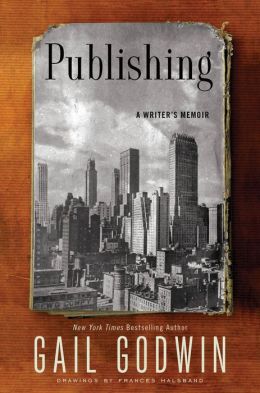
Publishing by Gail Godwin

In a winning voice, novelist Gail Godwin shares her experiences in publishing, which are alternately humorous and moving.

publishing

Gail Godwin is the author of 14 novels, as well as story collections, nonfiction and memoir, now including Publishing: A Writer’s Memoir, which she calls a “meditation on publishing.” In vaguely chronological fashion, she recounts her experiences with the industry; toward the end, she reflects upon earlier times.

Godwin begins with her years as an aspiring writer. Knowing well her mother’s progress from collegiate playwright to journalist to author of magazine romance stories, she is plagued by a hunger for publication and success (which presumably come together). She writes about failed marriages, fiction workshops and teachers who were encouraging and helpful (as well as those who weren’t), rejection and, finally, the book that sold: The Perfectionists, published in 1970. Several poignant chapters cover the “dance” between an author and an editor, with vignettes of each of Godwin’s dance partners over the years, several of whom she lost to unexpected deaths.

At points, her tone becomes elegiac, but Publishing is often funny and joyful as well. In a series of anecdotes, Godwin muses on book tours (the question of funding, author escorts, how long a reading modern audiences will tolerate, the new practice of hiring facilitators to help authors along in public appearances) and the value of bad book reviews. She profiles wonderful, helpful, joy-bringing people, and though she humorously describes the less-pleasant people she has encountered, she graciously avoids naming names. These entertaining, elegant, knowing recollections are accompanied by beautifully simple and appropriate black-and-white line drawings by Godwin’s friend Frances Halsband, which subtly add to the reader’s experience.

While her accounts of writing and publishing are fascinating and amusing, Godwin’s central strength is in her utterly charming personality: wise, occasionally self-deprecating and quietly playful. As promised, Publishing is not a history of the industry nor an instructive manual for the next generation of aspiring writers. It’s simply one woman’s well-told memories, peopled by appealing characters, sketched with wit. Stories about family, travel, love and life make this a book not only for fans of memoir, or dedicated readers, writers, editors and publishers, but for anyone who has pursued a dream or appreciates those who do.


This review originally ran in the January 8, 2015 issue of Shelf Awareness for the Book Trade. To subscribe, click here, and you’ll receive two issues per week of book reviews and other bookish fun!


Rating: 7 funerals.

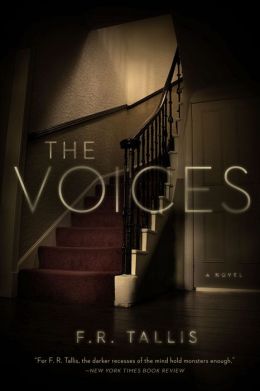
The Voices by F. R. Tallis

A haunted house inhabited by an increasingly troubled family.

voices
The Voices, a chilling tale of supernatural snooping by F.R. Tallis (The Sleep Room), is set in a well-off London neighborhood during the 1960s. When Christopher and Laura Norton move into their newly purchased and renovated old home with their four-month-old daughter, almost immediately they begin hearing strange things. Christopher, an avant-garde composer, is frustrated that his career has come to be defined by sci-fi music soundtracks; the ghostly voices–communications from the dead?–might be just what he needs to restart his more “serious” calling. Laura is simply terrified; she has always had accurate intuitions and now she is sure the voices are speaking her daughter’s name. Christopher begins sampling the voices for what he hopes will be his career-saving masterpiece; but with what consequences?

On its surface, The Voices is a ghost story set in a haunted house. But its historical setting adds complexity: Laura, a former model, reads The Feminine Mystique and makes new female friends at bookstore readings, as Christopher studies the economic challenges facing his country and his household. Their marriage is threatened not only by the voices and the stress they bring but also the changing times and the family dynamics to which Tallis (a clinical psychologist) applies extra scrutiny. The Nortons’ closest friends, also multifaceted, offer another layer of potential support, betrayal or suspense. With the added dimension of interpersonal relationships, this horror story is undeniably hair-raising.


This review originally ran in the January 2, 2015 issue of Shelf Awareness for Readers. To subscribe, click here, and you’ll receive two issues per week of book reviews and other bookish fun!


Rating: 6 knocks.

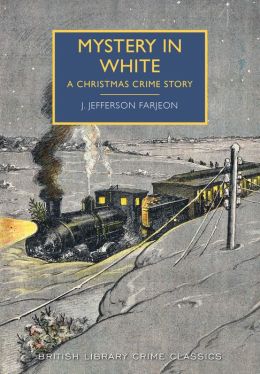
Mystery in White: A Christmas Crime Story by J. Jefferson Farjeon

A captivating puzzle mystery involving strangers thrown together by chance in a nearly snowbound British country house.

mystery
British crime novelist J. Jefferson Farjeon’s Mystery in White was first published in 1937 and receives a brief introduction to accompany this new release. It’s a classic puzzle, timeless even in its charming historic setting. A group of strangers gather in a third-class train compartment a few days before Christmas: an “elderly bore”; a young chorus girl; a clerk who “did not have spots, but looked as though he ought to have had”; a brother and sister; and an elderly scion of the Royal Psychical Society. When relentless snow shuts down the tracks, they flee an apparent murder on the train into the “strange fairyland” of whiteness outside. They happen upon a fine country estate, but the danger only mounts.

The door is unlocked, fires lit and tea set out; though no one appears to be home, the kettle is boiling over. This setting is not the closed environment it seems: in their investigations, members of the party tramp about in the snow only to find their footprints fade quickly and paths are obscured. The danger of losing oneself in the blizzard is added to the danger of knife-wielding lurkers.

Farjeon increases the pace and plays out suspense with an expert hand. His characters are appealing, their plight both picturesque and distressing; there is just a hint of the ghost story to this whodunit. Mystery in White is, in short, an elegantly, enchantingly entertaining tale to be enjoyed on a chilly evening while safely indoors.


This review originally ran as a *starred review* in the January 2, 2015 issue of Shelf Awareness for Readers. To subscribe, click here, and you’ll receive two issues per week of book reviews and other bookish fun!


Rating: 7 windows.

Screenplay by MacDonald Harris

An enthralling, time-traveling version of Alice, in dual wonderlands of 20th-century Hollywood.

screenplay

Originally published in 1982, Screenplay by MacDonald Harris (The Balloonist) exhibits remarkable sleight of hand with two parallel versions of Los Angeles. Alys was raised in the late 20th century by fabulously wealthy, unconventional parents and orphaned at age 18. With no personal connections and unlimited money to burn, he amuses himself with unusual old books and music and soulless sexual liaisons. An odd old man shows up at his doorstep and requests to rent a room–though no room has been advertised. He introduces himself as Nesselrode, a film producer, and says he can get Alys into pictures.

Soon Alys’s tenuous link to modern 1980s L.A. falters as he steps through a screen into black-and-white 1920s Hollywood with Nesselrode as a surly, time-obsessed guide. In this alternate world, he falls in love with a beautiful starlet, but can they make a life together in her time? Or in his?

In addition to the unmistakable overarching reference to Alice’s Adventures in Wonderland, Harris’s novel recalls the moral questions of The Picture of Dorian Gray and Alys himself could have stepped from the pages of The Great Gatsby. Even with such classics for comparison, Screenplay is a masterpiece of darkly playful cunning. Harris’s evocative prose, in Alys’s disturbingly clinical, coldly self-indulgent first-person narrative, is both intoxicating and disquieting; the altered reality here is more sinister and sensual, even erotic, than in Carroll’s Wonderland. The tension in this memorable and singular dreamscape builds with perfect pacing to an ending that raises more questions than it answers.


This review originally ran as a *starred review* in the December 30, 2014 issue of Shelf Awareness for Readers. To subscribe, click here, and you’ll receive two issues per week of book reviews and other bookish fun!


Rating: 8 toasters.

You’re Not Lost if You Can Still See the Truck: The Further Adventures of America’s Everyman Outdoorsman by Bill Heavey

Brief doses of amusing, thoughtful and compassionate reflections on outdoorsmanship.

not lost

In his third volume of collected works, You’re Not Lost If You Can Still See the Truck, Bill Heavey (It’s Only Slow Food Until You Try to Eat It) mainly draws from his work in Field & Stream, where he serves as editor at large. Spanning 26 years, these pieces focus largely on fishing, hunting and general outdoor antics, but occasionally touch on more personal subjects, such as fatherhood, divorce, grief, health and family. Self-deprecating humor is clearly Heavey’s greatest strength (especially refreshing, given the hyper-masculine hobbies under consideration), and the bulk of this collection is laugh-out-loud hilarious, but he demonstrates a distinct ability for gravity when called for, which adds a welcome note of complexity. For example, “Can I Tell You Something?” soberly explores the reasons some hunters and fishermen cease to enjoy certain aspects of their sports.

Heavey provides tongue-in-cheek critiques of the outdoor enthusiast’s retail market, tells charmingly and sometimes embarrassingly funny stories of his escapades and generally exhorts the reader (presumably an everyman or -woman like the author) not to take himself too seriously. His satisfyingly personal tone renders him a fully developed figure–a friend, even. The collection is more than the sum of its parts, tracing the arc of an amateur becoming a seasoned outdoorsman (though not an expert, as Heavey would be quick to point out), with examples of his persistent incompetence. Enjoyment of the entertaining result does not require a love of hunting or fishing.


This review originally ran in the December 30, 2014 issue of Shelf Awareness for Readers. To subscribe, click here, and you’ll receive two issues per week of book reviews and other bookish fun!


Rating: 7 packs of Rage Titanium two-blade expandables. (No, I don’t know what that is, either.)

When Books Went to War: The Stories that Helped Us Win World War II by Molly Guptill Manning

A heartfelt history of Armed Services Edition paperback books that helped save the sanity of many GIs in World War II.

books went

Molly Guptill Manning (The Myth of Ephraim Tutt) opens When Books Went to War by documenting the horrified response in the United States to Nazi Germany’s book burnings, beginning in 1933. Bibliophiles fought back in what was characterized as a “total war” of both military might and ideas.

To supply bored, lonely troops with reading materials, librarians in the U.S. organized the Victory Book Campaign, which collected more than 10 million books. To educate the public, the Council on Books in Wartime recommended relevant, topical titles for readers at home, but it found its stride with Armed Services Editions (ASEs). These pocket-sized, lightweight paperbacks, designed for use in the field, not only provided entertainment, escape and enlightenment to American servicemen, but also revolutionized the paperback book in a market that had previously shunned it, employed struggling publishers and helped to jumpstart the publishing industry after the war. Between 1943 and 1947, more than 120 million copies of more than 1,200 fiction and nonfiction titles were printed and efficiently distributed to American soldiers in every theater.

In her moving history, Manning fervently describes the many GIs who returned from war with a love of reading they hadn’t had when they left home, wrote impassioned letters to authors and council members and attributed their college educations to books they discovered as ASEs. For military and general history buffs and lovers of books and libraries, it is difficult to imagine a more inspirational story than this celebration of reading in a time of war.


This review originally ran in the December 23, 2014 issue of Shelf Awareness for Readers. To subscribe, click here, and you’ll receive two issues per week of book reviews and other bookish fun!


Rating: 7 letters.

Offcomer by Jo Baker

A delicately wrought debut novel about self-identity in a big, rough-edged world.

offcomer

Published in the United States for the first time, Offcomer is the striking first novel by Jo Baker (Longbourn). In Belfast, Claire Thomas is struggling with a messy relationship with an overstressed and self-important academic; a degrading, beer-stained job in a second-rate pub; loneliness; and self-harming. Baker presents Claire’s story in disjointed chronology, beginning mid-crisis, jumping back to when she meets her troublesome philosopher boyfriend, Alan, for the first time, then forward to the aftermath of a minor breakdown, as she travels home to confront her mother about the misrepresented mysteries of their shared past.

Claire, a recent college graduate floundering through early adulthood, is looking for an identity, a place in her world. In the dialect of Lancashire, an “offcomer” is an outsider or a nonlocal. Her family history is shadowy, fractured and geographically unstable; true to her family’s offcomer status, she can’t get comfortable, can’t decide who she is: “Claire saw herself reflected in a hundred different ways, distorted, fragmented, multiplicitous…. She couldn’t begin to resolve… discarded, throw-away ideas of Claire.” One of Offcomer‘s artistic feats is that of perspective. By shifting slightly from Claire’s point of view to Alan’s, for example, Baker subtly asks questions about the truth and nature of their self-images. Claire’s specific trials and disconnected family history are a vital part of her coming-of-age; her story is a universal one made fresh in Baker’s creative hands. Thoughtful, somber and perceptive, Offcomer will resonate with all who have searched for home.


This review originally ran in the December 23, 2014 issue of Shelf Awareness for Readers. To subscribe, click here, and you’ll receive two issues per week of book reviews and other bookish fun!


Rating: 8 bags.