Suitcase City by Sterling Watson

A reformed drug dealer gets pulled back into the game in this tense, bloody thriller with a strong sense of place and a soft heart.

suitcase

Suitcase City by Sterling Watson (Weep No More My Brother) opens with an extended flashback to protagonist Jimmy Teach’s time in small-town Florida. At the time, Teach has just finished a brief career in professional football and is back in the game of smuggling drugs, or in his words, operating as a “maritime consultant.” When a business deal with Guatemalans goes sour, Teach competently cleans up the mess, and moves on.

The bulk of Teach’s story then takes place nearly 20 years later, in late 1990s Tampa, Fla., where a rundown neighborhood called Suitcase City gives the novel its name. Teach is reformed, more or less: he’s vice-president of sales at a pharmaceutical company and has rebuilt a relationship with his teenaged daughter after his wife’s (her mother’s) death. But a little incident inside a bar one Friday afternoon–a tiny mistake, a single piece of rotten luck–and suddenly Teach finds himself worried about losing his house, his job, the relationship he’s built with his daughter, and maybe his own life.

Suitcase City is nearly halfway over before the reader finds out who Teach’s enemies are and what the present beef is about, but this lengthy plot development is never boring or slow–quite the opposite. Every moment is riveting, making this a difficult book to look up from at all; the reader is every bit as concerned as Teach over the maddening mystery of who or what in his past is pursuing him, and why. To get answers and solutions, Teach has to look into his past as well as consider his future. Along the way, he gets his hands dirty with blood, gore, prostitutes and drug dealers more sophisticated than anyone involved in his “maritime consulting” two decades ago.

Watson’s magic is in pacing and taut prose, in the details that make his Florida setting so compelling–boats and bilge, lobsters and golf–and in a father’s love for his daughter. Diverse characters enliven Teach’s world, including his charming daughter, a pushy reporter and a colorful pair of police detectives who represent a range of competence and demeanor. In the end, Teach is flawed but likable, and Suitcase City is an absorbing thriller, a vivid adventure in a bright, humid, perilous underworld.


This review originally ran as a *starred review* in the February 13, 2015 issue of Shelf Awareness for Readers. To subscribe, click here, and you’ll receive two issues per week of book reviews and other bookish fun!


Rating: 7 tee times.

Maximum Shelf author interview: Erik Larson

Following yesterday’s review of Dead Wake, here’s Erik Larson: Ideas and Process.


Erik Larson is the author of four national bestsellers: In the Garden of Beasts, Thunderstruck, The Devil in the White City and Isaac’s Storm, which have collectively sold more than 5.5 million copies. His books have been published in 17 countries. Larson began his writing career as a journalist, and now gets to travel the world researching his works of nonfiction. [You can read a longer and surprisingly hilarious bio written by the man himself here.]

larsonTo begin, my mother made me promise I’d ask: how do you choose the diverse subjects of your books? What makes for a compelling story that you feel driven to tell? Why the Lusitania?

Well, you tell your mother it’s none of her business. Actually, no, please tell her that, really, I have no idea. There’s more truth to that than I care to admit. The hunt for each book idea is a hard one for me, and typically takes about a year. To write the kind of history I write, I need to find real-life events that lend themselves to being told as stories–true stories–with beginnings, middles and ends. There has to be a clear, ascending narrative arc, and there has to be a rich enough trove of archival materials to make the story and characters come alive without massaging the facts. And, it has to be something I want to spend the next few years working on. I often think finding that next idea is like finding a spouse–you have to kiss a lot of frogs before you find one that kisses back.

What drove me to write about the Lusitania was the potential it offered for nonfiction story-telling–for crafting a narrative full of real-life suspense. A nonfiction maritime thriller. The archival base was extraordinarily rich, full of elements that I felt no one else had adequately mined–all the things I love to work with: telegrams, diaries, love letters, secret documents, even the German submarine commander’s hour-by-hour war log. It doesn’t get any better than that. Whether I succeeded, of course, is for readers to decide.

Aside from the obvious choices to concentrate on Captain Turner and Kapitänleutnant Schwieger, how did you choose the individual stories to follow? Were they (Charles Lauriat, Dwight Harris, Theodate Pope, etc.) simply the ones who left behind the most documentation?

Exactly! The three you cite all left vivid, detailed accounts, especially Lauriat, who wrote a book on the subject, and in addition left a broad and deep documentary trail. I also liked the fact that Lauriat was a famous bookseller. How nice that a time once existed when a bookseller could become famous and travel in first class on Cunard ships and be recognized on sight. As for Pope, I found her backstory particularly compelling: her depression, her interest in the supernatural, the fact she was a pioneering female architect and pal of Henry James and that she was in that cadre of American women who were first to embrace their identity as feminists, back when the term itself was brand new.

You state in your “Note to Readers” that you are very careful to stick to the facts, with no embellishment. And yet your narrative is incredibly lively. Please explain the importance of that rule for you–the integrity of pure fact–and how you make the bare truth so gripping.

They key lies in detail. There are no shortcuts–you have to do the necessary digging to find the bits and pieces that will ignite the reader’s imagination. It’s the reader, I’m convinced, who does the animating of my narratives. I just present the details necessary to allow that to happen. For example, I often have people tell me that I must have made some things up, because I have actual dialogue in my books. But in fact, if there is dialogue, it’s pulled directly from some actual historical document, like a letter, or memoir, or newspaper interview. More often than not, however, what they point to isn’t even dialogue–it just seems to be dialogue, and reads that way in their imagination. Which is wonderful. The human mind loves to connect dots and finish sentences and make disparate bits of information seem like a coherent whole.
lusitaniaWhat do your processes of research and writing look like, and are they in fact two separate processes? What’s the most enjoyable part for you?

They are two separate processes that merge in the middle. Ideally I’d like to have all my research done before I start to write, but that never happens. Invariably I reach a point where the book just has to come out. It’s like how my wife describes pregnancy: get this baby out of my body, NOW. Passages come to mind, and I start writing. At first I’ll just write them in my journal–I keep a journal for each book–then I’ll start writing things in a computer file called “Passages.” Then I enter my page-a-day mode, where I get up early, and write a single page before breakfast, and then return to my research for the rest of the day. Pretty soon the writing supplants the research almost entirely–although the research really never ends, because you always end up having to check things. What did early NYC street lamps look like? What was the weather like on a particular day? What were people reading in the newspapers in New York on the day the Lusitania departed? That kind of thing.

How do you keep so many characters and events in such a complex world history straight?

The most powerful tool is chronology. Before I start to write, I build a chronology that contains every worthwhile fact that I’ve mined from archives, books and whatever, with each item coded in such a way that I can readily find the source document in my files. This chronology becomes a de facto outline, with various events clumping at various points, and with each character’s role clearly defined. Using this as a spine, I craft the first draft. Then, I lay the whole thing out on the floor of our bedroom and, using a scissors and tape, I literally cut everything up and move it around, hunting for the most natural structure, while hoping that no one will open a window at the wrong moment. Once my dear departed dog, Molly, walked across the manuscript for Thunderstruck. Luckily only one small passage was displaced–it wound up on the balcony outside my bedroom.

What are you or will you be working on next?

I’m exploring a possible idea. This is early for me, so, being a pessimist, I’m pretty sure the idea won’t pan out. But I’m writing a test proposal. I won’t say what the subject is, because I never talk about works in progress until they’re done. It’s very annoying for my friends and family, though my wife and daughters all know early on. The proposal is a draft of what I would eventually send my agent, and which he in turn would send to my publisher, and which ideally my publisher would love so much that she would spend gobs of money to acquire it. Doing a proposal is a good test of an idea’s strength. If you get through the process–writing an opening chapter, an overall description and a chapter outline, maybe 80 to 100 pages in all–you have a pretty good sense that it’s a viable idea and that halfway through you won’t hang yourself from boredom.


This interview originally ran on February 9, 2015 as a Shelf Awareness special issue. To subscribe, click here, and you’ll receive two issues per week of book reviews and other bookish fun!

Maximum Shelf: Dead Wake: The Last Crossing of the Lusitania by Erik Larson

Maximum Shelf is the weekly Shelf Awareness feature focusing on an upcoming title we love and believe will be a great handselling opportunity for booksellers everywhere. The features are written by our editors and reviewers and the publisher has helped support the issue.

This review was published by Shelf Awareness on February 9, 2015.


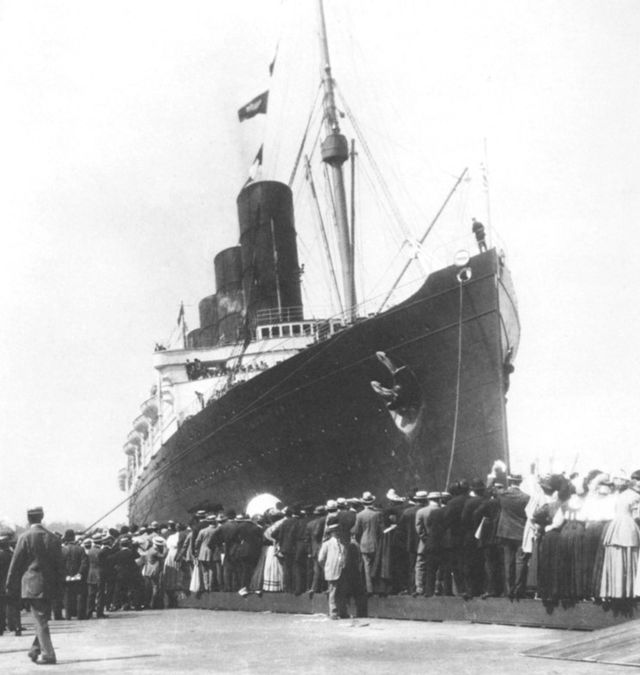
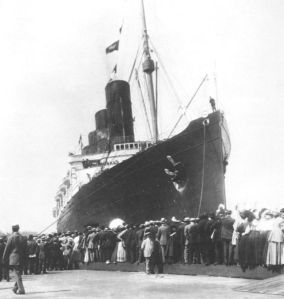
dead wakeIn May of 1915, a torpedo fired from a German submarine struck the RMS Lusitania, a British passenger ship with nearly 200 Americans aboard. She sunk off the coast of Ireland in less than 20 minutes (due to a sequence of events unforeseen even by its attacker), killing 1,200 passengers and crew, fully half of whose remains were never recovered. Common knowledge has it that this event drove the United States to enter a European war that would become World War I, but, in fact, while the Lusitania‘s fate played some role in that decision, it took two full years and the secret German Zimmerman telegram for the U.S. to enter the war in 1917.

Erik Larson examines this extended U.S. isolationism, the final days aboard the Lusitania, and related events and characters in Dead Wake: The Last Crossing of the Lusitania. As in his earlier books (Isaac’s Storm; In the Garden of Beasts), Larson presents exhaustive research with precision and accuracy, in extraordinarily compelling prose. Dead Wake is a masterpiece of gripping narrative nonfiction, arguably the most riveting of Larson’s works.

Nearly 2,000 people boarded the Lusitania in New York City, bound for Liverpool, including 1,300 passengers, of whom 189 were Americans. An unusually large proportion were children and babies. The Lusitania was the biggest and fastest civilian ship on the seas in that 10th month of European war. These superlatives–plus the reassurances of the captain, William Thomas Turner, and the Liverpool-based Cunard Line–allowed the ship to confidently set sail despite a German warning published in all the New York papers on the morning of the Lusitania‘s departure, that “vessels flying the flag of Great Britain, or of any of her allies, are liable to destruction.” Larson provides detail and humanity by profiling several passengers and crew members, including a Vanderbilt heir; a psychic; and a Boston bookseller who boarded with a small but invaluable collection of William Makepeace Thackeray’s original illustrations and Charles Dickens’s own copy of A Christmas Carol, complete with the author’s marginalia.

Just weeks earlier, another vessel had departed from the other side of the Atlantic Ocean. German Unterseeboot-20 was captained by Walther Schwieger, a well-regarded young Kapitänleutnant known for his aggressive and innovative tactics. Because submarines lost radio contact with their bases almost immediately upon departure and remained out of contact for much of their cruise, Schwieger was in full charge of his boat, empowered to cruise, dive and attack on his own, with the full support of his government. In following Schwieger’s submarine in the weeks leading up to the climax, Larson gives the story dimension; far from presenting the German captain as a monster, he is humanized, for example, by the devotion of the men who worked under him, and the presence on board of a litter of puppies rescued, interestingly, from another ship sunk by torpedo.

As he builds toward the inevitable intersection of U-20 with the Lusitania, Larson introduces more characters. Captain Turner of the Cunard Line had decades of experience at sea, and had just testified in a civil case against the owners of the Titanic on behalf of the families of deceased passengers. He was known to his men as a brave and capable but old-fashioned captain, with “one foot on the deck of a sailing ship.” U.S. President Woodrow Wilson had had a rough year, even without the European conflict: having lost his wife Ellen in late 1914, his mourning left him unmoored and struggling to concentrate, until he met widow Edith Bolling Galt. His love for her would prove overwhelming, and their courtship strained–she rejected his first marriage proposal. This love story is affecting, and if it serves as a distraction from the sinking ship at the center of this book, that is a fine style choice by Larson: it was a distraction for Wilson, too.

Meanwhile, a secret section of the British Admiralty was tasked with intercepting and decoding German wireless messages, a purpose known to only nine senior officials, who were hampered in using any information gained for fear of having its cryptanalysis ability revealed. They would therefore fail to warn Turner of U-20’s preying presence in the waters he sailed. Such parallel plots and individual profiles add color and depth to Larson’s account, as when the chief of British naval intelligence is described as “part Machiavelli, part schoolboy.”

The Lusitania‘s story is in itself moving, and carries great historical significance, but these events positively glitter with life in Larson’s engaging, quick-paced and captivating prose. Though it incorporates well-documented history, Dead Wake still contains elements of suspense for all but the most expert readers; as Larson acknowledges, he had his own misconceptions coming into this project, and learned surprising facts in his research, as readers surely will. The pages fly by as such details are revealed and the action ratchets up toward a climactic event that we all see coming, but that still makes us catch our breath. In spellbinding, immediate language, Larson contrasts the “books, and cigars, and fine foods, afternoon tea, and the easy cadence of shipboard life” on the Lusitania with the “U-boat sweat,” foul odors and close air aboard U-20. His enthralling description of passengers joking about submarines and torpedoes, in the very moments before the torpedo strike, and “making polite apologies” just after, in the scramble for life jackets, keep the reader fully engaged. Appealingly, in his “Note to Readers” and “Sources and Acknowledgments,” Larson writes in a more personal voice about the joy of the research process, and about his frank difficulty in understanding the passengers who boarded the Lusitania in the face of warnings from Germany about travel in a war zone.

Dead Wake is both a thoroughly satisfying read, and an unparalleled adventure into world history. Larson’s fans will rejoice, and grow in number.


Rating: 8 life jackets.

How lucky am I to get to interview Erik Larson?? Come back tomorrow to read the result.

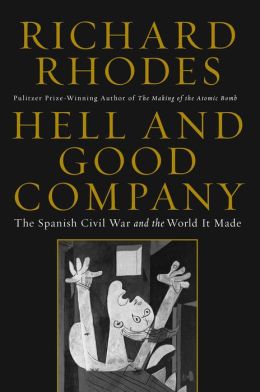
Hell and Good Company: The Spanish Civil War and the World it Made by Richard Rhodes

The Spanish Civil War, and its medical, military and artistic contributions to modernity.

hell

The Spanish Civil War was a precursor to World War II, and served as a practice field where medical and military leaders experimented with new technologies and refined strategies. Creative minds from around the world drew inspiration and horror from the conflict, yielding Picasso’s Guernica, Hemingway’s For Whom the Bell Tolls, Miro’s El Segador and Orwell’s Homage to Catalonia. In Hell and Good Company, Richard Rhodes (The Making of the Atomic Bomb) examines the Spanish Civil War not in exhaustive chronology or complex international intrigue–although both are present–but in its gifts, good and bad, to the world that followed.

As Germany and Italy begrudgingly contributed to the Spanish nationalist (fascist) side, and the Soviet Union just as reluctantly supplied the republicans, new military technologies met old. Advances in aircraft were matched by new strategies, including “carpet bombing,” a term used for the carnage at Guernica. In response, doctors and nurses from Spain and abroad innovated as well: while reliable blood typing and preservation for blood banking had been under development since World War I, safe transfusions in the field were born in the Spanish Civil War, as was the autochir (a mobile, sterile surgical unit).

Rhodes follows various individuals, famous (Hemingway, Picasso) and less so (volunteer doctors, nurses and soldiers from around the world), providing a vivid, wrenching view of war, art and love. While it scrutinizes world-changing new technologies and ways of life, Hell and Good Company is also a fine, accessible introductory history of the Spanish Civil War, and an evocative human story.


This review originally ran in the February 6, 2015 issue of Shelf Awareness for Readers. To subscribe, click here, and you’ll receive two issues per week of book reviews and other bookish fun!


Rating: 7 bombs.

The Kind Worth Killing by Peter Swanson

A modern retelling of Strangers on a Train that is every bit as chilling as the original, with new twists.

killing

In The Kind Worth Killing, a masterful modern reworking of Patricia Highsmith’s Strangers on a Train, Peter Swanson (The Girl with a Clock for a Heart) introduces his two protagonists, Ted Severson and Lily Kintner, on an airplane. Ted is a wealthy, successful businessman who discovered that his beautiful bohemian artist wife is cheating on him with the contractor building their new dream home. Lily is a woman with a difficult past–some experience of unhappy families, cheating and murder. Playing a game of truth after several drinks and the full telling of his tale, Ted casually admits, “What I really want to do is kill her.” And that makes sense to Lily: “Everyone dies. What difference does it make if a few bad apples get pushed along a little sooner….”

The resulting intrigues follow Highsmith’s outstanding original in atmosphere and spirit more than in specific details, which is a fine choice, because the new plot lines showcase suspenseful twists and turns, expert pacing and a breathless race to a surprise ending. Thus Swanson brings the best elements of Strangers on a Train–compelling but increasingly worrisome characters, the momentum of a chance meeting–to a fresh new setting, split between the Boston metro area and the rugged coast of Maine. Even readers unfamiliar with Highsmith will be enchanted by this captivating, powerful thriller about sex, deception, secrets, revenge, the strange things we get ourselves wrapped up in, and the magnetic pull of the past.


This review originally ran in the February 6, 2015 issue of Shelf Awareness for Readers. To subscribe, click here, and you’ll receive two issues per week of book reviews and other bookish fun!


Rating: 8 martinis.

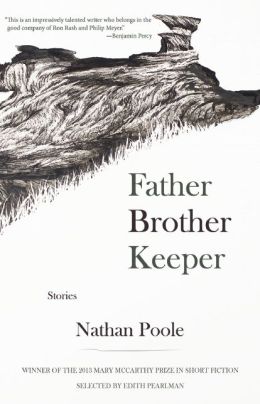
Father Brother Keeper by Nathan Poole

This memorable collection of reflective short stories about commonplace tragedies showcases a gentle, painstakingly accurate writing voice.

father brother keeper

Nathan Poole’s debut collection of short stories, Father Brother Keeper, won the Mary McCarthy Prize in Short Fiction and is an emotionally evocative and varied experience. Its contents are rarely connected, as when two consecutive stories follow one family through generations of gentle conflict. However, even stories that don’t share characters do have in common their settings in rural Georgia and a series of small towns. Each is a miniature masterpiece of perfect, often tragic realism, featuring men, women and children dealing with everyday trials: illness, death, divorce, financial hardship.

An old man fights his dementia–“he was losing traction”–when his estranged daughter leaves her two small children with him and drives away. A young man finds more than a dozen bait dogs (fight dogs past their prime) abandoned on his family’s property and accuses the wrong man of the brutality. Two brothers react in different ways toward their mother after their father leaves. Two young neighbor girls who are friends contract the same illness but with different outcomes; mapping this divergence is a challenge for each family. In the stories labelled “Two from Sparta,” four generations live off their land in slightly different ways, each father learning how to make his way with his son. A young man sets out to find the oldest, biggest tree of each species in the country, to honor a death. “It would be an easy thing to do, and good… a dedication. The year I would learn the joy of calling each thing by its proper name.”

Poole’s achievement in this collection is just that, calling each thing by its proper name. Though perhaps simple in their subject matter, each story is weighty in its emotional impact, and sharply, poignantly real. The stories all feature people living simply, accommodating change if not embracing it, and struggling to move forward through whatever life hands them. Poole’s voice is original, authentic and starkly honest; he is clearly compassionate toward his characters even as he walks them through terrible everyday calamities. Father Brother Keeper is a slim book but one that demands to be read slowly and thoughtfully, so that the hints of redemption can percolate. Meticulous, gorgeous and brooding, these stories will appeal to connoisseurs of the short story as well as fans of traditional Southern ways of life and literary fiction.


This review originally ran as a *starred review* in the February 5, 2015 issue of Shelf Awareness for the Book Trade. To subscribe, click here.


Rating: 7 barrels.

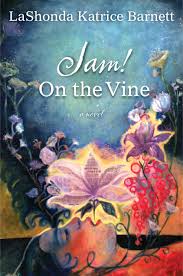
Jam! on the Vine by LaShonda Katrice Barnett

The vivid life of an African American newspaperwoman, civil rights activist and lover both entertains and inspires.

jam

LaShonda Katrice Barnett’s debut novel, Jam! on the Vine, is filled with color, suffering and feeling. Barnett’s protagonist Ivoe Williams is inspired by the life of Ida B. Wells-Barnett, newspaperwoman, suffragette and civil rights leader, and she sparkles from the first page, when she steals newspapers from her mother’s white employer to revel in the smell of the ink and the magic of print. Her mother, a Muslim and a former slave, is a talented gardener and cook, her father a masterful storyteller, so she is surrounded by art and encouraged in her education. The plucky Ivoe, a native of rural Texas born just after Emancipation, receives an unlikely scholarship to attend college in Austin, where she studies printing and journalism. She returns home overqualified for the kind of work available to young black women. Under the forces of power and prejudice, the Williams family will ultimately fracture and be forced to migrate to the city, where new challenges await. Ivoe finds love and purpose in work, eventually founding a Kansas City newspaper called Jam! on the Vine, which pursues the rights of African-Americans and women.

The connections to Wells-Barnett’s life are vague; the vibrancy of Ivoe’s trials and loves are a credit to Barnett the author. Sensual evocations are among Jam!‘s greatest triumphs: the Texas dirt and the tomato vines it sprouts, the savory jam crafted by Ivoe’s mother from their fruit, the family’s music and laughter, blood and pain and pleasure. Ivoe is stimulated by her study at the university, the tactile challenge of setting type and the intellectual exertions of politics and social justice. She grows from a gutsy child to become a famished student, then a frustrated young woman and, finally, finds love and joy and danger, in the Red Summer of race riots in 1919.

It is no exaggeration that the beautifully written Jam! on the Vine recalls Alice Walker and Zora Neale Hurston. Sensuality, pleasure and pain, as well as the righteous difficulties of the early civil rights movement, yield a story that is passionate, inspired and lively. Barnett’s (editor of I Got Thunder and Off the Record) prose flows with rhythm and feeling, and her characters both major and minor are intriguing. While Ivoe’s hard, important work and her love of written words will endear her especially to readers interested in the history of journalism and the civil rights movement, this literary novel has broad appeal.


This review originally ran in the February 3, 2015 issue of Shelf Awareness for Readers. To subscribe, click here, and you’ll receive two issues per week of book reviews and other bookish fun!


Rating: 7 jars.

The Sweetheart by Angelina Mirabella

The unlikely, humorous, heartrending story of a teenaged female wrestler in the 1950s.

sweetheart
Angelina Mirabella’s debut novel, The Sweetheart, opens with an older woman’s reflections, then quickly flashes back to 1953 Philadelphia. Leonie Putzkammer is an awkward, bookish teen with no self-confidence, despite a figure her peers would kill for and some tumbling skills left over from gymnastics. When she is recruited to attend Joe Pospisil’s School for Lady Grappling in Florida, a star-struck Leonie is sure everything will change. She gains a tag-team partner, Screaming Mimi, and a boyfriend, Spider, as well as an intimidating coach. Soon she is assigned a new name, Gwen Davies–later, Gorgeous Gwen Davies and, finally, the Sweetheart.

Many readers will sympathize with the older protagonist when she addresses her younger self: “What you have wanted more than anything was change… but the idea that the old life would no longer be waiting here for you is hard to accept.” The heart of this story addresses questions of autonomy, self-determination and regret: how to become someone different without entirely losing your past, how to recover from making the wrong choices or even how to tell when you have made wrong choices. Told from an unusual retrospective second-person perspective and perfectly evoking 1950s culture, The Sweetheart is often hilarious but also filled with the wholly realistic yearnings and heartbreak of young-adult reinvention, and is peopled by familiar, sympathetic characters. Mirabella’s impressive debut offers laughter, tears, failure, redemption, striving, success and a sweetheart we can’t help but love.


This review originally ran in the January 30, 2015 issue of Shelf Awareness for Readers. To subscribe, click here, and you’ll receive two issues per week of book reviews and other bookish fun!


Rating: 7 MoonPies.

Whipping Boy: The Forty-Year Search for My Twelve-Year-Old Bully by Allen Kurzweil

The lengthy and bizarre search for a childhood bully, with humor, pathos and redemption.

whipping boy

During his single year at a boarding school in Switzerland, sixth-grader Allen Kurzweil roomed with a boy improbably named Cesar Augustus, who bullied him physically and emotionally. Then Allen moved on, lived all over the world, found a successful career in journalism and writing, married a French anthropologist and had a son. But throughout those intervening years, Allen was bothered by the memory of Cesar.

In researching Cesar’s likely whereabouts, Allen dismisses false leads and relives old trauma. Eventually, he finds his childhood tormentor in a nearly unbelievable narrative: Cesar was sentenced to three years in prison for his role in a criminal scam so outlandish that it reads like a novel. Allen Kurzweil’s Whipping Boy is a work of nonfiction, with no names changed; just when it starts feeling like a thriller, it gets stranger than fiction.

Kurzweil is obsessed with Cesar, his “menace and muse.” He wants to right wrongs, to avenge himself and to solve a mystery. He also wants to stick up for his son, also bullied at a young age. Along the way, he is distracted–as is the reader–by the monstrosity and incredibility of con men who claim to be royalty, with costumes and jewelry to match, who manage to defraud eminent savvy businesspeople; and he is forced to consider questions about the nature of memory. But in the end, courage and closure are the rewards for a heartfelt, very funny, poignant and extremely weird story to which Kurzweil’s self-deprecatory voice is perfectly suited.


This review originally ran in the January 27, 2015 issue of Shelf Awareness for Readers. To subscribe, click here, and you’ll receive two issues per week of book reviews and other bookish fun!


Rating: 7 foosballs.

Unbecoming by Rebecca Scherm

A delicious, deceptively simple tale of art, crime, love and betrayal.

unbecoming

In the opening pages of Rebecca Scherm’s debut novel, Unbecoming, Julie from California is working in Paris at an antiques repair shop, polishing and replacing hinges, cleaning beadwork and resetting jewels. Except her name is really Grace, and she’s from Garland, Tennessee. Two young men are about to be paroled from prison in Garland, and Grace is nervous, because her name is not all she’s lying about. From this beginning, we follow Grace back in time: her unhappy home life, her great luck in being loved by a popular boy from a good family, her joy at being his mother’s daughter, her departure for college in New York City, her work in art appraisal and her ignominious retreat from all of the above. Only at the end of the novel do we learn how exactly Grace landed in Paris with a new name, a forged biography and a fear of her past.

Unbecoming is beguiling: a love story with twists and turns; the tale of an insecure, insufficiently loved girl from the wrong side of the tracks; a delightfully nuanced narrative about trust and trustworthiness. Grace is endearing and intriguing, although she is not all (or is more than) she seems. Layers of lies, longing and duplicity recall The Talented Mr. Ripley, another chilling masterpiece of dishonesty’s helpless acceleration. Scherm’s light, confident touch with pacing, suspense and characterization is pitch-perfect. Beware staying up all night to rush through this engrossing, enchanting debut.


This review originally ran as a *starred review* in the January 27, 2015 issue of Shelf Awareness for Readers. To subscribe, click here, and you’ll receive two issues per week of book reviews and other bookish fun!


Rating: 8 trillions.