Maximum Shelf: The Gap of Time by Jeanette Winterson

Maximum Shelf is the weekly Shelf Awareness feature focusing on an upcoming title we love and believe will be a great handselling opportunity for booksellers everywhere. The features are written by our editors and reviewers and the publisher has helped support the issue.

This review was published by Shelf Awareness on July 22, 2015.
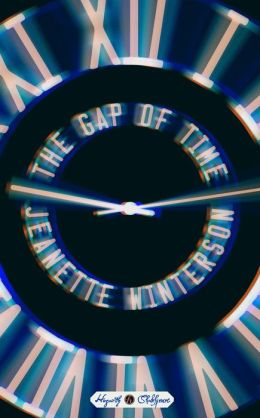

gap of timeThe Hogarth Shakespeare project undertakes to reinvent the Bard’s classic works in novel form; the first installment is The Gap of Time by Jeanette Winterson (Oranges Are Not the Only Fruit; Why Be Happy When You Could Be Normal?), a “cover version” of The Winter’s Tale. In Shakespeare’s original, the kings of Sicilia and Bohemia are great friends until one accuses the other of sleeping with his wife. The jealous Leontes plots to murder his friend Polixenes, but misses his chance and instead takes out his rage on his pregnant wife, the queen Hermione. By the time his suspicions are proved false, he has lost both his son and his wife, and the baby girl Hermione gives birth to has disappeared. Leontes ordered the baby taken into the wilderness and abandoned, but the man he assigned this task died in the process, so the baby’s fate is unknown. Sixteen years later, a romance between Polixenes’s son and a beautiful, mysterious shepherd’s daughter may offer redemption and even a second chance.

The Gap of Time is set dually in modern London, just following the 2008 economic crisis, and the fictional American city of New Bohemia. Londoners Leo and Xeno were childhood friends and, for a time, lovers; as adults, despite very different values, the bohemian Xeno and the materialistic Leo have become business partners in Sicilia, a high-tech gaming company. Leo’s wife, MiMi, son, Milo, and his uber-capable assistant, Pauline, round out a highly functional, loving family of sorts, until Leo becomes obsessed with the idea that MiMi and Xeno are sleeping together. Leo reacts violently, and loses his son and wife. When he tries to ship MiMi’s baby daughter overseas to Xeno, whom he wrongly believes to be her father, the little girl goes missing.

In New Bohemia, Shep and his son, Clo, who run a piano bar, come across a carjacking too late to save its victim, after which Shep is able to pull a baby out of the nearby hospital’s BabyHatch, a high-tech receptacle for abandoned infants. He is convinced this child is a gift meant for him, to help him heal after his wife’s death, and raises the girl as his own. Her name, according to papers found with her, is Perdita. He could never conceal from her that she is adopted: Perdita is white, while Shep and Clo are black; but she grows up in a home filled with love and music, never doubting that she is wanted. As in the original, 16 years will pass before Perdita encounters a romantic interest who, though equally ignorant of their connected past, will lead to her learning about her origins.

A very brief recap of The Winter’s Tale at the beginning of the book informs the reader, so that no knowledge of the original is necessary to follow or enjoy this retelling. Indeed, The Gap of Time will please readers who have never given Shakespeare a second glance, as well as his committed fans. Winterson has fashioned the ideal remake: paying respect to the original and faithfully following many plot points, as well as the general spirit, she simultaneously builds upon it, not only making Shakespeare’s work accessible to modern minds but providing a freshly felt and relevant emotional experience.

Shakespeare’s sympathetic and intriguing plot involving several twists and changes of heart plays well with Winterson’s nuanced tone, while her characters are more multi-faceted than the originals. Leo is a deeply flawed man who nonetheless attracts the reader; Xeno is magnetic, beautiful and sensual; and MiMi is a woman of more complex feelings than the dignity Shakespeare gives Hermione. The next generation, Perdita and Zel, Xeno’s son, are appealing, with passions and interests of their own. It is Shep and Clo, though, Shakespeare’s nameless Shepherd and Clown, who get the most reworking, and to great advantage.

Most of The Gap of Time takes place in London and New Bohemia, but also visits Paris, the Seine and, of course, the bookshop Shakespeare and Company. As realistic as these settings are, it is the gaming world invented by Leo and Xeno that is most imaginative and vibrant. Leo is obsessed with the scene in Superman: The Movie where Superman zips round the world and turns back time to save Lois Lane. Their game is creative, vividly rendered and evocative of Xeno’s disappointment in what his life has become, as well as Leo’s preoccupation with the idea of time’s malleability. It is a game filled with angels of death, and it is called The Gap of Time.

As the title indicates, Winterson’s version of The Winter’s Tale plays with the concept of time even more than the original did, asking questions about what is changeable about our pasts and our futures. Leo wishes he could take back his madness and its consequences; Xeno wishes he’d handled it differently. This is a stirring tale filled with waste, simple mistakes and regrets. But as in the original, it also offers hope, young love and the possibility of new beginnings. In an unusual twist, Winterson herself steps forward in the final pages to speak in the first person about what she hopes for from this story–and then she steps back to allow her characters to finish it.


Rating: 7 feathers.

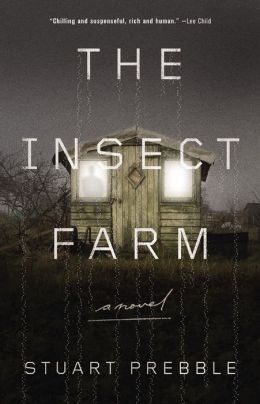
The Insect Farm by Stuart Prebble

A disquieting puzzle starring two odd but loving brothers with distinct fixations.

insect farm

Stuart Prebble’s U.S. debut, The Insect Farm, follows the lives of two devoted brothers, Jonathan and Roger. As boys, they were close, but as they enter adulthood they develop separate passions. Jonathan is obsessed with his stunning, brilliant wife, Harriet, and deeply, disturbingly jealous of the attentions she receives from other men. Roger is consumed with his intricate collection of insect tanks and habitats, housed in a garden shed, where he goes to lose himself for hours on end. Roger is mentally handicapped, and his ability in caring for the insect farm is much greater than his abilities in other areas of his life.

When their family circumstances change, Jonathan leaves university to care for Roger, putting Harriet at a physical distance since she stays in school. From this point, a series of misfortunes and accidents raises faint questions about the minds of each brother, as they age together in quiet companionship.

This unsettling story is told in Jonathan’s retrospective voice, as he looks back on the tragedies that have befallen his family. While each brother is a complex and subtly disconcerting character, this dubious point of view obscures them somewhat, and the reader’s suspicions accumulate.

Suspenseful and ominous, The Insect Farm sketches a world of unstable truths, while posing questions about memory, relationships, perception and intuition. Through Jonathan’s shifting narration, Prebble skillfully evokes an increasingly unnerving atmosphere, as it gradually becomes clear how little each brother really understands about the other–and about himself.


This review originally ran in the July 21, 2015 issue of Shelf Awareness for Readers. To subscribe, click here, and you’ll receive two issues per week of book reviews and other bookish fun!


Rating: 7 cockroaches.

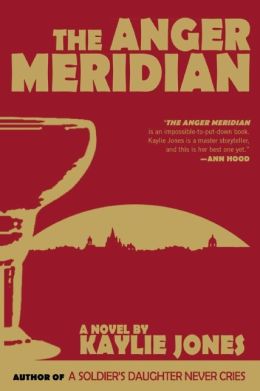
The Anger Meridian by Kaylie Jones

A newly widowed woman is forced to face her own secrets, in vibrant San Miguel de Allende.

anger meridian

Merryn is up late at night, awaiting and fearing her husband’s drunken homecoming, when she opens the door to find two policemen announcing that he has been killed in a car accident. She quickly bundles up their nine-year-old daughter, the precocious Tenney, and leaves Dallas, Tex., for her mother’s home in San Miguel de Allende, in central Mexico.

The rest of Kaylie Jones’s striking novel, The Anger Meridian, is set in San Miguel, where Merryn’s mother, Bibi, presides over an opulent home and her frightened daughter’s life. As Merryn struggles to navigate her husband’s legacy (the FBI has followed her to Mexico to investigate his business dealings) and her and Tenney’s future, she has the opportunity to confront many dishonesties, including her own. Lying is one of The Anger Meridian‘s central themes.

The tone of Jones’s writing quivers with tension from the opening page. Merryn is traumatized, anxious, grinds her teeth at night; she behaves like an abuse victim. But where does her damage come from? And whom should she–and the reader–trust? A handsome American expat doctor, a lawyer friend of the family, a local yoga teacher, the members of Bibi’s entourage and clever Tenney each offer different angles on Merryn’s life. In the end, there are several puzzles to untangle in this lovely, finely plotted novel, which highlights colorful San Miguel and the complexities of family, loyalty and honesty. The Anger Meridian is at once a suspenseful mystery and a superlatively gripping story of self-discovery.


This review originally ran as a *starred review* in the July 21, 2015 issue of Shelf Awareness for Readers. To subscribe, click here, and you’ll receive two issues per week of book reviews and other bookish fun!


Rating: 7 martinis.

The Casualties by Nick Holdstock

This memorable first novel examines a Scottish neighborhood’s eccentrics with the benefit of hindsight following an apocalypse.

casualties

In Edinburgh, Scotland, there was once a neighborhood called Comely Bank, whose denizens included some eccentrics, with stories that warrant telling. Hinted at, just out of the reader’s line of sight, is the calamitous event that wiped it out, and Edinburgh, and all of Western Europe and beyond. This catastrophe motivates the unnamed narrator’s storytelling, told almost entirely in flashback.

Following a brief and ominous opening in which Comely Bank’s destruction is promised, the daily lives of local residents form the focus of Nick Holdstock’s debut novel, The Casualties. Sam Clark is a very curious man. He runs the charity bookshop in the neighborhood, where he carefully sifts and sorts through donated books looking for the ephemera tucked forgotten between their pages: he’s after photographs, letters, airline tickets, notes and cards that shed light on the lives of strangers. He carefully observes the people around him, seeking their stories. The reader won’t learn what he’s really looking for until well into Holdstock’s meticulously ordered narrative.

Comely Bank’s other residents include Sinead, a nymphomaniac struggling to control herself but obsessed with a local shopkeeper; meanwhile she serves as caregiver for an obese, mentally handicapped man. Caitlin works at a secondhand clothing store and fixates on the crackling skin condition that mars her face. She loves a man who does not love her; “with adoration comes the wish to hold a pillow over his face.” Alasdair lives under a bridge, dispensing questionable health advice to passersby who do not want it; he can’t remember his last name or his past. “Trudy” is the name taken by a Filipino prostitute illegally residing in Comely Bank. Mr. Ashram is resentful of his neighbors’ reluctance to accept him into their society. Retired headmistress Mrs. Maclean is impatient for her own demise. And so on–until the final, strangely twisting, imaginative pages.

Holdstock vividly presents his odd and varied characters, and places them in a world that is at once both colorful and recognizably everyday. The protagonists’ personalities and actions are quirky but believable, and given added weight by their place in time: The Casualties is a twist on the post-apocalyptic novel in that it reexamines the world just before its end. This perspective, and the continuing mystery of the narrator’s identity, nudge the reader into asking uncomfortable questions about life and its length and meaning. In its ending, Holdstock’s unusual creation leaves certain details to the imagination. Strong characterization and a creative plot, both familiar and bizarre, give this novel enduring allure.


This review originally ran in the July 21, 2015 issue of Shelf Awareness for the Book Trade. To subscribe, click here.


Rating: 6 pictures.

Pretty Is by Maggie Mitchell

Trauma is reborn for the victims of a double abduction, nearly 20 years after their rescue.

pretty is

Two women in their 30s: Chloe is an almost-famous actor barely hanging on to her Hollywood career; Lois is a precocious junior professor with two book contracts. They share a past neither wants known. When they were 12, Lois and Chloe–then known as Carly May–were abducted and held in a hunting lodge in the Adirondacks for a summer before being rescued. This secret, the victimization they just want to forget, comes back to haunt them in Maggie Mitchell’s first novel, Pretty Is.

The action alternates between the present lives of Lois and the reinvented Chloe/Carly May, and flashbacks to the summer they spent with a man they called Zed. They’ve stuck by their story that he never touched or hurt them, not that anyone seems to believe that. Now, Lois’s latest project and a peculiarly disturbed student seem poised to intersect with Chloe’s struggling acting career. The question becomes not what Zed did nearly 20 years ago, but what agency do the adult women have in their own lives?

Suspenseful, quick-paced and action-driven, Pretty Is also wisely invests in character development. Carly May may have been a beauty queen, but she was an intelligent child, too; Lois was a spelling-bee champion and confirmed bookworm as well as pretty, and those lists of spelling words still serve as a mental aid. Mitchell’s greatest strength, however, is in the riveting, magnetic pull of her plot, as the stakes grow higher and Pretty Is rushes toward its finale.


This review originally ran in the July 17, 2015 issue of Shelf Awareness for Readers. To subscribe, click here, and you’ll receive two issues per week of book reviews and other bookish fun!


Rating: 6 text messages.

Forensics: What Bugs, Burns, Prints, DNA and More Tell Us About Crime by Val McDermid

The science of criminal detection from a writer with expertise and connections in the field.

forensics

Scottish crime writer Val McDermid (The Skeleton Road) expands on her considerable experience with Forensics: What Bugs, Burns, Prints, DNA and More Tell Us About Crime. In it, she studies the fields encompassed by forensic science and the large role that such detailed evidence plays in the modern judicial system.

In writing fiction, McDermid routinely consults professionals in law enforcement and scientific experts; here, she delves into their worlds to examine the history and challenges of their work. Chapters focus on crime and fire scenes, entomology, pathology, toxicology, forensic psychology and anthropology, the courtrooms and legal systems of various countries and more. McDermid visits with experts in each of these fields, exploring their personal and professional experiences, which can include trauma as well as deeply stimulating and important work. She also covers specific criminal cases, ranging from serial killings and rape to common burglary, that illustrate the science in question, and offers impressions of her own.

McDermid is not a perfectly impartial judge of the professions she considers; the tone of Forensics is more admiring than journalistic. She provides a great service in reducing complex science to a narrative easily understood by laypersons, and thereby allows fans of television crime drama and detective novels a heightened appreciation of the genre. Details are often predictably graphic, but never gratuitously so, and should be well within the tolerances of murder-mystery buffs. Forensics is an easy-reading introduction to the science behind criminal detection and a fine companion to fiction like McDermid’s.


This review originally ran in the July 17, 2015 issue of Shelf Awareness for Readers. To subscribe, click here, and you’ll receive two issues per week of book reviews and other bookish fun!


Rating: 6 pairs of gloves.

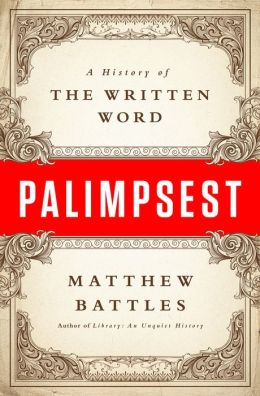
Palimpsest: A History of the Written Word by Matthew Battles

Bibliophiles and historians will be thrilled by this enthusiastic, detailed account of writing throughout history.

palimpsest

Matthew Battles (Library: An Unquiet History) undertakes a mammoth topic with Palimpsest: A History of the Written Word. Rather than an exhaustive chronicle, however, he has composed an extended meditation, a roaming through the centuries. The result is a collection of narrative examinations of writing as a technology, as a means of wielding power, as artistry and as communication. As Battles quotes it, the Oxford English Dictionary defines a palimpsest as a “writing surface on which the original text has been effaced or partially erased, and then overwritten by another.” His imagination is captured by this concept in fact and as metaphor, and Palimpsest is in part a drawn-out consideration of “mind as page” and “page as mind” (the titles of its opening and closing chapters).

Battles’s survey ranges from Mesopotamian cuneiform in the fourth century BCE to early printing, word processing and social media. He explores Thoreau’s views on Confucianism, the clay tablets of The Epic of Gilgamesh, the topology of Chinese hanzi and the fascination with writing in Great Expectations. He is intrigued by the politics of the printing press and various typefaces. Historians, writers, philosophers and anthropologists including Socrates, Claude Lévi-Strauss, Jean-Jacques Rousseau, Emily Dickinson, Ezra Pound and Ralph Waldo Emerson provide context for the philosophical significance of writing. Battles points out that modern computer code is a type of writing as well, “a kind of text that can’t exist on its own. But what other kind of text has ever existed?”

Among other revelations, Palimpsest elucidates the original meaning of “pirated” literature: “not… the unauthorized reproduction of someone else’s work but the use of a printing press without proper license,” and Allen Ginsberg’s modern redefinition of “graffiti,” which originally referred in the Italian to words or ornaments carved in clay forms. How we learn to write changes as our cultural expectations of writing change; thus what Battles calls a “feedback loop” of change in writing technologies perpetuates. In other words, in an increasingly digital age, Battles argues that writing is in flux–as it has been since its beginnings.

Palimpsest returns more than once to an emphasis on writing as art, and Battles’s own writing style is often decorative. The meandering structure of this expansive essay on writing in history, as well as its formal and academic tone, may pose challenges for some readers. However, the reader and writing fan absorbed by writing’s miscellany will find much to love and sink into in Palimpsest.


This review originally ran as a *starred review* in the July 10, 2015 issue of Shelf Awareness for the Book Trade. To subscribe, click here.


Rating: 4 radicals.*

*For my personal reaction to his style, although the quality of writing and research are sure to please other readers.

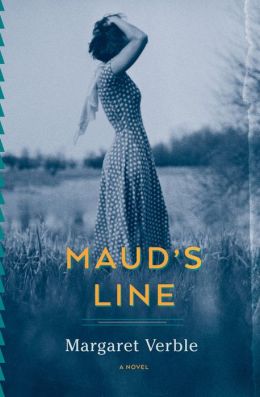
Maud’s Line by Margaret Verble

A young American Indian woman’s existential questionings and daily life on an Oklahoma farm will appeal to fans of historical fiction and personal narrative.

maud's line

Early in the 20th century, the U.S. government assigned plots of land to the American Indians displaced by Oklahoma’s statehood. Maud Nail’s day-to-day life on her family’s allotment is consumed by guns, dirt and chickens. She cares for her men–a dangerous, unruly father, aptly named Mustard, and a sensitive, thin-skinned brother named Lovely–as well as the extended family whose allotments neighbor hers. They recently survived the flood of 1926-27 that covered Oklahoma and much of the Midwest, but the difficulties don’t stop there. Margaret Verble’s first novel, Maud’s Line, details the year in which Maud makes several large choices that will affect the rest of her life.

A peddler in a brilliantly blue covered wagon first captures Maud’s eye with his good looks and his books. He gives her a copy of The Great Gatsby, and she can’t stop thinking about those bobbed haircuts and dresses above the knee. Though she loves her family, Maud desperately wishes she could move on, live in a different world. But as she begins to be caught up in a nascent love affair, her family’s troubles demand her attention. Two men from the family that has long feuded with hers are murdered, and Mustard has to leave town in a hurry. Lovely falls ill, and then, more troubling still, seems to be losing his mind. And Maud’s occasional, erstwhile boyfriend then makes a claim on her, just as she is struggling with the biggest dilemma of all.

Maud’s Line is filled with evocative glimpses of violence, viscera, yearning and the brusque but communal caring of family. In her unadorned writing style, below the violence and hardship on the surface of Maud’s life, Verble crafts a story filled with nuance and quiet conflict. She exhibits a talent for characterization: each individual is carefully and distinctly fashioned, so that Lovely’s girlfriend and the members of Maud’s extended family, for example, shine brightly in even the briefest of appearances. Maud herself is finely wrought, caught between the values she’s been raised with–and the people she loves–and a hope for a different life, one with electricity and hygiene in place of dust and blood. One of the greatest strengths of Verble’s novel, set on her own family’s land allotment, is the delicate interior conflicts produced by Maud’s deceptively simple life. Propelled by its own momentum, Maud’s Line pulls the reader along until, amid daily privations and small tragedies, Maud has the chance for the first time to choose for herself what her future will hold.


This review originally ran in the June 30, 2015 issue of Shelf Awareness for the Book Trade. To subscribe, click here.


Rating: 7 guns.

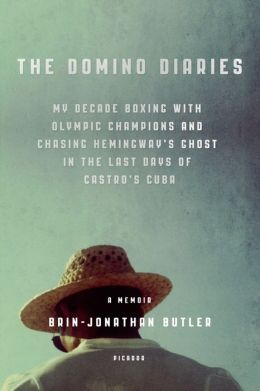
The Domino Diaries: My Decade Boxing with Olympic Champions and Chasing Hemingway’s Ghost in the Last Days of Castro’s Cuba by Brin-Jonathan Butler

An amateur boxer’s love affair with Cuba.

domino

Brin-Jonathan Butler first traveled to Cuba as a teenager, hoping “to find a boxing trainer and to meet the guy from The Old Man and the Sea.” He accomplished both goals and over the years that followed made repeated trips, seeking Cuban boxing, baseball and literary heroes, as well as the mysteries of the sequestered island. Eventually, Butler’s fixation on Cuba inspired a forthcoming documentary, Split Decision, about Cuban athletes’ difficult choices between staying and leaving. In The Domino Diaries, he confesses that the project was partly an excuse to stay, having become “homesick for a place [he] wasn’t born to.” His memoir further unravels the relationship he’s formed with this nation.

His escapades make for fine writing and include a tryst with Fidel Castro’s granddaughter and an interview with boxing legend Teófilo Stevenson that results in Butler’s being banned from Cuba. The Domino Diaries is a memoir of boxing heroes and political strife, a study of Castro’s legacies and Cuba’s “Special Period” of economic crisis, and an ode to the grace, joy and sadness of Cuban culture; it is also the personal story of Butler’s own traumas and his mother’s escape from Hungarian communist rule. These threads necessitate some meandering, but the resulting musing tone Butler employs is elegiac and quite effective. Rather than an exhaustive survey of the large and thorny topic of Cuba’s economy, politics and culture, Butler’s memoir is a rambling exploration, appealingly written in a distinctive voice and peppered with wisdoms phrased with lovely wit.


This review originally ran in the June 26, 2015 issue of Shelf Awareness for Readers. To subscribe, click here, and you’ll receive two issues per week of book reviews and other bookish fun!


Rating: 7 cigars.

Madeleine’s War by Peter Watson

A nuanced marriage of military history and romance, set in a secret British resistance unit during World War II.

madeleine

Peter Watson (who wrote Gifts of War under the pen name Mackenzie Ford) entertains with Madeleine’s War, a novel of World War II romance and intrigue starring fictional characters but with a historically accurate background.

Matthew fought on the ground in France with a secret British resistance unit until he suffered a severe injury. In his new role training fresh recruits, he meets Madeleine, a beautiful, talented French-Canadian woman determined to contribute to the war effort. Matthew’s job is to train Madeleine for intelligence and sabotage before she parachutes behind enemy lines. Her superior officer, he is not supposed to fall in love with her, but the two nonetheless embark upon a passionate, short-lived affair, before she is sent to France and disappears.

Despite its title, Madeleine’s War is told from Matthew’s perspective, leaving the reader as in the dark as he is after Madeleine vanishes in Nazi territory. He is then left to track her down–out of both love and duty, which sometimes conflict. The plot then twists again as Matthew is given an uncomfortable mission of his own to carry out.

Watson’s expertise as a historian lends credibility to the context of this story: in his afterword he states that the geography, training procedures, technologies and secrecy he portrays are all based on fact. Matthew and Madeleine and their colleagues are Watson’s own creations, painted with a rosy, romantic glow but also exposed to the glaring realities of war. Romance fans and war buffs will be equally pleased with the result.


This review originally ran in the June 23, 2015 issue of Shelf Awareness for Readers. To subscribe, click here, and you’ll receive two issues per week of book reviews and other bookish fun!


Rating: 7 cigarettes.