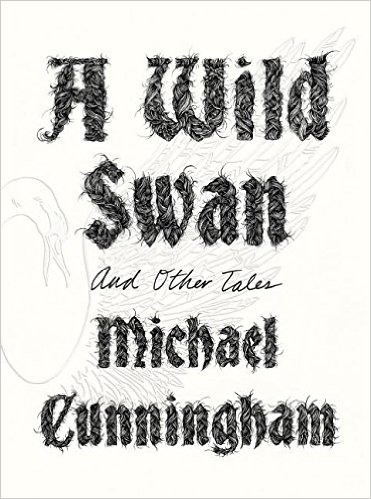
The Wild Swan: And Other Tales by Michael Cunningham, illustrated by Yuko Shimizu

Pulitzer Prize-winning novelist Michael Cunningham darkly reimagines classic fairy tales, with moodily appropriate illustrations.

wild swan

Michael Cunningham (Pulitzer Prize-winner for The Hours) takes a fresh and dark look at a selection of classic fairy tales with A Wild Swan: And Other Tales. His brief, richly imagined new stories, often based only loosely on their models, are accompanied by detailed, atmospheric black-and-white illustrations by Yuko Shimizu.

An introduction teases readers to acknowledge that they, too, enjoy seeing the fairy tales’ “manifestations of perfection”–those with “comeliness that startles the birds in the trees, coupled with grace, generosity, and charm”–cut low. Cunningham then proceeds to do just that with his versions of originals by the Brothers Grimm, Hans Christian Andersen and others.

Here readers will find the “crazy old lady” who lures Hansel and Gretel to her cottage of candy in the woods; but Hansel and Gretel are pierced and tattooed, and sexy “with their starved and foxy faces.” Snow White’s prince is obsessed with the beautiful deathly version of her he discovered in the coffin, and troublingly insists on replaying the scene over and over again. Rumpelstiltskin is surprisingly well intentioned–for the most part. Rapunzel’s life following the closure of the Grimms’ tale is revealed, and it’s a good thing she kept her severed braids. The Beast has grown to be a bad boy, even after Beauty gives him her love. He is “impeccably handsome” with “a lascivious, bestial smile; a rapacious and devouring smile,” the one who might catch your eye on the subway or at “the after-hours party your girlfriend has insisted on,” but you’ll come to regret it. And in the title story, the princess is successful in transforming all of her brothers but one back to their fully human forms.

Cunningham sometimes brings these stories into more or less modern times, but the point of this collection is not to recast the classics with smartphones and fast cars, and the setting of some remains unchanged. Rather, these are playful riffs on well-known stories, almost always with a still gloomier tone than even the Brothers Grimm applied. The mood of these tales of disturbing fetishes, murderous schemings and pedestrian human flaws such as hubris, laziness and jealousy is eventually relieved, however, by Cunningham’s final flourish, entitled “Ever/After.”

A Wild Swan works expert mischief with backstory, aftermath, interludes and retellings of well-known favorites. These tales are not always for the kids, of course, but will appeal to an intersection of dark humor and nostalgia for timeless stories, or anyone with an appreciation for a deliciously spooky imagination.


This review originally ran in the November 5, 2015 issue of Shelf Awareness for the Book Trade. To subscribe, click here.


Rating: 7 minutes under the lid.

Thunder & Lightning: Weather Past, Present, Future by Lauren Redniss

Superb illustrations accompany fascinating tidbits about weather and the world in this lovely, distinctive book.

thunder lightning

Lauren Redniss (Radioactive) offers a gorgeously rendered and singular piece of work with Thunder & Lightning: Weather Past, Present, Future. Her original artwork is stunning, dreamy and evocative, the perfect complement to facts about weather and carefully selected interview excerpts and quotations.

Redniss’s “Note on the Art” describes her media: copper plate photogravure etchings and photopolymer process prints, hand-colored, and a few drawings in oil pastel. She comments on the artistic tradition that inspired her: artist/scientists whose devotion to precision and accuracy have historically paired with “a sensation of strangeness, wonder, terror.” Her work is certainly worthy of that tradition; drawings of wildfires recall Picasso’s Guernica, and the chapter entitled “Sky” contains only striking illustrations and no text. These drawings are both otherworldly and very much of our world.

Redniss’s text, based on scientific research and cultural traditions, riffs on weather phenomena rather than offering a comprehensive study. Her chapters cover conditions (cold, rain, heat, fog) as well as concepts (dominion, war, profit), and span the planet and various peoples throughout history. She considers weather that has been blamed on witches or credited to gods; the use of cloud seeding as a weapon by the United States against Vietnam; and weather derivatives and insurance. Redniss’s subjects are quirky and entertaining; her chapter “Forecast” is as concerned with the Old Farmer’s Almanac as with the National Oceanic and Atmospheric Administration. That tone of marvel and whimsy, plus exquisite illustrations, make Thunder & Lightning both remarkably beautiful and pleasingly informative.


This review originally ran in the November 10, 2015 issue of Shelf Awareness for Readers. To subscribe, click here, and you’ll receive two issues per week of book reviews and other bookish fun!


Rating: 8 gorgeous interpretive hand-colored prints.

The Early Stories of Truman Capote

These previously unpublished stories written in Truman Capote’s youth are instantly recognizable.

early stories truman capote

The Early Stories of Truman Capote contains 14 stories, most previously unpublished, written in Capote’s teens and 20s, and only recently unearthed among his papers in the New York Public Library archives. Presented with a foreword by Hilton Als of the New Yorker, these are short pieces, studies of subjects Capote would continue to favor in the later works for which he is known: sensitive young children, fractious ladies, the poor and the disenfranchised. They are set in the Deep South, in New York City, in swamps and in small towns.

The talents of the author of In Cold Blood and Breakfast at Tiffany’s are evident in this early work. His descriptions are simple but strongly evocative: “curly, wig-like grey hair” and eyes “bright, like bubbles of blue glass.” His characters tend to be laconic but expressive, with interjections speaking as loudly as words. In “Swamp Terror,” a boy chases a convict into the woods and gets a bigger taste of adulthood than he bargained for. In “Louise,” a schoolgirl lets her petty jealousies do irreparable harm. “Traffic West” presents a remarkable collection of characters and events, in experimental form. In other stories, a young boy finds the dog of his dreams in a park, but the dog belongs to another child; and two wives muse on the hypothetical murder of their husbands.

These easy-reading, alternately amusing and haunting stories offer a fresh, new glimpse of Capote’s genius, and simultaneously feel intimately familiar.


This review originally ran in the November 6, 2015 issue of Shelf Awareness for Readers. To subscribe, click here, and you’ll receive two issues per week of book reviews and other bookish fun!


Rating: 7 deaths.

Dispatches from Pluto: Lost and Found in the Mississippi Delta by Richard Grant

An occasionally bumbling Brit moves into the Mississippi Delta and delivers a romping survey of the surroundings.

dispatches from pluto

Richard Grant (Crazy River) is “a misfit Englishman with a U.S. passport and a taste for remote places,” a writer and professional peripatetic when he encounters an old plantation home in the Mississippi Delta. Later he will ask, “What sort of idiot goes on a picnic and ends up buying a house?” He then explains.

In Dispatches from Pluto: Lost and Found in the Mississippi Delta, Richard moves, with his girlfriend, from New York City to a spot even the locals find remote. They struggle with home improvements, an enormous vegetable garden and the moral problem they encounter in hunting for their meat. After some hilarious hiccups along the way, they take pleasure in living in large part off the land. Perhaps more challenging are questions of culture: the liberal newcomers are sensitive to their conservative religious neighbors, who are surely suspicious in turn. But from the beginning they manage to bond like family.

Grant narrates the next year with reflection and humor, from electoral politics and absurd local news to learning how to hunt and party like a Deltan. The myriad forms and intensities of racism and racial tension develop into a theme, as Grant pursues diverse friends and acquaintances. But he finds beauty as well as complexity, and concludes, “I had done the thing that modern life conspires against. I had fully inhabited the present without distraction.” Dispatches from Pluto offers a lovely, appreciative and entertaining tour of the strange and rich Mississippi Delta.


This review originally ran as a *starred review* in the October 27, 2015 issue of Shelf Awareness for Readers. To subscribe, click here, and you’ll receive two issues per week of book reviews and other bookish fun!


Rating: 7 armadillos.

Atlas of Cursed Places by Olivier Le Carrer

Sailor Olivier Le Carrer guides readers on an enticing tour of frightening places around the world, with maps and pictures.

atlas cursed places

Olivier Le Carrer’s Atlas of Cursed Places: A Travel Guide to Dangerous and Frightful Destinations profiles 40 locations around the world, so that tourists may avoid risk and the adventurous may be satisfied that “many mysterious places remain to be explored and understood.” In his introduction, which recognizes Adam and Eve as the origination of curses, he describes these spots as falling into three categories: spiritual or paranormal curses; natural hazards; and human-caused threats. Le Carrer, a sailor, then sorts them by the oceans they lie nearest.

Historic religious conflicts qualify Gaza and Jerusalem: of the latter, Le Carrer writes that “mankind is capable of transforming even the most beautiful holy stories into a nightmare.” Other places are cursed by animal activity, as with Kasanka National Park in Zambia, where five million fruit bats descend annually, and Cape York in Queensland, Australia, where crocodiles reach 17 feet in length and live alongside eight of the 10 most dangerous snakes in the world. Le Carrer’s attitude toward his subjects varies, as he addresses the Bermuda Triangle rationally (“people navigate the area every day without incident, and there are often logical explanations for any incident”) but concludes mysteriously of Area 51 that “accursed nature strikes again.”

Le Carrer’s descriptions of place are designed to entertain and comfortably frighten his readers. His brief, playful evocations are accompanied by historical maps and period illustrations in this large-format book, which will please travelers and trivia fans alike.


This review originally ran in the – issue of Shelf Awareness for Readers. To subscribe, click here, and you’ll receive two issues per week of book reviews and other bookish fun!


Rating: 6 possible explanations.

One Out of Two by Daniel Sada, trans. by Katherine Silver

This delightful novella translated from the Spanish, about identical twins and the tricks they play, asks questions about identity and loyalty and answers them with glee.

one out of two

Daniel Sada (Almost Never) died in 2011, but the prolific Mexican writer left behind many short stories, novels and poems. Katherine Silver has translated his humorous novella One Out of Two into English for the first time.

“Now, how to say it? One out of two, or two in one, or what?” Constitución and Gloria Gamal are identical twin sisters, and this is their shared identity and life’s work. At 13, they were orphaned by a car wreck, but they did not notice for weeks, not until they ran out of food, so consumed were they with one another. Now in their 40s, they dress alike, wear the same makeup and hairstyle; whoever gets up first in the morning gets to choose that day’s attire for both. They have practiced the same gestures and mannerisms until they are indistinguishable. They even switch names from day to day. (“Why shouldn’t they!”) Established as seamstresses in a small Mexican town where everyone knows them–but can’t tell them apart–they take pleasure in their indistinguishability, the singular quality in their mundane existence.

This strange, even surreal description of twinned lives begins Sada’s magnetic tale. Then a problem challenges the Gamal sisters’ contented tricks of identity: one of them meets a man. They brought this startling element of difference into their lives somewhat on purpose, when they decided to send only one twin to a wedding, expressly because they believed she would have a better chance of catching a male eye if she were not half of a whole. After all, “this business of having a double can be vexatious, almost almost leech-like.” So Constitución comes home to announce: “I danced all night with a slender man of interesting age.” The novel calls this “her best sentence ever,” and it may well be, but it is not Sada’s; his winding, lyrical, frequently abstract language is one of the great joys of this comical, silly and touching story.

Of course, the introduction of a suitor raises questions for the twins. Separate or share? He has no idea that there are two, and so they take turns in romance. But two women who have split everything up to this point find a man harder to enjoy as equals. The tension of One Out of Two is related to illusion, deceit and identity, as Constitución and Gloria discover envy and competition for the first time. In a mere 100 pages, Sada dances his reader through these conflicts and on to a joyfully droll and loving conclusion. His playfulness with language, plot and character make One Out of Two a true pleasure; his readers’ only regret is that it is over so soon.


This review originally ran in the October 22, 2015 issue of Shelf Awareness for the Book Trade. To subscribe, click here.


Rating: 7 grape sodas.

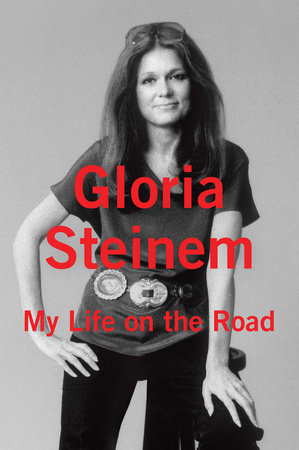
My Life on the Road by Gloria Steinem

Gloria Steinem’s straight-talking memoir is rich with personal anecdote, political history and a fervent love for living on the go.

steinem

Gloria Steinem, founder of New York and Ms. magazines and many women’s organizations and a noted leader of the women’s movement, shares her stories from along the way in My Life on the Road. This simply stated memoir recounts Steinem’s childhood, her organizing and activism from her youth into the present, with commentary on the social and political events of those decades. But it is also explicitly a story of life lived on the move. As she sees it in hindsight, Steinem inherited a love for constant motion from her father, who lived for most of her life out of his car, with little Gloria keeping him company for her first 10 years. As a young woman not ready to settle down to marriage and motherhood, and then as an organizer, she kept moving. One chapter is dedicated to her choice to travel communally rather than use an automobile of her own, because it offers increased opportunities for contact.

In stating her goals for this book, Steinem cites storytelling as a central drive. Much is told in short vignettes, stories from those she’s met in her travels or lessons learned on her way. There are more than a few instances of Steinem making assumptions about people (Harley riders, cab drivers), only to have them proven wrong–emphasizing the idea that every person is more than he or she appears.

Steinem hopes to encourage her readers to hit the road, too. She is clearly deeply passionate about the advantages of travel: for perspective, for personal development and for plain enjoyment. She recommends that politicians travel the country and the world: “I called big-city contributors from on-the-road places, so I could say, ‘You don’t know what it’s like out here.'”

My Life on the Road is not a history of the women’s movement, although of course it contains many references to that history, as well as to the U.S. political climate and events of the second half of the 20th century. Instead, Steinem’s memoir is a glimpse into one remarkable woman’s life and philosophies of the road. It includes profiles of Steinem’s immediate family and friends like Bella Abzug, Wilma Mankiller and Florynce Kennedy, and briefly addresses the conflict between Steinem and Betty Friedan. Steinem’s writing style is personal, warm, approachable and straightforward. Her fans will be satisfied by this personal view, one that combines a love for people and places and stories and change with a love for movements–in both senses.


This review originally ran in the October 15, 2015 issue of Shelf Awareness for the Book Trade. To subscribe, click here.


Rating: 7 stories.

Trans/Portraits: Voices From Transgender Communities by Jackson Wright Shultz

Trans/Portraits collects diverse, first-person stories of transgender experience and their contexts.

trans portraits

In his introduction to Trans/Portraits: Voices from Transgender Communities, Jackson Wright Shultz argues that while transgender experiences are increasingly present in academic writings and pop culture, the voices of transgender individuals remain largely absent from those portrayals. He works to correct this absence in discussions with 34 people who identify along a spectrum of genders.

As Shultz observes, no two of them use the same terminology to refer to themselves. Kelly came out as a girl at age 12, and was able to take puberty-suppressing medications and, later, hormones. Olivia transitioned when she was 43, and is a minister with the United Church of Christ. Alexander is asexual. Natalie is a police officer, and gives sensitivity training to departments around the state. Russ performs Deaf poetry in hir spare time (and uses the gender-neutral pronouns “ze” and “hir”).

Trans/Portraits suggests that the transgender experience cannot be encapsulated in any one story. The individuals Shultz talks with have undergone various forms of transition, using hormones, surgery, both or neither. Shultz asks them about vocabulary and pronoun use; finding support in communities; intersectional identities, for example race, gender, socioeconomics and (dis)ability; seeking basic safety and medical care; and activism. The theme is diversity: of lifestyle, of desired outcomes, of identity and personality. Shultz’s collection of first-person voices offers a fascinating and eye-opening view of transgender individuals and communities that will aid healthcare and education professionals, anyone with questions about gender and the general public. The uplifting message is that these are simply people, as sympathetic, interesting and varied as any other.


This review originally ran in the October 13, 2015 issue of Shelf Awareness for Readers. To subscribe, click here, and you’ll receive two issues per week of book reviews and other bookish fun!


Rating: 7 different ways to look at it.

We Were Brothers by Barry Moser

This reflective memoir of brotherhood, the evils of racism and sibling spats is as finely illustrated as it is well told, and will please diverse readers.

we were brothers

Book designer and illustrator Barry Moser and his brother, Tommy, grew up in the Tennessee country surrounding Chattanooga in the Jim Crow era. As boys, they were never close, and shared more physical conflict than anything else. As men, they grew further apart, disagreeing about everything from food to politics, as Barry renounced the racism they were raised with and Tommy did not. Only near the very end of Tommy’s life did they begin to communicate meaningfully and build the beginning of a relationship that would be cut short. We Were Brothers is Barry’s memoir of regret and remembrance.

The story of these two young men, and the times in which they lived, is plainly depicted. Moser’s narrative tone is straightforward in its observations from the perspective of small children, but the wisdom of the older man shines quietly through. For example, he wonders at his mother’s friendship with a black neighbor, who was accepted in many ways almost as family, but still expected to act differently in front of certain company; the family’s ingrained racism is inexplicable in this context, but never questioned. The young boys have a playmate who is black: he is mistreated in ways that do not resonate with the childhood Barry, but in adulthood he cannot remember that boy without tears.

After many disagreements and fistfights, the brothers go their separate ways, with Tommy joining the military while Barry went to college. Barry came to view the anti-Vietnam War movement with sympathy, reassessed his family’s racist views and left the South, while Tommy stayed. In his late 50s, Barry takes a phone call from his estranged brother that ends in racial epithets. Barry hangs up on Tommy, and their discord appears permanent. But then they begin writing letters, in which each man shares his hurts and disappointments. The first few letters, reproduced in the book, seem promising of a new era of openness, understanding and allowance for past mistakes. And then Tommy dies.

Moser’s deceptively simple story is accompanied by his own extraordinarily lovely drawings of the characters and places in question, so that the reader gains a visual glimpse into the people he evokes. We Were Brothers skillfully displays an introspective quality as the older man looks back with regret over a relationship he never had, and with appreciation for one briefly shared. Moser’s understated style only reinforces that musing tone. In the end, even as the painful brotherhood he recalls echoes the evils of a racist time and place, Moser’s calmly gentle, elegiac storytelling voice paints a picture that is loving as well as remorseful.


This review originally ran in the October 6, 2015 issue of Shelf Awareness for the Book Trade. To subscribe, click here.


Rating: 7 wished-for letters.

My Southern Journey: True Stories from the Heart of the South by Rick Bragg

Extraordinary, brief, true stories of the Deep South that are funny, haunting and redolent.

my southern journey

My Southern Journey: True Stories from the Heart of the South showcases the singular voice, humor and perspective of Pulitzer Prize-winner Rick Bragg (All Over but the Shoutin’), in short, entertaining stories. As he introduces it, “this book is a collection of Southern stories, but it is not a litany of pig pickins and frat parties and cutthroat beauty contests.” Rather, these are fervent, funny, heartfelt memories of places and cultures that need remembering.

Bragg shares his experience of the Deep South, from his family home in northern Alabama to Florida, Louisiana and the Alabama coast. Readers quickly become acquainted (or reacquainted) with his large and lively family, as Bragg brings immediacy and intimacy to his setting and cast of characters. His mouthwatering descriptions of the food of his homeland–centered on various forms of pork but with a heavy emphasis on Gulf Coast seafood as well–are flavorful and evocative. He occasionally claims that “I can’t write well enough to tell you how good it was,” a risky writerly trick that Bragg easily pulls off. He considers the red dirt of northeastern Alabama as both physical and symbolic. Bragg’s tone is self-effacing and often hilarious, which belies his ability to approach serious issues, like his treatment of overfishing and the Deepwater oil spill.

In exploring family, a sense of place or home, and the distinctive details of Southern food and culture, Bragg exhibits an exquisitely nuanced, clever voice, partly disguised by a down-home accent. Readers will laugh, and cry, and yearn to head South.


This review originally ran in the September 25, 2015 issue of Shelf Awareness for Readers. To subscribe, click here, and you’ll receive two issues per week of book reviews and other bookish fun!


Rating: 9 paper bags of cracklin’s.