Maximum Shelf author interview: Diane Les Becquets

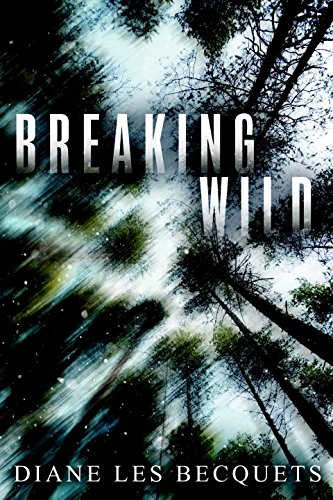
Following yesterday’s review of Breaking Wild, here’s Diane Les Becquets: The Wilderness Within.


Diane Les Becquets is from Nashville, Tenn., and holds degrees from Auburn University and the University of Southern Maine. She has taught writing workshops across the country, and is now a professor at Southern New Hampshire University. In addition, she has worked as a medical journalist, an archeology assistant, a marketing consultant, a sand and gravel dispatcher, a copywriter and a lifeguard. She is a competitive archer, and enjoys bicycling, snowshoeing, snowmobiling, backpacking, competing in sprint triathlons and hiking in the woods with her Labrador, Lacey. Before moving to New Hampshire she lived in a small ranching town in northwestern Colorado for almost 14 years, raising her three sons. Prior to Breaking Wild, Les Becquets published three young adult novels: The Stones of Mourning Creek, Love, Cajun Style and Season of Ice.

Where did the plot concept come from? Did it have to be set in northwestern Colorado?

photo: Nathaniel Boesch

photo: Nathaniel Boesch


I love this question because it triggers so many unforgettable moments from the years I lived in Colorado. The idea for the plot first came to me one evening when I was bow hunting alone. I had ventured into an area called Cyclone Pass, way off the grid, and was bugling back and forth with an elk, following him deeper and deeper into the terrain. The land was steep and littered with deadfall. But then the sky darkened; dusk had passed, and I knew it was too late to take a shot. However, what I also realized was that I was lost. I had gotten so caught up in the adrenaline rush of the hunt that I had failed to keep track of my bearings. The cloud cover was thick, the temperatures cold, and rain began to fall. I went for my headlamp in my backpack, but soon discovered that either the batteries were dead or the bulb had burned out. Not only did I not have a cell phone with me (not even sure I owned one at that time), this was an area where there was no cell signal. Four or five hours later, I found my way back to the trail, and eventually was at my truck. On the drive home that night, I began to imagine a story about a female bow hunter who goes missing. I thought about what that could mean about her life metaphorically. I was at an impasse in my own life, and oftentimes I had that sinking feeling of being lost, of feeling totally confused at which direction to take. I still have the note a friend wrote to me during that time: Within yourself you hold the compass. Together we will choose the direction. The geography of Breaking Wild is a metaphor for these women’s lives.

I chose northwestern Colorado for several reasons. First, this was an area I had called home for almost 14 years, where I had raised my three sons. The land and the people of this part of the state are very distinct from other areas. In many ways this is the last of the true West. It is an area I have tremendous fondness for. But also, geographically, this area is fascinating. It contains what archeologists and geologists refer to as the “edge effect,” where the Great Plains meets the High Desert and the Rocky Mountains. The result is dramatic, with rock formations and crevasses and magnificent storms and winds. Breaking Wild is situated in the Canyon Pintada District, terrain that is not only rich in geological formations, but also in Native American artifacts. There are over 300 archeological sites in this expanse of land. To be immersed in that kind of spiritual geography–very simply, there is nothing like it.

What makes for a compelling protagonist?

This is a difficult question, and I don’t think there is one answer. For me, the protagonists whom I am the most compelled by are those characters whom I care about. They become real to me, as do their stories. My life becomes larger because they are in it. Their lives, their stories, who they are, inspire me in both big and small ways. No longer does the protagonist exist simply as a persona on a page, but the reading experience becomes personal; it becomes a relationship. Once that relationship has been established, I’m going to become completely invested in what happens to her, especially when I know she has something at risk. Have you ever found yourself reading a book or watching a film and praying for the character, literally sending up a little prayer, and then catching yourself and saying, “Wait a minute. What am I doing? This isn’t real”? I am guilty of this quite often and that is an enormous compliment to the artist.

I love the way you switch between Amy Raye’s and Pru’s perspectives. Why is only one of these written in the first person?

This is a question I’ll have to answer in retrospect, as it wasn’t a conscious decision. I believe Pru would be the most similar to me, and perhaps that is why her story is told in first person. But in retrospect, I can also say that Pru is a cause-and-effect person, which makes a first-person account all that more accessible. I felt as if I could inhabit Pru and write what she saw and understood. Amy Raye is much more complicated. I wrote to understand her. I was the observer as I was writing her story.

Do you have a favorite of your two female leads?

Because I identify the most with Pru, because I felt as though I already knew her story before I wrote it, I think Amy Raye would have to be my favorite. She was the fresh, new character for me to get to know. She’s completely flawed and vulnerable and unlikable in so many ways, and yet I am the most compelled by her because I want to know why she is the way she is. I remember my dean once telling me, “We admire a perfect woman. We love an imperfect one.” Amy Raye is so completely imperfect, so completely risky, that I adore her.

How was writing for adults different from your young adult novels?

I never thought of myself as a young adult writer. I simply wrote the stories that came to me. However, I believe the age of each of the protagonists had to do with different situations in my life, places where I was stuck emotionally. The novels were a way for me to work through those places and emerge on new ground. I used to tell people I wrote Love, Cajun Style while I was going through my divorce because I couldn’t afford therapy at the time; I wanted to write something funny because I wanted to make myself laugh. I wanted to feel better. Breaking Wild was a completely different experience for me. I wrote the majority of the novel after emerging from a long space of grief after the death of my husband. It was with this novel that something broke free. The process became a way of being, imaginative and prayerful, rather than a means to work through something and get to someplace else.

What’s next?

I spent this past spring in Montana and Washington conducting physical research for my next novel. As with Breaking Wild, it will be a story of psychological intrigue and suspense. It is also a love story, told from the point of view of a shy, yet strong, female character–a conservationist working in the wilderness, who in her 30s falls in love for the first time. Once again, I find myself intoxicated with the experience. I have so many more stories to write. It is the freest I have ever felt.


This interview originally ran on December 9, 2015 as a Shelf Awareness special issue. To subscribe, click here, and you’ll receive two issues per week of book reviews and other bookish fun!

Maximum Shelf: Breaking Wild by Diane Les Becquets

Maximum Shelf is the weekly Shelf Awareness feature focusing on an upcoming title we love and believe will be a great handselling opportunity for booksellers everywhere. The features are written by our editors and reviewers and the publisher has helped support the issue.

This review was published by Shelf Awareness on December 9, 2015.


breaking wildBreaking Wild is the first adult novel by Diane Les Becquets, author of highly praised young adult novels including Season of Ice and The Stones of Mourning Creek. Carefully crafted characters and measured pacing define this tale of two women’s parallel personal journeys in the wilderness of northwestern Colorado.

Amy Raye Latour is a wife and mother, an accomplished outdoorswoman and a strong personality. She is on a camping and hunting trip with two male friends. The men have brought down elk with rifles, but Amy Raye hunts with a compound bow; she needs to get away from her companions to find the stillness and quiet required to get close enough to her prey. So she sneaks away from camp on their last morning, with only a light pack. When she doesn’t show up again that night, her friends call local authorities.

Pru Hathaway lives in the nearby town of Rio Mesa with her teenaged son, Joseph, and her dog, Kona. Pru is an archeological law enforcement ranger with the Bureau of Land Management; Kona is certified for search-and-rescue, including avalanche conditions. The sheriff, Colm McCormac, is a friend; when he gets the call about Amy Raye, he turns to Pru.

The personalities of the two women shape the novel: they are both more complicated than they seem on first meeting, and while they are very different, both have concealed and storied pasts. One of Les Becquets’s triumphs is the tantalizingly paced release of new information: about Pru’s personal history, about Amy Raye’s troubles and the tangled web of her life, any strand of which may be implicated in her disappearance. Similarly meticulous is the build-up to Pru and Amy Raye’s expected meeting. This is the story of a chase: Pru and Kona pursue Amy Raye through the backwoods, tracking her movements through drifting snow and rugged terrain, hoping to find her before she succumbs to a mountain lion or the harsh winter conditions. As one party makes a move, the other makes a corresponding move, and the pressure increases. Breaking Wild is not only a masterpiece of characterization, but a feat of taut anticipation and suspense.

Somewhat relieving this tension are flashback interludes to Pru’s and Amy Raye’s respective histories, and the personal dramas of the present timeline. Pru’s son, Joseph, although not entirely untroubled, is a sweet young man; he wonders if Pru and the sheriff–himself an intriguing minor character–should date. Amy Raye’s marriage is not without its cracks, a situation perhaps symbolized by the description of her hunting in the early pages: her husband prefers to shoot with a camera, and has asked her not to keep guns in the house. Thus she uses the compound bow instead, and it is this choice that causes her to leave camp alone in the first place.

Three sections–entitled “Bear,” “Cougar” and “Deer”–further shape the book; chapters within those sections alternate between Pru’s first-person perspective and a third-person view of Amy Raye’s experiences. This format is telling. The natural landscape of northwestern Colorado is a pivotal feature, the backdrop that sets the stakes for a spectacle of life and death, informing every detail, every decision made. Both Pru and Amy Raye repeatedly note the temperature and humidity level, the wind strength and direction, in judging where, when and if to travel. When Pru first tells Kona to “go find,” on page 36 of more than 300, the reader knows that Amy Raye will not be so easily located. From then on, animal life and nature’s rhythms are increasingly crucial to Amy Raye’s subsistence. Is she hunting, or being hunted? She has gone into the wild seeking something undefined: “In that moment she felt everything–life, death, the tangy sweet smell of pine, the freshness of the rain. It was the immensity of those feelings that drove her mad at times.”

While the niceties of backwoods survival are fully developed, the drama of the natural world is less central to the story than the human dramas. The travels of Amy Raye and Pru give them room to grow, and to ask and answer questions of how to love; what a healthy relationship looks like; the nature of addiction; and the meaning and forms of family and community. Indeed, part of what Amy Raye has gone into the woods to find is a connection to her past; Pru found solace in the outdoors when she suffered a personal tragedy. So the two threads of the story–family and community, natural wilderness–intertwine, just as the lives of two women do.

Les Becquets portrays a credible and compelling cast of characters, especially the two strong women at its center. Breaking Wild is a rare novel in its mastery of both plot and character, with deliberate rhythm, thrilling suspense and a striking backdrop. Its breathless momentum carries through to a dramatic conclusion.


Rating: 7 arrows.

Come back tomorrow for my interview with Les Becquets.

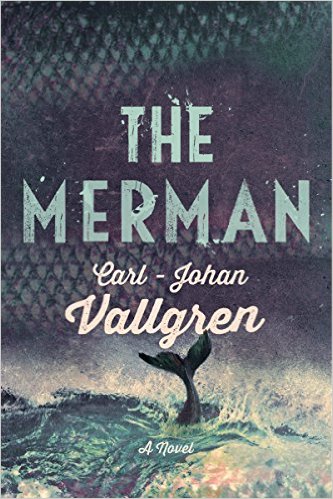
The Merman by Carl-Johan Vallgren, trans. by Ellen Flynn

In this grown-up fairy tale, a young women’s battles with poverty, violence and neglect are further complicated when a mystical creature enters her life.

merman

Carl-Johan Vallgren’s The Merman, translated from the Swedish by Ellen Flynn, concerns the realistic and heartbreaking circumstances of teenaged Nella and her little brother, Robert; at the same time, it is a dark fairy tale about a mythical creature from the deep and the possibility of resisting evil.

Nella and Robert’s parents are terribly incompetent, uncaring people, more focused on drinking and crime than their children’s welfare. Robert struggles with learning disabilities and is bullied at school; protecting him, getting him the glasses he needs, and his general well-being falls to his sister. Nella is hard-pressed to handle the responsibilities of the household, including cleaning up after her alcoholic mother, about whom she muses, “it was about as hard to judge her as it was to understand her.” This mature and nuanced observation is typical of a girl who, despite her own troubles, seems drawn to others who need her help, such as a disabled man who is one of her few friends.

When the neighborhood bullies begin to threaten Robert with violence, Nella turns to her only ally at school, a boy named Tommy. But contact with Tommy’s brothers presents a new difficulty. They have pulled a mystical being from the ocean, whose otherworldly nature and wordless communication will change everything Nella understands about her life. All at once, Nella struggles with the bullies’ extortion and Robert’s fear; their father is released from prison and brings criminals home with him to disrupt their fragile household; their mother threatens to leave; and the sea creature looks to Nella for help. A burdened but strong and compassionate young woman, she will learn and grow through these tests, and wins the reader’s heart by the time her story reaches the final, hard decisions.

Nella is a compelling protagonist, reminiscent of Roald Dahl’s Matilda in her miserable circumstances, but with a harder, more adult edge. Robert’s suffering is almost unbearable, but sadly realistic. In Ellen Flynn’s translation of Vallgren’s tale, dialogue can be a bit stiff and formal, especially in the children’s cases, but overall she establishes a tone appropriate to the balance of reality and mysticism in Nella’s story, and the stark ugliness of her life. Vallgren evokes his fantasy element with wonder and detail; The Merman is a singular story. Fans of adult fairy tales and bleak realism will be haunted and enthralled by this novel of human tragedies, and the mystery of what lies beyond.


This review originally ran in the November 5, 2015 issue of Shelf Awareness for the Book Trade. To subscribe, click here.


Rating: 7 cartons of cigarettes.

Memento Mori: The Dead Among Us by Paul Koudounaris

Photographs of memento mori from around the world illustrate rich relationships with death.

memento mori

Paul Koudounaris (The Empire of Death) presents phenomenal photographs and a fascinating survey of death across cultures and history with Memento Mori: The Dead Among Us. His text is concise but effective, allowing his photography to take the lead. Images are gorgeously rendered in large format and across full spreads. They feature ossuaries, charnel houses and intricate, artistic arrangements of bones, mummies and decorated skeletons from various cultures.

Koudounaris portrays the Torajans of Indonesia, who place their dead in caves, and after the coffins disintegrate, arrange the bones decoratively; the Aymara Indians of Bolivia, who keep treasured skulls in their homes and ask them for advice; and the elaborate, even decadent, Catholic ossuaries created in response to Protestant reforms. Buddhists gilded certain mummies; Rwandans set up memorial vaults. Wrapped in a blue satin cover, with more than 500 illustrations, Memento Mori offers a striking tribute to many ways of remembering and honoring death and the dead.


This review originally ran in the November 27, 2015 issue of Shelf Awareness for Readers. To subscribe, click here, and you’ll receive two issues per week of book reviews and other bookish fun!


Rating: 7 perspectives.

Because She Never Asked by Enrique Vila-Matas, trans. by Valerie Miles

This enigmatic novella in translation asks if life imitates art or vice versa.

because she never asked

Enrique Vila-Matas (Illogic of Kassel; Dublinesque) experiments with form and his reader’s trust in Because She Never Asked, a novella about the circularity of art and life.

This twisting story is told in three parts. In the first, a young artist, Rita Malú, lives in Paris and obsesses over another artist, Sophie Calle. Rita “carrie[s] out a series of experiments with truth”; in one of these, she embarks on a journey to Portugal to search for an author she does not really want to find. In the second part, a narrator reveals that he has written Part 1 at Sophie’s request, as a work of art that she will then live out as written. Part 3 questions again what has come before it. This convoluted structure, almost a story told in reverse, discloses details and layers of artifice as the reader proceeds. At least two subtly distinct voices demand attention and credibility.

Valerie Miles’s translation from the Spanish preserves a roguish tone that feels apt in this playful and puzzling novel, whose brevity–under 100 pages–belies its complexity. The narrator labors with questions about the reality of life, its relationship to art and their relative worth. He invokes the dreaminess of Don Quixote and the inscrutability of Marcel Duchamp, and when he becomes frustrated in explaining the jealousy of lovers, commands his reader to “read Proust to understand it better.” Vila-Matas’s novella is about something different by its end than at its beginning: a carefully packaged riddle, intriguing and stylish.


This review originally ran in the November 24, 2015 issue of Shelf Awareness for Readers. To subscribe, click here, and you’ll receive two issues per week of book reviews and other bookish fun!


Rating: 6 moments of circular imagination.

Writers by Barry Gifford

Barry Gifford’s brief fictional scenes of celebrated authors are funny, tragic and insightful.

writers

The prolific and versatile Barry Gifford (Wild at Heart; The Lost Highway) has a little fun with a range of literary figures in Writers, a collection of dramatic scenes “intended to be read as stories as well as performed as plays.” Gifford begins with “Spring Training at the Finca Vigía,” in which Hemingway showcases his famous bluster and paranoia while hosting two Brooklyn Dodgers at his Cuban home; Martha Gellhorn also makes an appearance in this longest of Gifford’s imaginings. Most run around 10 pages in length, and are short and pithy.

The settings range from “relatively realistic” to “wholly imaginary,” Gifford warns, and include a conversation between the living Roberto Bolaño and the ghost of Jorge Luis Borges. Arthur Rimbaud tells his sister on his deathbed, “I have been bitten by life before and survived.” Marcel Proust’s final words are likewise recorded. Herman Melville laments the public’s reaction to Moby-Dick to a passing policeman, who worries that he is suicidal. Emily Dickinson questions her sister: “Why? I’m nobody. Who are you? Aren’t you nobody, too?”; James Joyce and Samuel Beckett exchange silences. Joining these cameos are Kerouac (with characteristic openness and affinity for drink), Albert Camus, Nelson Algren, Jane Bowles, Baudelaire and others.

Gifford’s imagined anecdotes occasionally reference the absurd, but overall tend to confirm readers’ impressions of large and troubled personalities. These famous artists appear surreal and often ugly, but by caricaturing them he also reasserts their humanity. The result is both entertaining and thought provoking.


This review originally ran in the November 24, 2015 issue of Shelf Awareness for Readers. To subscribe, click here, and you’ll receive two issues per week of book reviews and other bookish fun!


Rating: 6 sets based on my personal affinity.

Maximum Shelf author interview: Ruth Wariner

Following Friday’s review of The Sound of Gravel, here’s Ruth Wariner: Finding a Voice.


Ruth Wariner was 15 years old when she left the polygamist Mormon colony where she grew up in Chihuahua, Mexico, and took her siblings with her to California. She raised her three youngest sisters while earning her GED and putting herself through college and then graduate school, eventually becoming a high school Spanish teacher. She now lives in Portland, Ore., where she remains close to her siblings and is happily married. The Sound of Gravel is her first book.

wariner
When did you know you wanted to write this story? How long did it take?

There was one specific moment when I realized I needed to write my story. It was late May in 1995, and I was 23 years old. My three youngest sisters, Elena, Leah and Holly, who were 12, 10 and eight at the time, and I were living in Grants Pass, Oregon, and eating a lunch that we’d ordered from the dollar menu at Burger King. We were sitting there when out of the blue, Leah asked, “So what happened to our mom anyway?” I was stunned by the question and suddenly realized that I had never told my sisters the story of where we came from.

That was when I began thinking about writing my memoir. But I was in college, and had full responsibility of my sisters. I was working a part-time job with barely enough time to do my homework. After I finished graduate school a few years later and started teaching, I began taking memoir and creative nonfiction writing classes after work. By then my sisters had grown and moved out of my apartment, but still, I wanted them to know who our mother was–or at least to know her as I had known her. I wanted them to know where we had come from and why we had to run away and grow up without parents.

Once I was ready to sit down and actually start writing The Sound of Gravel, it took me almost five years to finish. I couldn’t spend more than a few hours a day writing and often had to step away for a break, especially when I wrote about my most painful memories. There were times when it took me a few days to get back to finishing a disturbing scene.

Why did your story need telling, other than for your sisters?

My reasons for writing have always been very personal: I wanted to share my memories with my siblings–for their own healing and to help them understand the life we left behind. The more I wrote, the more I recognized my own need to process those most heartbreaking parts of my life and to express how I felt about those moments. It’s never been my intention to promote a particular cause or belief system, nor is it my intention to disparage any readers’ own beliefs or religion.

This retelling was painful. What made that process worthwhile?

The story was definitely a hard one to tell, but it has been an incredibly healing journey. Some of my memories bothered me more than I had expected them to. I hadn’t thought about my younger sister Meri in years, but when I wrote the scenes with her in them, I did so through tears.

Revisiting my mother’s life and writing about her in detail was also amazingly cathartic. Looking at photographs of her and remembering the way she smelled, the sound of her voice, the way she combed her hair, the way she smiled and the light freckles on her skin brought her back to me in a very raw and real way. Being able to think about her choices from a more adult perspective also helped. As I’ve grown and reflected on my own life and my relationship to the world, I realize my mom didn’t have a lot of self-love and self-acceptance. She chose a life and a belief system that reflected how she felt about herself.

Even though I know I’ll have to talk about my childhood in the coming months, I feel like I left so much of my past on those pages, which has made it easier for me to talk about. I’m grateful for the opportunity to share my experience. Writing this book also ended up being a process of self-discovery and personal healing. I feel like I found a voice I honestly didn’t know I had. I needed to recognize for myself that my life, my experience and what I had to say about it matters. This was especially important for me after growing up in a large, chaotic household where I really wasn’t heard.

You’re narrating the audiobook yourself. How has that project played out?

I actually just finished recording the audio book yesterday. I hadn’t considered reading myself but the Macmillan team felt that because the memoir is written in such a personal way, it needed to be read and recorded in my voice. The idea of reading it aloud to people really frightened and intimidated me, and I was so nervous that I broke out into hives the day before I started recording! When I finally sat down in the tall chair in front of the microphone with a digital version of my book in front of me, my throat became dry and tight, and my voice trembled. But after reading a few paragraphs and taking a few deep breaths, I felt more relaxed and was able to get into the flow of a natural reading pace. I ended up spending three full days in the studio with a fantastic recording team, and even though it was really hard, emotional work, and even though I felt completely out of my comfort zone, I’m so grateful to have had the opportunity to record my book and feel that it will be more powerful for listeners.

You’ve shared many personal details. Did you choose to withhold any?

I chose to leave out some details of my siblings’ experience in the Colony because their stories really aren’t mine to tell. I only wanted to share the details of their lives in relation to how they intertwined with my own. But when it came to my story, I honestly didn’t hold anything back. I have nothing to hide.

What do you want people to know about you that’s not in your book?

I’m still really close to my siblings on my mother’s side. All of us except for Matt, who is still a committed member of my dad’s church, live in the Pacific Northwest. We spend every holiday together and are a strong support system for each other. Growing up in the kind of poverty we did made our bond with each other stronger; we just didn’t have enough stuff (electronics, cable TV, computers, etc.) to distract us from each other. Growing up without parents also secured and strengthened our bond, and I am incredibly grateful that we were able to stay together through very challenging situations. For me, it’s important that my readers know this because in spite of our troubled childhood, there has been so much goodness and joy that has grown and blossomed. We grew stronger than our circumstances.


This interview originally ran on November 19, 2015 as a Shelf Awareness special issue. To subscribe, click here, and you’ll receive two issues per week of book reviews and other bookish fun!

Maximum Shelf: The Sound of Gravel by Ruth Wariner

Maximum Shelf is the weekly Shelf Awareness feature focusing on an upcoming title we love and believe will be a great handselling opportunity for booksellers everywhere. The features are written by our editors and reviewers and the publisher has helped support the issue.

This review was published by Shelf Awareness on November 29, 2015.


sound of gravelIn The Sound of Gravel, Ruth Wariner tells of growing up in a Mormon polygamist colony in the state of Chihuahua, Mexico. Her childhood was filled with sad and shocking hardships, some painfully difficult to read. But Wariner’s tone is never self-pitying, and her love for her mother and siblings imbues a distressing memoir with nuance, and eventual relief.

Ruth’s mother, Kathy, became the fifth wife of Joel LeBaron when she was 17 years old. Joel’s father founded Colonia LeBaron in Mexico because the practice of plural marriage was better tolerated there than in the United States. Ruth was Kathy’s fourth child and Joel’s 39th. He died just three months after Ruth’s birth–murdered by his brother over a conflict about church authority. Kathy remarried a man named Lane and bore another six children with him. Ruth was the eldest nondisabled female child and, over the years, many domestic duties, including childcare, fell to her.

The Sound of Gravel begins with the family history of the LeBarons, whose status as church leaders impressed the young Ruth, and with Kathy’s personal history, as told to her daughter. The earliest scenes Ruth relates from her own memory find her at age five, and introduce her siblings: Audrey, the eldest, with a disability that remained undiagnosed for years and that led to occasional violence against the other children; Matt, a responsible boy; Luke, good-natured but developmentally delayed; and the baby, Aaron. Later the family grows as Meri, Micah, Leah, Elena and Holly are born. Lane, Ruth’s stepfather, promises to complete Kathy’s family’s dwelling and add a showerhead, electricity and other longed-for luxuries, but is slow to do so. Lane’s first wife and her children receive preference as to the basics, in the tradition of the LeBaron church. Ruth dislikes Lane early on, for his failure to support her mother as well as his harsh discipline. From an early age, Ruth sees her mother’s conflicts and jealousies with her sister wives, and worries that plural marriage looks more like misery than the holy state her church teaches it to be.

Ruth grows up quickly as the household swells in size. The family moves around: Kathy leaves Lane after he beats her, and moves to the United States where her parents live, but returns to him. Lane relocates his families as they seek work: they harvest and sell pine nuts in New Mexico, camp out in El Paso, and smuggle undocumented Mexican workers across the border under the children’s makeshift bed in a camper. But Kathy, Ruth and the other children always return to Colonia LeBaron because, Kathy says, “this is where you kids belong.”

The poverty and poor living conditions that come with Kathy’s choices are based on her religion, her devotion to and dependence on Lane, and a belief that the United States is a Babylon “standing between us and our connection to God.” Squeezing a living out of food stamps and Lane’s meager earnings–shared among four wives and an uncounted number of children–means mostly subsisting on beans and rice. The children are pulled out of school in their early teens–Ruth at age 14–because “Mom insisted that it was more important for me to be around to help her take care of the house and the kids.” But the most heartbreaking aspect of Ruth’s childhood is Lane’s sexual abuse, which continues for years even as Ruth repeatedly reports him to her mother. Kathy exhorts Ruth to forgive and move on; but even a town tribunal fails to stop the abuse. The community’s betrayal of its children is an especially disturbing phenomenon in a story filled with the tragedy and woes of day-to-day hardships of poverty, the absence of creature comforts, illness and accidental death.

However, through it all flows Ruth Wariner’s careful, loving portrait of her mother, a woman doing her best with limited options, believing that her church knows best. Despite her profound anger at her mother’s failure to protect her from Lane, Ruth understands that she is loved, and deeply loves her mother in return. “I realized how little she had asked of the world, and how even that had been too much for the world to give.” She reflects that “Mom couldn’t teach me that because she didn’t know herself. She couldn’t show me how to be happy, only how to barely survive.” These and other contemplations establish Ruth as a wise and thoughtful narrator.

The Sound of Gravel is straightforwardly told, in chronological order and with little lyrical adornment. Its power lies in the facts of the story, which is deeply affecting both in its horrors and in its redemptive conclusion. At the end, when Ruth saves herself and her sisters by escaping Colonia LeBaron, she has earned the reader’s sympathy and respect, and an identity beyond that of survivor.


Rating: 8 babies (and counting).

Come back on Monday for my interview with Wariner.

Brooklyn: A Personal Memoir: With the lost photographs of David Attie by Truman Capote

A superb Capote essay with never-before-seen photographs originally commissioned to accompany it make an ideal match–and a great story.

brooklyn

Truman Capote’s essay about Brooklyn Heights, N.Y., filled with clever observations in his familiar style, was first published by Holiday magazine in the 1950s. It was reprinted in 2001, with a foreword by George Plimpton, which is included here. However, the singular contribution of Brooklyn: A Personal Memoir: With the Lost Photographs of David Attie is those photographs, discovered in 2014 by the late photographer’s son in dusty wooden boxes. The story Eli Attie tells in his afterword is as compelling as Capote’s witty and winning portrait of Brooklyn. Capote’s career was distinctly tied to Attie’s when the latter was hired to photo-illustrate Breakfast at Tiffany’s for its scheduled appearance in Harper’s Bazaar, which Eli learned only decades after his father’s death.

Capote’s essay is of course brilliant in its scenes, characters and language. “Sunstruck scraps of reflected river-shine” and the lovely alliteration of “plenipotentiaries from the pearl-floored palace of Poseidon or mariners merely” exhibit his decorative, evocative way with words. The historic contribution of this glimpse at a place in time is significant; and the same must be said of Attie’s documentary photographs, which perfectly complement Capote’s text. Since Harper’s Bazaar ultimately cut the novella, the included images went unpublished, including several of a young Capote, framed against the “beautiful staircase floating upward in white, swan-simple curves to a skylight of sunny amber-gold glass” in the house where Capote lived (in the basement).

This marriage of Capote’s glimmering words with Attie’s harmonizing photographs is perfected by the younger Attie’s narrative, in this unparalleled addition to the Capote canon.


This review originally ran in the November 17, 2015 issue of Shelf Awareness for Readers. To subscribe, click here, and you’ll receive two issues per week of book reviews and other bookish fun!


Rating: 8 local institutions.

The Japanese Lover by Isabel Allende

Isabel Allende’s latest masterpiece explores war, race relations, forbidden love and reconciliation.

japenese lover

Isabel Allende (The House of the Spirits; Maya’s Notebook) presents a beautiful, complex story of love, sacrifice and redemption in The Japanese Lover.

In 1939, an eight-year-old Polish girl named Alma is sent from Poland as the Nazis advance, to live with her aunt and uncle in opulent circumstances in San Francisco. There she meets a Japanese boy her age, Ichimei, who will be her great love, and her older cousin Nathaniel, who will be her best friend. Alma’s story–and her convoluted relationships with Ichi and Nat–is revealed from a distance of many years, when a young Eastern European woman named Irina takes a job at the senior residence Alma has just moved into. Slowly, Irina wins the trust of the prickly elderly Alma, and the unsolicited devotion of Alma’s grandson Seth. These and other characters are wrought with tenderness, humor and nuance in Allende’s characteristic lyric style, as the story of Alma’s love unfolds in a narrative alternating between passionate old age and the passions of youth.

Allende ruminates over lifelong love, in its various forms and bound by destiny; the sacrifices love does and does not compel; and the ugly realities of war and racism–while Alma emigrates to flee war, Ichimei and his family are interned in the United States following Pearl Harbor, and Irina’s personal history is touched by trauma and displacement that is revealed only late in the book. This novel of fervent feeling, reflection and multiculturalism will please Allende’s many fans.


This review originally ran in the November 17, 2015 issue of Shelf Awareness for Readers. To subscribe, click here, and you’ll receive two issues per week of book reviews and other bookish fun!


Rating: 7 gardenias.