The Iceberg by Marion Coutts

An artist reflects in a variety of ways on the end of her writer husband’s life.
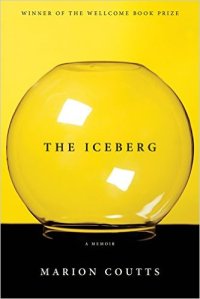
iceberg

Tom Lubbock was an art critic for the Independent and the father of an 18-month-old boy, when he was diagnosed with brain cancer in 2008. In The Iceberg, his wife, Marion Coutts, a versatile and prolific artist and writer, recalls his final years. The resulting memoir is musing, lyrical, ambling and sometimes digressive. The range of emotions she expresses is startling and real.

Coutts begins with “a diagnosis that has the status of an event” as she introduces her husband and their son, Ev. Tom works with words and concepts, meticulously and thoughtfully constructing the writings that are his livelihood and passion. When he has a seizure, a tumor is discovered in the speech and language part of his brain: Tom and Marion must reinvent communication. They practice and make lists: of names of friends, of ideas for outings, of opposing word pairs (big/small, light/heavy). They play a game of yes/no questions when Tom has something to discuss: Is it about your work? Is it about us? Is it food or clothing? These coping mechanisms are an interesting intellectual exercise, but are also central to this family’s experiences. Coutts writes: “I have lost the second consciousness that powers mine. Lost my sounding board, my echo, my check, my stop and finisher. I am down to one.”

The Iceberg neatly captures the events of diagnosis and death, with a stark attention to what comes in between, and little reference to the rest of life. Tom’s medical conditions are described with varying levels of detail, as Coutts often has only a vague understanding of them. Her encounters with the British National Health Service are frequently frustrating. These physical realities are less than central, however. The Iceberg is a forthright emotional account, often celebratory, even exultant: Tom especially often finds joy late in his life. Of course, Coutts is also destitute, bereft, undone. Such feelings alternate with a cerebral, even detached perspective. These jarring intersections are at the center of her story. She writes unflinchingly of her short temper with Ev, and occasionally with Tom; she relates both anguish and resolve, resignation and anger, often with a striking sense of remove. “There is going to be destruction: the obliteration of a person, his intellect, his experience and his agency. I am to watch it. This is my part.” Or of sitting at his deathbed: “I love being in position here. It is perfectly correct.”

Coutts’s prose is layered, textured, dense with meaning and interjected with brief e-mails to loved ones about Tom’s status along the way. As a consideration of art, life, death and love, the full impact of The Iceberg is deeply moving and intelligent, a worthy elegy.


This review originally ran in the January 22, 2016 issue of Shelf Awareness for the Book Trade. To subscribe, click here.


Rating: 7 words.

War Music: An Account of Homer’s Iliad by Christopher Logue

This epic retelling in verse of Homer’s Iliad is worthy of the classic.

war music

Upon his death, poet Christopher Logue left unfinished a full-length reimagining of Homer’s Iliad. His fellow poet and friend Christopher Reid applies a careful editorial hand to the papers Logue left behind to release War Music, which includes both previously published works and new material.

The result is as epic and evocative, as emotional and resounding as the original, yet also surprisingly novel. Logue employs memorable images, as when the two armies meet “like a forest making its way through a forest.” He is unafraid of wild anachronisms: “As many arrows on [Hector’s] posy shield/ As microphones on politicians’ stands”; “Blood like a car-wash.” But this is no attempt to modernize; the rage of Achilles, Helen’s beauty, capricious gods and customs of battle remain set in Homer’s Greece. Rather, it is an enrichment of a well-known and loved story, in swelling verse and with the same clever eye for tragedy and sly humor of its model.

Reid finds Logue’s “capacity for the grand conception dashingly and convincingly executed,” as near “pure Logue” as possible. His preface and comments in the appendix (where the manuscripts were roughest) offer insight for readers unfamiliar with Logue, who references Dostoyevsky, Shakespeare, Keats and Tennyson, as well as Homer. Expertise with the original is unnecessary to enjoy this version; although such knowledge will increase the impact, the grandeur of War Music is gripping and suspenseful regardless of the reader’s background. No fan of Homer will want to miss Logue’s contribution.


This review originally ran in the January 19, 2016 issue of Shelf Awareness for Readers. To subscribe, click here, and you’ll receive two issues per week of book reviews and other bookish news.


Rating: 8 topaz saucers heaped with nectarine jelly.

The Family Tree: A Lynching in Georgia, a Legacy of Secrets, and My Search for the Truth by Karen Branan

A journalist’s research uncovers her own family history and connections to a horrifying hate crime.

family tree

In researching her family history in the little town of Hamilton, Ga., investigative journalist Karen Branan was surprised to find connections to a 1912 lynching. A nephew of her great-grandfather, the sheriff, was murdered. Days later, a local mob killed three black men and a black woman. Branan digs deeper, expecting to find her forebears innocent of violence. The evidence is far more complex in The Family Tree: A Lynching in Georgia, a Legacy of Secrets, and My Search for the Truth.

In a town where nearly everyone has been related by blood or marriage for generations, Branan’s family variously turned a blind eye to the murders, or directly participated. She finds herself related not only to the white mob, but to at least one of the black victims as well. Every new piece of information complicates the story and startles her further, until she has to address her most basic understanding of the world. “I began this journey believing myself to be an unflinching investigative reporter and a nonracist,” Branan writes, but must confront a bias in favor of her own family. Admirably, she examines herself and the preconceptions she brings, even to the pursuit of racial justice.

The Family Tree offers an in-depth study of the history of Southern race relations, particularly in Georgia. The narrative of the lynching is told thrillingly, the background more dryly, but it is Branan’s personal perspective and soul-searching that makes this history insightful, relevant and memorable.


This review originally ran in the January 19, 2016 issue of Shelf Awareness for Readers. To subscribe, click here, and you’ll receive two issues per week of book reviews and other bookish news.


Rating: 6 liaisons.

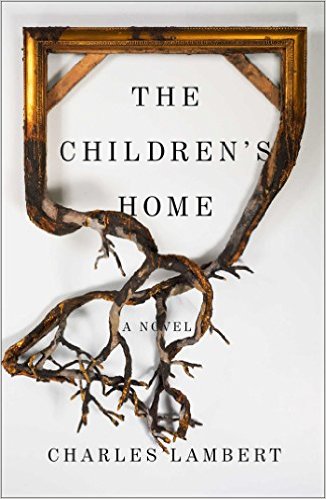
The Children’s Home by Charles Lambert

Wonderful, eccentric stray children fill a decaying country estate in this strikingly dark fairy tale.

children's home

Charles Lambert (With a Zero at Its Heart) offers a startling and adept blend of realism and frightening fantasy in The Children’s Home.

Morgan Fletcher lives alone, served by a housekeeper and a skeleton staff he purposefully never sees, on a sizable estate of fading opulence. He has been disfigured by a mysterious accident; his inherited fortune has equally enigmatic origins. His family history is only hinted at, but apparently contains ugly secrets. His housekeeper, Engel, seems comfortably wise to these difficulties, and when the country doctor, a “sunlike man,” befriends Morgan, he feels a little like himself again. The real difference, however, is the children, who show up one by one as if out of the air, some of them mere babies on the stoop. Morgan is wonderingly delighted to find himself surrounded by youngsters, whose playful noises echo often through the house, but who are strangely silent when he wishes for silence. These are not ordinary children, but Morgan has had no contact with the wider world for many years and is slow to question their behavior. They seem to seek something within his house and simultaneously seem to know his past already.

Lambert opens with plausibly lifelike scenarios and proceeds with careful pacing through the Fletcher family story. The line between reality and illusion is as imperceptible to the reader as it is to Morgan, until the final, otherworldly action accelerates with glittering vividness both lovely and grotesque. The Children’s Home is unforgettable: fanciful, chilling and poignant.


This review originally ran in the January 15, 2016 issue of Shelf Awareness for Readers. To subscribe, click here, and you’ll receive two issues per week of book reviews and other bookish fun!


Rating: 7 questions.

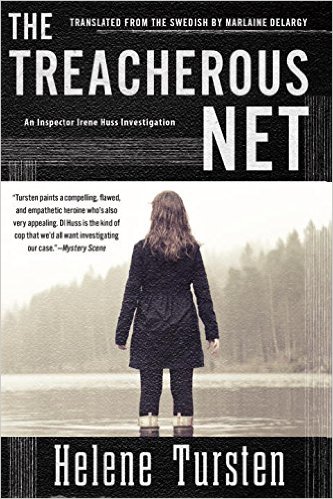
The Treacherous Net by Helene Tursten

Detective Inspector Huss works to protect a Swedish city beset by multiple violent crimes.

treacherous net

The Treacherous Net is the eighth book in Helene Tursten’s series starring Detective Inspector Irene Huss, who continues to be challenged by upheaval in her workplace and her personal life.

In the city of Göteborg, Sweden, Huss is frustrated with the new female boss of her Violent Crimes Unit, who uses her sex appeal to manage the men in her department; she has no use for Huss, the only other woman. Huss has lost her longtime partner, now the boss’s deputy, and the unit is short-staffed and overextended by an unusually high crime rate. Gang-related murders are up, a mummified corpse has been found bricked into a chimney during demolition of a burned-out building, and two teenaged girls have been raped and murdered. One was from an affluent family who promptly reported her missing; the other had scarcely been missed. Meanwhile, Huss worries over her supportive but stressed and overworked husband, her aging mother and her young adult daughters, now out on their own. A new addition to her work team will ease some of the load–and present new challenges.

Huss is a tough, committed investigator and a loving family woman, and her shifting alliances present a twist on the standard police drama. Several of the actors involved with the crimes in question are well-developed characters as well. But The Treacherous Net is most accomplished in its plot, with several threads exploring history, long-standing social stigmas and the power of the Internet. This fast-paced, gritty thriller offers both a dark story and a striking hero.


This review originally ran in the January 5, 2016 issue of Shelf Awareness for Readers. To subscribe, click here, and you’ll receive two issues per week of book reviews and other bookish fun!


Rating: 6 cups of coffee.

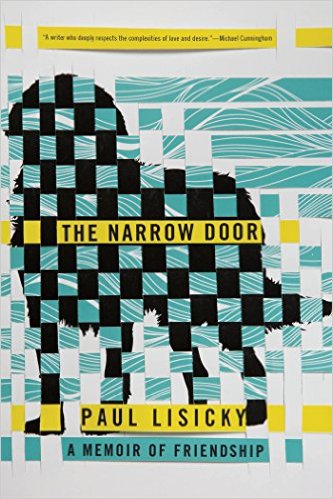
The Narrow Door by Paul Lisicky

The Narrow Door is literary, smart and poignant, an extended eulogy for a friend and a meditation on friendship.

narrow door

The Narrow Door is a striking memoir of love and loss by Paul Lisicky (Lawnboy; The Burning House). At its center are the life and death of Denise, Paul’s longtime best friend; in parallel, Paul and his husband slowly pull apart and finally break up. The ups and downs of these two relationships define the story Lisicky tells, but they also give him space to muse on larger questions: the craft of writing, competition among writers, the meaning of love and events in the larger world.

Paul met Denise in the early 1980s, when they were both teaching assistants at Rutgers. They became fast friends, talking on the phone for hours, sharing the pain and joy of writing. Denise becomes a published novelist first, but Paul’s later success threatens her. A tender passage about “Vincent” and Gauguin, about the painters’ competitive feelings and their wrecked friendship, helps Paul deal with his struggle with instincts leaning both toward and away from competition with Denise. This is only one example of the wide range of Lisicky’s subject: the Deepwater oil spill and the Haitian earthquake likewise influence his reactions to Denise’s cancer diagnosis and other immediate concerns. Paul and Denise are Joni Mitchell fans, and their story is guided by her music. When a hotel in Atlantic City is demolished, Lisicky writes, “It comes down as a person would…. I take it personally.” These disparate threads are tied together expertly, with tenderness, in careful prose.

Paul’s husband, identified simply as M, is a successful poet and has his own, weaker friendship with Denise. He supports Paul when she dies, but soon after, the couple begin their drift apart. The Narrow Door employs a disordered chronology, in sections headed by year: 1983, when Denise and Paul’s friendship is budding; 2008, when she dies; 2010, when Paul and M are at their rockiest; and times in between, as these relationships grow, change, climb and descend. When he fights with Denise, Lisicky considers losing a friend, as opposed to breaking up with a lover: “Sure, it might feel like rage, but aren’t rage and love part of the same water?”

This is an artistic work, poetic and layered and carefully structured. The tangled sequence of events emphasizes the ever-changing nature of relationships and emotional reactions. Lisicky’s tone is sometimes elegiac, sometimes gently humorous, and consistently introspective, questioning. The Narrow Door is not a long book; nonetheless, it requests the reader’s measured consideration of language, pitch, philosophy and emotion. This portrait of a friend in all her complexities is lyrical, intellectual and occasionally challenging. In an austere mood, Lisicky avoids the idea of comfort for its own sake but asks, “Couldn’t there be some rigor to comfort?” The Narrow Door answers with both, in a compelling package.


This review originally ran in the January 4, 2016 issue of Shelf Awareness for the Book Trade. To subscribe, click here.


Rating: 8 cups of coffee.

Life and Death in the Andes: On the Trail of Bandits, Heroes, and Revolutionaries by Kim MacQuarrie

This mesmerizing history of the Andes Mountains smoothly brings colorful characters and outrageous stories to general readers.

andes

Kim MacQuarrie (Last Days of the Incas) has long been fascinated by the vast region defined by the Andes Mountains. Having traveled and studied the length of these mountains, 4,500 miles of South America, he shares their stories in Life and Death in the Andes: On the Trail of Bandits, Heroes, and Revolutionaries.

Protagonists range over centuries and national borders, and include Pablo Escobar, the modern Colombian drug lord; Charles Darwin as an amateur naturalist in Ecuador’s Galápagos Islands; the 1980s Shining Path guerrilla movement in Peru; a teenaged girl sacrificed by the Incas in the 1400s; Che Guevara, making his final stand in Bolivia; and Butch Cassidy and the Sundance Kid, whose lives likewise end in Bolivia. MacQuarrie explores cultural conflicts with sensitivity, as in examining Hiram Bingham, the “discoverer” of the Machu Picchu ruins in Peru, who conveniently ignored earlier local knowledge of the site. Finally, MacQuarrie introduces the Yámana people of the southernmost points of Chile and Argentina, and meets with the last speaker of the Yámana language.

Life and Death in the Andes is captivating, its fascinating tales told with enthusiasm as well as careful research when dealing with relatively straightforward facts or with the story of “Juanita”–a young woman who lived in the 15th century–told as “an imaginative reconstruction based upon historical, ethnographic, forensic, and archaeological evidence.” This engaging history of dramatic stories and arresting characters is entertaining as well as informative, and its readability serves to recommend it widely.


This review originally ran in the December 22, 2015 issue of Shelf Awareness for Readers. To subscribe, click here, and you’ll receive two issues per week of book reviews and other bookish fun!


Rating: 8 coca leaves.

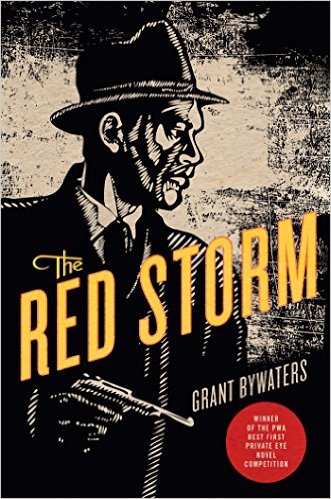
The Red Storm by Grant Bywaters

The case of a disgruntled P.I. with mysterious enemies is set in atmospheric 1930s New Orleans.

red storm

Grant Bywaters employs his expertise as a licensed private investigator in his first novel, The Red Storm. William Fletcher was a 1920s black prizefighter whose ambitions for the heavyweight title were frustrated by the prejudices of his day. After the end of his boxing career, he becomes a P.I. in New Orleans, a city Fletcher credits with a “more lax view on segregation.” He struggles to make a living, though, so when a contact from his old life shows up more than 15 years later requesting help, Fletcher reluctantly agrees to investigate, even though Bill Storm is a wanted murderer. Storm wants to find his estranged daughter. But as soon as Fletcher contacts her, violence breaks out around both Fletcher and Zella Storm. What, exactly, has Storm gotten him into?

Fletcher is a loner, with racial tensions adding to the distinctive anti-authority stance his profession tends to take. Zella is a peppery character, with an ambitious career singing in French Quarter establishments that would rather she just take her clothes off. Bywaters evokes a recognizable New Orleans and surrounding swamps, and the police are hard beset by organized crime, both local and inbound from New York City. Fletcher may be just the man to help out, if he can keep himself and Zella alive. The Red Storm‘s plot is solid, but it is the setting in both time and place that distinguish this classically styled noir P.I. story, which Bywaters flavors with period slang as liberally as a Creole cook spices food.


This review originally ran in the December 22, 2015 issue of Shelf Awareness for Readers. To subscribe, click here, and you’ll receive two issues per week of book reviews and other bookish fun!


Rating: 6 songs.

The Winter Girl by Matt Marinovich

At a borrowed home in the Hamptons, a couple pulling away from one another are drawn toward the house next door–and its secrets.

winter girl

Matt Marinovich’s The Winter Girl is a brief, chilling story of boredom’s path to crime and secrets uncovered.

Scott and Elise have decamped from New York City to the Hamptons, where they are staying at Elise’s father Victor’s house in unaccustomed splendor while he dies in the hospital of cancer. Their lives have been put on hold as Elise spends her days visiting with Victor and Scott mopes around the house, drinking Victor’s liquor cabinet dry. His career as a photographer has fallen off, although he still takes his camera out to the lake some days. His marriage to Elise is failing, for reasons that are more a natural drift than explicitly detailed. As Scott tells it, “Slowly, we’ve stolen the best parts of each other, carted ourselves away.” It is winter; the backdrop to Scott’s malaise is stark.

In his boredom, Scott starts watching the house next door, which clearly has been emptied for the winter. Every night he watches the light switch off on its timer at 11 p.m. He grows a little obsessed, so the next move is clear: while Elise is at the hospital one day, he breaks in, just to have a look around. “I felt like a suburban astronaut, exploring an abandoned home in which the crew had gone missing.” This is exciting, thrillingly illicit, and he brings Elise in for the fun, which has the perhaps surprising effect of reviving their passion. It also starts a string of increasingly criminal and disturbing thoughts and actions, and begins to unravel a long-guarded tangle of secrets. Just as tension has begun to build, Victor announces he will return home to die. But he seems to be getting stronger, not weaker. Questions pile up. What is really happening to Victor? And what is in the house next door?

Told in Scott’s first-person perspective, The Winter Girl offers strengths in its unsettling tone and moody, atmospheric setting. The events Scott relates become a little surreal in his off-hand telling; the reader is challenged to buy into his perspective, or stand back and try to see matters in a calmer light. Marinovich (Strange Skies) offers an unnerving and entertaining story. However, as the revelations mount, their pacing feels a bit rushed: the stakes rise steeply enough as to be a little jarring. On the whole, though, the experience is exhilarating, if a little leeway is allowed for accelerating surprises. And the dramatic denouement leaves the reader eager for more.


This review originally ran in the December 22, 2016 issue of Shelf Awareness for the Book Trade. To subscribe, click here.


Rating: 6 times I felt a little rushed.

Alex Haley: And the Books That Changed a Nation by Robert J. Norrell

History and literary criticism enrich the first biography of Alex Haley, author of Roots and Malcolm X’s Autobiography.

alex haley

Alex Haley wrote The Autobiography of Malcolm X (as told to him), and Roots, the story of his family from Africa through slavery and the Civil War. Separately, these books had a profound impact on how the United States viewed race relations and its own history. Together, their influence could hardly be overstated, and that is what Robert J. Norrell argues in Alex Haley: And the Books That Changed a Nation, the first biography of Haley and a study of his two seminal works and the controversies they fostered.

Norrell covers Haley’s forebears and Tennessee childhood, his three marriages and a writing career growing from the Coast Guard (where ghost-writing personal letters led to public relations assignments) to magazine work, which led to his interviewing Malcolm X for Reader’s Digest and Playboy. The process for Malcolm’s Autobiography (1965) was dynamic, as Haley walked the fine line between Malcolm’s voice and Haley’s more moderate political position, and as Malcolm’s views on race relations evolved. The Pulitzer Prize-winning Roots (1976) was even harder won, as Haley drew a short book contract out over more than 11 years of research and travel. The effect of the book, and its accompanying television miniseries, was astounding. And yet the rest of his life and work would be shadowed by accusations of copyright infringements and invention in what Haley called a work of nonfiction.

With sensitivity and careful study, Norrell examines Haley’s embattled life and extraordinary achievements. His final conclusion about this “likeable narcissist” is that despite Haley’s imperfections, his influence was prodigious and deserves our respect and continued study today.


This review originally ran in the December 18, 2015 issue of Shelf Awareness for Readers. To subscribe, click here, and you’ll receive two issues per week of book reviews and other bookish fun!


Rating: 7 pieces of gossip.