The Trespasser by Tana French

Tana French surpasses herself with character nuance and plot twists in her sixth gritty, Dublin-set murder-mystery.

trespasser

Tana French’s sixth novel, The Trespasser, revisits the burgeoning careers of Dublin Murder Squad Detectives Antoinette Conway and Stephen Moran, introduced in The Secret Place. As atmospheric and intricate as French’s past work, this engrossing mystery succeeds in both style and plot. Fans and new readers alike will be captivated.

Conway and Moran are partners now, but they are far from fitting in with the rest of the Murder Squad. The guys–and they are all guys–give Conway more than the usual rookie hazing. In the opening pages, she and Moran are assigned what looks like yet another boring domestic homicide: a beautiful young woman has been killed, apparently in a fit of passion during a romantic dinner at home. A little too perfect, she “looks like Dead Barbie,” and her apartment “like it was bought through some Decorate Your Home app.” But most disturbingly, Conway is sure she’s seen the vic somewhere before. The young detectives may be a little overeager to find links to organized crime or something more involved, but as this case unfolds, the ambitious Moran and much-beleaguered Conway find wider-reaching connections than they’d bargained for. As an added headache, the obnoxious veteran Detective Breslin has been assigned to “assist” Conway, who is ostensibly the lead detective, though Breslin seems to think he can call the shots.

French’s fans will recognize of the hallmarks of her mystery novels: intense interior struggles afflicting the protagonist detective; a potent undercurrent of class tensions; a case that appears to have a mind of its own; a victim whose personality haunts those who are seeking justice. The oppressive mood of the Murder Squad threatens to overwhelm Conway, who’s barely holding it together under the stress of workplace harassment; the incident room she is assigned becomes a character unto itself. The Trespasser is told in Conway’s voice, giving the reader full access to her troubles and offering perhaps a hint of the unreliable narrator to sneak in.

It is a testament to French’s talent that she more than matches her established achievements in characterization, dialogue, atmosphere and detailed setting, while also surprising her reader at every turn. She offers layers of possible betrayal, hypothetical events and convoluted stories, even an upheaval in Conway’s private life that echoes an element of the case at hand. More than 400 pages pass by almost without blinking, as The Trespasser‘s momentum presses forward to a finish that staggers Conway and Moran as much as it does the reader. This is a complex, compulsively readable novel; French keeps getting better and better.


This review originally ran in the August 29, 2016 issue of Shelf Awareness for the Book Trade. To subscribe, click here.


Rating: 8 stories we tell ourselves.

The Hidden Lives of Owls: The Science and Spirit of Nature’s Most Elusive Birds by Leigh Calvez

This enthusiastic study of the owls of the Pacific Northwest may inspire new fans and citizen scientists.

hidden lives of owls

Leigh Calvez had studied orca and humpback whales, spirit bears and brown bears, before owls crossed her line of sight. The Hidden Lives of Owls: The Science and Spirit of Nature’s Most Elusive Birds is the story of the time she spent pursuing the owls of the Pacific Northwest, where she lives.

Calvez meets with citizen scientists and professional researchers, and travels through Alaska, Montana, Washington and Oregon in her quest to spot and, more significantly, to understand a range of species. In a wondering tone, she considers the hard science and spiritual connections of Flammulated, Snowy, Great Horned, Great Gray, Burrowing and the controversial Barred Owls–which have thrived in the Pacific Northwest at the expense of other owls. Calvez shares some of the fascinating particulars of owl biology: specialized feathers that support silent flight; asynchronous hatching and fledging schedules; reversed sexual size dimorphism (females are larger than males in most owl species). She investigates the environmental threats to these birds, and she sympathizes with mothers forced to choose between the safety of their babies and their own.

The Hidden Lives of Owls is both informative and often reverential. While Calvez has chosen her subjects by their proximity to her home, many species considered here migrate or travel from coast to coast in the United States, and from Canada to Mexico, giving this book appeal across North America. In the end, Calvez makes a strong argument for the owls’ particular needs and interests.


This review originally ran in the August 26, 2016 issue of Shelf Awareness for Readers. To subscribe, click here, and you’ll receive two issues per week of book reviews and other bookish news.


Rating: 6 feathers.

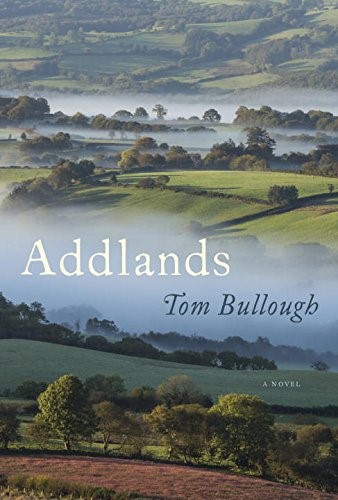
Addlands by Tom Bullough

This richly detailed novel explores borders–between Wales and England, and in a changing world.

addlands

The first of Tom Bullough’s novels to be published in the U.S., Addlands covers 70 years in the life of one Welsh family and the changes in the world around them. The novel’s beauty lies in the common experience embedded in the personal, and Bullough has the rare gift of brevity: this sprawling storyline fits comfortably in about 300 pages.

Addlands opens in 1941. Idris Hamer is struggling to keep his sheep farm running when his young wife, Etty, gives birth to a son, Oliver, who grows into a champion boxer and prodigious bar brawler. Idris is tyrannically religious and mistrustful of change; Etty is a stronger woman than he might prefer. As generation gives way to generation, the Hamers face the challenges of technological and cultural changes (such as the fraught decision to exchange horse for tractor), financial troubles and their town losing people as a younger generation moves away. Family secrets are obliquely revealed, including Idris’s traumas in the trenches of World War I and a feud between brothers.

Bullough’s story and storytelling method are deeply rooted in the Welsh borderlands. His commitment to dialect can be challenging, exchanging a degree of ambiguity for the benefits of flavor and sound, although context clues serve adequately. Bullough pays special attention to natural landscapes, native flora and fauna and agriculture’s mark on the land. This wide-ranging but locally fixed style and plot combine to offer a muscular, evocative experience of a land and people, a novel to get lost in.


This review originally ran in the August 23, 2016 issue of Shelf Awareness for Readers. To subscribe, click here, and you’ll receive two issues per week of book reviews and other bookish news.


Rating: 7 times tupped.

Origins of the Universe and What It All Means by Carole Firstman

This reflective memoir examines an odd and estranged father through the lens of his scientific expertise.

origins of the universe

Carole Firstman’s ruminative memoir tracks a strained relationship with her eccentric but gifted father. The ambitious title, Origins of the Universe and What It All Means, is entirely appropriate: it is a direct and repeated quotation from her father, a research biologist obsessed with finding meaning in an enormous and confounding world.

Firstman suspects her father is on the autism spectrum, which might explain some of the social awkwardness, emotional detachment and unrepentant self-centeredness that characterizes Bruce and his parenting strategies–like moving his 19-year-old bride and their newborn daughter, Carole, into a tent in the backyard, because the baby’s crying disturbed his work. Despite such shocking details, Firstman gives a nuanced portrayal of an intelligent, lonely man capable of rare displays of concern. Weaving evolutionary theory, hard science and metaphysical origin stories with personal memoir, Firstman takes a contemplative tone. She is concerned with questions of linked causality (think the butterfly effect–except with scorpions, Bruce’s area of specialty) and what exactly she may have inherited from him. For example, she puts the same obsessive language in her own mouth that she does in Bruce’s, hinting that the Asperger-like symptoms she ascribes to him may tease at her, too. Firstman’s mother appears almost parenthetically, but at its heart this memoir is about what is inherited from and owed to one’s parents.

Origins contains unusual elements, including diagrams, mock lesson plans and footnotes, alongside Firstman’s self-questioning narrative. Despite its broad scope, this essentially human story handles “a conundrum of attachment and detachment” with sensitivity and rigor.


This review originally ran in the August 12, 2016 issue of Shelf Awareness for Readers. To subscribe, click here, and you’ll receive two issues per week of book reviews and other bookish news.


Rating: 7 ounces of formaldehyde.

War and Turpentine by Stefan Hertmans, trans. by David Mckay

This historical novel told in two voices explores war and family with sensitivity and grace.

war and turpentine

Stefan Hertmans’s War & Turpentine is a superlative novel of war, love, family and discovery.

Urbain Martien was a painter and a soldier, devout and devoted to his family. Late in life, he painstakingly handwrote two volumes of memoir: one of a “practically medieval” childhood in the 19th century, and one of serving in World War I. His unnamed grandson waited more than 30 years to open these notebooks. Parts of War & Turpentine are narrated by that grandson, a writer now in midlife, in which he recounts his own memories of Urbain and his war stories, integrating what he learns from the journals. The novel then shifts to the battlefields and to the voice of Urbain himself.

This Flemish family story explores the difficulties of class and culture in early-20th-century Europe. Urbain portrays his father, who labored in poverty as an undersung restorer of church paintings and frescoes, and the mother he adored. His grandson discovers in the memoirs a love found and lost during the war. Urbain’s battle-ravaged world is populated by family, romance and a passion for art–and as the title suggests, by the tension between two halves of a life. This is a story of seeking the truth of one’s ancestors, a past that can never be fully known. “Maybe his silence says more than enough about his life as it was then.”

Hertmans’s writing, and David McKay’s translation from Dutch, is elegant and unadorned, intense and restrained. War & Turpentine is a world to get lost in, referencing a history both broad and personal.


This review originally ran in the August 12, 2016 issue of Shelf Awareness for the Book Trade. To subscribe, click here.


Rating: 7 scars.

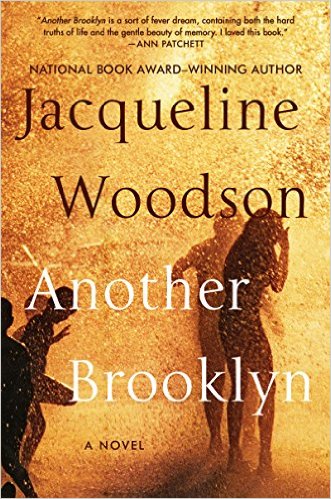
Another Brooklyn by Jacqueline Woodson

A vibrant, emotive coming-of-age novel explores friendship and its pitfalls in a changing world.

another brooklyn

Another Brooklyn is Jacqueline Woodson’s (Brown Girl Dreaming) first adult novel in 20 years. Powerfully moving and lyrical, it demonstrates her expertise beyond the children’s and young adult literature for which she is known.

“For a long time, my mother wasn’t dead yet.” This first line presents the powerful narrative voice of August, an adult reminiscing about her Brooklyn upbringing. Chapter 2 flashes back to the summer of 1973, when she was eight years old, and the novel follows chronologically from there. August and her little brother, recently relocated from Tennessee following a murky family tragedy, adjust slowly to city life. August watches a group of three girlfriends from her painted-shut, third-floor apartment window; she longs to be with them and eventually integrates herself, building an intensely close foursome. The girls share the mysteries, miseries and conquests of puberty–though their fate is hinted at by the opening chapter.

Another Brooklyn visits iconic moments in culture and history: damaged Vietnam veterans, white residents fleeing Brooklyn, the influence of the Nation of Islam in the neighborhood and in August’s single-parent household, the city-wide blackout of 1977. The city offers hope to four beautiful, talented, intelligent girls, and threatens them with men in dark alleys and the limiting judgments of others. Afros, cornrows and hijabs mark fashions in time. But despite these vibrant, evocative framing elements, this is essentially a coming-of-age story in which a child comes to face the hard edges of reality, both particular and universal. Woodson’s eye for detail and ear for poetry result in a novel both brief and profound.


This review originally ran in the August 12, 2016 issue of Shelf Awareness for Readers. To subscribe, click here, and you’ll receive two issues per week of book reviews and other bookish news.


Rating: 7 pickled pig’s feet.

Mississippi Noir ed. by Tom Franklin

Collected noir stories firmly grounded in Mississippi atmosphere offer a concise view of the genre’s possibilities.

mississippi noir

Akashic Books’ noir series travels to Mississippi, with Tom Franklin editing this collection of short stories by both established and newly published authors. Mississippi Noir includes 16 tales, symmetrically organized in four sections of four: “Conquest & Revenge,” “Wayward Youth,” “Bloodlines” and “Skipping Town.” The thematic groupings are loose, and the contents work equally well in any order, picked up and put down as the reader chooses.

These chilling stories vary in length, from 20-some pages down to just a few, and though they cover a range of subjects and settings in time, they consistently embody the ideal of noir writing with a strong sense of place. Bullets, blood, abuse and longing appear frequently, with some sex scenes thrown in as well. Ace Atkins writes of desperate teens running out of options; Megan Abbott, in a scintillating contribution, views from both sides a romance gone tragically wrong; Chris Offutt’s understated story stars a waitress drifting from town to town; and Dominiqua Dickey’s first published story involves an interracial romance in 1936. Within all of the pieces, the authors pay special attention to local details: natural beauty, economic depression, college culture, the longing to escape a small town or the yearning for a wider world.

These stories are dark by definition, and marked by unhappiness: as one narrator sighs, “I wanted sleep to pass without actually having to sleep. I wanted the future.” But an appreciation for the surroundings is always evident; these pages drip with Mississippi humidity. Fans of classic noir will be pleased and rooted in this redolent setting.


This review originally ran in the August 9, 2016 issue of Shelf Awareness for Readers. To subscribe, click here, and you’ll receive two issues per week of book reviews and other bookish news.


Rating: 7 bullets.

A Wife of Noble Character by Yvonne Georgina Puig

Set in contemporary Houston, Tex., this fresh riff on The House of Mirth addresses the same questions of class and feminism, although in its own way.

wife of noble character

In Yvonne Georgina Puig’s A Wife of Noble Character, Vivienne Cally comes from Houston, Tex., high society, but her value is fading: 30 years old, unmarried and living with a coldly distant aunt, she possesses no wealth to speak of. Preston Duffin is an architecture graduate student from a different but adjacent class of people; the two have known each other all their lives. Despite her traditional upbringing, Vivienne is refreshingly spirited and skeptical, and Preston’s challenges to the life she knows intrigue her. He is attracted in turn not only to her beauty, but also to her similarly questioning attitude. Because the novel’s perspective shifts between the two, readers know what neither Vivienne nor Preston does as they are mutually drawn together, mystified and intimidated.

Plot progression would be accelerated if the characters would only talk to one another, but neither of them have the ability to speak honestly. Meanwhile, Vivienne’s society affairs–bridal and baby showers, lunches, mani-pedis–and her increasing struggle to maintain the façade of effortless wealth provide both heartrending pathos and entertainment, as the scene shifts from Houston to Paris, where Vivienne attempts a professional career as an art consultant, and back. Lavish details evoke the fashion and humidity of an expertly rendered setting, and Puig’s characters can be both silly and profoundly recognizable. With allusions to Edith Wharton’s The House of Mirth, and sensitive criticisms and clever details, A Wife of Noble Character is both fun and intelligent, much like its heroine.


This review originally ran in the August 9, 2016 issue of Shelf Awareness for Readers. To subscribe, click here, and you’ll receive two issues per week of book reviews and other bookish news.


Rating: 8 pedicures.

The Fire This Time: A New Generation Speaks About Race edited by Jesmyn Ward

Poems and essays by a range of writers address race in the United States.

the fire this time

Responding to the deaths of Trayvon Martin, Michael Brown, Eric Garner, Tamir Rice, Sandra Bland and so many others, the subsequent Black Lives Matter movement and a feeling that not much has changed, Jesmyn Ward (Salvage the Bones; Men We Reaped) felt moved to build a collection of words to counter the pain and injustice she saw. Essays and poems, many of them solicited by Ward, make up The Fire This Time: A New Generation Speaks about Race. Its title, of course, answers James Baldwin’s 1963 The Fire Next Time, which addressed the same questions of being black in the United States.

Led by Ward’s powerful introduction, contributions from Natasha Trethewey, Isabel Wilkerson, Edwidge Danticat and more consider past, present and future–Legacy, Reckoning and Jubilee. Honorée Jeffers writes in defense of Phillis Wheatley’s husband, a man apparently wrongfully denigrated, and honors Wheatley’s legacy while questioning the way it’s been written by others. Kevin Young muses on Rachel Dolezal’s interpretation of race. Garnette Cadogan writes movingly of what it looks like to walk through U.S. cities as a black man. And Ward offers an essay on her own ethnic heritage.

These powerful words from a range of sources vary in specific subject matter, but all make the same vital demands: for black citizens to have true equality. The entries in the collection are a little uneven, but each is stirring in its way, and the finest among them offer poetry as well as truth.


This review originally ran in the August 9, 2016 issue of Shelf Awareness for Readers. To subscribe, click here, and you’ll receive two issues per week of book reviews and other bookish news.


Rating: 8 names.

American Heiress: The Wild Saga of the Kidnapping, Crimes and Trial of Patty Hearst by Jeffrey Toobin

New research on the Patty Hearst case reveals a story as compelling and confounding as ever.

american heiress

Jeffrey Toobin (The Run of His Life) brings context, nuance and new sources to a dramatic story in American Heiress: The Wild Saga of the Kidnapping, Crimes and Trial of Patty Hearst.

The 1974 kidnapping of heiress Patricia Campbell Hearst by the radical group self-styled as the Symbionese Liberation Army (SLA) was a media sensation. A nation watched with shock as the victim joined her captors in bank robberies and other crimes. Decades later, Toobin helpfully sets this salacious story against its backdrop: the influence of the Hearst name; the fledgling nature of televised media, particularly live news feeds; and the cultural upheavals underway via the radical political left, especially in the San Francisco area where Hearst lived. Surreally, a bumbling, incompetent SLA plagued by internal strife managed to elude federal investigators for many months. Jim Jones, Bill Walton and Ronald Reagan make cameo appearances.

American Heiress avoids firm conclusions about Hearst’s level of agency in her own crimes. As Toobin observes, the phrase “Stockholm syndrome” was not yet in use at the time, but psychological coercion was the focus of Hearst’s criminal defense. With the information uncovered, Toobin can reveal only a woman making the best of circumstances, “a clear thinker, if not a deep one.”

While most older readers will have preconceptions about the events, Toobin’s ample research and new sources offer a fresh version. An author’s note states that Hearst declined to comment, and explains the research methods. This history satisfies with its level of detail and emotional distance from a subject who remains mysterious.


This review originally ran in the August 2, 2016 issue of Shelf Awareness for Readers. To subscribe, click here, and you’ll receive two issues per week of book reviews and other bookish news.


Rating: 7 shots fired.