Maximum Shelf author interview: Victoria Redel

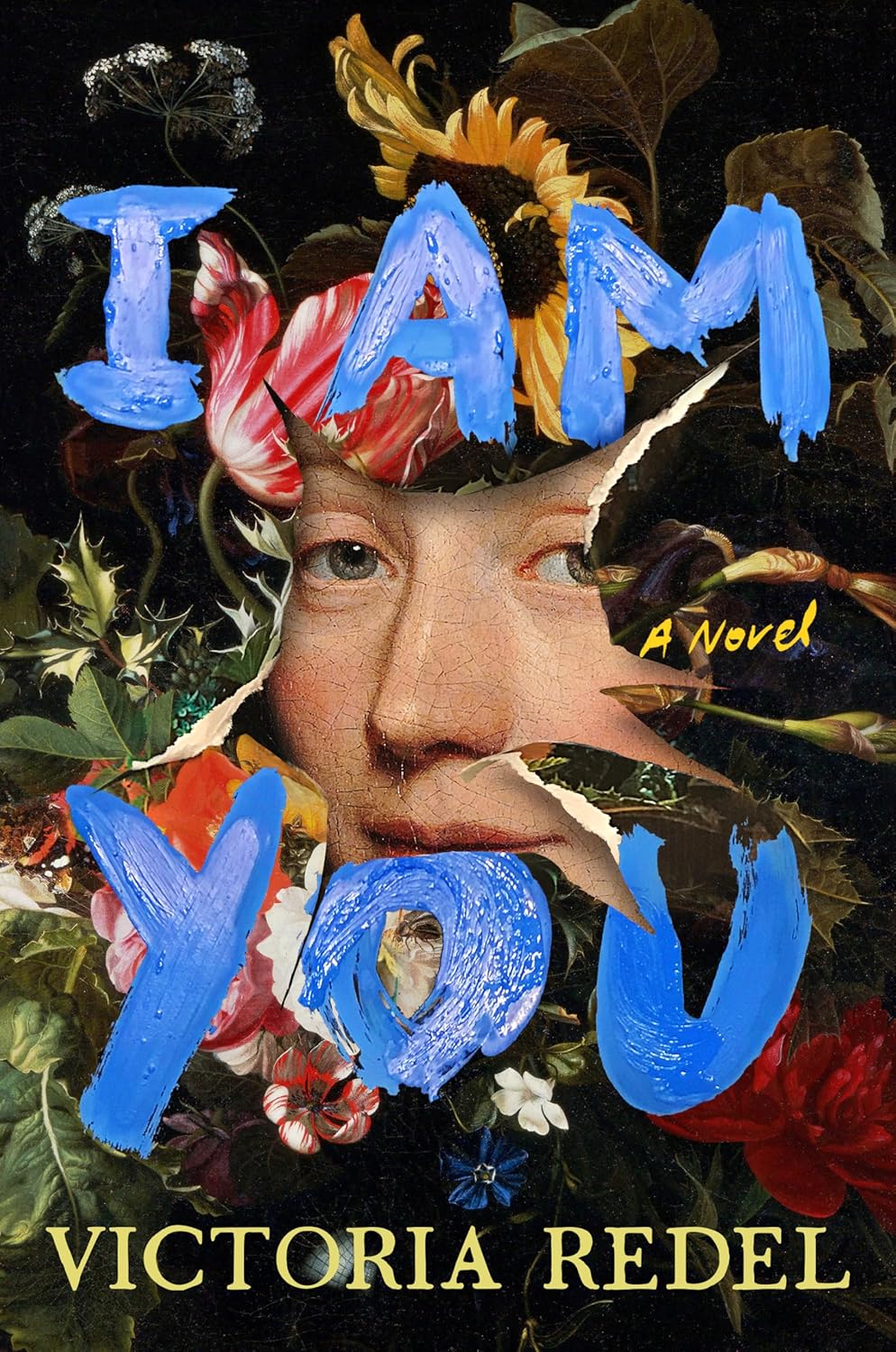
Following Friday’s review of I Am You, here’s Victoria Redel: Our Obsessions Reveal Themselves.


Victoria Redel is the author of Paradise and three other books of poetry; three novels, including Before Everything; and two story collections. She has received fellowships from the Guggenheim Foundation, the National Endowment for the Arts, and the Fine Arts Work Center. She is a professor in the Creative Writing programs at Sarah Lawrence College and lives in New York City. I Am You (SJP Lit/Zando, September 30, 2025) is an expansive novel about two 17th-century Dutch women painters and the hardships and joys they experience together.

These characters are based in history, but upon scarce information. How did you deal with such a shortage of fact?

Victoria Redel
(photo: George Rings)

It is great to have a shortage of facts because it provides freedom for invention. I encountered Maria Oosterwijck and my first whiff of a novel reading Russell Shorto’s Amsterdam, where he says little is known about the painter Maria Van Oosterwijck. I was curious and began to research, and what he’d written turned out to be true. I believe I’ve learned all that’s known about her–maybe there’s untranslated Dutch sources–but, mostly, the same scant information was repeated everywhere: that Maria had not been allowed in the Guild because she was a woman; that she’d had a prominent reputation and a prosperous life as a painter despite that; that she trained the family servant, Gerta, to be her paint-maker and assistant. They lived together for a time, though they were not together at their deaths. This posed the question of why? What transpired between them? These seemed like interesting questions for a novel.

I also gave myself the freedom to challenge the received facts. For example, because of the nature of her paintings, it’s assumed that Maria was highly religious. I’ve imagined her spiritual choices differently. I also did a ton of research about life in the 17th century. It’s an essential moment in Dutch history and much is written about trade and everyday life. When the novel expanded to include England, I needed to learn about the English court.

One pleasure in writing a novel has always been diving into research. But the trick is to learn and learn and then not exactly try to forget it all, but, hopefully, create a seamless world, not so jammed with details that you feel the writer bragging, “look what I know.” That’s the hope: that the world is effortlessly stitched on every page. I want the world I shape to feel inevitable.

Do you have a background in the visual arts, or paint-making?

Yes, I was a visual studies major in college. In many ways this book has been gestating for 20 years, when I walked into a paint and pigment store on the Lower East Side, saw shelves stocked with jars of pigment. I wanted to know about and use every one of those brilliant colors! I read about the very storied global history of paint and pigment with the idea of writing a novel, but I couldn’t find the story.

Then, a few years ago I had the opportunity to spend a couple of months living in Amsterdam, and it occurred to me that I might find a clue for that long-abandoned paint book. Every day, I went to the astonishingly beautiful art library in the Rijksmuseum to finish another book. But also to study the Dutch Golden Age. Then I’d leave the library to roam the canal streets. It was wandering through Amsterdam that I began imagining Maria and Gerta.

You excel at sensory writing: food, painting, color, sex.

Thank you for saying that. I say to my writing students, you have to love the thinginess of the world. Witness, observation, that’s at the core of my job on the page. If I want you, the reader, to engage with characters and a world of my making, my task is to render a believable and sensual world. In 17th-century Amsterdam, smells and tastes were right in your face, for good and bad. There were fewer opportunities to be discreet about what you did with garbage. You threw it in the canal! You threw bodily waste in the canal. Those same canals were the lifeblood of the city. My job as a writer dovetails with Gerta, my narrator, who moves from a profound physical knowledge–caring for animals, for a house, making food–and, over the course of the novel, extends her range from house servant to studio assistant, to painter, and lover. Paint-making, botany, lovemaking are beautiful and messy. Her awareness expands. She has an artist’s awakening. I want the reader to accompany her on that journey.

Gerta and Maria’s story offers commentary on power dynamics, especially gender and class, in society and in interpersonal relationships. Was that by design or a natural feature of their lives?

It’s what I learned through writing the book. There was an initial glimmer of power dynamics, understanding that Maria had a maid and assistant. And I right away knew it was Gerta who must tell their story. I needed to learn what Gerta needed to learn. As the story of what happens to them and between them unfolded, I saw that both interpersonal and societal power became more layered. What was at stake for each person? Their situation, their story complicates as it unfolds. What were their essential questions? I had to discover how they would each respond. I knew none of this when I started the book. I know very little when I begin. Which I think is good. Otherwise, I’d want to protect them from their choices and actions. The surprise and mystery of my characters’ choices is the hardest and greatest fun of the whole enterprise.

Where does this novel fit in your larger body of work? What was different this time?

I started as a poet. My relationship to language as a poet is, I’d like to believe, present inside all the fiction. My prior novels take place in loosely contemporary periods–though I’d argue every novel is a historical novel–and I Am You takes a leap back in time. If one of the goals in writing fiction is to enlarge and engage the empathic imagination, to let oneself enter into what it is to be another human, here I had the opportunity to consider people in another historical moment with all that might entail. Certainly, there’s much that reverberates in a contemporary way, but my task was to honor my characters, the choices and limitations of their present-day lives, and not impose current ideas and values on them. I didn’t think about overlaps while I was writing, but perhaps obsessive love, devotion, autonomy, and secrecy are themes that ribbon through all my work. But as I say to my writing students, we don’t choose our obsessions; for better or worse, they reveal themselves to us.


This interview originally ran on June 10, 2025 as a Shelf Awareness special issue. To subscribe, click here, and you’ll receive two issues per week of book reviews and other bookish fun.

Maximum Shelf: I Am You by Victoria Redel

Maximum Shelf is the weekly Shelf Awareness feature focusing on an upcoming title we love and believe will be a great handselling opportunity for booksellers everywhere. The features are written by our editors and reviewers and the publisher has helped support the issue.

This review was published by Shelf Awareness on June 10, 2025.


Victoria Redel (Before Everything; The Border of Truth) presents a bold, poignant historical novel about art, love, power, and authorship with I Am You. In the 17th-century Dutch Golden Age of painting, two women with greatly contrasting social and economic status achieve enormous closeness. One is a successful still life painter, the other her maid and assistant. Through their shared story, Redel finds room to muse on art and observation, the wonders of paints and pigments, social strata, interpersonal relationships and power dynamics, gender expressions, and much more. I Am You is no treatise; it is firstly a story of human relationships. But like all great stories, it allows for reflections beyond its literal subjects.

The novel opens in the town of Voorburg in 1653. A child named Gerta is put out to work by her family. Because the household where she is to live needs a boy, Gerta becomes Pieter in service to the wealthy Oosterwijcks. At age seven, Pieter is fascinated by the 14-year-old Maria Oosterwijck: “Her particular words. The varieties of her laughter. The concentration of her fingers as she skimmed or flicked the board with a paintbrush.” Pieter is a quiet child and a hardworking servant, gentle with the rabbits he cares for and butchers for the family meals. Maria, an aspiring painter, is permitted to study only still life, a form considered appropriate for “woman’s art.” She compulsively sketches and paints young Pieter at work: he is “the body most available” to a girl forbidden the study she craves. In his turn, and in his fascination, Pieter begins preparing inks for Maria’s use. He collects the materials–black walnut husks, alder cones, willow bark, oak galls, lichen, marigolds–and crafts them into inks and reed pens. In this way, Maria and Pieter grow up together, intertwined by art and separated by their stations in life. Then Maria, bound for Utrecht to continue her studies, peremptorily declares Pieter a girl once more, in order to to take her as her maid to the larger city.

In Utrecht and then Amsterdam and beyond, Maria and Gerta remain joined. Maria is an increasingly successful painter, commercially and socially, despite the significant impediment of being a woman. Gerta, serving as her maid, becomes progressively indispensable as a talented maker of paints and pigments. Eventually, she teaches herself to sketch and then to paint, becoming Maria’s studio assistant in more functions.

Sometimes Gerta still goes out as Pieter: “How could I erase all I’d known as a boy? Why would I? How much more useful to have known the world both male and female, to traverse brazenly with the rude mind of a boy or angle delicately with a girl’s careful polish.” Her gender-bending is a mode of social expediency, more than of self-identity: “Inside both costumes was me.” In this and other ways, I Am You comments on gender in society, which is only one of Gerta’s disadvantages, but Maria’s chief one. Gerta (or Pieter, as Maria will call her in private all their lives) narrates the novel from start to finish, providing a nuanced perspective on their world, with an evolving appreciation of her limits in it. Even as Gerta’s privileges in Maria’s household expand–she has a nicer bedroom, furnishings, and clothing than any maid should expect–she is reminded that she enjoys these advantages only by Maria’s whim.

Their relationship deepens until the two women become partners in every aspect of life, but Gerta remains subservient. Her devotion to Maria is total, so that even when Maria’s circumstances change and she finds herself ever more dependent on her maid, Gerta is glad to provide a broad range of support. But calamities arise, and there may come a time when the subordinate’s need for recognition, for identity, surfaces. Maria has had a painter’s eye for detail in the visual world from a young age, thanks to both talent and training, but it is Gerta who sees the changing nature of all. “Every day since childhood, hadn’t it been my daily job to make one thing into another? Nut into ink. Stone into viscous paint. The chicken I clucked to as I scattered melon scraps became the stew I spooned into bowls. Even myself, a constant transformation–girl child to boy, servant to budding girl, woman to man to woman, maid to painter to lover….” In the end, it is Gerta who will navigate the hardest choices for the two of them.

Redel excels at sensory and imagistic writing, particularly in the thrilling qualities of color, inks, paints, and pigments, and revelatory art. Her descriptions of the sights, smells, and sounds of daily life, food, and housekeeping are visceral. She writes expressively about sex, which in this novel can be both pleasure and communion, and also disturbing–as an abuse of power, and with questionable consent. The canals of Amsterdam, the butchering of dinner, and the disposal of bodily wastes alongside tender caresses and vivid achievements on the canvas: Redel offers compelling descriptions of both splendor and pain.

I Am You is a novel that deals with heavy themes and tough choices. Gerta’s sensitive, incisive perspective often reveals sad and distressing events, as well as the transcendent revelations of creative work. In considering art, love, gender, and class, her story confronts injustice and tragedy as well as beauty. The result is sensual, thought-provoking, and unforgettable.


Rating: 7 rabbits.

Come back Monday for my interview with Redel.

The Wild Dark: Finding the Night Sky in the Age of Light by Craig Childs

A longtime nature writer directs his gaze upward with this travelogue and love song for the dark night sky.

Prolific nature writer Craig Childs (The Secret Knowledge of Water; Atlas of a Lost World) takes readers on a journey away from the light with The Wild Dark: Finding the Night Sky in the Age of Light. He’s in search of a clear view of the heavens, stars, constellations, planets, galaxies, and beyond–and all that they stand for–and offers a quest narrative with a circular structure, which starts and ends in that bastion of illumination, Las Vegas, Nev.

Childs teamed up with an old friend and fellow adventurer, Irvin Fox-Fernandez, and together the two men rode loaded off-road bicycles north out of the city, which his friend called “Bortle-hopping.” Bortle, Childs explains, “is a naked-eye scale for determining a night sky’s quality”; in this book, Childs describes moving from Las Vegas’s Bortle 9 to the joys and profundities of Bortle 1, “where only stellar light and backscatter from sunshine in space can be seen.” He chronicles this trip with lyricism, gentle humor, and an obvious passion for darkness preserved, for the human ability to consider something larger than ourselves: “Beaming overhead, they live their lives regardless of how we see them, and for all I’ve heard that stars don’t care, I disagree. I just don’t know what they care about.” As environmental causes go, this one entails an easy fix: just turn the lights off. Referring to mythology, biology, archeoastronomy, and more, Childs makes a strong argument.

Beautifully written, fervent, and lavish in imagery both light and dark, The Wild Dark is a moving call to action.


This review originally ran in the May 30, 2025 issue of Shelf Awareness for Readers. To subscribe, click here, and you’ll receive two issues per week of book reviews and other bookish news.


Rating: 6 ginger cookies.

Mailman: My Wild Ride Delivering the Mail in Appalachia and Finally Finding Home by Stephen Starring Grant

Within the high highs and low lows of rural mail delivery, a laid-off white-collar worker builds new relationships with place, with his neighbors, and with himself.

In 2011, Stephen Starring Grant moved his wife and two daughters back to his hometown of Blacksburg, Va. In early 2020, Grant, the family’s primary wage earner, was laid off from his consulting job. He found himself unemployed at the start of the pandemic in a town that had limited employment options, and with a recent cancer diagnosis to boot. Unable to find anything in his field, he took a job as a rural-route carrier for the United States Postal Service. Mailman: My Wild Ride Delivering the Mail in Appalachia and Finally Finding Home offers his stories and reflections on a year spent in a position he’d never thought much about before.

Grant began with a bit of an ivory-tower complex, as he imagined his intellectual background overprepared him for the simple drudgery of mail delivery (which turned out to be untrue), but he ended with a profound respect for postal and other service workers, and balanced thoughts on class and background. These pages vary in tone, by turns hilarious and thoughtful. Grant describes religious experiences, being threatened at gunpoint, bonding with strangers over their deliveries and finessing their political differences. He discusses types of incompetence (a few months in, he “graduated to the consciously incompetent stage, lost in the burning wasteland of self-awareness that I was really not very good at delivering the mail”) and the intense discomfort involved with learning new things, with great effort and limited success, in adulthood. Musing on the origins and purpose of the USPS, he expresses a nuanced patriotism: “America is the greatest country in the world… America is a steroidal monster… Both versions of America are true.” And, he notes: “Our delivery vehicles were like democracy, the worst of all possible vehicles, except for the alternatives.”

Between indulging in fantasies of delivering the mail with Barack Obama at his side and performing neighborly services like basic car maintenance for favorite people along his route, Grant brought his kids for added help and dropped in on his parents for pancakes. Along the way, he informs the unschooled reader of the process that mail carriers undertake to sort, order, and “case” the mail for delivery, and the hazards: backbreaking labor, the ergonomic disaster of right-hand drive (especially in a left-hand-drive vehicle), extremes of heat and cold, and dog attacks. Via an adventure with unfamiliar blue-collar work, Grant discovered new values, new people, and a new relationship with home. Mailman is a classic memoiristic blend of whimsy, storytelling, and insight.


This review originally ran in the May 22, 2025 issue of Shelf Awareness for the Book Trade. To subscribe, click here.


Rating: 7 Slim Jims.

Etiquette for Lovers and Killers by Anna Fitzgerald Healy

A bored townie in 1960s Down East Maine comes into her own when both romance and a series of murders enter her orbit.

Anna Fitzgerald Healy’s debut novel, Etiquette for Lovers and Killers, is a darkly humorous, lighthearted romp of a mystery set in mid-1960s Down East Maine with an unusual heroine. Billie McCadie is a townie in Eastport, on Passamaquoddy Bay, where “fishermen squatting in trailers” abut “Vanderbilts languishing in mansions.” She’s never felt at home with the other locals, who fail to appreciate her sarcasm or her ambition to study linguistics and work in a museum. “I’ve grown up listening to their sock-hop hopes and Tupperware-party dreams, but my aspirations don’t fit in a casserole dish.” Since the tragic death of her parents, Billie, a “twenty-six-year-old virgin,” lives with her grandparents and works as a seamstress at Primp and Ribbon Alterations. Her great thrill, aside from the novels, dictionaries, and etiquette manuals she loves, is checking her post office box for rejection letters responding to her many employment applications to museums around the country.

But then comes the fateful summer when Avery Webster notices her. Billie receives an envelope containing a love letter to an unknown Gertrude, along with an engagement ring. She is invited to a solstice party at the fabulously wealthy Webster family’s estate, where she discovers a freshly murdered corpse–Gertrude. Avery has the potential to be Billie’s first taste of romance, but the strange communications pile up, along with the bodies, in sleepy, previously crime-free Eastport. And Billie leaps into all of it, because “Who needs a life when you’re busy investigating a murder?”

Billie’s wry narration of these events is peppered with wordplay and the occasional footnote commenting (still in Billie’s voice) upon the etymology of “home,” “love,” and “tuxedo.” Chapters are prefaced with relevant quotations from the book of etiquette that belonged to Billie’s mother, which emphasize that even amid a murder case, a sex scandal, and a budding romance, in 1960s Eastport, one must be mindful of appearances and manners. Billie’s never been in such danger, but she’s also never had as much fun, finally coming into herself, gaining confidence, and learning what she might want from life aside from a museum job: “So what if I’ve ended up in a Highsmith rather than an Austen? I’m the main character, and I need to start acting like it.”

Stylish, playful, and more than a little tongue-in-cheek, Etiquette for Lovers and Killers blends intrigue and romance into a perfect cocktail. Billie herself offers a delightful combination of bookishness, wit, and questionable decision-making that will keep readers on edge until the final pages. Healy’s debut is good, not-so-clean fun.


This review originally ran in the May 19, 2025 issue of Shelf Awareness for the Book Trade. To subscribe, click here.


Rating: 6 stilettos.

The Tiny Things Are Heavier by Esther Ifesinachi Okonkwo

A young Nigerian woman seeks home and belonging in a network of troubled relationships.

Esther Ifesinachi Okonkwo’s The Tiny Things Are Heavier is an expansive first novel about a woman searching for home, love, and belonging. Sommy is a Nigerian immigrant to the United States, a graduate student in literature, a sister, a daughter, a lover, a friend–but all of this leaves her still seeking a sense of identity.

Sommy left for graduate school in Iowa just weeks after her beloved brother Mezie’s suicide attempt. She feels isolated in the cold Midwest and tormented by guilt; Mezie will not take her calls. Eventually Sommy makes a few friends, and deepens and complicates her relationship with her roommate, Bayo, a fellow native of Lagos with a boisterous personality she is slow to appreciate. Then she meets Bryan, a biracial American with a Nigerian father he never knew. She struggles at first to interpret his interest: “She can’t say whether he’s flirting back. If he were a real Nigerian, she would know for sure.”

Their relationship proceeds slowly and then, after a rocky recovery from an early challenge, quickly. Sommy finds Bryan magnetic: handsome, wealthy, and a talented writer. In their second year together, they travel to Nigeria. It’s Sommy’s first time home, and the first time she’s seen or spoken with her brother since his suicide attempt. It’s Bryan’s first time in Nigeria. They search for his father, and Sommy shows Bryan her family, her neighborhood, her home. But a series of events culminating in a shocking tragedy causes Sommy to reassess her most important relationships and to call her core values into question. She is forced to consider yet again what it would mean to find a sense of belonging and home.

Okonkwo makes a wise choice to tell this story through Sommy’s compelling close third-person point of view, which portrays her as anxious and exasperated, strong-willed and intelligent, cynical and devoted. She loves her home even as she works to escape it. “If life, she thinks, its surprises, the slices of deep joy contained, its ruggedness and impliability, its contradictions, the implosion of it, the nonsense of it, were a physical place, it would be Lagos.” In returning, Sommy feels “the loss of a place for which to pine. She had gone home, and home did not feel like home.” Through Sommy’s experiences in Nigeria and in Iowa, Okonkwo asks her readers to reflect upon class, privilege, race, gender, and their interlocking power structures, as well as the importance of place to one’s sense of self. The Tiny Things Are Heavier is thought-provoking and unforgettable.


This review originally ran in the May 13, 2025 issue of Shelf Awareness for the Book Trade. To subscribe, click here.


Rating: 7 bottles.

Wildfire Days: A Woman, a Hotshot Crew, and the Burning American West by Kelly Ramsey

This beautifully crafted memoir features both dramatic action and deep soul-searching by a woman on an elite wildland firefighting crew.

Kelly Ramsey’s Wildfire Days: A Woman, a Hotshot Crew, and the Burning American West is a memoir of wildland firefighting and gender, but also of trauma, family, and navigating love and life at any age.

Ramsey’s expertly structured narrative shifts in both place and time, beginning with a hazardous fire event in her firefighting career, then moving to where she started that career (the Klamath River and its surrounds in Northern California), then a Kentucky childhood and her parents’ story. She paints a portrait of her mother that is a masterclass in the single-paragraph capsule profile. “Raised in a home where someone might vacuum a spill from the front lawn, my mom grew into an inquisitive, determined woman who was in the right almost as often as she believed she was.” Ramsey’s father was an alcoholic, eventually homeless and lost, whose absence caused the grief she may have been fighting along with the extreme challenges of becoming a wildland firefighter and other, still more self-destructive behaviors. This introspection occurs in flashbacks and fragments alongside the main timeline in which Ramsey, in her late 30s and after a wildly varied life, joined the Rowdy River Hotshots.

Hotshots live in barracks or on the road, sleeping on the ground as often as not, packed into a crew transport with their firefighting gear, working shifts that sometimes stretch to 24 hours in tremendously hazardous conditions. They hand-dig firebreak lines, run chainsaws and carry swamp brush, and hike vertiginous slopes under loads that can exceed 70 pounds, often amid active fire. The only woman on the crew her first season (and the first in nearly a decade), Ramsey was also one of the smallest and one of the oldest. She and “the boys” wrestled individually and collectively with how to treat her difference while integrating her into a crew that was necessarily tightknit: they relied on each other for survival.

Showcasing lovely writing and storytelling, Wildfire Days contains just enough firefighting and fire suppression policy history to contextualize Ramsey’s personal journeys. Ramsey is far from a saintly character, and she portrays her own less flattering moments clearly: worrying over her tendency to smile and people-please; her fear that she aligned herself with her male fellows in singling out the next woman to join the crew. This honesty is refreshing. Not a hero, Ramsey lets readers see her earnest and imperfect strivings. Her growth by the memoir’s end is ongoing, but impressive. “Here was the secret I kept stumbling upon: that our deepest wounds were the fertile soil of our growth. New life tended to spring from bitterest ash.” Tense action, fraught self-examination, pain, triumph, and romance make Wildfire Days propulsive and unforgettable.


This review originally ran in the May 8, 2025 issue of Shelf Awareness for the Book Trade. To subscribe, click here.


Rating: 8 smiles.

Earthly Materials: Journeys Through Our Bodies’ Emissions, Excretions, and Disintegrations by Cutter Wood

This weird, wonderful exploration considers the social, cultural, and political implications of bodily emissions as well as their science, but shines brightest in its empathetic storytelling.

Cutter Wood (Love and Death in the Sunshine State) offers a spellbinding collection of facts, observations, and musings in Earthly Materials: Journeys Through Our Bodies’ Emissions, Excretions, and Disintegrations. In 12 chapters that might be termed “essays” and Wood calls “stories,” he considers mucus, urine, blood, semen, menses, milk, flatulence, breath, feces, vomit, hair, and tears. While readers will certainly gain new and fascinating scientific knowledge, what makes Earthly Materials so special is storytelling: Wood’s compassionate, funny, earnest explorations through unexpected subject matters adjacent to bodily fluids.

At a lab at the Massachusetts Institute of Technology, he meets impassioned graduate students and views beautiful stellar-like magnifications of mucus, which resemble Hubble Telescope photographs. He discusses the political and financial implications of donating blood and delves into the discomfiting r/NoFap Reddit forum. In the absorbing true-crime case of Formula Mom, a Florida woman is investigated and sentenced to prison for creating a large-scale business that bought and sold infant formula.

Tongue-in-cheek, Wood describes the flatulence customs and practices of the preadolescent male in the Commonwealth of Pennsylvania. To explore vomit, he joins the Soul Quest Ayahuasca Church of Mother Earth and takes its sacrament. These experiences and studies often yield hilarity in Wood’s expert prose: dryly witty, comically verbose, and poignant. Wood finishes with the inexplicable tears of a Wimbledon finalist, in this thought-provoking philosophical study that exemplifies human interconnectedness through the rather surprising lens of bodily fluids and expulsions. Earthly Materials will change the way readers think about the mundane in unanticipated and transcendent ways.


This review originally ran in the May 2, 2025 issue of Shelf Awareness for Readers. To subscribe, click here, and you’ll receive two issues per week of book reviews and other bookish news.


Rating: 7 stills in the brambly Appalachian holler.

The Staircase in the Woods by Chuck Wendig

Former best friends reenter a scene of horror in this clever, terrifying novel about the dangers that lurk in friendships, home, and the self.

The singular Chuck Wendig (Blackbirds and more) brings his trademark blend of humor, profanity, and shrewd observation to the weirdly charismatic The Staircase in the Woods. Chilling, disturbing, and deliciously entertaining, this horror novel stars a group of one-time best friends who reunite as adults across a chasm of time and trauma. Nick is as abrasive as ever, but at least he gets them all back together again. Hamish has traded in his Birkenstocks, jam bands, and extra weight for fitness, church, and family. Lore (formerly Lauren) has achieved professional success, but only through an increasingly belligerent go-it-alone approach. Owen (aka Nailbiter) is barely surviving his mental health woes. And Matty, once their golden boy, hasn’t been seen since that day in the woods in 1998. Five teens went camping, four came back out again. Now, more than 20 years later, they have a chance to try to find out what went wrong–or lose themselves like Matty did.

Four dysfunctional adults walk into a different set of woods, fighting among themselves and against their own demons, and enter a sinister otherworld that may have consumed their friend. Wendig’s narrative emphasizes the strengths and failures of friendship, and the difficulties of both childhood and adulthood. His snark is obscenity laden but also earnest in its compassion. The Staircase in the Woods deals in torture, violence, and abuse, especially within families, portraying how connection to place and the importance of home can cause at least as much pain as comfort. The result is haunting and unforgettable.


This review originally ran in the May 2, 2025 issue of Shelf Awareness for Readers. To subscribe, click here, and you’ll receive two issues per week of book reviews and other bookish news.


Rating: 7 cuts.

The Wildelings by Lisa Harding

Lifelong friends splinter and suffer in their first year of college under the spell of a charismatic older student in this atmospheric roller coaster of a novel.

Lisa Harding (Bright Burnings Things; Cloud Girls) will haunt readers with the psychological drama of The Wildelings, a compulsively readable novel in which a woman looks back on her college days and a long-lost friendship.

Jessica is introduced as she begins therapy, newly divorced, in her 40s. The novel’s inciting event, however, is not divorce but a new play by an old acquaintance. Asked by her therapist to write down her memories and “start at the beginning,” Jessica recalls her first year at Dublin’s Wilde College and “The Unholy Quintet: Mark, Linda, Jonathan, Jacques, and me.”

Linda had been Jessica’s best friend since childhood. When the underprivileged, underparented pair achieves surprising slots at the “pretentious arty” college, Jessica is highly ranked for her beauty as well as her acting prowess; Linda, as ever, dwells in the shadows. But just as Jessica enters a charged relationship with the sexy Jacques, Linda finds love with Mark, a magnetic fourth-year playwright and director, after a false start with golden boy Jonathan. The older student’s grasp on the group tightens, especially after Mark casts Jessica in what he claims will be a breakout play. Mark proves treacherously adept at directing the people around him, on and off the stage.

Harding gives Jessica a self-excoriating, incisive, bitter, and evocative first-person voice. The Wildelings‘ inexorable plot is like the proverbial train wreck: shocking, electric, impossible to turn from. Its psychological tumult verges on horror. With this atmospheric roller coaster of a novel, Harding offers pulsing intensity, gut-wrenching emotional upheaval, and high drama in every sense.


This review originally ran in the April 18, 2025 issue of Shelf Awareness for Readers. To subscribe, click here, and you’ll receive two issues per week of book reviews and other bookish news.


Rating: 7 freckles.