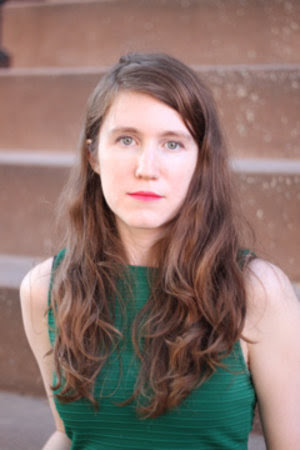
Winter Counts by David Heska Wanbli Weiden

On South Dakota’s Rosebud Indian Reservation, local enforcer Virgil Wounded Horse is faced with a challenging and personal case.


David Heska Wanbli Weiden’s first novel, Winter Counts, is a gripping story of crime investigation set on the Lakota Rosebud Reservation in South Dakota. Virgil Wounded Horse is cynical. He can’t imagine not living on the rez, but he’s more than skeptical of Indian spirituality and ritual, and doesn’t feel very connected to his people; his memories of being bullied in school are too fresh. Now that both his parents and his sister are dead, he doesn’t have much family to feel loyal to–but he is devoted to his orphaned nephew, Nathan, now a teenager who shares his home.

Virgil makes his living as a private enforcer. Tribal police have very limited powers, and the feds don’t bother with much on the reservation short of murder, so the Lakota often resort to hiring someone like Virgil to deliver vigilante justice. Now he gets to beat up his former bullies, and earn a few bucks doing so. It’s not necessarily work to take pride in, though, especially in the eyes of his ex-girlfriend’s politically powerful family. So Virgil is surprised when her father, a tribal council member, asks for his help. And he’s even more surprised when the case brings Marie back into his life.

It seems a local small-time pot dealer might be moving up into dealing heroin on the reservation. And when Nathan accidentally overdoses, it all becomes very real, with high stakes. Virgil will end up traveling all over the rez and down to Denver to try to track this latest crime wave. The scope of the case quickly grows beyond this private enforcer’s comfort zone, and he has a renewed romance to manage, while trying to keep Nathan safe at the same time. Out-of-town gangs, heavy hitters and hard drugs challenge Virgil’s skills. To keep all these threads together, he may need to reconnect with his Native roots, after all.

While Weiden’s prose is serviceable, his sympathetic characters and gripping plot keep readers engaged. Action and suspense are special strengths, and Weiden, himself a member of the Lakota nation, brings valuable perspective to the lives and experiences of his characters. The setting of Winter Counts offers an important and overlooked glimpse at the particular challenges faced by Native Americans, especially concerning crime and justice. But make no mistake: at the heart of this crime novel is a fight for the future of Rosebud Reservation and the lives of Virgil, Nathan, Marie and many more for whom this place is home. Tightly paced, compelling, realistic and deeply felt, Winter Counts offers a fresh take on the crime thriller.


This review originally ran in the July 30, 2020 issue of Shelf Awareness for the Book Trade. To subscribe, click here.


Rating: 6 glasses of Shasta.

author interview: Natasha Trethewey

Following my review of Memorial Drive: A Daughter’s Memoir, here’s Natasha Trethewey: The Lens of That Burning Question.


Natasha Trethewey is a former two-term United States Poet Laureate and the author of five collections of poetry. She is currently the Board of Trustees Professor of English at Northwestern University. In 2007, she won the Pulitzer Prize in Poetry for her collection Native Guard. Memorial Drive is her second book of creative nonfiction.

Is this the book you thought you were writing when you began the project?

photo: Nancy Crampton

Not at all. When I first said that I needed to do it, it was after I had begun to get a lot of press about me as a writer, after the Pulitzer and after being named U.S. Poet Laureate. Because of that, there were many newspaper stories or profiles in which my mother was mentioned as sort of an afterthought, the backstory. She was basically summed up in a line as this victim to whom this terrible thing had happened, and it really bothered me. I decided that if that tragedy was going to be part of the backstory that was recorded again and again, then I wanted to be the person to write her story, so she would not be simply reduced to a murdered woman. What I wanted to do was to show how important she was, her life, my time with her, her death, and my becoming who I am and becoming a writer. I thought one of the ways to do that was to tell the story of who she was, and I imagined it as more like a sort of biography of her. I would have researched her the way I have researched historical figures I wrote about in poems.

It didn’t work out that way. Instead, I think probably the moment that I looked at Shakespeare’s Sonnet 3, those lines I used–“Thou art thy mother’s glass, and she in thee/ Calls back the lovely April of her prime”–I knew that I was the biography, in many ways. That what she was able to make in me was one of the best records of who she was, and how remarkable and resilient she was.

How did you choose this title? Not person, action, relationship, but place–with obvious allusion to memory/memorializing.

You hit the nail on the head. As a writer I think one of my enduring projects is the drive toward memory and memorialization, and contending with the contentions and overlaps between personal memory and cultural or historical memory, what gets recorded and what gets left out of the record. So I knew that that was my project, because that’s what I was trying to do in Native Guard, that’s what I was trying to do in Domestic Work, is record part of my community, where I grew up in Mississippi, that was disappearing. These old people were dying, and it took me a long time to make that connection, that my mother had literally died on Memorial Drive in the shadow of the largest monument to the Confederacy. And that symbolically had something to do with my drive to memory and memorialization, and insisting that things that often get left out and forgotten are remembered.

It must have been painful in some ways to reenter this trauma. Was it worth it?

Oh, yeah. I mean, it was really difficult, and even now I find that having to talk about her and the book in this way keeps the grief that usually is farther away right up on the surface. So I’m living with it differently now than I usually do. But one of the things that I will never forget is when I first met Dan Halpern, who is my editor, and he had read just a few paragraphs of a scene that I had written when I was proposing the book, and he said to me that he fell in love with her just from that. And I thought, if that’s what can happen then, yeah, it’s worth it. She’ll be remembered. She’ll be known by people. And at least they’ll know what she meant to me. That’s a way of knowing her, too.

When you write a book like this, or in general: Do you write with an audience in mind, or for yourself first?

That’s an interesting question that I hadn’t thought about as related to this book. I think I might answer differently if I were thinking about poetry. Or maybe not. Because I was writing in response to what I told you about at the beginning, the newspaper articles that just recorded her as victim or murdered woman, I really was always having an audience in mind. Someone that I had to say oh, no, no, no–this is who she was, too. But at the same time, I think I must have been writing to myself, because of the things that I learned in the process. I knew many different things by the time I got to the end than when I started. I began to understand more things that I had willfully erased, things that were driving me internally on a subconscious level but that I hadn’t allowed myself to think about consciously. And so in that way, I was revealing myself to myself. Which is of course why for me that other epigraph comes in: “All journeys have secret destinations of which the traveler is unaware.” I didn’t know where I was headed.

And maybe that’s the problem in the question, because how could you ever not be writing for yourself?

Right, but it’s a good question, because it makes you think about the not competing, but the multitude of motivations for writing a book project like this.

How different is the writing of prose versus poetry?

On the most basic level, the silly level, it has always been harder for me to write more. I’ve always been better at writing less. Give me an assignment in a class to write a seven-page paper–somehow I’m not going to be able to get to that. Poems are so much smaller and more compressed; that just seems my natural inclination. But I think that I write prose like that. I imagine there was so much more that could have been in this book and part of this story, but it sort of crystallizes around one or two threads. For me it felt like a very long extended poem that had to do some of the things that I want a poem to do, as it moves, as it turns to certain motifs, certain images, certain words.

Turning to poetry–does a book like Native Guard begin as a project, where there’s a book idea and then it is filled with poems? Or do you write poems and then realize you have a book?

I almost always begin with a problem, some historical question that I want to ask myself, I want to ask the nation. I want to examine and explore from many different angles. When I am focused on something like that, it’s as if I could look at anything and it will somehow be filtered through the lens of that burning question that I’ve been asking myself.

When my students are worried about what they’re going to write about or whether the poems that they’re writing will somehow hold together, I talk to them about their obsessions, the things that we can’t get away from, that have an impact on how we see the world and the things in it. If you trust that, that’s what will come through in your poems, and your poems will hang together more than simply because you’re the person that wrote them. You’re the vision behind them.

What are you working on next?

This book took a lot out of me, and so I’m in a place of trying to fill back up. There are things that I’m interested in, so I’m reading. It has a lot to do with my home state, and cross-mapping memory and memorialization, with Confederate monuments, sites of lynchings, which sort of engrave white supremacy on the landscape. I know that’s what I’m thinking about, so I know that I won’t be able to look at a tree without thinking about it.


This review originally ran in the July 28, 2020 issue of Shelf Awareness for Readers. To subscribe, click here, and you’ll receive two issues per week of book reviews and other bookish news.

The Happily Ever After: A Memoir of an Unlikely Romance Novelist by Avi Steinberg

A romantically challenged writer treats the romance novel as career aspiration and life coach, with endearing and revealing results.

Following a divorce, Avi Steinberg (Running the Books; The Lost Book of Mormon) enters the realm of the romance novel, hoping to learn how to write a few commercially successful books and, perhaps more importantly, to solve his own real-life romantic challenges. In his quest, Steinberg hangs out with readers, authors, publishers and cover model CJ Hollenbach (so much more than “Ohio’s Response to Fabio”), attends conferences, joins a writing group and eventually lands a multibook contract under the pen name Dana Becker. These adventures he documents in The Happily Ever After: A Memoir of an Unlikely Romance Novelist.

Part personal memoir, part travelogue and part social and literary criticism, The Happily Ever After questions the societal tendency to look down on romance novels (and to apologize for reading them), examines romance’s domination of the commercial book market, reconsiders classics and the author’s own life through a romance lens, and explores the numerous subgenres of this much-loved and much-reviled field. Steinberg makes observations about gender roles and identities not only within romance novels but throughout American society. “The sentimental tropes of romance are so deeply embedded in our culture, we take them for granted,” making his comments relevant for everyone.

Entering as a romance newbie, Steinberg learns (and outlines for readers) the rules of the genre, including the necessity for “an emotionally satisfying and optimistic ending,” or Happily Ever After (HEA, in Romancelandia parlance). He concludes that “romance is America’s national literature: not because it is universally read or admired but because it is universally obsessed over,” and that Scheherazade was a romance author–bound to the whims of her audience, delivering rapidly and on demand.

Appropriately, Steinberg’s memoir has a generally upbeat cast, even during low points and through the narrator’s struggles with sincere emotions (“you go for a laugh when you could say something real,” one of his writing groupmates tells him; he calls himself “a depressed person who is an optimist at heart”). Also appropriately, the book concludes with the author’s own romance and bona fide HEA.

By no means is this memoir just for fans of the romance genre, although those readers will of course be tickled by his appreciative study. Steinberg’s personal story will suit any reader curious about the book industry, or who simply appreciates quirky personalities. Aspiring writers may find tips and tricks of special interest, but this is no how-to; rather, it’s an endearingly candid exploration of books, subculture and love itself.


This review originally ran in the July 24, 2020 issue of Shelf Awareness for the Book Trade. To subscribe, click here.


Rating: 7 aliases.

The Boy in the Field by Margot Livesey

A single discovery touches three siblings’ lives in surprising ways in this poignant, gleaming story.

The Boy in the Field is a stunning novel of tenderness, interconnectedness, cause and effect by Margot Livesey (The Flight of Gemma Hardy; Mercury). Matthew, Zoe and Duncan are walking home from school one day when they find him, in a field with cows, swallows, bluebottles: a beautiful young man, really just a boy, bloodied and unconscious. He speaks one word: “Cowrie,” Zoe reports to the police. “Cowslip,” says Duncan. “Coward,” says Matthew. With their discovery, they save his life.

The teenaged siblings are close, loving and very different from one another. Matthew, the eldest, is thoughtful. He hopes to become a detective one day, and becomes obsessed with solving the mystery of who hurt the boy in the field, and why. He puzzles over motivations. Zoe has “a gift for finding things: birds’ nests, their mother’s calculator, a missing book, a secret.” She worries over her parents’ relationship and explores her own first sexual experiences; she is drawn to the ways in which people come together and apart. Duncan, the youngest, is observant, almost preternaturally sensitive and a gifted painter. Finding the boy will start him toward a discovery about his own life that might be destructive.

The novel unfolds through alternating chapters from the perspectives of Matthew, Zoe and Duncan. Their parents, Betsy and Hal, are compelling characters as well, less known than the children but multi-faceted, imperfect and endearing. Livesey’s deceptively simple prose renders each sibling as both sweet and complicated. Their shared experience, finding the injured young man, begins for each of them a different kind of acceleration: into adulthood, out of innocence, into reconfigured connections. Matthew gets to know the police detective assigned to the case; his relationships with his girlfriend and his best friends irrevocably change; he notices for the first time that he’s drawing away from his younger siblings. Zoe has out-of-body experiences, breaks up with her boyfriend and meets a young philosopher, and it is Zoe who discovers the chink in their parents’ marriage. Duncan sinks into the paintings of Morandi, gets a new dog and launches an investigation of his own. By book’s end, the three will grow both closer and apart through this shared experience.

The Boy in the Field is a coming-of-age story, a mystery, a sharp-eyed examination of individual lives and relationships. Despite the violent crime related to its title and the insecurities that arise for various characters along the way, this brilliant novel offers a sense of beauty and safety in its quiet ruminations.


This review originally ran in the July 21, 2020 issue of Shelf Awareness for the Book Trade. To subscribe, click here.


Rating: 8 brushstrokes.

Luster by Raven Leilani

Race, sex, shifting social rules, art, inspiration and digestive troubles plague the compelling protagonist of this debut novel.

Raven Leilani’s first novel, Luster, is a rocket-paced, sensual fever dream of sex, trauma, relationships and conflicting perceptions.

Edie is in her 20s and struggling, with her crappy shared Bushwick apartment, her low-level position in children’s publishing, her uninspired sexual choices and her irritable bowel syndrome. Her parents are dead, but the psychic wounds they inflicted are not. Her painting is not going well, and she is a Black woman in New York City. “Racism is often so mundane it leaves your head spinning, the hand of the ordinary in your slow, psychic death so sly and absurd you begin to distrust your own eyes.” Early on, her affair with Eric seems different, refreshing, in spite of, or because of, the 23-year age gap. Then Edie gets fired and evicted, and she spirals, landing, weirdly, in the middle of someone else’s marriage. She knew from the start that Eric was in an open marriage–his wife set a lot of rules for his relationship with Edie. But suddenly she finds herself taken in, literally, by Rebecca, living in their guest room in New Jersey, asked to mentor this white couple’s adopted Black daughter, Akila. Surreality seems to be Edie’s default, but now the funhouse mirror tilts again.

Edie’s first-person narration is nearly stream-of-consciousness, long sentences overflowing with imaginative visual impressions and self-deprecation: “as the car is pulling away he is standing there on the porch in a floral silk robe that is clearly his wife’s, looking like he has not so much had an orgasm as experienced an arduous exorcism, and a cat is sitting at his feet, utterly bemused by the white clapboard and verdant lawn, which makes me hate this cat as the city rises around me in a bouquet of dust, industrial soot, and overripe squash, insisting upon its own enormity like some big-dick postmodernist fiction and still beautiful despite its knowledge of itself, even as the last merciless days of July leave large swaths of the city wilted and blank.” Edie’s particular blend of despair, panic and self-destruction is spellbinding. As she hesitatingly helps Akila with her hair and accompanies Rebecca to work (conducting autopsies at the VA) and to a midnight mosh pit, Edie begins to paint again. She is inspired by the minutiae of this family home: lightbulb, dinner plate, Rebecca’s body.

Luster is intoxicating and surprising, never letting readers settle into recognizable patterns. Leilani has crafted an unforgettable novel about a young woman making her own way.


This review originally ran in the July 20, 2020 issue of Shelf Awareness for the Book Trade. To subscribe, click here.


Rating: 7 Captain Planet mugs.

Caste: The Origins of Our Discontents by Isabel Wilkerson

In this meticulously researched and beautifully crafted book, Pulitzer Prize-winning journalist Isabel Wilkerson argues that the U.S. has a race-based caste system.

Pulitzer Prize-winning journalist Isabel Wilkerson (The Warmth of Other Suns) offers a singular and vital perspective on American society with Caste: The Origins of Our Discontents. This examination of caste and its consequences on every aspect of culture is unusual, eye-opening and of life-or-death importance. As in her previous work, which she continues and deepens here, Wilkerson lives up to the scope and significance of her subject matter, delivering a book that is deeply researched, clearly structured, well-written and moving.

The root of so many social ills in the United States, Wilkerson argues, is not precisely racism but casteism, which is closely linked to the concepts of race invented and reinforced since before the country’s founding. “Caste and race are neither synonymous nor mutually exclusive,” she writes, and then explicates and defines her terms precisely, with the support of exhaustive research. “Caste is insidious and therefore powerful because it is not hatred, it is not necessarily personal. It is the worn grooves of comforting routines and unthinking expectations, patterns of a social order that have been in place for so long that it looks like the natural order of things.”

Wilkerson interrogates and defines caste systems by comparing and contrasting three: those of Nazi Germany, India and the United States. The job of analyzing more than 400 years of American history, social structures on three continents and the complexities of sociology, psychology, history, anthropology, philosophy and more is an enormous one, but Wilkerson is more than capable. She lays out eight pillars of caste, including divine will, heritability, occupational hierarchy, and terror as enforcement. She puts to work a number of convincing metaphors to illustrate her points: infectious disease, the challenges of owning an old house, actors (mis)cast for a theater production, rungs on a ladder, the biblical concept of the scapegoat. She uses a new vocabulary to recast old problems, usually referring not to terms of race or class but of caste, and discusses recent electoral politics with descriptions rather than names, defamiliarizing the familiar and thereby offering her reader a fresh perspective.

Wilkerson’s understanding of caste proposes a nuanced take on the Trump election: many working-class white voters did not in fact vote against their interests, but rather prioritized one interest–upholding the caste system–over others, including access to health care, financial stability and clean air and water. She effectively argues that while “caste does not explain everything in American life… no aspect of American life can be fully understood without considering caste and embedded hierarchy,” and shows how it causes psychological and physical health damage to everyone living within this system.

Caste is a thorough, brilliant, incisive investigation of the often invisible workings of American society. Original, authoritative and exquisitely written, its significance cannot be overstated.


This review originally ran in the July 6, 2020 issue of Shelf Awareness for the Book Trade. To subscribe, click here.


Rating: 9 owners of old houses.

Memorial Drive: A Daughter’s Memoir by Natasha Trethewey

A former U.S. Poet Laureate remembers her mother, and wrestles with her brutal murder, in compelling and feeling style.

Natasha Trethewey, two-term United States Poet Laureate, forges a serious, poignant work of remembrance with Memorial Drive: A Daughter’s Memoir. Trethewey’s mother, Gwen, is the focus of this book: the daughter’s memories and what she’s forgotten, and, pointedly, the mother’s murder at the hands of her second ex-husband. The murder took place just off Memorial Drive in Atlanta, Ga.; the aptly named thoroughfare runs from downtown to Stone Mountain, monument to the Confederacy, “a lasting metaphor for the white mind of the South.”

Trethewey is the daughter of an African American mother and a white Canadian father. Their marriage was illegal; she was born just before the Loving v. Virginia Supreme Court case that struck down laws banning interracial marriage. Memorial Drive begins with her upbringing in Mississippi with her doting extended maternal family, necessarily recounting her early understanding of race and racism. This happy period ends abruptly with mother and daughter’s move to Atlanta, when Trethewey’s parents divorce. Atlanta has its strengths, such as a vibrant African American community, but very quickly, Gwen meets the man who will become her second husband. From the beginning, Joel is a sinister figure. Twelve years later, 19-year-old Trethewey returns to Atlanta from college to clean out her mother’s apartment after Joel brutally murders Gwen.

While this central event is harrowing, Memorial Drive does not focus only there. Trethewey ruminates on memory and forgetfulness, and recalls her developing love for and skill with metaphor, language, writing. Back home in Mississippi, her great-aunt “would appear each day at the back door, singing my name through the screen, her upturned palm holding out toward me three underripe figs… she was teaching me the figurative power of objects, their meaningful juxtapositions.” During the painful retelling of her stepfather’s physical abuse of her mother, Trethewey resorts to the second person, a whole chapter delivered to her younger herself. Concluding: “Look at you. Even now you think you can write yourself away from that girl you were, distance yourself in the second person, as if you weren’t the one to whom any of this happened.” Memories of her mother often appear as images, offering symbolic interpretations of the 12-year gap left by trauma. While Trethewey does pursue forensic exploration (transcripts of recorded phone calls between Gwen and Joel, as well as a visit to a psychic), this memoir is more introspection than true-crime investigation. And it is gracefully and gorgeously rendered, as befits a poet of Trethewey’s stature.

Trethewey declines to offer a neat conclusion, but she succeeds in making meaning from pain. Memorial Drive is loving and elegiac, disturbing and incisive.


This review originally ran in the June 18, 2020 issue of Shelf Awareness for the Book Trade. To subscribe, click here.


Rating: 7 lost records.

Bottled Goods by Sophie van Llewyn

An unusual story of 1970s Communist Romania with a thread of magical realism, told in flash-style snippets.

Bottled Goods, Sophie van Llewyn’s first novel, is a curious story of oppression set in 1970s Communist Romania, featuring a young woman pressing against the confines not only of culture and state but of family. Largely realistic, the narrative takes the odd, surprising turn toward magical realism, making the already strange world of heavily monitored government control feel stranger still.

Readers first meet Alina as a girl, then a young single woman, working as a translator and tour guide on the Romanian coast. It is here that she meets her future husband, a history student (later professor) named Liviu. While Alina comes from a background of privilege and property, lost when the Communists took power, Liviu comes from privation, which he does not let her forget. When they marry, “It was not a wedding, but a documentary about customs and traditions that she had been watching, trapped inside the bride’s body.” Trapped indeed in several ways, she goes to work as an elementary schoolteacher–which she dislikes–but life is tolerable until Liviu’s brother defects to France. Then the Secret Services enter their lives and everything changes.

Luckily or unluckily, Alina has an aunt with connections to the government, to whom she turns for help. Aunt Theresa’s assistance varies from intervention with the authorities to entanglements with fairies and strigoi (Romanian folk spirits). When Alina gets desperate, the fairies’ form of help will upturn her life yet again.

The short chapters in Bottled Goods resemble pieces of flash fiction (van Llewyn’s accustomed form). Some unfold in first-person narration, some in third person; some take the form of lists, postcards or how-tos. This formal variation puts readers slightly off-balance, as Alina is continually off-balance, trying to navigate the dizzying rules of her society and increasingly frustrating relationships with her husband and her mother, among others. Van Llewyn’s prose, often simple and unadorned, has moments of lovely imagery: “The beach is a conglomerate of eyes glazing her as if she were an apple.”

Though not always entirely likable, Alina is an insistent protagonist, pulling readers along relentlessly. The magical elements of her story play well off the mundane and the grotesque in everyday life, with surprisingly charming details throughout. Fluid in form, often stark in style and surrealistic in subject matter, Bottled Goods is a strange and compelling story about freedom of choice and those we choose to keep near to us.


This review originally ran in the June 16, 2020 issue of Shelf Awareness for the Book Trade. To subscribe, click here.


Rating: 6 pairs of Levi’s blue jeans.

bonus post: Shelf Awareness Turns 15!

Please pardon the extra post on a Tuesday, for this pleasing big news. I loved yesterday’s email, and hope you will too. Shelf Awareness Turns 15.

Maximum Shelf author interview: Paul Beatty

Following Monday’s review of Cuyahoga, here’s Paul Beatty: History-Adjacent.


Pete Beatty is a Cleveland-area native. He has taught writing at Kent State University and the University of Alabama, and has worked for the University of Chicago Press, Bloomsbury, Open Road Media, Belt Publishing and other places, including a driving range behind a Dairy Queen and a liquor store in Chicago. He currently works at the University of Alabama Press and lives with his wife in Tuscaloosa, Ala. Cuyahoga, to be published by Scribner in October, is his first novel.

To what extent is this novel based on the true history of Ohio City and Cleveland?

For a novel that prominently features magical powers, it does have a pretty firm root in history. There is an Ohio City. It’s a neighborhood in Cleveland, and it was an independent city that rivaled with Cleveland. There was a bridge built between the cities, and they got in a nonsensical fight over where to put it and how many bridges to build. I’ve read all the newspapers I could get my hands on from the 1830s, and it doesn’t seem like it made any more sense then than it does now. There remains a rivalry in Cleveland between the east and the west side. It has elements of ethnicity, race, class and just plain old-fashioned… the narcissism of small differences. We’re 99.9% the same people, but we’re not exactly the same, so we’re going to hate each other because we’re next to each other.

The actual bridge war was a brawl on the bridge in the fall of 1837. I think one person got knocked down, and a cow was killed by an errant gunshot, and then the sheriff showed up and busted the fight up.

I was a history major, and prior to writing this novel almost everything I’d written was nonfiction. I was thinking the other day whether it’s fair to describe my book as a historical novel; it’s almost more history-adjacent, because of the fantastic elements. But that’s not to say that it doesn’t have real elements of history in it. In this moment, in 1837, people in northeastern Ohio–what was then the frontier–were dealing with a shift in identity from being frontierspeople to townspeople. There was a national economic crisis, and the region had its own economic crisis of there not being any money. The plot element of the hero not being able to get money for the heroic feats that he does–I sort of sublimated the Panic of 1837 into speculative fiction.

How did your background in editing and publishing help you write this novel–if it did?

The original version of this novel had no punctuation of any kind. Literally zero. No periods, no quotation marks, no apostrophes, nothing. It was almost written in verse; the lineation was a lot more distinct. Part of the motor of the book is that it runs at this constant mumbly speed–it was written in such a way as to be unpunctuated. I don’t recommend this–don’t write an entire book without punctuation just to see what happens.

As I was writing it, the version with no punctuation, I imagined it with an indie publisher or a university press or something. It was weirder. It had a lot of sharper edges. My editor brain did kick back in and I made it more accessible. I didn’t take out any of the themes, it just became a little less gnarly. There was a lot more barf and historically appropriate insensitivity that was taken out when I wanted to get into PG-13 as opposed to R.

Who came to you first, Big or Meed?

I was sitting in the Phoenix Coffee Shop in 2015 when the voice of Meed talking about his brother came into my head. At first I thought it was just a short story. I have this other novel I’ve been playing with forever, but this book just kind of took over. Meed has a very insistent voice. I’m always a little wary of writers talking about how their characters showed them the way, but now I know why people say that. It’s not entirely made up. Sometimes you latch onto something and it just goes.

That coffee shop is in Ohio City on Bridge Avenue, and it eventually becomes that same bridge.

Who’s your favorite character in this story?

Dog. I mean, he’s completely irredeemable. In earlier drafts of the book he was much more of a villain. He had an animosity toward any kind of change, any kind of better future. That ended up getting grafted into Meed. I realized that I was drawn to writing the story of how the things that have a potential for being destructive or vindictive or evil can happen inside a character, with the right sort of framing. Initially Dog was this scary villain, and he became much more a sort of sad angry grandpa who’s blowing stuff up because he wants the world to stop.

Stop changing? Or just stop?

I think he wants it to stop changing, but he isn’t entirely honest with himself about whether he wants it to stop changing or just end completely. He reminds me a little of Falstaff from Shakespeare, and that surfaces pretty explicitly. He’s the friend of the young central figure who’s set in his ways, and very charming, and whispering ideas in the ear of Meed that almost make sense, even though they’re not good ideas.

Meed’s voice is such a fascinating hodgepodge. How did you create and keep track of such a guy?

Even now I don’t know that I necessarily completely nailed the consistency of the character. And in a kind of backward way that makes me think I did succeed, because he feels human. He feels like somebody with a bundle of contradictions, who has a complicated relationship with his sibling, and I think we all have complicated relationships with our siblings. If we don’t have them, those complicated relationships bubble up inside us, with our parents or our friends. He obviously is familiar with scripture, with Shakespeare, with the Greek classics, the Iliad, the Odyssey–but his familiarity is almost naïve. It’s in his language and it’s part of his voice, and he doesn’t necessarily know his own resonances. But he can criticize himself: “I’m being really lazy comparing my brother to Jesus, or talking about Judas Escariot when I feel guilty.”

Meed’s voice, more than anything else I’ve ever written, was the product of equal parts inspiration and deliberate craft. I would be stuck for a while and then he’d just start talking. I’d be at the computer, like poking garbage with a stick, and then the Meed voice would tune in. It felt like a broadcast from my id or something. I listened to Johnny Cash reading the New Testament on audiobook, to get those cadences. I was single at the time, and my way of falling asleep was just to leave my phone with that audiobook playing in bed. I’d be listening to the Bible in the dark, and I’d fall asleep, and depending on whether I’d set the timer, I’d wake up and Johnny Cash would just be talking. So, somebody with a relatively thick Arkansas accent reading the Bible–that was sort of the metronome for the voice.


This interview originally ran on May 13, 2020 as a Shelf Awareness special issue. To subscribe, click here, and you’ll receive two issues per week of book reviews and other bookish fun.