We Run the Tides by Vendela Vida

An uncertain adolescent girl narrates a heart-aching tale of coming of age in a city in transition.

We Run the Tides by Vendela Vida (The Diver’s Clothes Lie Empty) is a dreamy, tricky tale of girlhood, secrets and the shifting sands of truth set in mid-1980s San Francisco. This captivating coming-of-age novel asks readers to consider friendship, cruelty, deception and consequences.

Narrator Eulabee begins her story with the first-person plural point of view. “When I say ‘we,’ I sometimes mean the four of us Sea Cliff girls who are in the eighth grade at the Spragg School for Girls. But when I say ‘we,’ I always mean Maria Fabiola and me.” The foursome is close, but it is beautiful Maria Fabiola who enraptures Eulabee and, apparently, everyone else–children as well as adults–in their rarified world. Theirs is a neighborhood of au pairs, chauffeurs and views of the Golden Gate Bridge. “Sea Cliff is for solitude, for when you want to protect yourself from people.” Bad things still happen here, but the community handles them in whispers, while looking away.

Earnest, awkward, devoted Eulabee is perhaps less polished than her friends, or perhaps it only seems so because readers are privy to her insecurities. The trouble begins when she and Maria Fabiola fail to see a minor event in the same way, literally. Did Eulabee miss a small, important detail? Or did Maria Fabiola make it up? The truth almost doesn’t matter; what matters is that the girls are equally firm in their divergent truths. An insignificant moment snowballs until Eulabee’s world is shattered. Lives may be endangered; the foursome disintegrates; nothing will ever be the same again. “I stand there, on the cusp of the ocean and listen to its loud inhale. And then it recedes and takes everything from my childhood with it–the porcelain dolls, the tap-dancing shoes, the concert ticket stubs, the tiny trophies, and the long, long swing.”

We Run the Tides is an enchanting, literary novel, realistic but a little unreal. Vida gives a tender, incisive portrayal of adolescence. The girls’ cruelties are visceral and impermanent, the stressors of Sea Cliff somehow both superficial and profound. Decades later, the events of 1984-85 remain “part of the lore. The newspapers called what happened the Sea Cliff Seizures,” and in adulthood, Eulabee both has and has not outgrown them. Her friends and classmates have moved on; San Francisco has changed. “Symphonies of tiny violins play themselves to shreds.” And Vida’s readers will be changed, too, by this cleverly woven story about honesty, betrayal, charm and illusion, about what matters in youth and what matters always.


This review originally ran in the January 26, 2021 issue of Shelf Awareness for the Book Trade. To subscribe, click here.


Rating: 8 text messages.

author interview: Katherine Seligman

Following my review of At the Edge of the Haight, here’s Katherine Seligman: Strayed Lives.


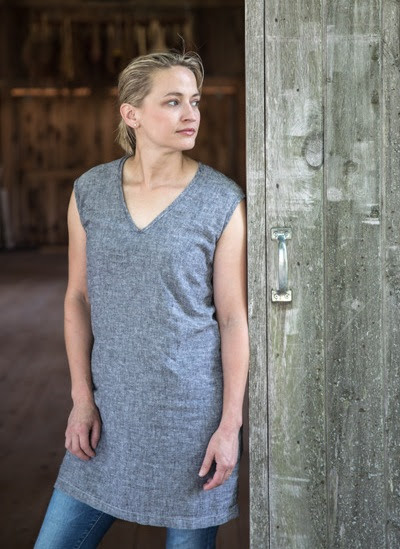
Katherine Seligman has been a staff writer at the San Francisco Chronicle Magazine and a reporter for the San Francisco Examiner and USA Today. Her stories have appeared in Redbook, Life, Time, Al Jazeera America and the anthology Fresh Takes. She is a member of the San Francisco Writers’ Grotto and loves working in clay. Her debut novel, At the Edge of the Haight, is the 10th winner of the PEN/Bellwether Prize for Socially Engaged Fiction.

What event or person inspired this story?

photo by Penni Gladstone

One night my husband and I were driving home through Golden Gate Park and this man threw himself in front of our car, saying, “Help, don’t leave me.” We stopped and called the police. He was pointing, and they shone the light over there, and there was a body on the ground. My husband, who’s been an ER doctor, ran over to see if there was anything he could do, and what he saw was this kid gasping for his last breath. They arrested the man who’d stopped us, and nothing ever happened to him. Because there were two witnesses, and one was dead. I tried to find out what had happened, asking questions of people who had been living in the park, and I just wasn’t getting anywhere. One of the cops said to me, “We have no idea what happened, but neither of these guys was up to any good.” And I just started thinking about this kid who died, and what his life had been like. That was what started it off. I had always talked to people on the streets who were traveling through or living here, but I started doing it with a new purpose, and I just started writing.

How are journalism and novel-writing alike and different?

I started out writing fiction in college and a year or two after college, and then went into journalism because I really didn’t have any idea what I wanted to write about. I felt like I was manufacturing things. I continued as a journalist, but never gave up the idea of writing fiction. I wrote two novels before this that are still drafts, and when I got to this one, I felt like I had learned more. It just carried me through the process. I think the natural curiosity and the rhythm of having deadlines and sitting down and knowing that you have to write helped me. I did have a great desire to do it, and some background, but there are some land mines for journalists who write fiction. I can see them in my work, and in other works. You can enter into research rapture, and think everything is so interesting, when it’s not important.

What makes a good protagonist?

Someone who inhabits a world so completely that we believe it. It doesn’t always have to be somebody that you really like or trust, as we know–there are so many books where we completely doubt or dislike the protagonist. But there has to be some element of belief in what this character is doing, and the character has to be revealed in some way. There has to be something that is driving them, often some big discovery, something the reader learns about the protagonist.

What happens inside Maddy is often as important as what happens outside. Why?

I played with writing from a close third person, and from two and then three points of view, but I came around to the first person, inside her head, because I really wanted to show how someone could get into a situation like this. That someone you see on the street often isn’t so different from your own child, or your sister. I know people say that, but I actually believe that that’s true. I really wanted a first-person voice that felt like she was learning while she was going. She didn’t know everything. That’s someone who we could look at and find some level of understanding of what she was going through, because there are a lot of things about herself that she doesn’t know. She’s so hurt. She’s somebody who really wants to hide, which I think is a fairly common human trait. I think there are a lot of people who go through life with so many secrets, trying to hide.

Did you do research specifically for this novel?

I did a number of stories over the years on various homeless issues, and a couple about what was going on in my own neighborhood, raising children, and why we stayed in the Haight.

I went to the hospital and sat and watched people come in. I spent a lot of time in the courts. I went and watched the disposition of cases of homeless people who’d been arrested and listened to how they were treated. The police were very generous, talking to me from their perspective. I did additional research, but in a different way than I did as a journalist, more talking and absorbing. There were a couple of kids who were very generous in spending time with me, answering questions about what it felt like to be awakened at 4 and 5 in the morning when they were sleeping in the park. A lot of the things that happened in the book, not the specific plot but some of the details, are things that actually happened. This neighborhood is so full of color and life. You just never know when you’ll find somebody walking a chicken on a leash down the street. There was actually a young woman many years ago who had a rat that she kept in her sleeve, and she taught it–she’d give it a juice box and it would drink through the straw. She told me what went into training this rat, and it was great.

What message do you hope readers take away from this story?

I hope that people will realize that someone who you walk by has a very full life story, just as you do. I don’t mean it in any finger-shaking kind of way, but I believe that our lives are richer when we open our eyes to what’s around us. It doesn’t matter where you live. And I realize that some people feel threatened, and there are really complicated things going on out there on the street. We have to have basic respect for people who are living on our streets, and they have to have respect for the neighborhood. I hope people will open their eyes and realize there’s a person out there who might have a lot in common with you and your family. Just be open to that. And there are many people with drug and alcohol problems who can be violent, but for the most part they’re people whose lives have strayed from what we consider typical, and who find themselves on the street. In my neighborhood often there are travelers and seekers who are following something that they think is going to be magical.

I didn’t set out to write about homelessness per se; it was just this idea that you walk by people every day and you have no idea who they are, what they’re hiding, what their lives are like. I guess that’s what interests most novelists. I can just look across the street in somebody’s window and think, huh. What’s going on over there? And I think we all have that element of make-believe.


This review originally ran in the January 19, 2021 issue of Shelf Awareness for the Book Trade. To subscribe, click here, and you’ll receive two issues per week of book reviews and other bookish news.

Sophomores by Sean Desmond

A boy begins to find himself as his parents face private battles of their own in this poignant and searching novel.

With Sophomores, Sean Desmond (Adam’s Fall) evokes late-1980s Dallas and its suburbs with eerie precision. A nuclear family–father, mother, son–and the worlds they navigate are full of anxieties, choices and possibilities. Spanning just one school year, this is a novel to get lost in.

In the fall of 1987, Dan Malone is a sophomore at the Jesuit College Preparatory School of Dallas. He belongs to a tight foursome of boys who support each other at school and in their forays with the girls of Ursuline Academy. A bit tortured by his shyness in both areas, Dan’s interior workings are self-consciously earnest but endearingly real. “Dan felt a sudden awareness, a shimmering sense of discovery, that his journal, the newspaper, music, writing, reading, it was all connected with some hidden purpose… The hour when he would take part in the life of the world seemed to be drawing closer, and Dan wanted to think and write and listen to his heart and find out what it felt.”

Dan’s father, Pat, is an airline executive facing a serious industry downturn, culturally Irish Catholic and miserably estranged by his displacement (for work) from his native Bronx. He drinks too much and hides it poorly from his family. He struggles with a recent diagnosis of multiple sclerosis.

Mother and wife Anne provides an essential counterpoint to Dan and Pat’s heavily male worlds. As a devout young woman, Anne had been a novice at Sisters of Charity, but she grew into a worldly, quietly feminist woman, inclined to be contrary in her internal monologues. Still a serious Catholic, Anne argues with the pastor both in her head and via anonymous phone calls.

These three perspectives triangulate to offer a rich, subtle story of family grief and love, teenaged seeking and adult angst. Desmond places crises in the classroom, where Dan strives for growth and recognition from a teacher “legendary for rigor and Socratic curveballs,” on equal footing with the murder trial where Anne serves as juror. Flashbacks to Anne’s and Pat’s pasts illuminate their characters and provide nuance and empathy. Events vary from the absurd (an ill-fated swim team trip) to the profane (one particularly colorful episode in Pat’s fall from grace), but throughout this narrative there is a sense that all of this is somehow serious, important, holy.

Sophomores is a sharp, crystalline look at a few months in the lives of a “regular” family. With a keen gaze, it captures a city in transition and a boy just coming of age. Dan and his parents will stay with the reader long after the story is finished.


This review originally ran in the January 8, 2021 issue of Shelf Awareness for the Book Trade. To subscribe, click here.


Rating: 8 sticks.

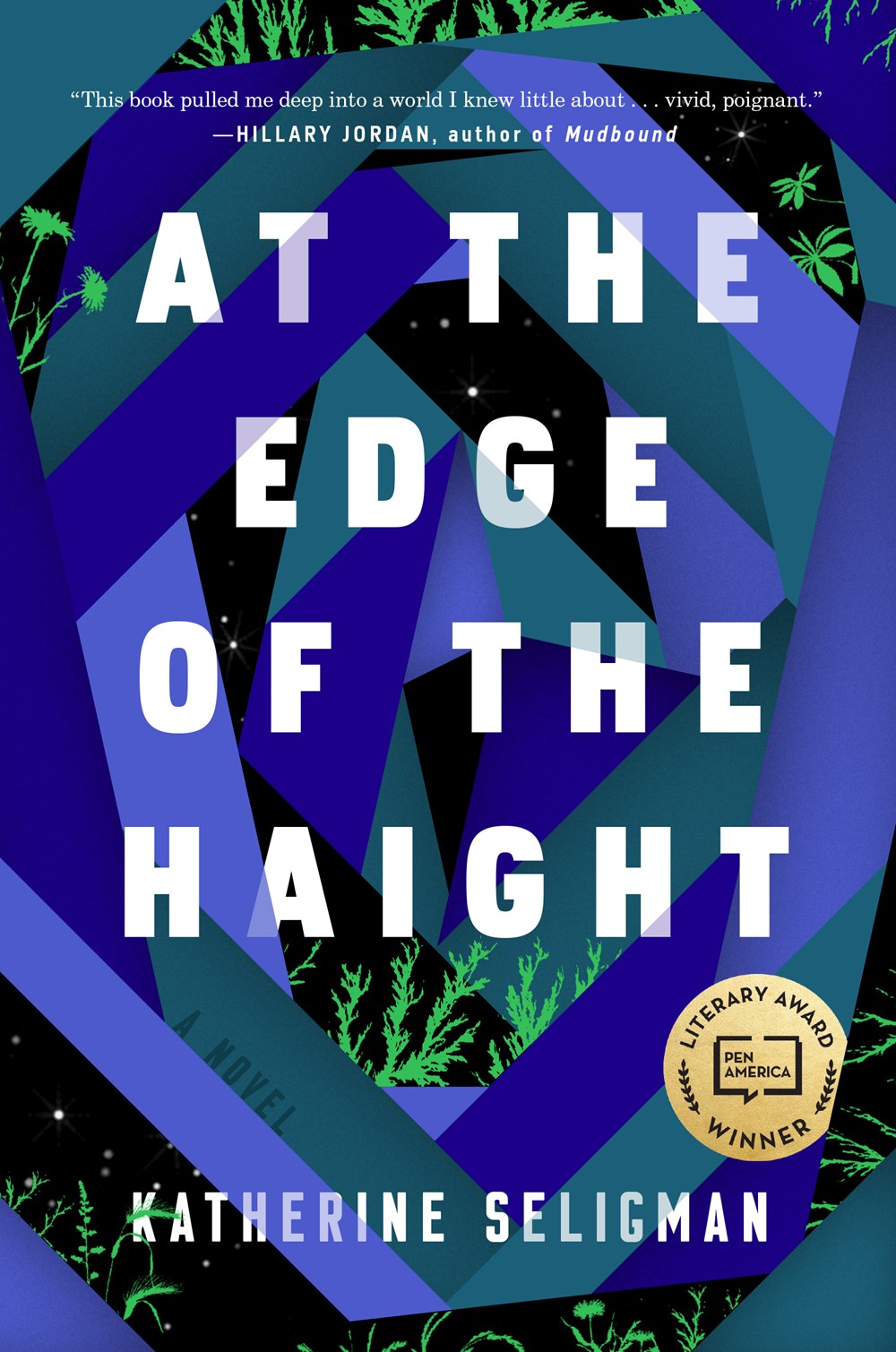
At the Edge of the Haight by Katherine Seligman

In this quietly compassionate novel, a young homeless woman stumbles into a crime scene on the edge of Haight-Ashbury, and eventually reconsiders how she got there.

Katherine Seligman’s gripping debut novel, At the Edge of the Haight, explores a community on the edge of a historic setting and on the edge of getting by, with a compelling protagonist and an array of issues to wrestle.

Twenty-year-old Maddy Donaldo lives in present-day Golden Gate Park, after Jerry Garcia and Janis Joplin are long gone, with a sort of chosen family. There’s Ash, “a skinny upside-down triangle” of a young man, “the most no bullshit guy around” with a talent for effective design of cardboard panhandling signs. Quiet, gentle, strawberry-blond Fleet has a pet rat named Tiny. Spike-haired Hope talks to everyone; she’s good with the tourists, but a bit of an instigator, too. And, most importantly, there’s Root, Maddy’s devoted dog. Together the friends scavenge food, find shelter, protect one another and navigate their tricky streets. It is Root who leads Maddy into the bushes in the first pages of this absorbing novel, where she stumbles upon a young man taking his last breath, and a man standing over him.

Maddy knows immediately that this sight will haunt her, that she is danger. She’s been handed a problem she didn’t earn; quickly the death of the boy named Shane follows her. The cops have questions. A man shows up at the local shelter and identifies himself as Shane’s father and asks for Maddy’s help. She gets to know Shane’s parents, Dave and Marva, and finds her loyalties beginning to split. Dave is a birdwatcher; Maddy observes the creatures, human and nonhuman, who live with her in the park. She investigates Shane’s murder, and along the way alienates her friends and finds herself nudged toward her own past, which she most wants to avoid.

At the Edge of the Haight is told in quiet prose from Maddy’s first-person point of view, so the reader is privy to her thoughts and fears, including an interiority that both protects and isolates her. All other characters are secondary, but this is a novel captivating in both its story and its characters. It is concerned with the social ills of homelessness, including addiction, mental health challenges and economics, without becoming polemic. The mystery of Shane’s death is a side plot, not the central focus; rather, it’s the situation that pressures the tenuous life Maddy has set up in the park. Seligman’s San Francisco is colorful and detailed. Readers are drawn into a challenging world with sympathetic characters, but it is Maddy’s internal turmoil that makes this novel memorable.


This review originally ran in the December 11, 2020 issue of Shelf Awareness for the Book Trade. To subscribe, click here.


Rating: 7 green apples.

Maximum Shelf author interview: Erin French

Following Monday’s review of Finding Freedom, here’s Erin French: Thinking of Each Chapter as a Dish.


Erin French is the owner and chef of The Lost Kitchen, a 40-seat restaurant in Freedom, Maine, that was named one of Time magazine’s World’s Greatest Places and one of “12 Restaurants Worth Traveling Across the World to Experience” by Bloomberg. Born and raised in Maine, French loves sharing her home region and its delicious heritage. French’s The Lost Kitchen Cookbook was nominated for a James Beard Foundation Award. Her memoir, Finding Freedom: A Cook’s Story; Remaking a Life from Scratch, will be published by Celadon in April 2021.

photo: Erin Little

How are the creative pursuits of cooking and writing similar, and different?

There were many times when writing this book that I told myself to bring it back to what I know. When I create a dish, I always take myself there in my mind, to taste it, to smell it, to think about every detail and how the dish makes me feel before I even make it, and long before I write it into a menu. I took my moments in the kitchen and used them to help me shape this book. I took time to think and go deep in my mind to taste all the details before I wrote them down on the page. Sometimes, to keep myself from getting overwhelmed, I tried to think of each chapter as a dish, that would eventually make up an entire menu. Bit by bit, ingredient by ingredient. The big difference? No dishes to wash!

When and how did you know you needed to write this book?

One of my editors once told me, “Your next book is always the one you feel burning inside of you.” Although I think my agent was baffled when I told her that I wasn’t pitching her another cookbook! I started to feel this one burning inside of me and knew I had to tell it. I knew I needed to reprocess my story to avoid burying it and to understand how it shaped my life. I also knew that in so many moments of my darkness I felt so utterly alone, and I hoped that if I shared this story maybe it would help others who experience their own moments of hell see the hope for getting through it and the beauty that can prevail.

Was it cathartic?

It was challenging going back to these dark days in such depth, but it empowered me that much more to live through them a second time. There were some unsettled moments that I finally put to rest through writing this book. It was the best therapy session with myself I’ve ever had.

You’ve shared so much of yourself in these pages. Do you hold anything back? How do you navigate the sharing of personal detail and trauma?

I poured it all out in the pages of this book. How do you tell your story of struggles to triumph without sharing the most vulnerable, darkest details of your days? I made one rule for myself while writing this: if it’s not my story, it’s not mine to tell. There are people in my life who have hurt me, and through it I recognized things they had been through in their own lives, reasons that shaped them into the person they became and maybe made them behave the way they did. But that’s their story to tell, not mine.

What are you cooking this week?

While the restaurant is closed, I’m cooking lots at home. Our freezer is stocked for winter and my dry goods pantry is ready for a winter at home. This week’s favorites were curried lentil soup while sitting in front of the fire; lamb chops marinated with rosemary and garlic; roasted squash with apples and maple syrup; and a classic apple crisp with a big scoop of vanilla ice cream!

What are you working on next?

Covid has me multitasking like a crazy woman right now. Adapting to our new world and trying to keep the restaurant alive keeps me moving. I’m neck deep in a construction project, building out individual private dining cabins in the woods here at the mill in Freedom, and simultaneously renovating my Airstream, which will serve as the mobile kitchen to serve the cabins. I’m also building out our first ever online makers market, which we are filling with beautiful Maine-made goods for the holidays. Oh! And planning for next season’s series of outdoor dinners we will be holding.


This interview originally ran on November 30, 2020 as a Shelf Awareness special issue. To subscribe, click here, and you’ll receive two issues per week of book reviews and other bookish fun.

Maximum Shelf: Finding Freedom: A Cook’s Story: Remaking a Life From Scratch by Erin French

Maximum Shelf is the weekly Shelf Awareness feature focusing on an upcoming title we love and believe will be a great handselling opportunity for booksellers everywhere. The features are written by our editors and reviewers and the publisher has helped support the issue.

This review was published by Shelf Awareness on November 30, 2020.


Erin French grew up in rural Maine, in the outdoors and in her father’s diner, where she began helping out in the kitchen at age 12. After a few years at college, she returned home to Maine, and faced challenges including young single motherhood; a difficult marriage and more difficult divorce; opening and then losing her first small restaurant; addiction and recovery. Eventually French moved back to her hometown of Freedom, where she would start again with her wildly successful The Lost Kitchen. These travels, pitfalls and victories she recounts in Finding Freedom: A Cook’s Story; Remaking a Life from Scratch. Renovation and redemption–of spaces and of herself–are central to her story.

This memoir begins mid-scene, with the nine-months-pregnant narrator, age 21, on break from a 16-hour shift at the family diner. The opening showcases the detailed, richly sensory food writing that permeates these pages, then flashes back, to describe French first entering the diner at age five; observing her father’s love for his work, his drinking and his limited ability to show love for his family; working in the kitchen and dreaming of escape. Finding Freedom centers around food, from childhood in the diner to young motherhood, when French supported herself with a small business baking cakes, cookies and pies, working retail in a cooking supply store and for a catering company. French picks up skills and ideas along the way and builds confidence until she is able to open a supper club and then the first The Lost Kitchen on the Maine coast. By this time, she has also picked up a husband, Tom, who turns out to be a heavy drinker, controlling and eventually abusive. From her problems with depression and anxiety, and the excruciating hard work and long days of restaurant work, she picks up prescriptions for Xanax, Ambien, Klonopin and more. This chapter of French’s story ends in rehab, with Tom seizing custody of her child and shuttering The Lost Kitchen, including “every whisk, every spoon, every spatula, and knife.”

But the cook (French resists the title “chef,” having no culinary degree or formal training) is scrappy, hard-working and resourceful. She adopts a dog, moves into a cabin without electricity or running water, fights for custody of her son and gets back into the kitchen. She first converts a dilapidated Airstream into a food truck for roving outdoor fine dining events on farms, in orchards and fields. And then another opportunity shows itself: the old mill in Freedom is finally gutted and renovated into the perfect, romantic setting for a small but picturesque dining room. The Lost Kitchen is reborn. Within a few short seasons, its limited reservations must be filled by postal lottery, more than 20,000 postcards “pouring in as though it were the North Pole.”

The spaces French occupies are lovingly built and restored. The first The Lost Kitchen is housed in a former bank building, a three-story gothic flatiron she describes in tender, glowing terms: “One by one I folded back the old wooden shutters and flung open the tall windows, letting light into spaces that had been dark for so long…. The place was dripping with character, with its hardwood floors, high ceilings, thick period molding, and doors with frosted glass and heavy hardware.” Its owners choose to take a chance on renting to French after a personal meeting and homemade meal. This process repeats with The Lost Kitchen’s reincarnation in Freedom: “The quiet rumors had been spreading around town about the old mill’s restoration, the same way they had about me.” In between, French must clean out and redecorate the cabin she lives in post-rehab on her parents’ land, and the Airstream trailer she uses to get on her cooking feet again. As the book closes, she has just purchased an old fixer-upper farmhouse “the color of strawberries.”

French excels in describing her passion for cooking and for pleasing people via food; she’s at her best detailing the foods themselves, and her mouth-watering writing is the heart of this memoir: “Hard-boiled quail eggs as bar snacks that you could peel-n-eat and dunk in a dust of celery salt.” “Fresh-from-the-fryer nutmeg-laced doughnuts.” “Fried chicken. Served cold, crispy, and juicy…. We could just hold it up in the air as the boat screamed through the waves to catch a bit of salty breeze before devouring it to the bone.”

Cooking and baking, flower arranging, the fine art of plating and the writing of this memoir contribute to a profile of a woman driven to create beauty even out of pain. The narrator’s voice is vulnerable, her trauma is real and visceral but, by the end, this is a delicious, feel-good redemption tale.


Rating: 6 nasturtiums.

Come back Friday for my interview with French.

Barbershops of America: Then and Now by Rob Hammer

Barbershops of America is a photographic tribute to a profession, an aesthetic and a community institution. Photographer Rob Hammer documents both “the old timers… like dinosaurs about to go extinct” and “the next generation,” in two distinct sections covering more than a thousand shops all over the United States. Images are only infrequently interrupted by quotations from barbers and their customers, so readers of this coffee-table book will revel most in the visual: elderly barbers and young, tattooed ones; beat-up barber chairs and decades of detritus; colorful signage, diverse clientele and what Hammer recognizes as the soul of these storied spaces. This collection of glossy documentary art is for lovers of culture, local color and traditions passed down across generations.


This review originally ran in the November 3, 2020 gift issue of Shelf Awareness for Readers. To subscribe, click here, and you’ll receive two issues per week of book reviews and other bookish fun.


Rating: 6 cool vintage chairs.

Stillicide by Cynan Jones

This minimalist meditation on climate change and human choices offers stark realism, haunting characters and lovely lyricism.

Cynan Jones (Everything I Found on the Beach; Cove) beautifully reprises his distinctive voice and poignant themes in Stillicide, a novel of climate change and human relationships. This novella-length meditation excels in its thoughtful considerations, quietly lyrical language and memorable lines and characters.

Water is rare and sought after. A water train has replaced the old pipeline to bring this commodity into cities, which are resented by the surrounding countryside. The train is armed: “Deer. Dog. Man. If it was still alive and present when the water load passed, the defence guns of the train would fire automatically.” In the opening chapter, a marksman stands by as additional security, life and death in his hands. Meanwhile, the authorities plan to replace the water train with a new and wider corridor, to drag an iceberg overland into the city. “A gash cut through the city,” this will displace many residents; protestors gather.

The subsequent chapters focus on different characters and their perspectives. A construction worker for the new iceberg path wonders if his work is for good or ill, and contemplates the work of his partner, who makes flowers from refuse to plant “in the cracks of the kerbs.” A young nurse contemplates an affair; an older nurse lies dying. A boy chases a stray dog through the streets. An elderly couple on the coast refuses to move inland even as they see the future approaching. These perspectives note where the natural world still gleams in a city increasingly dry and dusty–aphids, butterflies, the rare deer, “sparrows and pigeons, as if from nowhere.” A professor finds evidence of an endangered species in the iceberg’s path, and with it hope: “A dragonfly could stop an iceberg. For a while at least.” Many of these characters remain nameless, so that even in their specificity they stand in for a larger human experience, and the effect is that this thirsty world is a little blurred.

Stillicide is a sobering consideration of a possible near future, and a moving work of fiction. Jones is easy to appreciate also for his writing, for the poetry in “the contained clatter of the runnelled rain.” The marksman guarding the water train, where the novel both begins and ends, drives home questions about what to value and protect, and when to let go. This is a quiet masterpiece of language, imagination and grim possibility.


This review originally ran in the October 26, 2020 issue of Shelf Awareness for the Book Trade. To subscribe, click here.


Rating: 7 drops of water.

A Million Aunties by Alecia McKenzie

After a great loss, a man returns to his mother’s homeland of Jamaica in this stunning novel of love, loss, grief, healing, art, identity, family and home.

Jamaican author Alecia McKenzie (Sweetheart) offers her readers delightful characters and thoughtful themes in A Million Aunties.

Chris seems to be running from something when he arrives in the Jamaican village of Port Segovia from New York City. In the opening chapter, “How to Paint Flowers,” his grief is gradually revealed: a woman, Lidia, now gone; Chris’s dark paintings; the impulse now toward light, as if to make up for what is lost. His friend and agent, Stephen, has sent him to Auntie Della in Port Segovia, promising, “You’ll have anything and everything you want. The whole range of tropical beauties: hibiscus, bird of paradise, bougainvillea.” Della owns a local nursery.

Just as readers settle into Chris’s pain and paintings, McKenzie shifts the focus. Chapter two is told from the point of view of Chris’s father, aging in Brooklyn. He worries about his son and their frayed relationship. Other chapters focus on other characters: Chris’s agent, Stephen, Jamaican by birth, who lives in New York; their friend Féliciane, a French artist who works with found objects; Uncle Alton, a painter in Kingston; Miss Pretty, Port Segovia’s local eccentric, who walks all day long in a fur coat. Chris was born in the United States, to a Black man from Alabama and a Jamaican woman. His father remembers first meeting her, and noting “the arrogance and confidence of growing up as a majority. The shortsightedness of it.”

Chris and Della are the heart of this story, but the kaleidoscope of other perspectives enriches it. Chris begins to heal from the loss of Lidia and even reconsider his relationship with his father, with the help of a new auntie and a broadening view of the world. The myriad characters offer a textured background to this central story. From rural Jamaica to New York City, Paris and the Firenzes of Alabama and Italy (Chris: “Firenze was always Firenze, never Florence”), and across generations, they share common threads: art, flowers, love, loss. “Painting flowers is political action,” Chris’s best-remembered teacher used to say. Now this seems to be all he can do for Lidia, who rearranged her life to devote it to flowers.

Stephen’s relationship with Auntie Della offers perhaps the novel’s central theme of human connection, built families: “In his most morbid moments, he sometimes thought: lose a mother, gain a million aunties.” A Million Aunties is an exquisite novel about beauty and pain, and what binds us together. Through captivating character studies, quiet lovely writing and deceptively simple storytelling, McKenzie illuminates basic commonalities and rethinks what family and home mean.


This review originally ran in the October 22, 2020 issue of Shelf Awareness for the Book Trade. To subscribe, click here.


Rating: 7 heaped plates.

Fortune Favors the Dead by Stephen Spotswood

This classic noir-style mystery recast with humor, female leads and superb style is both satisfying and great fun.

Willowjean Parker (who goes by Will) ran away from home at 15 to join the circus. She’s working on the side, a security job at a construction site–the kind of job women get to do now that “the men who’d usually have taken them were overseas hoping for a shot at Hitler”–when she first meets Lillian Pentecost, the famous lady detective. A few clever deductions and a little knife-throwing skill later, and she finds herself in Ms. Pentecost’s employ, apprentice to the aging lady detective. Stephen Spotswood’s first novel, Fortune Favors the Dead, sparkles with the wit and personality of this bold, unconventional heroine. Will may revere her boss, but readers know that it’s the intrepid younger woman who stars.

In Will’s delightful first-person telling, peppered with vernacular asides, the two women initially clash in a violent midnight action sequence worthy of the kind of pulp novel Will so loves. She now relates this and other stories from a distance of some years, confiding in her readers the difficulties of choosing what to include. The major case she highlights is that of the Collins family: the patriarch dead of an apparently self-inflicted gunshot wound, matriarch bludgeoned with a crystal ball following a séance–in a locked room–leaving twins Randolph and Rebecca to tease and manipulate their hired detectives, Ms. Pentecost and Will. The twins’ godfather is now acting CEO of Collins Steelworks; his loyalties are unclear. And the medium and “spiritual advisor” whose crystal ball became a murder weapon is another wild card: she seems to have unusual power to intimidate Ms. Pentecost, which unnerves Will entirely.

This mystery plot has all the twists and surprises a fan of the genre could ask for, but it is Will’s distinctive, captivating voice and background–from difficult childhood to the circus to lady detective–that is Spotswood’s real triumph. Fortune Favors the Dead resets classic noir elements (smoky nightclubs, femmes fatale, unexplained midnight gunshots) in 1940s New York City as experienced by women who like women and men who like men, as Will discreetly frequents a slightly different kind of nightclub, and no one is precisely who they seem. Ms. Pentecost’s expertise and no-nonsense attitude are appealing and entertaining, but gutsy Will, with her snappy, slangy narrative style, ultimately wins readers’ hearts and carries the day.


This review originally ran in the October 2, 2020 issue of Shelf Awareness for the Book Trade. To subscribe, click here.


Rating: 8 pockets.