L.A. Weather by María Amparo Escandón

In a novel alternating between fun and heartbreak, a prosperous, big-hearted, messy family struggles to weather literal and metaphoric disaster in 2016 Los Angeles.

L.A. Weather is a lovely, compelling and occasionally brutal novel by María Amparo Escandón (Esperanza’s Box of Saints) about a family on the brink of disaster, in a city similarly on edge. Captivating, sympathetic, funny characters and never-ending surprises (that even those involved compare to a telenovela) form a world for readers to get lost in.

Patriarch Oscar Alvarado has become a shell of his formerly assertive self; his wife, Keila, a sculptor, is losing patience. Their daughters are Claudia, an author and television chef; Olivia, an architect and mother of twin girls; and social-media maven Patricia. The Alvarados are a close-knit family of successful, high-powered professionals, bridging Oscar’s Catholicism, Keila’s Judaism and their shared Mexican-American heritage in Los Angeles, a vibrant city beautifully evoked by Escandón’s loving descriptions of food, traffic and culture.

In L.A. Weather‘s opening pages, a horrifying accident befalls Olivia’s daughters (parents beware), prompting various responses to trauma and launching the story directly into the Alvarados’ family dynamic and cascading failures. Oscar’s obsession with drought and wildfire may at first seem random, if not nonsensical, but it reflects a secret he’s been keeping from his family, and serves as symbol for their shared concerns. When Keila announces she wants to divorce him, their daughters protest vehemently, although it is soon their own respective marriages that threaten to catch fire. The city crackles with heat as one crisis or shenanigan after another ensues.

“[The] family’s stories were never neatly wrapped up at the end of the year. They just went on, and it felt good, this continuum.” The novel is defined by time, however: Escandón chronicles events from January through December of 2016. Her story is a feat of both plot and character. Each member of the extended Alvarado clan is intriguing and flawed but deserving of empathy; even when they make questionable decisions, they are both convincing and entertaining. Climate change serves as a clever way to monitor the metaphoric fire risk to a family that loves fiercely but stumbles in the execution of that love. L.A. is richly portrayed: “the wildland-urban interface, that zone where nature and city cohabited (or collided?), where your surveillance camera could spot a mountain lion roaming in your backyard while you slept…. [Oscar] could not stop thinking that it was this unashamed human encroachment into nature that was causing so much destruction.” This is a story of people, place and connection. Absorbing, moving, comic and tragic, L.A. Weather will capture readers and never let them go.


This review originally ran in the August 9, 2021 issue of Shelf Awareness for the Book Trade. To subscribe, click here.


Rating: 7 squash-flower mini tamales.

In the Field by Rachel Pastan

A Nobel-winning scientist holds the focus of this lovely, contemplative, completely absorbing novel.

“What if Cinderella had asked her mother’s tree to give her a microscope instead of a ballgown?” With In the Field, Rachel Pastan (Alena) offers a compassionate, clear-eyed story of self-determination, love and science. The novel begins in 1982, when Dr. Kate Croft receives a phone call from the Nobel committee, then rewinds to 1923, when Kate is a first-year student at Cornell University, to the disapproval of her family, male professors and classmates.

Kate is entranced by biology, if not obsessed: “The cell was an uncharted country, and she was an explorer newly landed on shore… that was part of the joy of it: the promise of richness that lay ahead. The sense she had of undreamed-of discoveries–unimagined systems and structures–waiting there in the dark to be found.” Socially challenged and estranged from her family, she grows up with a single-minded devotion to her work, despite the struggles of being a woman in a male-dominated field and her difficulties in love.

An author’s note acknowledges that Kate Croft is based on Barbara McClintock, but Pastan makes clear that this is a heavily fictionalized account of the geneticist’s personal life, while remaining accurate to the science. Kate is a “corn man,” in the parlance of the day, studying maize genes at Cornell’s College of Agriculture. Her colleagues accept and respect her to varying degrees: one reports, “People say either you’re a genius, or else you’re off your rocker.” Kate’s greatest joy is in carefully tending her corn, her slides and her data. Other scientists profit off her discoveries (she is a gifted researcher) and deny her credit; she has difficulty accepting help. Meanwhile, she wrestles with her secret love affair with a woman, and maintains a lifelong friendship with a fellow corn man.

The curiosity that drives Kate’s research fuels her love for humanity, too. “Couldn’t people change their natures? Couldn’t they change, the way her corn had changed in the middle of the growing season, suddenly producing leaves with different frequencies of streaks? Something switched on, something else switched off, deep inside the cells.” These questions of free will are as important as those of heredity or meiosis. In the Field excels in its multifaceted view of a complex woman: scientist, lover, friend, student of life in both biology and philosophy. Readers will be better for time spent with this patient, tender, loving examination of a life devoted to examination of life. Kate will stay with readers for a long time.


This review originally ran in the July 15, 2021 issue of Shelf Awareness for the Book Trade. To subscribe, click here.


Rating: 8 chocolate walnut cookies.

Songbirds by Christy Lefteri

Set in the old capital city of Cyprus, this is a beautiful, sad novel about human relationships and hard choices, who is seen and unseen.

With Songbirds, Christy Lefteri (The Beekeeper of Aleppo) shines a light on social issues through the story of one woman’s disappearance. The central character is absent from the beginning and remains a mystery until the novel’s final pages.

“One day, Nisha vanished and turned to gold.” Nisha is a Sri Lankan immigrant to Cyprus, where she works in the capital city of Nicosia as maid to Petra, a widow, and her nine-year-old daughter, Aliki. Petra’s upstairs tenant Yiannis is Nisha’s secret lover (maids are not permitted lovers). This absorbing novel opens after Nisha has gone missing, and is told in chapters that alternate between Petra’s and Yiannis’s points of view as they mourn and search for Nisha.

Nisha is representative of numerous migrant worker women in Cyprus, largely from Vietnam, Nepal, the Philippines and Sri Lanka. Petra observes, “The maids here did everything–they were hired and paid (lower than the minimum wage) to clean the house, but ended up being child-carers, shop assistants, waitresses.” Also: “I had started to see the rhythm of these women with new eyes–how the whole neighborhood pulsed with their activity. They had been invisible to me before Nisha had gone missing.”

Although her neighbors are quick to write off the disappearance as abandonment, with the assumptions of casual racism, Petra knows this is out of character. Nisha is devoted to Aliki, and besides she’s left behind her passport and most precious possessions, relics of her late husband and her own daughter in Sri Lanka. The police won’t help. Petra mounts her own investigation, eventually teaming up with a distraught Yiannis, who is facing challenges of his own. He feels trapped by his involvement in the criminal poaching of songbirds, and especially conflicted because he’d grown up feeling so close to nature.

Lefteri deftly weaves Yiannis’s pain at his illegal work and the loss of his love with Petra’s growing realizations about her own culture and Aliki’s attachment to her missing caretaker. Nisha, “a dark and beautiful shadow, who rattled around in old sandals and with fire in her eyes,” is the center of this story, but an absence; the two speaking characters triangulate the third, and readers don’t hear Nisha’s own voice until the very end. Moving human characters and careful depiction of natural spaces contribute to a contemplative tone. Songbirds is quietly urgent in its treatment of Nicosia’s maids, lyrical in its descriptions, and thoughtful, compassionate and important.


This review originally ran in the July 12, 2021 issue of Shelf Awareness for the Book Trade. To subscribe, click here.


Rating: 7 makeshift oars.

The Reading List by Sara Nisha Adams

A shared reading list improves the lives of two lonely individuals in this charming novel about the power of a good book.

In Sara Nisha Adams’s sweet, pleasing debut, The Reading List, two lonely characters in contemporary London–and a host of friends and family–learn just how much books, and other people, have to offer.

Mukesh is grieving after his wife’s death: “Now here he was, alone, still without any clue as to what he should do now she was gone, left in a lifeless, soulless, bookless house that had once been their home.” He wishes he were as close to his granddaughter, Priya, as she was to her grandmother, but he does not share their love of reading. Then he finds an unreturned library book his late wife loved and gives it a chance.

Aleisha, 17, works at the library, but begrudgingly. Her older brother is the reader in the family. Both are slowly being crushed by their mother’s oppressive depression; they’ve lost touch with their friends and even each other, leaving Aleisha alone in the world, traveling between work and home until even the boring local library begins to feel like a sanctuary. In a returned book, she finds a handwritten note that begins, “Just in case you need it,” with a list of book titles. Not knowing why, she tucks it away.

Following a prologue introducing the titular reading list, sections of the novel are named for books (The Time Traveler’s Wife, Rebecca and more); most chapters follow either Aleisha or Mukesh. In interstitial chapters labeled “The Reading List,” other characters interact with the same mysterious document in their own ways–a crime thriller fan grieving a break-up; a lonely divorcé; a young woman who collects lists.

Out of guilt and boredom, Aleisha begins reading the books on the found list and recommending them to the elderly Hindu man who has tentatively begun to visit her library. Together, Mukesh and his teenaged librarian share what they read. Both are unpracticed, but each has much to gain from the developing friendship and the fictional worlds that transport them away from their daily struggles. When tragedy strikes, the friendship and the reading list may help them get through: “‘Aleisha,’ Mukesh said softly. ‘Please try to remember that books aren’t always an escape; sometimes books teach us things. They show us the world; they don’t hide it.'”

The Reading List is a tender novel about human connection and community and the healing power of reading, about the support and compassion that all people need at one time or another. This book is a soothing salve.


This review originally ran in the July 8, 2021 issue of Shelf Awareness for the Book Trade. To subscribe, click here.


Rating: 8 cups of chai.

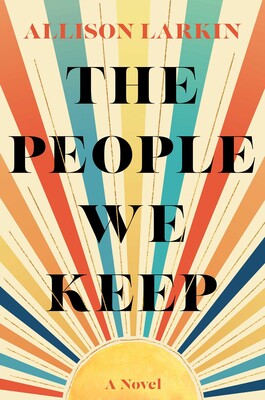
The People We Keep by Allison Larkin

A teenaged singer-songwriter takes to the road, both hoping for and running from an experience of love and acceptance.

It is 1994 in Little River, N.Y., when 16-year-old April steals her neighbor’s car to drive into the next town for an open mic night. She returns the car when she’s done, but the teasing taste of freedom she finds on the road–and the crowd’s positive reaction to her songs–set the standard for the rest of this propulsive novel. Allison Larkin’s The People We Keep is the story of April’s journey away from Little River: escape, both seeking something (home, community) and fleeing from it.

Her mother is long gone and barely remembered; her father alternates between abuse and neglect, but he also gives April her first guitar. It is clear that her music is essentially her only lifeline: “My dad used to say that good folk music is etched with the rhythm of the road. I always listen for it in songs and I find it in the best ones. So when I’m driving, I pay attention to all the noise… and I start my song. It begins like a story in my head….”

April finds her first hope and solace in Ithaca, a town with hippies and colleges and baffling coffee drinks, and where she gets a job and a lover and makes her first true friend. Thanks to her past and trauma, though, she both yearns for and fears attachment; she has to keep moving. The rest of the novel follows April up and down the eastern seaboard, living out of her car, busking and playing bars and coffee shops, finding and losing what she most wants, over and over again.

The People We Keep is intimate, urgent and direct; April’s first-person voice is magnetic, compelling. She is damaged and still so young–years go by and she is still in her teens–but extraordinarily resilient, a “miracle girl who is so full of piss and vinegar that she survived it all.” Just when it begins to feel like she’ll never learn to stop moving, she makes a discovery. “We have people we get to keep, who won’t ever let us go. And that’s the most important part.”

This is a novel of great empathy, about connections and coming of age, built families and self-acceptance. It contains heartbreak and redemption, and a plucky, irresistible protagonist. For any reader who’s ever wished they could go, or wished they could stay.


This review originally ran in the July 1, 2021 issue of Shelf Awareness for the Book Trade. To subscribe, click here.


Rating: 8 picks.

The Council of Animals by Nick McDonell, illustrated by Steven Tabbutt

A council of animals decides the post-Calamity fate of humans in this wise, witty, perfectly compelling tale of adventure and survival.

In the witty and compelling The Council of Animals by Nick McDonell (Twelve), humans are nearly extinct following an unspecified disaster (“The Calamity”) of their own making. The animals, also sorely suffering in a changed world, gather to debate and vote on the next steps: to allow the humans to live, or to kill and eat them all. This council includes a grizzled, arthritic bulldog; a not-so-bright horse; an underfed grizzly bear; a religious crow; an aloof and possibly turncoat cat; and a bully of a baboon. The belated seventh council member is the source of some trepidation and mystery. When the humans (who mostly remain offscreen) appear doomed, a motley alliance must form, swelling the ranks of animal characters to encompass a trio of moles, a giant lizard that thinks it’s a bat, a small but important scorpion and more. To save humanity, these intrepid creatures will travel and adventure together, learning interspecies trust and new animal facts, and finding hilarity and danger along the way.

This story contains both whimsy and life-or-death consequences, charmingly related with humor and sagacity by a narrator, “a humble historian (or animal contextographer),” who conceals their own identity until the very end. The details of this animal-centered world are endlessly entertaining, as reference is made to “the wallaby who taught Elvis how to sing. The lobsters who elevated Salvador Dalí’s conceptual practice. The raccoon who, quite disastrously, advised Calvin Coolidge.” Steven Tabbutt’s deceptively simple illustrations reinforce the storybook impression and advance character development, as when the bear classically addresses a human skull during an existential crisis. While frequently playful, this narrative is not all fun and games: the dog might have PTSD, the baboon has disturbingly dictatorial tendencies and the stakes couldn’t be higher. McDonell’s clever, lively prose and snappy pacing propels readers onward.

The Council of Animals has the feel of a fable, both a romp with sweetly goofy animal characters and a serious and clear-eyed story about the real world and its dangers. “It is the duty of the historian to face the hideous facts, and violence is one.” Ultimately, this is a tale about community and cooperation. Humans may have something to learn from the animals about communication and mutual responsibility: “Even bony zompompers at the bottom of the Marianas Trench like to chat with blue whales now and then.” Thought-provoking, captivating, funny, instructive: this is a book for readers who have ever yearned for a little extrahuman wisdom and cheer.


This review originally ran in the June 21, 2021 issue of Shelf Awareness for the Book Trade. To subscribe, click here.


Rating: 7 crustacean colonial novels.

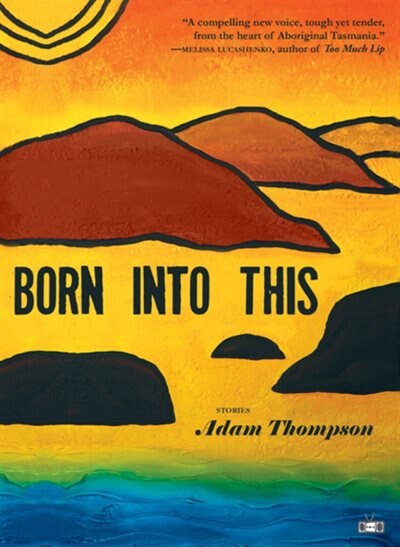
Born Into This by Adam Thompson

These cunning, clever, piercing stories of marginalized indigenous Australians are both compelling and illuminating.


Adam Thompson’s Born into This is a striking collection of hard-edged, penetrating stories set primarily in the Australian state of Tasmania and wrestling with issues of race, colonialism and individual agency. Every story features Aboriginal characters, generally in the central role; the various experiences and complexities of this identity (which the author shares) form the heart of the stories’ combined impact. The collection is loosely linked by recurring characters and settings: an act of angry protest at the center of one story reappears as a minor annoyance in another. An island on the Bass Strait is home to a family over generations.

The collection opens with “The Old Tin Mine,” a story about a bitter, aging guide at a “survival camp” for city youth, who may be nearing the end of his career. “Honey” offers a cold, brutal, satisfying justice in the face of hate. In “Aboriginal Alcatraz,” a man wrestles with a life-changing decision in the midst of a storm, building to an ironic conclusion. Some stories lead with forceful blows, others sneak in to nag at the back of the reader’s mind: an alcoholic recalls the worst thing he’s ever done; a young man views a current love affair with cynicism. In the title story, a young woman fights an inherited losing battle involving eucalyptus plants. Working in the woods “was like looking into a mirror.” In “The Blackfellas from Here,” a young activist proposes an extreme and perhaps unrealistic, but also perfectly reasonable, resolution to a controversy. These punchy tales question family ties, infidelity, superstition and who has the right to claim Aboriginal ancestry.

Thompson’s characters are stoic, taciturn, often blue-collar. They struggle with racism, exploitative economic systems, class tensions and the disappearing natural world that a culture once depended on. Their reactions to these challenges range from rage to lethargy; their stark stories are frequently, quietly, brutal. The lives and attitudes of these characters vary, offering a revealing set of perspectives on the contemporary landscape. It is not all bleak: Born into This contains as well dark humor and even slim strands of hope. Thompson’s prose style appears blunt at first glance but shows nuance. His 16 stories are unyielding in terms of their values, yet somehow deft, even delicate in their storytelling and various voices. The overall effect is understated: simple, unglamorous lives and events crescendo toward a thought-provoking and memorable whole. Even (or especially) in its quietest moments, this is a haunting debut collection by a skilled writer.


This review originally ran in the June 11, 2021 issue of Shelf Awareness for the Book Trade. To subscribe, click here.


Rating: 7 eucalypts.

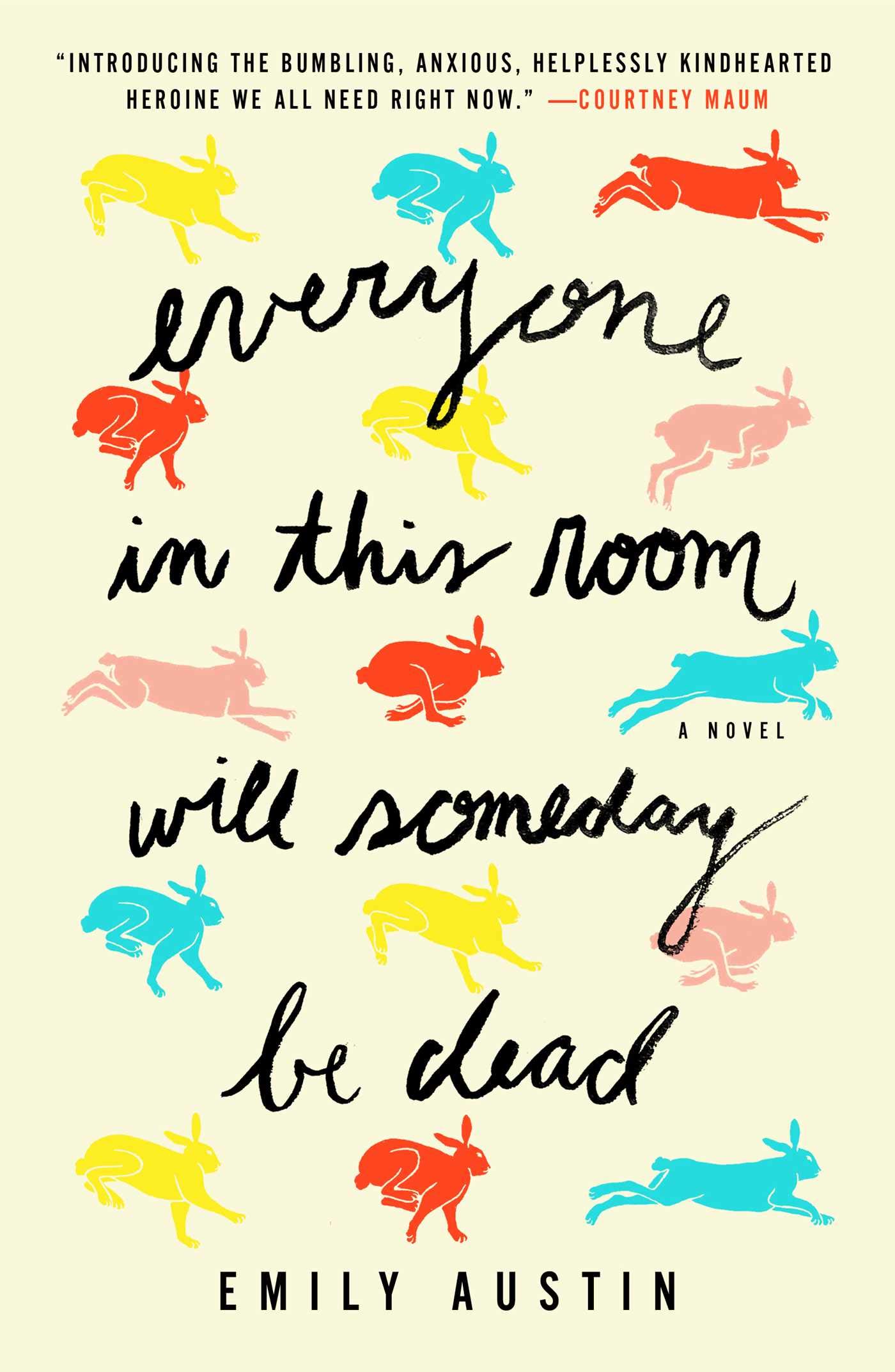
Everyone in This Room Will Someday Be Dead by Emily Austin

This strangely delightful debut novel, with its charming, anxious, bumbling hero, crackles with warmth.

Emily Austin’s spellbinding and unforgettable first novel, Everyone in This Room Will Someday Be Dead, stars an unusual hero: Gilda is so profoundly socially awkward, anxious and depressed as to be practically nonfunctioning as an adult. She is perhaps too kind for her own good.

The story begins with a car wreck, when Gilda, who narrates, is struck from behind by a beige van. When she arrives at the emergency room (having driven herself, with a broken arm, because “I do not like to be a spectacle”), she is told, “You are a lot calmer than you usually are when you come in here.” Readers begin to understand that Gilda is a little odd.

From this misfortune, she follows an ad for free counseling and is dismayed to find that it is being offered at a Catholic church (Gilda is an atheist). She is too polite to disappoint the priest who thinks she’s there for a job interview, and finds herself working as the church’s new receptionist–therefore living a double life, posing as a Catholic and sort-of-dating a parishioner’s abhorrent brother-in-law (Gilda is a lesbian). While keeping up this increasingly complicated act she also finds time to worry about her brother (drinking too much) and a missing neighborhood cat, among countless other stressors; topping that list may be the fate of the church’s previous receptionist, Grace, who died under suspicious circumstances. Gilda is obsessed with death, her mind on an endless loop: hit by a bus, choke on a piece of bread, clogged arteries, cancer, apartment fire, malaria, carbon monoxide, lightning strike. Almost without meaning to, Gilda begins investigating Grace’s death, and because she doesn’t have the heart to break bad news, posing as Grace in e-mails to the woman’s old friend. What could go wrong?

Gilda’s anxiety and social ineptitude could hardly be overstated, and she bumbles through life with such painful clumsiness that her story should be hard to read. But somehow, Austin’s remarkable narrative is engaging and snappily paced even when its first-person narrator is lying in a dry, empty bathtub without the will to move. Gilda’s voice is frequently extremely funny, with gut-laugh punchlines made more effective because they are so surprising.

Everyone in This Room Will Someday Be Dead is disarmingly sweet even in its grimness. Gilda is a singularly memorable character. She ponders big questions–“I feel simultaneously intensely insignificant and hyperaware of how important everyone is”–and remains open to all possibilities, sometimes even the good ones.


This review originally ran in the June 7, 2021 issue of Shelf Awareness for the Book Trade. To subscribe, click here.


Rating: 8 pots of macaroni.

The Woman from Uruguay by Pedro Mairal, trans. by Jennifer Croft

Part picaresque, part tragedy, this critical day in the life of a hapless Argentine writer and would-be lover is both entertaining and thought-provoking.

Pedro Mairal’s The Woman from Uruguay follows a contemporary Argentine writer named Lucas for a single fateful Tuesday, as he travels from Buenos Aires to Montevideo and back again. Lucas narrates these events, with flashes forward and back in time, in a lengthy direct address to his wife, Catalina. “You told me I talked in my sleep. That’s the first thing I remember.” He is stumbling, if not entirely failing, as a writer, in debt to nearly everyone he knows, and fairly sure that Catalina is cheating on him. The purpose of the day trip to Uruguay is ostensibly to collect a significant sum of money in cash (advances on two books), which Lucas expects will change his fortunes. His hidden, secondary purpose is to visit the titular woman with whom Lucas has been captivated since they met at a writers’ festival months earlier. He calls her Guerra–war–and is obsessed by their so-far-unconsummated affair.

Lucas is not an entirely likable narrator. He is self-pitying, a bit sleazy in his adulterous aspirations and at best a mediocre husband and father. He resents his wife for her ability to support him financially, and his young son for disrupting his work (“How am I supposed to write with my kid dangling from my balls?”). But readers will be drawn in by the mysterious Guerra and the pathetic and darkly comic narrative of Lucas’s unlucky day. He can be woefully misguided by desire (for Guerra, for escape from responsibility), artful in his telling (Lucas is a writer, after all), wry, clever and even wise. In buying a ukulele for his son: “I realized I’d rather play the ukulele well than keep playing the guitar poorly, and that was like a new personal philosophy. If you can’t handle life, try a lifelet.” The translation from Spanish to English by Jennifer Croft (Homesick) handles such moods and idiosyncrasies perfectly. Lucas’s child is a “tiny little elderly man, that haiku of a person,” “a drunken dwarf.” Readers may not be precisely rooting for Lucas to get what he wants (which is a bit unclear even to Lucas), but they will certainly be eager to find out what happens next.

In just 17 hours, this luckless protagonist experiences great hopes and severe losses, navigating both a marital crisis and an existential one with limited grace but great ardor and intensity. Challenged in love, marriage, parenthood, finances and fantasy, he makes a mess but comes away with a story to tell and, for a writer, there are worse endings. “May death be to know all,” he muses in hindsight. “For now, I can only imagine.”


This review originally ran in the June 4, 2021 issue of Shelf Awareness for the Book Trade. To subscribe, click here.


Rating: 6 hopes.

This Shining Life by Harriet Kline

A family struggles to honor the loss of one of their own and a remarkable boy works to solve the puzzle of the meaning of life in this poignant, loving debut novel.

Harriet Kline’s This Shining Life opens with a brief prologue: a happy family, a joyful party at sunset. Then the tone shifts. “My dad died. He gave everyone a present before he died. He gave me a pair of binoculars. They smell of books that haven’t been read for a very long time.” This is the voice of Ollie, a boy with certain gifts (sudoku, puzzles, literal meanings) and challenges (socks, hugs, turns of phrase). As the novel considers the death of Ollie’s dad from various points of view and at different points in time, Ollie’s chapters will always begin the same way. “My dad died.”

Ollie’s dad, Rich, was spontaneous, fun-loving, kind and a great lover of cheese. He was a devoted husband to Ollie’s mom, Ruth. Ruth’s sister, Nessa, originally set them up; she and Rich had been best friends since college. Ruth suffers from depression, like their abrasive, troubled mother, Angran; Nessa believes in charging in and grasping life in a firm grip, consequences be damned. Rich’s parents, Gerald and Marjorie, are starched and proper where Angran is bohemian (Gerald says it as if it’s a dirty word) and brusque. They are a motley crew, but all devoted to Rich. In this engrossing story of grief, love and mix-ups, Ollie fixates on the puzzle he believes his father has left him, in the presents he left behind. Because of something Rich said, Ollie believes these gifts hold the secret to what it means to be alive. “I want to do that puzzle now. I want to feel happy like he did. All I have to do is get the answers right.” Time jumps around, so that Rich is dead and alive again, as Ollie attempts to track the gifts Rich has sent to his loved ones and discern their hidden meaning.

In a novel about grief and love and continuing on, these characters are heartbreakingly flawed: Nessa’s pushiness, Angran’s rudeness, Gerald’s blustering into dementia. Shifting perspectives do the essential good of enforcing empathy even in the face of quite bad behaviors. As Ollie single-mindedly pursues the solution to his father’s puzzle, the adults around him seem too caught up in their own struggles to aid him; will they rally in time?

This Shining Life is attuned to the importance of setting, including natural spaces like the waterfalls that dominate this family’s neighborhood, and the deep potential significance of objects, like those fraught gifts that Rich gives. It is a sad story, of course, but also joyful, in the style of Rich delightedly offering cheese at his final party. It proposes that grief and love are inextricable, and that there may be light even in pain.


This review originally ran in the May 27, 2021 issue of Shelf Awareness for the Book Trade. To subscribe, click here.


Rating: 8 threads.