Ocean State by Stewart O’Nan

In this unforgettable novel–disturbing, gorgeously written and poignant–working-class women and girls are pushed to extremes.

“When I was in eighth grade my sister helped kill another girl. She was in love, my mother said, like it was an excuse.” So opens Ocean State by Stewart O’Nan (West of Sunset; City of Secrets; The Odds: A Love Story). If this were a murder mystery, the killer’s identity is immediately known. But it’s not the crime itself that occupies the novel’s spotlight so much as the challenges faced by its four central characters.

They are four women, closely connected but very different. Angel is a popular high school student. Carol, her mother, is a nurse and stressed-out single mother, a bit preoccupied by her dating woes. Marie is Angel’s younger sister, forever watching other people’s lives as if they were movies and waiting for hers to begin. Birdy is Angel’s classmate. They both want the same boy, a rich kid who inevitably will leave their small town behind. Angel is his girlfriend of three years, Birdy his secret. The way these lives converge will change all of them forever. O’Nan presents the four women’s perspectives in turn, so that readers watch them build and crescendo to a violent crime and then tumble through its aftermath. The events are horrifying, and not only in terms of that final violence, the writing is lovely, glimmering. O’Nan evokes Ocean State‘s setting, the blue-collar Rhode Island town of Ashaway, with equal care: perhaps unbeautiful, but rendered with detail and tenderness.

O’Nan’s greatest accomplishment is in the compassionate portrayal of characters who are each guilty of smaller and larger wrongs, but whose motivations, concerns and battles always feel of real concern. Marie desperately wants to connect, with anyone. Carol wants the best for her daughters but can scarcely keep her head above water. Birdy has strong family ties but has succumbed to a dangerous infatuation. Angel is gripped by a version of love that contains a large dose of possessive rage. Interestingly, the boy that these girls focus on does not have his perspective revealed; readers meet him only as Birdy and Angel see him.

Because of how the book begins, readers always see the crime coming. Somehow, this does not reduce the suspense, as tension builds toward the unavoidable climax. Ocean State is a compelling, propulsive read: easy to inhale but difficult in some ways to stomach. This is a story less about love than about obsession and family connections and disconnections, and about the devastations of hardscrabble lives. The ugly turns beautiful in O’Nan’s scintillating prose, and his four main characters will linger with readers long after their stories end.


This review originally ran in the January 21, 2022 issue of Shelf Awareness for the Book Trade. To subscribe, click here.


Rating: 7 coffee cabinets.

Pandora’s Jar: Women in the Greek Myths by Natalie Haynes

This classicist’s reconsideration of famous Greek myths from various female perspectives combines cultural and literary criticism, humor and wit.

Classicist Natalie Haynes (The Furies; A Thousand Ships) brings her prodigious expertise to Pandora’s Jar: Women in the Greek Myths, a thorough consideration of the perspectives, reputations and visibility of some of ancient Greece’s most famous female characters. The title refers to the first correction Haynes offers: rather than the mythic Pandora’s box, Pandora in the original Greek opened a jar, which is only the first of several misconceptions. Not that there will ever be an authoritative version: even Homer, Haynes reminds us, drew on earlier sources. Myths “operate in at least two timelines: the one in which they are ostensibly set, and the one in which any particular version is written,” and Haynes has a firm grasp of numerous iterations. In her capable hands, Pandora and others appear as multifaceted, complex characters, even across conflicting accounts. Best of all, despite its impressive depth of research, Pandora’s Jar is never dry, and frequently great fun.

After the opening chapter’s title character, Haynes introduces readers to Jocasta, Helen, Medusa, the Amazons, Clytemnestra, Eurydice, Phaedra, Medea and finally Penelope. Readers unfamiliar with their stories are guided through the relevant versions. These myths involve traumas of marriage, motherhood, rape and betrayal; their themes are serious and unforgiving. Perhaps surprisingly, some of the misogyny and erasure that Pandora, the Amazons, Eurydice and others have experienced have surprisingly modern origins. “Not for the first time, we see that an accurate translation has been sacrificed in the pursuit of making women less alarming (and less impressive) in English than they were in Greek.” Among Haynes’s subjects, “some have been painted as villains (Clytemnestra, Medea), some as victims (Eurydice, Penelope), some have been literally monstered (Medusa),” but each contains depths: “Medusa is–and always has been–the monster who would save us.”

Haynes’s authorial voice is remarkable: expressive, nuanced, impassioned. Her tone is absolutely accessible, even conversational, and often laugh-out-loud hilarious. Haynes (also a stand-up comic) is as well versed in the modern world and its concerns as in the ancients. The book opens with 1981’s Clash of the Titans, and refers to Beyonce and Wonder Woman with the same ease and mastery as it does Homer, Ovid, Euripides, Aristotle, Aeschylus and many more ancients and more recent writers. Haynes’s assessments of the visual arts (from ancient pottery through Renaissance paintings to modern television and movies) offer another dimension in this meticulous study.

The classics are as relevant, subversive and entertaining as ever in this brilliant piece of work. Clever, moving, expert, Pandora’s Jar is a gem, equally for the serious fan or scholar of Greek myth, for the feminist or for the reader simply absorbed by fine storytelling across time and geography.


This review originally ran in the January 18, 2022 issue of Shelf Awareness for the Book Trade. To subscribe, click here.


Rating: 9 gazes.

Sundial by Catriona Ward

This unnerving novel of family history and impossible choices is part ghost story, part terrifying reality.

Catriona Ward (The Last House on Needless Street) places mundane, everyday frustrations alongside profound chills in a novel of family, tough choices, secrets and terror. “It’s the chicken pox that makes me sure–my husband is having another affair.” At the beginning of Sundial, readers wonder what feels just a little off about the suburban household where Rob and her husband, Irving, bicker and feud and raise their two daughters, Callie and Annie. Irving has a nasty temper; Rob is bitterly frustrated: “These days I don’t understand why anyone bothers to watch soap operas or go to movies. Living is enough. It is so intense and painful.” Annie is a sweet, docile child; Callie has a discomfiting fascination with murder and death. When the bones of small mammals begin to show up in Callie’s room, Rob feels that things have gone far enough, and takes her elder daughter away for a spell–to Sundial, Rob’s family home in California’s Mojave desert, an abandoned hippie commune and site of terrible unnamed wrongs.

Through flashback-style stories Rob tells Callie, readers learn of Rob’s past: she had a twin sister named Jack, and the sisters shared an unusual upbringing, surrounded by half-wild dogs, scientific experiments, wayward graduate students and shadowy, evil acts. Something dark lived or lives in Rob, or Jack, or Callie, or possibly all of them, and it gradually dawns on readers that Rob is mulling the unthinkable choice to save one daughter or the other. Her secrets come out only slowly and in fits and starts, and it’s often unclear what is imagined, what is paranormal and what is plain human malice. “It’s possible to feel the horror of something and to accept it all at the same time. How else could we cope with being alive?” The novel’s perspective shifts between Rob then, Rob now and Callie, so a character may appear innocent in one chapter and dangerous in the next. At least one of these narrators is surely unreliable, but it takes until the final pages to piece together the unsettling enigma of Rob’s family history and the possible futures for her girls.

With the special horror of creepy children and the very real torture of abusive adults, Sundial serves up a deeply, deliciously disturbing family mystery, populated by ghost dogs and misguided scientists as well as apparently nonthreatening neighbors. A slow burn leads into a quick ratcheting up as this psychological horror deals its final blows.


This review originally ran in the January 6, 2022 issue of Shelf Awareness for the Book Trade. To subscribe, click here.


Rating: 7 cinnamon candies.

The Stone World by Joel Agee

Immediately following World War II, an intuitive boy from the U.S. in Mexico carefully observes his changing world in this scintillating work of literary fiction.

Following his memoirs (Twelve Years; In the House of My Fear) and translations, Joel Agee’s first novel, The Stone World, is a dreamy, haunting immersion in the mind of a child in a gravely serious adult world. The story spans mere months in the life of six-and-a-half-year-old Peter, who prefers to go by Pira, as his Mexican friends pronounce his name. (Pira wishes he was Mexican; he has learned that gringo is not a compliment.) This is a quietly profound study of boyhood, in some ways almost humdrum: Pira writes a poem, borrows a significant item from a parent and breaks it (and lies about it), falls out with a friend, learns about the world. But the backdrop is late-1940s Mexico, where Pira lives with his American mother and German communist “second father” (his biological father lives in New York), and they rub shoulders with a range of characters: American, Hungarian, Mexican, rich, poor, activists and organizers and artists, including Frida Kahlo.

Pira is prone to involved imaginings, including dreams but also waking visions, as when he lies on the cold stone floors of the family’s small patio and feels himself sinking into another world. There is a literal fever dream as well (brought on by a serious allergic reaction), but even the half-sleep of the afternoon siesta can transport the boy–a very serious thinker–into realms of fantasy, where he decides that a nearby decaying bull’s carcass is the famous bull that has just killed a beloved Spanish bullfighter. Through the eyes of this curious, philosophical, sensitive child, the whole world is fresh and new, colorful, beautiful and dangerous.

Joel Agee is the son of celebrated novelist James Agee, and Pira’s life resembles his creator’s, who likewise lived in Mexico with his mother and German stepfather in the late 1940s. The Stone World is concerned with relationships, interpersonal and political: Pira is friends with boys his own age, as well as his pet dog and parrot and the family’s cherished maid, Zita. The politics of his parents and their friends (with their talk of parties–but not in the usual sense) are initially boring to young Pira, but real-life risks and even arrests bring the issues home to him: “He didn’t understand, but there was an explanation.”

In the hands of such a skilled and nuanced writer, this material glistens and tilts with both beauty and menace. Pira is captivating, and The Stone World is completely absorbing. Readers should clear their calendars until the final page has been turned, and then leave time for the contemplation this novel deserves.


This review originally ran in the December 21, 2021 issue of Shelf Awareness for the Book Trade. To subscribe, click here.


Rating: 7 marbles.

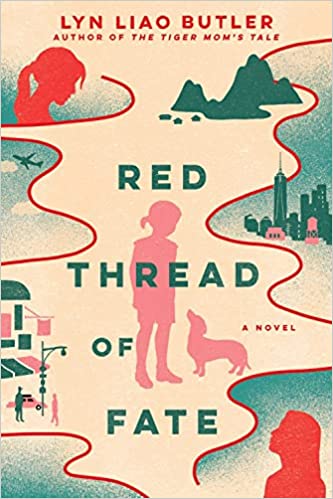
Red Thread of Fate by Lyn Liao Butler

Amid grief, betrayal and exposed secrets, a new widow learns to forge unexpected bonds.

Lyn Liao Butler (The Tiger Mom’s Tale) offers secrets, tragedy, hope and redemption in a novel centered on family and forgiveness. When Red Thread of Fate opens, Tam is on the phone with Tony, her husband. They are a bit short with each other; the marriage has been a little off, but they’re generally headed back on track and preparing to adopt a little boy from China, which both look forward to. Then there is cursing, a roaring sound–and just like that, Tam is a widow. The shocks come quickly, one after another: Tony was not in Manhattan, where he should have been, but in Flushing, Queens, and accompanied by a cousin Tam thought he’d been estranged from for years, killed by the same truck that struck Tony. Then Tam is surprised to be named guardian of the estranged cousin’s five-year-old daughter, even as her son-to-be still awaits adoption in China.

Tam, the California-born daughter of Taiwanese immigrants, and Tony, an immigrant from China, negotiated an uneasy peace with their families and their new lives in New York City, and with each other. Upon her own immigration, Tony’s cousin Mia lived with the couple for nearly two years, before unspecified events broke up the happy household. Now Tam is left to untangle the mysteries of Tony’s life, which seem to multiply the more she learns; Mia’s history is even more enigmatic, but Tam is committed to parenting her orphaned niece. She carries a guilty secret of her own, too.

By nature a shy and private woman, Tam is prompted by her new life–widowed, a single parent, grieving–to accept help, against her instincts. Slowly, she builds a family and a community: taking in her niece, moving toward adoption (which must be renegotiated now that she does not have a husband), deepening friendships and finding new ones, even beginning to mend relations with her mother. This process also involves navigating cultural nuances and divided loyalties. By the time Tony’s secrets come fully to light, Tam is a changed woman, with new strengths and allegiances, and better equipped to meet her many challenges.

Red Thread of Fate is a novel about what ties people to one another, and the nature of those bonds, the unintended consequences of choices and the possibility of a fresh start. With contemplative characters, surprising humor and a twisting plot, Butler’s thought-provoking story of nontraditional family models will appeal to readers interested in fate and identity.


This review originally ran in the December 6, 2021 issue of Shelf Awareness for the Book Trade. To subscribe, click here.


Rating: 6 wontons.

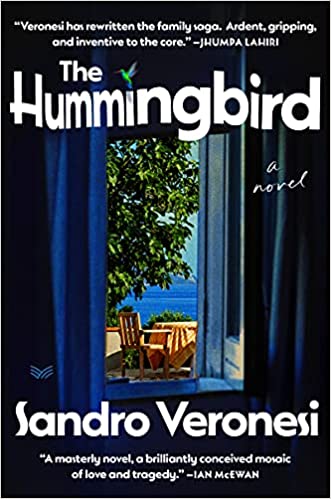
The Hummingbird by Sandro Veronesi, trans. by Elena Pala

This family saga set in Italy, with one life at its center, is moving, literary, philosophical and multi-layered.

The Hummingbird by Sandro Veronesi (Quiet Chaos; The Force of the Past), translated from the Italian by Elena Pala, is a shape-shifting, multigenerational novel of family, love, loss, joy, change and pain.

When readers meet Marco Carrera, the year is 1999 and he is a 40-year-old ophthalmologist in Rome, about to meet destiny in the form of a psychoanalyst breaking his confidentiality oath. From here, chapters jump back and forth in time from 1960 to 2030. Readers meet the great love of Marco’s life, visit his childhood, witness his marriage and divorce. When he is just a boy, Marco stops growing, remaining small and childlike well into his teenage years: his mother nicknames him “the hummingbird” for his stature, a moniker that will echo into his adulthood. He becomes a father and eventually a grandfather, so that four generations of his family flash kaleidoscopically across these pages; Marco is ever at the novel’s center, however, even as he is accused of holding still through life’s storms. “You can keep still as time flows around you, you can stop it flowing, sometimes you can turn back time, even–just like a hummingbird, you can fly backwards and retrieve lost time.” The novel mimics this movement with its nearly stop-action chronology.

Some chapters take a straight narrative form, others are transcribed conversations, letters, postcards or e-mails. Elena Pala’s translation from the Italian feels perfectly suited to this twisting, many-faceted form, as different voices take the lead. The pieced-together story moves between Rome and a Tuscan coastal town where the Carreras have a vacation home; its characters travel much farther (Spain, Germany, the United States), but Marco’s orbit is limited. Rather, as he keeps still, his family and friends revolve around him.

In these various forms, across time and space, Veronesi refers to numerous other literary voices (a Samuel Beckett epigraph sets the tone) and concepts from ophthalmology, psychotherapy, architecture and design, among other disparate fields. The Hummingbird is clearly an intellectual exercise, but can also be read more simply as a story about a single, deceptively ordinary life: Marco might appear unremarkable at first glance, but he has lived remarkable tragedies and triumphs, which will define him. He is affected by his experiences as if by ocean waves, his life a series of natural forces, or natural disaster. Packed with pathos, humor and tragedy, the novel’s finish is both a quiet goodbye and a crescendo, the only fitting end to such an unobtrusive but resounding life.


This review originally ran in the December 2, 2021 issue of Shelf Awareness for the Book Trade. To subscribe, click here.


Rating: 7 appointments.

1000 Perfect Weekends by National Geographic

1000 Perfect Weekends is a beautiful, photo-packed offering from National Geographic, sure to expand anyone’s bucket list. Destinations are grouped into 18 chapters, including beaches, mountains, cities, small towns, wildlife and nature themes, family-friendliness and off-grid options. Explore “kayaks like floating La-Z-Boy recliners” on the Delaware River, coffee tours in Panama and a bee farm in the Philippines, alongside references to UNESCO sites, architecture, dining, adventures and a delightful ode to libraries in the chapter on “Historical Explorations.” Entries are short, punchy and accompanied by mouthwatering photographs and frequent, inspiring top-10 lists (sporting events, theme parks, spas). Adrenaline-fueled, enabled and accessible, pet-friendly: there is a perfect weekend for everyone in this tantalizing book, an obvious choice for the frequent flier and the armchair traveler alike.


This review originally ran in the November 2, 2021 gift issue of Shelf Awareness for Readers. To subscribe, click here, and you’ll receive two issues per week of book reviews and other bookish fun.


Rating: 6 Instagram moments.

When Me and God Were Little by Mads Nygaard, trans. by Steve Schein

A rocky childhood on the Danish North Sea is rendered in weird but apt terms by an extraordinary young narrator.

Mads Nygaard’s When Me and God Were Little, translated by Steve Schein, is a stark portrayal of a hardscrabble childhood in a blue-collar, small town in Denmark, on the coast of the North Sea. Its narrator is seven-year-old Karl Gustav (who would rather be called Big Ox), and his distinctive point of view is filled with preposterous details that make perfect sense to him. “In our town you couldn’t drown barefoot,” he begins, and yet his big brother, Alexander, has managed to do just that, permanently upsetting Karl Gustav’s worldview.

His father is a drunk, but owns his own business building houses, and “Our house was so big that Mom still hadn’t gotten around to vacuuming all the rooms.” “Dad weighed 250 pounds and it was all muscle, except for the hair,” but then Dad goes to jail (something about the papers in his file drawers; the young narrator isn’t concerned with the details), so Karl Gustav and his mother move into a county-owned house in a new town. Unperturbed, the child carries on obsessing over soccer (he plays alone over four fields through the winter) and terrorizing his teachers. Years pass, very few friends come and go, and readers follow Karl Gustav’s experiments with porn, disastrous employment, grifting, a doomed love affair with another damaged young person and a developing relationship with his father. The loss of his brother will always loom large, for Alexander was a hero: “He just smiled, knowing everything.” But other losses accrue, as Karl Gustav learns more about the wide, perplexing world. By the book’s end, the narrator is a teenager, perhaps still ungainly, but wiser for the trials he’s seen.

This is an unusual novel, its narrator’s voice colorful, unpolished and unforgettable in Schein’s gruff translation. It is Karl Gustav’s singular perspective that makes When Me and God Were Little the memorable, bizarre, poignant adventure that it is. It’s absurd and often fantastic, as this narrator delivers an earnestly nonsensical account of events that readers know to be impossible. And yet it rings true, because what is childhood if not nonsensical? Karl Gustav is all bluster and pain, bluffing in the face of forces bigger than he is. His story is gritty, messy but real, and there are no happy endings on this harsh coastline. The novel is filled with cigarettes and swagger and masturbation literal and figurative, often unbeautiful but somehow still lovely in its authentic, unvarnished view of a difficult coming-of-age.


This review originally ran in the October 29, 2021 issue of Shelf Awareness for the Book Trade. To subscribe, click here.


Rating: 6 hedgehogs.

Dark Night by Paige Shelton

Piles of intrigue and secrets populate a remote town in Alaska, where an amateur sleuth hopes to reinvent herself, in book three of this cozy mystery series.

Dark Night, book three in Paige Shelton’s Alaska Wild series, continues the adventures of thriller writer Beth Rivers in the insular small town of Benedict, Alaska. Like Thin Ice and Cold Wind, this installment offers intrigue in a low-gore, cozy package.

Beth is known to the rest of the world under her pseudonym, Elizabeth Fairchild, but after an abduction and skin-of-the-teeth escape, she’s retreated to this remote hamlet to live quietly and anonymously: only the local police chief knows who she really is. With winter closing in and a few friends kept at arm’s distance, Beth tries to heal from the trauma and go on with her writing, hoping to hear that her abductor will eventually be caught. Instead, her mother turns up unexpectedly. Mill Rivers is a loose cannon, on the run from the law herself–and she may be Beth’s best hope at finding peace and finally feeling safe again. A local murder, of course, spices things up. Between Beth’s reluctant romantic interest in the comically named Tex Southern, the propensity of Benedict’s residents to keep their secrets, an ill-mannered, unwanted census taker and yet another fugitive in town, mother and daughter will have their hands full solving mysteries large and small.

Beth’s relationship with local law enforcement (and Benedict’s unconventional boundaries in this regard) allow her to act as an unofficial investigator. Mill is a force to be reckoned with in every way: another amateur detective, but with a violent streak, she still seeks her husband (Beth’s father), who has been missing for decades. The librarian is a special-ops dark horse, and the local dog sledder and tow truck driver may have a checkered history of his own. Beth is a by-choice tenant at a halfway house for female felons; the list of eccentrics lengthens from here. Benedict is the town where people go to keep their secrets, but Beth may have to open up if she’s going to learn the truth of her own past.

Shelton’s plot is twistier than a path through the dark Alaska woods. Her characters may be bumbling, but they are generally well-meaning, except when they are revealed as decidedly otherwise. Suspicions shift and suspense builds in this novel of discovery, growth, relationship building and investigatory hijinks. As a bonus, Dark Night ends with a lead-in to the next episode: Beth Rivers’s trajectory will surely extend and continue to complicate as she deepens her roots in the captivating town of Benedict.


This review originally ran in the October 25, 2021 issue of Shelf Awareness for the Book Trade. To subscribe, click here.


Rating: 6 cheese-foraging adventures.

Maximum Shelf author interview: Julia May Jonas

Following Monday’s review of Vladímír, here’s Julia May Jonas: Upending Assumptions.


photo: Adam Sternbergh

Julia May Jonas holds an MFA in playwriting from Columbia University and lives in Brooklyn with her family; she teaches theater at Skidmore College. Her first novel, Vladímír, will be published by Avid Reader on February 1, 2022. Set on an insular college campus during the #metoo era, Vladímír is a sensual, thought-provoking novel about power and desire, gender, aging, art and much more.

Where did this narrator come from? What makes for a powerful protagonist?

The idea for this narrator came to me around 2018, when there was a slew of allegations against prominent men coming to public attention–and I was thinking about the wives of these men. I realized how many assumptions I had about these wives (that they were saintly and long-suffering, among other things) and how reductive my unexamined opinion of them was. So I wanted to explore, and perhaps upend, those assumptions.

I started working with this character inside of a play at first, which I ended up putting in a drawer–but the character of The Wife stayed with me. When the pandemic struck and I had a large theatrical project postponed, I decided to try and write prose–something that I had attempted many times but had always put aside when I would be called to work on a play. After I wrote the first chapter in this narrator’s voice, I knew I had a novel.

My narrator is a person who is undergoing immense changes, both internally and externally, passively and actively, spiritually and physically. I think a powerful protagonist is always going to be on the verge–someone who is in the process of transforming, in either subtle or (in the case of my narrator) drastic ways–and who is confronting that process of transformation.

How did you channel the perspective of a 58-year-old woman anxious about her aging? That’s a perspective we don’t frequently see handled in fiction.

Many months before I began working on the novel I had been thinking about desire, in all of the varied senses of the word. I’m the mother of two young children, which brings the process of aging more prominently to your attention (you start doing the math–when my daughter is this age, I’ll be this age, etc.). I realized I had this subconscious belief that as I grew older I would desire less, that my vanity would be cured, that I would achieve some sort of docile peace with my place in the world. And immediately I realized how wrong and maddening that idea was–I didn’t think my desire would fade, I didn’t expect my vanity would be cured, I doubted that some kind of peace would rain down on me from above. You don’t have to be 58 to notice all the negative stereotypes that are ascribed to women as they age–from sexual invisibility to being thought of as doddering or incompetent. I’m younger than my protagonist, but I occasionally feel a sense of chagrin when I mention my current age in certain circles (though I wish I didn’t). So, I wanted to explore a character who feels a real sense of rage about those stereotypes and expectations, especially given everything she’s going through. Perhaps if we had caught her at a different, more peaceful time, my narrator might have been more accepting of the aging process. But given everything that is happening to her when the novel takes place, the cruelty of aging as a woman in this society weighs heavily on her mind and plays very much into her actions.

Do you think of your protagonist as an unreliable narrator?

Only insofar as she is very rooted in her perspective, and every perspective has blind spots. I don’t believe she is trying to confuse the reader, or that she is deliberately untruthful–more that she sees things the way she does because of her background, upbringing, generation and experiences, which is probably very different from how someone else with a different background, upbringing, generation and experience may see it. Which is not to say she is right–but she doesn’t intend to mislead.

How does your background in playwriting inform your work as a novelist?

I imagine I’m more inclined to think in terms of scenes and events when I’m writing and using them as a container for the other pleasures of fiction (memory, digression, perspective, internal reactions, emotional insights–all that wonderful character development you can’t write out in a play). Plays are often about the spaces between the lines (or the scenes)–the unsaid, the skips and the jumps–and I think that informs how I move story forward.

I think playwriting also informs how I think about the rhythm–both in the prose style (As Virginia Woolf says: “Style is a very simple matter: it is all rhythm”) and in the structure–of a book from start to finish. A good play is an exercise in sustained energy (getting the audience to sit happily in their seat for 90 minutes or more). As a novelist, I want to get deeply into a character, to be truthful, to be a good bedside companion, but I also want to maintain an energy that makes a reader want to turn the page. And, of course, being a playwright helps with dialogue, because I’ve spent quite a lot of time thinking about how people talk, the emotion behind it, what they say, and what they leave out.

What is your favorite part of this delightfully discomfiting narrator?

She was such a pleasure to spend time with, so it’s hard to choose. I loved writing her digressions–whether they be about her past, her role as a mother, her opinions about her students, her thoughts on meal preparation, or her insights about her colleagues. I appreciate that wrongly or rightly, amid all her insecurity and anger, she acts. She’s flawed–she can be harsh, myopic, selfish, judgmental, impulsive (among other things)–but she also has moments of real self-awareness. She’s able to examine her own mind and explore how she might be falling short. I enjoyed writing about a woman, no longer young, who is still exploring her relationship to ambition. And lastly, the fact that she is an English professor allowed me to make many references and allusions to other works of literature that are dear to me while still staying true to her voice.

What are you working on next?

I had a production of a five-play cycle I have written that was supposed to premiere in the fall of 2020. It has now been delayed to the spring of 2023, so development and planning for that production continues, which will be interesting given my now very long interruption from working in the theater. And I am very happily working on my second novel.


This interview originally ran on October 18, 2021 as a Shelf Awareness special issue. To subscribe, click here, and you’ll receive two issues per week of book reviews and other bookish fun.