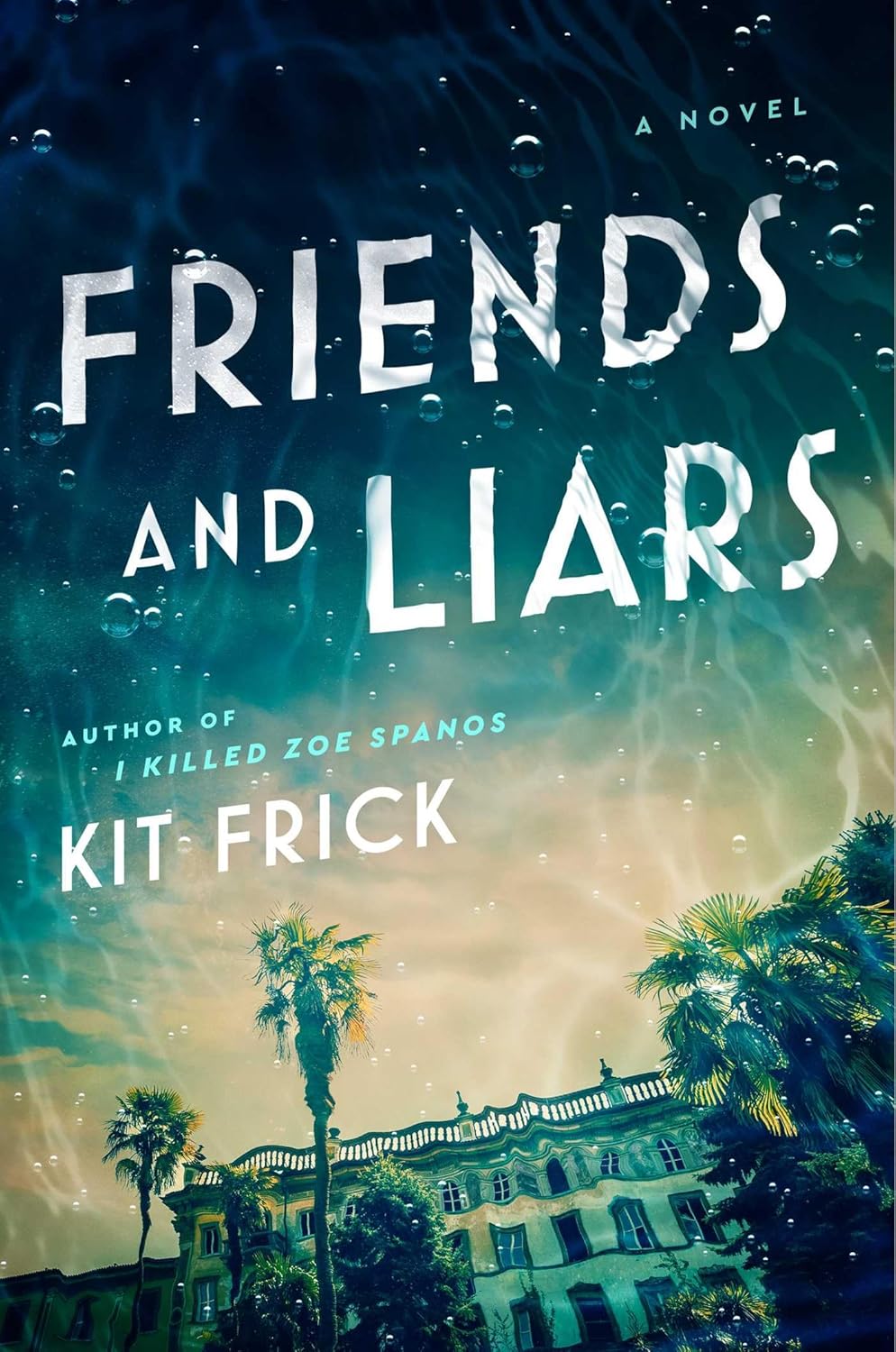
Friends and Liars by Kit Frick

Estranged college friends are drawn back to the palatial Italian estate where old secrets are buried and one of them died in this electric tale of friendship, deceit, and suspense.

Friends and Liars by Kit Frick (I Killed Zoe Spanos) sees a foursome of estranged friends reunite at a luxurious private Italian palazzo for an extravagant weeklong vacation to remember their fifth, heiress Clare Monroe. Clare was 21 when she drowned in Lake Como on New Year’s Eve. Now she would be 27.

Luca, Harper, Sirina, and David gather for an itinerary organized (and paid for) by Clare’s family, the famous and secretive Monroes of Hollywood. Luca is foundering in small-town Florida, recently dropped by his sugar daddy for a younger model. Harper has a nearly five-year-old son with her perfect husband, and she’s the only one of the group to have settled down directly after college. Sirina is hard at work building her acting career. And David–Clare’s boyfriend at the time of her death–is enjoying a successful career in directing, with another girlfriend whose father is well-connected. The friends still care for each other, but have been out of touch since that terrible New Year’s Eve. Clare’s tragic death is all bound up with secrets that each of them would rather not confront again–the lies and betrayals that contributed to her demise.

But, for various personal reasons, none is able to resist the invitation to return to the Palazzo Mella for another series of opulent events orchestrated by Clare’s icy Aunt Catherine. Immediately, their uneasiness is intensified by the appearance of taunting “gifts” and notes left for them in the guest quarters. The message is clear: someone knows what happened on that New Year’s Eve and has come for revenge. The old friends must band together and face their own worst behaviors to solve a compound mystery: Who knows what they’ve each done? Who is preying upon their guilt? What really happened that night, and who will pay for it now?

Friends and Liars achieves a delicious balance of emotional complication, layered deceptions, and consummate psychological drama. Lush with the accoutrements of affluence and charged with the machinations of aspiring creatives, the lavish setting near Bellagio distills to a locked-room mystery. The surviving Monroes, a few family friends, Clare’s four ride-or-die college buddies and their two plus-ones, as well as the household staff, make for colorful suspects in a plot with rising stakes. Heart-racing suspense, compelling characters and relationships, and great danger add up to a highly satisfying puzzle of a novel, which saves surprises for its final pages.


This review originally ran in the October 3, 2025 issue of Shelf Awareness for the Book Trade. To subscribe, click here.


Rating: 7 Paper Planes.

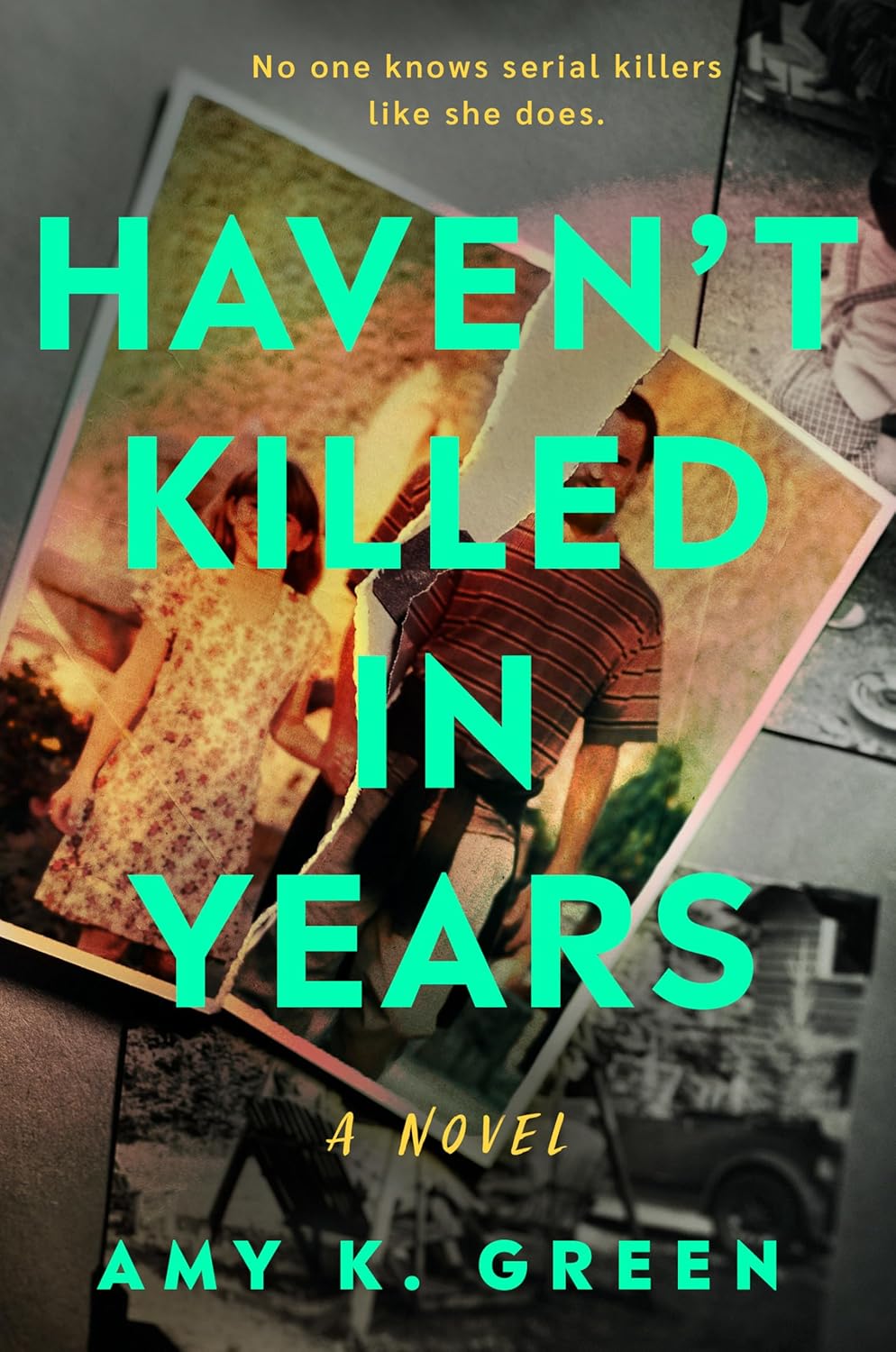
Haven’t Killed in Years by Amy K. Green

The long-hidden daughter of a serial killer is caught up in a new wave of crimes in this clever, absorbing, constantly surprising novel about finding one’s own way.

Amy K. Green (The Prized Girl) presents a twisting puzzle of a thriller with Haven’t Killed in Years, starring a young woman whose hidden past resurfaces in bizarre, gruesome, and often funny ways.

“On the day my mother was released from prison I stubbed my toe four times…. It was a statistical anomaly and, in hindsight, a warning that bad things were coming my way.” In this way, readers meet Gwen Tanner, who has a boring office job, an unremarkable one-bedroom apartment, and no serious relationships. From the outside she appears to be “your standard almost-too-basic law-abiding woman approaching thirty. On the inside? Eh, not so much.” Gwen was born Marin Haggerty. When she was nine, her father was convicted on eight counts of first-degree murder (eight being just the ones they could pin on him) and both parents went to prison (her mother for aiding and abetting). Marin became Gwen and disappeared from the public eye. She has spent the past two decades building a resolutely ordinary life, hoping to avoid the fate her father intended for her: to be just like him. Her father had “also had a good job and worn nice clothes; it was the easiest way to hide in plain sight.”

But now a severed arm turns up on her doorstep, with a note: “Hi, Marin.” Someone knows Gwen’s real story. Her safe, staid lifestyle is disrupted; and more than that, Gwen is offended that someone thinks they can get the better of her. She sets out to investigate, but the clues and the characters just tangle her up further. She meets a tour guide who specializes in her father’s crimes, a group of murder-obsessed young men, and a woman from her own childhood who does not recognize her. These relationships complicate her sterile existence; she mostly accidentally finds herself making friends–who are also suspects. “When you let people into your life, there are so many details. I knew that and I had ignored my own rules anyway.” Is it time for Gwen–Marin–to come into her own as her father’s protégé? Or is she going to surprise herself and set out on her own path?

Just when this unforgettable protagonist thinks she knows who is behind which crimes, new information throws her (and readers) off track. Many scenes spin into comedies of errors, playing on constant subversions of expectations. In Gwen/Marin’s dryly cynical voice, these madcap events hit both tender and comic notes. Despite instances of poignant suffering and a noteworthy serial killer, Haven’t Killed in Years is weirdly, deeply fun.


This review originally ran in the September 29, 2025 issue of Shelf Awareness for the Book Trade. To subscribe, click here.


Rating: 8 blue drinks.

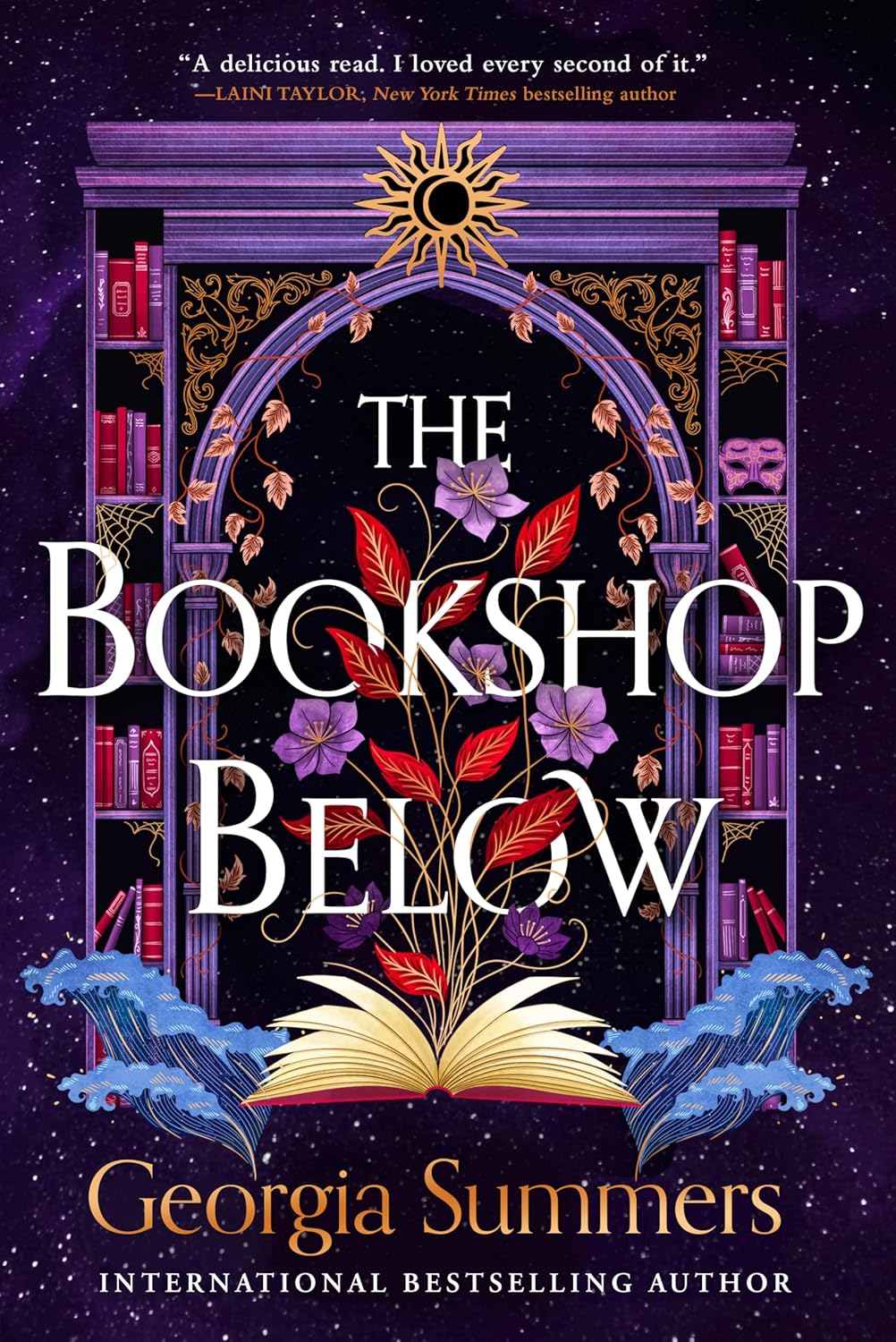
The Bookshop Below by Georgia Summers

This dark fantasy about the magic of books and the power of love is both heartrending and inspiring.

Georgia Summers (The City of Stardust) renders an enchanting world of self-sabotage, romance, deadly ink magic, and dearly beloved bookstores in her sophomore novel, The Bookshop Below. London was once full of shops where books and the magic they held could be exchanged for the priceless: self-extracted teeth, a lock of hair, a firstborn child. In contemporary times, the force that imbues books and bookshops with their power, through the particular magical workings of booksellers, is fading. Now Cassandra, a disgraced former bookseller, is drawn back into the life that exiled her, just in time to die along with the world she reveres–or, perhaps, to save it.

She’s been living as Cass Holt for years, getting by (and keeping her hands on the books she loves) in the most ignoble fashion: Cass is a book thief. She is also one of the most talented readers–wielders of the magic within enchanted books; now she sells that gift without scruples to whomever can pay. But Cass once had another name: “Cassandra Fairfax, named after a woman whose words melted into thin air no matter how truthful they were, with the surname of a character in disguise from a novel by a long-dead author. Layers upon layers of insubstantiality.”

Summers’s enchanting fantasy opens with Cassandra in great danger, called to return, reluctantly, to the bookshop where she was raised, trained, and then banished by her mentor, Chiron. She was once his protégé, destined to become an owner one day. Now, just as suddenly, she finds herself reinstated, struggling to rehabilitate Chiron’s decayed shop “and all its finicky, unpredictable moods.” She is in over her head, wrestling with her considerable guilt over past crimes against bookshops, against the underground river that powers the bookshop systems in ways Cassandra has yet to understand, and against Chiron himself. She is in danger from enemies who know about her deeds as Cass Holt, and whatever is threatening the bookshops. Cassandra must manage a bookseller she feels lucky to hire, a wonderfully capable woman named Byron; a handsome, magnetic rival named Lowell Sharpe; and the duty she feels to solve the mysteries of what happened to Chiron and why the magic bookshops are disappearing. Cassandra is not sure she wants to be here at all, let alone on the hook for saving everything she knows from destruction. But she feels she owes a debt. She finds she cares about people she never expected to. And she uncovers an enormous secret about her own origins that upends the stakes entirely.

The Bookshop Below offers a delicious combination of shadowy, sinister magic, wistful romance, propulsive action, and the utter reverence one holds for the right book. Summers excels at transporting her readers to a dreamy otherworld where anything is possible.


This review originally ran in the September 26, 2025 issue of Shelf Awareness for the Book Trade. To subscribe, click here.


Rating: 8 mugs that say “I slay comma splices.”

The White Hot by Quiara Alegría Hudes

Delightful, unpredictable, and often harrowing, this mother-daughter tale of growing and learning will keep any reader riveted.

With The White Hot, Quiara Alegría Hudes (My Broken Language; Pulitzer Prize-winner for the play Water by the Spoonful) offers an expansive, surprising coming-of-age story about both a mother and a daughter. The novel opens on Noelle’s 18th birthday, when she receives an envelope. “It wasn’t the handwriting that dinged memory’s bell so much as the pen’s feral indentations.” Since she was 10, when her mother disappeared, Noelle has lived with her father, stepmother, and two half-brothers in New Jersey. Readers have just met the teenager when the voice shifts. “Dear Noelle… I am not going to send this,” the letter begins. What at first masquerades as an interlude quickly takes over the book. Breathlessly, alongside Noelle, readers take in April Soto’s story.

“That awful day began with your classroom art show.” At age 26, April is weary. Her 10-year-old daughter is precocious, an artistic and academic genius, and disturbingly observant of her mother’s shortcomings. Their household comprises four generations of Soto women: Abuela Omara (who emigrated from Puerto Rico), Mamá Suset, April, and Noelle, “not a speck of dust–or man–in sight.” April is undone by her child’s gimlet eye, her own unrealized potential, her lack of options, and daily drudgery, and in the wake of a scene at the dinner table, she simply walks away from their Philadelphia home.

What follows is an epic and astonishing journey of self-discovery. April muses on the influence of Hermann Hesse, Charles Mingus, sex as revelation, violences witnessed and perpetrated; she undertakes a wilderness trek (profoundly unprepared in sandals and sequins), and experiences painful, blissful realizations via blisters and hunger. She tells her child she knows her leaving was a betrayal, but hopes she has also offered choice. By book’s end, the briefest return to Noelle’s own 20s presents a full-circle perspective of the parallels in these two lives, and the significant differences.

April’s narrative is astounding and vibrant. In her best and worst moments, she describes being cracked open, experiencing epiphanies: “She felt an un-looming, a separation into threads, some of which rose and drifted through nearby windows whose unseen inhabitants shimmered inside her, too.” These, as well as the mundane, yield stunning, lightning-bolt prose: “Within this deluge, the frog and the oak, the tuba and congregants were not discrete phenomena but native to each other, and I to them. That I of all creatures should be tapped for a glimpse? A bewilderment.” The White Hot is wide-ranging, thought-provoking, tender, and raw–unforgettable.


This review originally ran in the September 23, 2025 issue of Shelf Awareness for the Book Trade. To subscribe, click here.


Rating: 7 olives.

Maximum Shelf author interview: James Workman and Amanda Leland

Following Friday’s review of Sea Change, here’s James Workman and Amanda Leland: Messy, Immersive, and a Little Salty.


James Workman and Amanda Leland are the authors of Sea Change: Unlikely Allies and a Success Story of Oceanic Proportions (Torrey House Press, September 30, 2025), the compelling story of hard-driving fishermen and determined conservationists working together to turn the tide on overfishing. In this vivid, accessible book, they argue for a system that could serve as a blueprint for solving other environmental crises.

James Workman

James Workman is a storyteller, entrepreneur, and author of resilience strategies, including the award-winning book
Heart of Dryness. He founded AquaShares, a firm pioneering water credit trading, and has been published in the New York Times, the Los Angeles Times, the New Republic, Orion, Trout, and Washington Monthly. Workman studied at Yale, Oxford, and Stanford, and taught at Wesleyan and Whitman. But his real education came from wildfire recovery, reintroducing wolves, blowing up dams, smuggling to dissidents, getting married, and raising two daughters.

Amanda Leland
(photo: Ben Tiu)

Amanda Leland fell in love with the sea at five years old, when her grandfather taught her to fish. She is executive director of Environmental Defense Fund and previously led EDF’s Oceans program, a global team focused on reversing overfishing while supporting those whose livelihoods rely on fish. An avid kayaker and scuba diver, Leland holds a master’s degree in marine biology and lives with her family in Washington, D.C.

What was the origin of this book?

It’s the classic, counterintuitive “man bites dog” story, right? Against the ubiquitous headlines warning our oceans were running out of fish and “deadliest catch,” we knew there was a counter-narrative of quiet recovery, innovation, and collaboration. Fishing was growing safer, more ecologically resilient, and more prosperous, yet almost no one knew it. That silence was our opportunity: to share this well-kept secret of offshore transformation with fellow landlubbers.

The scale and complexity of this story ruled out a blog series or even a long magazine feature. Moreover, it cried out for a deeply human protagonist, someone who faced storms, institutional obstacles and his own doubts. That search led us to Buddy Guindon, a Galveston captain whose life traced the arc of modern fishing: from unregulated abundance to dangerous depletion, from the most dangerous profession to calm seas, from fierce resistance to steady reform. Through Buddy’s eyes we could share how a remarkable inner shift, combined with real agency, altered the fate of a fishery and sent ripples outward to the region, the nation, and the world.

How did the two of you come to this project?

For two decades, on opposite coasts, we had been watching this story take shape and sensed it needed to be told in full. On the Atlantic, Amanda, a trained marine biologist turned environmental advocate, was building coalitions, educating policymakers, and supporting new solutions. On the Pacific, Jamie, fascinated with hunter-gatherer societies, was interviewing fishermen from Mozambique, India and Belize to Lake Michigan, the Gulf, and his native California coast.

Both of us kept hearing the same universal, fatalistic trap: “If I don’t catch the last fish, someone else will.” We realized our distinct but converging perspectives could make the book richer and more compelling: Amanda could open insights into ocean ecology and the political tensions behind reform; Jamie could personalize the stakes for readers with a firsthand view of life and death on the docks, bars and decks offshore.

What are your roles as coauthors?

It’s an iterative process of talking, writing, rewriting… then rewriting again. Amanda brought science knowledge, policy experience, and relationships with key players like Buddy. Jamie had flexibility to explore narrative structure, conduct dockside or barstool interviews, research scientific documents, and distill complex systems into human stories that would resonate beyond the waterfront.

Drafts got passed back and forth until even red ink Track Changes could no longer tell who had revised what. When we disagreed, our exchanges mirrored the trust-building central to the book, the delicate negotiations between conservationists and fishermen, scientists and policymakers, who must work past suspicion to get results.

What does the research process look like for a project of this scope?

Messy, immersive, and a little salty. We logged hundreds of hours in interviews listening to fishermen, scientists, seafood dealers, policymakers, and critics. We tracked EDF’s decades-long efforts to advance sustainable fisheries. We sifted through historical archives, economic data, and stock assessments, where otherwise dry material might yield some fresh angles or surprising discoveries. For example, among our title’s “unlikely allies,” Thomas Jefferson and Alexander Hamilton set aside a lifetime of political rivalry to unite, perhaps for the only time, behind an economic vision for America’s fisheries based on “sharesmen.”

The work took us from early-morning commercial harvests to fluorescent-lit stakeholder workshops, from policy conferences in Washington to cutting bait on a skiff in southern Belize. We found patterns: secure rights, clear rules, and shared stewardship could take root in wildly different contexts, from tropics to arctic, and we tried to bring those contrasts to life on the page.

The structure you use, a journey from personal to global, feels very natural. How did you come to it?

It grew organically, with form following function. Other approaches–framed on a single species, gear innovation, era, or location–lacked the human flow and rising stakes we wanted. By chance, the formal evolution of catch shares paralleled Buddy’s personal journey from alienation to reconciliation, from antagonism to collaboration, from fighting the old system to advocating for the new.

His growing concern radiated outward: from family, Galveston bar and first boat, to the local wharf, fish house, and rival yacht club, then to his coastline, country, Gulf Stream, and fishing communities worldwide. That expansion mirrored the spread of an unlikely idea that began with skepticism yet matured into stewardship. Helping readers identify with Buddy made the story tensions real; scaling up made the stakes consequential.

That arc also let us show a universal truth: fishery management is really people management. And since few of us (not just Buddy) like to be managed by distant strangers, the challenge is to overcome the legacy of distrust and rediscover how to manage from within the community, because the people closest to the problem are often also closest to the solution.

What do you hope results from this book’s publication?

There is an undeniable despair and cynicism about how, or if, we can sustain a healthy, clean, life-giving planet for all of us. It’s too easy, especially while shopping in well stocked supermarkets, to point fingers at “commerce” or “industry” and blame remote “others” for ecological decline, or to cut off access to resources so essential to the health, nutrition, and security of billions.

Sea Change wants to replace simplistic blame and fatalistic shrugs with a proven, science-based case for practical hope. We want readers to see that “wicked problems” aren’t always intractable, that solutions can emerge from unexpected alliances, and that those most directly tied to the fate of a resource can become its fiercest protectors when given the right incentives.

We also hope the book sparks a wide conversation about how the same principles that saved fisheries could help us restore mature forests, groundwater, soil fertility, and even slow climate change. If a Gulf Coast “pirate” can transform into a guardian of the sea, imagine what the rest of us can do?


This interview originally ran on September 11, 2025 as a Shelf Awareness special issue. To subscribe, click here, and you’ll receive two issues per week of book reviews and other bookish fun.

Maximum Shelf: Sea Change: Unlikely Allies and a Success Story of Oceanic Proportions by James Workman and Amanda Leland

Maximum Shelf is the weekly Shelf Awareness feature focusing on an upcoming title we love and believe will be a great handselling opportunity for booksellers everywhere. The features are written by our editors and reviewers and the publisher has helped support the issue.

This review was published by Shelf Awareness on September 11, 2025.


Journalist and entrepreneur James Workman and Amanda Leland, executive director of Environmental Defense Fund, present a rare story of ecological recovery with Sea Change: Unlikely Allies and a Success Story of Oceanic Proportions. In the concept known as “catch shares,” fishers are allotted proportional shares of a limited quantity of fish to be harvested; the demonstrated outcome improves the health of fisheries as well as the lives and livelihoods of commercial fisherfolk. Through the lens of engaging characters and locally based stories, Workman and Leland suggest this strategy may be applicable to other challenges around the world: “This revolutionary social contract with the sea has not only slowed, stopped, and in some cases reversed the devastating effects of overfishing along our coasts, but the centrality of pragmatism and collaboration could help solve some of the thorniest and most urgent natural resource challenges we confront worldwide–including the climate crisis.”

In an easy-to-read, storytelling style, Workman and Leland describe how catch shares have been proposed and enacted, often amid great conflict. The authors also detail how this strategy has led to safer and more profitable fishing while helping recover fish populations. Even former opponents have become involved in supporting and expanding such programs. Sea Change wisely focuses on delightful, colorful characters, opening with Keith “Buddy” Guindon, who grew up fishing the Great Lakes and then made a career in Galveston, Tex. Big, brash, a self-described pirate with a “reputation as a grim reaper of the aquatic world,” he’s an ideal protagonist. “A barrel of a man with amused eyes, a gruff voice and a Santa Claus beard, Buddy is a Galveston legend.” Since arriving there in the late 1970s, “he has consistently outmuscled and outfoxed every other fisherman in the western Gulf.” An early, outspoken detractor of catch shares, Buddy rapidly morphed into one of its champions, proselytizing across the United States and the world.

Fisheries in the United States and around the world have been, in recent years, suffering various stages of overuse. As the problem grows exponentially–fewer fish, longer hours, greater rush in more unsafe conditions, lower prices–so does the solution. When fishermen are assured of their fair share of the total catch, they can be more methodical, efficient, and selective about their work. They can avoid dangerous weather conditions, work shorter shifts with less rush, save on fuel, reduce bycatch and waste, bring in higher-quality product and command higher prices, even tailor their harvest to market. In Alaska’s pollock fishery, for example, “Each shareholder could set a unique and more unhurried pace to catch his quota. Vessels dropped trawl nets into the sea less often and more selectively, with fewer ‘tows’ per day. Waste from having to throw back both regulatory discards (fish that are marketable but illegal to keep) and accidental bycatch (species with no market value) plummeted. Fishermen began to insist on and provide credible data, sharing information on how much they caught where and at what time just as soon as it was available.”

Moreover, as the fish population, health, and habitat recover, fishers and communities become safer and more secure. Fishermen like Buddy, generally fiercely independent individualists, learn to work together not only in allocating shares but in enforcing rules and developing technologies to assist in transparency and improved fishing practices. Fishers learn to work with scientists and environmentalists–not traditional partners–and everyone with a stake in the fishery’s health learns to play a more responsible role.

Often following Buddy’s own journey, Sea Change is structured as a movement from the microcosm to the macro, in sections titled “Personal,” “Local,” “Regional,” “National,” and finally “Global,” where readers see Buddy travel to Tokyo’s Tsukiji fish market, and share his support for catch shares with Japan’s commercial harvesters. The narrative progresses from highly specific successes to globally applicable potentials. Coercive, top-down policies set by government or environmental agencies had long rankled the likes of Buddy, who reflexively pushed back; but catch shares depend on cooperative buy-in from the fishers themselves and incentivize them to protect overfished populations of their own volition.

Catch shares is in some ways an innovation, but also based on traditional relationships across many small coastal societies throughout history: the concept that everyone takes a share according to ability and need, and that everyone contributes to responsible stewardship. It is a version of the concept of the commons, in which a public resource is both used and maintained by the public. The “tragedy of the commons,” in turn, is the fear that if one party does not use up their share–or more than their share–another will. This mindset encourages irresponsible use: if someone else is going to overharvest, it might as well be me, some might think. But with appropriate monitoring–another piece of the system whose development wound up actively involving fishermen–Buddy and the others were able to relax, build trust, and fish smarter.

From local fisheries to global trends, Sea Change samples best and worst practices to highlight the great promise of catch shares to help both fish populations and the people who rely upon them for livelihoods and nutrition. This accessible study emphasizes galvanizing opportunities to make positive change in myriad other areas of policy and sorely needed optimism in the world of environmental thinking and planning.


Rating: 6 hooks.

Come back Monday for my interview with Workman & Leland.

author interview: Rabih Alameddine

Following my review of The True True Story of Raja the Gullible (and His Mother), here’s Rabih Alameddine: In an Insane World.


Rabih Alameddine is the author of Comforting Myths: Concerning the Political in Art; novels including The Angel of History, The Wrong End of the Telescope, and An Unnecessary Woman; and the story collection The Perv. He divides his time between his bedroom and his living room. His latest novel, The True True Story of Raja the Gullible (and His Mother), considers the life of a high school philosophy teacher in Beirut and his fractious relationship with his overbearing mother.

You are a painter as well as a writer–what is the relationship between the two?

Rabih Alameddine
(image: Oliver Wasow)

I’m not very good at painting, which is fine, because part of the reason I enjoy it is I don’t ask of myself a lot. It’s as if I no longer enjoy writing; I put so much pressure on myself.

I started taking piano lessons at around 58, and I can’t say I am the worst piano player ever, but it’s close. I love that there’s no requirement. Removing the pressure, painting allows me to play.

It takes two to three years for something to grab a hold of me for a writing project. It might be interesting for a month or for an hour, but to sustain interest for the three to four years that it takes to write, is a big thing. Whereas with painting–ooh! That’s a lovely tree! It’s expressing a feeling at that time. It’s not necessarily instantaneous, but it’s not a long-term obsession. Writing is all about obsession, what will not leave my head.

It’s the pressure of making something good that troubles me. I watched a documentary on Meredith Monk the other day, and I was fascinated. She does a lot that is just experimental. It might work, it might not, people might see it, they might not. And I started thinking, when was the last time I did something like that? I don’t know.

Painting and bad piano playing allow me to relax. To allow play back into my work. I make it sound like my work is serious, which it isn’t, but my intention is serious. And I think that’s the problem. One of the worst things an artist can do is take themselves seriously. You have to take it a little seriously, but there has to be some part of me that always goes, ha ha! You think that’s good! Otherwise it becomes too earnest. There has to be a part of me that wants to change the world and a part of me that says, fuck it.

Does your wonderful humor come naturally?

Humor is my defense mechanism. How can one live in this world and be conscious of all the traumas that we cause and still be sane if one didn’t have a sense of humor? How do we deal with the Trump years? One of my ideas was to write this book where this woman gets distracted by two men, one who’s all sex and the other who’s all patriotism. I’m trying to see, would that work as distraction? Would having a lot of sex counter the guilt of being part of a genocide? Or cutting Medicaid on millions of people? How do we deal with these things? What is the distraction? For me, it’s humor. In an insane world, being insane is quite normal.

Raja the Gullible starts and ends in 2023 but jumps timelines in the middle.

I did not want to deal with Gaza, so it had to stop in 2023. There’s no way anybody living in Lebanon or, for me, in the United States, could not deal with it if it goes past 2023. Hakawati ended in 2003, right before the Iraq invasion. You can’t not deal with it, and dealing with it would take over the book.

I wanted this parabolic look at life, and the center of it is the kidnapping, if you want to call it that. I was interested in how we looked at trauma, and how trauma has become identity. We have prescribed ways of dealing with trauma; I sometimes think that it might be better if we go back to not dealing with trauma. We forget that two people might have the same experience and have completely different outlooks. We tend to think this person is this way because such and such happened to them. This is not just wrong, it’s insane! Not even Freud ever suggested that this would explain everything. It has become a cliché: my father did not pay any attention to me and that’s why I fall for men who are such and such. That’s bullshit! I went to see this movie, one of the Marvel superhero movies, and it had a talking racoon. And the movie actually went back to how the raccoon was tortured as a baby raccoon, and I thought, wait, am I supposed to become attached to a raccoon?! This book is sort of the anti-raccoon. Yes, yes, Raja could go back and deal with [his trauma], but dealing with this is not his primary concern. He’s functioning. That’s what I was going for… and then I started writing, and the mother took over.

I did want to write about love. Whether you want to call what was between the two boys Stockholm syndrome–I hate these terms, because it assumes the syndrome is the same for everybody. It isn’t. I wanted to show different kinds of love. It turns out that the weirdest was Raja and his mother. They’re completely devoted to each other, and they want to kill each other. There’s one line: Raja says, “I want to kill my mother. I don’t want to hurt her!” If you live through a civil war and you’re kidnapped, how much would you want the world to be orderly and controlled? He’s a control queen. His mother is, what is the opposite of a control queen? A chaos queen. That was the primary tension.

What do you hope your writing offers to the world?

I am both still shocked that anybody reads me–What?! You don’t have anything better to do with your time?–and shocked that I am not read by absolutely every single person on earth. It is in this tension between ‘you must listen to me’ and ‘why would you listen to me’ that I think art resides. This tension of narcissist megalomania and, I don’t want to call it self-loathing, but feelings of utter incompetence. I hope that tension makes something good.

A book doesn’t exist without a reader, but we’re all different. If you write in every detail, down to the knot in your shoelaces, that leaves little to the reader’s imagination. I tend to write just enough description to be believable, but readers fill in the rest. Because we’re all so different, each reader brings something different. I used to think if we could just empathize–but a book can never do that, in my mind. If this romantic notion were true, that a book can change a life… there are so many amazing books, and we still commit genocide. It is my perspective that what you get out of it is yours–it’s not from the book. Maybe what books do is light a fire under you. What you already had.


This interview originally ran in the September 5, 2025 issue of Shelf Awareness for Readers. To subscribe, click here, and you’ll receive two issues per week of book reviews and other bookish news.

Her One Regret by Donna Freitas

A young mother confesses regret in this satisfying, dynamic mystery that is also a rousing conversation starter about an experience of motherhood still treated as taboo.

Donna Freitas’s Her One Regret explores what one of her characters calls “the last taboo of motherhood.” At once a rocket-paced crime tale of suspense and a thoughtful examination of cultural dictates about motherhood, this novel of women’s lives and relationships excels as both entertainment and a call to difficult but necessary conversations.

In a brief introductory section, readers meet Lucy in the parking lot of a supermarket in Narragansett Beach. On a gorgeous, early fall afternoon, she loads groceries alongside her nine-month-old daughter, Emma. Then begins Part I: “The First 48 Hours.” Lucy has vanished; Emma is found, alone, crying, but perfectly fine, in the parking lot. The small Rhode Island community is horrified, united in a search for the missing mother. But then it is revealed that Lucy had recently confided in her best friend, Michelle, that she regretted having Emma. She had fantasized about staging her own disappearance. The community and the nation erupt in harsh judgment. Is Lucy a kidnapping victim, or on the run? Is she a monster? What do we make of a woman who regrets motherhood?

The rest of Freitas’s narrative jumps between the lives of four local women. Lucy is seen mostly in memory, or as a symbol. Michelle is devastated by her best friend’s disappearance, in love with her own role as mother, but galvanized to defend her friend. Lucy had tried to tell Michelle what she was suffering, but “Michelle did the thing everybody does with mothers: dismiss their feelings as not real. Michelle gaslit Lucy, kept gaslighting her. She hadn’t meant to.” Diana, a retired detective, is drawn to Lucy’s case and its similarities and differences from other vanished women. And then there is Julia, whose baby is the same age as Emma: “Julia keeps waiting for the moment she’ll feel bonded to her son, that miracle other women talk about when connection and unbelievable love will flood her person and overcome the dread, the sadness, the resistance. But it never happens.” Julia, an artist who can no longer bring herself to create, sees herself in Lucy, shares the fantasy of escape, and now watches as the world on social media condemns her parallel self. Her desperation feels like an emergency no one around her will acknowledge.

Freitas (Consent; The Nine Lives of Rose Napolitano) relates these lives and quiet–or in Lucy’s case, suddenly very public–struggles with nuance and compassion. Her One Regret is purposefully thought-provoking and a riveting mystery–a masterpiece of duality, not soon forgotten.


This review originally ran in the September 5, 2025 issue of Shelf Awareness for the Book Trade. To subscribe, click here.


Rating: 8 sketches.

Witchcraft by Sole Otero, trans. by Andrea Rosenberg

This graphic novel follows an unusual household over several centuries in Buenos Aires, Argentina, through various characters whose lives are impacted, if not ruined, by three enigmatic sisters.

Argentinean comics artist Sole Otero (Mothballs) offers a tale that meanders through historical and speculative fiction with Witchcraft, a graphic novel that spans centuries in Buenos Aires. In Otero’s evolving but recognizable visual style, the opening scene emerges spookily from the fog, as a ship arrives in Nuestra Señora del Buen Ayre in 1768. (One of a series of footnotes explains that this was the original name of Buenos Aires, given by the conqueror Pedro de Mendoza.) Readers see three women disembark with their goat, taking with them the three-year-old son of another passenger, to the latter’s wails of despair. From these early, atmospheric pages, a sense of unease is established and maintained.

The following sections of the narrative undertake large jumps in time. In more or less present-day Buenos Aires, a man tells his friend a scarcely credible story of nude women dancing around entranced nude men, with a goat and a chalk circle and “this super creepy music.” In an earlier, historical setting, a Mapuche woman goes to work at a grand estate for three sisters who are both feared and respected in their local village, to a horrifying end. In modern times, a reclusive woman exchanges e-mails with a similarly lonely man, the veterinarian who came on a house call to look at her sick cat; he tells strange, disturbing tales about his family and the elderly goat they want him to save. A nunnery sends an allegedly evil orphan girl to live with three sisters who normally adopt only boys. From these and other narrative threads, populated by spirits, witch hunts, pleas and losses, readers begin to piece together the fractured story of the María sisters and their unusual, perhaps supernatural, habits.

Otero’s style of illustration varies somewhat between sections, but is often distorted or off-kilter, and highly detailed; in full color, her characters’ facial expressions and contortions advance the unnerving atmosphere of the larger story. Page spreads may include carefully spaced panels or no panels at all; text style likewise shifts, with infrequent footnotes to help readers along. This results in a sinister, mysterious, and deeply compelling reading experience. Translated by Andrea Rosenberg (who also translated Otero’s Mothballs), Witchcraft blends horror, dark magic and dark humor, rage and righteousness. This disjointed, sometimes discomfiting, entertaining story addresses colonial power and indigenous resistance alongside ritual, sex, and sacrifice in an eerie, phantasmagoric package not soon forgotten.


This review originally ran in the August 18, 2025 issue of Shelf Awareness for the Book Trade. To subscribe, click here.


Rating: 6 trees climbed.

Sister Creatures by Laura Venita Green

From rural Louisiana to locations around the globe, the same problems and secrets follow a quartet of girls-become-women in this arresting, unnerving, and wise debut novel.

With Sister Creatures, Laura Venita Green invites her reader to navigate a shape-shifting world, beginning in rural Louisiana and ranging overseas and into starscapes and imagination. Rotating among a small group of girls and women, this imaginative narrative muddies the line between the novel’s real world and a fictional one within it. The result is dreamy, often disturbing, and hauntingly unforgettable.

In the opening scene, Tess uses her isolated job as a live-in nanny to hide away from the life she feels has already cratered, at age 20, with her heavy drinking. A neighboring teenager, Gail, makes a disquieting appearance: she is clearly not well, perhaps in danger, but rejects Tess’s half-hearted offer to help. The older girl “hat[es] how relieved she felt not to have to deal with anything.” Gail’s plight becomes a legend to the other characters until she makes a reappearance as an adult at the novel’s end. Meanwhile, Tess grows up and has a daughter of her own, lives around the world as part of a military family, but struggles to escape the problems she hid from in Pinecreek, La. Her former best friend, Lainey, leaves Louisiana as well, resulting in permanent banishment at the hands of a troubled younger sister. Another young woman, Olivia, wrestles with the local options, characterized as “Jesus and booze,” and with a sexuality not likely to be tolerated there. And then there is a recurring character whose entire reality seems in question. While they all choose to leave Pinecreek, the struggles that originate in their shared hometown follow these characters to Munich, Baltimore, New York City, and beyond.

In their parallel comings-of-age, and across generations, Green’s characters thread their paths between love and spite, affection and abuse. Their loose connections and jumps in chronology reward close attention, contributing to a slightly off-balance reader experience that is very much a part of the novel’s atmosphere. Sister Creatures blurs the concepts of reality and of right and wrong. Are the woods–of Louisiana, Maryland, or Bavaria–sanctuary or threat? Who is real and who is made up? Green’s narrative offers a strong literary bent, as characters interact with “The Yellow Wallpaper,” old fairy tales, misogyny, motherhood, and their own creative pursuits. They hurt each other, but they help each other, too; this is a novel ruled by nuance and surreality as well as the all-too-real.

Sister Creatures is often unsettling, but pairs moments of great sweetness alongside discomfiting ones. This novel remains thought-provoking long after its final pages.


This review originally ran in the August 12, 2025 issue of Shelf Awareness for the Book Trade. To subscribe, click here.


Rating: 7 cut-out musical notes.