Motherthing by Ainslie Hogarth

Mothers and motherhood haunt this alarming, dark, weirdly funny novel of family ties and the power of just the right recipe to heal all wounds.

Ainslie Hogarth’s Motherthing is a grim, disturbing novel of family drama and mental illness, yet a bizarrely funny glimpse into one woman’s mind. In its opening pages, Abby, who narrates, and Ralph have recently moved in with Ralph’s mother, Laura, hoping to nurse her through her depression. But instead, Laura takes her life, Abby purloins Laura’s coveted opal ring and Ralph falls into despair. “Because even though he’d been strong when we’d moved in, strong enough to move in–equipped with resources he’d downloaded from a website called the Borderline Parent, and a swear-on-your-life promise from me that I could handle this temporary uprooting–being near her stirred rotten dangerous things inside him.”

Abby, very much in the throes of dealing with her own mother’s shortcomings and abuse, has identified Ralph as part mother, part god, the “Perfect Good” in her life and “the most genuinely good person in the entire world.” “Ralph would make eggs too, not specially because I was there, but because a person has eggs for breakfast. And soon, I remember thinking, clutching fistfuls of duvet to steady my overwhelming joy, I would be a person too.” In flashbacks to her childhood, she recalls a beloved couch she calls Couchy Motherthing, and constantly circles and ponders the ideal mother figure; she relies on a cookbook “for the mothers of good, happy, wholesome families, with lots of mouths to feed. And that’s the kind of mother I am too, even if I’m not yet”–because Abby desperately wants to have a child of her own, to embody the kind of mother that neither she nor Ralph got to have. She works at a nursing home where she considers her favorite resident her “baby” and, simultaneously, the perfect mother she never had. This fantasy is disrupted by the appearance of the woman’s real daughter, which might just push Abby over the edge. Because paired with her nurturing impulse, Abby secretly harbors intense rage, “murder so much more manageable right now than creating a whole entire family.” Her love verges on violence.

Hogarth (The Boy Meets Girl Massacre (Annotated)) rocks readers via Abby’s turmoil, her swings from devotion to fury, self-loathing to self-aggrandizement. Motherthing keeps readers as unstable as its narrator, struggling to manage the traumas and the waves of emotion. Abby copes with a focus on a few objects that she imbues with special significance: Laura’s ring (symbol of rejection, as Laura judged her daughter-in-law “more of a Kay Jewelers type than a vintage-family-heirloom type”), Abby’s cookbook and the recipes she hopes will save Ralph (an obsessed-over jellied salmon and an unusual iteration of Chicken à la King). The result of these roiling thoughts and images is a darkly comic, kaleidoscopic novel of unhealthy fixations, love, murder, the gifts and wounds that family can inflict and one woman’s fight to save herself.


This review originally ran in the August 4, 2022 issue of Shelf Awareness for the Book Trade. To subscribe, click here.


Rating: 6 little dogs next door.

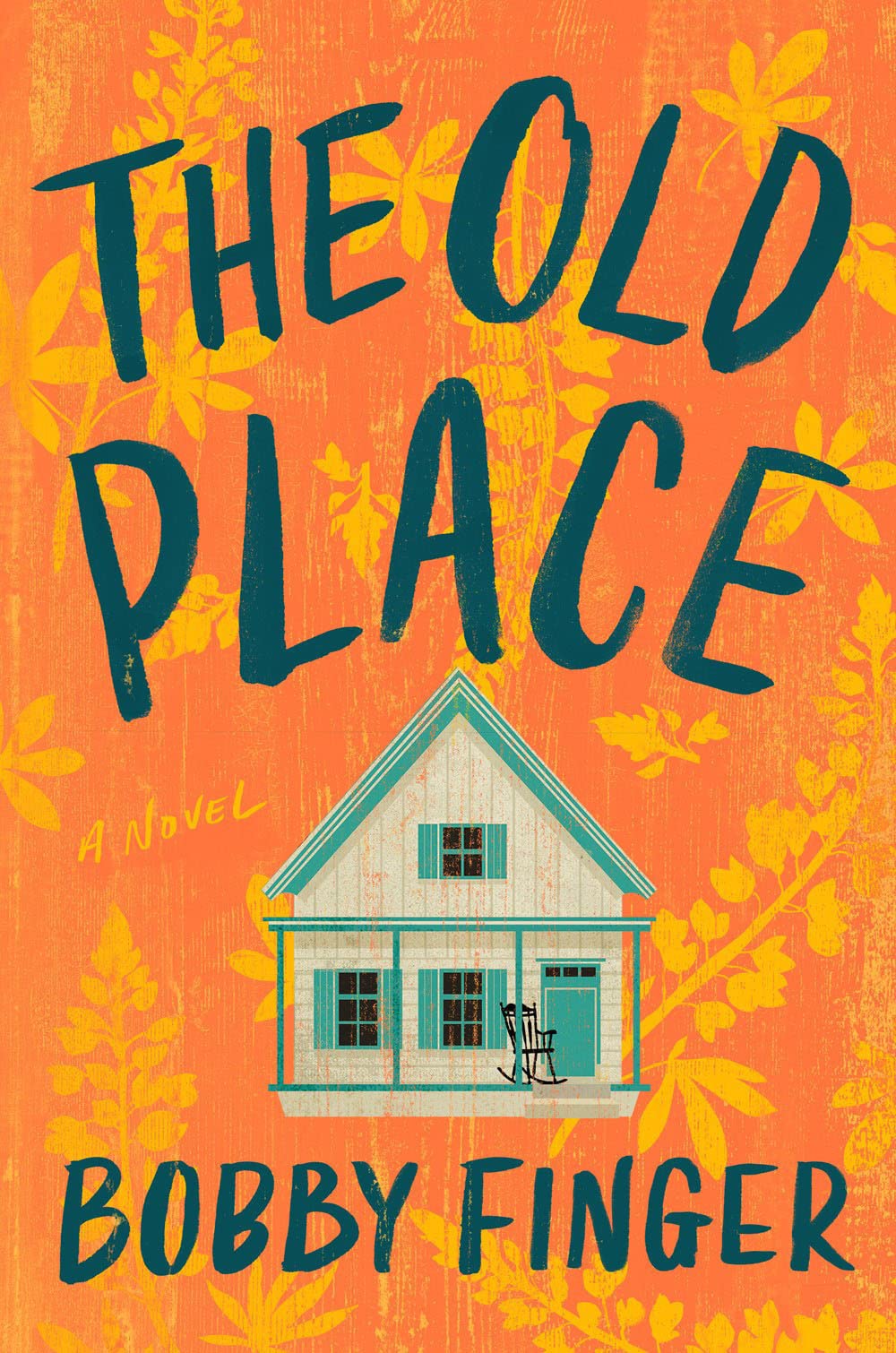
The Old Place by Bobby Finger

An irritable retiree in a small Texas town stars in this sweet, poignant story about community, secrets and all the ways to love.

Bobby Finger’s unforgettable debut novel, The Old Place, hits the rare and satisfying double note of harrowing and delightful. Roughly 90 minutes outside of San Antonio, Tex., a recently retired schoolteacher navigates various relationships and juggles old secrets in the kind of small community where everyone thinks they know everything about everybody else. Mary Alice Roth is a compelling, although decidedly prickly, protagonist; secondary characters only sweeten this heart-wrenching, warm-and-fuzzy small-town drama.

In the opening pages, Mary Alice is furious at being forced out of her job, and at the young woman–new to town and newly wed into an old family–hired to replace her. She tentatively renews her friendship with neighbor Ellie, hinting at one of the novel’s first slow reveals: the two women (one widowed, one divorced) had sons the same age who were also best friends, until a double tragedy. As readers puzzle over the deaths of Mary Alice’s husband and son, her (also long-estranged) sister, Katherine, shows up unannounced and unwelcome, all the way from Atlanta. Mary Alice continues her practice of bullying and haranguing the local ladies in preparation for the annual church picnic (“All the money spent there, whether on raffles or games or rides or food, went to Him whether you believed or not”). Katherine prods her to take responsibility for an old wrong, and together they reopen old wounds. Ellie privately nurses a new romance, only adding to the ever-twisting mysteries and secrets. Mary Alice’s replacement, the newcomer, offers a refreshing outside perspective as a native New Yorker who is as surprised as anyone at how much she loves her new home.

The Old Place muses over the stereotypes of a town like Billington, Tex., where privacy is scarce and prejudices persist, but where forgiveness and even redemption may just be possible. Mary Alice is a difficult woman to like, but the people who surround her–and the life she’s lived–keep her from being pure villain. By the novel’s second half, everyone is more nuanced than they originally seemed, and the fictional Billington feels as multifaceted and significant as any real hometown. Finger is expert at the careful disclosure of one secret after another, and his characters capture hearts and imaginations. His novel beautifully profiles the iconic small town, both holding it accountable and celebrating its quiet humanity. “Even a town in decline never really stops growing. People may leave, but their stories remain, reverberating in the bones of all those left behind.” At its heart, The Old Place is about the way people relate to one another: family, neighbors, new and old friends. The messiness, pain and grace of these relationships are candidly portrayed in a story that will inspire laughter and tears, making this debut a memorable achievement indeed.


This review originally ran in the July 26, 2022 issue of Shelf Awareness for the Book Trade. To subscribe, click here.


Rating: 8 tubs of potato salad.

Lungfish by Meghan Gilliss

A woman wrestles practical and existential questions of family and survival on an abandoned Maine island in this contemplative debut novel.

“Agnes–the first Agnes, who was my father’s mother, not long dead, on whose island I find myself now, and whom I named my daughter after (if only to try to solve a mystery)–had always protected her love for her only child.” Meghan Gilliss’s contemplative first novel Lungfish examines such mysteries of family in an austere setting.

Her protagonist takes refuge from unnamed problems on an island off the coast of Maine, in her late grandmother’s cabin, scraping a meager living from the rocks and the sea. In her fractured first-person narration, Tuck slowly releases information. She has brought along her young daughter, Agnes, named for the beloved grandmother. She is also accompanied by her husband, Paul, who is unwell. She has the field guides and religious texts her grandmother left behind, and little else. Paul’s trouble and the issues they have fled on the mainland only gradually become clear, to Tuck as well as to readers.

Some chapters offer consecutive pages of narrative storytelling; some are very brief and take a more gestural or lyric approach, revealing Tuck’s fragile grasp on her own story and history. The chronology shifts from present to past. Tuck’s father, who is legally heir to the cabin where she squats with her family, is missing, and has always lived an unconventional life. “He looks off the rails because we cannot see his rails.” Paul offers a new and different challenge. Tuck fearfully watches the calendar, knowing that when Maine’s fall turns to winter, her family will no longer be safe on this island; just as fearfully, she watches for the executor of her grandmother’s will. She scrambles the rocky beaches foraging for bladderwrack, rosehips, mussels and crabs, her toddler daughter in tow and knowing only this life. Tuck hides the key to the dory from her troubled husband between trips to the mainland for the most basic of provisions. It is a precarious system; mother and daughter flirt with starvation. A lone boat at sea allows Tuck to dream and hope.

Lungfish is a novel steeped in the harshness and beauty of the natural world, in which islands may be both real and metaphorical, where a woman may be accompanied by child and husband but also alone in navigating grief and responsibility. Tuck considers her relationships to her own father, mother, brother, her troubled husband and the growing Agnes, who “comes from different stock.” Although this novel’s setting is particular, its themes are universal. Atmospheric, haunted, but struck through with beauty and love, Lungfish is one to remember.


This review originally ran in the July 8, 2022 issue of Shelf Awareness for the Book Trade. To subscribe, click here.


Rating: 7 packets.

The Marsh Queen by Virginia Hartman

Mystery, romance, conspiracy, family drama, natural history and art combine in this excursion into a decades-old suspicious death in the swamplands of northern Florida.

Loni was 12 years old when her beloved father headed into the northern Florida marsh in his johnboat and did not return. At 36, she is working her dream job as a natural history artist at the Smithsonian, ignoring her past and her remaining family as hard as she can, until her younger brother calls to insist she come home to help care for their mother. The Marsh Queen, Virginia Hartman’s fast-paced, compelling first novel, sees the prodigal daughter return to the swamps, the family she left behind, the mystery of her father’s death and the possibility of a fresh start.

“Daddy wasn’t just a visitor to the swamp, he was a part of the place.” Loni’s father, Boyd, was a Fish & Game officer, a fisherman, a devoted husband and father and a most unlikely suicide, although that was the rumored–and covered up–cause of his death. Loni was his usual companion in the swamps, uninterested in fishing but a passionate and talented illustrator of the birds they watched together. As an adult, she’s kept that passion, but grown distant from her brother and especially from her always-prickly mother, Ruth, now suffering from dementia. A serious gardener and herbalist, Ruth struggles with painful secrets long kept from her daughter. Loni’s leave of absence from the Smithsonian comes at an especially stressful time at work, and returning home is always painful; nothing about this trip feels right. But Loni canoes the swamps, discovers family secrets, investigates her father’s death, finds herself involved in fresh intrigues and dangers–and meets a handsome stranger. The Smithsonian, and leaving Florida behind, have always been central to Loni’s life plan, but as she sinks back into the quirks of family and home, she may just find a new way.

Hartman’s descriptive writing and clear passion for her subject are on best display when Loni immerses herself in the natural environment, in her art and in her memories of Boyd. In her contemporary relationships, Loni can be frustratingly obtuse and lacking in self-awareness. As the enigma around Boyd’s suspicious death gets more complex, the plotting can feel a little unwieldy. But the subversion of Loni’s expectations is frequently refreshing; a few secondary characters offer intriguing perspectives, and the novel’s framing details of Florida marshland, ornithology, museum work and fine art are expertly and beautifully drawn. The Marsh Queen is unwavering in its lush, finely detailed, appreciative portrayal of a distinctive natural setting, and ends on a redemptive, even inspirational note.


This review originally ran in the July 1, 2022 issue of Shelf Awareness for the Book Trade. To subscribe, click here.


Rating: 5 herons.

Maximum Shelf author interview: Claire North

Following Friday’s review of Ithaca, here’s Claire North: ‘Celebrate All Books as Much as Possible.’


Claire North is a pseudonym for Catherine Webb, who wrote her first novel at 14 years old. She also writes under the name Kate Griffin. North’s earlier novels include The First Fifteen Lives of Harry August; Touch; and The Pursuit of William Abbey. She lives in London. On September 6, 2022, Redhook will publish North’s novel Ithaca, which fills in the long expanse between the events of The Iliad and The Odyssey, while Odysseus is away and his queen, Penelope, is in charge.

How do you reimagine something so familiar?

photo credit: Siobhan Watts

It depends what you mean by reimagining–because Penelope’s story is not really told. In The Odyssey, there’s a lot of weeping and being sent to her room, and that’s kind of it. I’ve gone out of my way to stay not very close to the mainline Homeric narrative. I’m cherry-picking a world. In that sense it’s just like historical fiction: you cherry-pick a time and a place, and then you have a whale of a time with it. That’s my ambition, to have picked a “historical” bit that I find geopolitically fascinating, and to tell the story in that context, rather than to attempt to retell Homer.

Beyond The Iliad and The Odyssey, what kind of research did this project involve? Did you find other retellings helpful?

I read The Oresteia as well, because Orestes features a lot. I have not deliberately sought out other retellings. I think that potentially risks disrespect to your fellow writers, which sounds weird, but I think it’s quite easy to feed on other writers, whether [one means to] or not. When you enjoy something, it’s going to influence you. It is respectful to know what your fellow writers are doing, and make sure you’re not shitting on that thing, but at the same time your job is to tell something that is original and true to you.

I did read The Penelopiad, years and years ago, because… Margaret Atwood. And since writing the trilogy I have read Elektra by Jennifer Saint, which I quite enjoyed. I was relieved, though, to find out that we’re doing very different things. I was like, oh thank goodness. We’re all different.

What inspired Hera’s voice?

When I pitched this idea to my editor, I was like, I want to write a geopolitical drama, and she was like, are you aware this is a fantasy imprint? Bringing in the goddesses as narrators was a conscious attempt to engage with the mythology instead of just politics.

Throughout human history, in almost every culture, there will be a worshipped woman image, a mother earth, a fertility goddess, etc. And there is some evidence that Mycenean Greece did still worship the concept of this powerful woman. There’s an argument that the Homeric epics and that era of storytelling sees a shift in our narratives from powerful women to powerful men. After Homer, The Oresteia, you don’t really think of Greek myths, legends and indeed stories as being about women. You have your three archetypal females: Helen, the whore; Penelope, the chaste one who stayed behind; and Clytemnestra, the murderess. Those are the three female archetypes you’re left with. We stop telling stories about Ariadne and Medea; we shift power from the women to the men. I found that very interesting, the idea of taking away women’s power through storytelling. Hera was the right voice to narrate this story from that point of view. Someone you can imagine tens of thousands of years ago as this embodied figure of powerful womanhood, of motherhood, of earth, fertility, being twisted and turned over centuries of storytelling into a vindictive wife who’s just locked up at home.

You call yourself a fantasy writer.

Obviously I think genre is a lie. It’s a very useful lie, a useful algorithm which allows you to walk into a bookshop and I say, I enjoyed this so I might enjoy that. But on the other hand, if it allows you to say Margaret Atwood or David Mitchell or Mary Shelley doesn’t write science fiction, then I’ve got news for you. I’ve seen Douglas Adams shelved as literature! Guys! This is a lie! It’s a lie that is fueled to a certain extent by the language of academic criticism and of what genre is. That is finally starting to change, but it’s a long, slow road. So the reason I call myself a fantasy writer and a sci-fi writer is, there is pride to be had in that genre. It would be easy for me to say I write literature, but if you’ve written words in a book, then it’s literature. Challenging the exclusivity of that is important. I think we should celebrate all books as much as possible, and part of the way I feel I can contribute to that is by very proudly standing up and saying, hey, genre. It rocks.

How was Ithaca different?

Ithaca is my 23rd novel. This is going to sound dreadful, but I feel pretty confident in what I’m doing at this point (touch wood, spin five times). But also, I don’t want to just be repeating the same thing each time. I like being challenged and learning something new. I’m not a classicist. I have massive imposter syndrome. I reread The Iliad, The Odyssey and The Oresteia, and that’s kind of it. There’s this huge world of classical scholarship that I deliberately avoided. I’m speaking to a story about womanhood and power and politics for a modern audience in a modern way. But I am mortally terrified of having got it wrong and having offended the many excellent people who have dedicated their lives to the scholarship. Wading into something that has been so studied and so beloved by so many people for millennia, you don’t want to screw it up; but also you don’t want to be bound by the idea of something sacred. The sacred should always be questioned and challenged, because we’re an evolving culture and we have a job to look at how and why we keep telling these stories and what they reinforce.

Another challenge was integrating the geopolitical and the mythological. We have a queen who can’t say yes and she can’t say no to any marriage proposal. This is a familiar geopolitical situation for queens. But to weave in mythology, you have to ask the question: How do I ground this quite solid political story… and also there’s a minotaur?


This interview originally ran on June 22, 2022 as a Shelf Awareness special issue. To subscribe, click here, and you’ll receive two issues per week of book reviews and other bookish fun.

Maximum Shelf: Ithaca by Claire North

Maximum Shelf is the weekly Shelf Awareness feature focusing on an upcoming title we love and believe will be a great handselling opportunity for booksellers everywhere. The features are written by our editors and reviewers and the publisher has helped support the issue.

This review was published by Shelf Awareness on June 22, 2022.


Claire North (The First Fifteen Lives of Harry August; The Pursuit of William Abbey) offers a new take on a familiar tale with Ithaca, a richly imagined, thought-provoking novel of Penelope’s trials during the Trojan War and its aftermath. The forgotten or misrepresented women and goddesses of ancient Greece bring joy, sorrow, humor and wit.

A lengthy space of time falls between The Iliad‘s story of the Trojan War’s conclusion and The Odyssey‘s story of Odysseus’s protracted homecoming. On the island of Ithaca while its king, Odysseus, is absent, Penelope, his queen, rules uncertainly, beset by unruly suitors wishing to become king, and the hopes and ambitions of her son, Telemachus, an infant when his father went to war and a young adult by the time he returns. Into this gap comes Ithaca, which follows the challenges faced by Penelope and the other women–queens, wives, mothers, goddesses, slaves–who surround her and fight their own often overlooked battles.

The Homeric myths are well-known and familiar territories for many readers and indeed many writers, who have reimagined and retold these stories in abundance. But despite the richness of such retellings, Penelope remains an enigma, and North’s contribution to the genre is unique and welcome. While the Ithacan queen is in some respects its protagonist, Ithaca is narrated by the goddess Hera, wife (and sister) to Zeus, and frequently represented as bitter, jealous and vengeful. Hera’s interest in Penelope is self-serving: as the goddess of women, wives, queens and motherhood, she resents the ways in which Penelope is disregarded by her male counselors, her absent husband, her suitors and her son. While Hera’s stepdaughter, Athena, is chiefly concerned with the hero Odysseus, Hera is entirely here for the women. In fact, it is not Penelope whose fate concerns her first: “No one ever said the gods did not have favourites, and it is Clytemnestra I love best, my queen above all, the one who would be free.”

Clytemnestra’s crime of husband-murder is reframed by the recounted sins of Agamemnon, and when the murderess-queen hides on Ithaca, readers are reminded that she and Penelope are cousins. Next arrive Orestes and Elektra, who seek to avenge their father’s death; Orestes is near-mute and disengaged, while his sister is a magnetic, powerful force, barely remembering that she must at least seem to defer to the will of a man: “aware that she has been perhaps a little too forceful… [she] adds, ‘My brother will issue his commands shortly.’ ” Clever Penelope is more practiced at the trick of subtly sliding her wise points into conversations while seeming to demur. Telemachus is a bit silly, a boy hoping to be a man. Odysseus is entirely off-screen, “groan[ing] in the nymph’s pearly bed.” Both Artemis and Athena make appearances, annoying their stepmother with their own agendas.

Penelope is of course harassed by the unwelcome suitors who place the queen in a sort of stalemate, as she can neither accept their offers of marriage (both because Odysseus may still be living, and because to accept one would be to provoke the others quite possibly to war) nor send them away (because of the culturally sacred host’s obligation). In this version, Penelope is additionally beset by pirates attacking her island nation–pirates dressed as Illyrians but wielding the short swords of Greeks. There seems to be intrigue afoot, offering a whodunit mystery subplot for Penelope and her subtle female counselors (in contrast to her blustering male ones) to investigate. Women warriors lurk in the shadows of this Ithaca. And North does not forget the maids, who are also slaves, and also in some cases Trojans: “Death to all the Greeks,” one of them repeatedly mutters under her breath. The maids are frequently bedmates of the suitors; but to what end, and with what choice in the matter?

Thus is Ithaca the story not only of Penelope, Hera and other queens and goddesses, but of less famed women as well, down to the teenaged village huntress who opens these pages. Hera is quick to remind her audience that the stories that get passed down are written by poets, whose narratives may be purchased, and who rarely notice the contributions of women: “That girl is not remembered now”; “No poet will ever do her homage.” “Freedom only increased the efficacy of her work, though there is not a single poet in all of Greece who would dare breathe of such an outcome.” Hera’s voice is humorous, whimsical, imperious, frequently scornful. But she is also surprisingly easily cowed by the other Olympians, knowing that Zeus holds power over her. “I was a queen of women once, before my husband bound me with chains and made me a queen of wives.” While this story is on its face about Penelope, Clytemnestra, Elektra and the rest, Hera is an engrossing and masterful character in her narration.

North’s prose is clever, funny and as wise as Penelope herself, with an eye for pleasing images as well as deeper meanings. In her capable hands, this ancient landscape is both fresh and timely. Ithaca is the first in a trilogy, and having come to know this three-dimensional Penelope, North’s readers will eagerly await the next two installments.


Rating: 8 dreams.

Come back Monday for my interview with North.

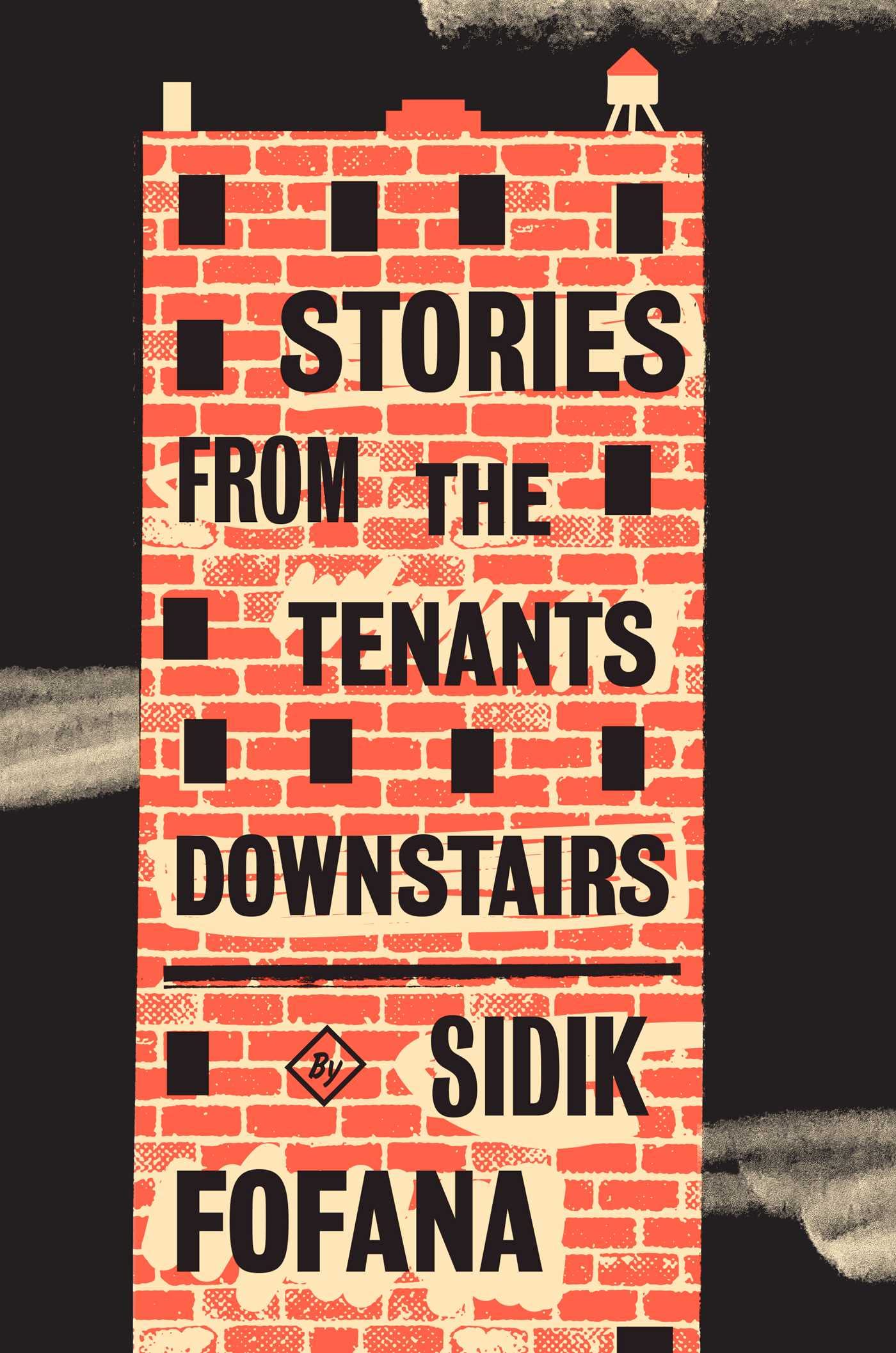
Stories from the Tenants Downstairs by Sidik Fofana

This linked collection portrays the human condition by way of the struggle to make rent in a Harlem high-rise, with a cast of memorable characters.

Stories from the Tenants Downstairs, Sidik Fofana’s electric debut, consists of eight stories featuring eight residents of a low-income apartment building in Harlem where rents are rising and eviction notices are being posted by the score. These men and women struggle at the edge of making ends meet and cope by various means, including hard work, stiff upper lips, bluffing, bluster and despair.

Mimi runs a hair salon out of apartment 14D, spends beyond her means and dreams of a house in the suburbs with her son’s father, Swan. Swan (6B) lives eight floors below, with his mother, marveling at the country’s first Black president and wishing he could find his own way out of the hustle. Swan’s mother, Ms. Dallas (6B), wrestles with her day job as a paraprofessional at the local public school, bemoaning the students’ behavior, scorning the young do-gooder teachers and awaiting the school’s looming closure. Two students from Ms. Dallas’s school each feature in stories of their own. Kandese (3A) suffers losses upon losses, while her boyfriend, perennial follower Najee (24M), dreams of stardom but finds tragedy. Mimi’s erstwhile assistant, Dary (12H), flirts with a darker line of work. Neisha (21J), a former aspiring Olympic gymnast, has quit college and returned home to the building, where she has to face a trauma that still haunts her. Old Mr. Murray (2E) just wants to play sidewalk chess in peace, but the old ladies of the Banneker Terrace Committee of Concern want to make him their cause.

These protagonists are all interconnected, whether they like it or not, by more than their address. Many have been lifelong residents of Banneker Terrace, and while some have fantasized about moving on, others wish only to stay in the home they know. Their stories take various points of view (first, second and third), mostly running to heavy vernacular and each brimming with voice, from Mimi’s bravado to Najee’s fumbled but earnest reporting: the seats on the 2 train are “faded… the scrapes on them wuz also scrapes on my heart.” Fofana shows an ear for pacing and for evocative, frequently musical language. He expertly handles the structure of each story and of the collection as a whole, whose easy readability advances serious themes, including the challenges of poverty in its many iterations, gentrification, humor and hope and anguish.

This quickly shifting narrative introduces vibrant, appealing characters in brief but three-dimensional sketches, and paints a larger picture of existential efforts and persistence. Fofana’s is a striking voice, and his protagonists will linger in readers’ imaginations.


This review originally ran in the June 9, 2022 issue of Shelf Awareness for the Book Trade. To subscribe, click here.


Rating: 7 skins.

The Wild Hunt by Emma Seckel

On a remote Scottish island, villagers battle the sluagh–crows said to host the souls of the dead–and the aftermath of World War II, and one young woman reckons with the ghosts of her own past.

“On the first of October they arrived.” Leigh Welles has just returned home to the island of her birth for her father’s funeral, and the crows have returned as they do each October, but she finds nearly everything else changed since the war. So begins Emma Seckel’s first novel, The Wild Hunt, an atmospheric story of place, family, home and belonging.

This small, isolated Scottish island lost many of its young men, “nearly an entire generation off to fight for a country they’d barely thought of until now,” in World War II. Leigh’s brother had gone, and though he survived, he did not come home, and all they’ve done since is argue. Leaving has in fact been a family trait, beginning with their mother’s mysterious departure when Leigh was a girl. Later, Leigh had committed the sin (in island eyes) of moving to the mainland, where she’d been miserable: “the telephone call summoning her home had been a black sort of blessing.” Now she’s returned to the Welles home, “a run-down sheep farm with no sheep.” Her mother gone, her brother gone, her father dead, the island haunted by its absent young men and by the sluagh–those crows who group in threes and beat upon windows and strike at eyes and kill.

Leigh drops with surprising ease into the old ways, reciting the Gaelic and joining the rituals meant to protect the islanders from the sluagh, which are said to carry the souls of the dead. She is disturbed, however, to see the crows’ increased audacity–attacking villagers in the street–as well as the villagers’ subdued reactions and the persistent signs of the war, which has been over for years. Meanwhile, Iain MacTavish, widower and RAF veteran, struggles to function at all, some days leaving his bed only when forced by his mother-in-law. Leigh’s younger childhood friend Hugo McClare kills a crow, and then disappears, on this island too small to hide a man. Leigh and Iain unexpectedly connect over a shared purpose, although it may be of the saddest sort.

The Wild Hunt is part ghost story, part elegy to war and traditional lifestyles, dreamlike even in its horrors. Seckel weaves historical fiction with mystery and fantastic elements and threads of romance in this tale of love, grief, attachment to place and resistance to change. Her island setting is both otherworldly and firmly rooted, and her prose style is lushly evocative. This imaginative novel is memorable and wild indeed.


This review originally ran in the May 27, 2022 issue of Shelf Awareness for the Book Trade. To subscribe, click here.


Rating: 8 goats.

Thrust by Lidia Yuknavitch

A remarkable girl moves through past and future timelines to connect disparate, marginalized characters in Lidia Yuknavitch’s imaginative otherworld.


Lidia Yuknavitch’s Thrust is a complex novel of great imagination, outside of time but very much concerned with it. At its center is Laisvė, also known as the Water Girl. In the late 21st century, she and her father hide away from what is left of society in a submerged New York City where only the tip of Lady Liberty’s torch is visible at low tide. Laisvė has a fascination with curious objects and an unusual set of skills. “She knew not to be afraid to go to water, because time slips and moves forward and backward, just as objects and stories do.” Laisvė is a carrier, who can move not only objects but people, through time as well as space. In Yuknavitch’s lovely, weird prose, Laisvė will eventually connect Frédéric, the French sculptor of the Statue of Liberty, and his captivating, beloved cousin Aurora; a violent, abused boy and the social worker–the daughter of a war criminal–who hopes to save him; and a tight-knit crew of three men and one woman who help build the Statue, and who represent “an ocean of laborers.”

Yuknavitch (Verge; The Chronology of Water) moves between worlds as her chapters follow different characters in turn. Some are labeled ethnographies, and form an ode to unrecognized workers, immigrants and misfits. “The story of workers is buried under the weight of every monument to progress or power. Our labor never reaches the height of the sacred. No one ever tells the story of how beautiful we were. How the body of us moved. How we lifted entire epochs.” Characters come from all over the world, speak a range of languages and concern themselves variously with history, the arts, social welfare and the body. Their stories are intertwined and connected by Laisvė’s travels. Laisvė “wants the words to rearrange, to locate differently, the way language itself could if you loosened it from human hubris and let it flow freely again as a sign system, as the land and water did, as species of plants and animals did, everything in existence suddenly again in flux, everything again possible.”

Yuknavitch’s writing style is recognizable to readers familiar with her lyricism, coined words, love of the downtrodden, and water as an emphatic theme. Thrust is many things: a speculative history of the United States, a recognition of forgotten classes, a fluid song about the power of love, a celebration of the power of language and storytelling. It is an intricate novel in its interconnections, plotlines twisting away and back together again, but readers’ attention will be well rewarded by profound, thought-provoking and deeply beautiful observations about humanity in an ever-changing world.


This review originally ran in the May 10, 2022 issue of Shelf Awareness for the Book Trade. To subscribe, click here.


Rating: 8 pennies.

Elsewhere by Alexis Schaitkin

Set in a village where mothers vanish, this atmospheric novel encourages contemplation of differences and commonalities, and thinking bigger than the boundaries into which one is born.

Alexis Schaitkin creates a chilling, mesmeric world in Elsewhere, a novel that questions motherhood, community ties and individual agency. The village at its heart and the options of a larger world will stick with readers long after the final page.

“We lived high above the rest of the world. Our town sat in the narrow aperture between mountains, the mountains forested, the forests impenetrable.” Vera has grown up in this setting, in a town with unknown origins (“Our streets and park and river carried names in a language we did not speak”) but strict rules. No one goes out after dark, when the ubiquitous clouds descend. Girls form friendships in threesomes, not pairs. And every girl lives in anticipation of becoming a mother, which carries the greatest risk and reward the village knows, because some mothers will stay and some mothers disappear. “One minute she was here, as solid and real as any of us, the next her body faded, faded, until she vanished into the clouds. Gone.”

Vera’s mother went when she was a small child, and she spends her youth wondering what kind of mother she might possibly be without a mother of her own to guide her, if it’s possible that she can be a mother at all. Her obsession echoes that of all the townspeople, who thrill at guessing which mother will be next, and what makes the difference between one who stays and one who goes. “Impossible to predict, what motherhood would bring out of a woman, what it would show her about herself, the end to which it would carry her.” Vera has always known this as blessing as much as curse. “Our affliction opened us to pain, yes, but also to heights of beauty, and of love, that people elsewhere would never know, because they did not know what it was to love in the shadow of our affliction, our love deepened and made wild by the threat that hovered over it. Our affliction was terrible, but it was not as terrible as living without it.” But when motherhood indeed comes for Vera, and she finds herself fully in the unimaginable thrall of her child, the town’s affliction haunts her in a new way.

The village is profoundly insular: “What could the stories and histories of lives elsewhere offer us?” But it turns out that “elsewhere” is a place as well. Elsewhere is unsettling, thought-provoking and lushly detailed, a memorable inquiry about attachments to place and to family, and what happens when a person has to choose between her family and herself.


This review originally ran in the April 29, 2022 issue of Shelf Awareness for the Book Trade. To subscribe, click here.


Rating: 9 crystal pendants.