Factory Girls by Michelle Gallen

Amid the Troubles in Northern Ireland, a scrappy young woman comes of age in this inspiring, humorous and moving novel.

With Factory Girls, Michelle Gallen (Big Girl, Small Town) delivers a heartrending, funny, blistering and beautiful novel of foreboding and hope. In the summer of 1994, Maeve Murray and her two best friends are on the cusp of escaping their small Northern Irish town for bigger, better and safer things. Maeve is a child of the Troubles: “neighbours shooting neighbours was just the way things had always been for her.” She comes from a poor Catholic family and has been taught to expect little, but she has hopes that her exam results will move her beyond the background that, in her world, defines her. “Nobody as poor as Maeve could afford to have notions about herself. Which was why she treasured them.” Maeve and her friends Caroline and Aoife find summer jobs at a shirt factory in town, hoping to save a bit before going away to college. Exam results loom all summer, in this novel organized by a countdown beginning “74 days until results.”

Caroline has a loving family, and Aoife is downright privileged compared to Maeve’s rather stark upbringing, not only in poverty but with the death of her sister (unexplained for much of the novel) shadowing all her family’s interactions. “Maeve sometimes wondered if [her sister]’d still be alive if she’d failed and stayed in the town.” Factory work is a bit of a miracle in this depressed town, but it comes with unforeseen challenges, like working alongside Protestants, while outside the gates a never-ending war of retaliation is played out by paramilitary groups on both sides. Maeve worries about losing her kneecaps or her life before she ever makes it to London. “The news reports had said the children were ‘lucky,’ for despite being packed together in the parish hall, they’d received only minor injuries…. She didn’t feel lucky when she felt the slap of the explosion.” Alongside wrestling with grueling work making shirts that nobody she knows can afford and fending off her slimy English boss, Maeve will find still greater challenges spring from the factory floor. “It was the factory workers–both Prods and Taigs–who were at the bottom of a very long and merciless food chain.”

Factory Girls takes on class, corruption and the Catholic/Protestant and English/Irish divides; gender and labor rights; female friendships; family disappointments; the specter of opportunity and the puzzle of how to transcend one’s roots without leaving part of oneself behind. This may sound like a heavy, ambitious group of subjects, but Gallen draws delightful, richly rendered characters and imbues her narrative with a vernacular voice that will charm readers and keep them firmly rooted in time and place. This novel is as hilarious as it is heartbreaking: not to be missed.


This review originally ran in the October 25, 2022 issue of Shelf Awareness for the Book Trade. To subscribe, click here.


Rating: 8 crisp sandwiches.

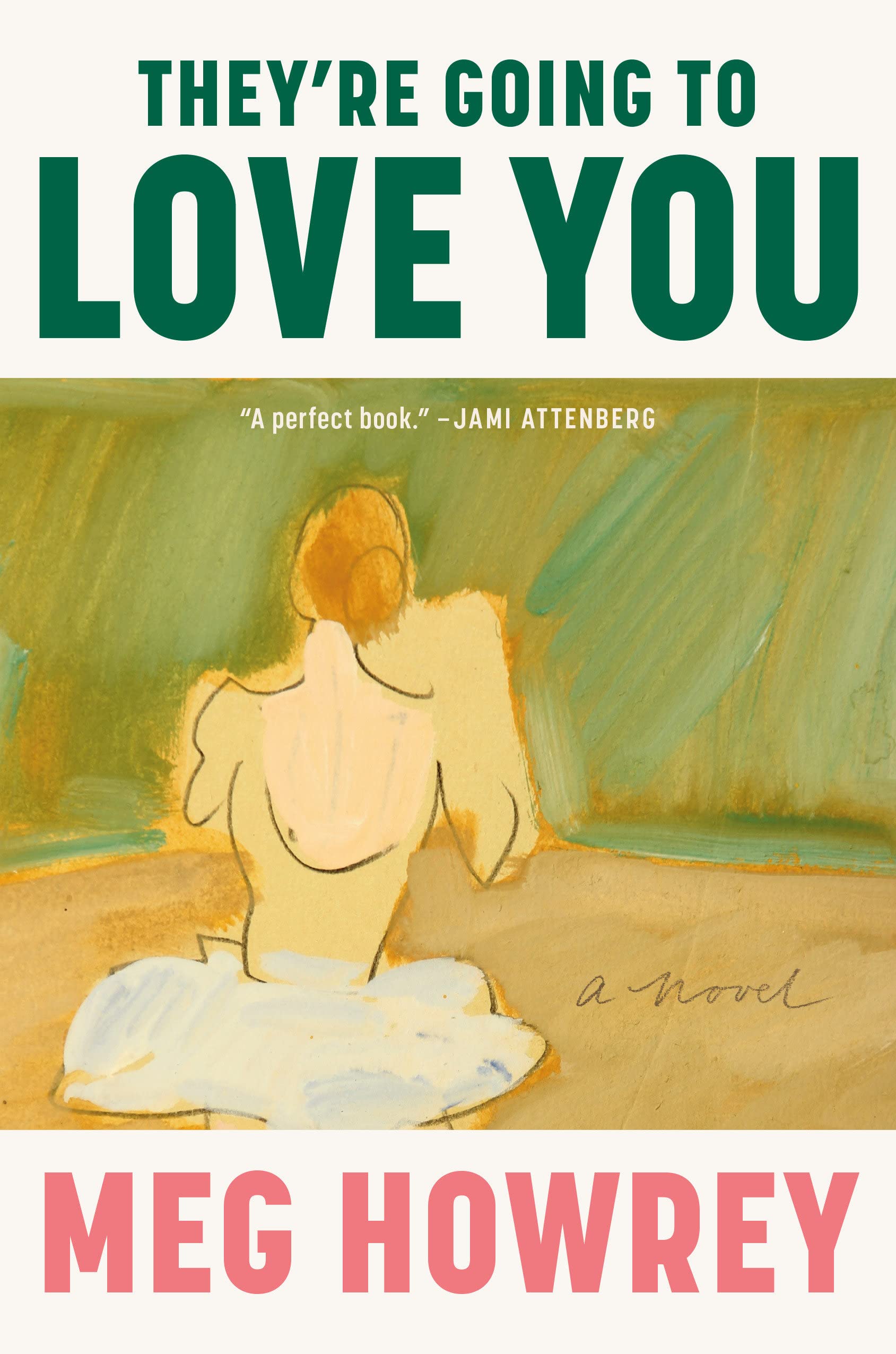
They’re Going to Love You by Meg Howrey

This gorgeous, heartbreaking novel movingly evokes family ties and betrayal, love and forgiveness against a backdrop of professional ballet.

They’re Going to Love You by Meg Howrey (Blind Sight; The Cranes Dance) is an unforgettable novel of scintillating beauty and heart-buckling pain about ballet, loyalty, forgiveness and the many forms of love.

Carlisle grows up feeling distant from her mother, with whom she lives most of the time in Ohio, and with a deep and yearning love for her father and, even more, for her father’s partner, James. When she stays with Robert and James at their Bank Street apartment in Greenwich Village, Carlisle basks in the arts education James shares with her. She’s been born into ballet: her mother a former professional dancer, her father briefly the same before managing ballet companies and festivals. James still teaches ballet. Carlisle loves dance and works hard, but tops six feet tall in high school, “the height that–for a woman–is rarely allowed to pass without comment in the outside world, let alone the ballet one.” (There may be other shortcomings as well.) By her early 40s, she is one of the first women to make it as a successful-but-struggling choreographer. She’s been estranged from Robert and James for 19 years when she gets the call that her father is dying.

The estrangement began with a betrayal that takes most of the novel to reveal. Carlisle’s first-person narrative bounces between the present, as she delays and eventually travels back to Bank Street to her father’s deathbed, and the past, her coming-of-age years as a visitor to Bank Street during the 1980s AIDS crisis. James is a mentor and a hero. “My father, I love, and James I sort of want to be. Maybe I mean: have?” It is a young person’s love, pure, ardent and jealous, wrecked by a mysterious episode that shapes the rest of Carlisle’s life–absolutely including her choreography career. Naturally, along with James’s news about Robert’s pending death comes a big opportunity to compose a modern version of the classical ballet Firebird. Carlisle both knows this is a big chance (maybe the big chance) and resists it. The reader will understand before Carlisle does that Firebird and her relationship with her father are part of the same wound.

Meg Howrey’s writing is dazzlingly, mind-bendingly good, and so true it hurts. She considers ballet, music, the artist’s drive to create, being a woman in a man’s world, desire and betrayal, family and the bottomless, haunting hunger to belong (“Are any of these questions danceable?”; “Emotions have a way of collecting and hardening inside us, like neglected grease. We are all smoking stoves”; “There might be undanceable truths.”) Her prose can be as funny and pithy as it is poignant and grand. They’re Going to Love You tackles a broad range of themes, but Howrey is superlatively up to the task. As Carlisle grows from longing, awkward youth to lonely, gifted working artist, Howrey conjures “all this gorgeous, unrepeatable wreckage” in spectacular fashion. Readers will laugh and cry and be changed.


This review originally ran in the October 13, 2022 issue of Shelf Awareness for the Book Trade. To subscribe, click here.


Rating: 9 gorgon pearls.

Strega by Johanne Lykke Holm, trans. by Saskia Vogel

In mesmerizing, allegorical storytelling, nine maids at a mountain hotel consider the violence the world offers them when one suddenly disappears.

Johanne Lykke Holm’s first novel in English, Strega, is a fever dream meditation on girlhood, female friendships and unnamed dangers.

Rafaela is 19 years old when she leaves her parents’ home and travels into the mountains to work as a maid at an old hotel, with eight other girls her age. They clean and polish and set tables for every meal; they wash sheets and dress in clean uniforms, but no guests arrive. Lounging together, sharing cigarettes and liqueurs and candies, they are immediately close. Their matronly bosses are strict, even punitive, but their days still feel relaxed and without energy, emphasizing the pointlessness of their work. The hotel was once a shocking red, fading to pink against the forests; the strangely sinister neighboring nuns call it Il Rosso. Rafa calls it “a morgue beneath the trees.” When listless summer turns to fall, the hotel throws a party, and one of the nine girls disappears.

The remaining eight girls search for her; her parents appear to claim her possessions; the barren season at the hotel stretches on. In one of Strega‘s figurative turns, the missing girl–presumed murdered–comes to stand in for female victims of unspecified violence. At the beginning, Rafa confides, “I knew a woman’s life could at any point be turned into a crime scene. I had yet to understand that I was already living inside the crime scene, that the crime scene was not the bed but the body, that the crime had already taken place.” Near its end, “We can only find a way out of this crime scene by constructing one of our own.”

Holm’s prose, translated from the Swedish by Saskia Vogel, is hypnotic, dreamlike and favors repetition in phrasing and images: “Our hands would repeat the same movements… our hands always repeated the same movements.” Strega is saturated with red: “We watched a red light rise from the grass and take the form of a hand. I knew it was the blame and the distribution of blame”; “Women are drawn to all things earthly. Bitter soda and red herbs, a lipstick in a bitter red shade. And death, of course.” These short, declarative sentences offer surprising lyricism, so that each line demands the reader’s attention.

The novel is short and spare, but unwavering in its intensity. Strega is riveting: surreal, ominous, somehow both vague and sharp in its observations about the harms that girls submit to when they become women.


This review originally ran in the September 27, 2022 issue of Shelf Awareness for the Book Trade. To subscribe, click here.


Rating: 7 aspergilla.

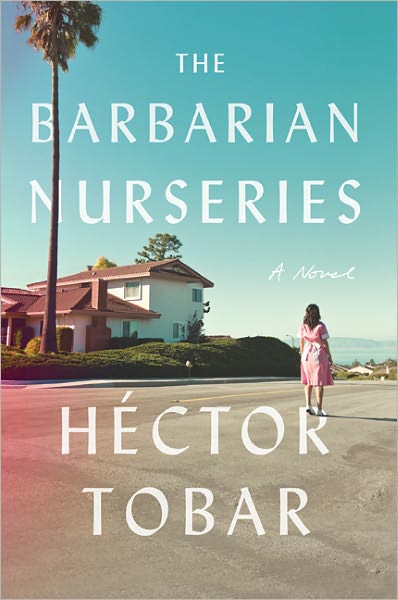
rerun: The Barbarian Nurseries by Héctor Tobar

A deceptively quiet story, with swift currents running deep beneath its surface, considers the fate of an unprepared Mexican housekeeper in Orange County left to care for her employers’ young children.

Pulitzer Prize-winning journalist Héctor Tobar’s second novel tackles the ambitious goal of characterizing Southern California’s multicultural schizophrenia and achieves it admirably.

Araceli is quietly comfortable in her role as housemaid to the Torres-Thompson household in Orange County, one of three Mexican domestics; but when the gardener and nanny are suddenly dismissed, she is puzzled to find herself expected to care of three children she considers strangers. Worse, she wakes up one morning to find both her employers gone with their baby–-leaving her alone in the house with two young boys. In desperation, she sets off with them on a daunting trek through diverse and unfamiliar Los Angeles to try to find their estranged paternal grandfather.

Tobar creates an intriguing juxtaposition of cultures, as the Torres-Thompson children are thrust into a huge, unfamiliar, multiethnic city. Most observations are from Araceli’s perplexed, amused, lyrically bilingual perspective. At other times, we look through the boys’ eyes, with all the wonder of the new, including evidence of poverty they’ve never before encountered. The older boy (age 11), in particular, has a unique way of clinically interpreting new experiences through books he’s read, imbuing the world with fantasy. The adventure with the boys is a comedy of errors–-Araceli becomes suddenly famous as a symbol of racial politics, and her fate depends upon forces outside her control.

The Barbarian Nurseries is a beautifully written, contemplative and thought-provoking view into Southern California’s diversity and contradictions, as well as a fascinating and well-presented story.


This review originally ran in the September 23, 2011 issue of Shelf Awareness for Readers. To subscribe, click here, and you’ll receive two issues per week of book reviews and other bookish news.


I decided to skip the post-dated rating on this one, as it’s been a while and I’m genuinely curious as to how it’s aged. I did call it one of the best books of the year. Anybody have a more recent reading to report?

rerun: Hemingway’s Boat: Everything He Loved in Life, and Lost, 1934-1961 by Paul Hendrickson

A lyrical, textured, and meticulously researched meditation on Hemingway from a fresh new angle.

Paul Hendrickson, NBCC award-winning nonfiction author for Sons of Mississippi, pulls off the remarkable feat of finding a fresh, new angle from which to approach Ernest Hemingway: his boat Pilar. Purchased in 1934 with an advance from his longtime publisher Scribner, she saw him through three wives, great achievements and critical failures in his writing career, big fish and little ones, and the beginnings and the endings of many relationships. Hendrickson suggests that Pilar may have been the love of Hemingway’s life.

This is not a biography but a careful and compassionate rumination on the man through the lens of the boat. Hendrickson has brought to his readers a Hemingway who is neither object of worship nor monster, but a full and complex human who made serious mistakes in his relationships and fought pitched battles against his own demons, and finally lost.

The Hemingway fan will be enthralled with new details of his life, and the study of figures previously treated as minor but now revealing new facets of the man. The less familiar reader will be fascinated by this comprehensive account of the master and his complex spiderweb of varied effects on so many lives, large and small. Hendrickson presents his unusual and noteworthy story with beautifully quiet intensity and contemplation. Hemingway’s Boat achieves a terrific feat in reworking Hemingway’s story.


This review originally ran in the September 23, 2011 issue of Shelf Awareness for Readers. To subscribe, click here, and you’ll receive two issues per week of book reviews and other bookish news.


Further notes… Hendrickson treats Hemingway sort of gently, but doesn’t spare the man in his moments of monstrosity. Hendrickson comes from several different angles, interviewing different people who knew Hem more or less well, unearthing some new details. Hemingway’s Boat approaches the subject with the relatively unique concept that he was just a man – a great artist, but also human, with flaws and moments of everyday beauty. This book was noteworthy in all my reading about Hemingway and the surrounding literature. It made me laugh and cry. I wholeheartedly recommend this book for fans of Hemingway, or of literary biography, or of well-written nonfiction, or for those looking for vignettes in Key West or Havana history.


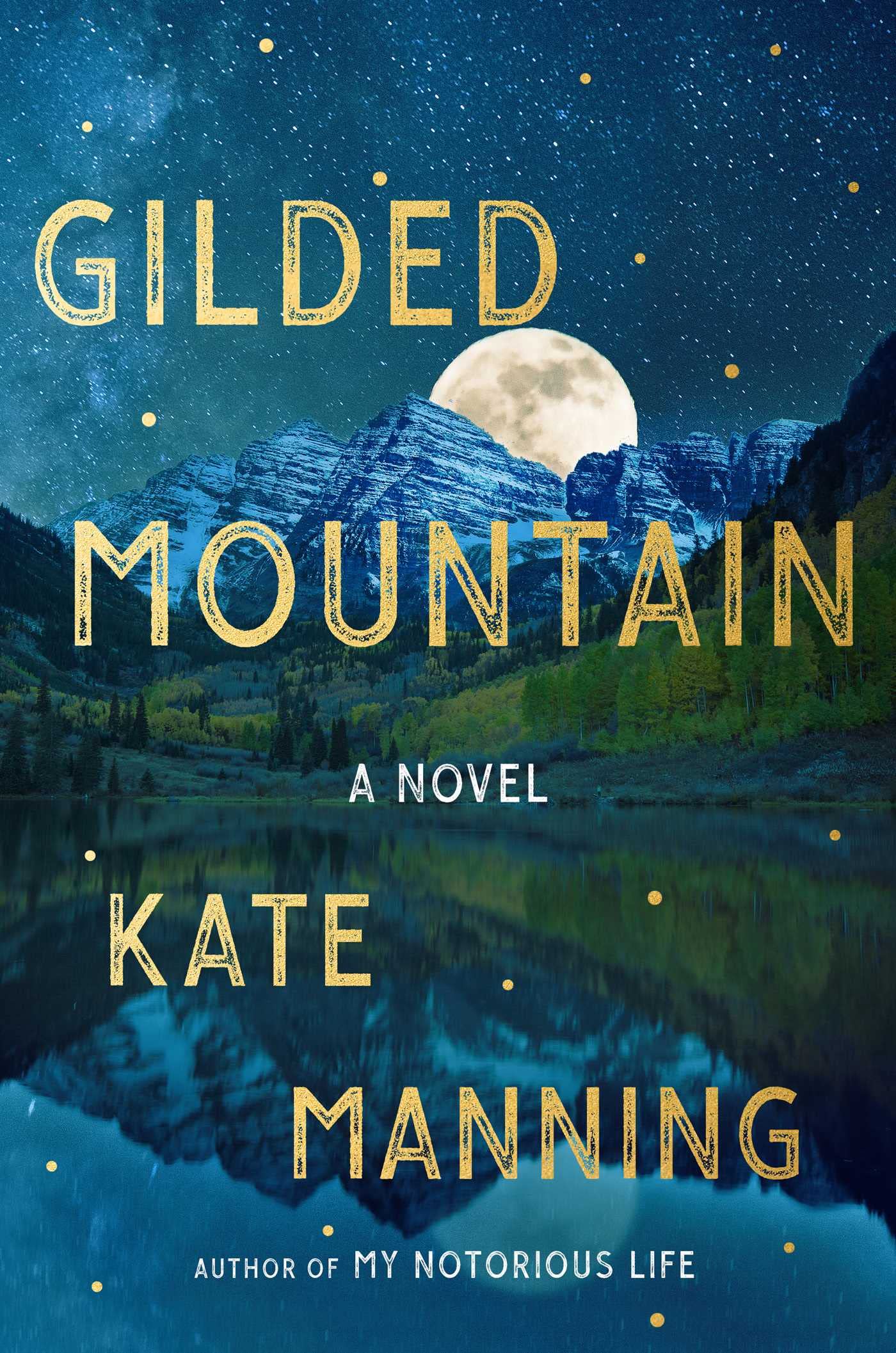
Gilded Mountain by Kate Manning

This gorgeously evocative novel of the early-1900s American West takes on issues of race, class, labor and women’s rights via a remarkable young woman’s coming of age.

“Strikes are all the same. Same songs. Same reasons. Same hope and rage. In those years it was struggle and strife all over the mountains, in the cities and on the plains of the country, wherever there was industry or toil.” Gilded Mountain by Kate Manning (Whitegirl; My Notorious Life) is an expansive novel of passions: love, beauty, suffering; struggles for labor rights, women’s equality and the rights of formerly enslaved people. Set in the early-1900s Colorado mountains, this enthralling story stars Sylvie Pelletier, who travels west at age 17 to find the world broader, more lovely and more terrible than she’d imagined. Gilded Mountain tracks her coming of age and the troubles of her family and the marble miners of Moonstone.

Sylvie’s father, Jacques, is beloved by his family and his coworkers in the marble quarry, who call him “Frenchy,” but Sylvie’s mother fears he will again meet danger with his union organizing. Sylvie graduates from high school and apprentices as “printer’s devil” to the freethinking K.T. Redmond, who further shocks townspeople by being a newspaperwoman. As conditions in the mines deteriorate and K.T. nurtures Sylvie’s rebellious streak, the young protagonist is also invited into the household of Company owner Duke Padgett and his wife, the Countess. Their royal titles are self-assigned, but their wealth is real. The Duke’s son, Jace, becomes something of a romantic interest, but there is also United Mine Workers’ representative George Lonahan. Sylvie is torn between her principles and love for her family, her class and her boss, and the temptations of the other life. “I forgot to observe with the sharp eyes of a printer’s devil because my sight was dulled by sugar and awe,” she realizes. “My loyalties gnarled and snared me.”

Gilded Mountain is an ambitious novel, swelling to encompass labor rights (complete with Pinkerton Detective Agency goons), women’s rights, the societal role of the free press, the rights of Black Americans immediately following the Civil War, lynching, immigration and more. Starring real characters from history (union organizer Mother Jones, Belgium’s King Leopold II), it contains romance, historical fiction and inspired, high-minded thinking on important issues. Moonstone, Colo., is a fictionalized composite town, but its marble mining and the standard operating procedures of the Company are well based in historical fact. It also contains lovely writing about the natural world: “[T]he Diamond River overflowed its banks and rushed downhill, rooks sang in the trees, and leaves unfurled like new little salads on the ends of their branches. A corduroy of greens softened the hard folds of the mountains, and the meadows bloomed with swaths of blue columbine and dashes of yellow sneezeweed.” The result is a painfully beautiful novel of big ideals, heartbreaks and tragedies, sewn together by an admirable and unforgettable heroine.


This review originally ran in the September 15, 2022 issue of Shelf Awareness for the Book Trade. To subscribe, click here.


Rating: 8 maraschino cherries.

In the Mouth of the Wolf: A Murder, a Cover-Up, and the True Cost of Silencing the Press by Katherine Corcoran

The unsolved murder of a Mexican journalist has implications for the free press and free society everywhere in this in-depth investigation.

In the Mouth of the Wolf: A Murder, a Cover-Up, and the True Cost of Silencing the Press is American journalist Katherine Corcoran’s first book, focusing on the murder of Mexican journalist Regina Martínez in 2012, its aftermath and implications for the free press in Mexico and beyond. Corcoran details the years she spent investigating Martínez’s death, without the satisfaction of a final conclusion; the case remains unsolved, along with many other cases of slain journalists.

“To the foreigner, Mexico charms, cajoles, and seduces. There are so many Mexicos: so many climates, cultures, foods, and languages; contiguous, concentric, stacked; native and colonial; current and past; invisible yet present.” With this same attention to multiplicity, Corcoran relates the complicated nature of a single murder case and all that it represents. Already familiar with Mexican culture, politics and journalism, Corcoran, as Associated Press bureau chief in Mexico City, had also received threats to her staff by the time that Martínez was brutally killed in the bathroom of her own home in Xalapa, Veracruz. Killings of journalists had been on the rise, but this case was different, not least because Martínez was nationally known: “Everyone, including me, knew she was beyond reproach. I had tried to hire her once.” Martínez was known for covering potentially dangerous subjects, frequently including the connection between government corruption and organized crime. No one in her tight-knit circle of journalist friends could say what she’d been working on when she was killed, and the official line quickly became that she had been the victim of a crime of passion–something none of her friends believed, but a difficult theory to disprove.

Into a mess of stories and theories, and still under threat of surveillance and violence years later, steps Corcoran, with archival research and hundreds of interviews with a dizzying cast of characters (helpfully listed in the front of the book) from the media, politics, organized crime, and Martínez’s family and friends. She brings a journalist’s careful accounting of where truth meets speculation, where the author has chosen between versions of the same story, where corroboration has been impossible. In the Mouth of the Wolf offers the results of this research, numerous unconfirmed theories and the personal story of a journalist chasing an elusive truth. By its finish, Corcoran has become alarmed by the state of the free press in the United States as well as in Mexico, and concludes that Martínez’s unsolved murder–and so many like it–have chilling effects not only on the freedom of the press but on society itself, all over the world. This compelling, carefully researched investigation is a sobering clarion call.


This review originally ran in the August 26, 2022 issue of Shelf Awareness for the Book Trade. To subscribe, click here.


Rating: 7 vests.

The White Hare by Jane Johnson

Love and mourning, betrayal and hope, ancient legends and modern conflicts come together in the atmospheric Cornish countryside in this engrossing novel.

Jane Johnson (The Sea Gate; The Tenth Gift) transports readers to rural Cornwall in the years just after World War II in The White Hare, a fanciful novel of family, village life, history, mythology and more.

In the opening pages, first-person narrator Mila, her daughter, Janey, and her mother, Magda, arrive at their new home, a grand but dilapidated Cornish seaside estate, in the summer of 1954. Timid Mila is fleeing an unnamed scandal in London; the irascible Magda has taken charge of their little troop. Janey, age five, is eager to explore her new surroundings, accompanied by Rabbit, her stuffed toy and best friend. The estate, purchased with unexplained but apparently significant funds, has a mysterious history; locals make foreboding remarks and then clam up. “Best not talk about unlucky things too much, or you may attract unwanted attention,” Mila is warned. Magda plans to refurbish and open a grand guest house, with Mila to cook and clean. Immediately and surprisingly latching on to their odd household is Jack Lord, a local who is (like all these characters) unforthcoming about his past, but handy with repairs and good with high-spirited, imaginative, clever Janey. Things go bump in the night, there are hints of ghosts and old crimes, and the vicar in town is inexplicably, aggressively sinister.

Mila and her parents immigrated from Poland just before the war, so she must deal with several layers of outsider status in this insular and remote setting. Janey and Rabbit are oddly at home in the natural world and its legends, while Mila struggles with local culture; her mother’s hostility is considerable, but Jack’s influence is calming, if enigmatic. The White Hare is jam-packed with slowly released secrets: those between mothers and daughters, those kept by the villagers, and those locked away within traumatized minds. It addresses class and war, mysticism and folklore, the persistent influence of history and bloodshed; it dabbles in romance, but remains centrally concerned with the relationships of family, community and place. With lush descriptions of fashion, food and especially nature, Johnson’s prose appeals to sentiment and expertly evokes an often-menacing mood. The intrepid, uncanny Janey and her Rabbit, however, joined by several wise women of the village, offer hope that Mila and her family can move into a happier future in the end. The White Hare is enthralling, as filled with secret passages as the stately home in which it’s set.


This review originally ran in the August 22, 2022 issue of Shelf Awareness for the Book Trade. To subscribe, click here.


Rating: 6 Latin phrases.

Utopia by Heidi Sopinka

Art, gender, love and friendship are all under consideration in this novel of twisted relationships in the 1970s L.A. art scene.

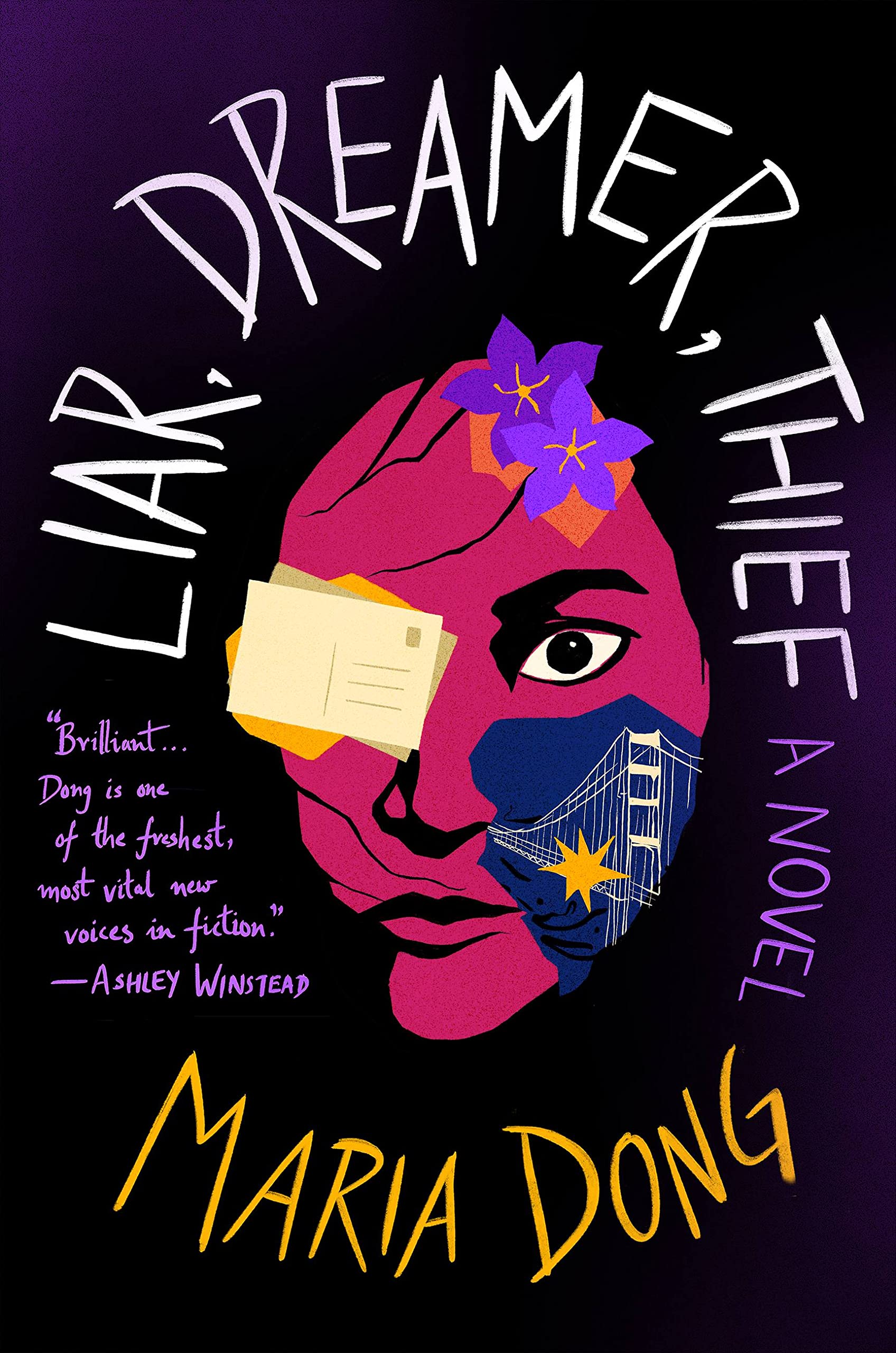
Heidi Sopinka’s Utopia opens at a party with the first-person perspective of Romy, a performance artist, directly addressing her months-old daughter. The evening ends with an unexplained tragedy, and from there the novel jumps forward some months to follow a young woman named Paz, who is now raising Romy’s baby and is married to Romy’s husband, Billy. It is 1978, and Paz, Billy and all their friends are steeped in the Los Angeles art scene, where sex, drugs and free expression are soured by competition, infighting and wildly different rules for male and female artists. Paz attends women’s groups and wishes for a freer life for herself, but many women see her as having taken over Romy’s life in decidedly unfeminist fashion. Romy, the more successful and established artist, casts a long shadow; Paz loves Billy but is perhaps more in love with Romy, whose life and art obsess her. Caring for Romy’s baby, lost in reading Romy’s journals, Paz finds herself in something of a love triangle with a ghost, and begins to lose grasp of her own life and art. And then a postcard arrives, apparently from Romy. It is labeled “disappearance piece.”

Utopia cleverly investigates layers of social issues: feminism and its intersections with race and class; gender roles in life and in art; women’s relationships; the artist’s relationship to commerce and social justice. The central narrative belongs to Paz, but that narrative is always shadowed by Romy, and intermingled with Romy’s voice via her journal entries. “Everything Romy said assumed importance. She lived her life so strongly.” The two women and all they have in common (including an art-star husband and a baby) offer plenty of room to examine questions about art and gender. Paz’s best friend Essa (also an artist and mother) is another powerful character and model for Paz to chart her own path. They are surrounded by other women of the art scene and feminist groups; the novel is populated by strong women questioning norms.

Sopinka (The Dictionary of Animal Languages) excels in characterization and the evocation of the power of creation. In pursuing her predecessor’s mysterious end, Paz must put herself in real danger and explore the very edges of not only art but existence. “She’s driving a speed addict’s car in an inside-out shirt, on painkillers, with a hand wrapped in gauze, on her way to find her husband’s dead ex-wife. If she concentrates hard enough, these things will snap into a logical pattern.” By the time the perspective shifts to that of a third woman near the novel’s conclusion, Utopia has asked that the reader journey through some weighty questions–but all will be rewarded.


This review originally ran in the August 16, 2022 issue of Shelf Awareness for the Book Trade. To subscribe, click here.


Rating: 7 matches.

Curing Season: Artifacts by Kristine Langley Mahler

These experimental essays about place, home and the failed effort to belong are closely tied to Eastern North Carolina, but will resonate everywhere.

Kristine Langley Mahler’s Curing Season: Artifacts is an essay collection selected for West Virginia University Press’s In Place series, which features strongly place-based literary nonfiction. In these often experimental essays, Mahler considers a brief but powerful part of her youth spent in eastern North Carolina: four years of preadolescence in which the young Mahler struggled with feeling that she didn’t belong. While this is arguably a universal preadolescent experience, Mahler’s story is indelibly linked to the community in which she lived, made and lost friends and attended school.

In Pitt County, N.C., the author encounters matters of race and class for the first time. The profitable sale of her family’s home in Oregon has enabled them to enter a prosperous suburb where her neighbors attend cotillion. White children, like Mahler, who go to public school are bussed into a majority-Black part of town as part of 1990s desegregation efforts. Her neighbors’ families seem to all rely on generational relationships to the place. She feels her outsider status at every turn. Also characterizing Mahler’s experience are difficult preadolescent friendships, including the “mean girl” type, and one relationship in particular: Mahler’s best friend Annie, long estranged and eventually deceased. By the end of Curing Season, the troubled, dead friend haunts the author as much as the place does.

While some essays use relatively straightforward narrative storytelling, others are fragmented, rely on images or borrow forms from other works. There are list essays and hermit crab essays based on dictionary entries and proposals for project fundings; Mahler explores astrology, references Joan Didion’s famous rational detachment and borrows lines from Margaret Atwood’s Cat’s Eye and the local history Chronicles of Pitt County. “I grafted my history onto theirs; I twisted the lessons until I could wring out similarities between my past and theirs; I removed and imprinted my history on top of theirs until I could not tell the difference between their truth and mine.” In blending Mahler’s experiences with those of Pitt County, she digs into the very nature of truth and memory. The author of these formally inventive essays is forever circling both the specific place and the experience of feeling disconnected and othered. “I have returned a hundred times; I have never come home.” She remains preoccupied, even obsessed, decades after leaving, still trying to belong or gain a greater understanding of what didn’t work.

The title Curing Season: Artifacts refers to the tobacco-curing season in Pitt County and to both literal and figurative acts of excavation. Mahler’s investigative ponderings on belonging, displacement and a sense of home are both specific to place and universally familiar.


This review originally ran in the August 12, 2022 issue of Shelf Awareness for the Book Trade. To subscribe, click here.


Rating: 6 stolen pins.