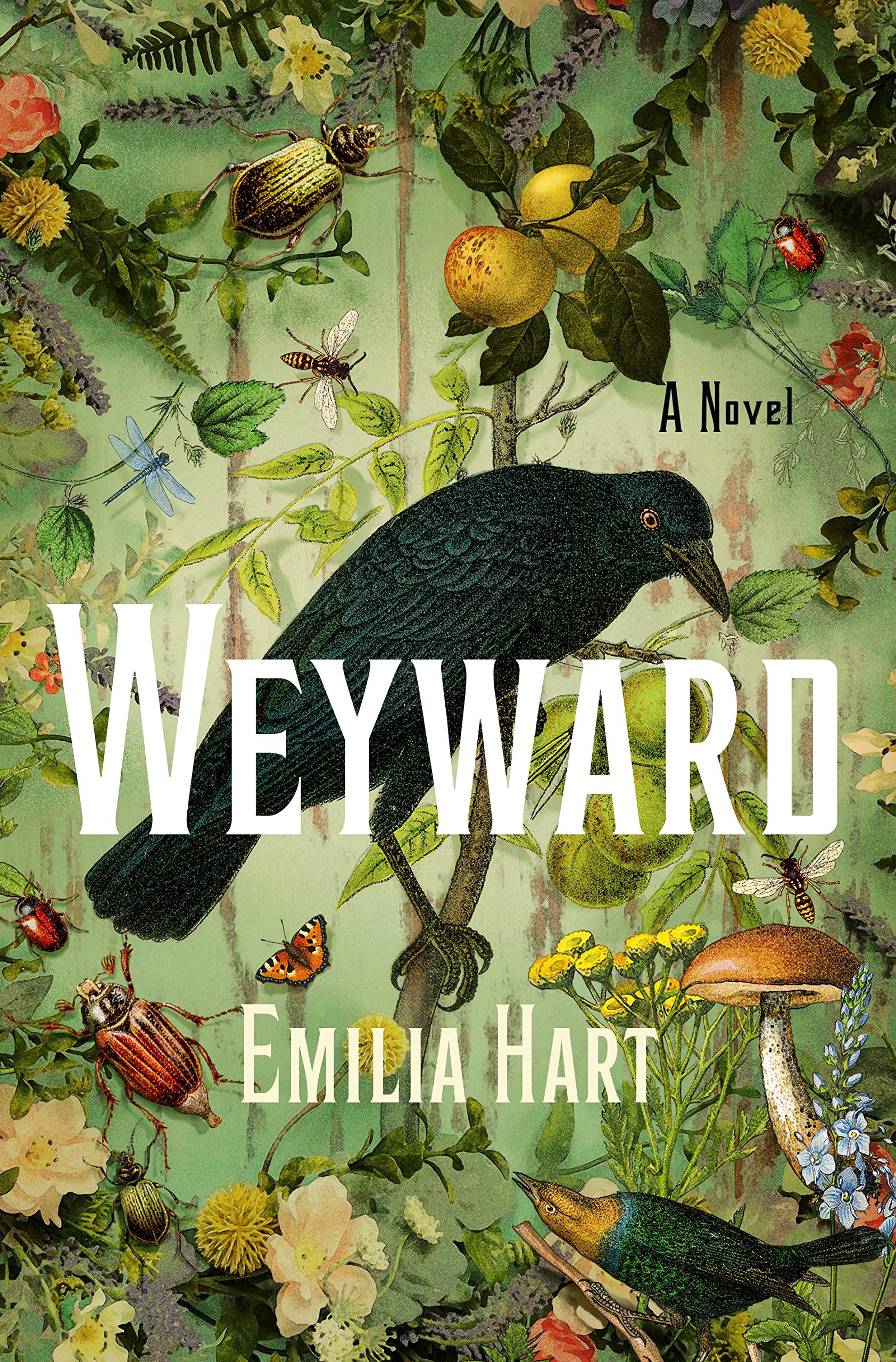
Weyward by Emilia Hart

The stories of three imperiled protagonists across centuries connect in this suspenseful, magical debut about the power of women and the natural world.

Emilia Hart’s first novel, Weyward, glows and glimmers with hidden powers, thrills and danger, a close connection with nature and between women across time. Three distinct stories eventually link to form a larger tale about strength, resilience and love.

Altha goes on trial for witchcraft in the English countryside in 1619. In 2019 London, Kate attempts to escape an abusive partner while harboring a significant secret. And at a grand estate in 1942, teenaged Violet struggles against the limitations of her father’s strict household rules, consumed by an unladylike love for trees, insects and other natural wonders. In alternating chapters, each of these stories deepens. Altha, the daughter of a healer, tries her best to follow in her beloved late mother’s footsteps, helping her neighbors and causing no harm, while dodging the increasingly avid witch-hunters of her time. Locked in a Lancaster dungeon, Altha does what she can to protect herself. Kate flees the city undetected, holing up in a cottage inherited from a great-aunt she hardly knew, but her safety there is tenuous as she plans for an uncertain future. Violet is a tenacious and spirited 16-year-old, but powerless as she is imprisoned in her father’s world; she dreams of becoming a biologist or an entomologist, but cannot even visit the local village. Men in the Weyward world, in all three timelines, are sources of power and abuse, not kindness, but Violet’s loyal brother forms a notable exception.

Each woman must learn about and come to terms with her powers and her connections to the natural world. Violet is passionately entwined with a particular beech tree, with damselflies and weasels, but no one will even tell her her mother’s name, let alone the family history that she senses casts a shadow on her life. Having lost her father at a young age in a curious accident, Kate lives in fear of the birds and insects that most call to her. Altha is reluctant to exercise her full powers, having promised her mother she would be careful. But, she says, “I had begun to suspect that nature, to us, was as much a life force as the very air we breathed.”

Hart expertly weaves together disparate but connected storylines, with leaves and butterfly cocoons and a mountain stream. Her protagonists are strong, but hard beset by the forces around them, even across centuries. Her prose sparkles with wonder and simmers with danger. Weyward‘s atmosphere is compelling, as each plot thread offers suspense. With a momentum of its own, this debut draws readers inexorably to a glorious conclusion that celebrates connectedness and the power of women and nature.


This review originally ran in the February 2, 2023 issue of Shelf Awareness for the Book Trade. To subscribe, click here.


Rating: 7 feathers.

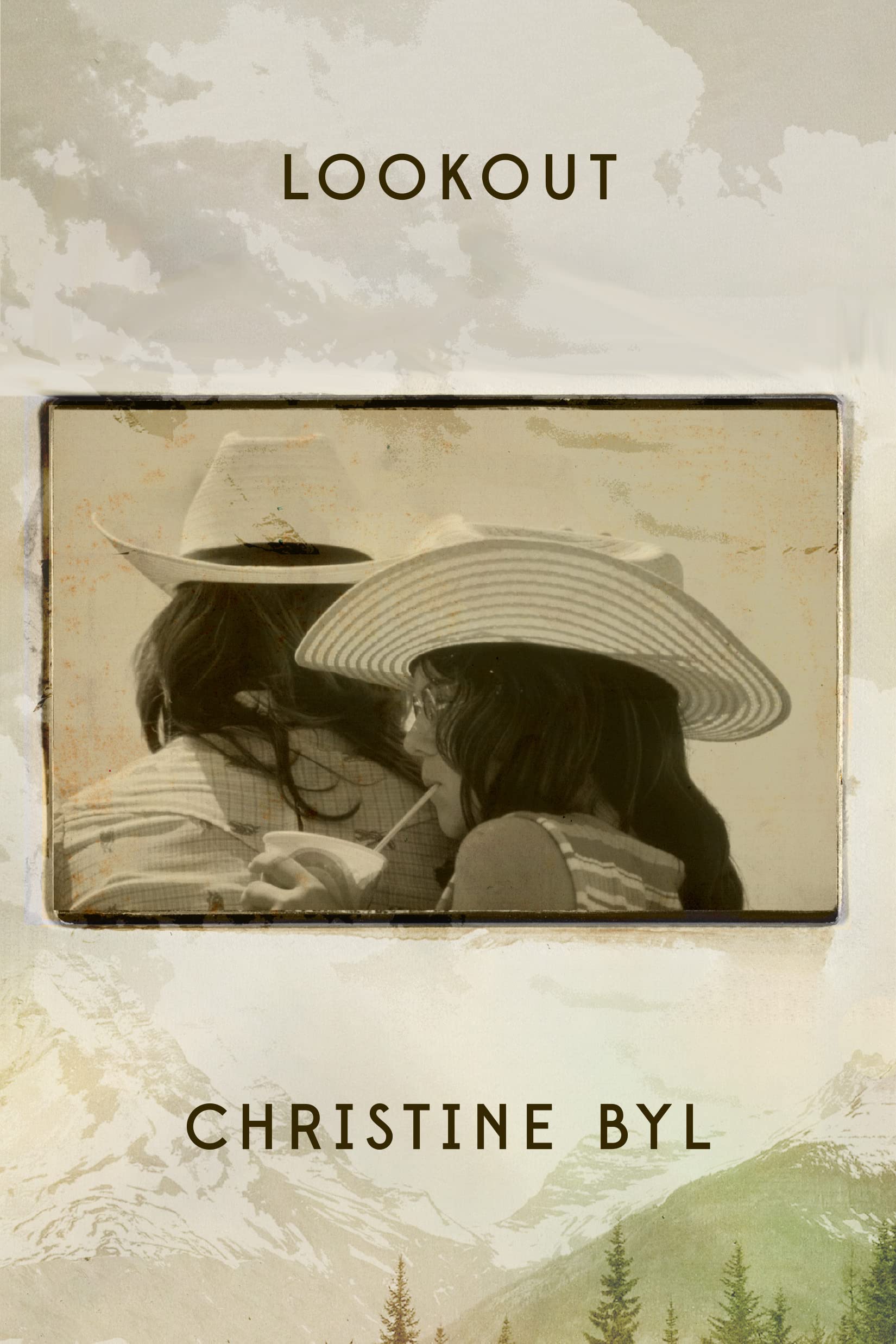
Lookout by Christine Byl

This astonishing novel of work, love, community and forgiveness in 20th-century rural Montana will leave readers forever changed for the better.

Christine Byl’s Lookout is an unforgettable novel, both stunning and subtle, written with nuance and compassion. With all the down-to-earth lyricism displayed in her memoir, Dirt Work: An Education in the Woods, Byl transports readers to rural Montana in the 1980s, ’90s and 2000s, where the Kinzler family lives, works and loves. These characters, whose bonds are gorgeously rendered and even inspirational in their imperfections, are deeply lovable.

Josiah Kinzler’s family history includes alcoholism and suicide; he is alone in the world before he is 20 but possesses land, skills, a work ethic and strong ties to his neighbors. He marries Margaret Blanchard. Together they eke out a living in her father’s hardware store and eventually through Josiah’s highly regarded furniture-making and woodworking. Their two daughters, Louisa and Cody, are remarkably different from one another but as fiercely loving as their parents. The family will grow into nontraditional shapes, but its members never lose their commitment to one another. Each is complicated, fully developed and sensitively drawn.

Chapters shift between a third-person perspective and the first-person voices of various characters–not only the central Kinzlers but also various members of their community. In this way, Byl offers triangulations on events and characters. These secondary characters’ perspectives enrich the story enormously, as when a neighbor who has known Josiah from childhood observes the latter’s marriage and fatherhood: “He loves those girls, and I can see his ease with them that I have not found with my own sons.” Montana in the 1980s and ’90s is not without its problems: gay characters struggle to find acceptance, and American Indians’ claims to the land are dismissed. Families and individuals struggle with mental illness and addiction. But Byl treats the people and their problems–even the shortsighted ones–with grace and frankness. Frequently, characters do the same for one another.

Lookout, which contains evocative expressions of love, is lush in its descriptions of relationships, the natural world and Josiah’s exquisite woodworking. Byl writes with an attention to the details of her characters and setting: “A heavy snow in early May buried pasqueflowers and daffodils and the barely rising shoots that would become the season’s crops, but by the end of the month, the sun lit up like a match.” Cody and her father are similarly laconic and watchful; they share a special bond, as displayed in a stunningly beautiful scene in which he proudly watches her run a chainsaw just as she was taught. Many of the relationships and family systems represented are unconventional–but sensitive and thoughtful. Lookout specializes in the quiet observation of transcendent truths about many facets of life.


This review originally ran in the January 26, 2023 issue of Shelf Awareness for the Book Trade. To subscribe, click here.


Rating: 10 dried pansy petals.

The Writing Retreat by Julia Bartz

In this shape-shifting tale, aspiring novelists come together at a possibly haunted estate with a famously reclusive writer–for what turns out to be as much horror as inspiration.

Alex, the glum protagonist of Julia Bartz’s The Writing Retreat, has recently crossed into her 30s. Stuck in long-term writer’s block, her dreams of making it as a novelist are just about dead; she holds a thankless and “bleakly underpaid” position in publishing; her sex life is equally bleak; and she still mourns her traumatic friend-breakup with the more successful Wren a year ago. So it feels like a shocking and undeserved honor to be accepted to a fantastically exclusive writing retreat hosted by Roza Vallo, the wildly successful novelist Alex has idolized since she was 12 years old. The catch is that Wren has been accepted, too.

Roza’s Blackbriar Estate in the Adirondacks in New York is grand, dramatic and supposedly haunted. Roza herself is famous, rather controversial and private: the five young women attending the retreat must sign NDAs. Alex’s adoration of her enigmatic hero is enormous, and she senses this is her big shot at turning her life around: “If I lived in a pocket of Roza Vallo’s brain, however small, I sensed it would bolster my own existence.” She is also nearly crippled by anxiety about being near Wren–but that concern is quickly overshadowed by the terms of Roza’s intensely competitive program for the retreat. The five writers in attendance must each complete a whole novel in just 28 days, and the best of their works will win a million-dollar advance on a publishing deal. Even as the high-speed writing race ramps up and the drama with Wren continues to smolder, it emerges that something still more sinister is going on behind the scenes at Blackbriar Estate. Inexorably, The Writing Retreat evolves into a locked-room mystery, as eight women–five young writers, two staff and Roza–find themselves snowed in at Blackbriar and beset by potentially fatal threats that may be supernatural or simply human evil.

Bartz imbues her writing with a shape-shifting momentum: the plot’s focus moves from the small, painful dramas of competition and jealousies in friendship into horror and psychological suspense. Blackbriar Estate is both magnetic, in its haunting history and narrative possibilities, and stifling. The world of writing and publishing can be, at turns, solitary, socially supportive, triumphant and backbiting, and The Writing Retreat encompasses all these possibilities and more, as it explores friendship and family traumas, artistic crises and human nature. Bartz’s debut subverts genre in the interest of entertainment, satire and chilling thrills.


This review originally ran in the January 19, 2023 issue of Shelf Awareness for the Book Trade. To subscribe, click here.


Rating: 7 words.

Stone Blind by Natalie Haynes

Natalie Haynes splendidly showcases classical scholarship, witty humor and an appreciation for nuance in this reframing of the story of Medusa.

With Stone Blind, Natalie Haynes (A Thousand Ships; Pandora’s Jar) brings her authoritative expertise in Greek myths to bear on Medusa, whose story is fresh and surprising in this telling. Haynes is both a scholar of the classics and a stand-up comic, and that combination is brilliantly evident in this sardonic, darkly funny adaptation.

Stone Blind combines several threads familiar to fans of Greek mythology, although readers need no previous knowledge to follow along. Zeus, king of the gods on Olympus, philanders and bickers with his wife, Hera; this narrative will witness Athene’s birth and a battle between gods and giants, among other Olympian events. Medusa is delivered as an infant mortal to the two elder Gorgons who will be her sisters–in this version, they are monsters only in their unusual appearance, and they care for their fragile mortal sister with great tenderness. As a young woman, Medusa is raped by Poseidon in Athene’s temple. The goddess is so offended by this sacrilege that she punishes the victim, replacing Medusa’s hair with snakes and bestowing her most famous attribute: the ability to turn any living creature to stone by eye contact. In a third thread, the demigod Perseus comes of age as a bumbling incompetent: self-serving, lazy, whining, unnecessarily violent. And Andromeda, legendary beauty and princess of Ethiopia, is cursed to death by her mother Cassiope’s hubris.

These threads come together in complex ways when gods are offended and angered and play out their dramas with mortal pawns. Traditional storytelling has cast Perseus as a hero and Medusa as a monster, but Haynes does not concur: “The hero isn’t the one who’s kind or brave or loyal. Sometimes–not always, but sometimes–he is monstrous. And the monster? Who is she?”

“Who decides what is a monster?” Medusa’s sister asks. To which Medusa responds: “I don’t know…. Men, I suppose.”

Haynes’s genius lies not only in her subtle recasting of this story–with an emphasis on who assigns roles and draws conclusions–but in her dryly scathing humor. Her gods are (even more than usual) immature, selfish and often silly. Athene is “delighted with herself” for the simplest of observations about humanity; she burst forth from Zeus’s head fully formed, but not necessarily with the emotional maturity or world knowledge her physical perfection would imply. Poseidon’s bluster and Zeus’s carelessness of his children are exaggerated. Perseus is a dolt, impervious to learning the lessons of his (mis)adventures. Haynes writes in many voices: those of olive trees, Medusa’s snakes-for-hair, a crow, the gods and mortals that make up this twisting tale. A surprising ending caps off her truly delightful and novel version of a very old story.


This review originally ran in the January 6, 2023 issue of Shelf Awareness for the Book Trade. To subscribe, click here.


Rating: 8 birds.

Maximum Shelf author interview: Monica Brashears

Following Friday’s review of House of Cotton, here’s Monica Brashears: Feel the Life in the Ghosts.


Monica Brashears is an Affrilachian writer from Tennessee and a graduate of Syracuse University’s MFA program. Her work has appeared in Nashville Review, Split Lip magazine, Appalachian Review, the Masters Review and more. Her debut novel is House of Cotton (Flatiron Books, April 4, 2023), a novel about ghosts, mothers and the struggle to survive, set in Tennessee with its lingering challenges of race and class. Brashears lives in Syracuse, N.Y., where she is at work on her second novel.

What makes Magnolia a compelling protagonist?

photo credit: Beowulf Sheehan

The reason I love her so much, and why she’s my baby, is because of her willingness to create other worlds as a response to trauma. There’s such a tenderness there. It’s an act of hope, that the world can be velvet. It doesn’t have to be so harsh all the time. Even in moments when it’s the harshest, she has an ability to make it velvet, and I think that’s special.

To what do you attribute that ability in her?

That ability is both a method of survival and another sort of haunting. Magnolia’s imagined fairytales stem from coping strategies she turned to as a child and because she’s carried them into adulthood, her trauma still lives in that humor. Additionally, Mama Brown’s laughter and steady shelter taught Magnolia her definition of safety and, because of that, Mama Brown’s life is reflected in the way Magnolia jokes.

Was Magnolia the beginning of this novel coming to you?

House of Cotton began as a short story in undergrad, and it was plot driven. The characters were not-quite-formed-laughing-things. I had no intentions of returning to the story, but three years later, Magnolia returned. I only knew that she had an emotional cavity, and inside that cavity, she claimed there were geodes. Usually, for me, the plot comes first as a way to announce all the ways I’m fed up. But I don’t have anything to work with until the characters show me how and why their yearning stretches beyond their exhaustion.

Does writing a ghost like Mama Brown differ from writing a living character?

I tend to write a lot of ghosts because I was raised hearing these Appalachian folktales. I think I feel the life more in the ghosts in the first draft, because there’s an urgency there. They’re back–why are they back? What do they need? I kind of prefer writing ghosts, strangely.

Is this an allegory about slavery?

Not entirely. I think it’s very much rooted in the present. Although I do understand that reading, because the effects of slavery are in the present. It’s in the fabric of everything that’s happening now. And, of course, the title is House of Cotton, which kind of primes the reader.

How important is setting to this story? Could it happen anywhere else?

The basic plot could happen anywhere. But the setting, the love and the lust and the tenderness, is very much tied to the land–all the plants, the kudzu.

House Mountain is mentioned in the novel, and I move it around. It’s generally always in my writing, but I move it around Tennessee. Knoxville is also, I would say, an Appalachian city, but it doesn’t get viewed that way. The mountains are there. So I like to say hey, remember? Don’t forget! We’re in Appalachia.

What does it mean to be an Affrilachian writer?

I believe Frank X. Walker coined the term. I remember writing, and it was always about the mountains, in undergraduate workshops at the University of Tennessee. And then one day in a poetry workshop my senior year, just before I was getting ready to move to Syracuse for my MFA, I was called Affrilachian. And I was like, what do you mean? Can I claim that? I wasn’t literally living on a mountain, but I was at the feet of them, so I was always on them growing up. So it really felt like coming home in my writing. When people think Appalachia, I don’t think they often think about Black people inhabiting the mountains, so within the genre there’s kind of a pushback against that erasure. This is our land, too.

Is there a special challenge to writing something this strongly based in place while you are elsewhere?

I did write the novel in Syracuse. I carry home within me, always, and nurture that sense through familiar music or food. If anything, Syracuse winters helped me focus on the specifics of all I missed; the book’s infatuation with Tennessean summertime is yet another layer of yearning.

Has your MFA program changed how you work as a writer?

It definitely has. I love the community. When I first came here everyone was name-dropping all of these authors and I felt very out of place. But I took a class that was focused on Ulysses. We spent the entire semester reading Ulysses, and it was full of suffering, and it was bizarre, but I came out of that really uncomfortable semester having definitely improved in seeing all of these fun craft maneuvers available. Permission was gained. I’ve been exposed to so many texts and writers and traditions that otherwise I wouldn’t have, and it’s improved my craft and widened my love for literature.

What’s an example of a good craft maneuver you learned?

Approaching revision with an acknowledgement that a writer’s subconscious has the story figured out before the writer helped unlock the process for me. There’s a pleasure in finding hints within a story or novel and toying with them until I find their meaning. My hints usually present themselves as repetition. There’s an urgency that’s accidental and charming and indicative of strong emotion. But what am I really trying to say?

What can you tell us about your next novel?

It is a trailer park noir filled with jewels, and the fear of God, of course, and murder.

What’s your favorite thing about this novel?

I think Magnolia. I often think of her as my child. I was raised an older sibling, so I was kind of assigned motherhood occasionally, and she feels like a younger sibling or a child. Someone I hold close and within me and tend to love every day.


This interview originally ran on January 4, 2023 as a Shelf Awareness special issue. To subscribe, click here, and you’ll receive two issues per week of book reviews and other bookish fun.

Maximum Shelf: House of Cotton by Monica Brashears

Maximum Shelf is the weekly Shelf Awareness feature focusing on an upcoming title we love and believe will be a great handselling opportunity for booksellers everywhere. The features are written by our editors and reviewers and the publisher has helped support the issue.

This review was published by Shelf Awareness on January 4, 2023.


Monica Brashears’s House of Cotton is an engrossing coming-of-age novel about ghosts, mothers and the struggle to survive. It is also a novel of the lingering challenges of race and class. Brashears’s prose style is sharp and incisive, and the entrancing, distinctive voice of her protagonist is by turns weary, sardonic and yearning. A haunting story and unusual perspective make this a memorable and thought-provoking debut.

Magnolia Brown is 19 years old when her grandmother, Mama Brown, dies. Her absent mother struggles with substance abuse and an abusive partner, so that leaves Magnolia more or less alone in the world, fending off a lecherous landlord (who is also deacon at her grandmother’s church) and struggling to get by. She works the night shift at a Knoxville, Tenn., gas station, where she tries to care for Cigarette Sammy, the muttering man who goes through the trash outside (“the only other Black person I see on this side of town”), between one-and-done encounters executed by her Tinder persona, Carolina Nettle. It’s a tenuous living, and she misses Mama Brown terribly. One night “a whistling man with blood-smeared hands” walks into the gas station. “Hearing a man whistle when he walks in a place he don’t own ain’t natural. Like finding a chipped tooth on concrete. An omen.” When he returns from the bathroom after cleaning his hands, she sees the man is polished, manicured, smooth-talking, wearing good cologne. Cotton offers Magnolia a modeling job, but she’s wary; Magnolia knows omens. But she’s also broke, and quite possibly pregnant.

At the address he gives her, Magnolia finds the Weeping Willow Parlor, a funeral home run by Cotton and his gleefully friendly, drunk Aunt Eden. The pair is eccentric: Cotton needs to constantly finger a piece of pocketed twine to remain calm; Eden is something of an alcoholic and firmly does not believe in ghosts. They are wealthy, and culturally foreign to Magnolia.

Cotton and Eden Productions offers Magnolia a most unusual modeling job: they provide families with lost or missing loved ones a final contact, a side business something like a séance. With Eden’s uncanny funeral-home makeup skills and Magnolia’s amateur acting, Magnolia will play the part of the dead. She’s used to pretending; it has long been her coping mechanism: “When I get this way, when I feel like kudzu is wrapped tight around my ribcage and I’m bleeding a bright heat, I like to slip inside my head.” She slides smoothly into Cotton and Eden’s world and their comfortable, decadent habits: cocktails at all hours, joyriding in the hearse. She moves into the funeral home, lets Eden apply pale body paint to allow her to become missing white women and men, and begins saving her money. The ghost of Mama Brown checks in with Magnolia: knowing, comforting, but judging as well. Reading a letter Mama Brown left her, Magnolia knows “[S]he ain’t left me. I ain’t seen her, but she sits by me. Unseen but real as humidity.” Soon the ghost will be seen as well.

Magnolia’s life becomes split. At the Weeping Willow, she lives in ease and has money to spare, but feels estranged from the very different world Cotton and Eden come from. The relationship is transactional, and she’s always acting, even when the makeup is off. And then there is Mama Brown’s home, where the garden (the place Magnolia still meets her Tinder dates) grows out of control. By tending the needs of the rich white folks who help support her, Magnolia has literally let her own house get out of order. Her caretaking of Cigarette Sammy has become disrupted. Cotton’s requests get weirder and weirder, and Mama Brown’s ghost expresses concerns about Magnolia’s choices, which have affected Mama Brown in the afterlife. The worldly and otherworldly pressures mount.

Set in the grand Weeping Willow Parlor, complete with secret passageways and haunted by Magnolia’s much-loved but literally disintegrating grandmother, House of Cotton pits traditional gothic elements (the haunted castle, women in distress, death and decay) against contemporary questions about race and class and the persistent legacy of slavery. It shares the genre’s sense of suspense and foreboding, but Magnolia’s struggles are very realistic. Her first-person narration brings an immediacy to the events, and an intimacy that’s advanced by her frank voice and turns of phrase. On its face, this is an intriguing ghost story with a compelling, beleaguered protagonist. In its layers, there is much more at stake.

“I am a tattered quilt of all the women before me. I am a broken puzzle,” Magnolia states, but she is clearly a survivor as well. Despite her many fears, she is somehow fearless in pursuing the truest version of herself. Brashears excels in strong characters and deeply felt emotions, and in a robust sense of place: Knoxville shines as both urban and cultural setting and in the details of its natural world. Brashears offers a fresh new perspective on Appalachia and the American South, and Magnolia’s rich voice will echo with readers long after the pages are closed.


Rating: 7 missing fingernails.

Come back Monday for my interview with Brashears.

Brutes by Dizz Tate

A group of 13-year-old girls tries to deal with another teenager’s disappearance alongside their own coming-of-age in an unattractive Florida town beset by increasingly adult threats.

Dizz Tate’s first novel, Brutes, is set in Falls Landing, Fla., a small town formed of theme parks, mall food courts, gated communities and swampland. At its center is the mystery of a missing teenage girl, and the group of younger girls who adored her: the narrative voice is the unusual first-person plural “we,” which perfectly suits a girlhood of conformity and togetherness. The 13-year-old narrators yearn for individual recognition but also fear separation. Their collective voice slips into the singular only when the girls speak from their adult perspectives, looking back. This narrative “we” contributes greatly to the haunting atmosphere of a story about loss, secrets and the costs of growing up.

“Where is she?” the girls imagine Sammy’s parents asking the morning after her disappearance, and this question will echo. They worshipped, followed and watched Sammy on the nights when she climbed over the wall of her exclusive community to meet her boyfriend, Eddie; they share her love for Eddie and, after she’s gone, shift to attach themselves to Sammy’s best friend and rival, Mia. “We wanted to be like them, to become ever louder and brighter, but we could feel their futures slipping through our fingers, because we were not stupid.” Sammy and Mia had both been affiliated with Star Search, the local talent agency, and everyone in town wants to be selected, to be seen as special, to be given a business card or a plane ticket to L.A. “We squashed our faces against the glass of our own lives. Is this it? we asked. Are we having fun like they have fun? Are we in love like they are in love? We filled up our days following them, watching them, waiting to be invited in.” The girls come from the apartment towers of Falls Landing, not the desirable neighborhood behind the white walls that they watch obsessively. Their mothers are harshly portrayed with both love and derision by the daughters they call “brutes” for their childish cruelties.

Brutes offers stark and unlovely characterizations, but with moments of striking beauty. The girls (and their mothers) are grasping, even desperate, but capable of compassion. Tate’s Florida is steamy and thickly rank, with blinding sunlight and shadowy depths, not least in the lake that many residents believe houses a monster–maybe the monster that took Sammy, although the human monsters in this community are plenty sinister. This is a dark coming-of-age tale and meditation on childhood and the cusp of adolescence: authentic, often grim, but with glimmers of hope.


This review originally ran in the December 16, 2022 issue of Shelf Awareness for the Book Trade. To subscribe, click here.


Rating: 6 fire ants.

The Minuscule Mansion of Myra Malone by Audrey Burges

This captivating novel of miniature furniture and big themes braids strong friendships, romance, family ties and the importance of stepping outside of one’s comfort zone.

Audrey Burges’s The Minuscule Mansion of Myra Malone charmingly combines threads of magic, whimsy, romance, grief and loss in a debut novel of great feeling.

Readers first meets 30-something Myra in 2015 in the Arizona mountains, where she lives in the attic of her late grandfather’s cabin. She is regularly visited by her best friend Gwen, who forms Myra’s main link with the outside world–along with the website by which hundreds of thousands of followers know the Mansion, Myra’s life’s work and greatest love. She inherited the large, highly detailed, finely wrought miniature (don’t call it a dollhouse!) from her beloved step-grandmother, Trixie, who, along with Grampa Lou, taught her sewing, woodworking, painting and sculpting. “I know what gemstones look like water and what pen can draw the most convincing chain stitch on a washcloth that’s too small to sew. I can be eclectic or traditional, modern or romantic, and the Mansion absorbs those dreams into its walls.” In flashbacks, the novel also reveals a very young Myra in her loving relationship with Trixie, until the older woman’s tragic death on Myra’s fifth birthday. Other chapters introduce a woman returning to her stately home in Virginia in the 1930s. And in 2015 Virginia, a young man named Alex discovers Myra’s website, “The Minuscule Mansion of Myra Malone,” and the miniature Mansion itself, which is, shockingly, a perfect match to the riverside family estate where he lives alone.

Interspersed with chapters alternating between Arizona and Virginia are short essays that Myra posts on her blog: “I’ll set out with the simplest plans, a minor tweak, and wind up with a choice between full-scale renovations and a shift of perspective. An attitude adjustment or a gut job.” These many threads form a rich portrait of several easy-to-like characters.

Myra still grieves the loss of her Grandpa Lou and especially Trixie, whose skills in making miniatures she honors in continuing to curate the Mansion, painstakingly redecorating room by room. She is a recluse, but the Mansion’s website offers a rare and rich connection to the outside world; her followers view the Mansion as both escape and refuge. Then Myra is threatened with eviction, and her carefully guarded small world tilts. Things begin moving around in Alex’s home and in Myra’s miniature version–piano music emanating from a room without a piano; things that go bump in the night. The keepers of both houses must reassess their relationships to their homes and to the larger world, and it may take more than Gwen’s prodigious business savvy to save the Mansion.

Burges carefully constructs her plot with as much quirkiness and love as any of Myra’s miniatures. With sympathetic characters, high stakes and winning miniature chifforobes, The Minuscule Mansion of Myra Malone is dreamy, sweet and satisfying.


This review originally ran in the November 29, 2022 issue of Shelf Awareness for the Book Trade. To subscribe, click here.


Rating: 8 hairpin legs.

Maximum Shelf author interview: Costanza Casati

Following Monday’s review of Clytemnestra, here’s Costanza Casati: ‘Now Is the Time to Retell Their Stories.’


Costanza Casati (photo: Arianna Genghini)

Costanza Casati was born in Texas and has lived in Italy and the U.K. Before moving to London, she attended a classical liceo in Italy, where she studied ancient Greek and ancient Greek literature for five years. She is a graduate of the Warwick Writing MA program and currently works as a freelance journalist and screenwriter. Her debut novel, Clytemnestra (Sourcebooks Landmark, March 7, 2023), is a striking retelling of the story of Greek myth’s queen of Mycenae and murderer of Agamemnon.

Why Clytemnestra? What made her story the one you needed to tell?

So many reasons! She is powerful, clever, fierce, obstinate. In the ancient texts, she comes across as a truly unforgettable character: she is feared and respected for the power she holds and, most of all, she doesn’t let the men around her belittle her. And then there are all the myths surrounding her, which I wanted to explore from her perspective. Clytemnestra is connected to some of the most fascinating characters from the myth: she is sister to Helen, cousin of Penelope, lover to Aegisthus, daughter of Leda.

Even her very first mention, which is in the Odyssey, is such an unforgettable one. When Odysseus meets Agamemnon in the Underworld, they speak of their wives, Penelope and Clytemnestra, and Agamemnon says, “Happy Odysseus, what a fine, faithful wife you won! The immortal gods will lift a glorious song in praise of self-possessed Penelope./ A far cry from the daughter of Tyndareus, Clytemnestra/ the song men sing of her will ring with loathing./ She brands with a foul name the breed of womankind.”

Cast as a murderess and the archetypally “bad wife” for centuries, Clytemnestra is actually an incredibly modern character: a powerful woman who refuses to know her place. Once you know her story, her entire story, you can’t help falling in love with her.

Did writing this novel involve research on top of your academic background?

There are two kinds of research I like to do. There is the more practical, specific kind, which I do in parallel with writing a scene–Which towels did they use? Was soap a thing? Which frescoes were common in Mycenae? What did a typical meal look like in Sparta?–and then there is the “cultural” research, which you must do before writing a novel, and which, in my opinion, is essential for writing historical/mythical fiction. It was very important for me to truly live inside my characters’ heads, experience the world through their eyes. So, for instance, a more broad, “cultural” research question would involve things such as: How was guilt perceived in Mycenaean Greece? Did the Greeks fear death? How were women treated in Sparta? Did forgiveness exist for these people? Those are things that must be woven seamlessly into the narrative, but they also must be clear to a contemporary reader. That balance, between re-creating the way in which ancient people thought, and making it accessible to contemporary readers, is the most important thing for me.

It feels like modern retellings of the Greek myths are a genre of their own. Do you have any favorites?

There are so many! The first retellings I fell in love with are The Song of Achilles and The Children of Jocasta. Both take extremely famous characters from the myth–Achilles and Oedipus–and tell their story from the perspectives of lesser-known figures: the shy Patroclus in Miller’s novel and Oedipus’ wife and daughter in Haynes’s book. What I love the most about Miller’s and Haynes’s writing is the way in which they re-create the mindset of Ancient Greece: concealing impeccable research behind smooth and lyrical prose.

Other favorites of mine include Ariadne, The Silence of the Girls and Circe.

Which characters are yours?

Some of the characters are my own creations: Clytemnestra’s guard in Mycenae, Leon, and her faithful servant, Aileen. The elders obviously feature in Aeschylus’s Agamemnon but as a chorus, while I gave them names and more specific motives. Then a character that is mine entirely is Cynisca. To write her, I drew on a woman who truly existed (though many years later, and with no connections to Clytemnestra’s story): the Spartan woman famous for being the first to win at the Olympic games in 392 BC.

Then there are Timandra, Clytemnestra’s sister, and Tantalus, Clytemnestra’s first husband, who exist in the sources, but just as passing names. Timandra is mentioned in fragments by poets Stesichorus and Hesiod. They say that Timandra was unfaithful to her husband, just like her sisters, because of a sin their father Tyndareus had committed when forgetting to sacrifice to Aphrodite. I found these fragments incredibly fascinating and wanted to explore Timandra further.

Tantalus of Maeonia (or Lydia) was another character I was drawn to because he is so important to Clytemnestra’s story. His name appears in Euripides’s Iphigenia in Aulis.

What was the writing process like?

One of the things I loved the most about writing Clytemnestra was bringing to life a female character who is ambitious and loyal, powerful and beloved. I fell in love with this character 10 years ago and wanted others to fall in love with her too. Clytemnestra has been portrayed as an adulteress, a jealous, power-hungry ruler and murderess for centuries, so I really enjoyed playing with these stereotypes and peeling them away to show the woman under them.

One of the hardest parts (which was also incredibly fascinating) was writing the more well-known characters from the myth in a way that felt both fresh and true to the sources. Helen and Odysseus, for instance, are incredibly famous, but I felt like I needed to write them in a way that felt familiar but also unexpected. The same challenge obviously came with the plot. For the people who know the myth, they already know how Clytemnestra’s story plays out, so how do you make it interesting and surprising? I tried to bring to light elements and details that were already hidden in the sources and play with them a little bit. Finally, one of the things I loved the most while writing was exploring Clytemnestra’s family dynamics.

Is this a feminist retelling?

I would absolutely call this a feminist retelling. “Feminist” because I wanted to write the story of a woman who took part in the action, whose narrative is as epic as the ones of the men and heroes. Besides, Clytemnestra isn’t the only powerful woman in my novel: it was essential to me that I wrote a story with a cast of female characters that were clever and complex, flawed and unforgettable.

The women of the Greek myths are incredibly heroic–think Alcestis, Antigone, Ariadne, Circe–and yet throughout the centuries they have been burdened with cultural and ethical codes that make them helpless victims, or, in the case of Clytemnestra and Helen, misogynist archetypes: murderesses and lustful whores. Now is the time to retell their stories.


This interview originally ran on November 15, 2022 as a Shelf Awareness special issue. To subscribe, click here, and you’ll receive two issues per week of book reviews and other bookish fun.

Maximum Shelf: Clytemnestra by Costanza Casati

Maximum Shelf is the weekly Shelf Awareness feature focusing on an upcoming title we love and believe will be a great handselling opportunity for booksellers everywhere. The features are written by our editors and reviewers and the publisher has helped support the issue.

This review was published by Shelf Awareness on November 15, 2022.


“Kings are brilliant / mighty / godlike // Queens are deadly / shameless / accursed.” Such has been the literary fate of Clytemnestra–adulteress, wife and murderer of Agamemnon in the Ancient Greek canon. Costanza Casati’s debut, Clytemnestra, is a dynamic retelling of the story of the much-maligned Spartan princess, sister of Helen, queen of Mycenae, mother of Iphigenia, Electra and Orestes (and others). Aeschylus, Homer and Euripides generally portray Clytemnestra in a negative light, but Casati’s reframing–from her title character’s point of view–emphasizes the difficult circumstances that challenged a strong-willed woman in a time and place that did not reward such a quality. Clytemnestra is a masterpiece of justified rage on the protagonist’s part, and a subtly subversive revision of a story many readers know from a different perspective. She will be called ruthless, merciless, “cruel queen and unfaithful wife,” but viewed from another angle, Clytemnestra fights honorably for her own well-being and for that of the people she loves.

The events of Clytemnestra’s life are not much rearranged here. As a princess in the Spartan court, she is trained as a warrior and huntress, surrounded by violence and death even in her privilege to sit in the megaron with her father, King Tyndareus, where they hear the villagers’ requests. This upbringing emphasizes martial training, physical skill, obedience and the ability to suffer. Her first marriage, to Tantalus, was for love and was a meeting of minds, but it ended in murder and betrayal, and with a forced second marriage to the Mycenaean king, Agamemnon, whose brother Menelaus in parallel marries Helen. Clytemnestra’s later lover, the traitor Aegisthus, is a complicated, enigmatic character in his own right. This proud queen, treated as a pawn in political power struggles, wrestles to keep her dignity in the Mycenaean court under the brutalities of her husband, but never loses her sense of herself as a warrior and a survivor. The events of this novel close where Aeschylus’s Agamemnon opens, thereby gifting a complex backstory to a woman often portrayed as villain.

Clytemnestra dips its toes as well into the stories of the queen’s famous family members: her brothers Castor and Polydeuces, boxers and horsebreakers; her sister, Helen, whose legendary beauty led to the Trojan War; her mother, Leda, who was seduced by Zeus in the form of a swan (or was she raped?). Her children include Tantalus’s unnamed infant son; Iphigenia, sacrificed at Aulis to summon wind for the Greek ships on their way to Troy; and Electra and Orestes, whose stories expand only after these pages close. This Clytemnestra is very close and loyal to her siblings; family ties for better and for worse shape her decisions all her life, even at great distances. For instance, meeting a new face, she thinks of her siblings: “Helen would have charmed him with her beauty and subtle cleverness, softening him until he opened like a peach. Castor would have mocked him, pricked him with words like needles, until he talked.” Clytemnestra’s cousin is Penelope, eventually famous as Odysseus’s queen and faithful wife, in marked contrast to the Clytemnestra in traditional representations; here, again, the reader sees a new and complex side of a familiar character, as she is courted by the cunning Ithacan king.

The gods in this version are mere myth, not actors in real events; Clytemnestra, like her mother, is skeptical, even scornful of the gods and their followers. She understands that kings and not queens rule in her world, but she continues to demand the respect she deserves even when it’s unlikely she will get it, and consistently calls out the rapes and attempted rapes that often go unmarked in the courts and villages of both Sparta and Mycenae. This retelling is a deepening of Clytemnestra’s story and her character. Helen, her beloved sister, likewise grows more multifaceted in Casati’s nuanced novel, but the beautiful one is not gifted with physical prowess or the confidence of the fierier Clytemnestra: “Clytemnestra dances for herself; Helen dances for others.” Timandra, one of their younger sisters, is fierce like Clytemnestra, but with a different burden in their strict society. These female leads are glittering, glowering, admirable and sympathetic, and the result will reignite (or ignite) readers’ interest in the stories of ancient Greece and emphasize their relevance in any time.

Clytemnestra is a stunning, standout contribution to the growing genre of modern treatments of the Greek myths. Casati brings both a solid grounding in the canon and imaginative venturing into the inner workings of a woman who has long been famous but little understood. Her writing is gorgeously descriptive and emotive: “She thinks of those white flowers blooming against the rocks of the Ceadas. For years she wondered how they survived down there, among the corpses and darkness. But maybe this is how broken people keep living…. Outside the light is golden. It shines on them as if they were gods.” Casati’s Clytemnestra is modern in her staunch demands for dignity and respect, but believably rooted in ancient times. This is a necessary novel for fans of mythology, strong women, the pushing of boundaries and epic dramas of family, power and love.


Rating: 8 cuts.

Come back Friday for my interview with Casati.