Old Flame by Molly Prentiss

A young modern woman explores and redefines her roles as advertising copywriter, creative writer, friend, daughter, lover, partner and mother in this exquisitely detailed rendering.

Following Tuesday Nights in 1980, Molly Prentiss presents another ambitious and brilliant novel. Old Flame stars a young woman seeking connection in busy New York City and picturesque Bologna, while wrestling with its many permutations.

Emily is performing a life. She’s about 30 years old, has graduated from bartending to a “real job” writing advertising copy for an iconic department store. She has a boyfriend and “a shitty but workable basement apartment in Williamsburg that, because of my real-job salary, I did not have to share.” She steals time at work to read poems and even do a little writing, but her lofty artistic goals aren’t coming together in the gaps between witty headlines about bras and descriptions of leather satchels. She perpetually feels the absence of her mother, who died in childbirth, and the shortcomings of her rigid, distant adoptive mother.

As the novel opens, Emily’s creative department is finalizing the Women’s Book, a biannual catalogue, and Emily is moving from just-work-friends to real-friends status with Megan, a graphic designer. Megan sends Emily a drawing, Emily responds with a short story, and the two are off and running on a truly creative project: The Other Women’s Book, Emily proposes, and Megan responds: YES. In quick succession, a troubled affair, a layoff and a wedding invitation both cement the women’s friendship and upend their circumstances. More or less spontaneously they travel together to Italy, where Emily spent an important year abroad when she was about 20. And in Italy, an unplanned pregnancy and a devastating fight with Megan shatter Emily’s tenuously structured life.

Old Flame considers the particular challenges of being a young artist in New York, balancing the kind of work that pays (“the magnet was capitalism, but I couldn’t see that then”) with the kind that inspires. It considers feminism and appearances, how people see themselves versus how others see them: in literal terms, Emily’s boyfriend is a photographer, and she questions the pictures he takes of her and the ones he displays in his studio; figuratively, of course, the possibilities multiply. Prentiss is a master of detailed descriptions, character studies, highly specific lists and meaningful settings. New York is hectic, fast-changing and inspirational; Bologna is romantic and somehow simultaneously disorienting and comforting. Emily’s deepest struggle is in navigating personal relationships: as a romantic partner, a daughter, a friend, a mother. By novel’s end, she will have learned a little about what these roles mean.

With Old Flame, Prentiss offers a sensitive story, gorgeously detailed and painfully realistic, about the lives and ordeals of women and artists, and what it means to seek and shape connection in the modern world. Filled with both snark and wisdom, this novel is a gift of love and forgiveness.


This review originally ran in the March 17, 2023 issue of Shelf Awareness for the Book Trade. To subscribe, click here.


Rating: 7 pajama shirts.

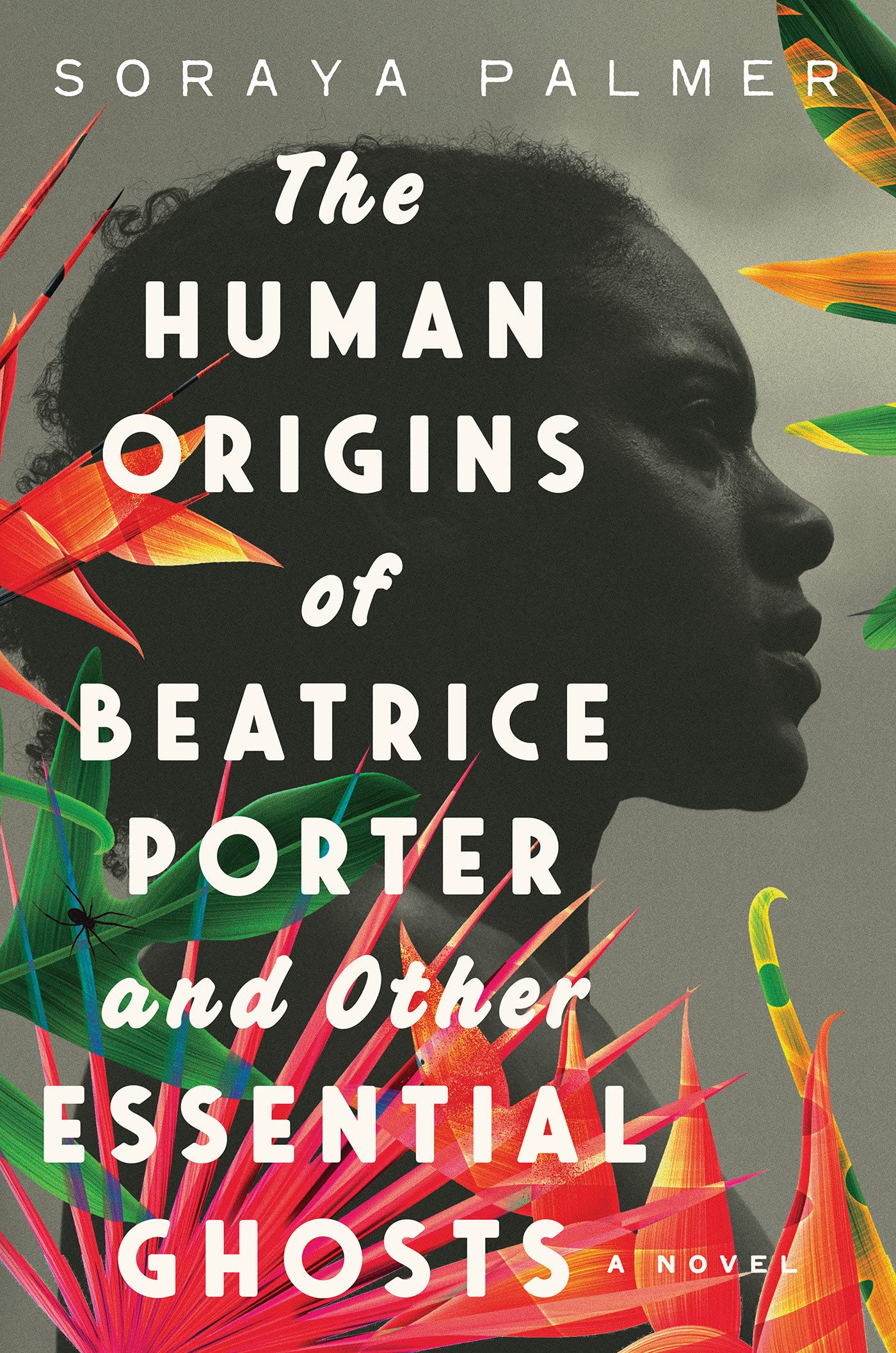
The Human Origins of Beatrice Porter and Other Essential Ghosts by Soraya Palmer

A fracturing family in Brooklyn with roots in Jamaica and Trinidad navigates love and loss in this debut novel influenced by Caribbean folktales and the power of stories.

The Human Origins of Beatrice Porter and Other Essential Ghosts is Soraya Palmer’s first novel, a phantasmagoric interweaving of family and folktale. Readers first meet two sisters, Sasha and Zora, when they are young girls in Brooklyn’s Flatbush, dealing with the household complexities of their father Nigel’s violence and infidelity and their mother Beatrice’s headaches and distance. Soon this timeline meanders to visit Nigel and Beatrice as children in Jamaica and Trinidad, respectively, and then as a young couple. These individual and family histories blend with folktales of Anansi (spider, god, man, woman, trickster storyteller), demons and exorcisms. The Rolling Calf haunts butchers, and Mama Dglo is the protector and mother of the ocean and “all things water,” among other mythical tales. The narrator of these time-jumping tales, with the repeating refrain “Let me tell you a story,” is mysterious, driven by motivations not always clear nor necessarily reliable–but always concerned with the power of storytelling itself: “You see I am what they call Your Faithful Narrator, found in places the West calls fairy tales, what men call gossip, what children call magic.” Small actions can be revolutionary: “They realize there is nothing more dangerous than a story with an owner that no one can touch.”

In the 1990s and 2000s, Sasha discovers chest binding as she navigates gender and sexuality. Zora studies her book of Anansi stories and hones her craft (that of her namesake) in her diary. As much as the sisters love each other, their respective self-explorations push them apart. In different ways, Nigel and Beatrice separate but remain intertwined. Caribbean and West African folktales continue to influence each of these threads until they come together again in Trinidad with a 106-year-old grandmother, several reunions, an ending and a new beginning. None of these characters is entirely innocent or faultless, but they are finely drawn with compassion and compelling, colorful pasts. Love and family contain both beauty and pain in this telling.

Palmer imbues her novel with both snappy pacing and deep feeling in a lovely prose voice with music and poetry behind it. The Human Origins of Beatrice Porter has big things to say about sisterhood and family; race, sexuality and class; life and death; and above all, the power of storytelling. “Why do we remember some stories more than others? And what happens to the ones that we forget? Let me tell you a story.” The result is wide-ranging and thought-provoking–but also an immersive and sumptuous read. Palmer shines.


This review originally ran in the March 3, 2023 issue of Shelf Awareness for the Book Trade. To subscribe, click here.


Rating: 7 Apple J’s.

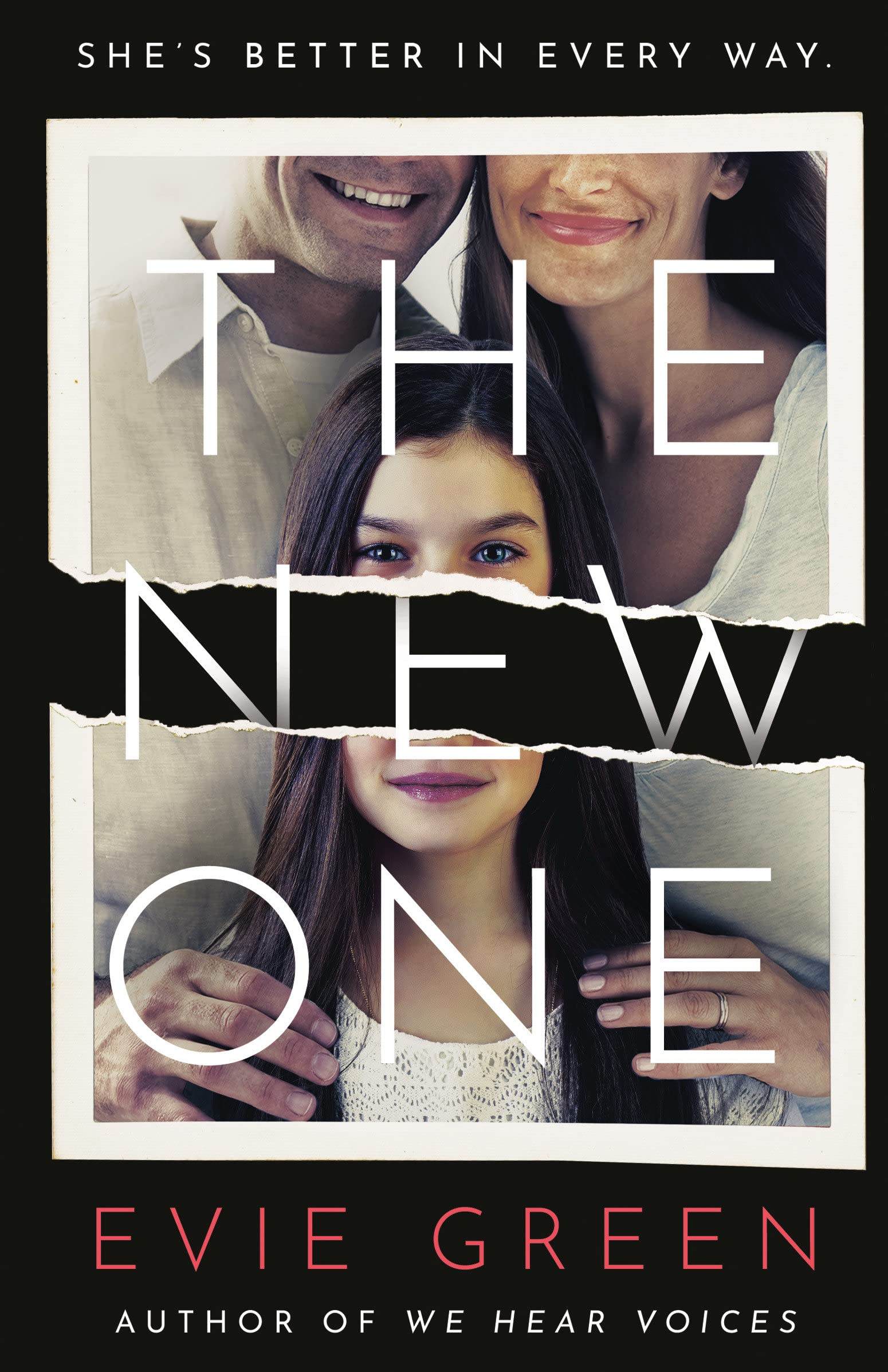
The New One by Evie Green

Artificial intelligence, family troubles, love and aspiration combine for a delightfully suspenseful novel of secrets and betrayal.

In The New One, Evie Green (We Hear Voices) takes readers on a propulsive journey through grief, loss and secrets kept by those we love. This compelling novel will have readers up all night, following the tribulations of a struggling family offered a great gift–or possibly a curse.

Scarlett, the Trelawneys’ daughter, was a perfect angel–brilliant, beautiful, sweet, gifted–until she turned 13. She then becomes a terror: lying, staying out late at night, neglecting her schoolwork. “They had become a shouty family,” Green writes. “They all yelled at one another every day, and [Tamsyn] had no idea how to stop.” In near-future Cornwall, Scarlett’s parents, Tamsyn and Ed, are barely surviving in their humble camper: Ed works nights, and Tamsyn is up early mornings, “a peasant working in fields.” They subsist on stolen cauliflowers and rarely speak to each other (without shouting). Then tragedy strikes: Scarlett is left lying in a hospital bed in a coma, and Tamsyn fears she’ll never see her daughter conscious again. Just as their insurance runs out, they receive an offer that seems a mix of magic, miracle and horror: while a company called VitaNova rebuilds their daughter, the comatose Scarlett will receive the finest medical care, and her parents will be granted a fully funded fresh start in Geneva, Switzerland. Scarlett, now named Sophie (her middle name), is part human clone and part AI. She shares Scarlett’s memories and gifts, although with the traumatic past year erased, and has been augmented with a better knowledge of French and physics–and a perfect, innocent love for her parents.

Most of the story is told from Tamsyn’s point of view, with brief ventures into the perspectives of the other members of her family. Tamsyn is unsure of her manufactured daughter: this new one is so like her darling Scarlett that she’s impossible not to love. But Tamsyn grasps what Ed seems not to: their real, true, original daughter still lies unconscious, and every bond with Sophie represents a small betrayal.

The New One‘s creepy Stepford atmosphere is not to be underestimated. Readers can see what even Tamsyn cannot: Sophie understands more than she seems to, and her best interests and Scarlett’s may not align. Ed is keeping secrets. Geneva is a bit too perfect. Green’s (aka British author Emily Barr) prose is compulsively readable, her characters disarming and capable of great mystery. The New One is deliciously disturbing, engrossing and surprising at its every turn. This not-to-be-missed novel of family dynamics and what it really means to be human and to love is both pleasurably escapist and thought-provoking.


This review originally ran in the February 23, 2023 issue of Shelf Awareness for the Book Trade. To subscribe, click here.


Rating: 8 DVDs.

Maximum Shelf author interview: S. A. Cosby

Following Friday’s review of All the Sinners Bleed, here’s S. A. Cosby: The Light in the End.


S.A. Cosby is an Anthony Award-winning writer from Southeastern Virginia. He is the author of My Darkest Prayer, Blacktop Wasteland and Razorblade Tears. His fourth novel, All the Sinners Bleed (Flatiron Books, June 6, 2023), introduces Sheriff Titus Crown, who has returned to his Southern hometown and is out to right some wrongs from the inside. When not writing, Cosby is an avid hiker and chess player.

Is Sheriff Titus Crown a hero?

S. A. Cosby

S. A. Cosby (Sam Sauter Photography)

He is, but like all heroes, he’s flawed. Flawless heroes are boring. It’s the reason they had to give Superman kryptonite. A perfect hero is aesthetically something to aspire to, but existentially it’s a bit of a dud. It makes the hero stronger that they’re able to overcome those flaws and still do the right thing.

How well does he fit the classic loner noir detective model?

He is a classic noir detective–even though he’s the elected sheriff, he has more in common with Philip Marlowe than with Wyatt Earp. But he has a strong support system that a lot of those classic heroes didn’t have. He has his dad, his brother–I really love their relationship–his girlfriend and some of his deputies. Even though he’s their boss, he does respect and lean on them. But at the end of the day, he is the lone man standing up for what’s right. He’s the one that has to face the devil, eventually, by himself, and that’s by design. I’m fascinated with what somebody does when they’re faced with a life-changing moment. How do they stand up? And it’s most interesting to me when they stand up in those moments alone. You know, character is what you do when no one is looking. I wanted to firmly put him in that situation.

How important is a character’s backstory?

Incredibly important. When I create characters, I do their full biographies, and a lot of the time none of that makes it into the book. I create long documents about their childhood, their past, their likes and dislikes, intrinsic quirks. Even things that will never be revealed completely still influence the character’s arc, their decisions, their decision-making process. You don’t need to know everything about Titus, but you need to know that the things that have happened to him have shaped him, have defined his morals and his idealism, and his small bit of nihilism.

Titus is part of that tradition of the lone wolf, but he’s also very much in the tradition of the local boy made good. Charon County is so much a part of who he is, whether he’s in the FBI or, now, the sheriff. There is a proprietary sense about him. He cares about this place, and he knows some of the people–most of the people–don’t particularly care for him because he’s the sheriff, but he still feels protective of this place. The roots of Charon are so deep in his psyche.

What makes for a compelling villain or protagonist?

Your protagonist is only as good as your villain. You need a villain that matches the protagonist in drive and intellectually, but also personality-wise. Eminem and Kid Rock were both coming up in Detroit at the same time as rappers, and people would ask him why he would never battle Kid Rock. And he said, because beating him wouldn’t have meant anything, because I don’t respect his skill. He didn’t see him as a worthy opponent. For Titus, I wanted the villain that he has to face to be a genuine threat, not just physically but intellectually, because I wanted his triumph to mean something.

When readers get to the end of the book, they’ll realize that Titus understands some of what the villain has gone through. That creates a pretty interesting dynamic, to show the differences between these two characters. There are elements in their background that are similar, but whereas Titus went the way of wanting to protect people and not giving in to the pain of his past, the villain chose another route.

How important is place to this narrative?

Place is important in all my stories, but I think it’s the most important aspect of this story. In my previous books I’ve written about place as a more general, macro idea. I’ve written about THE SOUTH, all capital letters, what that entails and what that means. I’ve spoken ad nauseum about how proud I am to be from the South but at the same time how much I recognize the flaws that are here. As an artist, I think it’s my duty to examine that. With this book I really wanted to delve into the micro of that, and what’s it’s like in a town like Charon, which has a deep history. It has this sort of mythic quality to it. The citizens experience it in totally different ways. The white citizens experience it differently than the Black citizens. The young citizens experience it differently than the older folks. This town can have a multiplicity of definitions based on who you are and what your background is. I think place gives the story its weight. Charon County is a secondary protagonist and antagonist in the book.

Is this a novel about race?

In Southern fiction four things will always come up: race, class, sex and religion. Those are the four pillars of Southern gothic fiction. All are represented to various degrees in All the Sinners Bleed. As an African American person, I’m always going to write about race, because race is always a part of the conversation for me. People ask, why do you have to bring up race? I didn’t bring it up. This country brought it up; my life brings it up. Race is important, because Titus is a Black man, the first Black sheriff in this town. But religion is also on the forefront, maybe even more so, because in the rural South, there is an incredible hypocrisy that comes up with religion. Small towns with 25, 30 churches talk about Christianity as a concept but not as a practice. Flannery O’Conner said she doesn’t believe the South is Christ-centered, but Christ-haunted. And I believe that’s emblematic of the hypocrisy of the modern Christian evangelical movement, that you purport to love your sisters and brothers in Christ, but you vote against helping people, you vote against empathy. You live in a world where you thump a Bible and worry about the lives of children, so to speak, but once those children are out of the womb you could not care less about them. I wanted to talk about all of that. Religion can be a hammer to break down doors or it can be a cudgel to beat you down, and I think it’s represented in both ways in the book.

Is it difficult or draining to write bleak stories? Or is there catharsis there?

It’s never as draining as you might think. I’m a pessimistic optimist; I write these bleak characters in these bleak situations, but my characters triumph in the end. Not without some difficulty, some wounds and some scars, but they triumph. I was raised Southern Baptist, and I have this Old Testament philosophy that “I’ve never seen the righteous forsaken,” to quote Titus’s father. I write these really dark, morally complex characters and situations because I want the good guys to win, because that doesn’t really happen in real life. If it’s going to happen anywhere, it should happen in my book; I’m the one writing it. So as dark as my characters and their situations can be, they come through with the light in the end.


This interview originally ran on February 13, 2023 as a Shelf Awareness special issue. To subscribe, click here, and you’ll receive two issues per week of book reviews and other bookish fun.

Maximum Shelf: All the Sinners Bleed by S. A. Cosby

Maximum Shelf is the weekly Shelf Awareness feature focusing on an upcoming title we love and believe will be a great handselling opportunity for booksellers everywhere. The features are written by our editors and reviewers and the publisher has helped support the issue.

This review was published by Shelf Awareness on February 13, 2023.


From S.A. Cosby, author of Blacktop Wasteland and Razorblade Tears, All the Sinners Bleed is a lushly dark mystery set in fictional Charon County in Southeastern Virginia and starring a Black sheriff in a town that’s not at all sure it’s ready for one. Recently elected Sheriff Titus Crown is out to right some wrongs from the inside: police corruption, racism and profiling, law enforcers living above the law. He’s also dodging a few traumas of his own. Having come home to Charon County means he gets to live with and help his aging father, but it also means he’s reminded of his beloved late mother. His brother lives in town but rarely comes around. Titus has a local girlfriend who’s very sweet and good for him, but sort of unremarkable; he has a sense he should love her more. He’s haunted by the events that ended his FBI career in Indiana. Running a small staff of deputies in a small Southern town has its own challenges, mostly manageable ones; he hopes to redeem himself in this way from wrongs only hinted at.

But then there’s a call about an active gunman at the high school in town. In minutes, Titus is looking at a popular teacher of decades shot to death in his classroom, and a young Black man killed by deputies while the school–and via their cell phone videos, the entire Internet–watched. Before Latrell Macdonald died, “with a wolf’s snout in his left hand and cradling a .30-30 like a newborn in the crook of his right arm,” he spoke of crimes that make Titus’s blood run cold. The ensuing investigation will crack Charon County wide open, and challenge to the core Titus’s plans to clean up his hometown and make amends for things that happened in Indiana.

Titus is no investigative slouch. “His instructors at the Academy had their own version of String Theory. The way they explained it, there were invisible strings that vibrated unseen in the liminal spaces between sunrise and secrets, between rumor, shadows, and lies. Strings that pulled all this together. All you had to do was find the seam and unravel it. Or rip it apart.” His years with the Bureau and training under his friend and mentor there give him an edge on profiling and pursuing an enemy who seems determined to toy with him. He finds the remains of badly tortured and murdered Black boys and girls; as he investigates, the body count only rises. An old girlfriend from his FBI years appears, asking to interview him for her crime podcast; his father pleads with him to come back to church. The Sons of the Confederacy are planning a march at the upcoming Fall Fest, and a strange story surfaces about a reclusive fire-and-brimstone snake-handling preacher. Increasingly distressed at his inability to keep his county safe, Titus is plagued by memories and the present evil attacking his home. On less and less sleep, he doggedly puts in work. “He went over a few other emails, reviewed the gas expense reports, checked the arrest log from last night, updated the Sheriff department’s social media page…. It felt strange to attend to the mundane and the profane at the same time but that was a defining aspect of the job.”

All the Sinners Bleed is noir with a particular American Southern twist. Place figures heavily. “The soil of Charon County, like most towns and counties in the South, was sown with generations of tears…. Blood and tears. Violence and mayhem. Love and hate. These were the rocks upon which the South was built.” Cosby deals in timely themes: returning home and reckoning with old wounds and crimes; the unsavory histories of the places we love; the legacies of Confederate statues, of slavery and racism; the darkness within all of us, even those playing the good guys; the role of police and policing. His prose is gruff, poetic but stark: “The clouds gathered like young men on a corner getting ready for a fight.” Titus has a code like that of Michael Connelly’s Detective Harry Bosch: “Either we all matter or no one matters. Everyone deserves to have someone speak for them.” He believes that something hard and mean dwells in every heart–and in a few, true evil. What has beset Charon County is not supernatural. It is merely the wages of sin (as his churchgoing neighbors might say), or the county’s bloody past coming back around. There is something of the lone gunslinger–damaged but virtuous–in Titus Crown, who stands against the worst elements of human nature. Like Cosby’s previous novels, All the Sinners Bleed is often grim, but it lands on a surprisingly hopeful, even joyful ending.

For fans of gritty, dark mysteries with an interest in the very real and contemporary demons of United States culture and history, Cosby’s work offers a sinister but satisfying voyage into the best and worst of returning home and starting fresh.


Rating: 7 sheep.

Come back Monday for my interview with Cosby.

What Happened to Ruthy Ramirez by Claire Jimenez

This debut novel about a family still searching for a long-missing daughter and sister brims with voice, attitude and yearning.

Claire Jimenez’s first novel, What Happened to Ruthy Ramirez, brings to life a close but troubled Puerto Rican family in Staten Island, N.Y., carrying on but rocked by loss. “The five of us seem normal for a while, up until Ruthy turns thirteen and disappears…. Draw my mother sixty-two pounds later. Give her diabetes. Kill my dad. Cut a hole in the middle of the timeline. Eliminate the canvas. Destroy any type of logic. There is no such thing now as a map.” No one ever figured out what happened on the day Ruthy didn’t come home from track practice on the S48 bus as expected.

More than a decade later, Nina, the baby, is “blessed with the brilliant luck of graduating [from college] into the 2008 recession,” the first in her family to attend college but now returned home to live with her mother and work at the mall selling lingerie. Jessica, the eldest, lives with her boyfriend and their baby; she works as a patient care technician at the hospital, harried and tired but proud of her work. Their mother, Dolores, depends on her relationship with God and the church. What Happened to Ruthy Ramirez unfolds in alternating chapters, through the first-person perspectives of these four central characters: Nina, Jessica and Dolores in the late 2000s and the stormy, troubled 13-year-old Ruthy in 1996 when she disappeared. The latter is all attitude: You really want to know what happened to Ruthy Ramirez, she asks? Most people “think they got it all figured out, about who I am and what happened. Whatever, who cares? Not me, I promise you.” She describes the day it happened, the schoolgirl dramas and fights, whose pain appears superficial only from the outside. Years later, her sisters and mother struggle with everyday life and with moving on–until the day Jessica believes she sees Ruthy’s face on a sordid reality TV show: the woman shares the missing girl’s beauty mark, her laugh, the toss of her head, a couple of key phrases. And the remaining Ramirez family is off on a mission to recover their lost member.

One of Jimenez’s greatest achievements lies in the individual voices of her narrators, crackling with life, wit, humor, pain and personality. Jessica and Nina wrestle with the complicated love they feel for their family; Dolores rants in a well-meaning but frustrated one-sided conversation with her God; Ruthy oozes teenaged bravado and angst. Readers will be tugged by hope and despair alongside these true-to-life characters. In the end, What Happened to Ruthy Ramirez offers observations about race, class, family and the fate of missing girls beyond its title character.


This review originally ran in the February 7, 2023 issue of Shelf Awareness for the Book Trade. To subscribe, click here.


Rating: 7 grilled cheese sandwiches from the school cafeteria.

Weyward by Emilia Hart

The stories of three imperiled protagonists across centuries connect in this suspenseful, magical debut about the power of women and the natural world.

Emilia Hart’s first novel, Weyward, glows and glimmers with hidden powers, thrills and danger, a close connection with nature and between women across time. Three distinct stories eventually link to form a larger tale about strength, resilience and love.

Altha goes on trial for witchcraft in the English countryside in 1619. In 2019 London, Kate attempts to escape an abusive partner while harboring a significant secret. And at a grand estate in 1942, teenaged Violet struggles against the limitations of her father’s strict household rules, consumed by an unladylike love for trees, insects and other natural wonders. In alternating chapters, each of these stories deepens. Altha, the daughter of a healer, tries her best to follow in her beloved late mother’s footsteps, helping her neighbors and causing no harm, while dodging the increasingly avid witch-hunters of her time. Locked in a Lancaster dungeon, Altha does what she can to protect herself. Kate flees the city undetected, holing up in a cottage inherited from a great-aunt she hardly knew, but her safety there is tenuous as she plans for an uncertain future. Violet is a tenacious and spirited 16-year-old, but powerless as she is imprisoned in her father’s world; she dreams of becoming a biologist or an entomologist, but cannot even visit the local village. Men in the Weyward world, in all three timelines, are sources of power and abuse, not kindness, but Violet’s loyal brother forms a notable exception.

Each woman must learn about and come to terms with her powers and her connections to the natural world. Violet is passionately entwined with a particular beech tree, with damselflies and weasels, but no one will even tell her her mother’s name, let alone the family history that she senses casts a shadow on her life. Having lost her father at a young age in a curious accident, Kate lives in fear of the birds and insects that most call to her. Altha is reluctant to exercise her full powers, having promised her mother she would be careful. But, she says, “I had begun to suspect that nature, to us, was as much a life force as the very air we breathed.”

Hart expertly weaves together disparate but connected storylines, with leaves and butterfly cocoons and a mountain stream. Her protagonists are strong, but hard beset by the forces around them, even across centuries. Her prose sparkles with wonder and simmers with danger. Weyward‘s atmosphere is compelling, as each plot thread offers suspense. With a momentum of its own, this debut draws readers inexorably to a glorious conclusion that celebrates connectedness and the power of women and nature.


This review originally ran in the February 2, 2023 issue of Shelf Awareness for the Book Trade. To subscribe, click here.


Rating: 7 feathers.

Lookout by Christine Byl

This astonishing novel of work, love, community and forgiveness in 20th-century rural Montana will leave readers forever changed for the better.

Christine Byl’s Lookout is an unforgettable novel, both stunning and subtle, written with nuance and compassion. With all the down-to-earth lyricism displayed in her memoir, Dirt Work: An Education in the Woods, Byl transports readers to rural Montana in the 1980s, ’90s and 2000s, where the Kinzler family lives, works and loves. These characters, whose bonds are gorgeously rendered and even inspirational in their imperfections, are deeply lovable.

Josiah Kinzler’s family history includes alcoholism and suicide; he is alone in the world before he is 20 but possesses land, skills, a work ethic and strong ties to his neighbors. He marries Margaret Blanchard. Together they eke out a living in her father’s hardware store and eventually through Josiah’s highly regarded furniture-making and woodworking. Their two daughters, Louisa and Cody, are remarkably different from one another but as fiercely loving as their parents. The family will grow into nontraditional shapes, but its members never lose their commitment to one another. Each is complicated, fully developed and sensitively drawn.

Chapters shift between a third-person perspective and the first-person voices of various characters–not only the central Kinzlers but also various members of their community. In this way, Byl offers triangulations on events and characters. These secondary characters’ perspectives enrich the story enormously, as when a neighbor who has known Josiah from childhood observes the latter’s marriage and fatherhood: “He loves those girls, and I can see his ease with them that I have not found with my own sons.” Montana in the 1980s and ’90s is not without its problems: gay characters struggle to find acceptance, and American Indians’ claims to the land are dismissed. Families and individuals struggle with mental illness and addiction. But Byl treats the people and their problems–even the shortsighted ones–with grace and frankness. Frequently, characters do the same for one another.

Lookout, which contains evocative expressions of love, is lush in its descriptions of relationships, the natural world and Josiah’s exquisite woodworking. Byl writes with an attention to the details of her characters and setting: “A heavy snow in early May buried pasqueflowers and daffodils and the barely rising shoots that would become the season’s crops, but by the end of the month, the sun lit up like a match.” Cody and her father are similarly laconic and watchful; they share a special bond, as displayed in a stunningly beautiful scene in which he proudly watches her run a chainsaw just as she was taught. Many of the relationships and family systems represented are unconventional–but sensitive and thoughtful. Lookout specializes in the quiet observation of transcendent truths about many facets of life.


This review originally ran in the January 26, 2023 issue of Shelf Awareness for the Book Trade. To subscribe, click here.


Rating: 10 dried pansy petals.

The Writing Retreat by Julia Bartz

In this shape-shifting tale, aspiring novelists come together at a possibly haunted estate with a famously reclusive writer–for what turns out to be as much horror as inspiration.

Alex, the glum protagonist of Julia Bartz’s The Writing Retreat, has recently crossed into her 30s. Stuck in long-term writer’s block, her dreams of making it as a novelist are just about dead; she holds a thankless and “bleakly underpaid” position in publishing; her sex life is equally bleak; and she still mourns her traumatic friend-breakup with the more successful Wren a year ago. So it feels like a shocking and undeserved honor to be accepted to a fantastically exclusive writing retreat hosted by Roza Vallo, the wildly successful novelist Alex has idolized since she was 12 years old. The catch is that Wren has been accepted, too.

Roza’s Blackbriar Estate in the Adirondacks in New York is grand, dramatic and supposedly haunted. Roza herself is famous, rather controversial and private: the five young women attending the retreat must sign NDAs. Alex’s adoration of her enigmatic hero is enormous, and she senses this is her big shot at turning her life around: “If I lived in a pocket of Roza Vallo’s brain, however small, I sensed it would bolster my own existence.” She is also nearly crippled by anxiety about being near Wren–but that concern is quickly overshadowed by the terms of Roza’s intensely competitive program for the retreat. The five writers in attendance must each complete a whole novel in just 28 days, and the best of their works will win a million-dollar advance on a publishing deal. Even as the high-speed writing race ramps up and the drama with Wren continues to smolder, it emerges that something still more sinister is going on behind the scenes at Blackbriar Estate. Inexorably, The Writing Retreat evolves into a locked-room mystery, as eight women–five young writers, two staff and Roza–find themselves snowed in at Blackbriar and beset by potentially fatal threats that may be supernatural or simply human evil.

Bartz imbues her writing with a shape-shifting momentum: the plot’s focus moves from the small, painful dramas of competition and jealousies in friendship into horror and psychological suspense. Blackbriar Estate is both magnetic, in its haunting history and narrative possibilities, and stifling. The world of writing and publishing can be, at turns, solitary, socially supportive, triumphant and backbiting, and The Writing Retreat encompasses all these possibilities and more, as it explores friendship and family traumas, artistic crises and human nature. Bartz’s debut subverts genre in the interest of entertainment, satire and chilling thrills.


This review originally ran in the January 19, 2023 issue of Shelf Awareness for the Book Trade. To subscribe, click here.


Rating: 7 words.

Stone Blind by Natalie Haynes

Natalie Haynes splendidly showcases classical scholarship, witty humor and an appreciation for nuance in this reframing of the story of Medusa.

With Stone Blind, Natalie Haynes (A Thousand Ships; Pandora’s Jar) brings her authoritative expertise in Greek myths to bear on Medusa, whose story is fresh and surprising in this telling. Haynes is both a scholar of the classics and a stand-up comic, and that combination is brilliantly evident in this sardonic, darkly funny adaptation.

Stone Blind combines several threads familiar to fans of Greek mythology, although readers need no previous knowledge to follow along. Zeus, king of the gods on Olympus, philanders and bickers with his wife, Hera; this narrative will witness Athene’s birth and a battle between gods and giants, among other Olympian events. Medusa is delivered as an infant mortal to the two elder Gorgons who will be her sisters–in this version, they are monsters only in their unusual appearance, and they care for their fragile mortal sister with great tenderness. As a young woman, Medusa is raped by Poseidon in Athene’s temple. The goddess is so offended by this sacrilege that she punishes the victim, replacing Medusa’s hair with snakes and bestowing her most famous attribute: the ability to turn any living creature to stone by eye contact. In a third thread, the demigod Perseus comes of age as a bumbling incompetent: self-serving, lazy, whining, unnecessarily violent. And Andromeda, legendary beauty and princess of Ethiopia, is cursed to death by her mother Cassiope’s hubris.

These threads come together in complex ways when gods are offended and angered and play out their dramas with mortal pawns. Traditional storytelling has cast Perseus as a hero and Medusa as a monster, but Haynes does not concur: “The hero isn’t the one who’s kind or brave or loyal. Sometimes–not always, but sometimes–he is monstrous. And the monster? Who is she?”

“Who decides what is a monster?” Medusa’s sister asks. To which Medusa responds: “I don’t know…. Men, I suppose.”

Haynes’s genius lies not only in her subtle recasting of this story–with an emphasis on who assigns roles and draws conclusions–but in her dryly scathing humor. Her gods are (even more than usual) immature, selfish and often silly. Athene is “delighted with herself” for the simplest of observations about humanity; she burst forth from Zeus’s head fully formed, but not necessarily with the emotional maturity or world knowledge her physical perfection would imply. Poseidon’s bluster and Zeus’s carelessness of his children are exaggerated. Perseus is a dolt, impervious to learning the lessons of his (mis)adventures. Haynes writes in many voices: those of olive trees, Medusa’s snakes-for-hair, a crow, the gods and mortals that make up this twisting tale. A surprising ending caps off her truly delightful and novel version of a very old story.


This review originally ran in the January 6, 2023 issue of Shelf Awareness for the Book Trade. To subscribe, click here.


Rating: 8 birds.