Walk the Darkness Down by Daniel Magariel

Grim but with a final upward turn, this novel of loss, grief, and strained bonds investigates human connections and disconnections.


In Walk the Darkness Down, Daniel Magariel (One of the Boys) introduces a couple separately torturing themselves through grief and eventually coming together again.

Marlene and Les, who live in a small, troubled town on the Atlantic coast of the United States, lost their young daughter years ago. In suffering, they mistreat each other. Les is a commercial fisherman on an offshore scalloping boat with a crew of other men; punishingly hard physical labor, camaraderie, and violence combine in a cocktail that helps distract him from his loss. Marlene drives the streets at night, mining memory, searching for the deep and searing pain that will help her remember. During his brief stays at their apartment, they repeat a pattern: Marlene breaks the bedroom door and Les fixes it. When Les is offshore, she picks up local sex workers and brings them home to clean them up and feed them. One of these encounters develops into something resembling friendship, just as Les’s crew fractures and the dangers of his work increase. Marlene clips newspaper articles about freak natural occurrences: mass deaths of red-winged blackbirds and horseshoe crabs; new migrations of American bullfrogs; wildfires, droughts, and the widening of tornado alley. As their two lives approach new crises, Marlene and Les must chart a course out of self-destruction.

Magariel’s prose is as quietly lovely and evocative as his subjects are bleak. “The woman settles into her chair, and Marlene proceeds to lay bare the details of her face. The worry lines of her forehead Marlene excavates with a pass over the brow.” His settings showcase realistic detail, and both beauty and damage: fecund coastlines and wetlands, the harsh sea, an old family home, and garishly decorated working-class bars. Marlene and Les treat one another with alternating callousness and tenderness; Les’s relationships, especially on the boat (with what Marlene calls his “other family”), reveal a memorable form of rough, ungentle love.

Relationships across great distances–physical and psychic–are a central concern of this novel, which is focused on how its characters handle pain. “You got to abide with your darkness as if it were a scared child that wakes up in the middle of the night and needs to be walked back down to bed,” Marlene’s newest acquaintance asserts, but each character wrestles with hurt in their own, often-wounding ways.

Stark and tragic, Walk the Darkness Down offers a harrowing view of individual and familial suffering–with empathy and, ultimately, with hope.


This review originally ran in the June 6, 2023 issue of Shelf Awareness for the Book Trade. To subscribe, click here.


Rating: 7 lobsters.

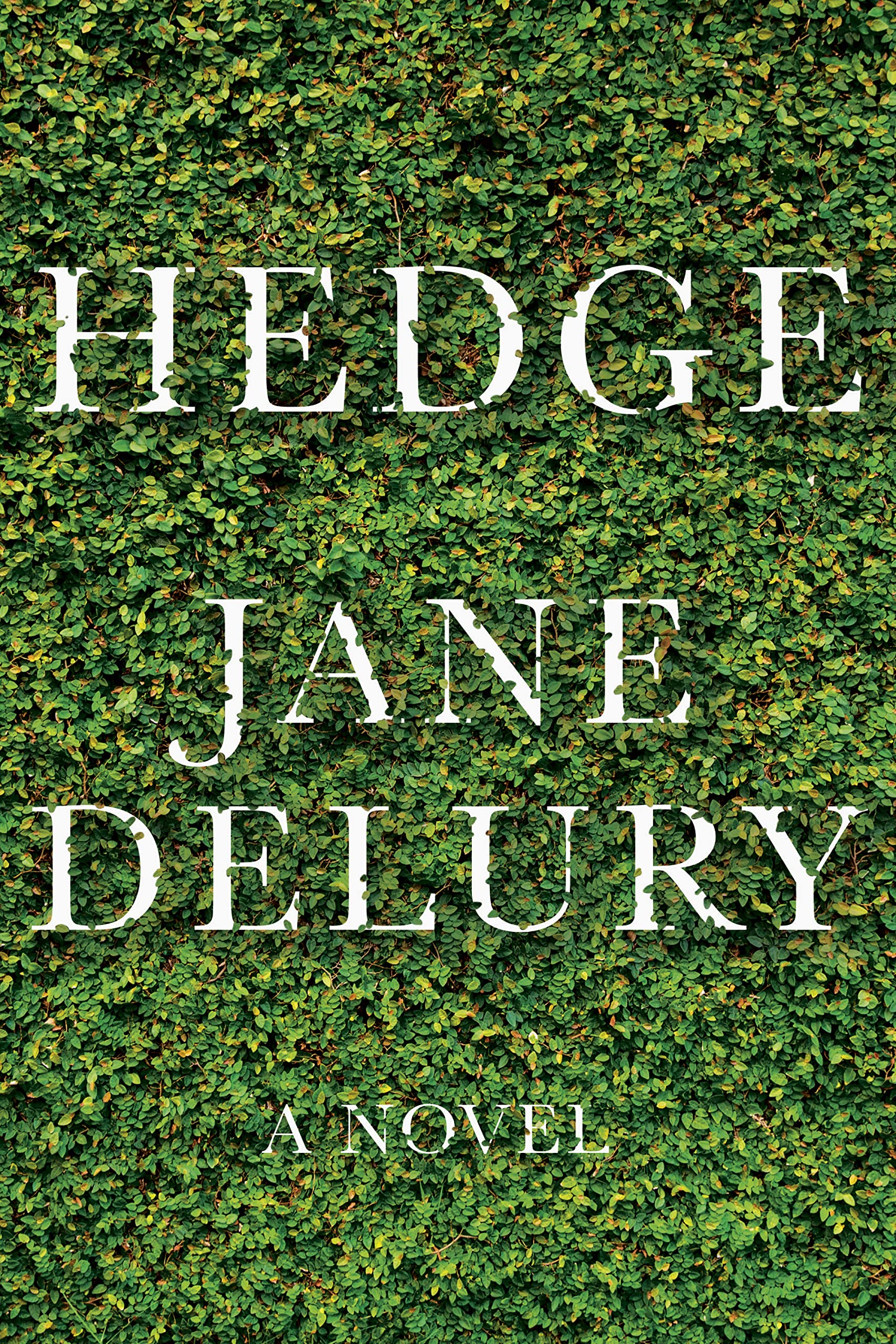
Hedge by Jane Delury

In this profound novel about love, loss, and choices, a summer’s exciting work and exhilarating affair will reverberate through the lives of a deeply likeable protagonist and her family for years.

Hedge by Jane Delury (The Balcony) is a roller coaster of a novel about family, creation, love, and shifting priorities, lush with detail and delicately rendered. Readers will be thinking of Delury’s protagonist long after these pages close.

Maud is a garden historian, “with her odd mix of botany, archaeology, history, and practical gardening skills,” and she loves her work. Originally from California, she was well suited to England, both London (where she finished her education) and the countryside, but reluctantly returned to the United States for her husband Peter’s career. When Hedge opens, Maud is at work on a restoration project in New York’s Hudson Valley. It is beautiful, stimulating work, and she is likewise stimulated by the company of Gabriel, a handsome, intriguing archeologist at work on the same site. Her two daughters, Ella and Louise, are about to join her for the rest of the summer. Peter remains in California: the couple has separated “both geographically and maritally,” and Maud plans to make this separation permanent and legal, but their girls don’t know this yet. On the cusp of an affair with Gabriel, she feels enlivened, awakened by his attention, her own physicality, the thrill of discovering flower beds from the Civil War era and the turning of the earth. She allows herself to dream of what a new life could look like for her as well as for the scotch roses, lilac, clematis, and honeysuckle she plants. But when the girls arrive from California, 13-year-old Ella suffers a trauma that snowballs into life-changing events for all involved.

The idyll in New York ends suddenly, and Maud’s next months and years are spent dealing with hard choices between undesirable outcomes. She wrestles to balance meaningful work and practicalities; lustful, soulful connection, and the mundane compromises of marriage; her own needs and those of her children. “You could comfort yourself with statistics, tell yourself that a twenty-year relationship was a good run. After all, when marriage was invented, no one lived this long. But it was still a jagged gash through your life, even if it was what you wanted.” Delury’s prose is finely detailed, saturated with color and feeling; Maud’s passion for her work is as substantial and sympathetic as her love for her daughters. Both a quiet domestic tale and a novel of surprising suspense, Hedge cycles from hopeful to harrowing and back again. Maud is nurturing and steely, riveting and unforgettable.


This review originally ran in the May 8, 2023 issue of Shelf Awareness for the Book Trade. To subscribe, click here.


Rating: 7 slices of pepperoni.

Maximum Shelf author interview: Jesmyn Ward

Following Monday’s review of Let Us Descend, here’s Jesmyn Ward: Finding Those Erased by History.


Jesmyn Ward received her MFA from the University of Michigan and has received a MacArthur Genius Grant and a Stegner Fellowship. She has won two National Book Awards, in 2017 for Sing, Unburied, Sing; and in 2011 for Salvage the Bones. She is professor of creative writing at Tulane University and lives in Mississippi. Her fourth novel, Let Us Descend, begins on a rice plantation in the Carolinas, and is narrated by an inspiring enslaved young woman in transcendent prose.

What freedoms and challenges do the historical setting present?

Jesmyn Ward (photo: Beowulf Sheehan)

It offered me a freedom to write from a time and place where I was less constrained by the present moment. That is, I didn’t feel pressured to write about current politics or manners or modes of behavior or even geography, as the world of the novel had its own.

It was beyond difficult to write about a person who has little to no physical agency for much of the novel. That reality is so far removed from my own that it was nearly impossible for me to draft a beginning. I wrote that beginning over and over for years because I could not figure out how to inhabit Annis; I was flailing because I couldn’t understand where the narrative was supposed to go. It took me a long time to figure out that Annis would have other kinds of agency–emotional, imaginative, and spiritual–and that these would carry her through the story. Once I began putting words on the page, living with Annis’s voice, she led me.

Where did this novel begin?

I heard an episode of WWOZ’s Tripod called “Sighting the Sites of the New Orleans Slave Trade.” In it, historian Erin Greenwald tells journalist Laine Kaplan-Levinson that there were only two plaques in New Orleans that accounted for the slave trade, and one of them was in the wrong location.

I felt a hot blush in my chest and had to fight back tears when I heard this. It was devastating to know that so many enslaved people had been sent for sale to the lower south, had endured barbaric conditions and treatment, and then had their experiences erased. It was painful to know that I moved through this landscape, a landscape that had soaked up their sorrow and pain like a sponge, and I was blind to it. It seemed immensely unjust. I immediately asked myself: What if I write about it? What will happen if I bring it to life through a character, a woman? This is how I first began to get glimpses of Annis.

How much research was required?

I knew next to nothing about the domestic slave trade. It was embarrassing to realize that my high school and college education had failed me so miserably in that aspect. It made me wonder about active erasure, about how the active suppression of knowledge can make it possible for a well-known rapper to say slavery was a choice, 150 years later. For folks on Black Twitter to talk about slavery and say: I am not my ancestor–couldn’t be me. We have these ill-informed reactions to American slavery because we don’t know anything about it beyond what we see in pop culture. We are not educated about it.

I read general books about American slavery: The Half Has Never Been Told, They Were Her Property and The Great Stain. I read books about Louisiana: The Sugar Masters, Slavery’s Metropolis and The Free People of Color of New Orleans. I read about slave pens in Soul by Soul. I read about maroons in Slavery’s Exiles, and I read slave narratives, too, the most helpful one being Six Women’s Slave Narratives. This is not an exhaustive list, but these are some of the books that were most helpful to me.

As I wrote I discovered there was still more research I needed to do. I read about African-American slave medicine, the amazons of Dahomey, flora and fauna of the southeast United States, and more, driven by panic and anxiety. The last thing I wanted was to kick an academic out of the story when I got some fact or bit of ephemera wrong.

I’m sure I made mistakes, but I tried really hard not to. I hope I read enough to render the world real and present for the reader, to crowd them into Annis’s reality, to make it impossible for them to look away.

Does this offer an allegory for present times?

I think at its heart that this novel is about someone struggling with grief. I can strip away all the material circumstances of Annis’s enslavement, and underneath the brutality and cruelty of the forced work and punishment and dehumanization, I see a person who is swimming through grief. She has lost so many loved ones, so she is navigating mourning and the strange reality of the slave markets and the lower south at the same time. She is all longing and bewilderment and grit. I think many of us can identify with those emotions, especially post-2020, as we maneuver our way through this new reality, so many of us saddled with loss.

Annis enters adulthood because she has fought to survive a very American crucible. I believe that in a way, Annis saves herself in telling stories, in remembering, in creating community and relationship with those she meets on her way, in empathizing, in living. I like to think that she gives us a blueprint for how to survive and thrive in the present moment.

Is this a triumphant story?

I believe it is a triumphant story for Annis, for the character, but I also think it is a triumphant story for all the enslaved and maroons in the world of the story. In allowing the reader to inhabit this world, we empathize with them, we feel with them as they live and love and resist and persist. I hope this novel contributes to the conversation that writers of African descent have been having in books like The Water Dancer or The Underground Railroad, and that it does its part to enable readers to witness and to understand enslaved people anew.

How has novel-writing changed for you?

I find my motivation for writing novels changing. In the beginning, I wanted to write about people who could be part of my community or family because I wanted to make us visible. I wanted readers to love us and bleed with us and cry and laugh with us. I still want all that, but in the last two novels, I’ve discovered that it is also important to me to find those erased by history and to write them into the present, into common knowledge. I want readers to know about kids like Richie, sent to Parchman Prison at 12 and 13. I want readers to know that teens like Annis existed: that she and others like her walked from the upper south to the lower south, that they encountered demeaning horror after demeaning horror, and yet they persisted. They lived in spite of all that was done to them.

I intend to write a YA/middle grade book next, and my next few novel ideas revolve around characters who live through moments of upheaval, when the world is turned on its head and the logic of everyday life does not apply. I’m really interested in how people cope in those moments, in how they hold onto themselves in those moments, in how they navigate realities that defy their expectations and their experiences.

I believe Let Us Descend could count as the first flower of that motivation as well.


This interview originally ran on May 17, 2023 as a Shelf Awareness special issue. To subscribe, click here, and you’ll receive two issues per week of book reviews and other bookish fun.

Maximum Shelf: Let Us Descend by Jesmyn Ward

Maximum Shelf is the weekly Shelf Awareness feature focusing on an upcoming title we love and believe will be a great handselling opportunity for booksellers everywhere. The features are written by our editors and reviewers and the publisher has helped support the issue.

This review was published by Shelf Awareness on May 17, 2023.


Two-time National Book Award-winner for Fiction Jesmyn Ward (Men We Reaped; Navigate Your Stars; The Fire This Time; Sing, Unburied, Sing; Salvage the Bones) takes a different direction with her fourth novel, Let Us Descend: it’s her first historical narrative. Beautifully written and heartrending, Ward’s story sensitively handles grief, love, and recovery. On a rice plantation in the Carolinas, an enslaved teenager named Annis narrates as she works alongside her beloved mother. Mama is a source of comfort and strength even as her finger bones are “blades in sheaths.” Annis says, “The first weapon I ever held was my mother’s hand.” This steely woman teaches Annis lessons of combat learned from her own mother, one of thousands of warrior wives to an African king, tasked with both protection and elephant hunting. “In this world, you your own weapon,” she tells her daughter, and Annis will need to be.

Annis’s father is the plantation owner who owns her and her mother. Annis has half-sisters in the big house. “My sire’s house hulks; its insides pinned by creaks,” and her “sallow sisters” have a tutor to read to them, to teach them the texts of ancient Greece, about bees and wasps and Dante’s Inferno: “The tutor is telling a story of a man, an ancient Italian, who is walking down into hell. The hell he travels has levels like my father’s house.” Let Us Descend‘s title is a nod to Dante, and a cue to the reader to notice hells, descents, and journeys south. Annis listens and learns. Through her natural gifts, her own interest, and with her mother’s help, she becomes skilled in foraging: herbs, mushrooms, medicinal plants, and simple foods. She learns to befriend the bees she hears her sisters’ tutor speak of.

Then Annis’s father chooses to sell her mother south. The “Georgia Man” takes her away in a line of stolen people for the long walk to market. Annis falls into a near-fatal grief at being left without the most important person in her life, until a kind friend pulls her back to the surface. But soon, Annis and Safi, her friend-turned-lover, are sent on the same walk with the Georgia Man. From the plantation where she was born, Annis makes a death march to a New Orleans slave market and is sold to a cruel lady whose Louisiana sugar plantation marks a further descent, into a new level of hell. Others will uplift her along the way, but she never shakes the excruciating grief for her mother.

Along the way she gains and loses friends, and meets a spirit: Aza controls the storms and winds, and has stolen the name of Annis’s maternal grandmother, the warrior Mama Aza. “Aza’s hair a living thing: scudded clouds, the setting sun lighting them on fire. She leans forward and a breeze blows from her. Feels like the slap of a freshly washed linen on my face, snapping in a cool wind.” The spirit seeks her own identity and self-importance in relation to others, and has locked onto Annis’s maternal line as a way to achieve this: she models herself after the grandmother Annis never knew, and her use of the name Aza represents both connection and theft. That Annis refers to enslaved people like herself as “stolen” adds a layer to Aza’s use of the name.

Less centered around plot and character than Ward’s previous novels, Annis’s story is more elemental and thematic, dealing primarily with grief, forces of nature and human evil, villains and allies. The spirits she meets–chiefly Aza, but others as well–are closely associated with natural forces. “Another spirit, white and cold as snow, walks the edge of the river; it hungers for warmth, for breath, for blood, for fear, and it, too, glances against the enslaved stolen and feeds. Another spirit slithers from rooftop to rooftop before twining about wrought iron balconies outside plaçage women’s bedrooms, where it hums, telling the bound women to portion out poison in pinches over the years, to revolt, revolt, revolt.” These spirits can help but also harm, offer but also take away; they may represent another form of attempted ownership, as Aza has taken Mama Aza’s name. In a magical-realism twist, Annis finds these spirits widen her world beyond her immediate suffering to other timelines and possibilities.

Just as Ward’s title refers to Dante’s story of a descent into ever-deeper levels of hell, her hero makes a parallel, nonconsensual descent into the deeper South, into pain and suffering and sorrow, and into the worsening and worst of humanity. The novel moves with Annis from the Carolinas to Louisiana, and in story, back to Africa, where Mama Aza established the fighting spirit she would pass on.

Ward gives Annis’s voice a raw strength and musicality. After she is imprisoned in an underground cell by a particularly sadistic plantation owner, Aza tells her, “When you were up north, your sorrow choked your song. Swallowed it down. Even so, it hummed. But the walk changed it. The further you went, the more it rose until the woman put you down in the earth. Then it shrieked.” Attention to descriptive detail emphasizes Annis’s close relationship to place, and the importance of the land itself (not least in supplementing the enslaved people’s painfully meager allotted diet). “The water reaches in every direction, duckweed bright and green, floating on the murky wet. Cypress, fresh with rain, shimmers.”

As much pain, struggle, torture as there is in these pages, there are also various forms of love, and great strength, power, and personal reclamation. Let Us Descend ends with surprising hope. “How the whitewash of starlight would buoy them along. How they dance with the rocking deck. How them sing.” With this novel, Ward’s talent continues to deepen and glow.


Rating: 6 broad, glossy leaves.

Come back Friday for my interview with Ward.

A History of Burning by Janika Oza

Janika Oza’s A History of Burning is a stunning multigenerational saga that follows a family and a community who move during the years 1898 to 1992 from India to Kenya to Uganda, to Canada and the U.K., and beyond. In nearly a dozen voices, Oza’s debut novel illuminates immigration patterns and pain alongside familial joys and sorrows.

Readers first meet 13-year-old Pirbhai in Gujarat, India; he is, as the oldest son, fierce with the need to provide for his family. In exchange for a coin and the promise of opportunity, he unwittingly sells himself into labor on the railroad the British are building in East Africa. Pirbhai builds a family and a community with other Indian Africans; his children and grandchildren feel buoyed by the strong ties but sometimes limited by the strictures of tradition and duty. After Ugandan independence, anti-Asian sentiment drives them out of the only country they have known. Pirbhai’s son, Vinod, thinks there must be a “third possibility–not African, not Indian, but something beyond borders, an identity forged over decades of scattering apart and, miraculously, finding repair.” Each generation struggles in a new place, the tight-knit family always navigating change and searching for a place to call their own. Oza’s gorgeous prose is lush with detail–colors, flavors, emotions–and saturated with loveliness and pain, “the messy, the beautiful, the wild improbable light.” A History of Burning admirably charts how–by the time Pirbhai’s descendants plant seeds in Canadian soil–history, both personal and collective, is formed from the stories we tell and the silences we allow to remain.


This review originally ran in the May 5, 2023 issue of Shelf Awareness for Readers. To subscribe, click here, and you’ll receive two issues per week of book reviews and other bookish news.


Rating: 8 matunda.

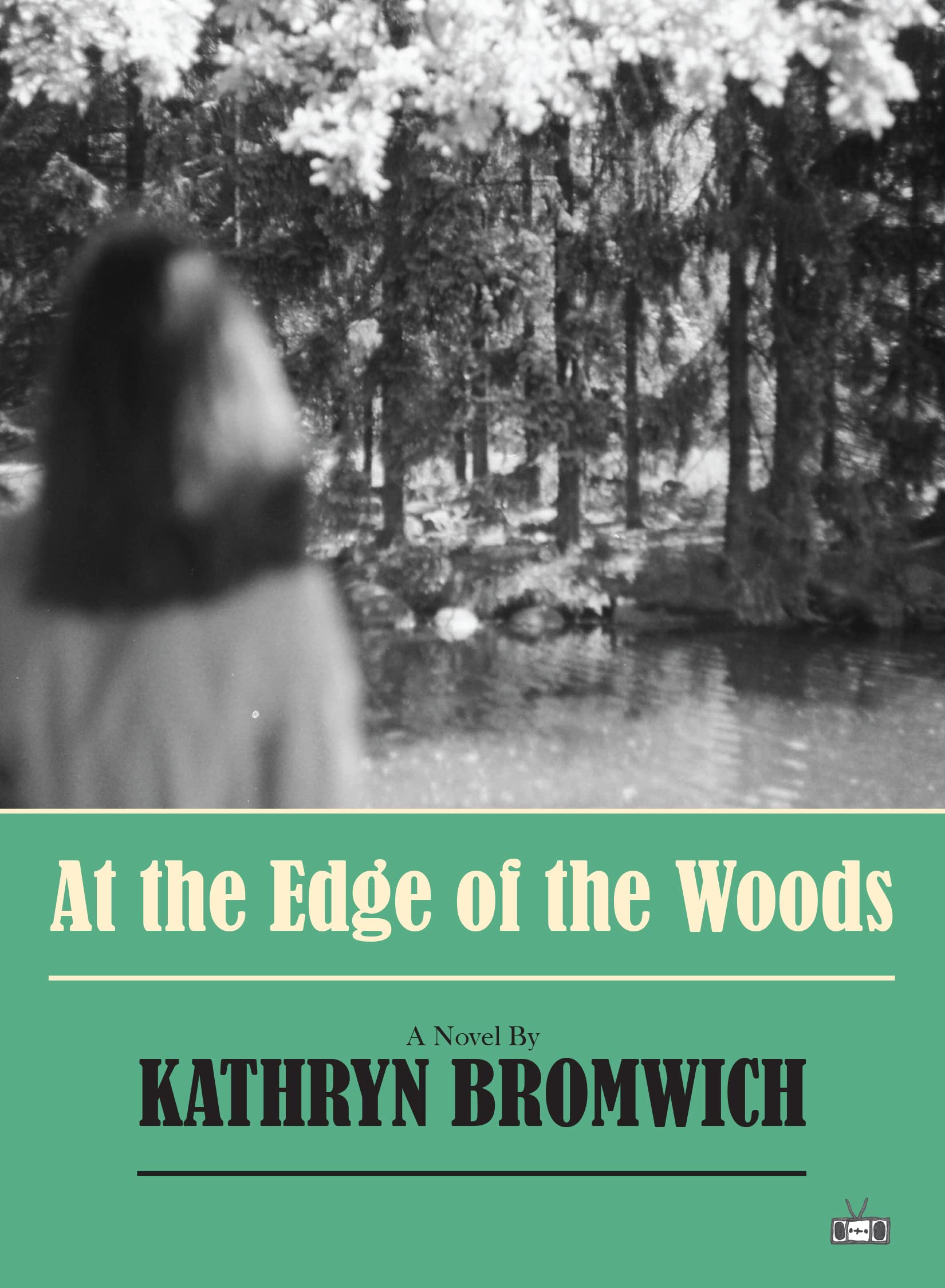
At the Edge of the Woods by Kathryn Bromwich

A woman reinvents herself in solitude but finds the tension with humanity remains in this finely textured novel set in the Italian Alps.

Kathryn Bromwich’s first novel, At the Edge of the Woods, both chills and charms with its fable-like story of a woman beginning a new life alone in a cabin outside a small Italian village.

“In the mornings, when my thoughts have not yet arranged themselves into their familiar malevolent shapes and the day is still unformed, I wake up before dawn… and walk deep into the woods while my eyes adjust to the velvety darkness.” First-person narrator Laura Mantovani is determined to simplify and forget: she revels in her close attention to her daily walks, her observations of nature, her humble fare, and austere human contacts. She supports her modest lifestyle with translations of medical texts for the village apothecary and tutoring a few well-off children; in the evenings, she reads widely. She briefly takes a lover, before retreating into still deeper solitude and communion with the natural world. Readers wonder what she has escaped from–until a contact from her past life turns up on the doorstep. Glimpses of another life are revealed in flashbacks, before Laura’s narrative returns to the deceptive quiet of the Italian mountaintop woods.

Bromwich’s prose is sedately paced, erudite, and textured in its observations of nature. Laura has a sly sense of humor and a deep distrust of humankind. As her story advances, her relationship to reality shifts and slides. She has visions. “The woods seem to have taken on unusual colors–not just deeper but slightly off. Certain tree trunks appear a lurid purple; tangerine and teal leaves wave in the breeze.” She sinks into the nonhuman world in ways that strengthen her and give her confidence: “I seem to have passed over into–somewhere I am no longer beholden to the chains and responsibilities of man, but to the perfect harmony of the natural world, where everything has its place, and no rock or broken twig is without purpose.” The village down the mountain from her, where she treks for supplies–with decreasing frequency, as the forest provides all she needs–shifts as well, from a point of support to something rather more sinister. The villagers call her strega (witch), because an independent woman alone is otherwise too much to grasp. Laura has created a new life for herself, a world in which her needs make sense in new ways, but human society still looms. “If you are there, in front of their eyes–fading, yes, but not invisible, not quite yet–it is more difficult for them to turn you into a monster with their words after you are gone.” In the end, she may find herself in as much danger as ever.

At the Edge of the Woods is wise, ethereal, haunting, filled with both beauty and horror. Brief but thoughtful, lush in its descriptions, this is a novel of introspection.


This review originally ran in the May 5, 2023 issue of Shelf Awareness for the Book Trade. To subscribe, click here.


Rating: 7 rude jokes for potatoes.

Burnt: A Memoir of Fighting Fire by Clare Frank

This exceptional memoir shows wide emotional range in spanning the complexities of firefighting and fire prevention in California and the American West, gender issues, family, work, love, and loss.

Clare Frank’s Burnt: A Memoir of Fighting Fire is a heart-racing, heartfelt story that will make readers laugh, cry, and consider what matters most in life. The author is an indomitable character, from self-supporting teen through a decades-long career in California firefighting (beginning in 1982, when women were few and generally viewed askance), with impressive achievements in her career and personal life. Frank’s memoir is packed not only with adrenaline but with sensitivity, thoughtfulness, and creativity. Beware the impulse to race through these 300-plus pages in a single sitting.

After talking her unorthodox parents into emancipating her at 16, Frank becomes a firefighter at 17 (faced with an age requirement of 18, she simply leaves her birthdate blank on the employment form). Despite being “the youngest, shortest, and lightest person in an academy for the brawniest of professions,” she is indefatigable: stubborn, hardworking, short-fused, and tenacious, earning nicknames like Flipper, Tiger, and Poindexter–as well as degrees in fire administration, law, and creative writing–along the way. Frank rises through the firefighting ranks in her 33-year career (with a five-year doctor-mandated medical break), finishing with the lofty position of State Chief of Fire Protection, six ranks above captain, the highest she once thought she would be willing to attain. She works on structure fires and wildfires, in small firehouses and large ones, in the field and in positions of leadership, on labor and legal issues, prevention, forestry, and more, across the behemoth California Department of Forestry and Fire Protection, aka Cal Fire (the largest fire department in the state).

While she does meditate on firefighting’s gender issues, her response to the question for much of her career is encapsulated in an anecdote: “While I pulled hose through tangled manzanita, the reporter jammed a microphone in my face and yelled, ‘What’s it feel like to be a female on the line?’ I yelled back, ‘The same as it feels for the guys, except I have chee-chees.’ ” She hoped that if she ignored what made her different, everyone else would as well–a strategy that worked frequently but not always.

Frank is a renegade overachiever in all areas: athletic, career, and (after a late return to the classroom) academic. Her writing is not merely serviceable, but thoughtfully constructed; her memoir’s sections are labeled for stages of fire development: ignition, sustained heat, free burn, growth, full development, and decay. Fire is present in every aspect of Frank’s life and work, including writing, but this always feels natural rather than effortful. By the end of this memorable book, readers will reconsider fire policy as well as family, risk, and hard work. With thrilling momentum and a heat of its own, Burnt is a sensation and an inspiration.


This review originally ran in the April 27, 2023 issue of Shelf Awareness for the Book Trade. To subscribe, click here.


Rating: 9 bird’s nests.

Maximum Shelf author interview: Brando Skyhorse

Following Friday’s review of My Name Is Iris, here’s Brando Skyhorse: Life Under a Perpetual Dark Cloud of Fear.


Brando Skyhorse was born and raised in Echo Park, Calif., and has degrees from Stanford University and from the MFA Writing Program at UC Irvine. He is an associate professor of English at Indiana University in Bloomington. His debut novel, The Madonnas of Echo Park, received the 2011 PEN/Hemingway Award and the Sue Kaufman Prize for First Fiction from the American Academy of Arts and Letters. Take This Man: A Memoir was named a Best Nonfiction Book of the Year by Kirkus. Skyhorse also co-edited the anthology We Wear the Mask: 15 True Stories of Passing in America. His dystopian novel My Name Is Iris will be published by Avid Reader Press on August 1, 2023.

Does a novel like this begin with story or character?

Brando Skyhorse (photo: Eric van den Brulle)

I tell my students: it always begins with character. But not this one. It actually started with an image. I think you can guess: it started with this wall, just kind of growing out of the ground. I was finishing up my last project, an anthology of original essays on ethnic and racial passing, and it was summer of 2016, and let’s just say there was a certain word that was getting bounced around, this relentless drumbeat. I started thinking about it. I remember talking to my agent, and she said that’s interesting, but seems kind of topical. When Clinton is elected president, who’s going to be there to buy it? And I said, I’m going to keep thinking about it.

The more I thought about it, the more I had questions. That word, wall–the most banal thing imaginable, became coded. It was a very specific kind of reference, and a relentless barrage. Where is this wall? Who is attached to it? What’s the situation? I said, I’ll finish this in a year. Because I didn’t start with character, but with an image, it took me another five years to figure out the specifics of character and situation. Iris is trying to take care of herself, to take care of her child. She has a community that she’s estranged from, and she’s doing the best she can. Once that part of the story got laid out–it’s about safety for her. Her American dream is safety. That’s it for her. And that’s something a lot of readers can relate to, I hope.

What is it that makes Iris a compelling protagonist?

Based upon the experiences Iris has had, she decided early on, I want to be safe above all. I want to protect myself and my family–that’s the trade-off that I’m making, and if that makes me brusque or unlikable, I’m rolling with it. But what does that leave for Iris in the life that she’s attempting to live? Has it been fulfilling; has it been satisfying? What kind of reckoning is afoot for her?

Once you get the totality of her situation, she becomes very easy to understand. I realize it’s a bit of an authorial risk to put this character out there and have her say the things that she says, and put up her own wall. She has lived a very structured and specific life. My family, my daughter, my household. Very intentional. The idea of what it means to be a woman of color at this time, in this place, at this part of American history, what’s that experience like? At least as I see it, there’s probably a sense of guardedness, apprehensiveness. I’m not sure what the next day is going to bring me so I have to be on guard. What’s out there waiting for me?

I didn’t want to turn it into a Twilight Zone episode where this is a character who is being punished because she’s bad. What’s her backstory? Where’s she from, what kind of life is she trying to live? I had to move that character development forward while at the same time pressing her from all sides. Every chapter, another bad thing happens. How to create a character who isn’t solely reactive? If it’s not the wall, it’s the bands; if it’s not the bands, it’s what’s going on with her family or with her daughter. She needs to take some control, some agency, but each time she does, there’s something else another step ahead of her. Thinking about the lived experience that all of us have had over the last few years, I think this book is what it was like for me.

And the technology. Oh look, it’s this cool little thing from Silicon Valley, and it’ll track how much garbage you throw away. And very suddenly it becomes this whole other thing altogether. We have a collective embracing of certain technologies, if we feel there’s going to be a benefit, and sometimes there’s a flipside, unintended or intended consequences. Iris has traded away an essential part of her identity for the convenience of being American. Her community has traded away the idea of citizenship because there’s a little thing that can tell them how many steps they take in a day. What does that mean for us? I don’t know. But I don’t know if it means anything good.

Are there heroes or villains in this story?

I don’t think so. If there’s a villain here, it’s just fear. It’s very simple. Fear leads to paranoia leads to a series of decisions… everybody in this universe in this novel is living under a perpetual dark cloud of fear.

Do you feel your readers need knowledge of Spanish to follow this novel?

My goal is not to confuse or alienate anybody. When you write a book, you’re trying to connect with as many readers as possible. What I ask myself is, what’s most important for this character in this situation? English, Spanish, switching back and forth? When she’s with her mom, at the house, having dinner… it flows freely, and I wanted to capture that. I wanted it to be correct for that experience.

So much of the conversational nature of this book was influenced heavily by my family. My biological father left me when I was three, and I found him in my 30s. I was accepted into this family I didn’t know, and all of a sudden, I had three sisters. When I hang out with them the conversation varies based on who I’m talking to, the context, what’s being discussed. My Spanish is not great, but I can get what’s being said if they speak really slowly, like to a child. Part of this is trying to mimic that experience for me. That sense of what would it be like to have a relationship with this language, which is important for communicating with your family, your community–lose it, and then work your way back. I hope that’s one of the themes in the book. Our main character goes through this journey–if I’ve done it correctly–with the Spanish language. If I’m going to take the readers on that journey it has to be correct.


This interview originally ran on May 10, 2023 as a Shelf Awareness special issue. To subscribe, click here, and you’ll receive two issues per week of book reviews and other bookish fun.

Maximum Shelf: My Name Is Iris by Brando Skyhorse

Maximum Shelf is the weekly Shelf Awareness feature focusing on an upcoming title we love and believe will be a great handselling opportunity for booksellers everywhere. The features are written by our editors and reviewers and the publisher has helped support the issue.

This review was published by Shelf Awareness on May 10, 2023.


My Name Is Iris by Brando Skyhorse (The Madonnas of Echo Park; Take This Man) is a chilling near-reality dystopian novel, set in an unnamed state that resembles California (and is called the “Golden State”). Protagonist Iris Prince is a second-generation Mexican American whose parents view her birthright as a gift and use the refrain “you were born here” to shame her whenever they feel her bad behavior shows a lack of gratitude. (“I am a second-generation Mexican-American daughter of Mexican immigrants, meaning that of course I was ungrateful.”) Born Inés Soto, she was glad to have her first name simplified by white schoolteachers, and then to take her husband’s last name. Iris is proud to be a rule follower, her highest ambition to blend in.

When the novel opens, Iris Prince has just left Alex, her husband of 16 years, and is determined to finally build the sanitized, magazine-cover life she’s dreamed of: a new house in a suburban neighborhood on a cul-de-sac, a new school for her nine-year-old daughter, Melanie. She has shunned her parents’ low-income home in a Spanish-speaking neighborhood (where her younger sister still lives, annoying Iris with her activism) and avoids Alex’s overtures at co-parenting or getting back together. Iris feels that her real life–coffee clubs, gardening, and white picket fences–is about to begin.

Then one morning, she looks out of her lovely new bay window to find that a wall has sprung up in her front yard. It seems permanently fixed, and no one but Iris and Melanie can see it. Her realtor and contractors claim the wall must have been there all along, until gaslit Iris wonders, “Who was I to say otherwise?” And, impossible as it is, the wall seems to be growing.

Meanwhile, a new piece of wrist-wearable tech called “the band” is sweeping across the state. Iris herself voted in favor of the proposition that established this technology as a paper-saving, easy identification to “facilitate paying for and receiving state and public services, act as a drivers’ license,… help users regulate a household’s water usage and garbage output, serve as proof of residency for your child’s enrollment in school, and potentially save the state millions of dollars.” But it turns out that, regardless of citizenship, one must have a parent born in the United States to qualify for a band. Iris’s confidence in her place in society is shaken. “Wear your bands and prove you belong here,” says the propaganda. Hatred, bigotry and intolerance quickly swell into violence. “Somehow, in an overnight or two, my social contract had been renegotiated. Politeness vanished.” Iris’s loyalties are challenged: she has long associated herself with law and order and the establishment, but those forces have turned against her, despite all her rule-following. Each morning she drops her daughter off at school, the band’s seductive glow encircling Mel’s slim wrist–due to Alex’s birthright, Mel qualifies for the privileges of the band. But Iris fears for her home and her job; her mother has been fired for her bandless status, and the family is in jeopardy. Under these pressures, Iris will have to consider just what she’ll risk to protect her hard-won sense of identity.

Skyhorse seeds his text with plenty of Spanish-language dialogue, especially with Iris’s parents and sister; non-Spanish-speaking readers will easily use context clues. In addition to this lovely linguistic texture, Skyhorse imbues his all-too-lifelike novel with fine details–Iris’s anti-nostalgia for a defunct supermarket, her love for bland ritual–and judicious use of highly impactful notes of the mysterious or the surreal. These twists of magical realism include a ghost from a childhood trauma who haunts Iris in her vulnerable moments, and of course the wall itself, which grows and morphs overnight. The wall is ever-present, at one point “almost like a co-parent,” even as it literally deprives her home of the sun’s light and heat, as well as her sense of security: “Later, when I would dream, I dreamed of walls.”

My Name Is Iris is terrifying with its proximity to reality. Iris is perhaps preoccupied with labels and appearances (as the book’s title forecasts), and not the most likable protagonist, initially; but her flaw is simply in seeking the American dream as it’s been advertised. Despite her obedience–teaching her child to always trust the police, adhering strictly to HOA rules–the world she’s trusted has turned on her. What can one woman do to fight a state security regime or a magically self-constructing wall?

This gripping dystopia poses difficult but important questions about the world as we know it and the few small steps it takes to slide into horror. Intolerance and xenophobia lurk in the most seemingly benign corners. My Name Is Iris is part social commentary and part thoughtful consideration of themes that include family, identity, transitions, perspectives, and hope. In addition to being an engrossing, discomfiting tale, this will make an excellent book club selection and fuel for tough conversations.


Rating: 6 chanclas.

Come back Monday for my interview with Skyhorse.

The Nigerwife by Vanessa Walters

In this riveting novel about a young woman’s disappearance, Lagos high society hides personal struggles and larger cultural concerns.

Vanessa Walters’s American debut, The Nigerwife, is a gripping work of suspense, a psychological puzzle, a mystery, and a critique of marriage and high society. The prologue begins: “Nicole often wondered what had happened to the body.” This foreshadowing line refers to a body floating in a trash-filled Lagos lagoon, viewed from the home of a young woman who had recently left London to join her Nigerian-born husband. This narrative perspective, “Nicole, Before,” defines every other chapter of the novel, interspersed with the viewpoint of “Claudine, After.” The pivotal event of these dual timelines is Nicole’s disappearance, which gives the prologue’s opening line new and sinister meaning.

Nicole spent years in Lagos with her husband, Tonye, and their two young sons. She ceased communication with her family in London and formed and dissolved friendships both in and out of a club called the Nigerwives. “The Nigerwives were so different, a pick ‘n’ mix of skin tones, hair textures, body shapes, and facial features, but their stories were one and the same. They had all defied the prides and prejudices of their families, sacrificed friendships and careers and independence, and followed heart and husband to Nigeria for what they believed would be an epic adventure.” For Nicole–and perhaps for other Nigerwives before her–that adventure would end badly. Between fancy dress and art openings, social posturing and boating parties, she struggled to keep her sanity and independence.

In the days after Nicole goes missing, the aunt who raised her travels to Lagos to look for answers. Claudine does not know Tonye’s family well and is dismayed to find how little the family or the police seem to be doing to find Nicole. “She could see [the household help had] been warned not to tell her anything, not even what time of day it was, though they were very respectful clams.” The more she attempts to unravel her estranged niece’s life, the greater her fear that she’s arrived too late. As their timelines progress, Claudine and Nicole each work separately to sort out the family issues that drove them apart, which will not be revealed to readers until the story’s end.

With a sense of foreboding, The Nigerwife considers overlapping loyalties and betrayals and the strict constraints of marriage, family, gender, and culture. Nigeria’s largest city is ruled by glamour, glitz and materialism; motivations for marriage include love, financial and political gain, and cultural compatibility. Various characters criticize Lagos and Nigeria, but this is not the novel’s aim. Rather, Walters’s inexorably paced plot examines institutions and the choices women face. “Nothing compensated for having family around to look out for you. But then, what kind of family?” This engrossing novel both entertains, with the mystery at its heart, and provokes questions that go far beyond Nicole’s personal story.


This review originally ran in the April 7, 2023 issue of Shelf Awareness for the Book Trade. To subscribe, click here.


Rating: 7 hidden knives.