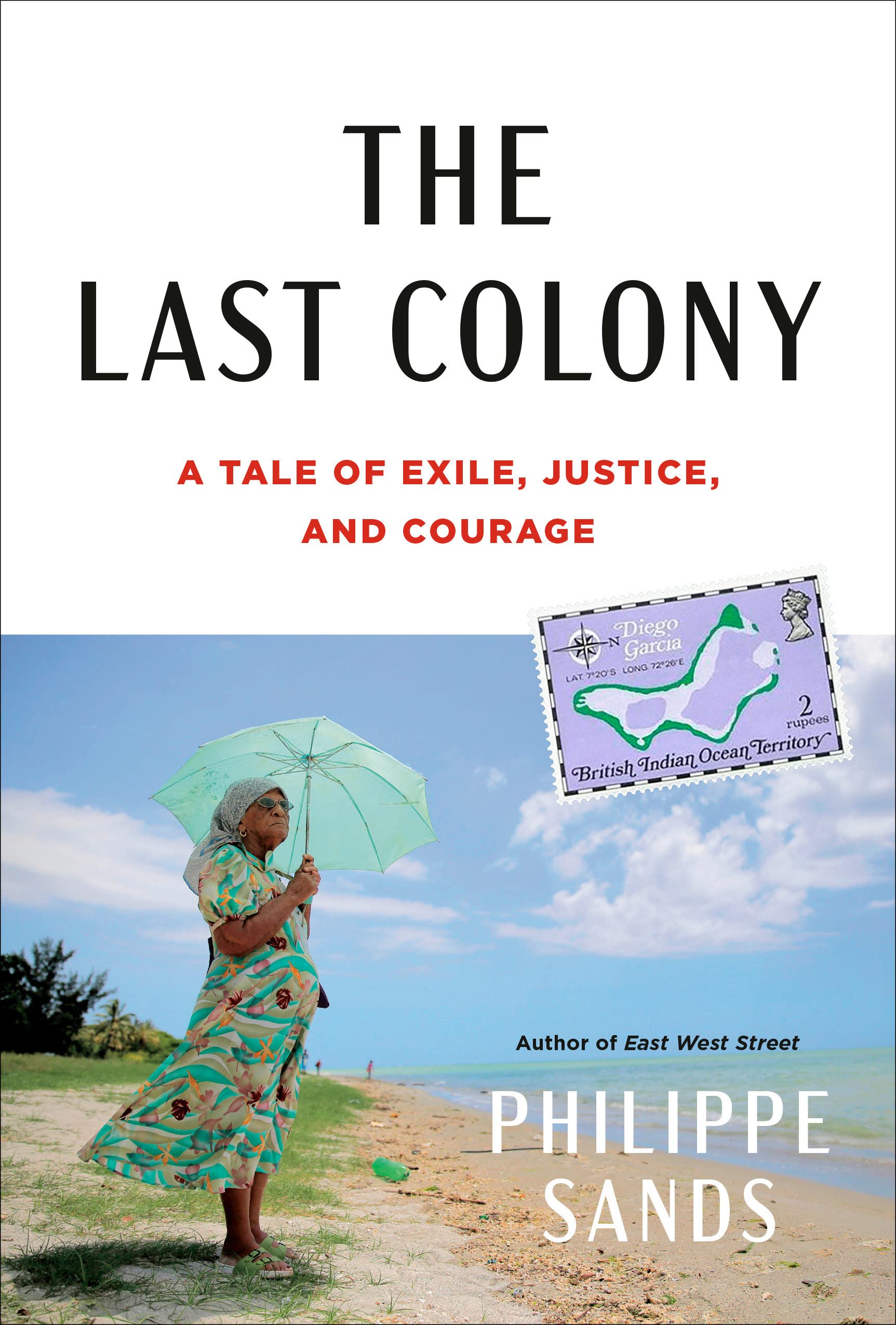
The Last Colony: A Tale of Exile, Justice, and Courage by Philippe Sands

The 2018 freeing of an Indian Ocean archipelago from British colonial rule is both a complex case of international law and a stirring tale of injustice and homecoming.

In The Last Colony: A Tale of Exile, Justice, and Courage, Philippe Sands combines a moving story of human tragedy and injustice with the complexities of international law to great effect.

The Chagos Archipelago is a little-known collection of islands in the Indian Ocean near Mauritius, colonized over centuries by the Portuguese, Dutch, and French before becoming a British colony as part of Mauritius. In 1973, the British forcibly removed its longtime residents, ostensibly to make way for a United States military base on a single island. Residents for generations, in many cases descended from enslaved coconut oil workers, were deported en masse with no notice, forced to leave behind their homes, memories, pets, and any possessions that didn’t fit in a single small trunk. Among them was Liseby Elysé, recently married, 20 years old, and four months pregnant. Decades later, in 2018, Madame Elysé would be present for the decision of the International Court of Justice in The Hague that would allow her to return to her home island, for which she’d yearned all those years. Her testimony would be an important part of that case.

Sands (East West Street; The Ratline) was part of the legal team representing Mauritius in its bid to free the Chagos from British control. With decades of international law experience and an intimate knowledge of many of the judges and lawyers involved, Sands brings authoritative expertise to this subject matter; as an actor in the case at hand, he acknowledges his personal perspective, including an admiration of Madame Elysé and other Chagossian activists. Madame Elysé cannot read or write, but in Sands’s recounting she is a natural storyteller, has an excellent memory, and speaks eloquently and unwaveringly of her strong feelings for her home. This sense of place and feeling of loss for her homeland, even nearly 50 years after leaving, strikes a common chord of human connection to the place from whence one came.

With a lawyer’s careful research and methodical laying out of the facts, Sands rewinds to 1945 and Ralph Bunche’s work on decolonization at the founding of the United Nations; briefly reviews Chagossian history over centuries; and then zooms into the finer points of international law on separation of colonies after World War II. The Last Colony is both a neat work of detailed legal points and history, and a deeply felt narrative about the injustice of deportation and the dwindling number of Chagossians with strong ties to their homeland. Madame Elysé is an impressive, courageous figure and emblem, putting a human face on colonialism’s continuing wrongs, both for the International Court and this book. There is much to appreciate about this little-known story in Sands’s sensitive telling.


This review originally ran in the August 1, 2023 issue of Shelf Awareness for the Book Trade. To subscribe, click here.


Rating: 7 dogs.

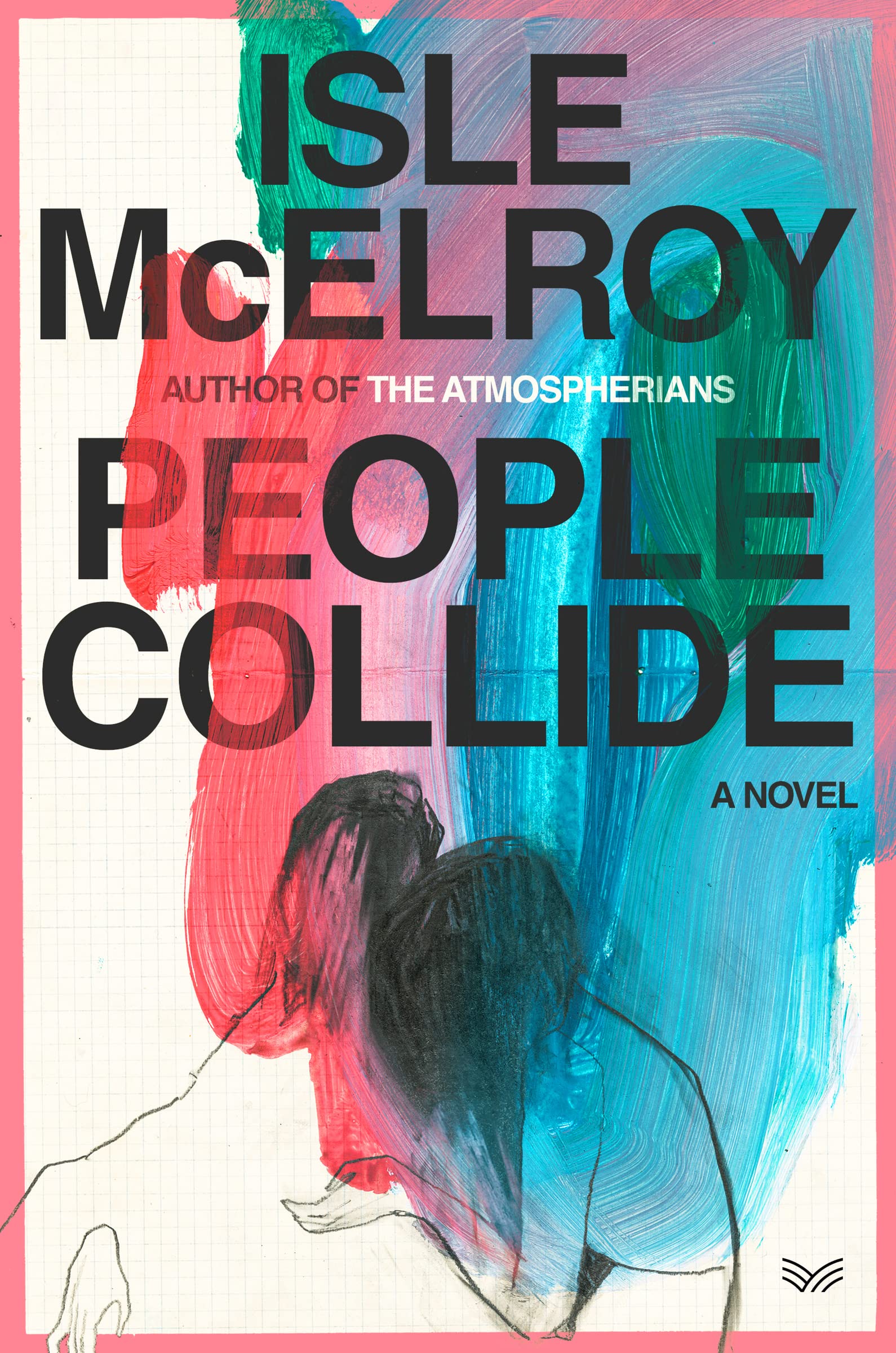
People Collide by Isle McElroy

In this smart, absorbing, thought-provoking novel, a husband and wife mysteriously swap bodies and experience widely varying impressions and reactions.

Isle McElroy (The Atmospherians) takes readers on a mind-bending journey of gender exploration and body politics with People Collide. Much of the novel is told from the perspective of Eli Harding, an American man living in Bulgaria with his wife, Elizabeth, a highly accomplished writer with a prestigious teaching fellowship. Eli is also a writer, but less successful–at everything–than his impressive spouse. In the novel’s opening pages, he discovers that he has woken up in Elizabeth’s body. Elizabeth herself has disappeared.

Eli first hides away in the couple’s apartment, waiting for Elizabeth–whom he assumes now occupies his body–to return, or for this mysterious “Incident” (as he thinks of it) to right itself. When he ventures out, he dresses Elizabeth’s body, applies makeup, and decides that she was right: a male friend was condescending to her all this time. Then both Eli’s mother and Elizabeth’s parents push for action: he is sent to Paris by his own mother (who believes he is Elizabeth) to search for her vanished son. He finds his wife–indeed, in his own body–and the surreality intensifies.

People Collide comments on gender and the roles that the larger world expects from people who present as men and as women. Elizabeth is an ambitious, dominant, talented, driven, no-nonsense individual; Eli is a hardworking writer but has mostly made his living as a restaurant server. He’s followed her to Bulgaria for her more prestigious work. They do not disagree that she is his superior: “‘I’m smarter than you, I’m kinder than you, I’m more talented and better looking. And you benefit from all of that. It’s exhausting. And I want to benefit. Things should be easy for me.’ It didn’t hurt to hear her say those things. I felt the same way.” Eli’s well-muscled body is six inches taller than Elizabeth’s, and she carries it “with a graceful confidence that I had never shown in my life.” He used to walk too quickly for her, which she found “frustrating and selfish.” In her body, he notes: “I never slowed down for her. Not until now, when I had no other choice.”

Beyond the gender binary and the public’s assumptions based upon appearances, McElroy’s insightful novel also examines class, privilege, the art world, and family relationships. Elizabeth’s parents are smugly satisfied with their money, connections, and community in a small, liberal, artsy town in Michigan; they look down upon Eli’s thrice-divorced mother. Everyone judges Eli harshly for abandoning his wife–an irony, because it was, in fact, Elizabeth who did the abandoning, in his body.

People Collide is sly, clever, funny, provocative, and compelling. It offers a world and a story to get lost in.


This review originally ran in the July 28, 2023 issue of Shelf Awareness for the Book Trade. To subscribe, click here.


Rating: 7 steps.

Maximum Shelf author interview: Tim O’Brien

Following Friday’s review of America Fantastica, here’s Tim O’Brien: Route 66 Meets MAGA America.


Tim O’Brien is the author of the novels Going After Cacciato; The Things They Carried; In the Lake of the Woods; and others, as well as memoirs including If I Die in a Combat Zone, Box Me Up and Ship Me Home. He has won the National Book Award for Fiction, the James Fenimore Cooper Prize, and the Katherine Anne Porter Award, and was a finalist for the Pulitzer Prize and the National Book Critics Circle Award. O’Brien has been elected to the American Academy of Arts and Letters and the American Academy of Arts and Sciences. His eighth novel, America Fantastica, a wild ride through a paranoid nation, will be published by Mariner Books on October 24, 2023.

What brought you back to writing a novel after more than 20 years?

Tim O’Brien
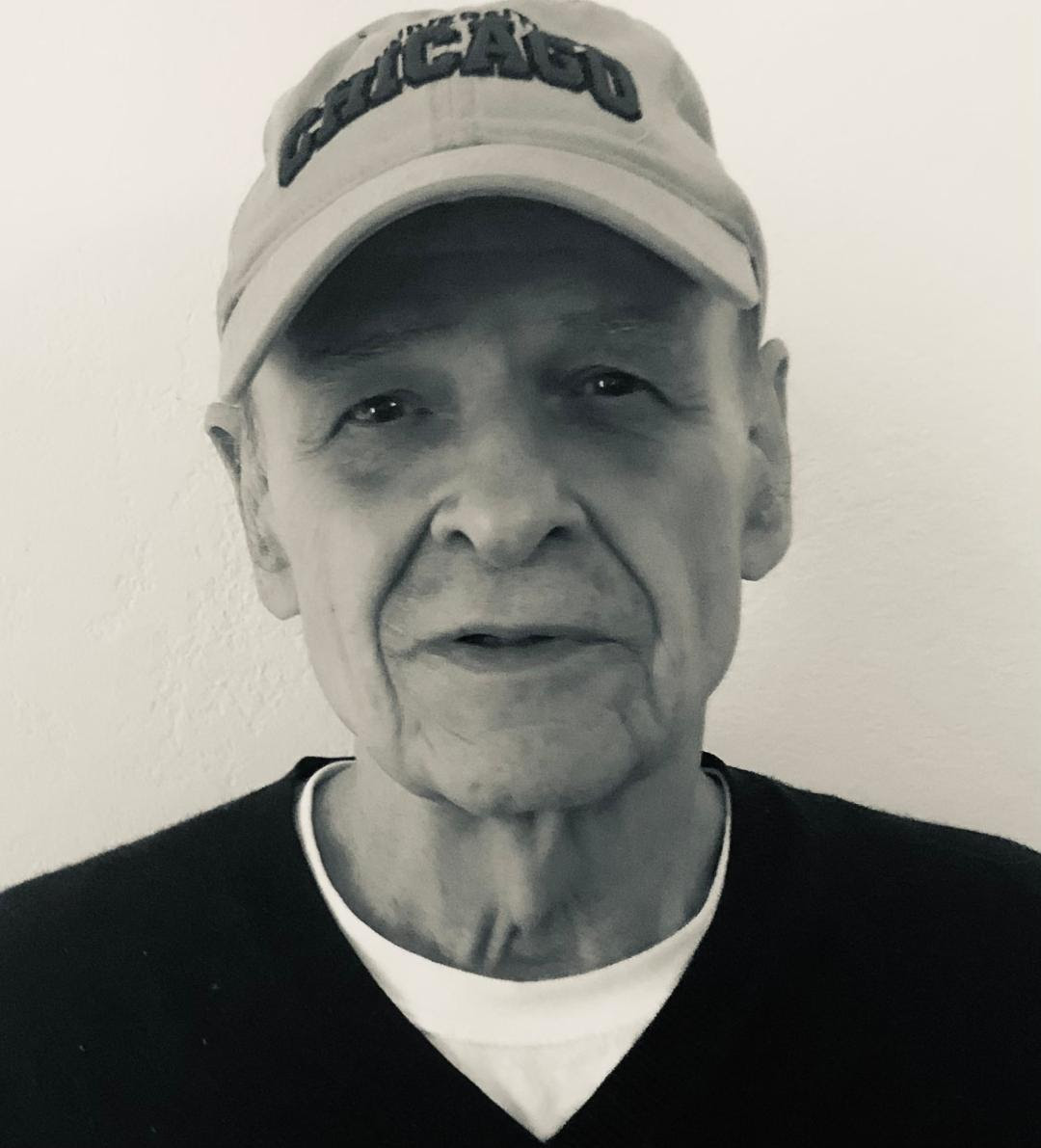
(photo: Tad O’Brien)

The character of Angie Bing. She came into my head, I don’t know, 20 years ago, as did the antihero, Boyd. I tried to push them away for a long time. They just kept yapping at me. Put me in a book! Especially Angie. It was that voice inside my head for all those years that convinced me to at least try. And it was fun. I enjoyed her.

I was pretty determined not to ever write another novel. It’s hard work and often frustrating, all the things that go with a 400-something page book. Five years of my life. I was a little reluctant to do it, but once I started, I got a kind of perverse pleasure out of it.

America Fantastica contains so many characters, events, places. How do you stay organized?

The organizational tool is my head. It’s nothing much beyond that. Occasionally I would lose chronology, but then I simply go back and reread and rediscover.

The novel switches voices among many of those characters. How fun or difficult is that?

It was a great pleasure, going from voice to voice. There are some pretty nasty people in the book–most of them, in fact–and it was fun being nasty. I see it around me so much. It was a sort of Jonathan Swift/Mark Twain fun, curmudgeonly. You call a bank or an airline and they’ll have that message on: “Our phone lines are unusually busy; please hold.” They’re not unusually busy. They’re usually busy. In fact, they’re always busy. Things like that were fun to strike back at.

Do you have a favorite character?

No. Characters, probably for all writers, are like your own children. You don’t pick them. They’re very different. I don’t approve of most of the characters in this book, but I don’t approve of most of the people I see on CNN and Fox, either.

This work of fiction is centered on the lying or fictionalizing of its characters.

It’s been a theme that’s gone through my entire work and probably my entire life, going way back even to my childhood. I grew up in a small town and spent a lot of my time in my own head, imagining I was not in this godawful place. That followed me to Vietnam and has followed me through adulthood. It’s astonishing the things that we witness that seem almost impossible, incredible, especially during the Trump years. How can this be happening in a country I really had loved as a kid? It seemed as if I were living in a fairy tale that couldn’t be true, and yet seemed true. And so all of my work has to do with this blend of our imaginations and the realities we see around us. This book probably is the most blunt about it. Boyd seemed to represent for me what I’m witnessing socially, culturally, and politically in this country, a kind of shameless lying or deceit. I wanted to have as a foil someone who was pretty certain about the world–Angie has a kind of religious certainty about the world. The tug of war between them was fascinating.

Angie came first?

They came together. I imagined her originally as a bank teller, and then almost instantly I imagined Boyd as a small-town entrepreneur (later a JCPenney manager), and within 20 minutes or so I had him robbing that bank as the novel begins. Robbing it essentially for entertainment, as a way of making himself move out of his lethargy and do something in the world. When he invited her along, or made her come along, a kind of Route 66 theme dominated, and it stayed throughout the entire book. It’s sort of a Route 66 meets MAGA America kind of book.

I knew it would be set during those years. They were the years that I was living through, with my mouth agape as I watched the television set. It seemed appropriate to have a character who was a shameless liar and had been his entire life, and to find out why. Why do people do this sort of thing? There’s a quote at the beginning of the book by Yeats: “We had fed the heart on fantasies, / The heart’s grown brutal from the fare.” That’s what I saw happening around me, that sort of fantasy: of a lost election being a winning election, for example. I wanted a hero who was part of the conspiracy world, coming up with these bizarre fantasies about the world and apparently believing in them, repeating them enough to believe in them.

By having such a human being as one of the two main characters in the book I felt I was trying to get into what made people do these sorts of things. For my hero, Boyd, it goes back to his childhood, as we learn late in the book. He began, even as a kid, living in a fantasy world as a way of escaping the world he was in. It can have terrible consequences, and did for him: a broken marriage, a lost career. But on the other hand, fantasy keeps us going. The fantasy that tomorrow will be better than today. Maybe fantasy isn’t the word, but the hope or the dream that things will improve for all of us. I’ll win the lottery, I’ll have a great time in Yellowstone, I’ll meet the girl of my dreams or the boy of my dreams. I think we need fantasy. So there’s that tug of war, when what we need can have terrible consequences. That will always fascinate me, and has since I was a kid.

What are you working on next?

I’m working on my golf game.

Nothing. I’d been working on this book all the way through page proofs and so on; it still feels like in my head I’m working on it.

Are you one of those writers who’s never done, even when it’s printed and published?

I am. I’ve made changes in The Things They Carried; In the Lake of the Woods; [Going After] Cacciato. I slip them in when they print a paperback edition. Most of them minor and none of them noticed, except by scholars. I did have a letter from a high school English teacher once who disputed my changes.


This interview originally ran on July 27, 2023 as a Shelf Awareness special issue. To subscribe, click here, and you’ll receive two issues per week of book reviews and other bookish fun.

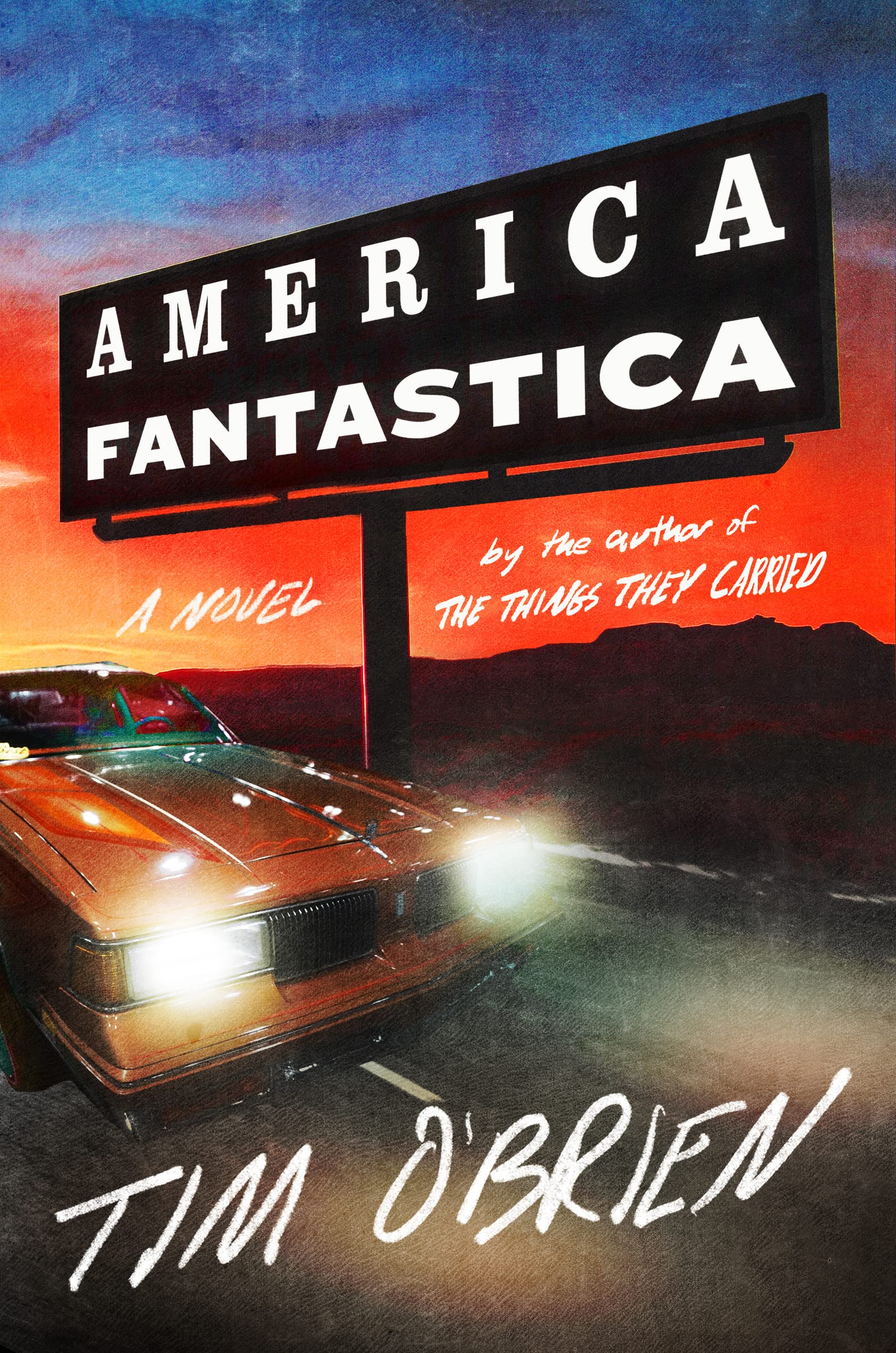
Maximum Shelf: America Fantastica by Tim O’Brien

Maximum Shelf is the weekly Shelf Awareness feature focusing on an upcoming title we love and believe will be a great handselling opportunity for booksellers everywhere. The features are written by our editors and reviewers and the publisher has helped support the issue.

This review was published by Shelf Awareness on July 27, 2023.


Set against the backdrop of an unnamed but recognizable American presidency, Tim O’Brien’s black comedy, America Fantastica, takes both the dark and the comic to epic proportions with simultaneous absurdism and poignancy. O’Brien (The Things They Carried; If I Die in a Combat Zone, Box Me Up and Ship Me Home) here offers his first novel in more than 20 years–a sprawling, madcap tale of road trips, crimes large and small, love, loss, and, most of all, lying. Like The Things They Carried, America Fantastica revels in detail and highly specific lists, so that the world it portrays feels robust and brimming.

Its opening lines set the tone, far-reaching and grandiose: “The contagion was as old as Africa, older than Babylon, wafting from century to century upon sunlight and moonbeams and the vibrations of wagging tongues. During the second decade of the twenty-first century, the contagion alighted in Fulda, California, riding aboard the bytes of a MacBook Air…. Reinvigorated by repeated utterance, fertilized by outrage, mythomania claimed its earliest victims among chat room patrons–the disappointed, the defeated, the disrespected, and the genetically suspicious…. The disease spread northward into Oregon, eastward into Idaho, arriving on Pennsylvania Avenue in January of 2017.”

Readers first meet O’Brien’s antihero in action. “On an afternoon in late August of the year 2019, after locking up the JCPenney store on South Spruce Street, Boyd Halverson strode out to his car, started the engine, sat without moving for several minutes, then blinked and wiped his eyes and resolved to make changes in his life. He had grown sick and tired of synthetics, rayon in particular.” He departs his Kiwanis brunch early to head to the bank, where he presents a gun and leaves with just under $81,000 and the teller, “a diminutive redhead named Angie Bing.” She is technically kidnapped, but Boyd will repeatedly try and fail to ditch her over the coming months. His name is not really Boyd Halverson and his entire résumé is a fiction. He had in fact been married, had a child, had an impressive career as a foreign correspondent and nearly won a Pulitzer Prize. But that life was built on lies, culminating when “at last he collided with the sudden, brutal, and well-earned catastrophe he’d been patiently anticipating for decades.”

Boyd and Angie hit the road, seeking first Boyd’s ex-wife, Evelyn, and then her father, Dooney, against whom Boyd holds a significant grudge. Their travels prompt movements by an increasingly colorful cast of bizarre characters. Dooney and his partner Calvin flee the possibly murderous Boyd from Port Aransas, Tex., to Bemidji, Minn., and onward. Randy, Angie’s boyfriend, an almost-laughably amoral electrician/rodeo cowboy/burglar, tracks Angie from Santa Rosalía, Mexico, to Santa Monica, Calif., and beyond. Along the way, he meets two ex-cons at a diner in Los Angeles who latch onto his interest in an unreported bank robbery. These characters set the tone of a novel dealing equally in ludicrous comedy, political commentary, and pathos. They will be joined in O’Brien’s imaginative, wide-ranging tale by a violent, egomaniacal CFO; a bank president and his wife, both with a gift and passion for fraud; a racist cop; an Amazonian CrossFit gym owner and amateur detective; a small-town sex worker with either an excellent act or multiple personalities. Events range from disturbing to ridiculous, often simultaneously, as when Boyd gets his toes broken with a monkey wrench by an unlikely pair of sidekicks. These characters and events, in a series of deftly drawn American locales, form a fantasmagoria, a version of reality that both bizarrely exaggerates and digs directly into the emotional truth of the real world.

O’Brien opens with a Yeats epigraph: “We had fed the heart on fantasies,/ The heart’s grown brutal from the fare.” His novel speaks of a nation that craves delusion and deception; O’Brien’s profile of the 2019 United States is savage, blending satire and realism. “Off with their heads! Climatologists? Chemists? Off with their tongues! Who needs reality when you have Venom? Who needs history when you can manufacture your own?” Is it plausible that Boyd, an esteemed investigative journalist, exposed as a liar, might in turn expose larger wrongs than his own?

America Fantastica showcases a broad emotional range, as Boyd Halverson (aka Otis Birdsong, aka Junior, et al.) turns out to harbor some very real trauma amid a fabricated personal history, and at least one complex personal relationship. It is a story chock-full of lies or fictions, a theme O’Brien has explored in earlier works as well. “[Boyd] had fervently believed every word, every unearned moment of an unlived life. Yes, he was a Princeton graduate. Yes, he had distinguished himself in the Hindu Kush, scaled Mount McKinley, survived brain cancer, scored near-perfect on his SATs. But so what? Why risk failure when a fib was always conveniently at hand?” By the novel’s end, readers will have learned–more or less, as far as we can tell–the “real” truth. This feels in some respects like a hopeful conclusion. But the truth itself is more grim than hopeful, which is perhaps the most realistic–truthful–possibility.

As in the earlier works for which he has long been recognized, O’Brien here demonstrates an electric combination of deadpan humor, vicious wit, and a masterful eye for detail in capturing a peculiarly American form of torment.


Rating: 7 wiggles.

Come back Monday for my interview with O’Brien.

Black Sheep by Rachel Harrison

In this darkly comedic yet philosophical horror novel, an unhappy 20-something returns home to the insular community and church she’d left behind only to find frights worse than she’d remembered.

Black Sheep by Rachel Harrison (Such Sharp Teeth; Cackle; The Return) moves inexorably from the darkly absurd into terrifying horror. Readers follow apathetic, antisocial Vesper Wright as she returns home to her estranged family and learns that what she knew of her unorthodox upbringing was just the beginning.

Vesper is 23 years old, working as a server at a chain restaurant “in an unglamorous part of Westchester County, sporting a polo and serving plates of baby back ribs I was fairly certain were generated in a lab.” She’s unhappy but relieved to be free from the family, community, and church in which she was raised–until she receives an invitation to attend the wedding of her former best friend and her first boyfriend. Magnetically drawn to the place she misses, dreads, and still thinks of as home, Vesper reencounters not only the unusual church but her powerful mother, a horror movie megastar who never proved very maternal: “I’d only ever seen her emote on screen, her vulnerability behind glass. She was more human to me when she was pretending to be someone other than herself.” What she finds at home will blow Vesper’s world, and perhaps literally the entire world, wide open. She reconsiders her memories and “that our past is not the truth. It’s warped by time and emotion, inevitably muddied by love and resentment, joy and shame, hope and regret.” Eventually Vesper will have to rethink everything she thought she understood about her family, her church, and her past–and reexamine her loss of faith.

Early on, Black Sheep exhibits black humor and an accessible 20-something nihilistic angst. Details of Vesper’s former church are darkly comic. As the stakes rise, however, Harrison’s imaginative plot turns gruesomely to true horror. Fans of the genre will find pleasure in both the playful and the ghastly aspects. Aside from the terror, Vesper’s story ruminates on themes that include nature vs. nurture, the legacy of family trauma, and the repercussions of organized religion in its various forms. “Nothing terrified me more than this. The notion that without a choice we inherit parts of us that we cannot change. Cannot cut out.” This subject matter elevates a horror novel to a study in philosophy, even as the bloodletting ramps up.

Black Sheep is can’t-look-away riveting in its best and most disturbing moments, gripping readers on both conceptual and visceral levels. Vesper’s discontent and wrestling with her own worst self, her former family’s creepy cultlike demeanor, and the final crescendo of action add up to an unforgettable adventure.


This review originally ran in the July 14, 2023 issue of Shelf Awareness for the Book Trade. To subscribe, click here.


Rating: 6 glasses of wine.

Return of the Bison: A Story of Survival, Restoration, and a Wilder World by Roger Di Silvestro

With fervor and meticulous research–and with implications for the future of megafauna around the world–Roger L. Di Silvestro recounts the complex and difficult ongoing struggle for bison recovery.

With Return of the Bison: A Story of Survival, Restoration, and a Wilder World, naturalist Roger L. Di Silvestro (Theodore Roosevelt in the Badlands) chronicles the history of an iconic species. This exhaustively researched text briefly describes the bison’s early massive proliferation across the North American continent, humans’ heavy pursuit of them, and their near extinction as a result. But it begins in earnest with the earliest conservation efforts, in the 1880s, through the present. Di Silvestro outlines the stories of the American wood bison (western Canada and Alaska) and the European bison, or wisent, but his focus rests chiefly on the American plains bison, which until the late 1800s covered much of North America in the kinds of extraordinary numbers also associated with the now-extinct passenger pigeon. While the bison population has recovered from just a few hundred into the low hundreds of thousands (most of those in commercial herds), its fate is far from secure; in fact, according to some biologists, the bison is already ecologically extinct (“its numbers are so low, so scattered, that it no longer fulfills any ecological role”). The lessons of this story apply to the conservation of other megafauna worldwide, including giraffes, elephants, rhinos, and wildebeest.

Di Silvestro writes with passion about the loss to biodiversity and ecosystems represented by the near-death of a keystone species, as well as the damage to Native American cultures, which have historically been closely tied to the bison’s massive herds. He also considers wild human characters, including Theodore Roosevelt, John Lacey, George Bird Grinnell, William T. Hornaday, and Charles Goodnight. The bison’s tale is poignant, infuriating, inspiring, and hopeful–and perhaps, above all, complicated, involving intricacies of both human and natural histories. At just over 200 pages, Return of the Bison feels longer, dense as it is with detail, such as the bison’s fluctuating population numbers on various tracts of land, the perils of genetic diversity in small herds, human intolerance, cultural clashes, and evolving concepts of and trends in wildlife conservation. This is not only a narrative of the bison; Di Silvestro is concerned with the story of “the first large mammal subjected to recovery efforts” and what lessons this unprecedented battle has for other similar attempts.

Return of the Bison is a thorough, impassioned, expert account of a specific conservation effort over the past 150 years and the questions that will continue to face those who care about wildlife and human impact on the natural world. “The saga of the bison is still an unfurling epic”–and one to watch.


This review originally ran in the June 30, 2023 issue of Shelf Awareness for the Book Trade. To subscribe, click here.


Rating: 6 humps.

Under the Influence by Noelle Crooks

An aspiring writer goes to work for charismatic self-help guru in a propulsively paced, Stepford-like tale of workplace violations and the search for self-actualization.

Under the Influence, Noelle Crooks’s first novel, follows a young woman into a work opportunity that offers the chance for great success–or a total loss of self.

A few years ago, Harper Cruz moved from Poughkeepsie, N.Y., to the big city to make her way as a writer, and then slid into what she thought was a safer position working in publishing. Now, laid off, she’s been struggling to make rent, aided by a perfectly lovely best friend, Poppy. It’s Poppy who finds the listing for a “Visionary Support Strategist” to a social media sensation, influencer Charlotte Green. As soon as she’s applied, Harper finds herself whisked off to Nashville, Tenn., rushed through signing a contract for an unbelievable amount of money, and inducted into the work family at the Greenhouse, where tiny, magnetic, manipulative Charlotte rules a team of employees who are both in love with and terrified of her.

Harper is bookish; she couldn’t have named a single influencer before she worked for one; and her own Insta, according to a #GreenTeam colleague, is “sad.” She has off-and-on concerns about Charlotte’s self-help empire; her boss notes more than once how much integrity Harper has. But she falls under the spell of Charlotte’s charm and carefully meted compliments and soon embraces the long hours, absence of work-life balance, and cult-like branding that defines the Greenhouse. Mandatory dance parties, social media oversharing, and bottomless green juice should compensate for a few HR violations, right? Harper has a new best friend and possibly even a romantic interest, both at work. She sees herself losing touch with Poppy and her own parents, but Charlotte needs her–even at night, over the weekends, and on holidays. Charlotte warns her staff, of course, that their families won’t support their work: “Powerful people can be intimidating.” If Harper starts seeing her relationships break down, she figures, “I guess that’s just the price of success.”

Under the Influence is propulsive in its pacing, with the chipper tones of the Green Team and the emotional roller coaster that is Harper’s work (and only) life. That readers can see warning signs that Harper herself often fails to note makes the novel quietly terrifying, even in the upbeat spin so carefully crafted by Charlotte’s helpers. The result is disorienting, even mind-bending: Harper’s story is green-clad, photogenic, cheerful, and horrifying. Secondary characters at the Greenhouse are finely drawn and nuanced. After wrestling with workplace culture, female friendships, and the risks inherent in coming of age, Crooks’s debut ends on a hopeful note, blending horror into fantasy. Compulsively readable, frightening but addictive, Under the Influence perfectly captures some of the contradictions and challenges of modern work life.


This review originally ran in the June 12, 2023 issue of Shelf Awareness for the Book Trade. To subscribe, click here.


Rating: 5 red flags.

Walk the Darkness Down by Daniel Magariel

Grim but with a final upward turn, this novel of loss, grief, and strained bonds investigates human connections and disconnections.


In Walk the Darkness Down, Daniel Magariel (One of the Boys) introduces a couple separately torturing themselves through grief and eventually coming together again.

Marlene and Les, who live in a small, troubled town on the Atlantic coast of the United States, lost their young daughter years ago. In suffering, they mistreat each other. Les is a commercial fisherman on an offshore scalloping boat with a crew of other men; punishingly hard physical labor, camaraderie, and violence combine in a cocktail that helps distract him from his loss. Marlene drives the streets at night, mining memory, searching for the deep and searing pain that will help her remember. During his brief stays at their apartment, they repeat a pattern: Marlene breaks the bedroom door and Les fixes it. When Les is offshore, she picks up local sex workers and brings them home to clean them up and feed them. One of these encounters develops into something resembling friendship, just as Les’s crew fractures and the dangers of his work increase. Marlene clips newspaper articles about freak natural occurrences: mass deaths of red-winged blackbirds and horseshoe crabs; new migrations of American bullfrogs; wildfires, droughts, and the widening of tornado alley. As their two lives approach new crises, Marlene and Les must chart a course out of self-destruction.

Magariel’s prose is as quietly lovely and evocative as his subjects are bleak. “The woman settles into her chair, and Marlene proceeds to lay bare the details of her face. The worry lines of her forehead Marlene excavates with a pass over the brow.” His settings showcase realistic detail, and both beauty and damage: fecund coastlines and wetlands, the harsh sea, an old family home, and garishly decorated working-class bars. Marlene and Les treat one another with alternating callousness and tenderness; Les’s relationships, especially on the boat (with what Marlene calls his “other family”), reveal a memorable form of rough, ungentle love.

Relationships across great distances–physical and psychic–are a central concern of this novel, which is focused on how its characters handle pain. “You got to abide with your darkness as if it were a scared child that wakes up in the middle of the night and needs to be walked back down to bed,” Marlene’s newest acquaintance asserts, but each character wrestles with hurt in their own, often-wounding ways.

Stark and tragic, Walk the Darkness Down offers a harrowing view of individual and familial suffering–with empathy and, ultimately, with hope.


This review originally ran in the June 6, 2023 issue of Shelf Awareness for the Book Trade. To subscribe, click here.


Rating: 7 lobsters.

Hedge by Jane Delury

In this profound novel about love, loss, and choices, a summer’s exciting work and exhilarating affair will reverberate through the lives of a deeply likeable protagonist and her family for years.

Hedge by Jane Delury (The Balcony) is a roller coaster of a novel about family, creation, love, and shifting priorities, lush with detail and delicately rendered. Readers will be thinking of Delury’s protagonist long after these pages close.

Maud is a garden historian, “with her odd mix of botany, archaeology, history, and practical gardening skills,” and she loves her work. Originally from California, she was well suited to England, both London (where she finished her education) and the countryside, but reluctantly returned to the United States for her husband Peter’s career. When Hedge opens, Maud is at work on a restoration project in New York’s Hudson Valley. It is beautiful, stimulating work, and she is likewise stimulated by the company of Gabriel, a handsome, intriguing archeologist at work on the same site. Her two daughters, Ella and Louise, are about to join her for the rest of the summer. Peter remains in California: the couple has separated “both geographically and maritally,” and Maud plans to make this separation permanent and legal, but their girls don’t know this yet. On the cusp of an affair with Gabriel, she feels enlivened, awakened by his attention, her own physicality, the thrill of discovering flower beds from the Civil War era and the turning of the earth. She allows herself to dream of what a new life could look like for her as well as for the scotch roses, lilac, clematis, and honeysuckle she plants. But when the girls arrive from California, 13-year-old Ella suffers a trauma that snowballs into life-changing events for all involved.

The idyll in New York ends suddenly, and Maud’s next months and years are spent dealing with hard choices between undesirable outcomes. She wrestles to balance meaningful work and practicalities; lustful, soulful connection, and the mundane compromises of marriage; her own needs and those of her children. “You could comfort yourself with statistics, tell yourself that a twenty-year relationship was a good run. After all, when marriage was invented, no one lived this long. But it was still a jagged gash through your life, even if it was what you wanted.” Delury’s prose is finely detailed, saturated with color and feeling; Maud’s passion for her work is as substantial and sympathetic as her love for her daughters. Both a quiet domestic tale and a novel of surprising suspense, Hedge cycles from hopeful to harrowing and back again. Maud is nurturing and steely, riveting and unforgettable.


This review originally ran in the May 8, 2023 issue of Shelf Awareness for the Book Trade. To subscribe, click here.


Rating: 7 slices of pepperoni.

Maximum Shelf author interview: Jesmyn Ward

Following Monday’s review of Let Us Descend, here’s Jesmyn Ward: Finding Those Erased by History.


Jesmyn Ward received her MFA from the University of Michigan and has received a MacArthur Genius Grant and a Stegner Fellowship. She has won two National Book Awards, in 2017 for Sing, Unburied, Sing; and in 2011 for Salvage the Bones. She is professor of creative writing at Tulane University and lives in Mississippi. Her fourth novel, Let Us Descend, begins on a rice plantation in the Carolinas, and is narrated by an inspiring enslaved young woman in transcendent prose.

What freedoms and challenges do the historical setting present?

Jesmyn Ward (photo: Beowulf Sheehan)

It offered me a freedom to write from a time and place where I was less constrained by the present moment. That is, I didn’t feel pressured to write about current politics or manners or modes of behavior or even geography, as the world of the novel had its own.

It was beyond difficult to write about a person who has little to no physical agency for much of the novel. That reality is so far removed from my own that it was nearly impossible for me to draft a beginning. I wrote that beginning over and over for years because I could not figure out how to inhabit Annis; I was flailing because I couldn’t understand where the narrative was supposed to go. It took me a long time to figure out that Annis would have other kinds of agency–emotional, imaginative, and spiritual–and that these would carry her through the story. Once I began putting words on the page, living with Annis’s voice, she led me.

Where did this novel begin?

I heard an episode of WWOZ’s Tripod called “Sighting the Sites of the New Orleans Slave Trade.” In it, historian Erin Greenwald tells journalist Laine Kaplan-Levinson that there were only two plaques in New Orleans that accounted for the slave trade, and one of them was in the wrong location.

I felt a hot blush in my chest and had to fight back tears when I heard this. It was devastating to know that so many enslaved people had been sent for sale to the lower south, had endured barbaric conditions and treatment, and then had their experiences erased. It was painful to know that I moved through this landscape, a landscape that had soaked up their sorrow and pain like a sponge, and I was blind to it. It seemed immensely unjust. I immediately asked myself: What if I write about it? What will happen if I bring it to life through a character, a woman? This is how I first began to get glimpses of Annis.

How much research was required?

I knew next to nothing about the domestic slave trade. It was embarrassing to realize that my high school and college education had failed me so miserably in that aspect. It made me wonder about active erasure, about how the active suppression of knowledge can make it possible for a well-known rapper to say slavery was a choice, 150 years later. For folks on Black Twitter to talk about slavery and say: I am not my ancestor–couldn’t be me. We have these ill-informed reactions to American slavery because we don’t know anything about it beyond what we see in pop culture. We are not educated about it.

I read general books about American slavery: The Half Has Never Been Told, They Were Her Property and The Great Stain. I read books about Louisiana: The Sugar Masters, Slavery’s Metropolis and The Free People of Color of New Orleans. I read about slave pens in Soul by Soul. I read about maroons in Slavery’s Exiles, and I read slave narratives, too, the most helpful one being Six Women’s Slave Narratives. This is not an exhaustive list, but these are some of the books that were most helpful to me.

As I wrote I discovered there was still more research I needed to do. I read about African-American slave medicine, the amazons of Dahomey, flora and fauna of the southeast United States, and more, driven by panic and anxiety. The last thing I wanted was to kick an academic out of the story when I got some fact or bit of ephemera wrong.

I’m sure I made mistakes, but I tried really hard not to. I hope I read enough to render the world real and present for the reader, to crowd them into Annis’s reality, to make it impossible for them to look away.

Does this offer an allegory for present times?

I think at its heart that this novel is about someone struggling with grief. I can strip away all the material circumstances of Annis’s enslavement, and underneath the brutality and cruelty of the forced work and punishment and dehumanization, I see a person who is swimming through grief. She has lost so many loved ones, so she is navigating mourning and the strange reality of the slave markets and the lower south at the same time. She is all longing and bewilderment and grit. I think many of us can identify with those emotions, especially post-2020, as we maneuver our way through this new reality, so many of us saddled with loss.

Annis enters adulthood because she has fought to survive a very American crucible. I believe that in a way, Annis saves herself in telling stories, in remembering, in creating community and relationship with those she meets on her way, in empathizing, in living. I like to think that she gives us a blueprint for how to survive and thrive in the present moment.

Is this a triumphant story?

I believe it is a triumphant story for Annis, for the character, but I also think it is a triumphant story for all the enslaved and maroons in the world of the story. In allowing the reader to inhabit this world, we empathize with them, we feel with them as they live and love and resist and persist. I hope this novel contributes to the conversation that writers of African descent have been having in books like The Water Dancer or The Underground Railroad, and that it does its part to enable readers to witness and to understand enslaved people anew.

How has novel-writing changed for you?

I find my motivation for writing novels changing. In the beginning, I wanted to write about people who could be part of my community or family because I wanted to make us visible. I wanted readers to love us and bleed with us and cry and laugh with us. I still want all that, but in the last two novels, I’ve discovered that it is also important to me to find those erased by history and to write them into the present, into common knowledge. I want readers to know about kids like Richie, sent to Parchman Prison at 12 and 13. I want readers to know that teens like Annis existed: that she and others like her walked from the upper south to the lower south, that they encountered demeaning horror after demeaning horror, and yet they persisted. They lived in spite of all that was done to them.

I intend to write a YA/middle grade book next, and my next few novel ideas revolve around characters who live through moments of upheaval, when the world is turned on its head and the logic of everyday life does not apply. I’m really interested in how people cope in those moments, in how they hold onto themselves in those moments, in how they navigate realities that defy their expectations and their experiences.

I believe Let Us Descend could count as the first flower of that motivation as well.


This interview originally ran on May 17, 2023 as a Shelf Awareness special issue. To subscribe, click here, and you’ll receive two issues per week of book reviews and other bookish fun.